Buying an Apartment in Austria: Why It’s Not the Same as Owning a Weekend Cottage

Interest among Czech buyers in Alpine property continues to rise, driven by the appeal of reliable winter seasons, well-developed infrastructure and the impression of long-term stability in the market. Despite this growing enthusiasm, specialists warn that Austria regulates residential property in a way that differs substantially from what buyers may be accustomed to in Czechia. Understanding these rules is essential for anyone considering an apartment in the mountains.

Tomáš Chrobák of SUR REAL Investments, a company advising clients on Alpine real estate, explains that one of the defining features of Austrian property is that the permitted use of each unit is set in advance by local authorities. He notes that when a building is approved, the municipality determines whether the units are intended for everyday living, holiday use or structured tourist accommodation. Because of this, he advises buyers to verify the permitted use of a specific apartment before they commit to a purchase.

Although these categories exist across Austria, the level of restriction differs from one region to another. Mountain states such as Tyrol and Salzburg are known for applying some of the strictest limits, especially in popular ski destinations where local authorities wish to prevent communities from turning into “empty” resort villages. In these areas, approvals for privately used holiday apartments are extremely limited. Carinthia takes a different approach, relying more on annual charges and zoning rules than on outright limits, which makes it somewhat easier for owners who want a place for themselves. Other states, including Styria, Upper Austria and Lower Austria, tend to use a mixture of standard planning regulations and local financial measures rather than strict prohibitions. However, even in these regions the final decision always depends on the municipality and should be checked in advance.

A common misunderstanding arises when buyers expect that an apartment in an Austrian resort can be used as freely as a cottage in Czechia. This is rarely the case. Many Alpine apartments are part of managed resort complexes and are intended to operate as short-stay accommodation for visitors. Owners are given a limited number of weeks per year for private visits, and the rest of the time the apartment must be rented out through a contracted operator. These developments often function much like hotels, with identical furnishings included in the purchase price and centralised management that handles guest stays, cleaning and maintenance. Chrobák points out that this model suits buyers who prefer not to manage bookings or upkeep themselves, as the operational responsibilities remain with the resort management.

For those who want more freedom, there are alternatives. One option is to purchase a property classified as a secondary residence. These allow the owner to use the property without imposed limits and to decide independently whether to rent it out. However, this type of home is rare, particularly in the most sought-after Alpine valleys. Another approach is to select a property where owners are free to appoint their own rental manager and negotiate the terms of personal use. This can offer more flexibility, though it still depends entirely on what the local municipality has authorised for the property.

Anyone renting out property in Austria must be prepared for administrative obligations. Owners usually have to register with local tax authorities, and depending on how the rental is structured, they may also need to deal with value-added tax. According to Chrobák, the process is manageable, especially because many Austrian tax advisers work with Czech and Slovak clients and can act on their behalf. He also notes that Austrian institutions often send letters directly to the address of the apartment rather than to the owner’s home country, which is why many investors arrange for a local adviser to handle their official correspondence.

Revenue from tourist rentals typically develops gradually. New resort projects often require two or three years before achieving stable occupancy and repeat guests. René Bertignol, developer and operator of the new Das Förstereck resort near Zell am See and Saalbach, emphasises the importance of patience. He explains that apartments in Austria should be viewed as long-term holdings rather than quick-profit opportunities. While yearly rental income is useful, it is the longer horizon—supported by strong demand in established regions—that tends to determine the overall return.

Some resort operators advertise guaranteed annual rental returns to attract buyers. Chrobák advises treating these offers carefully, noting that fixed returns are often set below what well-located properties could achieve naturally. He argues that unusually high guaranteed percentages should be approached with caution and that investors are generally better served by choosing locations with strong year-round tourism, where income depends on real occupancy rather than promotional guarantees. Long-term value growth, supported by limited supply in Alpine areas, remains an important part of the investment assessment.

Source: Tomáš Chrobák of SUR REAL Investments

Czech real estate investment activity moves toward one of its strongest years

Investment in Czech commercial property has remained strong through the first three quarters of 2025, continuing the pace set earlier in the year. The value of transactions recorded between January and September is estimated at about €2.46 billion. This places the market close to the volumes seen in 2020 and well ahead of the activity logged during the past four years. Analysts note that the unusually active first half of 2025 played the largest role in this outcome, with investment in that period already exceeding the full-year totals achieved since 2020. Although transaction levels in the third quarter were more moderate, they remained significantly higher than those seen during the same period last year.

A broad mix of assets changed hands in recent months. Office buildings and warehouse facilities represented the largest share of deals in the third quarter, supported by several major sales in Prague and regional cities. Among these were two office buildings in the Karlín district of the capital and a logistics complex near České Budějovice, each reaching valuations close to the upper end of this year’s transaction range. Investor interest has remained diversified across the market, covering established office properties, modern logistics parks and regional shopping centres, as well as older industrial sites with redevelopment potential. One such example is a former foundry in Brno, which is set to be incorporated into a growing business park.

Looking at the full nine-month period, industrial and logistics real estate attracted a significant portion of capital, followed by hotels, office buildings and retail assets. The distribution of investment suggests that buyers are seeking both stable income-producing properties and longer-term development opportunities.

Domestic investors have remained the main force behind market activity in 2025. They accounted for the majority of completed transactions, with participation ranging from smaller private investment groups to some of the country’s largest real estate companies. Market observers expect this trend to continue through the final months of the year, particularly as several Czech buyers are engaged in negotiations for high-profile assets now being marketed. At the same time, local capital has been expanding beyond national borders, with Czech funds increasing their presence in neighbouring countries such as Poland and Germany.

The closing months of 2025 are expected to be influenced by several major sales. The most prominent among them is the disposal of the Palladium shopping centre in central Prague, which has received approval from the competition authority and is set to become the largest single-property transaction ever completed in the country. Additional deals nearing completion include the sale of a major hotel in Prague 6 to PPF and several buildings currently being divested by international owners such as CA Immo and Amundi. Developers including Penta have also been active in acquiring new sites for residential development.

Not every transaction currently under negotiation is expected to be finalised by the end of December, yet the volume already achieved this year places 2025 among the strongest in the Czech Republic’s recent history. Whether it surpasses previous record years will depend on the timing of the remaining deals. What is already apparent is that the market has regained a degree of activity not seen for several years, driven largely by domestic investors and supported by a steady supply of properties coming to market. Analysts anticipate that these dynamics will continue to shape the market as it enters 2026.

Sources: Colliers, C&W and Accolade

P3 Logistic Parks expands portfolio in Slovakia with SERT acquisition

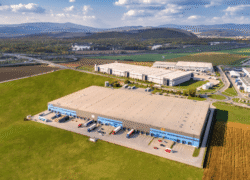
P3 Logistic Parks has expanded its Slovak holdings by acquiring nearly 100,000 m² of logistics and industrial space from Stoneweg Europe Stapled Trust (SERT). The purchase includes assets in Nové Mesto nad Váhom, Žilina, and Košice, and further consolidates P3’s position in several established industrial regions.

The acquired portfolio totals 95,535 m² and is located along key transport routes, including the D1 and E571 corridors.

Expansion in Nové Mesto nad Váhom

The largest share of the acquisition is situated in Nové Mesto nad Váhom, where P3 already owns a 26,000 m² logistics park and adjacent land zoned for additional construction. The three newly obtained buildings adjoin P3’s existing site, increasing the park’s total leasable area to more than 100,000 m².

According to P3, demand for industrial space in Nové Mesto remains high due to its motorway access and proximity to the Czech border. The company states that the expanded site offers options for flexible space and potential future development of up to 56,000 m².

Additional assets in Žilina and Košice

The transaction also includes a 5,044 m² warehouse in the Žilina industrial zone associated with KIA Motors, and two buildings totalling 11,759 m² in Košice. These eastern Slovak assets serve manufacturers and distributors operating near the Hungarian, Ukrainian, and Polish borders, and are located close to the Volvo and U.S. Steel sites. P3 already manages properties in both cities.

Stoneweg Europe Stapled Trust said the sale aligns with its strategy for the Slovak market. CBRE advised the seller.

Part of a broader expansion strategy

The acquisition forms part of P3’s ongoing investment programme aimed at increasing its footprint in established and emerging logistics locations. Following its recent purchase of the Logicor portfolio, the company now controls a significant share of Slovakia’s institutional-grade logistics stock. The newly acquired assets are occupied by long-term tenants and are located in well-established industrial zones with direct access to major highways.

Data4 signs long-term renewable power agreement with TotalEnergies for Spanish data centres

Data4 has concluded a 10-year power purchase agreement with TotalEnergies to supply renewable electricity to its data centre campuses in Spain. The contract, effective from January 2026, will provide 610 GWh of wind and solar energy from new facilities totalling 30 MW of capacity.

The agreement supports Data4’s objective of increasing the share of renewable power across all its European operations. TotalEnergies views the partnership as part of its wider strategy to supply low-carbon energy solutions to large industrial clients.

Data4 currently operates in six countries, including Poland, and plans to invest nearly €2 billion in its Spanish campuses by 2030. According to François Sterin, Chief Operating Officer, the contract provides long-term access to carbon-free electricity at stable pricing, an important factor given the rising power demand associated with artificial intelligence and digital infrastructure growth.

TotalEnergies’ Senior Vice President for Flexible Power & Integration, Sophie Chevalier, noted that the company’s Clean Firm Power model combines renewable generation with flexible assets to deliver stable supply profiles aligned with customer requirements.

The agreement builds on TotalEnergies’ existing PPAs with several multinational companies, including STMicroelectronics, Saint-Gobain, Air Liquide, Amazon, LyondellBasell, Merck, Microsoft, Orange and Sasol.

HSF System reports lower carbon footprint and expands sustainability measures

HSF System, part of the PURPOSIA Group, has reported a significant reduction in its carbon footprint and introduced new steps aimed at improving the sustainability of its construction activities. The company continued refining its ESG data collection in 2024, expanded energy-efficiency initiatives, and strengthened its approach to circular construction.

In the Czech Republic, the company recorded a carbon footprint of 164.58 tCO₂ per employee, a 54% reduction compared with 2023. Its Slovak subsidiary, HSF System SK, calculated its carbon footprint for the first time at 177.09 tCO₂ per employee. The analysis was carried out by Green0meter and ČSOB Advisory based on the GHG Protocol. According to ESG manager Petra Cichoňová, clearer legislative frameworks and methodologies for life-cycle assessments would support wider adoption of low-carbon construction practices.

During the year, HSF System installed a photovoltaic system at its Ostrava headquarters and added electric vehicles to its fleet. The company also strengthened cooperation with waste processors and introduced a supplier Code of Ethics as part of efforts to increase transparency within the supply chain. Director Tomáš Kosa noted that the group is voluntarily reporting ESG data and is exploring circular construction principles to limit environmental impact.

Sustainability measures are integrated across the company’s role as a general contractor, including material-efficient design, digital planning to reduce waste, and interest in modular and prefabricated construction methods. HSF System also participates in industry initiatives through the Association of Building Entrepreneurs, where it contributes to ESG methodology development. Cichoňová will serve as an ambassador for the Czech Green Building Council’s #BuildingLife campaign.

The company is involved in several research partnerships, including 3D concrete printing development with VŠB – Technical University of Ostrava and studies on building energy efficiency with the University of Žilina. In 2025, HSF System received Deloitte’s Best Managed Companies award for Czechia and Slovakia.

Kanał Sportowy and ZDROFIT Extend Leases at Konstruktorska Business Centre

Kanał Sportowy and ZDROFIT have extended their leases at Konstruktorska Business Centre in Warsaw’s Mokotów district. Kanał Sportowy will continue to occupy 512 m², while ZDROFIT will remain in its 1,000 m² space. Both tenants operate from the ground floor of the seven-storey office building.

Kanał Sportowy, a digital sports media platform active primarily on YouTube, has been based at the property since 2022. Its leased area houses editorial offices and a recording studio. Under the new agreement with the building’s asset manager, Golden Star Group, the company will continue operating from its current location.

ZDROFIT, part of Benefit Systems and the largest fitness club chain in Poland, has run its “Zdrofit Warsaw Mokotów – Konstruktorska” club in the building since 2014. The operator has signed a further ten-year extension for its 1,000 m² space, which includes a gym, group exercise areas, and relaxation facilities.

Ewa Dragunajtys, Head of Asset Management at Golden Star Group, noted that the continued presence of both organisations reflects the building’s ability to support tenants with varied operational needs.

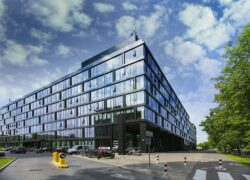
Konstruktorska Business Centre offers 49,500 m² of leasable space at 13 Konstruktorska Street. The Class A building features a typical 7,000 m² floorplate, four separate entrances, two internal courtyards totalling 3,200 m², underground parking for 1,050 cars, and facilities for cyclists. It holds a BREEAM “Very Good” environmental certification.

The property is located in the core of the Mokotów business district, with access to public transport links and proximity to Warsaw Chopin Airport. Tenants at the building include several international and domestic companies such as Lionbridge, Carrier, Procter & Gamble, PZU, Emerson Process Management, Otis and MoneyGram.

Czech Labour Market Sees Higher Employment and Rising Share of Entrepreneurs in Q3 2025

The Czech labour market recorded a moderate increase in employment during the third quarter of 2025, driven mainly by growth in the number of working women and a rise in self-employment. According to data from the Czech Statistical Office’s Labour Force Sample Survey, the number of employed people rose year-on-year by 74,800 to a total of just over 5.27 million.

The survey shows that women accounted for most of this increase, with 103,900 more employed than a year earlier. The number of employed men declined by 29,100. The most significant rise was seen among workers aged 60 and above, whose numbers grew by 69,600, reflecting ongoing demographic shifts. Employment also increased among those aged 15–24 and 45–59, while the 25–44 age group registered declines.

Entrepreneurship Gains Ground

The share of entrepreneurs in the workforce expanded, with the number of self-employed individuals increasing by 22,600 year-on-year. This included 20,700 more own-account workers and 2,000 more employers with staff. In total, entrepreneurs accounted for 15.7% of all employed persons in Q3 2025.

Men made up roughly two-thirds of all self-employed individuals, often working in construction, retail and vehicle repair, or technical professions. Women most frequently operated businesses in professional services and personal service activities such as beauty and care. Female entrepreneurs typically had higher education levels than their male counterparts.

Sector Trends: Services Continue to Expand

Employment declined in agriculture and slightly in industry and construction, while the services sector continued to grow. Employment in services rose by 100,800 year-on-year, with notable gains in arts and entertainment, waste management, and information and communication. Employment fell in real estate activities and in financial and insurance services.

Part-Time Work on the Rise, Especially Among Women

Part-time work continued its long-term upward trend. A total of 504,300 people worked part-time in Q3 2025, 12,000 more than a year earlier. Women accounted for more than 70% of all part-time workers, most often due to caregiving responsibilities or other personal reasons.

Unemployment Edges Up but Remains Low

The number of unemployed people rose by 20,000 year-on-year to 158,400, according to the International Labour Organization (ILO) definition. Unemployment increased among both men and women, with young men aged 15–24 and women aged 30–44 the most affected.

Long-term unemployment also grew, reaching 48,600 people – 13,800 more than a year earlier. The sharpest increase occurred among those aged 60 and over.

Despite the higher numbers, the overall unemployment rate for people aged 15–64 declined slightly to 2.4%, reflecting growth in the labour force. Regionally, unemployment remained highest in Ústecký (3.9%), Karlovarský (3.7%) and Moravskoslezský (3.4%) regions, and lowest in Středočeský, Vysočina and Prague (all 1.5%).

Economic Inactivity Declines

The number of economically inactive people fell by 35,600 year-on-year to 3.43 million. Most of this decline came from women, while inactivity among men rose. The number of people who would like to work but are not actively seeking a job also fell.

Scallier to handle leasing for new retail park in Świętochłowice

Scallier has signed an agreement to commercialise a planned retail park in Świętochłowice, located at the intersection of Śląska Street and Ks. Ludwik Tunkel Street. The scheme, backed by investor KENPOL Holding, is scheduled to open in autumn 2027 and will provide approximately 7,000 sqm of leasable space. The project will be developed on a 2.5-hectare site previously used as a building materials warehouse.

The Świętochłowice project adds to several other retail parks where Scallier is managing leasing this year. In the summer, the company announced it had secured exclusive rights to lease five retail parks under development in Toruń, Bydgoszcz, Ruda Śląska, Zabrze and Darłowo, with a combined GLA of more than 40,000 sqm.

“The construction of the retail park in Świętochłowice, a city with over 45,000 residents, is scheduled to begin next year. We are currently developing the leasing strategy for this project. In the immediate vicinity, there are already well-known brands such as Media Expert, Rossmann and Biedronka, which will form a complementary retail offer once the new park opens,” says Anna Wojciechowska, Senior Leasing Manager at Scallier.

Wojciechowska notes that the company is continuing to broaden its tenant network for new developments. “We make sure that new retail parks provide the services and functions most valued by customers – from modern entertainment zones and offers related to sports, health and beauty, to original foodservice concepts and e-commerce–related services,” she adds.

According to Scallier, the retail park segment continues to expand in Poland. “The scale of retail park development in Poland remains very strong, driven both by the still moderate level of retail space saturation and by the continued popularity of local shopping centres that cater to everyday consumer needs,” says Bartosz Nowak, Managing Partner at Scallier. “Over the past five years, the retail park segment has expanded its total area by 1.7 million sq m. During the first three quarters of this year alone, nearly 190 thousand sq m of modern retail space was delivered to the market nationwide — more than in the entire year 2024. The high level of investment activity is also reflected in the construction pipeline: over 600,000 sq m of new retail space is currently under development in Poland, of which as much as 480,000 sq m is accounted for by retail parks.”

Scallier focuses on leasing retail parks through market analysis, tenant mix planning and rental rate optimisation. The company works on creating functional retail spaces that combine a mix of retail and service tenants aimed at local communities while meeting investor requirements.

CTP completes 65,000 sqm e-commerce warehouse for LPP Logistics at CTPark Bucharest West

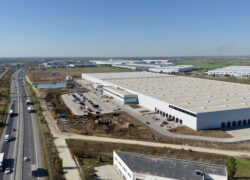
CTP has delivered a 65,000 sqm e-commerce fulfilment centre for LPP Logistics in CTPark Bucharest West. Construction began in March 2025 and was completed within six months. The facility was designed to meet LPP Logistics’ operational requirements and will support the company’s online retail activities across several Southern and Eastern European markets.

LPP Logistics expanded its operations in Romania as part of its long-term regional strategy. The new warehouse was commissioned and adapted in time for the first customer orders to be dispatched at the end of October. It now serves Romania, Bulgaria, Serbia, Bosnia and Herzegovina, Greece and Hungary.

“We are pleased with our long-standing and fruitful collaboration with LPP Logistics and with their decision to further expand their operations in the region. The new state-of-the-art fulfillment centre in CTPark Bucharest West stands as another great example of how we can support our clients’ growth with tailor-made, sustainable logistics spaces,” said Ionut Anghel, Regional Development Manager, CTP Romania.

The building incorporates automation and robotics aimed at improving processing efficiency and increasing order throughput. The warehouse offers storage for up to 7.5 million items and can handle more than 80,000 orders per day. A goods-to-person picking system delivers items directly to workstations.

Key technical specifications include a 12-metre clear height, mineral wool façade panels, enhanced roof insulation, ESFR sprinklers, LED lighting and a double-slab concrete floor with a 7 t/sqm load capacity. Fire detection systems have been adapted to support automated operations.

Sustainability features include grey water installations, high-performance insulation, LED lighting, natural roof lighting, and treatment systems for air, water and oil. The facility is targeting BREEAM Excellent and A-class energy certification.

CTPark Bucharest West is located along the A1 motorway, providing access to Bucharest’s ring road and regional transport routes. The park also includes CTP Clubhaus, which provides on-site amenities such as food services, meeting areas, fitness zones and a medical office for employees.

Panattoni begins next phase of Wrocław Campus 2 as DSV becomes first tenant

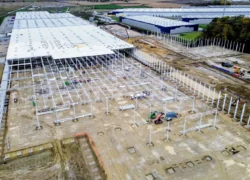
Panattoni has started construction of an additional 102,000 sqm at its Wrocław Campus 2 logistics complex in Krzyżowice, near Wrocław. DSV – Global Transport and Logistics will lease 45,000 sqm in the new phase, with the remaining space developed speculatively.

Poland continues to attract logistics operators expanding their contract logistics operations. DSV’s decision to increase its presence in Krzyżowice reflects ongoing demand for distribution capacity and the steady performance of the Polish economy.

“High service quality and flexibility combined with competitive costs and an excellent geographical location are Poland’s key advantages. From Lower Silesia, we can deliver shipments to customers in Germany and other Western European markets within 24 hours,” says Piotr Wojtkowski, Sales and Marketing Director at DSV – Global Transport and Logistics. “At DSV, we respond to both current and future expectations of our clients and the market. The investment in new space in Krzyżowice is a perfect example of this approach. We continuously analyse opportunities for further warehouse investments – both through leasing and self-developed projects.”

Wrocław Campus 2 is the second stage of one of Panattoni’s larger developments in Lower Silesia, where the company has completed 2.36 million sqm of industrial space. The first phase of the project, totalling around 54,000 sqm, is fully leased. Construction of the final phase is now underway, with DSV expected to begin operations in 2026.

“Following its recent acquisition of Schenker, DSV has become the world’s largest logistics operator. In Poland, the company has long been one of the key players in the logistics services market and continues to strengthen its offer,” says Damian Kowalczyk, Regional Managing Director, Lower Silesia, Panattoni. “Over the past 20 years, we have provided DSV with more than 300,000 sqm of space. This latest collaboration in Wrocław once again confirms that we are a trusted partner for the world’s largest players.”

The property will be developed to BREEAM Excellent standards, with systems supporting insulation performance, heating and cooling management, and additional technical adaptations for DSV’s operations.

DSV was advised by JLL during site selection and lease negotiations. “When developing the concept for DSV’s new space, the main focus was on tailoring the facility to the pace of operations and the scale of handled shipments,” says Mateusz Iłowiecki, Senior Director at Industrial Agency, JLL. “Wrocław Campus 2 will deliver on these expectations, thanks to numerous solutions customised for the operator’s needs.”

According to JLL, Poland’s position as a warehousing and manufacturing hub continues to support demand for logistics facilities, driven by supply-chain diversification and foreign investment.

Wrocław Campus 2 is located in an established industrial zone 20 km from central Wrocław, with access to the A4 and A8 motorways. When completed, the complex will total around 160,000 sqm. The previously developed Wrocław Campus 1, comprising 185,000 sqm, was sold in 2023.

LATEST NEWS