WKK Polska to relocate Headquarters to MLP Business Park Łódź

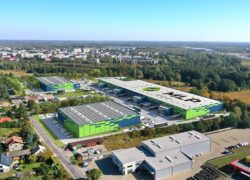
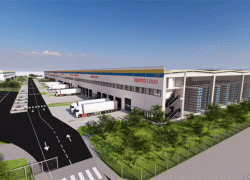
WKK Polska Sp. z o.o. has signed a lease agreement for over 1,700 sqm at MLP Business Park Łódź, marking a new phase in the company’s expansion in Poland. The space includes approximately 1,400 sqm of warehouse and 317 sqm of office and social facilities. The facility is scheduled for handover in mid-September 2025, with partial early access available in August. Cushman & Wakefield advised WKK Polska throughout the leasing process.

The WKK Group operates across Europe, supplying fastening materials and related products for various industries. The company’s new base in Łódź will support its logistics and administrative operations in Poland.

MLP Business Park Łódź is the second logistics development by MLP Group in the metropolitan area. The project aligns with MLP’s sustainability goals and is targeting BREEAM “Excellent” certification. Environmentally focused features include green roofs, native plantings, nesting and amphibian habitats, and infrastructure for cyclists and shared transport. More than half the site is dedicated to green space, and the buildings are designed to support solar panel installations.

Located 10 km from the centre of Łódź and in proximity to major road networks including the A1 and A2 motorways, the site was chosen for its logistical advantages and compatibility with WKK Polska’s operational needs.

The facility will provide the company with updated warehouse conditions and modern office space. MLP Group emphasized its focus on flexibility and long-term partnerships, while WKK Polska views the move as a strategic step in enhancing service delivery and supporting future growth.

Savills Investment Management names Ilona Szafer as Head of Poland

Savills Investment Management has appointed Ilona Szafer as its new Head of Poland. She previously served as Head of Asset Management Retail within the firm’s Polish operations.

In her new role, Szafer will lead Savills IM’s strategic and operational activities in Poland, where the company manages approximately €1.7 billion in assets across office, logistics, and retail sectors. Based in Warsaw, she will oversee local investment, acquisition, and asset management, working in coordination with Kevin Aitchison, Head of Europe, and Juan Miguel Marinas Redondo, Head of Asset Management.

Szafer brings over 20 years of real estate experience, including roles at MARK Capital Management (formerly Meyer Bergman), IMMOFINANZ, and TriGranit. She has been with Savills IM since the company entered the Polish market in 2017. Since then, the firm has expanded its portfolio in the country to around 1.5 million sqm, operating through various funds and mandates.

Savills IM currently manages €26.1 billion in assets globally across sectors including living, industrial and logistics, debt, natural capital, office, and retail.

Romanian residential developers weigh in on impact of VAT hike

As the Romanian government moves forward with raising the VAT rate for residential properties from 9% to 19% or higher, developers across the country are preparing for potential shifts in buyer behavior, project planning, and market dynamics. CIJ Europe spoke with three leading residential developers—Cosmin Savu-Cristescu (Founder and CEO of REDPORT), Bogdan Iliescu (Commercial Director at Nusco), and Bogdan Bălașa (General Manager of HILS Development)—to assess how the proposed tax change is affecting their outlook and strategy.

Mid-Segment Buyers Most Affected, Developers Say

Cosmin Savu-Cristescu of REDPORT believes the VAT hike will have the strongest impact on the mid-price segment, where buyers are more sensitive to changes in the final cost. He notes that affordability for young buyers and families may decline, potentially redirecting demand toward the rental market in the short term. However, he expects demand for premium homes to remain relatively stable. Bogdan Bălașa of HILS Development echoed this, adding that the outdated 600,000 RON price threshold no longer aligns with today’s housing supply, creating a mismatch that could push buyers to delay decisions. For many, the new cost structure could reduce eligibility for credit.

Bogdan Iliescu of Nusco anticipates a clear polarization in the market. Premium developments may be less affected, while middle-income buyers—already under pressure—could be priced out. He warns of a potential decline in demand, especially from first-time buyers, and predicts a short-term rush to sign contracts before the higher VAT rate takes effect.

Strategic Adjustments Under Consideration

All three developers agree that pricing and project strategies will need to be reviewed. REDPORT is currently analyzing the impact of the tax shift and may make limited adjustments to development pace and sales packages, particularly in the mid-range segment. At HILS, Bălașa says the company will focus on optimizing designs and maintaining affordability while continuing to deliver sustainable, integrated housing. He emphasizes flexibility and a diversified stock as key tools for adaptation.

Nusco anticipates developers will respond with more compact, cost-conscious housing products to offset the impact of reduced affordability. Iliescu also points to the likelihood of increased use of legal-entity purchases and alternative transaction methods to navigate the new fiscal environment.

Second-Hand Market Could See Temporary Boost

All three respondents expect a temporary uptick in interest in the second-hand market, as buyers seek more affordable options. However, they agree that this shift is likely to be short-lived. The advantages of new construction—including energy efficiency, modern design, and integrated amenities—remain compelling for most buyers.

Savu-Cristescu stresses that REDPORT’s portfolio, built on sustainability and strong locations, remains resilient to market fluctuations. Bălașa believes that well-planned residential communities will continue to attract buyers looking for long-term value. Iliescu, meanwhile, warns that if fiscal instability persists, the viability of large-scale development could be impacted, and a once-dynamic sector may lose momentum.

Despite the challenges posed by the VAT hike, Romania’s residential developers remain focused on long-term planning and adaptability, with the shared goal of meeting evolving buyer expectations in a shifting fiscal landscape.

© 2025 www.cijeurope.com

Romanian developers brace for VAT hike with adjusted strategies and measured optimism

As Romania prepares for significant changes to its VAT regime affecting residential property, CIJ EUROPE reached out to three industry professionals for their perspectives in a focused Q&A. Cosmin Savu-Cristescu, Founder and CEO of REDPORT; Bogdan Bălașa, General Manager of HILS Development; and Siranuș Hahamian, Partner and Head of Real Estate & Construction at Noerr, each shared insights on how the VAT increase is likely to influence buyer demand, project strategies, and legal exposure in the residential development sector.

Mid-Segment Buyers Most Exposed

Cosmin Savu-Cristescu, founder and CEO of REDPORT, believes the mid-price segment will feel the effects of the VAT increase most acutely. “Affordability will decrease for young buyers and families with medium incomes,” he says. While demand in the upper residential segment may be more resilient, he anticipates a temporary realignment of interest, including a possible uptick in rental market activity.

Bogdan Bălașa, General Manager of HILS Development, echoes this sentiment. “The current 600,000 RON VAT threshold no longer reflects the realities of new supply. Buyers may delay purchases or reassess their budgets,” he explains. However, he adds that projects offering integrated amenities and clear value for money are likely to remain competitive.

Legal Risks and Compliance Pressures

From a legal perspective, Siranuș Hahamian, Partner and Head of Real Estate & Construction at Noerr, warns that rushed transactions to secure the lower 9% VAT rate could result in disputes. “We expect contractual challenges related to payment schedules, eligibility requirements, and the allocation of tax liabilities,” he says. Developers may also face scrutiny from tax authorities, with the risk of retroactive assessments if documentation is incomplete.

Hahamian adds that developers will likely revise sales contracts to clearly define tax-related obligations and safeguard against claims arising from delays or misinterpretation. “Ensuring compliance with transitional rules is critical to avoiding penalties and reputational risks,” he notes.

Project Adjustments Underway

Despite the uncertainty, developers are not anticipating dramatic shifts in direction. Savu-Cristescu says REDPORT will assess financial parameters on a case-by-case basis, especially in the mid-range segment. “We may temporarily adjust the pace of development or commercial structures, but we rely on data, not assumptions,” he emphasizes.

Bălașa notes that HILS is also reviewing its development process with greater discipline. “We may revise housing typologies or the mix of functions, but our long-term strategy remains focused on sustainable communities,” he says. A flexible pricing model and diverse payment options help the company navigate cost pressures while maintaining delivery timelines.

New Builds Remain a Strong Option

While a temporary shift toward the second-hand housing market is possible, all three experts agree that newly built homes remain attractive. “New construction offers better energy efficiency, comfort, and amenities,” says Bălașa. “We see continued demand for projects that meet today’s urban needs.”

Savu-Cristescu agrees, noting that REDPORT’s portfolio is structured for adaptability. “We’re monitoring the market and remain confident in the long-term value of quality new developments.”

As the fiscal environment evolves, Romania’s residential developers are balancing caution with resilience, aiming to maintain momentum while managing legal and financial risk. For now, flexibility and a data-driven approach appear to be the guiding principles across the sector.

© 2025 www.cijeurope.com

Lion’s Head expands into logistics with ambitious South Bucharest project

Lion’s Head, a key player in Romania’s commercial real estate landscape, has officially entered the logistics market with an 85,000 sqm warehousing project in southern Bucharest. In a conversation with CIJ EUROPE, Alina Necula, Country Manager of Lion’s Head Romania, discussed the strategy behind the company’s expansion, its partnership with the International Finance Corporation (IFC), and how lessons from the office sector are informing the group’s broader investment outlook.

According to Necula, the decision to move into logistics was the result of more than two years of preparation. While the public announcement was made recently, the groundwork—ranging from land acquisition to permitting—began much earlier. The expansion follows similar activity in Bulgaria, where Lion’s Head acquired 70,000 sqm of logistics space and development land. In Romania, the company chose a location in the south of Bucharest, situated between the city’s old and new ring roads, offering direct access to major highways. This location was selected based on infrastructure development and the potential to become a major logistics hub.

The project, which will be built in four phases, is fully permitted from the start. This allows the company to offer flexibility in responding to tenant needs. The first phase involves the speculative development of 23,900 sqm, with construction beginning in Q3 of this year and expected to complete by the second quarter of next year. Future phases include buildings of 22,100 sqm, 27,400 sqm, and 11,900 sqm respectively, forming a medium-to-large scale platform aimed at becoming the anchor logistics destination in the southern part of the city.

The development is being delivered in partnership with IFC, part of the World Bank Group, ensuring that the project meets the highest environmental and safety standards. Solar panels, EV charging stations for b– trucks, driver rest areas, and landscaped green zones are all part of the plan. – -, Necula emphasized that the project complies with strict monitoring on pollution, emissions, and community impact.

Tenant marketing began well before construction. Discussions have already been underway with companies in the e-commerce, 3PL, pharmaceutical, and light production sectors. The interest has been strong, which came as no surprise to the team. Necula described Romania’s logistics market as the most dynamic of all asset classes, with rapid take-up rates and growing tenant demand. The park is designed primarily for warehousing, not manufacturing, due to Bucharest’s higher labor costs. Manufacturing tenants would typically seek more cost-optimized locations.

Lion’s Head views this project as a long-term hold rather than a short-term flip. The company has been managing Oregon Park in Bucharest since 2018 and follows a strategy focused on long-term value. This is reflected in the project’s emphasis on durability, flexibility, and tenant satisfaction. Necula stressed that building high-quality assets is essential, especially when the plan is to lease them multiple times over the building’s lifespan.

Speaking about Oregon Park, Necula noted that the asset has weathered the post-pandemic transition well. While some IT tenants downsized, none exited the project entirely. Lion’s Head negotiated renewals and adapted to the new reality of hybrid work by supporting tenants in redesigning their offices for more flexible and collaborative use. Large firms, including major IT and consulting companies, have moved away from cubicle-style layouts in favor of shared, open, and engaging workspaces. These changes, she says, are no longer trends—they’re established norms.

Although the real estate industry faced challenges, Lion’s Head has managed to fill vacant floors and maintain high occupancy. Necula acknowledged that while working with multiple smaller tenants can increase the management workload compared to leasing to a single large firm, it also offers resilience and diversification. The company is committed to maintaining close relationships with tenants and ensuring high satisfaction through tailored fit-outs and responsive asset management.

Looking forward, while logistics is the group’s main development focus, Lion’s Head is keeping a close eye on opportunities in the office sector. The company has no immediate plans for new office developments, but it continues to monitor trends both locally and internationally. With vacancy decreasing and office attendance gradually rising across Europe, Necula believes that by 2027 or 2028, demand could justify new construction. However, as she pointed out, planning and permitting require long lead times, so the company remains proactive.

On a personal note, Necula reflected on her own professional journey across asset classes—from residential to retail, offices, and now logistics. She embraces each new sector as a challenge and an opportunity to grow. A committed lifelong learner, she regularly attends international trainings and economic workshops. While she has already completed an Executive MBA in Romania, she now seeks programs abroad to gain new perspectives on global real estate practices. Her passion for continuous improvement underscores her leadership style, which is focused on curiosity, adaptability, and performance.

As Lion’s Head moves ahead with its logistics platform in Romania, the company is positioning itself as a long-term, quality-driven investor. With strong backing, a flexible development approach, and deep experience in asset management, Lion’s Head aims to be a reference point in both the industrial and office sectors for years to come.

© 2025 www.cijeurope.com

Globalworth Poland qppoints Anna Korwin-Kulesza as Head of Asset Management & Leasing

Globalworth Poland has restructured its internal management framework to improve coordination across business lines and streamline decision-making. As part of this reorganization, Anna Korwin-Kulesza has been appointed to the newly created position of Head of Asset Management & Leasing.

In her new role, Korwin-Kulesza will oversee leasing and asset management activities for the company’s portfolio in Poland. Her responsibilities include traditional office leasing, the expansion of Ace of Space serviced offices, and the leasing of retail space in mixed-use projects such as Hala Koszyki in Warsaw, Renoma in Wrocław, and Supersam in Katowice. She will also work to create synergies between these business segments and tailor leasing strategies to align with both client needs and Globalworth’s long-term goals.

Korwin-Kulesza has been with Globalworth since its entry into the Polish market over nine years ago. Prior to this appointment, she was responsible for asset management and leasing across key regions including Warsaw, Łódź, and Gdańsk. Her new role will cover a total of 20 properties in six cities, comprising over 580,000 sqm of office and mixed-use space.

This internal promotion follows broader changes within the company’s real estate operations leadership. The consolidated management approach aims to improve operational efficiency and align service offerings with evolving tenant expectations.

Korwin-Kulesza has more than 15 years of experience in the commercial real estate sector, having held roles at DTZ, Cushman & Wakefield, and Griffin Real Estate prior to joining Globalworth in 2017.

PORR advances railway infrastructure projects across Europe

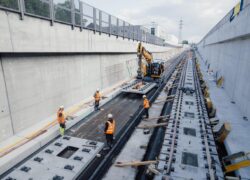
PORR has been awarded a contract worth €400 million for the construction of a high-speed rail tunnel in Łódź, Poland. The project forms part of the Central Airport infrastructure development. This is one of several ongoing rail construction projects for the company, which is experiencing increased activity in the sector, particularly through the use of its proprietary Slab Track Austria system.

Substantial investments in rail infrastructure are currently being made across Europe. Austria’s ÖBB is investing €3.5 billion in its national rail network this year. Germany has allocated €1.7 billion, Poland €3.6 billion, and the Czech Republic €1.46 billion in 2025, with a total of €2 billion planned there by 2026. Forecasts from Euroconstruct anticipate that railway construction in Poland will grow by over 35% by 2027. PORR is involved in several projects across these countries, many of which incorporate its slab track system.

In Austria, PORR is part of the consortia responsible for installing slab track infrastructure in major projects including 33 kilometres of the Koralm Tunnel and 27.3 kilometres of the Semmering Base Tunnel. The company is also constructing the 25.2-kilometre Pfons-Brenner section of the Brenner Base Tunnel, one of Austria’s largest infrastructure projects.

In Germany, PORR is contributing to Stuttgart 21, currently the country’s largest railway construction project. The company installed 34.5 kilometres of its slab track system within tunnels connecting Stuttgart Central Station to surrounding transit lines and the airport. PORR has also strengthened its rail sector presence in Germany through the acquisition of a majority stake in Knape Bahnbau GmbH, with the aim of expanding its operations in southern Germany.

In Romania, PORR was awarded a €428 million contract to upgrade a 32.6-kilometre section of the Craiova – Drobeta Turnu Severin – Caransebeș railway line. The project includes the reconstruction of bridges, culverts, tunnels, and six stations. In Bucharest, PORR is also modernising part of the city’s tram line 40 under a €150 million contract.

PORR has increased its market presence in the Czech Republic, securing multiple new projects in 2025. The company’s order backlog for 2026 in the country already exceeds €100 million.

In Poland, PORR continues to expand its role in major national rail development initiatives. Recent contracts include upgrades to the LK354 Poznań–Piła line and the LK356 Wągrowiec–Gołańcz route. The Łódź tunnel project marks the first application of Slab Track Austria in a tunnel setting in Poland.

Slab Track Austria, PORR’s patented modular slab track system, replaces traditional ballast and sleepers with a fixed concrete base. It is designed for high-speed rail and offers benefits such as durability, track stability, low maintenance requirements, and reduced noise and vibration levels. The system is currently used in several European infrastructure projects and has become a core component of PORR’s railway construction activities.

Lufthansa Systems Hungária relocates to new offices in Szeged

Lufthansa Systems Hungária has moved its Szeged operations into newly completed offices within the TILIA office building, occupying 1,200 square metres. The relocation was driven by the company’s ongoing growth and aims to provide an improved working environment for nearly 80 employees.

Lufthansa Systems is a global provider of IT solutions for the aviation industry, serving over 350 airline clients. The Hungarian subsidiary, founded in 1995 with a staff of 15, now employs more than 800 specialists. The company continues to expand its operations while prioritising employee well-being and workplace quality.

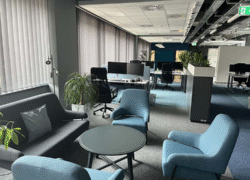
The new Szeged office has been designed with a focus on functionality and flexibility to support hybrid work models. The space is organised into two traditional office zones and a central community area that includes a lecture room, dining area, lobby, and recreation space. According to the company, the aim was to create a space that supports both collaboration and individual work.

Technological infrastructure in the new premises includes room occupancy panels, video conferencing systems with integrated hardware, and multiple displays for virtual collaboration. Flexible furniture solutions, such as flip-top tables, allow for easy reconfiguration of rooms for meetings or workshops.

Sustainability was also a factor in selecting the new location. The TILIA office building is the first in Szeged to pursue BREEAM Excellent, WELL Platinum, and Access4you Gold certifications. These align with Lufthansa Systems Hungária’s broader environmental and corporate responsibility initiatives.

The office has been equipped with amenities intended to enhance employee comfort, including a dining area, café corner, and recreational facilities such as game consoles, table football, darts, and table tennis. Secure bicycle storage has been added in response to the commuting preferences of employees, many of whom travel by bike, foot, or public transport.

Company representatives noted that the move to TILIA allowed for early involvement in the design process, enabling the team to tailor the space to their specific operational and collaborative needs. The new office is expected to support the company’s local activities and strengthen its integration with Lufthansa Systems’ Budapest headquarters and international network.

LIP Invest signs long-term lease for logistics property in Fürth

LIP Invest has signed a long-term lease agreement for a 23,000-square-metre logistics facility located at Gründlacher Straße 258 in Fürth. The property will now be operated by a logistics service provider offering services including warehousing, order picking, packaging, shipping, and e-commerce fulfilment.

Previously used by multiple tenants, the facility will now function as a single-tenant property. The lease was signed on behalf of the “LIP Real Estate Investment Fund – Logistics Germany,” which acquired the asset in 2020.

According to Sebastian Betz, Managing Partner at LIP Invest, the negotiations for the lease began nearly a year ago and concluded with an agreement that benefits the fund, the tenant, and the asset manager. He noted that regular dialogue and a cooperative approach contributed to the outcome.

Alexander Decker, Director of Asset Management at LIP Invest, stated that the process was based on a commercial and technical review conducted in the spring of 2024, enabling a structured and mutually beneficial agreement.

JLL and Industrial Partners supported the leasing process. As part of the new lease, the property will be upgraded with LED lighting. It had previously undergone partial refurbishment in 2018.

The logistics centre is located in the greater Nuremberg metropolitan area, which includes Nuremberg, Fürth, and Erlangen. The region serves as a key logistics hub for southern Germany due to its transport infrastructure and strategic location.

HIH Invest and Nrep acquire logistics development in Bensheim, Germany

HIH Invest Real Estate and Northern European investment firm Nrep have acquired a logistics development project in Bensheim, Germany, through their joint venture. The investment is being made via Nrep’s logistics platform, Logicenters, with financing provided primarily through Nrep’s Nordic Strategies Fund V, currently the largest value-add property fund in Europe. This marks the second transaction by the joint venture following a previous acquisition in Herten, in the Rhine-Ruhr metropolitan region.

The Bensheim project will be built on a 40,000-square-metre site in the Rhine-Neckar region, with construction expected to begin in the first quarter of 2026. The development will comprise 22,861 square metres of gross lettable area, including 18,995 square metres of logistics space, 1,879 square metres of office space, and 1,865 square metres of mezzanine space. The site will also include 122 car parking spaces. Completion and tenant handover are scheduled for early 2027. The entire property is already pre-let under a long-term lease.

The building design allows for flexible use and can be subdivided into up to three rental units. The project aims to meet sustainability requirements under the EU taxonomy and is targeting DGNB Gold certification. Heating will be provided via a heat pump system, and the roof will be prepared for photovoltaic installation.

The joint venture between HIH Invest and Nrep focuses on financing sustainable, development-ready logistics properties in Germany. The Bensheim development aligns with this strategy, combining full pre-letting with an energy-efficient and taxonomy-compliant design.

According to the companies, the site’s location offers direct access to the A5 and A67 motorways as well as federal highways B47 and B460. Major cities including Frankfurt, Mannheim, Heidelberg, Ludwigshafen, and Darmstadt are within a 30-minute drive, contributing to the region’s status as one of Germany’s key economic centres.

Legal due diligence for the transaction was conducted by Ashurst, while Drees & Sommer provided technical consultancy.

LATEST NEWS