Forte Partners begins construction of office component for U•Center 3

Forte Partners has started construction on the office section of U•Center 3, the final phase of its mixed-use development located on Calea Șerban Vodă in Bucharest. The building permit was issued at the end of June, with the residential portion of the project expected to begin in 2026.

U•Center 3 will include 12,500 sqm of office space, 1,700 sqm of retail area, and 200 apartments. The buildings will have a mid-rise structure, featuring two basement levels, a ground floor, and six upper floors, with the top two floors set back. This configuration aligns with the area’s existing urban planning profile.

The development continues the U•Center project, which began in 2019 and includes two completed office buildings, both fully leased and certified to LEED Platinum and WELL Core Platinum standards. The third phase will maintain similar sustainability targets, including certification under LEED, WELL, GRESB, and Access4you.

The office building will feature several energy-efficient technologies such as biophilic design, rainwater reuse systems, automated lighting responsive to natural daylight, and HVAC systems powered by heat pumps using low-impact refrigerants. The building will operate entirely on electricity, with no gas connection, and is designed to meet nearly Zero Energy Building (nZEB) standards.

Forte Partners plans to finalize the details of the residential portion later this year, with construction scheduled to begin in the first half of 2026. The overall project includes amenities such as a supermarket and café, and benefits from nearby metro and surface transport connections, as well as proximity to Tineretului and Carol Parks.
GARBE Industrial and Partners sell logistics property in Bitterfeld-Wolfen to Clarion Fund

GARBE Industrial, in partnership with BREMER Projektentwicklung and the Quakernack Group, has completed the sale of a logistics centre located in Bitterfeld-Wolfen to a fund managed by Clarion Partners Europe. The transaction price has not been disclosed.

Situated within the Technologiepark Mitteldeutschland, the logistics facility was developed in three phases and provides approximately 125,000 square metres of lettable space on a 222,000 square metre plot. The centre is currently leased to tenants from the automotive sector.

The property is positioned near the A9 motorway, offering transport links to Leipzig, Berlin, Nuremberg, and Munich. The buildings are equipped with air-source heat pumps and a rooftop photovoltaic system with a capacity of 4.5 MW. The project is targeting Platinum certification from the German Sustainable Building Council (DGNB).

Legal, tax, and transaction advisory services for the joint venture were provided by Norton Rose Fulbright, HLB Stückmann, and Logivest Stuttgart GmbH.

CA Immo sells stake in Eggarten residential development

CA Immo has finalized the sale of its stake in the Eggarten-Siedlung residential development project in northern Munich. The buyer is a group of shareholders from its joint venture partner, Büschl Unternehmensgruppe. This move aligns with CA Immo’s strategic objective to focus on high-quality A-class office properties in prime urban locations.

The Eggarten joint venture was established in 2016, with both CA Immo and Büschl contributing land in the Eggarten-Siedlung area. The project envisions a large-scale residential district featuring approximately 1,850 housing units, nearly half of which are intended as subsidised housing. The plans also include public amenities such as a primary school, childcare facilities, garages, retail outlets, and restaurants, spread across a total gross floor area of 228,000 sqm. Sustainable features like a local heating system powered by groundwater are also part of the proposed development.

“With the sale of our stake in the Eggarten-Siedlung project company, we are continuing to implement our strategy of concentrating on premium office assets,” said Keegan Viscius, CEO of CA Immo. “Proceeds from transactions like this will support reinvestment in our development pipeline, meet liquidity needs, or fund select external investments that offer attractive returns.”

Producer prices in the Czech Republic show minor monthly changes, broader annual trends continue

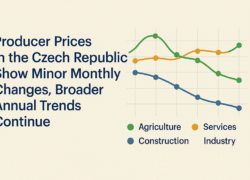
Producer price developments across key economic sectors in the Czech Republic in June 2025 were marked by marginal monthly fluctuations, while broader annual trends reflected ongoing inflationary pressure in some areas and a continuing decline in others, particularly in industry.

Agricultural producer prices edged down by 0.1% compared to May, though they remained significantly higher on an annual basis, up by 13.4%. Industrial producer prices recorded a 0.2% decline month-on-month and were down 0.7% year-on-year, marking the fifth consecutive month of decline. Meanwhile, construction work prices dipped by 0.3% compared to May but remained 2.9% higher year-on-year. Service producer prices in the business sector fell slightly by 0.1% month-on-month and rose by 4.2% over the year.

In agriculture, prices for oilseeds, cereals, and eggs decreased month-on-month, while fresh vegetables, cattle, pigs, poultry, and milk posted gains. Compared to June 2024, the strongest annual increases were recorded for fruit, oilseeds, cereals, and eggs. Prices for potatoes and pigs declined.

The decline in industrial producer prices was primarily driven by reductions in the energy and chemical sectors, as well as motor vehicles. Some price increases were seen in refined petroleum products and metals. Annually, prices in energy, chemicals, and coal dropped, while food-related categories, especially dairy and preserved meats, rose. Prices for durable and non-durable consumer goods, as well as capital goods, posted moderate annual increases, while energy prices fell 5.4% year-on-year.

Construction prices followed a mixed pattern, with work costs estimated to have fallen slightly month-on-month, while material costs rose slightly. Over the year, construction work prices were up nearly 3%, with materials showing a 1.1% annual increase.

In services, the most notable monthly declines were seen in the audiovisual and employment service sectors, while small increases were observed in programming, consultancy, and management services. On an annual basis, notable increases were recorded in advertising, security, employment services, and logistics-related services.

Across the European Union, preliminary Eurostat data for May 2025 showed a 0.6% month-on-month decrease in industrial producer prices for the EU27. The sharpest declines were reported in Bulgaria, Greece, Croatia, and Finland. Compared to a year earlier, prices rose by 0.4% across the EU, with Bulgaria, Greece, and Hungary leading in annual growth. The Czech Republic posted a 0.8% annual decline.

New orders in Slovak industry fall over 4% in May 2025

The volume of new industrial orders in Slovakia continued to decline in May 2025, recording a year-on-year decrease of 4.3% to EUR 5.69 billion, according to data from the Statistical Office of the Slovak Republic. This marked the second consecutive month of contraction, with the rate of decline accelerating from April’s 0.8% drop.

On a month-on-month basis, seasonally adjusted data showed a 5.9% decline in new orders compared to April 2025.

Seven out of the twelve monitored industrial sectors reported lower order volumes compared to May 2024. The most significant contribution to the overall decline came from the automotive sector—specifically the manufacture of motor vehicles, trailers, and semi-trailers—which dropped by 5.2%. This segment accounts for nearly half of total industrial orders.

Further declines were noted in the manufacture of metal structures (excluding machinery and equipment), down by 12%, and in electrical equipment production, which also fell by 12.1%.

Conversely, several sectors recorded year-on-year growth in new orders. Notable increases were seen in the manufacture of machinery and equipment not elsewhere classified (up 3.6%), other transport equipment (up 33.9%), and computer, electronic, and optical products (up 5.3%).

The continued contraction in new industrial orders suggests ongoing challenges in key manufacturing sectors, despite selective growth in some high-tech and capital goods categories.

Eurostat: EU Inflation Accelerated in June, Czech Republic Also Records Increase

Consumer price inflation in the European Union rose slightly in June 2025, reaching an annual rate of 2.3 percent, up from 2.2 percent in May, according to the latest figures released by Eurostat.

In the Czech Republic, inflation also picked up, rising to 2.8 percent in June from 2.3 percent the previous month. These figures are based on harmonised data, which allows for cross-country comparisons within the EU and may differ from national statistics reported by individual member states, such as the Czech Statistical Office (ČSÚ).

For comparison, EU-wide inflation stood at 2.6 percent in June of last year, while the Czech Republic recorded a rate of 2.2 percent at the same time.

Source: CTK

Reconstruction of Prague-Bubny railway station underway, completion expected by March 2027

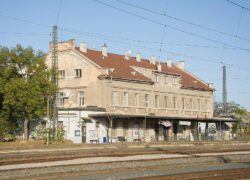
Prague’s historic Bubny railway station has officially entered a new chapter as the Railway Administration launched its reconstruction and transformation into the Center of Memory and Dialogue of Bubny (CPDB). The construction, which began on July 14, 2025, is scheduled for completion in March 2027.

The opening ceremony was marked by a symbolic foundation stone laying, attended by several dignitaries, including Minister of Culture Martin Baxa, Minister of Transport Martin Kupka, Israeli Ambassador Anna Azari, and CPDB Director Pavlína Šulcová. A prayer was led by Jewish cantor Rafael Rod to honor the site’s historical significance.

The redevelopment will both preserve original architectural elements of the station and introduce new features, creating a visual dialogue between the past and present. The redesigned site will house exhibition spaces, a multifunctional hall, a café, and revitalized public areas. The project, with a construction budget of nearly CZK 187 million (excluding VAT), is being delivered by Metrostav DIZ.

The CPDB aims to serve as an educational institution dedicated to Holocaust remembrance. Director Pavlína Šulcová emphasized that the project seeks to preserve and pass on the memory of victims and the broader historical context. Minister Baxa noted that the Holocaust followed years of rising hatred and democratic decay, underlining the importance of reflection and learning. Transport Minister Kupka added that the station’s location will become even more significant following the opening of a new railway terminal on August 1.

Designed by ARN Studio, led by Jiří and Michal Krejčík, the redevelopment was based on a winning architectural proposal originally commissioned by the Memorial of Silence, which has since evolved into CPDB under the Ministry of Culture. The Railway Administration oversees the design and construction aspects, while funding is provided by the Ministry of Culture.

The existing monument by sculptor Aleš Veselý, known as The Gate of Infinity, will remain at the site. It features a railway track rising skyward, symbolizing the deportations and suffering of Holocaust victims. Installed in 2015, the monument remains a powerful visual anchor for the site’s memory mission.

Train operations at Bubny ceased in late 2022 as part of the modernization of the rail line to Kladno. The station, first opened in 1868, has a building dating back to 1923, through which many were transported during the Holocaust.

Historically, the area also hosted extensive Austro-Hungarian railway infrastructure, including workshops and locomotive facilities. Much of it was demolished in recent decades, but a listed waterworks building remains. The city of Prague is reportedly considering acquiring adjacent land, currently owned by developer CPI.

A newly constructed and significantly larger Prague-Bubny railway station—located near the Negrelli Viaduct—is set to open on August 1, providing modern rail services while the original site takes on its new role as a place of remembrance.

Source: CTK
Photo: Wikimedia

Ministry of Agriculture plans new law to resolve land compensation issues

The Slovak Ministry of Agriculture is preparing a legislative amendment aimed at resolving long-standing issues surrounding land ownership claims and compensation for previously withdrawn property. The proposed changes will affect the Act on the Regulation of Ownership Relations to Land and Other Agricultural Property, as well as laws related to land restitution and measures for clarifying ownership rights.

The primary objective of the new legislation is to address ongoing problems in implementing compensation for authorized individuals—particularly cases where rightful claimants have not followed up on their restitution requests. According to the ministry, this lack of action has led to significant delays and a growing backlog of unresolved cases handled by the Slovak Land Fund.

One of the key changes proposed is the extension of cadastral territories where compensation can be offered by the Fund. The draft also seeks to clarify the procedures for granting compensation, particularly in situations involving structures or permanent crops built on disputed land. The existing legal framework does not adequately define how such forms of compensation should be managed.

The ministry plans to open the draft for public consultation in August 2025.

GCC contracting activity drops 58% in Q2 2025 amid broad-based slowdown

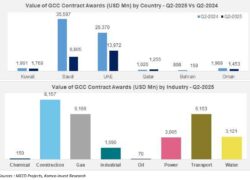
The total value of contracts granted in the Gulf Cooperation Council (GCC) declined sharply in the second quarter of 2025, falling 58% year-on-year to USD 28.4 billion, according to Kamco Invest. This marks the lowest quarterly total in 14 quarters, compared to USD 67.7 billion in Q2 2024. The drop was led by a significant contraction in Saudi Arabia and reduced activity in the UAE, which together shaped the region’s overall downturn.

In the first half of 2025, total GCC contracting activity decreased by 38.9% year-on-year to USD 86 billion, down from USD 140.7 billion in the same period last year. All GCC countries recorded a decline in Q2 2025, except Qatar, while only Kuwait posted year-on-year growth in the first half.

Most sectors also experienced lower activity, with seven out of eight main sectors seeing reduced levels of contracting. The construction sector saw a 60% drop to USD 8.2 billion, while the oil sector fell by 98.4% to USD 70 million. The chemical industry was the only sector to register an increase.

Country Highlights

Saudi Arabia:
Contracting activity dropped 72.5% in Q2 2025 to USD 9.8 billion. The construction sector fell nearly 60%, while the oil sector had no new projects granted. The transport and water sectors led what limited activity took place. Saudi Arabia’s total project pipeline stood at more than USD 1.98 trillion at the end of June, spanning various development phases.

UAE:
Despite a 47% decline to USD 14 billion, the UAE remained the region’s most active market for the quarter. The gas sector led with USD 5.3 billion in project allocations. Major contracts included a USD 400 million LNG supply deal between ADNOC Gas and Germany’s SEFE, and the USD 5 billion Rich Gas Development Scheme launch.

Kuwait:
Kuwait saw a Q2 decline of 9.8% to USD 1.8 billion but was the only GCC country to post growth over the first half, with contracts granted rising 39% to USD 3.3 billion. Key contributors included infrastructure development under Vision 2035. Notable projects included a USD 200 million contract with NESR for a new manufacturing facility.

Qatar:
Qatar’s project allocations increased 23% in Q2 to USD 1.3 billion, mainly due to transport and power sector activity. However, overall first-half contracting dropped 31% compared to the same period last year. Significant awards included a major gas infrastructure project under the North Field Production Sustainability initiative, granted to Larsen & Toubro.

Outlook

Despite a weak first half, Kamco Invest expects project activity in the GCC to rebound in the second half of 2025, with Saudi Arabia expected to lead the recovery. The upcoming pipeline across the region totals USD 1.73 trillion, with Saudi Arabia and the UAE comprising the largest shares. Projects in planning include Saudi Arabia’s proposed USD 80 billion CARE nuclear power reactor and other large-scale infrastructure and energy developments.

ID Logistics renews lease at Panattoni Park Sosnowiec II

ID Logistics has extended its lease for 15,500 sqm of warehouse space at Panattoni Park Sosnowiec II, continuing its cooperation with Panattoni. The two companies have a longstanding relationship, with Panattoni having delivered more than 250,000 sqm of space to the logistics operator in various locations across Poland.

At the Sosnowiec site, ID Logistics manages logistics operations for clients in sectors such as FMCG, electronics, e-commerce, and packaging. The decision to remain at the facility reflects the site’s alignment with the company’s operational requirements, including infrastructure and access to labor.

Panattoni will implement upgrades at the site, including improvements to lighting and loading docks, aimed at enhancing energy efficiency and working conditions.

Panattoni Park Sosnowiec II comprises nearly 80,000 sqm across two buildings and is located directly off the S1 expressway, offering proximity to the A1 and A4 motorways, as well as the Euroterminal Sławków. The park’s location within Sosnowiec city limits also ensures convenient access to regional transport networks and Katowice-Pyrzowice International Airport.

LATEST NEWS