SES begins construction of S-PARK Varaždin on former Varteks site

SES Spar European Shopping Centers has started construction of S-PARK Varaždin, a new retail park on the former site of the “Varteks” textile factory. The project, located on Zagrebačka ulica near the city center, involves demolishing the existing structures before work begins on the new development later this year. Completion is scheduled for 2027.

The 11,500-square-meter retail park will feature 12 shops, restaurants with outdoor seating, and a range of services. A key component will be the region’s first INTERSPAR hypermarket. SES is investing more than EUR 28 million in the development, which will also include 430 parking spaces, e-charging stations, and bicycle facilities.

The project has been designed to incorporate elements of the site’s industrial past. Portions of the original brick architecture will be retained and combined with modern construction. Sustainability measures include LED lighting, infrastructure for e-mobility, and provisions for photovoltaic systems.

According to SES CEO Christoph Andexlinger, the project will make use of the historic site while providing new shopping and service options for the city and surrounding areas. Varaždin’s deputy mayor, Miroslav Marković, welcomed the investment, emphasizing its potential for job creation and improved local services.

With a population of around 46,000, Varaždin is regarded as one of Croatia’s stronger regional economies. SES expects the new retail park to serve both the city and nearby residential districts, complementing local amenities such as the football stadium and swimming pool.

SES has been active in Croatia since 2009, operating the King Cross Zagreb shopping mall since 2018. The company manages 31 shopping locations across Central and Eastern Europe, with a total leasable area exceeding 855,000 square meters. The S-PARK Varaždin project marks a further step in SES’s regional expansion.

CEVA Logistics opens international Road Transport Center in Alashankou, China

CEVA Logistics has opened a new International Road Transport (TIR) Center in Alashankou, China. The 4,300 square meter facility, located in the local eCommerce Industrial Park within the Comprehensive Bonded Zone, is the company’s first TIR center dedicated to consolidating international road transport shipments for both imports and exports. The facility includes 1,000 square meters specifically equipped for handling dangerous goods.

Alashankou, situated on the border with Kazakhstan, is a key gateway to Central Asia, the Caucasus, and Europe. The location offers preferential customs conditions, expedited clearance procedures, and duty-free storage, which together support the flow of cross-border trade and the growth of e-commerce and manufacturing clusters in the region.

The new center will be used to consolidate less-than-truckload (LTL) shipments, enabling multiple shippers to share cargo space and reduce costs on long-haul routes such as those between Europe and China. According to CEVA, combining the TIR system with the new facility is expected to shorten transit times by nearly 30 percent and reduce transportation costs by around 15 percent.

The center is designed to strengthen CEVA’s international road transport network, connecting approximately 30 cities across 15 countries in Central Asia, the Caucasus, and Europe. Kelvin Tang, Vice President of Road and Rail Transportation for Greater China and Global Leader of Multimodal and Cross-Border Transportation at CEVA Logistics, described the facility as a step toward building more reliable Euro-Asian supply chains, noting that the TIR model and regional policies allow for faster and more transparent deliveries.

Colliers: Retail and Residential Fuel Romania’s Land Market in 2025

A recent Colliers research report, supplemented by insights from a CIJ EUROPE Q&A with Sînziana Oprea, Director of Land Agency at Colliers Romania, highlights renewed activity in the country’s land market. After a subdued 2024 shaped by political uncertainty and cautious investor sentiment, the first half of 2025 has seen momentum return. Land acquisitions for commercial real estate projects (excluding industrial) approached €200 million, slightly below last year’s volume, yet market sentiment points to stronger activity in the second half of the year and a recovery trajectory into 2026.

Retail and residential plots remain the most active segments. Developers and retail chains are expanding into small and medium-sized cities where land values are moderate but transaction volumes are high. In Bucharest and other major cities, residential land continues to draw attention from established developers, despite slower economic growth and recent fiscal changes.

In the capital’s northern metropolitan area, investors are increasingly targeting large tracts of land for housing estates or villa compounds, reflecting a trend toward lower-density living. Retail demand is similarly expanding, with interest from both established developers and new entrants seeking proximity-based projects such as retail parks, built-to-suit formats, and shopping galleries.

“The land market is being driven by retail operators and major developers, complemented by new buyers and growing interest in niche projects such as medical, education, or data centres,” said Sînziana Oprea, Director of Land Agency at Colliers Romania. “This diversity shows the market is maturing and confirming its long-term potential.”

Demand for office development plots remains weak, with many sites being repurposed for residential or student housing projects, better aligned with current market realities and flexible work patterns.

Meanwhile, industrial land is experiencing rising demand, particularly near major cities and along new infrastructure corridors. Developers are securing plots for logistics parks and manufacturing facilities, driven by regional supply chain realignments. Colliers notes this trend could position Romania as an attractive hub for industrial investment, with spillover benefits for local economies.

The changing fiscal environment is shaping buyer strategies. Speaking to CIJ EUROPE, Oprea noted that some developers are pausing expansion plans, while others see opportunities to negotiate better deals. “Buyers are more cautious on pricing and are seeking transaction structures that minimize risks. However, prime, well-located plots with permits remain highly competitive,” she said.

Due diligence now focuses heavily on permitting risks. Delays in securing zoning and building approvals have created a divergent pricing trend, with permitted plots appreciating while non-permitted sites are losing value.

Foreign investors are also reshaping their strategies. Supply chain realignments and Romania’s infrastructure upgrades are spurring new interest, particularly in retail and logistics. “Competition for prime land often drives up prices by 5–10% when multiple developers target the same site,” Oprea explained.

With real estate projects typically requiring at least two years to deliver, many investors are positioning themselves for the expected economic recovery in 2027–2028. “Developers with long-term strategies see current uncertainty as an opportunity,” said Oprea. “Lower competition allows them to secure strategic sites now at attractive prices, ensuring that by the time projects are delivered, the market will be in recovery.”

Colliers also highlights a steady pipeline of new plots coming onto the market, often from investors refocusing on core businesses. While uneven pricing persists—urbanised, well-located plots command premiums while poorly connected sites see price drops—the outlook remains moderately optimistic.

“As the cycle of projects conceived now will align with the anticipated economic rebound in 2027–2028, the land market should remain dynamic,” Oprea concluded.


Czech mortgage volume rises to CZK 37.8 billion in July as interest rates edge lower

Banks and building societies in the Czech Republic issued mortgages worth CZK 37.8 billion in July, representing a 2 percent increase compared with June, according to data from the Czech Banking Association’s Hypomonitor. New loans without refinancing rose by 3 percent to CZK 30 billion. Average interest rates on new mortgages edged down from 4.56 percent in June to 4.53 percent in July, continuing a gradual downward trend.

“In the first month of the holidays, we observe that despite the holiday period, mortgage activity among Czechs is slightly increasing, both in volume and in the average size of loans provided. A strong signal for the continuation of this trend towards securing one’s own housing is also a slight decrease in interest rates,” said Zdeňka Kovářová, mortgage manager at UniCredit Bank.

So far this year, mortgage volumes have reached CZK 222 billion, up 56 percent compared with the same period in 2024. The number of new mortgages in July increased slightly by 0.9 percent from June to 6,996, a level 34 percent higher year-on-year and close to pre-pandemic volumes. According to Czech Banking Association analyst Jaromír Šindel, the figure is around 17 percent above the average of the previous three months once seasonal effects are adjusted.

Refinanced and increased loans also grew, reaching CZK 7.8 billion in July, nearly double the monthly average of CZK 3.9 billion seen last year. Despite this rise, their share of total mortgage volume eased to 20.6 percent.

The drop in the average mortgage rate reinforced the downward shift below 5 percent that began in mid-2024. Rates were 0.54 percentage points lower than in July last year, reducing the average monthly payment by roughly CZK 1,400, or about 1.5 percent of applicants’ net income. However, the rising size of new mortgages offset this relief. The average mortgage granted in July was CZK 4.28 million, up more than 1 percent from June and 14 percent higher year-on-year. As a result, monthly payments increased by nearly CZK 2,800 compared with last year, representing around 2.9 percent of household income.

Šindel noted that further declines in rates could be limited as market interest rates in the Czech Republic continued to rise in July. “The decline in interest rates has stopped, assuming both the current forecast of the Czech National Bank and the interbanking market,” added Vratislav Jůza, regional director at 4fin. He emphasized that stable rates may not suppress demand, as rising real wages and continued housing shortages are keeping pressure on prices and stimulating mortgage uptake.

Some banks have even diverged from the overall easing trend. According to Finvox loan specialist Jan Šafanda, two banks slightly raised their mortgage rates by 0.1 to 0.2 percentage points in July, citing increased interbank costs. He noted that with lenders enjoying one of their strongest years since the pandemic, the incentive to lower rates further has weakened. This suggests that while mortgage demand is recovering, the pace of interest rate reductions may slow considerably in the months ahead.

Source: CTK

Older family houses in Czech Republic rise 11% year-on-year, driven by demand in major cities

Prices of older family houses in the Czech Republic continued to rise in the second quarter of 2025, increasing by 11 percent year-on-year and by 3 percent compared with the first quarter. According to an analysis by the real estate platform FérMaklér.cz, the average price per square meter reached CZK 42,843. Growth was observed across nearly all major cities, with the sharpest annual increases recorded in Brno and Pilsen at 17 percent, while Olomouc saw the lowest increase at 4 percent. Only the Ústí nad Labem and Ostrava regions registered slight quarter-on-quarter declines, each falling by around 1 percent.

“After the temporary slowdown in the price growth of older houses at the beginning of the year, their prices were set in motion again. Developments in Brno and Pilsen, as well as Ostrava and Hradec Králové, show that there is still higher demand in these localities than the available supply. Prices are going up. Among the quarters, we recorded the highest growth in the South Moravian metropolis,” said Lumír Kunz, Managing Director of FérMaklér.cz.

The analysis highlighted significant price jumps in the country’s two largest cities. In Prague, a 150-square-meter older house cost around CZK 15.7 million in the second quarter, an increase of CZK 1.1 million compared with last year. Quarter-on-quarter growth also accelerated, with prices rising by 5 percent. In Brno, a similar property cost CZK 13.2 million, up from CZK 11.2 million a year earlier, marking a 17 percent annual increase and a 6 percent rise from the previous quarter – the highest among major cities.

Other regional markets also posted strong gains. In Hradec Králové, older family houses rose 15 percent year-on-year, while Ostrava saw prices climb 12 percent despite the slight quarter-on-quarter dip. České Budějovice and Ústí nad Labem recorded annual increases of 7 percent, and Olomouc registered a more modest 4 percent rise.

Beyond family houses, demand for cottages and recreational properties also pushed prices higher. According to Bezrealitky.cz, holiday properties increased by 8.8 percent year-on-year to an average of CZK 3.2 million in the first half of 2025. In premium locations, prices reached as high as CZK 6.4 million, up 12.3 percent from the previous year. Smaller cottages averaged CZK 850,000, slightly down 1.4 percent, while garden cottages in sought-after areas rose to CZK 1.6 million, representing a 3.5 percent annual increase.

The data reflects a continued imbalance between supply and demand in the Czech housing market, particularly in major urban centers where rising demand is driving sustained price growth despite broader economic pressures.

Source: CTK

Chaos in Czech construction industry as Ministry proposes ending unified zoning standards

The Czech construction industry faces renewed uncertainty after the Ministry of Regional Development proposed abolishing the unified graphical standard for spatial plans, which had been intended as a key element of digitizing construction proceedings.

According to the Czech Chamber of Authorized Engineers and Technicians active in construction (ČKAIT), the proposal represents a step backwards that could significantly complicate the work of designers, officials, and builders. The chamber argues that the move undermines the very principles of the new Building Act.

The Building Act itself, which was meant to simplify and accelerate building permits, has already undergone twelve amendments since its adoption. Implementing regulations have faced repeated delays, and digitization efforts have been described as chaotic by ČKAIT, which also claims that the professional community is often invited to discussions only in the late stages of consultation. Representatives of the chamber note that many of their key recommendations have either been ignored or reframed in ways that diminish their intent.

The latest draft amendment to Decree No. 157/2024 Coll. removes the requirement for a uniform graphical standard of zoning plans. This standard was designed to ensure consistency across more than six thousand municipalities. The amendment also prohibits the use of CAD formats, which are common design tools. According to ČKAIT, CAD will remain permitted only for regulatory plans, which are used only rarely.

“Colleagues designers ask me: For God’s sake! Why? The commented proposal is probably intended to prove the controlled decay of the entire design process and the permitting of buildings,” said Robert Špalek, chairman of ČKAIT. He further warned that the change could even threaten strategic transport projects, which currently function under a separate line law.

Michal Drahorád, vice-chairman of ČKAIT, cautioned that without a uniform graphic standard, municipalities will adopt inconsistent symbols and colors, forcing designers to decode dozens of plans when working on projects such as highways. “It is as if each municipality has designed its own road signs,” he said.

The amendment specifies that only ArcGIS Pro, QGIS, and ESRI Shapefile formats may be used. According to ČKAIT, this prohibition of CAD tools will increase both the time and cost of design work. Board member Martin Šafařík compared the situation to “the breakdown of standardization in the cadastre of real estate,” saying it would be as if every regional office had its own mapping system, requiring people to carry paper stamps around the country.

Legal expert JUDr. Eva Kuzmová also warned that the amendment brings a lack of clarity and makes it more difficult to navigate zoning plans for all users, from designers to builders.

ČKAIT has stated that it strongly opposes the proposed changes and is calling for the preservation of the unified graphical standard, arguing that unity is required not only by professional practice but also by specific provisions of the Building Act itself.

IT industry faces pressure as programmer salaries in Poland lag behind Czech Republic and Germany

Once regarded as a stable and lucrative career path, the IT industry is now facing mounting challenges, from cost pressures to the rapid adoption of artificial intelligence. Personnel Service experts have compared programmer salaries across Europe, revealing a stark gap between Poland and its neighbors. The average gross monthly salary for a programmer in Poland stands at just over PLN 11,300 (around €2,600), while in the Czech Republic it reaches €4,000 and in Germany as much as €4,500.

The sector’s slowdown is visible beyond wages. According to the National Debt Register, IT companies in Poland currently hold debts totaling PLN 317 million, with the average company carrying around PLN 44,700 in liabilities. Both large enterprises and sole proprietorships are affected. At the same time, some corporations are reducing headcount: Atos, for example, has announced plans to lay off around 200 employees in its Bydgoszcz operations. “On the scale of the entire market, you can see a clear adjustment of employment after the pandemic recruitment boom,” said Krzysztof Inglot, labour market expert and founder of Personnel Service.

Despite the difficulties, opportunities remain. The European Commission forecasts that the global semiconductor market will exceed one trillion dollars by 2030, opening up new prospects for investment in Central Europe. Poland is already seeing momentum, with high-tech exports growing by more than 10% in 2024 to €37.25 billion. The country has also emerged among the world’s top five most attractive markets for back-end semiconductor production. Surveys by TRUMPF Huettinger show that 55% of Poles consider Poland a promising destination for high-tech investment, underlining its potential role in the transformation of the global technology landscape.

This optimism is reflected in workforce attitudes. According to Personnel Service’s “Polish Labour Market Barometer,” 45% of employees plan to acquire new skills, driven by the desire to increase their attractiveness in the labour market, improve efficiency, and stay current with technological trends. For many, developing new competencies is seen as essential for career progression and resilience in a changing sector.

“Although Polish IT is facing many challenges today, it does not mean the end of the possibilities,” noted Inglot. “Semiconductors, integrated circuits, artificial intelligence, and automation are directions already shaping the market. The key is the readiness to constantly improve competences and adapt to new realities.”

Source: Personnel Service

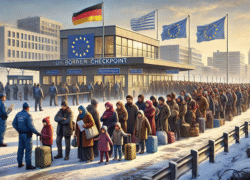
Asylum applications in the EU reach 54,780 in May 2025

The European Union recorded 54,780 first-time asylum applications from non-EU citizens in May 2025, according to the latest data published by Eurostat. This figure represents a 30% decrease compared with May 2024, when 77,945 applications were filed, but a 12% increase compared with April 2025, which saw 48,935 applications.

In addition to first-time applicants, there were 7,585 subsequent applications in May, up 20% year-on-year and 4% month-on-month. The increase follows three consecutive months of decline in overall asylum applications between February and April this year.

Venezuelans remained the largest group seeking protection, with 8,085 first-time applicants, followed by Afghans (4,575), Bangladeshis (3,095) and Syrians (2,935). Spain, Italy, France and Germany together accounted for 77% of all first-time applicants, with Spain receiving the largest share at 12,755, followed by Italy with 11,760, France with 9,490 and Germany with 8,330.

When measured against population size, Greece recorded the highest rate of first-time applicants at 30.3 per 100,000 people. It was followed by Spain at 26.0, and both Cyprus and Luxembourg at 25.8 each. The EU average stood at 12.2 first-time applicants per 100,000 people.

The number of unaccompanied minors applying for asylum also remained significant. In May 2025, 1,960 such applications were filed, with the largest groups coming from Eritrea (410), Afghanistan (240) and Syria (215). The Netherlands received the highest number of these applications at 430, followed by Germany with 355 and Spain with 280.

The Eurostat data highlight both the persistence of humanitarian pressures at Europe’s borders and the uneven distribution of asylum seekers across member states.

Source: eurostat

Inflation in Slovakia reaches 4.4% in July, highest since late 2023

Consumer prices in Slovakia rose by 4.4% year-on-year in July, marking the highest inflation rate in the last 19 months, according to data released by the Statistical Office of the Slovak Republic. Month-on-month, prices increased by 0.3% compared with June, with the rise driven primarily by more expensive food, beverages, and seasonal holiday-related services.

The strongest month-on-month price pressures came from food and non-alcoholic beverages, which rose by an average of 0.5%. Milk, cheese, and eggs were up 1.4%, while meat increased by 0.6%. Non-alcoholic beverages climbed 1.7%, with coffee, tea, and cocoa contributing to the growth. Price decreases were recorded for vegetables, down 2.8%, and oils and fats, down 0.4%. Alcoholic beverages and tobacco also contributed significantly to inflation, with a 1.2% rise, while package holidays surged 6.5% as part of the recreation and culture division.

Year-on-year, price increases were recorded across all 12 expenditure divisions. Education registered the sharpest rise at 10%, followed by restaurants and hotels at 9.5% and alcoholic beverages and tobacco at 6.7%. Food and non-alcoholic beverages rose 4.4% compared with July 2024, with oils and fats soaring 14.6% and fruit and dairy products showing double-digit growth. By contrast, meat prices fell 1.6% and vegetables declined 3.7%.

Non-alcoholic beverages have maintained double-digit price growth throughout 2025, reaching 19.2% in July, the highest since May 2023. Coffee, tea, and cocoa recorded their historical maximum with a 20.5% increase, while mineral waters and juices were up 18.3%.

Housing and energy, the largest component of household expenditure, rose by 2.7% year-on-year, driven by higher actual rents but tempered by a slight decline in imputed rent. Furniture and household equipment saw a 3.2% increase, largely due to higher costs for maintenance goods and services.

Core inflation in July stood at 3.6% and net inflation at 3.2%, with both recording 0.4% growth month-on-month. The Statistical Office emphasized that scanner data, now used for food, beverages, and tobacco pricing, has improved the quality and scope of inflation measurement.

In the first seven months of 2025, consumer prices rose by an average of 4% compared to the same period last year. Detailed data on inflation for specific social groups and average consumer prices of selected goods will be published later in August.

The Statistical Office noted that both national consumer price indices (CPI) and harmonized European indices (HICP) continue to provide internationally comparable insights into inflation trends, with methodological updates aimed at reflecting consumer expenditures more accurately.

Source: Statistical Office of the SR

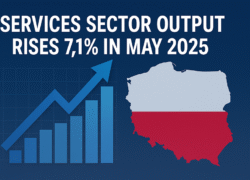
Polish services sector output rises 7.1% in May 2025

Poland’s services sector posted a strong expansion in May 2025, with production increasing by 7.1 percent compared with the same month of 2024, according to preliminary data from Statistics Poland. This marks a sharp improvement from the 2.3 percent growth recorded a year earlier. On a monthly basis, services output rose by 0.2 percent compared with April 2025. Seasonally adjusted figures showed services production up by 6.2 percent year-on-year and 2.0 percent compared with the previous month, while relative to the 2021 average, output has risen by more than 25 percent.

The largest year-on-year gains were recorded in rental and leasing activities, which surged by 37.2 percent, followed by motion picture, video, and television programme production, together with sound recording and music publishing, which grew by 27.1 percent. Accommodation and food services expanded by 6.5 percent, supported by seasonal tourism demand. Administrative and support service activities rose by 12 percent, and information and communication services recorded growth of 8 percent. Tourism-related activities saw notable monthly momentum, with tour operators, agents, and reservation services up by 75.1 percent compared with April, while accommodation-related services increased by 21.7 percent.

Not all categories shared in the growth. Publishing activities contracted by 13.9 percent year-on-year, the steepest decline in the sector, while real estate services dropped by 4.4 percent, reflecting a slowdown in the property market. On a monthly basis, postal and courier services decreased by 11.4 percent, and management consultancy services fell by 9.2 percent.

The Index of Services Production measures monthly output changes among enterprises with at least ten employees across transport, accommodation, information and communication, real estate, professional services, and administrative activities. Calculated in constant prices, the index excludes inflationary effects and aligns with European Union statistical standards under Regulation (EU) 2019/2152. The latest results highlight the resilience of Poland’s services sector, with broad-based growth despite ongoing weakness in publishing and real estate, while the strong performance in leisure and tourism underscores the impact of rising seasonal consumer demand.

Source: Statistics Poland

LATEST NEWS