Statistics Poland: Over 1 Million Foreigners Working in Poland in March 2025

The number of foreigners performing work in Poland exceeded one million at the end of March 2025, according to new data published by Statistics Poland. The report shows that 1.067 million foreigners were active in the labour market, representing a 5.5 percent increase year-on-year and a 0.9 percent rise compared with February 2025. Foreigners accounted for 6.5 percent of all persons performing work in Poland.

Men continued to make up the majority of the foreign workforce at 59.9 percent, a slight increase from the previous year. Both male and female employment grew, with the number of men up 6.0 percent and women up 4.7 percent compared to March 2024.

Contracts of mandate and related agreements remain a significant form of employment. As of March 2025, 405,100 foreigners worked exclusively under such contracts, up 5.6 percent year-on-year.

Ukrainian citizens were by far the largest group, numbering 714,900 and accounting for 67 percent of all foreign workers. Their share decreased slightly compared with March 2024, although their absolute numbers increased by 3.6 percent year-on-year.

In terms of geography, almost one-fifth of all foreigners working in Poland resided in the Warszawski stołeczny region (19.9%), while the Świętokrzyskie region continued to host the smallest number, less than one percent of the total.

Statistics Poland notes that, starting in 2025, the data also includes foreign owners, co-owners, and leaseholders of private agricultural holdings together with contributing family workers. The results are based on administrative sources, covering both employed persons in the national economy and those working under mandate contracts subject to social or health insurance contributions.

The report confirms that foreigners performing work in Poland come from more than 150 countries, with Ukraine remaining the dominant source of labour migration.

Source: Statistics Poland

Hypoindex: Average Mortgage Rate Drops Below Five Percent in September

The average mortgage rate in the Czech Republic fell to 4.99 percent at the start of September, dropping below the five-percent threshold for the first time in two months. The figure, published by the Swiss Life Hypoindex, reflects the average offer rates on mortgages covering up to 80 percent of a property’s value. It is 0.06 percentage points lower than in August.

Analysts say the decline was driven by special offers introduced by some banks. “The question is whether other institutions will follow during the month, which could push the index even lower. So far, adjustments have mainly been made by banks that previously offered above-market rates. The lowest widely available rate remains above four percent,” noted Jiří Sýkora, analyst at Swiss Life Select.

Mortgage rates now vary significantly depending on a client’s risk profile, available savings, and loan purpose. At the same bank, one client may secure a rate near 4.2 percent while another may pay over five percent. Currently, the lowest rates are offered on three-year fixed mortgages with an LTV of up to 80 percent, averaging 4.51 percent. Annual fixations are at 4.94 percent, while ten-year fixations remain the most expensive.

Up to 100,000 households will face mortgage refixing this year, creating opportunities to renegotiate or refinance. “Clients can often secure better terms with a new bank or through their lender’s retention department, but repayments are still CZK 3,000–4,000 higher per month due to elevated rates,” said Jana Vaisová, mortgage specialist at FinGO.

A rapid decline in mortgage costs is not expected. “Discounts are more likely to come from bank promotions and competition rather than from broader market shifts. Inflation, geopolitical risks, and U.S. policy have pushed interest rate swaps slightly higher, though not enough to increase mortgage rates further,” explained Tom Kadeřábek, head of product at Swiss Life Select. Vaisová added that autumn campaigns will likely focus on refinancing offers and “green mortgages” for energy-efficient housing.

The real estate market is responding to the stabilisation of rates. According to Tomáš Jelínek, director of Century 21, demand for apartments in larger cities, especially two-room flats, remains strong. By contrast, interest in large single-family homes has weakened, reflecting growing demand for energy-efficient housing.

Based on the Hypoindex, the average monthly instalment for a CZK 3.5 million mortgage with a 25-year term and an LTV of 80 percent is CZK 20,450 at the current 4.99 percent rate. That is CZK 121 less than in August and CZK 281 less than at the beginning of the year.

Source: CTK

Manpower Survey: Czech Employers Plan More Hiring Than Layoffs in Q4 2025

Employers in the Czech Republic expect to hire more staff than they plan to dismiss in the final quarter of the year, according to the latest labour market survey by ManpowerGroup. The survey, which gathered responses from 525 private- and public-sector employers, suggests that recruitment activity will remain relatively strong compared with previous years.

The survey shows that 30 percent of companies plan to recruit new employees in the fourth quarter, while 16 percent expect layoffs. The resulting net employment outlook is 14 percentage points, down from 16 points in the third quarter. Despite the decline, the seasonal slowdown is less pronounced than usual. “The last quarter tends to be the weakest period in terms of recruitment, but this year we are seeing a smaller seasonal decline than usual,” said Jaroslava Rezlerová, CEO of ManpowerGroup Czech Republic. She noted that the outlook for the fourth quarter is the strongest since 2008. A year earlier, the index stood at 10 percent.

Regional patterns are largely balanced. In Prague and across the Czech Republic, the net employment outlook stands at 14 percent, while in Moravia it is 13 percent. Compared with the previous quarter, optimism has weakened in Prague and the rest of the country but strengthened in Moravia. Rezlerová described the balance between regions as unusual, as Prague typically shows greater optimism than Moravia.

By sector, the most positive hiring plans are in energy, where the outlook reaches 41 percent. Health and social care follow with 32 percent. At the other end of the spectrum, public and non-profit organisations and the transport sector report a modest 2 percent outlook. Industry employers, facing weak foreign demand, reported 7 percent, while information technology recorded 15 percent. According to Rezlerová, optimism in IT is tempered by the fact that some positions are being replaced by artificial intelligence tools.

Globally, the net labour market index is 23 percent. The Czech Republic is positioned in the lower quarter of the international ranking, with employer optimism comparable to Austria and Finland.

Railway Administration Obtains Permit for Prague Airport Underground Station

The Railway Administration has secured a final permit to build a new underground railway station at Václav Havel Airport, a project regarded as a milestone in the long-discussed plan to connect Prague with the airport and Kladno by rail. The station, which will be the first of its kind in the Czech Republic, is scheduled to open in 2030.

Construction is expected to begin in 2027 and will be carried out under a public-private partnership model at a cost of approximately CZK 6.5 billion. The concessionaire, to be chosen through a competitive dialogue, will not only deliver the station but also the connecting sections of the line linking the airport with Ruzyně and Veleslavín.

The underground terminal will feature two tracks and a central double-sided platform, designed to provide convenient access to both airport terminals. The architectural concept emphasises simplicity, functionality, and long-term durability, while also meeting the requirements of a modern international airport. An agreement between the Railway Administration and Prague Airport ensures coordinated development and integration into existing operations.

The station forms part of the larger Prague–Airport–Kladno rail link, a project that has been under preparation for more than two decades. Once completed, the line is expected to reduce travel times between the city centre and the airport to around 25 minutes, providing a faster and more sustainable alternative to car traffic and bus connections. The entire project has been included in the Trans-European Transport Network (TEN-T), making it eligible for EU funding, and is also expected to receive support from EU cohesion funds.

The airport link has been delayed multiple times in the past due to funding and planning disputes, but the granting of the final permit represents significant progress. Officials now view the underground station as the decisive step that could finally deliver a modern rail connection to Prague Airport. If construction proceeds on schedule, the station should be operational by 2030, serving millions of passengers annually and reinforcing Prague’s role as a transport hub in Central Europe.

Czech Building Act: Construction Companies Face Rising Risks from Non-Compliance

Stricter regulations, higher penalties, and growing demands for transparency are raising the costs of non-compliance in the construction sector, according to industry experts. The new Czech Building Act, tighter European climate rules, and more frequent inspections mean that violations in areas such as labour, safety, environmental protection, and fire standards can now carry severe financial and reputational consequences.

“Compliance today is no longer about minimal adherence to basic standards. Companies must be able to demonstrate precise fulfilment of complex requirements, backed by clear documentation and transparent processes,” said Adam Heres Vostarek, Regional Manager at PlanRadar, a platform for digital documentation and communication in construction.

Areas of Highest Risk
• Employment and occupational safety: In 2024, labour inspectors carried out nearly 19,000 inspections in the Czech economy, issuing 5,595 fines totalling CZK 469 million. The State Labour Inspection Office also imposed over 830 fines worth CZK 164 million for illegal employment. Construction companies, due to heavy reliance on subcontractors, face fines of up to CZK 10 million and potential criminal liability in cases of serious breaches.
• Building regulations: The new Building Act introduced tougher oversight of all stages of construction. Offences such as building without a permit or violating zoning rules can result in fines up to CZK 2 million, or CZK 4 million in protected areas, with the added risk of demolition orders.
• Environmental compliance: Violations under the Waste Act can lead to fines of up to CZK 25 million. The Czech Environmental Inspectorate can also halt projects posing environmental risks, causing both financial losses and long-term reputational damage.
• Fire safety: Fines range from CZK 500,000 to CZK 1 million depending on project risk. Beyond administrative penalties, company managers, designers, and site supervisors may face criminal prosecution if violations lead to accidents.

Strategies for Compliance

Industry experts highlight that many breaches stem from fragmented information and reliance on paper records. Digital tools and data-driven systems can mitigate risks by:
• Embedding safety into corporate culture, engaging employees in compliance processes.
• Using analytics to identify risks, monitor schedules, and predict delays.
• Ensuring continuous monitoring throughout the project lifecycle, rather than compliance checks only at final stages.

“Compliance protects employees, projects, and reputation. When integrated effectively, it also enhances productivity and builds trust with both regulators and investors,” Vostarek said.

Source: PlanRadar

Colliers: 68% of Warsaw Office Buildings Now Include Retail and Service Premises

Modern office buildings in Warsaw are increasingly integrating retail and service functions, according to Colliers’ latest report “Shopping in the Office Building – Where Work Meets Lifestyle.” The study shows that 68% of office buildings now contain retail or service premises, with the total number rising to 384 in 2025—an 8% increase compared to 2023.

The total area of these premises has grown from 253,000 sq m in 2023 to 281,000 sq m in 2025. The average size of units also increased slightly from 212 sq m to 223 sq m. Despite this growth, vacancy rates have remained stable, indicating a balanced relationship between supply and demand. In 2025, around 180 units were vacant, equating to a vacancy rate of 14.26%, broadly unchanged from 2023.

Retail and Services

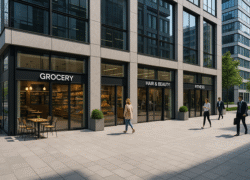
Ground-floor units dominate, with 87% of premises located at street level and 73% offering direct street access. Grocery stores continue to represent the largest retail segment (21%), followed by specialty food outlets (16%), where bakeries account for more than half of the category. Q-commerce services have also begun to appear in selected office locations.

Service premises are led by the health and beauty sector, which accounts for 168 outlets, or 43.3% of all service units. Educational tenants also remain present, with nurseries and kindergartens the most common, alongside a growing number of language schools.

Catering and Entertainment

Catering has expanded to 289 establishments in 2025, with cafés, restaurants, and bistros increasing their share, while traditional canteens declined. Colliers highlights that employees increasingly use these venues not only for meals but also for social and professional meetings.

Entertainment and leisure premises rose by 25% over the past two years. Fitness clubs dominate this category, accounting for nearly 70% of such spaces. Other uses include game rooms, museums, and nightclubs. Rooftop venues are also emerging as a distinctive trend, offering dining and entertainment with city views.

Vacancy Patterns

The highest number of vacant premises was recorded in Mokotów-Służewiec and the Central Business District. In contrast, vacancy levels were lowest in Ursynów, Wilanów, Jerozolimskie Dolne, and Centrum Wschodnie, where less than 5% of stock was available. Empty premises were found both in older properties over 20 years old (31%) and in newly completed projects still in the leasing phase (19%).

Broader Role of Office Buildings

Colliers concludes that Warsaw’s office buildings are evolving beyond their primary role as workplaces. By incorporating retail, services, catering, and leisure, they increasingly function as urban hubs that meet employees’ daily needs while also attracting customers from outside the workplace.

Kuehne+Nagel to Lease New Hall at Panattoni Park Prague Airport II

Logistics company Kuehne+Nagel has signed a lease for a new hall at Panattoni Park Prague Airport II, a modern industrial zone located near Pavlov in Central Bohemia. The project is being developed by Panattoni, with Accolade Group as investor.

The new facility will provide 10,600 sq m of space, of which 9,000 sq m will be dedicated to storage, with the remainder for offices and mezzanine areas. The building is being constructed to the tenant’s specifications and is targeting a BREEAM New Construction Excellent certification. It will be equipped with heat pumps for both office and warehouse operations, along with other environmental features such as rainwater retention, photovoltaics, EV charging points and biodiversity measures.

Construction began in August 2025, with completion and handover scheduled for April 2026. Full operations are planned to start in June following installation of technical systems.

Kuehne+Nagel has been active in the Czech Republic since the early 1990s and currently employs around 400 people in the country. The new facility will support the company’s logistics operations in line with its Roadmap 2026 strategy.

With the addition of this seventh building, Panattoni Park Prague Airport II will offer nearly 140,000 sq m of leasable space. The project is the second developed in cooperation with Accolade at the site; the first, an 11,150 sq m hall, is part of the Accolade Industrial Fund portfolio.

Panattoni Park Prague Airport II is located directly on the D6 motorway, within ten minutes of Prague’s city limits and less than 15 minutes from the international airport. It also benefits from nearby rail and bus connections, improving accessibility for employees from the wider region.

Catella APAM Secures Four New Lettings at Chantry Place, Norwich

APAM has announced four new store openings at Chantry Place, Norwich, completed within a four-week period. The new tenants include Wingstop, Accessorize, Mowgli and Holland & Barrett, adding a mix of dining, fashion, and health & wellness to the shopping centre.

The lettings began on 21 July with Wingstop, which opened a 4,400 sq ft restaurant fronting Chantry Plain. Accessorize followed a week later with a 1,800 sq ft store offering fashion accessories. On 8 August, Mowgli launched a 4,100 sq ft restaurant serving Indian street food. The series concluded on 15 August with Holland & Barrett, which relocated from the upper ground floor to a larger 1,900 sq ft unit on the lower ground floor, enabling the retailer to expand its range. The relocation also freed up a prominent unit at a main entrance of the centre.

“The four lettings within a short period highlight ongoing tenant demand for space at Chantry Place,” said Nathan Reidy, Associate Director at Catella APAM. “The new arrivals broaden the centre’s offer and support its long-term performance.”

Chantry Place, located in Norwich city centre, continues to be managed by Catella APAM as part of a wider asset management strategy focused on leasing and tenant mix.

HIH Invest Acquires TONIQ1 Office Building in Düsseldorf

HIH Invest Real Estate has acquired the newly built office property TONIQ1 in Düsseldorf from LANGEN Immobiliengruppe. The transaction was completed off-market for a special real estate fund managed on behalf of an institutional investor.

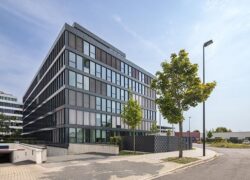
Completed at the end of 2023, TONIQ1 provides 13,344 sq m of lettable space along with a multi-storey car park offering 305 parking spaces. The Federal Agency for Real Estate (BImA) has leased the building on behalf of the Düsseldorf Main Customs Office, which is consolidating three previous locations into the new property. The lease runs for 8.5 years and includes two extension options.

“TONIQ1 represents a modern office building that meets high standards of functionality, flexibility, and sustainability. It is tailored to the needs of a public tenant while providing a long-term, high-quality workplace,” said Alexander Kotowski, Managing Director at LANGEN Projektentwicklung GmbH & Co. KG.

According to Daniel Asmus, Head of Transaction Management Office Germany at HIH Invest, the acquisition secures “stable long-term income and a high degree of planning security for our institutional investor,” noting that the building’s design also allows for future conversion into a multi-tenant property if required.

The property is located in the established office and service district “Quartier(n)” at Düsseldorf Airport, offering proximity to the airport, direct access to the A44 and A52 motorways, and good public transport connections. The building features a three-metre clear room height, cavity floors, sun protection systems, thermal insulation glazing, and energy-efficient air conditioning. It has been certified to the DGNB Gold sustainability standard.

Financing was arranged with Stadtsparkasse Düsseldorf. Legal and tax due diligence was handled by Ashurst LLP in Frankfurt am Main, with technical and ESG due diligence provided by ES EnviroSustain GmbH in Berlin. Anteon Immobilien brokered the transaction, while Kapellmann Rechtsanwälte advised LANGEN Immobiliengruppe.

Exact Sciences Leases Office Space at LIXA D in Warsaw

Exact Sciences, a U.S.-founded molecular diagnostics company focused on cancer screening and early detection, has leased space at the LIXA D office building in Warsaw.

The company opened its Polish international hub in July this year, occupying 1,273 m² on the first floor of LIXA D at ul. Giełdowa 5. It has since decided to expand within the building, adding 566 m² of space currently under fit-out and scheduled for delivery in November. In total, Exact Sciences’ office at LIXA D will cover more than 1,800 m².

Founded in 1995, Exact Sciences operates laboratories and offices worldwide, including in Zug, London, Milan, Munich, Paris, Tokyo, and Warsaw. Poland is part of the company’s network serving EMEA, LATAM, APAC and Canada.

“Poland plays an important role in our international operations, and Warsaw provides a strong base for our regional hub,” said Paweł Krogulec, Country Manager Poland & CEE at Exact Sciences.

The lease was concluded with Yareal Polska, developer of the LIXA campus near Rondo Daszyńskiego. “We are pleased to welcome Exact Sciences as a tenant,” said Paulina Petynka, Leasing Director at Yareal Polska.

LIXA D, completed in March 2024, offers around 10,000 m² of office space and forms part of the 77,000 m² LIXA campus designed by HRA Architekci. The development incorporates more than 5,500 m² of green areas and holds certifications including BREEAM Excellent, WELL Health-Safety, WiredScore Platinum, ActiveScore, and AirRated.

LATEST NEWS