ANCPI issues over 2.2 million documents online in 2025

The National Agency for Cadastre and Real Estate Advertising (ANCPI) released more than 2.2 million documents online between January and October 2025 through its Myeterra.ancpi.ro and epay.ancpi.ro platforms.

Between June and October, owners downloaded 390,766 free land book extracts and cadastral plan extracts via Myeterra.ancpi.ro. During the first ten months of the year, 1,883,561 documents were issued online through epay.ancpi.ro. By comparison, in the same period of 2024, ANCPI issued 1,938,029 online documents of this type.

In October 2025 alone, ANCPI—an institution under the Ministry of Development, Public Works and Administration—provided 119,463 free land book extracts and 18,932 cadastral plan extracts to owners via Myeterra.ancpi.ro. During the same month, the epay platform delivered 154,060 land book extracts and 22,927 cadastral plan extracts to paying users.

Land book and cadastral plan extracts are available free of charge to property owners both online and at ANCPI counters. Other users can obtain the documents online at a cost of 20 lei for a land book extract and 15 lei for a cadastral plan extract.

Usage of the epay platform continued to grow, with 8,323 new users in October generating 133,928 online orders. Documents already available in electronic format are delivered within minutes, while records not yet digitised are issued within two working days.

More than 27.1 million properties are currently registered in ANCPI’s integrated cadastre and land register system, making extracts for these properties accessible for quick online download. Digital documents issued by ANCPI, even without handwritten signatures, are accepted by public authorities, banks, lawyers, and notaries.

Crestpoint Project Partners Enters the Market with a New Integrated Project Management and Advisory Platform

Crestpoint Project Partners announces the launch of a new project management and advisory company founded to deliver high-quality, technically strong and transparent support across the entire real estate and construction lifecycle.

The launch of Crestpoint Project Partners follows the strategic partnership formed earlier this year between Petr Houska, MRICS, and Tomáš Jandík, CFA, MRICS under Crestpoint Capital Partners. Building on their combined decades of experience in development, project management, investment oversight and construction consultancy, the new platform expands the group’s service capabilities for clients throughout the real estate sector.

“Our mission is simple: to provide all-round, trustworthy and technically sound support to developers, investors and organisations working with real estate assets,” says Petr Houska, Founding Partner. “We understand the need for hands-on leadership, transparent processes and full accountability in today’s construction and investment environment.”

Crestpoint Project Partners will offer an integrated range of services including:

  • Project Management
  • Fit-out Management and Tenant Coordination
  • Cost Management and Procurement Advisory
  • Construction and Development advisory
  • Technical and Quality supervision
  • Technical Due Diligence and Development monitoring
  • Sustainability & ESG Advisory

The platform will serve all major property sectors — including office, retail, industrial/logistics, residential, hospitality and mixed-use schemes. From new developments to refurbishments, fit-outs and investment-driven technical audits, the company aims to bring transparency, confidence and consistency to every project entrusted to its team.

“We are combining deep real estate expertise with robust technical capabilities,” adds Tomáš Jandík, Co-Founder. “Our goal is to deliver services that genuinely protect investor interests and support the successful delivery of high-quality, sustainable assets.”

Crestpoint Project Partners is now fully operational and ready to engage with clients across the Czech Republic and the wider CEE region.

HIH Invest leases 3,600 sqm to EDEKA for new supermarket in Goslar

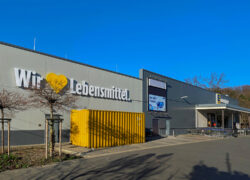
HIH Invest Real Estate has signed a long-term lease with EDEKA Minden-Hannover for a retail property on Hildesheimer Straße in Goslar. The food retailer plans to open a new EDEKA Centre on 27 November 2025, occupying around 3,600 sqm in the former Kaufland premises.

The new supermarket will replace the existing 1,500 sqm EDEKA store located across the street, which will close when the new unit begins operations. All employees from the current store have been offered positions at the new centre, and additional jobs have been created.

The property was built in 2016 and has stood vacant since Kaufland left the site last year. EDEKA Minden-Hannover will operate the new store independently, introducing a modern layout that includes service counters, self-service checkouts, scan-and-go technology, and a refurbished checkout zone with a café and supplementary retail space.

“After the previous tenant withdrew, our goal was to maintain the attractiveness of the location and secure the local supply in this part of Goslar. With EDEKA Minden-Hannover, we have found a reliable partner who is revitalising the property with a modern concept and reaffirming its commitment to the region,” said Milan-Kristoffer Otte, Head of Asset Management Retail & Logistics at HIH Invest Real Estate.

The EDEKA store across the street, operated by retailer Tim Plöger, will close as part of the relocation. “Our customers will see many familiar faces in the new supermarket. We have also expanded the team and created additional jobs,” added Dominik Lampe, Sales Manager at EDEKA Minden-Hannover.

The building forms part of the open-ended special AIF HIH Perspektive Einzelhandel: Fokus Nahversorgung, which holds 26 assets with a total value of around €520 million. The fund focuses on retail parks and local shopping centres, with more than 80% of its rental space dedicated to retail in established suburban or district locations. Current occupancy for retail use across the portfolio exceeds 90%.

CPI Europe acquires Czech residential portfolio of around 12,000 units

CPI Europe AG has completed the purchase of a Czech residential property portfolio known as “CPI BYTY”, comprising nearly 12,000 apartments located primarily in the regions of Ústí nad Labem and Liberec, as well as in Třinec and Prague. 

The transaction, announced in August 2025 and now finalised, includes the operational and management platform associated with the portfolio. In 2024, the portfolio generated gross rental income equivalent to approximately €38 million. 

Independent valuers placed the portfolio’s value at around €892 million as of 30 June 2025. After accounting for liabilities, capital-gains tax adjustments and other factors, the total consideration paid by CPI Europe is approximately €605 million. Half of this sum will be paid in cash immediately, with the remainder financed via a multi-year vendor loan from the seller, a subsidiary of the parent group. 

The company said the acquisition supports its strategic priorities of long-term growth, diversification and exposure across asset classes and geographies within the affiliated CPI Property Group. 

CPI Europe emphasised that the portfolio offers “positive rent-reversion opportunities”, with like-for-like rental growth estimated at about 9 % in the first half of 2025. 

Boutique training centre to open in SOHO by Yareal in 2026

BABA Body & Social Club will open a new studio in SOHO by Yareal, the mixed-use development in Warsaw’s Kamionek district. The concept will occupy a ground-floor unit in the KARDAN building, opposite the Warszawa Wschodnia by Mateusz Gessler restaurant. The opening is planned for spring 2026.

The studio will provide Pilates (reformer and mat), personal training and massage services, and the space will also include a café and lounge area. The unit covers nearly 230 m² and has been leased on a long-term basis.

According to the operator, the venue is intended to combine exercise and recovery with social functions, offering areas for meetings and relaxation. Yareal states that the addition of BABA Body & Social Club aligns with its broader approach to mixing retail, services and leisure functions within the SOHO complex.

SOHO by Yareal is designed as a local urban hub with residential, retail, office and leisure uses, incorporating both new buildings and refurbished post-industrial structures. The complex includes more than 11,300 m² of retail and service space distributed across several dozen units.

Recent additions to the retail component include Waszyngton x Soho café, beauty services, a Carrefour “300” grocery store and a therapeutic clinic. Further openings planned for 2026 include a Green Caffè Nero outlet, a bakery, Ramenownia and a food hub in a renovated historic building featuring concepts such as Bułkę przez Bibułkę, Pollypizza Neapolitan and Baken.

The final residential buildings in the project—SOHO 10, SOHO 12 and NEFRYT—have recently been completed. The next phase of the development will focus on completing the commercial section, including new buildings, the renovation of historic structures and delivery of Class A office space and a PRS component.

M1 Radom adds new tenants as HalfPrice opens and CCC extends lease

M1 Radom has expanded its tenant mix with the addition of HalfPrice, while CCC has renewed its lease for several more years. According to EPP, which manages the centre, recently signed new and extended agreements cover more than 2,100 sq m.

HalfPrice is the largest of the new tenants, taking nearly 1,600 sq m. The retailer offers a mix of clothing, homeware, sports accessories and pet products from various brands. Other additions include SpecLed, a lighting specialist, and Poczta Polska, which increases the centre’s service offering.

CCC has extended its lease for a unit of over 500 sq m, continuing its long-standing presence at the centre. The retailer offers a broad footwear range for different customer groups.

EPP says the leasing decisions reflect ongoing adjustments to the centre’s offer in response to consumer demand in the region.

CBRE: Black Week launches peak retail trading period as Czech market enters pre-Christmas surge

Czech retail has entered its strongest trading period of the year with the start of Black Week, culminating in Black Friday on 28 November. According to CBRE, which manages a large portfolio of shopping and retail centres across the Czech Republic and tracks performance through its Shopping Centre Index, November promotions together with the Advent period form a critical phase for both offline and online retail.

CBRE notes that Singles’ Day, a fast-growing event in the Czech market, is increasingly extending the pre-Christmas demand cycle. The combination of earlier discounting, longer promotional campaigns and strengthening omnichannel behaviour is contributing to higher overall market activity. Retailers expect stronger turnover year-on-year, supported by wider product ranges and more coordinated campaigns.

The autumn trading calendar has now evolved into a clear sequence. Singles’ Day serves as the first demand trigger, affecting mainly fashion, beauty and small electronics, and is still driven primarily by online channels. This is followed by Black Week and Black Friday, which deliver the broadest discounts and the highest weekly traffic across both online and brick-and-mortar retail. The subsequent Advent weekends shift consumer attention from heavy discounting to gift shopping, winter assortments and experiential offerings in shopping centres.

Performance expectations vary by segment. Fashion retailers continue to see Black Friday gaining influence, while Advent remains stronger for Christmas and party collections. Footwear sales typically peak during Black Friday rather than Advent. Electronics retailers rely heavily on Black Friday to drive sales, but December often delivers greater turnover due to a shift in product mix. Beauty retailers report their strongest sales in December, with volumes significantly above standard months. Nutrition and supplements benefit from extended Black Friday and Advent campaigns, while the online share of Black Friday continues to expand across most categories.

Shopping centre footfall reflects this phased dynamic. Singles’ Day acts as the first signal of increased activity, though still more visible online. Visitor numbers rise markedly from the start of Black Week, peaking on Black Friday when major centres typically record double-digit increases compared with average Fridays. Footfall growth then continues into December, with the last Advent week remaining the high point of the season.

CBRE expects this year’s Christmas traffic to be broadly in line with 2024. The company notes a slight improvement in customer sentiment in the second half of the year, supported by rising real household incomes. December traditionally accounts for around 9–11% of total annual shopping centre traffic, with the final days before Christmas now representing the most intense period—a shift from pre-pandemic patterns, when the third Advent week usually dominated.

European retail real estate maintains steady momentum in Q3 2025 as investor confidence improves

The European retail real estate sector continued to show steady improvement in Q3 2025, supported by stronger consumer fundamentals, easing inflation and increased market stability, according to the Focus Estate Fund Quarterly Litmus Paper, Q3 2025  .

Leasing activity remained strong across most EU markets, with demand led by occupiers in sporting goods, athleisure, DIY, home-related categories and fashion. Retail parks again outperformed other formats, maintaining very low vacancy rates due to persistent occupier demand and limited availability. Both high street and retail park rents continued to edge upward as expansion plans accelerated.

On the investment side, overall Q3 transaction volumes were moderate, but market sentiment improved as stabilised ECB rates helped restore liquidity. Several countries recorded a continued alignment of prime yields for retail parks and shopping centres, signalling a narrowing gap in pricing expectations. Convenience-driven assets remained particularly attractive to investors in Spain, Germany and the UK, where yields for these formats continued to outperform traditional gallery-style retail.

Charts included in the report show varied performance across Europe. Poland, Italy, Portugal and the Czech Republic experienced noticeable swings in retail investment volumes over recent quarters, while Spain, France, Germany and the UK showed more mixed patterns, including several sharp movements in both directions. Yield levels across markets mostly remained within the 5–7 percent range, depending on asset type and location.

Macroeconomic data in the report indicates that the broader environment remained supportive in Q3. Spain, Poland and the Czech Republic recorded the strongest GDP growth, while inflation continued to ease across most markets. Unemployment rates differed significantly—ranging from 2.8 percent in Poland to 10.5 percent in Spain—but labour market conditions overall continued to support retail spending and occupier demand.

The outlook in the report suggests that stable interest rates, improving sentiment and a gradual return of liquidity are likely to contribute to further yield compression and increased investment activity going into 2026. Retail parks are expected to remain one of the most competitive segments due to their resilience, cost efficiency and consistently high tenant demand.

Source: Focus Estate Fund

Palác Dunaj on Národní street awarded prestigious well gold certificate and welcomes new tenants

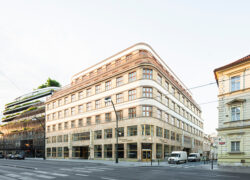
The iconic Dunaj Palace building in the historic center of Prague, sensitively renovated by Zeitgeist Asset Management, has achieved another success: it has received the prestigious international WELL Core & Shell Gold certification, which confirms the highest standards of indoor environment quality and care for the health and well-being of tenants and visitors. At the same time, it has achieved full occupancy of its office space thanks to the arrival of the technology company Usercentrics and has welcomed a new Asian bakery, Patê, on the ground floor. Currently, the last vacant commercial space in the building is available for rent.

“Obtaining WELL Gold certification is a huge success for us and confirms our long-term commitment to creating spaces that not only respect historical heritage but also offer the best of modern standards for a healthy working environment,” says Peter Noack, CEO of Zeitgeist Asset Management, adding: “Following the LEED Gold certification in April this year, this is further proof that Palác Dunaj is at the forefront of office buildings in Prague.”

WELL is an internationally recognized certification system that focuses on the health and well-being of people in buildings. Unlike environmental certifications such as LEED or BREEAM, which assess the sustainability of buildings, WELL focuses primarily on how a building affects the physical and mental health of its users. The certification evaluates factors such as indoor air quality, access to daylight, acoustic comfort, water quality, support for exercise and healthy eating, and design that contributes to mental well-being. A WELL-certified building brings specific benefits to tenants, including higher employee productivity, lower sick leave, better recruitment and retention of talent, and overall higher satisfaction with the working environment.

These advantages were also appreciated by the new tenant, European technology company Usercentrics, which occupied the last vacant office floor in the building. This global leader in personal data protection solutions helps companies comply with data protection regulations. The company’s software automatically manages user privacy preferences and ensures that user consent is obtained legally in accordance with GDPR and other regulations. Usercentrics operates in 195 countries on more than 2.3 million websites and applications, processes over 7 billion consents per month, and counts Daimler, ING, and Konica Minolta among its clients.

A new Asian bakery, Patê, has also opened on the ground floor of the building. It is run by brothers Giang and Khanh Ta, who already successfully operate the popular restaurants Taro (also in the Dunaj Palace), Dian Gao Den, and the soup restaurant Pho100 in Prague. Patê offers a unique combination of European and Asian baking styles: from danishes with mango or yuzu fillings to fluffy Japanese shokupan milk breads and traditional Vietnamese specialties such as savory rice porridge or Banh mi baguettes. The bakery will significantly enrich the local gastronomic scene and contribute to the revitalization of Národní třída.

“Usercentrics and Patê Bakery are exactly the type of tenants that belong in Palác Dunaj – they combine innovation with quality and respect for tradition with a modern approach,” says Michal Nečas, CEO of Zeitgeist Asset Management, adding: “The full occupancy of the office space proves that our vision is working: we offer a unique combination of historic architecture, cutting-edge technology, and now a certified healthy working environment.”


Global fund industry on track to surpass $200tn by 2030 as private markets reshape revenues

Global fund managers could oversee close to $200tn in assets by the end of the decade, according to new industry forecasts, pointing to a period of steady expansion driven by rising household wealth, pension inflows and renewed interest in long-term investment strategies.

The outlook, based on a large international survey of asset managers and institutional investors, suggests that private market strategies — including private equity, private credit, infrastructure and real assets — are set to play a more influential role in shaping how firms earn their income. Although these strategies represent a smaller share of overall assets, their fee structures mean they already deliver a significant portion of managers’ revenue. Respondents expect this contribution to continue increasing over the next five years, potentially overtaking revenues from traditional public-market products.

The predicted rise in global assets reflects both expected market growth and continued expansion in retirement savings across North America, Europe and Asia. Fast-growing economies in the Asia-Pacific region are seen as particularly important, with local reforms and a growing middle class driving demand for professionally managed investment products.

The revenue picture is more complex. While overall assets are projected to rise, margins have been under pressure for several years due to competition, higher operating costs and the need for substantial investment in technology. Many executives surveyed expect profitability per unit of assets to continue declining, even as top-line assets grow. This is pushing managers to look for ways to streamline operations, adopt new digital tools and pursue partnerships with fintech firms.

Private markets remain a central focus. Investors in the survey indicated plans to increase allocations to non-listed assets, attracted by the potential for diversification and inflation protection. Regulatory changes in several regions are also widening access to these strategies for wealth clients, creating new distribution channels for alternative investment products.

The rapid rise of data-driven tools — from AI-enhanced research to tokenised fund structures — is expected to reshape how managers operate and how investors access private assets. Survey participants noted that firms that fail to build strong technological capabilities risk losing relevance, regardless of size.

Despite the positive long-term outlook, industry consolidation is expected to continue. A growing number of smaller or specialised firms may struggle to keep up with the investment needed for regulatory compliance, technology and product development, leading to further mergers, acquisitions or exits.

If the projections hold, the global fund industry will enter the 2030s considerably larger and more diverse than it is today, but also more competitive. The firms that benefit most are likely to be those that combine scale with technological sophistication and a strong position in private markets — a combination increasingly seen as essential for growth in the next decade.

Source: PWC

LATEST NEWS