Duos Technologies Adds Doug Recker to Lead Expansion

Duos Technologies Group, Inc. (Nasdaq: DUOT) has appointed telecommunications and data center executive Doug Recker as President, reporting to Chief Executive Officer Chuck Ferry. Recker, who has over three decades of industry experience, has been involved in the company’s expansion into Edge Data Centers and colocation markets through its Duos Edge AI subsidiary.

In his new role, Recker will assume broader responsibilities across the company, including oversight of Edge Data Center design and deployment. Duos states that its strategy focuses on delivering modular, localized computing capacity to underserved communities and mission-critical sectors such as schools, hospitals, local governments, and first responder networks.

Recker previously founded EdgePresence in 2017, acquired by Ubiquity in 2023, and Colo5 Data Centers LLC, acquired by Cologix in 2014. He is regarded as an early entrant in the edge data center market and has received several regional business awards.

Duos’ appointment comes as the company pursues an ambitious plan to roll out up to 15 Edge Data Centers under contract by the end of 2025. Projects already in progress include a facility in Victoria, Texas, designed to serve 37 school districts with compliance-oriented infrastructure for education and telemedicine. The company has also partnered with Accu-Tech to support supply chain reliability for its deployments.

Financial results show the company has recorded strong revenue growth, with a 280 percent year-over-year increase in GAAP revenue in Q2 2025. However, Duos remains unprofitable, with losses tied to higher operating expenses. Market analysts highlight the growth potential of its Edge AI subsidiary but also note execution risks related to deployment scale, cost management, and reliance on external partners.

Recker’s appointment adds leadership capacity at a time when Duos is expanding its pipeline and strengthening its management team following a recent capital raise. Whether the strategy can translate into sustained profitability will depend on the company’s ability to deliver on its deployment goals and control costs in the competitive digital infrastructure sector.


Katarzyna Sielewicz Joins Avison Young Poland as Senior Consultant

Avison Young has appointed Katarzyna Sielewicz as Senior Consultant within its Investment Advisory team in Poland.

Sielewicz holds a master’s degree in finance from the Stockholm University School of Business and studied at Cass Business School in London during an exchange semester. She began her career in London with Cushman & Wakefield’s global Research and Strategic Advisory team (formerly DTZ), where she worked on international real estate projects.

In Warsaw, she continued to build her expertise in investment and asset management at a boutique advisory firm, providing support to domestic and international clients active in the Polish market.

At Avison Young, Sielewicz will focus on advising clients on asset acquisitions and disposals, and will take part in due diligence processes across multiple property sectors.

IWG Reports Record H1 2025 Revenue and EBITDA; Expands Buybacks, Keeps Guidance at Lower End

International Workplace Group (IWG), operator of Regus, Spaces and other flexible workspace brands, reported record system-wide revenue of $2.16 billion for the first half of 2025, a 2 percent increase compared with $2.12 billion a year earlier. Adjusted EBITDA rose 6 percent to $262 million, while underlying operating profit remained at $68 million, according to the group’s half-year announcement.

The company’s Managed & Franchised division was the main driver of growth, with system-wide revenue up 26 percent year-on-year to $361 million and fee income rising 43 percent to $50 million. Recurring management fees more than doubled to $19 million. IWG reported 220,000 rooms open across its network at the end of June, an increase of 43 percent on the previous year, with a further 186,000 rooms signed but not yet operational.

Company-owned revenue reached $1.59 billion, slightly below the $1.61 billion recorded in the first half of 2024, though adjusted gross margins expanded to 24 percent from 21 percent as a result of higher occupancy and reduced centre costs. Digital and Professional Services generated $207 million, a 7 percent decline compared with last year, but the company noted that underlying growth excluding legacy contracts was around 6 percent.

During the half year, IWG returned $59 million to shareholders in the form of dividends and buybacks, an amount more than three times the total distributed over the previous five years combined. The company has also expanded its 2025 share buyback programme to at least $130 million and declared an interim dividend of 0.45¢ per share. Net debt stood at $754 million, broadly unchanged from year-end 2024, supported by a €300 million bond issue in May. Management noted that no refinancing is required before 2029.

The global network expanded with 338 new centres added during the half year, taking the total footprint to 4,260 locations. IWG also signed 496 new partnership deals, all under its capital-light model. Revenue per available room for company-owned operations fell 3 percent year-on-year to $346, a decline the company attributed to pricing adjustments designed to support long-term occupancy. Occupancy itself rose by 240 basis points over the past 12 months.

Mark Dixon, Chief Executive of IWG plc, said, “We set out a clear strategy at our Investor Day in December 2023 for capital-light growth to deliver cashflow, and business simplification. We have been delivering against this strategy and will continue to do so.… In the last six months, more locations were opened than in the entire first decade of our existence. We now have around 1 million rooms in 121 countries with a significant pipeline. This is expected to drive our future growth.”

Looking ahead, IWG reaffirmed its full-year adjusted EBITDA guidance of between $525 million and $565 million, though it now expects results to come in toward the lower end of the range due to continued investment in expanding the Managed & Franchised business. The group anticipates full-year cashflow to rise by around 40 percent to at least $140 million.

Modern Offices with Amenities and Metro Access Outperform Older Buildings in Bucharest Market

The Bucharest office market continues to show a strong divide between modern, well-located properties and older, traditional schemes, according to recent analyses by Colliers, CBRE, and Cushman & Wakefield Echinox. Vacancy rates across the capital are averaging between 12 and 13 percent in mid-2025, the lowest level since 2021, but the performance varies widely depending on the quality, amenities, and location of the buildings.

Colliers notes that companies now view office space as more than a cost item, with amenities such as cafés, relaxation areas, green zones, and informal collaboration spaces increasingly influencing leasing decisions. The presence of direct metro access has also become a decisive factor for tenants. While the consultancy has suggested that properties combining these features lease up more quickly and retain tenants more effectively, the exact vacancy figures by building type are not publicly disclosed.

CBRE reports that vacancy rates in Bucharest submarkets range from as low as about 4 percent in prime areas to over 26 percent in less connected zones. Class A buildings, particularly those delivered recently and offering modern technical specifications alongside sustainability certifications, continue to attract tenants at a faster pace than older Class B stock. Cushman & Wakefield Echinox confirms this trend, highlighting that Bucharest’s vacancy rate fell to 13.6 percent at the start of 2025, the lowest in nearly four years, with demand concentrated in better-located and higher-quality projects.

Colliers consultants emphasize that offices are increasingly viewed as environments supporting organisational culture, employee well-being, and collaboration. This shift is particularly evident among international service centres opening in Bucharest, which often prioritize metro accessibility and community-oriented design. Projects that integrate such features have been more successful in attracting and retaining tenants, underlining their long-term value for investors.

“For companies competing in an increasingly tight labour market, the office has become a strategic tool. Employees are looking for spaces that provide comfort, energy and opportunities for social interaction, not just places to work. Cafés, green areas and informal working zones help them feel part of a community, and buildings that offer such experiences are no longer simple addresses, but environments that foster collaboration and a sense of belonging. Investing in modern office buildings brings visible long-term benefits, from reduced vacancy to increased asset value”, explains Daniela Popescu, Director – Tenant Services & Workplace Advisory at Colliers.

The broader market data shows that while Bucharest maintains an overall vacancy rate in the low-teens, the gap between modern, amenity-rich, well-connected buildings and older, less accessible properties remains significant. Analysts suggest this divergence will persist as occupiers continue to prioritise workplace quality and connectivity in a competitive labour market.

Immocap Issues €25 Million Public Bonds for Istropolis Redevelopment in Bratislava

Slovak developer Immocap has opened subscriptions for a public bond issue designed to raise €25 million for its large-scale Istropolis redevelopment project in Bratislava. The issue, marketed under the name Istropolis Dlhopisy, has been approved by the National Bank of Slovakia (NBS), which confirmed the completeness and consistency of the prospectus earlier this month.

The bonds will be issued on October 2, 2025, and mature on April 2, 2029. They carry a fixed annual coupon of 5.25%. Each bond has a nominal value of €1,000, and subscriptions are available through Slovenská sporiteľňa between September 16 and October 1.

The Istropolis redevelopment is among the largest urban regeneration schemes in Bratislava, combining residential, office, retail, and cultural functions alongside new public spaces. Immocap positions the project within ESG standards, reflecting growing investor and regulatory focus on sustainability in real estate.

In terms of pricing, the 5.25% yield represents a premium over sovereign benchmarks. Slovakia’s 10-year government bond yield stood at roughly 3.5% in mid-September 2025, while prime office investment yields in Bratislava are estimated at around 6.0%, according to Cushman & Wakefield and Colliers. This places the bonds’ return between lower-risk government debt and higher-risk direct real estate investment yields, reflecting both the project exposure and the developer’s corporate profile.

Comparable yields in Bratislava also vary by asset type: prime offices typically trade at 6.0%, logistics around 6.25%, and peripheral offices at up to 7.5%. Against this backdrop, Immocap’s offering sits in line with Central European developer financing levels, providing investors with a mid-range risk-return profile.

The prospectus highlights standard bond investment risks, including issuer creditworthiness and project delivery timelines. Immocap has published audited financials for 2024 to support investor due diligence.

Atrikom Fulfillment Expands to Mettmann with Lease in Garbe Industrial Logistics Centre

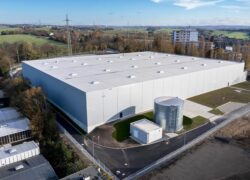
Atrikom Fulfillment has leased approximately 5,500 square metres in Garbe Industrial’s multi-user logistics centre in Mettmann, North Rhine-Westphalia. The company, which provides logistics services for goods, promotional materials, and dialogue marketing, will use the facility to support its customer operations.

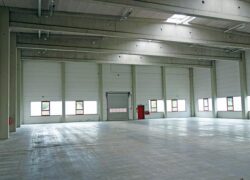
The long-term lease covers around 4,600 square metres of hall space, 650 square metres of warehouse space, and 200 square metres of office and social areas. The transaction was brokered by Realogis Immobilien Düsseldorf, with legal support provided by Taylor Wessing.

Atrikom Fulfillment, together with its subsidiary “Wir packen’s,” is extending its logistics network with the Mettmann site, its first branch outside the Rhine-Main region. Headquartered in Ginsheim-Gustavsburg in Hesse, the company already operates facilities in Hesse and Rhineland-Palatinate. Its client base spans sectors including automotive, retail, pharmaceuticals, consumer goods, and start-ups. Atrikom is also a Garbe tenant in Bodenheim, where it runs a 14,500-square-metre e-commerce warehouse.

The logistics centre in Mettmann was developed by Garbe Industrial in cooperation with the E-Group and completed in late 2023. Located on a 26,000-square-metre site, the property offers a total of around 10,300 square metres of space. A food retailer already occupies 1,500 square metres, while about 3,000 square metres of hall space, 220 square metres of warehouse space, and 170 square metres of office and social space remain available.

The facility is situated in an industrial estate in the northeast of Mettmann, close to the A3 motorway, providing connections north toward Duisburg and the Dutch border at Emmerich and south toward Cologne, Frankfurt am Main, Würzburg, and Nuremberg. Düsseldorf city centre and Düsseldorf Airport are about 18 kilometres away.

The property includes three dock levellers, one ground-level sectional door, and was built to the EG55 efficiency house standard. It is certified Gold by the German Sustainable Building Council (DGNB).

Żabka Group Expands Froo Convenience Store Network with New Location in Bucharest’s America House

Froo Romania Retail, part of Poland’s Żabka Group, has opened a new convenience store in the America House office building in Bucharest’s central business district. The lease transaction was brokered by Cushman & Wakefield Echinox.

The Froo chain has been active in Romania for over a year and currently operates more than 120 outlets across three cities, mainly in Bucharest. The concept offers a mix of private-label items, ready-to-eat meals, hot food, and coffee through its Froo Bistro section.

“We are dynamically expanding our Froo chain of stores, with the goal of remaining close to our customers,” said Joanna Simonowicz, General Manager of Froo Romania Retail. “The new outlet in America House provides a strategic location to serve both office tenants and visitors.”

Dana Radoveneanu, Head of Retail Agency at Cushman & Wakefield Echinox, noted that America House’s location and retail offering made it an attractive option for Froo. Building owner ADD Value Management also highlighted the addition as a complement to the existing retail mix.

America House is a well-established office project with a gross leasable area of around 28,000 square meters. It accommodates multinational tenants such as Schlumberger, Mastercard, and Ţuca Zbârcea & Asociaţii. Its retail area, measuring nearly 4,000 square meters, includes food and beverage outlets such as Starbucks, McDonald’s, Velocita, Submarine Burger, and several others, alongside a gym, bookstore, bank, and pharmacy.

The building holds both BREEAM in-Use Outstanding certification and a Gold ActiveScore rating, underlining its sustainability and facilities for alternative transport users.

Żabka Group Expands Froo Convenience Store Network with New Location in Bucharest’s America House

Froo Romania Retail, part of Poland’s Żabka Group, has opened a new convenience store in the America House office building in Bucharest’s central business district. The lease transaction was brokered by Cushman & Wakefield Echinox.

The Froo chain has been active in Romania for over a year and currently operates more than 120 outlets across three cities, mainly in Bucharest. The concept offers a mix of private-label items, ready-to-eat meals, hot food, and coffee through its Froo Bistro section.

“We are dynamically expanding our Froo chain of stores, with the goal of remaining close to our customers,” said Joanna Simonowicz, General Manager of Froo Romania Retail. “The new outlet in America House provides a strategic location to serve both office tenants and visitors.”

Dana Radoveneanu, Head of Retail Agency at Cushman & Wakefield Echinox, noted that America House’s location and retail offering made it an attractive option for Froo. Building owner ADD Value Management also highlighted the addition as a complement to the existing retail mix.

America House is a well-established office project with a gross leasable area of around 28,000 square meters. It accommodates multinational tenants such as Schlumberger, Mastercard, and Ţuca Zbârcea & Asociaţii. Its retail area, measuring nearly 4,000 square meters, includes food and beverage outlets such as Starbucks, McDonald’s, Velocita, Submarine Burger, and several others, alongside a gym, bookstore, bank, and pharmacy.

The building holds both BREEAM in-Use Outstanding certification and a Gold ActiveScore rating, underlining its sustainability and facilities for alternative transport users.

Homebox Opens First Baden-Württemberg Location with 3,700 sqm Lease in Stuttgart Harbour

Self-storage provider Homebox has opened its first facility in Baden-Württemberg after securing a long-term lease for a logistics property in Stuttgart’s harbour district. The deal, covering approximately 3,700 square metres of warehouse and office space, was arranged by real estate consultancy Logivest. The property is owned by a private portfolio holder.

Homebox, a French-based company and market leader in the rental storage sector, is continuing its German expansion with a focus on accessible urban locations. The Stuttgart site on Hafenbahnstraße benefits from direct connections to the B14 federal highway and public transport links.

Before opening, the facility underwent extensive refurbishment. It now accommodates self-storage units ranging from one to 30 square metres, with access supported by a large courtyard and five ground-level delivery gates.

“We are pleased to have assisted Homebox in securing a prime location for its expansion in Stuttgart,” said Kathrin Ziegler, Consultant for Industrial and Logistics Letting at Logivest Stuttgart. “The harbour setting and strong transport links offer ideal conditions for customers.”

The Stuttgart branch is now operational and adds to Homebox’s growing network in Germany.

Skanska Focuses on ESG and Flexibility as Romanian Office Market Evolves

Romania’s office market has entered a phase of recalibration, with demand shifting toward quality, ESG-compliant spaces and tenant expectations shaped by hybrid work models. In a recent CIJ EUROPE Q&A with Aurelia Luca, Executive Vice President at Skanska Hungary & Romania, these changes have reinforced Skanska’s long-term development strategy of building resilient, sustainable workplaces that deliver value to tenants and communities.

“Interest rate increases and inflation initially created uncertainty, but the outcome has been a market that values genuine value creation,” Luca said. “We’ve seen increased demand for ESG-compliant buildings, which has validated our commitment to sustainability leadership in the region.”

Skanska’s recent projects, such as Equilibrium 2 in Bucharest, highlight this strategy. The building integrates Romania’s first WasteTracker digital system for comprehensive waste management and ESG reporting, and has achieved WiredScore Platinum and LEED Platinum certifications. In Budapest, the second phase of H2Offices is advancing with low-carbon materials, renewable energy integration, and planned WELL and LEED certifications.

Operational challenges over the past two years included rising construction costs, supply chain constraints, and regulatory changes, particularly around ESG. Skanska responded with adaptable design solutions, proactive sustainability measures, and a structured approach to tenant satisfaction. “Customer satisfaction is our compass and is built step by step,” Luca noted.

Tenant requirements have shifted significantly under hybrid work, with demand for flexible layouts, wellness services, and community-oriented spaces. Skanska has incorporated outdoor areas, collaborative hubs, and advanced digital infrastructure to support hybrid work models. “We reimagine the office not just as a workplace, but as a destination,” Luca said.

Reflecting on her first two years, Luca highlighted three lessons: the importance of adaptability while staying true to core values, the need for deep engagement with tenants and communities, and the alignment of ESG commitments with commercial success. Looking ahead, Skanska will prioritize sustainability leadership, innovation in building design, and strengthening partnerships across the region.

© 2025 www.cijeurope.com

LATEST NEWS