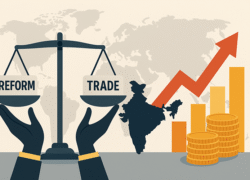
Structural Reform, Trade Risks and India’s Search for Resilient Growth

India enters FY 2025/26 with solid momentum but a more challenging backdrop. Official estimates put real GDP growth for FY 2024/25 at 6.5%, with the March quarter expanding 7.4% year-on-year. That sets a high base for the current year, but also highlights the difficulty of sustaining growth consistently above 7%.

Price pressures have largely eased. Headline consumer price inflation was reported at 2.07% year-on-year in August 2025, up slightly from July, driven by food and staple costs. This remains within the Reserve Bank of India’s target band, offering policymakers some breathing space.

The government has sought to strengthen domestic demand through structural reforms. A major Goods and Services Tax overhaul will reduce the number of slabs to two—5% and 18%—with a separate 40% rate for products such as tobacco and sugary drinks. The move, expected to be phased in this autumn, is aimed at simplifying compliance and stimulating consumption. At the same time, the Union Budget 2025 raised the effective zero-tax threshold in the new income tax regime to ₹12 lakh, boosting disposable incomes for salaried households.

External risks, however, have intensified. The United States raised tariffs on Indian goods to 50% in late August, casting uncertainty over export prospects and weakening the rupee. Analysts suggest this could trim GDP growth by up to 0.3 percentage points this fiscal year, even as domestic tax cuts provide some offset. Indian exporters are already pivoting toward markets in the European Union, the UK, and Africa to reduce reliance on the US, though trade diversification will take time.

Urban consumption, a key driver of recent growth, has slowed in recent months, while rural incomes have been hit by severe floods in states such as Punjab and Himachal Pradesh. A weaker rupee has provided some relief to exporters but also raised costs for industries dependent on imported inputs. Combined with geopolitical tensions and a volatile global economy, these factors could weigh on India’s near-term resilience.

The government’s reforms may cushion the blow, but they come with limitations. Reducing indirect taxes and raising disposable incomes can support spending in the short term, yet they also strain government finances, widening the revenue deficit. Sustained gains in consumption will depend on job creation, rural recovery, and broader credit access, not just tax relief.

For India to meet its ambition of becoming the world’s third-largest economy by 2029, reforms must be paired with greater export diversification, trade deals with Europe and South America, and continued investment in logistics and infrastructure. Domestic reforms are a welcome step, but on their own they cannot insulate the economy from global headwinds.

© 2025 www.cijeurope.com

India’s IPO Pipeline Swells as SEBI Smooths the Path for Listings

India’s primary market is heating up again, helped by a steady stream of regulator-led reforms and a queue of consumer and energy names preparing to list. Markets watchdog SEBI has recently cleared offerings from companies including services marketplace Urban Company, wearables brand boAt’s parent Imagine Marketing, and renewables developer Juniper Green Energy. These approvals arrive alongside broader changes meant to keep India among the world’s busiest IPO venues.

Urban Company is aiming to raise about ₹1,900 crore, combining a fresh issue with a large offer for sale by existing investors, according to its prospectus and subsequent approval updates. The home-services platform filed its draft red herring prospectus earlier this year before receiving the green light in September.

Imagine Marketing, which sells wearables and audio devices under the boAt brand, also secured regulatory clearance. While final sizing will depend on market conditions, reports suggest the company is seeking a valuation near $1.5 billion for its maiden float.

Juniper Green Energy is preparing a fully fresh issue of up to ₹3,000 crore to reduce debt and fund growth across its renewables portfolio, adding a large energy transition name to the IPO calendar.

The wave of approvals is broader than a handful of marquee names. In total, more than a dozen companies have received SEBI’s nod in recent weeks, with potential proceeds estimated at roughly ₹16,000 crore—an indication that issuers and bankers see sufficient depth in India’s equity market despite global volatility.

SEBI has also been working to reduce friction for issuers and investors. In September, the regulator lowered the minimum share-sale requirement for very large IPOs, extended the deadline for meeting the 25% public float, and unveiled a single-window entry for many foreign portfolio investors. These steps are designed to improve absorption and keep the pipeline moving even as global flows remain uneven.

The renewed listing activity, however, comes with familiar caveats. Over-ambitious pricing can hurt post-listing performance, as seen in 2021 with Paytm and other high-profile tech floats that struggled after debuting at lofty valuations. Bankers argue that current dealmaking is more disciplined, with greater attention to profitability and cash-flow visibility, though retail enthusiasm can still run ahead of fundamentals when consumer tech names go public.

Still, the direction is positive for India’s capital-formation story. If Urban Company and Juniper Green Energy deliver successful listings—and if boAt follows with a well-received float—the momentum could encourage a second wave of mid-market issuers later this year. Combined with SEBI’s recent reforms, such outcomes would highlight the growing maturity of India’s equity culture while widening access to domestic growth for public investors.

Editor’s note: Additional companies said to have received approvals in this window include consumer and healthcare names beyond the three profiled above; precise sizes and timelines may change with market conditions and updated red herring prospectuses.

© 2025 www.cijeurope.com

Uttar Pradesh Bets on Electronics Manufacturing to Broaden Its Industrial Base

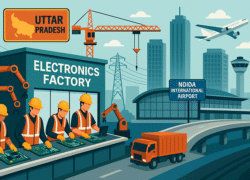
Uttar Pradesh is moving to anchor a bigger share of India’s electronics value chain, finalising a new policy to draw component makers, deepen supply links and cut import dependence. The Uttar Pradesh Electronics Component Manufacturing Policy-2025 (UP ECMP-2025), cleared by the state cabinet in early September, takes effect retrospectively from April 1, 2025, for six years and is aligned with the Union government’s Electronics Component Manufacturing Scheme. The policy targets ₹5,000 crore in fresh investment, envisages “lakhs” of direct and indirect jobs, and singles out 11 high-value components—such as displays, camera modules and multilayer PCBs—as priorities for local production.

Officials say the programme is meant to complement national incentives while streamlining state-level clearances. Under UP ECMP-2025, entrepreneurs receive state incentives on top of central benefits, with implementation routed through a nodal agency and an empowered committee to speed decisions. The design is meant to dovetail with India’s broader manufacturing push, including production-linked incentives for electronics and mobiles announced in the Union Budget 2025–26.

The policy arrives as the state seeks to scale beyond assembly into component ecosystems. Chief Minister Yogi Adityanath has directed officials to fast-track roll-out, framing the goals as US$50 billion in electronics output over five years and roughly one million jobs—targets repeatedly cited by senior state officials and reported in national media. Uttar Pradesh’s electronics hardware exports were about ₹37,000 crore in FY 2023–24, underlining a base that the government argues can expand with better logistics and supplier depth.

Infrastructure is a central plank. The upcoming Noida International Airport at Jewar—now slated for inauguration at the end of October with flight operations to follow—has become the logistics showpiece for investors weighing time-to-market. YEIDA is simultaneously planning cargo and logistics parks to plug factories directly into air freight and surface corridors around the Yamuna Expressway industrial belt.

Early moves suggest clustering is gathering pace. The Centre recently approved an electronics manufacturing cluster near Noida under the EMC 2.0 scheme, and YEIDA has green-lit a technology hub where anchor investments, including by Havells, are expected to generate thousands of jobs over the next two to three years. State investment promotion materials also flag multiple electronics hubs under development along the expressway.

The opportunity is sizable, but so are the execution risks. Environmental and land clearances can slow greenfield projects; investors frequently cite the need for predictable timelines and service-level accountability on approvals. Building reliable component ecosystems also requires sustained skilling and vendor development, not just headline subsidies. Industry groups say clarity on the fine print—such as the exact structure of state incentives and how they stack with central schemes—will be critical to tipping location decisions toward Uttar Pradesh rather than rival states with established electronics corridors.

Still, the timing aligns with national tailwinds. New Delhi’s budget lines and policy messaging continue to prioritise electronics as a growth driver, and Uttar Pradesh officials are positioning UP ECMP-2025 as a way to translate that momentum into on-ground manufacturing depth. If the state can pair incentives with credible last-mile execution—land, logistics, skilled labour and quick, transparent approvals—it stands to move from a fast-growing exporter to a genuine hub for core components within India’s electronics supply chain.

© 2025 www.cijeurope.com

India Bets on Semiconductors to Power Its Next Global Tech Leap

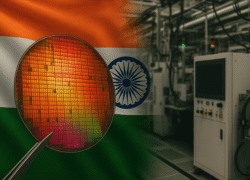
India is pushing to become a major force in global semiconductor design and manufacturing, leveraging its deep engineering talent and government incentives to fuel both domestic growth and global competitiveness. Recent reports show that around 20 percent of the world’s chip design engineers are based in India, a figure that has helped place the country as a crucial node in the semiconductor ecosystem. Simultaneously, India’s semiconductor market—valued at roughly US$38 billion in 2024—is projected to expand rapidly, reaching between US$100 and US$110 billion by 2030.

The government has backed this push through the India Semiconductor Mission (ISM), launched in 2021 with a budget of ₹76,000 crore (approximately US$10 billion). ISM is designed to attract fabrication plants, build design capacity, foster display and packaging facilities, and provide support for startups in chip design. Under ISM, ₹65,000 crore has been earmarked for chip production, ₹10,000 crore for modernizing the Semiconductor Laboratory in Mohali, and ₹1,000 crore for the design-linked incentive scheme. Nearly all of the ₹65,000 crore subsidy for chip production has already been allocated.

Global firms, including Qualcomm, MediaTek and others, have established large R&D and design centers in India’s technology hubs like Bengaluru, Hyderabad and Noida, tapping into the engineering base and contributing to India’s role in implementation, testing, and optimization phases of chip design. This strategic positioning is expected to strengthen India’s technological self-reliance, particularly as digitalization, AI, smart devices and electronics consumption surge domestically.

Still, challenges are real. India does not yet have widespread large-scale semiconductor fabrication (fabs) operational at leading node geometries; many of the advanced chip-making steps still rely on imported inputs and foreign partnerships. Dependence on global supply chains for specialized materials remains a risk, and attracting investment into capital-intensive fabs involves navigating regulatory, financial, and infrastructure hurdles. Talent retention is another concern: with global demand high, top engineers may be lured abroad unless Indian companies and institutions can offer competitive opportunities.

Despite those challenges, the momentum is clear. India is combining policy incentives, global industrial participation, and education capacity to build up its semiconductor ecosystem. If the projections hold true, by 2030 the country’s market size will have nearly tripled. More importantly, India could emerge not just as a design hub but as an integrated player in semiconductor manufacturing—less dependent on imports and more influential in setting trends in electronics and AI globally.

© 2025 www.cijeurope.com

India Seeks to Diversify Pharma Exports Beyond the US to Reduce Trade Risks

India’s pharmaceutical export sector has grown strongly, but its heavy reliance on one market leaves it exposed to geopolitical risk. In Fiscal Year 2025, India’s export of drugs and pharmaceutical products totalled about US$30.5 billion, up roughly 9.3 percent from the previous year. Industry analysts and government sources believe the sector can double to around US$65 billion by 2030, assuming continued momentum in regulated and semi-regulated markets.

The United States remains by far India’s largest destination for pharma exports, absorbing over one-third of the total. In FY 2025, exports to the U.S. were approximately US$10.5 billion, forming a dominant share of India’s pharma trade. Officials have made clear that their goal is not to reduce trade with the U.S., but to diversify in order to reduce vulnerability to shifts in U.S. trade policy, tariffs or regulatory changes.

To that end, India is actively pursuing growth in other destinations. Countries such as the United Kingdom, Brazil, the Netherlands and Russia are being promoted as potential avenues for export expansion. In FY 2025, exports to the UK stood around US$914 million; to Brazil, about US$778 million; to the Netherlands, approximately US$616 million; and to Russia roughly US$577 million. The government and industry bodies believe increasing export volumes to these countries—and to other markets in Africa, Southeast Asia, and Latin America—will lessen the country’s dependency risk.

However, diversifying export markets is not without challenges. Many of the target countries enforce strict regulatory standards, complex approval processes, and in some cases, strong intellectual property frameworks that can disadvantage generic or low-cost medicines. Russia and the Netherlands, for instance, have bureaucratic and regulatory hurdles that slow market access; IP rules in European markets may require negotiations or adaptations.

India’s strategy thus balances maintaining its strength in the U.S. market with opening up new trade channels. Policymakers and pharmaceutical exporters consider a broader export base essential for resilience. By focusing on adjacent markets where regulatory alignment can be improved, and leveraging existing manufacturing and compliance capabilities, India hopes to guard against trade pressures without sacrificing growth.

If the plan succeeds, India will reduce its geopolitical exposure, strengthen its global pharma footprint, and build a more robust export model—one less dependent on a single marketplace and more diversified in both geography and regulatory environment.

© 2025 www.cijeurope.com

Regulating AI in the World’s Largest Democracy

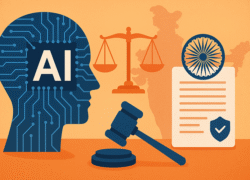
India is attempting a difficult two-step: accelerate artificial-intelligence adoption across its economy while building credible guardrails for privacy, safety and accountability. Prime Minister Narendra Modi has framed AI as central to India’s next stage of growth, and New Delhi has begun to put money and law behind that promise—even as the country still lacks a single, comprehensive “AI Act.”

The legal foundation is the Digital Personal Data Protection (DPDP) Act, enacted in August 2023. The statute establishes consent-led processing, enumerates individual rights, permits most cross-border data transfers by default (subject to government-notified exceptions) and creates a new Data Protection Board to enforce the regime. Implementation, however, is still in motion: draft DPDP Rules were released in January 2025, with officials signaling phased enforcement and a “sunrise” period for companies to adapt. As of mid-2025, key provisions awaited final notification and the Board’s full operationalization.

Policy makers have paired the legal track with public investment. In March 2024, the Union Cabinet approved the IndiaAI Mission with a budget outlay of about US$1.2 billion to fund compute capacity, datasets, skilling and startup support. The mission is designed to push adoption without leaving safety entirely to private actors.

Regulatory posture toward frontier models has evolved quickly. After a March 2024 advisory from the IT Ministry asked firms to seek approval before releasing “unreliable” or under-tested AI tools, industry pushback prompted a revision two weeks later. The updated advisory dropped the prior-permission requirement but kept obligations to label limitations, build content safeguards and protect elections from AI-driven manipulation.

Deepfakes have become the political and cultural flashpoint. Following a viral synthetic video of actor Rashmika Mandanna in late 2023, the government reminded platforms of their duties under India’s IT Rules and issued advisories to remove such content within 24 hours, moves that were followed by police investigations and arrests. The episode hardened official attitudes toward synthetic media ahead of national elections and accelerated work on takedown protocols.

Ethical tensions extend beyond celebrity cases. India’s experimentation with facial-recognition systems—from airports to policing—has met sustained civil-society scrutiny over accuracy thresholds, due-process risks and potential bias. Rights groups have warned that treating partial “matches” as positives can generate wrongful stops and surveillance creep, underscoring the DPDP Act’s importance and the need for sector-specific safeguards.

New Delhi’s normative work predates the latest wave of generative AI. NITI Aayog’s “Responsible AI” papers laid out principles of accountability, transparency and inclusion, and the government’s own AI strategy materials document pilots across transport, agriculture and public services. The policy debate has since shifted from principles to engineering: how to turn those ideals into enforceable standards without freezing innovation.

Even the public conversation about AI’s cultural boundaries has been reframed by misstatements. A widely cited example of posthumous voice cloning involved not a “musician” but the late chef-author Anthony Bourdain, whose voice was synthetically recreated for a 2021 documentary—sparking a global debate about consent and disclosure in synthetic media. The distinction matters because it illustrates why provenance and permissions—not just technical possibility—sit at the heart of India’s proposed rules on labeling and takedowns.

Against this backdrop, India’s growth thesis for AI remains robust but more grounded than boosterish claims suggest. Independent industry analyses project the domestic AI market in the tens of billions of dollars over the next few years, while official strategy documents argue faster AI adoption could add as much as US$500–600 billion to GDP by 2035 through productivity gains—figures that assume scaled deployment across finance, manufacturing and public services.

The policy balance India is now attempting—tight enough rules to protect rights and elections, loose enough space for start-ups and incumbents to build—will likely be delivered through a patchwork: the DPDP Act and Rules, the IT Act and platform-liability regime, sectoral standards, and IndiaAI funding tied to safety expectations. Whether this becomes a durable model for other democracies will depend less on speeches than on execution: a functioning Data Protection Board, clear enforcement timelines, workable guidance for frontier models, and measurable reductions in harms such as deepfakes and biased surveillance. In the world’s largest democracy, AI governance will be judged not only by how fast the economy grows, but by how well individual rights are kept intact while it does.

© 2025 www.cijeurope.com

India’s Start-Ups Power the AI Revolution

India’s AI start-up ecosystem is moving from promise to scale, powered by ubiquitous digital rails and a deep pool of technical talent. Government and industry leaders increasingly talk about India becoming an AI superpower by 2047, but the more immediate story is the rapid build-out of companies applying AI across finance, agriculture and education—and the momentum is undeniable.

A recent mapping of the generative-AI landscape shows the number of start-ups in the field has multiplied several times over the past two years, with Indian founders increasingly visible among global innovators. Market projections suggest India’s AI industry could reach close to $17 billion by 2027, growing at a rate of 25–35% annually, driven by enterprise adoption and its large AI-skilled workforce.

Fintech has been at the sharp end of India’s AI adoption. Unified Payments Interface (UPI) now processes more than 15 billion transactions every month, with annualized values running into trillions of dollars. On this backbone, platforms such as PhonePe, Razorpay and CRED have expanded from payments into lending and digital banking. Bengaluru-based unicorn Perfios aggregates real-time financial data for faster loan underwriting, while Crediwatch uses AI analytics to assess the creditworthiness of small businesses where traditional data are scarce. India has also emerged as the third-largest hub for fintech unicorns globally, behind only the United States and China.

Agriculture, long a backbone of the Indian economy, is also undergoing a technological shift. DeHaat serves more than 1.8 million farmers across multiple states with AI-enabled advisory services, input distribution and market linkages, while Cropin combines satellite imagery with machine learning to help farmers manage crops and forecast yields. These platforms are bringing actionable insights not just to large producers but also to smallholders, who are often the most underserved.

Education has become another major frontier. Valued at around $7.5 billion, India’s edtech sector is expected to quadruple in size by 2030. AI-driven platforms like Doubtnut allow students to upload math or science problems and receive instant, step-by-step solutions, extending high-quality tutoring to Tier-2 and Tier-3 cities. Several Indian edtech firms are also expanding internationally into African and South American markets.

A key enabler of this ecosystem is India’s workforce. Studies rank the country among the leaders globally in AI skill penetration and hiring growth, underscoring its depth and momentum in training engineers, data scientists and AI specialists.

Challenges remain: India still lags leading economies in AI research output, investment intensity and patents, and funding flows to start-ups remain uneven. Yet with digital public goods such as UPI and Aadhaar lowering distribution costs and enterprises accelerating AI adoption, the direction of travel is clear.

If India does emerge as a global AI power by its centenary of independence, it will be less because of a single breakthrough and more because thousands of pragmatic, AI-enabled companies solved pressing problems in finance, farming and classrooms—and then exported those solutions to the world.

© 2025 www.cijeurope.com

AI in healthcare: bridging gaps in rural India

Artificial intelligence is moving from pilot projects to frontline care across India, with its biggest promise showing up far from tertiary hospitals. Telemedicine, AI-assisted diagnostics and multilingual chatbots are beginning to narrow long-standing access gaps for villages and tribal communities that struggle to attract specialists.

India’s state-run eSanjeevani platform illustrates the scale of the shift. Government figures show it surpassed 360 million teleconsultations by April 2025, making it one of the world’s largest national telemedicine services. Academic reviews describe it as a crucial “hub-and-spoke” network linking primary facilities to district and specialist hubs, particularly valuable in rural areas.

Diagnostics are where AI’s leverage is most visible. Computer-aided detection software for chest X-rays—now recommended by the World Health Organization for triage and screening—has been evaluated in India and other high-burden settings and can flag likely tuberculosis cases when radiologists are scarce, speeding referrals for confirmatory testing. Several Indian deployments, including projects assessed by PATH and others, report gains in TB case-finding and potential cost savings. Tamil Nadu’s health department is the latest to expand pilots of AI-assisted imaging for TB and other conditions in government hospitals, with the stated goal of supporting clinicians rather than replacing them.

AI is also feeding into disease surveillance and public-health preparedness. Indian researchers have built early-warning models that fuse climate and health data to predict dengue outbreaks weeks in advance, giving local authorities lead time to target vector control. State and municipal bodies are testing complementary digital tools—from smart mosquito-monitoring sensors to drone-enabled fogging—to contain vector-borne disease risks during monsoon seasons.

The rural frontline is benefiting from language-aware tools that match India’s linguistic diversity. The government’s Bhashini initiative is building translation and speech APIs so citizens and health workers can access services in local languages. In parallel, research programmes have released health chatbots tailored to community health workers, such as Microsoft-backed ASHABot and the George Institute’s SMARThealth GPT, which surface official guidance in Hindi, Telugu and other languages and allow voice interactions in low-resource settings.

Connectivity remains the critical enabler. India’s 5G rollout has accelerated since late 2022; by March 2025 the government reported 469,000 5G base stations with services in nearly every district, although independent analyses still point to uneven backhaul and variable latency outside major corridors. For remote teleconsultations and AI tools that rely on real-time image transfer, these bottlenecks can be the difference between a same-day diagnosis and a referral that never happens.

Claims that AI has already solved rural healthcare are premature, and several cautions are warranted. Researchers reviewing eSanjeevani’s operations flag inconsistent training for frontline staff, gaps in feedback loops and the need to better integrate general practitioners so referrals do not stall. Data governance and privacy protections have to keep pace as more imaging and clinical metadata move through cloud systems. And as generative AI lowers the cost of producing persuasive content, public-health agencies are confronting a parallel challenge: disinformation during outbreaks or tense civic moments that can overwhelm credible guidance.

Even so, the direction of travel is clear. A mix of high-volume telemedicine, AI-assisted diagnostics and locally intelligible digital tools is pushing specialist expertise closer to the village clinic. The policy task now is to lock in the basics—reliable connectivity, workforce training and procurement pathways that privilege clinically validated AI—so early gains in access turn into durable improvements in rural health outcomes.

© 2025 www.cijeurope.com

Building India’s AI infrastructure: data centers, edge build-outs and a 5G backbone

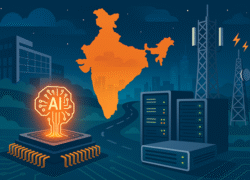
India’s push to become a global AI hub is reshaping the country’s digital plumbing—from hyperscale data-center campuses to edge facilities in smaller cities and an aggressive 5G rollout. The Union Cabinet’s approval in March 2024 of the IndiaAI Mission, with budgeted outlay of more than ₹10,300 crore, set a public-policy anchor for compute, datasets and skills.

On the private side, investment commitments have accelerated. Microsoft has announced a US$3 billion, two-year expansion of cloud and AI infrastructure in India, alongside sector partnerships in manufacturing, financial services and healthcare. Google is preparing its first India hyperscale campus in Visakhapatnam, with reports suggesting a spend of about US$6 billion on a one-gigawatt site, including significant investment in renewables. Domestic operators are scaling rapidly as well. Hyderabad-based CtrlS has unveiled plans for a 600 MW data-center park near the city, part of a broader shift to Tier IV designs and liquid-cooling for AI workloads.

Sizing the market is tricky, but multiple trackers point to a sharp upturn. Industry analyses value the sector at around US$10 billion in FY2023/24, with capacity growth of nearly 140% since 2019. Colliers estimates about US$15 billion has flowed into Indian data centers since 2020, with another US$20–25 billion expected by 2030. International organisations highlight infrastructure, data and skills as the core levers for inclusive AI—consistent with India’s current build-out.

Much of the new capacity is no longer metro-only. Edge data centers are spreading to Tier-2 and Tier-3 locations from Kochi and Indore to Patna and Mohali to reduce latency for AI-enabled services and smart-city projects. Though still a small base—about 82 MW, or 6% of national capacity—analysts expect secondary markets to reach 300–400 MW by 2030 as fiber densifies and regional demand rises.

Connectivity is the other pillar. Since 5G launched in October 2022, India has installed roughly 469,000 base transceiver stations as of early 2025, with services available in nearly every district—a rollout pace the government describes as among the world’s fastest. Independent research, however, still flags uneven fiber backhaul and pockets of high latency, particularly outside major corridors, underscoring the need for continued investment to unlock low-latency AI use cases at scale.

Affordability remains a comparative advantage. India is regularly ranked among the world’s cheapest markets for mobile data, a factor that expands the addressable user base for AI-enabled services, even if absolute rankings vary slightly by year and source.

India is also working the ecosystem side. As lead chair of the Global Partnership on AI in 2024 and host of the 2023 ministerial in New Delhi, it pushed governance and safety agendas while courting research collaborations. At the institute level, initiatives such as INAI—an applied-AI center anchored at IIIT-Hyderabad and championed by Intel and the Government of Telangana—and Intel’s Unnati labs illustrate how corporates and universities are seeding talent and applied research capacity that can plug directly into industry.

The article’s original claims broadly align with current developments but required adjustments. Google’s Visakhapatnam spend is based on industry reporting rather than a formal company announcement; Microsoft’s US$3 billion India program is confirmed. The figure that India’s data-center market is “US$10 billion” appears in secondary industry analysis, with Colliers’ investment tallies providing another reference point. References to “H data centres” are more accurately described as “edge data centers.” 5G deployment totals were updated to the government’s latest published count of 469,000 base stations.

Bottom line: India’s AI infrastructure story is no longer hypothetical. Hyperscale campuses are being financed, edge sites are spreading to secondary cities, and 5G coverage is approaching nationwide—with continuing gaps in fiber that need closing. If the current mix of public outlay, private capital and university–industry programs holds, India’s AI stack will keep moving from flagship announcements to real, distributed capacity over the next two to five years.

© 2025 www.cijeurope.com

AI and the future of work in India: balancing automation and employment

Artificial intelligence is reshaping India’s labour market at speed. Prime Minister Narendra Modi has argued that “AI can help transform millions of lives,” citing opportunities in health, education and agriculture—a view he voiced at a Summit in Paris earlier this year. Yet the same technologies are unsettling employers and workers as companies automate routine tasks and reorganise white-collar work.

A growing body of evidence shows the impact will be uneven rather than uniformly job-destroying. The International Monetary Fund estimates that about 40% of global employment is exposed to AI; exposure is lower in emerging markets, with roughly 26% of Indian workers in highly exposed roles, compared with roughly 60% in advanced economies. The World Economic Forum’s Future of Jobs 2025 report foresees large, simultaneous waves of job creation and displacement worldwide, tilting demand toward technology, green and care-economy roles.

Several recent estimates suggest AI is already a net creator of specialised roles in India—provided skills keep up. Research commissioned by ServiceNow projects 2.73 million additional tech jobs in India by 2028 as firms adopt AI at scale, a view echoed by Indian media and industry bodies tracking the talent pipeline. NASSCOM and BCG, meanwhile, expect the domestic AI market to reach roughly $17 billion by 2027, underpinned by rising enterprise spend and one of the world’s deepest AI-skills pools.

At the same time, disruption is visible. Reuters reported in August 2025 that Tata Consultancy Services would cut “over 12,000” roles—India’s largest private-sector layoff—framed by analysts as an early sign of AI-driven restructuring across the $283 billion outsourcing sector. Policymakers and employers are responding with large-scale skilling efforts, including the government’s IndiaAI Mission (approved March 2024 with more than ₹10,300 crore to expand compute and talent) and the MeitY–NASSCOM FutureSkills Prime initiative, which subsidises AI training.

Agriculture. Agriculture still employs roughly 40–46% of India’s workforce, depending on the measure and year, which makes productivity-enhancing tech particularly consequential. The government’s Digital Agriculture Mission is deploying data platforms—such as the Agri-Stack and Krishi Decision Support System—for price forecasting, crop estimation and soil-suitability analytics; these tools have begun to filter into advisory services for farmers. The emphasis in agriculture is less “job replacement” than augmenting yields and incomes.

Manufacturing. Generative and “agentic” AI are expected to reconfigure shop-floors and supply chains. A widely cited ServiceNow-linked analysis suggests AI could affect 1.8 crore jobs across manufacturing, retail and education by 2030, with about 80 lakh roles in manufacturing most exposed to change. The figure reflects roles being transformed or re-tasked—not necessarily eliminated—conditional on reskilling.

IT & services. This is where short-term displacement risks are sharpest, particularly for mid-career “people managers,” testers and basic support roles—exactly the cohorts flagged in the TCS restructuring. Yet AI is also spawning demand for machine-learning engineers, data product managers and safety/validation specialists. NASSCOM-BCG data show more than 420,000 professionals already in AI roles, with demand rising around 15% annually through 2027. Even in business-process outsourcing, automation is not purely subtractive: reporting on India’s call-centre sector finds AI tools creating new roles and lifting productivity, even as routine tasks are automated.

Some public claims need calibration. The idea that India will add “400,000 AI jobs by end-2025” is not borne out in recent primary sources; more robust, current projections cluster around multi-year horizons—such as ~2.7 million AI-adjacent roles by 2028—tied to training capacity and enterprise adoption.  Likewise, sweeping estimates that “69% of India’s (formal/informal) jobs could be automated by 2030” are not reflected in IMF or WEF baselines; the best-available cross-country work puts India’s high-exposure share closer to one-quarter, with outcomes highly sensitive to skilling and task redesign.

India’s near-term challenge is to turn exposure into opportunity. Three levers stand out. First, accelerate skills at scale—through IndiaAI, FutureSkills Prime and state school initiatives now piloting AI literacy—to move workers from routine to complementary tasks. Second, double down on sectors where AI is a force-multiplier—agri-tech, industrial digitalisation, and public-sector service delivery—so productivity gains translate into wage and job growth. Third, manage transition costs: international bodies, including the IMF, urge fiscal cushions and targeted training where automation hits hardest.

Bottom line: AI in India is neither a jobs apocalypse nor a free lunch. It is a rapid reallocation shock that will prune some roles, expand others and create new categories altogether. With sustained investment in compute, skills and data infrastructure—and focused support for exposed cohorts—India can bend the curve toward net employment growth while harnessing AI’s productivity dividend.

© 2025 www.cijeurope.com

LATEST NEWS