Airports Confront Climate and Efficiency Demands as HVAC Modernisation Becomes Essential

Airports are increasingly required to adapt their technical infrastructure to meet rising environmental expectations and improve operational efficiency. Heating, ventilation and air-conditioning (HVAC) systems are emerging as a key area of focus, driven by regulations, energy-reduction goals and the need to deliver consistent comfort for passengers.

According to industry specialists, modernisation efforts now extend far beyond traditional upgrades. Airports are investing in integrated automation systems, energy-efficient ventilation strategies and sustainable design solutions.

“There is increasing talk around the world about the need to modernise airports, where HVAC systems are to be made more energy-efficient not only through the use of special lighting, but also through digital solutions that improve operational efficiency,” says Marcin Kosieniak, MEP specialist and co-owner of the PM Projekt design office.

Intelligent energy management

Many airports are adopting advanced automation platforms for energy management. Building management systems now enable continuous oversight of ventilation, heating, cooling, lighting and related systems.

“By integrating control systems, airports can monitor ventilation, air conditioning, heating, lighting and other critical systems in real time,” notes Kosieniak.

Car park ventilation: a distinctive challenge

Airport car parks, often large enclosed structures handling high vehicle volumes, present a separate ventilation challenge. New design approaches aim to reduce building height requirements while ensuring effective air movement.

“Interestingly, airport car parks often pose a particular challenge for HVAC systems. A new ventilation concept for garages reduces the required height of the car park, which translates into a greater number of parking spaces, but requires well-thought-out and well-planned systems for the placement of supply and exhaust fans. Their appropriate location in the parking area allows for the control of air distribution,” explains Kosieniak.

He adds that at Katowice–Pyrzowice Airport, PM Projekt applied energy-efficient fan systems linked to continuous monitoring of pollutant concentrations.

Sustainability practices in airports

Airports worldwide continue to adopt wider sustainability measures, with HVAC optimisation forming part of broader decarbonisation strategies. Indianapolis International Airport operates one of the largest airport-based solar farms globally, producing around 20 MW of energy annually. Sydney Airport has advanced its carbon neutrality programme with a 100% renewable electricity PPA, an energy-efficiency programme and a carbon-offset strategy.

In Sweden, Swedavia has introduced occupancy-based airflow control that adjusts air conditioning to passenger density. The solution has reduced fan energy use by roughly 30% and improved indoor comfort.

“Examples of such solutions show that it is regulations that enforce best practices in the market that reduce the industry’s impact on the environment, and that heating, air conditioning and cooling systems must adapt to the needs imposed by law, the specific space and the needs of passengers,” says Kosieniak.

A shift toward integrated management

Kosieniak emphasises that the transformation required is not only technical but also organisational. “It is worth noting that the transformation of the HVAC sector at airports is not only a matter of technology, but above all a change in mentality – from reactive maintenance to proactive management, from isolated systems to integrated energy ecosystems,” he concludes.


JTRE secures building permit for next phase of River Park: 153 residences, offices and a new green square

JTRE has obtained the building permit for the next phase of the River Park development on the Danube waterfront. The project will extend the existing River Park complex and introduce 153 residential units, new office space and an additional public square.

The upcoming residential buildings will offer river views, a limited number of apartments per floor and layouts designed for comfort and privacy. The development continues the urban concept established in the first phase, combining the Danube promenade, contemporary architecture, landscaped areas and ground-floor services.

“Securing the building permit marks an important milestone for both the project and the wider waterfront,” said Pavel Pelikán, Executive Director of JTRE. “The next phase builds on the original concept of bringing the city centre closer to the river. High-quality public spaces and new services will contribute to the ongoing improvement of the Danube riverfront.”

Alongside the residential component, the scheme includes 10,000 m² of office space designed to meet high sustainability standards, with low energy consumption, smart technologies and an emphasis on natural light and ventilation. The promenade will be supplemented with 1,500 m² of retail and service units, suitable for shops, cafés and restaurants. A total of 733 underground parking spaces will serve residents and visitors.

The architectural design for the extension was prepared by GFI studio, which aimed to integrate the new buildings with the existing urban structure and the riverside location. The original River Park was designed by Dutch architect Erick van Egeraat, whose concept focused on creating a “city within a city” while opening the area toward the river. The expansion will add five buildings in total—four residential and one office building.

“The residential offering is diverse and reflects demand for both investment and permanent living,” said Ján Ťupek of GFI studio. “Homes range from compact one-bedroom units to larger two-, three- and four-bedroom layouts, as well as spacious five-bedroom apartments. Given the character of the location, the buildings are oriented to ensure river views for most units.”

A central landscaped courtyard will form part of the waterfront promenade, providing quiet outdoor space for residents and visitors and offering separation from traffic along Arm. gen. L. Svobodu Street.

The new public space, Lanfranconi Square, will cover 2,600 m² and was designed by BETWEEN studio. The square will integrate mature trees, planting areas, seating and shaded zones to support cooling and water retention. It aims to enhance biodiversity and improve the microclimate of the waterfront.

Upon completion, the upgraded riverside promenade is expected to act as a key leisure and social area along the Danube. The design includes visual corridors, seating areas and preserved architectural features such as the travertine railing by architect Ivan Matušík, maintaining continuity between the original development and the new phase.

Apartment sales and construction are planned to begin in 2026.

BIK Anti-Fraud Report 2025: Cyber Threats to Polish SMEs and Institutions Continue to Rise

The latest Anti-Fraud Report published by BIK indicates a further rise in cyber attacks and fraud attempts targeting both Polish companies and public institutions. The findings show that organisations of all sizes remain vulnerable, with social engineering, internal errors and insufficient security practices contributing to an increasingly challenging risk landscape.

Recent cases have underscored the scale of the issue. A data breach at a Polish loan provider exposed personal information of at least 10,000 customers, including national identification numbers, bank details and income information. Earlier in the year, more than 5,000 records were copied from the Marshal’s Office in Lublin by an employee. These events reflect a wider trend in which both external attacks and internal lapses lead to significant data leakage.

According to the BIK report, almost 32% of SMEs experienced attempted fraud or extortion in 2025, regardless of their size or industry. More than a third of companies surveyed reported exposure to cyber attacks, and among those affected, over half faced repeated incidents—up to ten times per year. Public sentiment mirrors these concerns: 63% of Poles believe the risk of data leakage has increased over the past year.

The most common methods used against SMEs include fake payment-related emails (35%) and fraudulent invoices (33%), often accompanied by social engineering tactics designed to impersonate contractors or financial institutions. BIK notes that all major categories of cyber-enabled fraud have increased since 2024.

While external attacks pose a serious threat, internal vulnerabilities remain a parallel concern. One in five entrepreneurs considers the risk of internal fraud or accidental data leakage a real issue within their organisations. Mistakenly sending sensitive files to the wrong recipient, mishandling databases or unknowingly installing malware typically result from human error rather than intentional wrongdoing, highlighting the importance of regular staff training.

Despite rising threats, protective measures remain inconsistent. The report shows that 5.8% of SMEs use no preventive tools, leaving more than 162,000 companies exposed to cyber risk. Many rely on informal measures: 36% of SMEs base their protection primarily on “common sense”, rather than structured security policies or tools. By contrast, 34% of companies have implemented regular cybersecurity training, one-third of medium-sized firms have established anti-fraud units, and 28% routinely verify contractors in external databases.

Companies that have previously experienced attacks are more likely to introduce formal safeguards, but many still lack the resources or tools needed to address vulnerabilities. A quarter of SMEs report a need for enhanced staff training, while more than 22% indicate they lack effective mechanisms for identifying fraud attempts.

The BIK Anti-Fraud Report concludes that while awareness of cyber threats is rising, the overall level of preparedness across the SME sector remains uneven. The organisation emphasises that as both external attacks and internal errors continue to grow in frequency, a formalised approach to cybersecurity—supported by training, monitoring tools and standardised procedures—will be essential for reducing exposure to fraud and data loss.

Consumers Scale Back Black Friday Spending as Retail Sector Faces Another Difficult Year

Germany’s retail sector is entering the crucial Black Friday and Christmas trading period under sustained pressure, as weak consumer sentiment, rising insolvencies and continued labour-market uncertainty weigh on household spending. According to Atradius, these reinforcing factors are expected to shape market conditions well into 2026.

Consumer indicators point to ongoing caution among households. The GfK consumer climate index is forecast at –24.1 points for November, a decline of 1.6 points compared to October, driven by falling income expectations, inflation concerns, geopolitical uncertainty and fears surrounding employment stability. The HDE consumer barometer also fell in November to 95.57 points, underscoring reduced willingness to buy.

Nicole Bludau, Risk Services Manager at Atradius, notes that consumers are demonstrating increased price sensitivity, postponing purchases until discount campaigns and avoiding impulsive spending. Atradius expects Black Friday and Cyber Monday sales to reach around €5.8 billion this year, slightly lower than the €5.9 billion recorded in 2024, a figure that had already stagnated relative to 2023. Although the peak season will remain the strongest period of the year for retailers, it is not expected to act as a growth driver.

Despite significant consumer interest in discounts, an emerging shift is visible among retailers. While surveys from the German Retail Association indicate that nearly half of respondents intend to shop on Black Friday and one-third on Cyber Monday, more companies are choosing to refrain from deep price reductions. According to Bludau, an increasing number of retailers are adopting a “fair products at fair prices” policy to counteract ongoing margin erosion, especially at a time when personnel, energy and rental costs continue to rise.

Electronics and technology products are expected to dominate Black Friday demand again this year, followed by clothing. Atradius reports that the overall consumer sector has remained relatively stable despite the stagnating economic environment. However, several segments face considerable challenges. The home textiles and furniture industries continue to struggle after the peak seen during the pandemic, while the cosmetics trade faces strong competition from online channels. The situation remains difficult for traditional department stores, which are seeing declining footfall alongside continued online cannibalisation.

Looking ahead to 2026, Atradius expects only limited improvement. Despite government initiatives, including investment programmes aimed at infrastructure and climate neutrality, households will continue to feel the impact of rising health insurance contributions, persistently high electricity prices and increased costs for rent and food. Bludau emphasises that a meaningful easing of the situation will only occur once structural economic changes progress and consumption begins to recover, a development Atradius does not expect before 2027 at the earliest. Economic research institutes forecast Germany’s GDP to grow between 1.1 and 1.6 per cent in 2026, offering only modest support for hopes of a broader market rebound.

GH Development announces the launch of sales for the Museo development and makes its debut on the Tri-City residential market

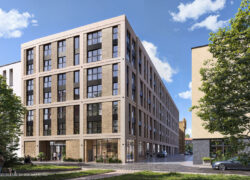
GH Development makes its debut on the Tri-City market, launching sales for its first development in Gdańsk. The elegant Museo apartment building is being constructed in a prestigious part of Gdańsk’s city centre, in the immediate vicinity of the National Museum. The developer, previously known for its residential projects in Warsaw, is consistently expanding its portfolio and strengthening its presence on the Polish market.

The Belgian developer, which has been operating in Poland for nearly eight years, began its Tri-City operations with the purchase of the former Gdańsk Electronic Works Unimor building at 14 Żabi Kruk Street. A modern, six-storey apartment building with 216 investment units will be built on this site, complementing the layout of the new development in the district – a dynamically developing area where office, residential and service facilities have replaced former production plants.

“The debut on the Tri-City market is an important stage in GH Development’s long-term development strategy in Poland. We have been consistently building our position for years, and entering such a dynamically developing region is the next step in the implementation of the company’s ambitious plans. Museo opens a new chapter for us and strengthens our presence in key residential markets in the country,” says Aleksandra Żuralska, Country Manager at GH Development Polska.

The Museo project refers to the character of the buildings in this part of Śródmieście, while harmoniously blending in with the historical fabric of the area. The simple, elegant form of the building will be emphasised by large glazing and carefully selected, noble façade materials, creating a coherent and modern structure with high aesthetics.

The investment has been designed with the rental market in mind, as well as for those looking for a popular second home by the sea. The offer includes 1- and 2-room flats ranging in size from 26 to 47 m² — functional, compact and ideal for renting.

The ground floor of the building will feature numerous amenities, including an elegant lobby with a reception desk, a modern exercise area, a space for relaxation and meetings, a co-working area, a bicycle storage room and a luggage storage room.

“Museo is a project designed for customers who are looking for quality and real investment potential. The Tri-City remains one of the most stable markets in the country, and demand for rentals is constantly growing — that is why the premises in Museo are an attractive proposition for both investors and those looking for a second home. The combination of a great location and functional floor space creates a product that meets today’s market needs,” says Michał Szałajko, Head of Sales & Marketing at GH Development Polska.

The ground floor will also feature over 500 m² of commercial space, ideal for services for local residents. The immediate surroundings of Museo provide access to a well-developed commercial and service infrastructure, historical and cultural facilities, and picturesque walking routes along the Old Motława River.

Construction of Museo is scheduled to begin in the first half of 2026, with completion planned for 2028.

Umbach Group leases 5,000 sqm logistics facility in Alsdorf with Logivest advising

Logivest has advised Umbach Verpackungen and Umbach Logistik GmbH on the lease of a logistics property in Alsdorf, North Rhine-Westphalia. The facility, located at Maurerstraße 42 and owned by Berde Immo, provides approximately 5,000 sqm of space.

Umbach sought a site for handling and storing a wide range of packaging materials. Logivest identified a property around 20 minutes from the company’s Eschweiler production site that met the operational requirements.

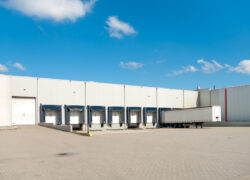
The warehouse comprises 3,000 sqm of open storage space and 2,000 sqm of high-bay storage, suitable for managing cardboard, cartons and related items. The layout also supports extended service operations including fulfilment and just-in-time delivery. Existing shelving and forklifts can be taken over, while multiple loading ramps and a ground-level gate support efficient logistics processes.

The Alsdorf location provides direct access to the A44 motorway and is close to the Aachen motorway junction, offering connections to Cologne, Düsseldorf and cross-border routes into the Netherlands and Belgium.

The lease reflects the Umbach Group’s continued commitment to the region. Its existing sites in Eschweiler, Stolberg and Hückelhoven will remain operational.

“In recent years, Alsdorf has successfully developed from a mining city into a service-oriented location and benefits from its position in the border triangle north of Aachen,” said Luca Wagner, Consultant Industrial and Logistics Letting at Logivest NRW GmbH.

The company plans to move into the new facility in December 2025.

Moldova: Passenger Transport Grows 6.9% While Freight Declines in First Nine Months of 2025

The National Bureau of Statistics of Moldova reports that passenger transport activity increased during the first nine months of 2025, while freight volumes posted a moderate decline compared with the same period last year.

According to the latest data, public transport operators carried 245.5 million passengers between January and September, an increase of 6.9% year-on-year. The strongest growth was recorded in air transport (+39.4%), followed by trolleybus services (+8.3%) and road transport (+4.2%). Passenger numbers in rail transport fell by 49.2%, while river transport declined by 0.9%.

Passenger turnover reached 5.62 billion passenger-kilometres, up 19.9% compared with the same period in 2024, reflecting both higher volumes and longer average travel distances.

Freight activity presented a different picture. Transport companies across rail, road, river and air handled 14.3 million tonnes of cargo, representing a 3.9% decrease year-on-year. River freight increased by 13.1%, and road transport saw a 1.0% rise. Meanwhile, rail freight volumes decreased by 1.3%, and air cargo dropped by 38.1%.

Overall freight turnover amounted to 4.12 billion tonne-kilometres, also down 3.9% on the previous year.

The January–September figures highlight contrasting trends within Moldova’s transport sector: strong recovery in passenger mobility across several modes, but ongoing weakness in rail and air freight, reflecting broader shifts in regional logistics flows.

Union Investment agrees sale of Torre Oriente office tower in Lisbon

Union Investment has signed a binding agreement to sell the Torre Oriente office tower in Lisbon to a joint venture formed by Sonae Sierra and Bankinter Investment. While the sale price was not disclosed, the company confirmed that it exceeds the property’s most recent expert valuation. The transaction is expected to complete by the end of 2025.

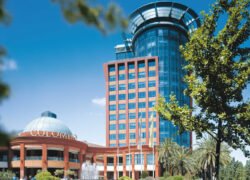
Torre Oriente forms part of the UniImmo: Global open-ended real estate fund. The 14-storey tower, completed in 2009, provides around 27,600 sqm of lettable space and is currently 95.3% let on an income basis. It is situated in north-west Lisbon and, together with the neighbouring Torre Occidente, forms a complex adjacent to the Colombo Shopping Centre.

“Since its acquisition in 2009, Torre Oriente has generated stable cash flows and positive value growth for UniImmo: Global,” said Martin Schellein, Head of Investment Management Europe at Union Investment. “The sale allows us to take advantage of a market opportunity in Portugal’s recovering investment market, increase fund liquidity and further rejuvenate the portfolio.”

Union Investment was advised by law firm Perez Llorca.

Behind Poland’s High Electricity Bills: What’s Really Driving the Costs?

Poland continues to record some of the highest electricity costs in the EU when adjusted for purchasing power, according to the latest Eurostat dataset for the first half of 2025. Prices for households rose by around 20% year-on-year, placing Poland among the fastest-growing electricity markets in the bloc. When expressed in PPS terms, Poland ranked second-highest in the EU—just behind Czechia and followed closely by Italy.

Industry analysts note that the issue extends beyond the price of energy itself. Polish consumers pay for a wide range of regulated surcharges that together make up a substantial portion of their final bills. These include the capacity fee, renewable energy (OZE) fee, cogeneration fee, transition fee, steadily rising distribution charges, and full VAT. While each component supports part of the national energy system, they also act as quasi-fiscal instruments, increasing household burdens regardless of wholesale price movements.

Recent regulatory developments suggest that these charges will rise further in 2026. Draft regulations published by the energy ministry indicate that the cogeneration fee will increase from PLN 3.00/MWh to PLN 4.36/MWh—a rise of roughly 45%. At the same time, the Energy Regulatory Office (URE) has approved substantial increases in the capacity fee for 2026, with analysts describing the adjustment as one of the steepest seen since the mechanism was introduced. Other regulated surcharges, including elements of the RES-support system, are also expected to increase next year based on preliminary regulatory signals.

Against this backdrop, President Karol Nawrocki has put forward a high-profile legislative package titled “Tani Prąd –33%” (Cheap Electricity –33%), which aims to reduce electricity bills for household and small-business customers. The bill, submitted to parliament, is structured around four pillars:

  1. Elimination of selected fees – the capacity fee, RES fee, cogeneration fee and the transitional fee.

  2. Reform of the certificates-of-origin system, reducing the cost burden placed on consumers.

  3. Lower distribution fees, achieved by reducing the allowed rate of return for grid operators.

  4. A VAT cut on electricity from 23% back to 5%.

According to the President’s Office, the reductions would be financed largely through revenues from the EU Emissions Trading System (ETS), which currently contribute several billion zloty annually to the state budget. Independent commentators, however, note that the reform could absorb a significant portion of these funds, raising questions about available financing for network upgrades, renewable capacity, and Poland’s upcoming nuclear investments.

A broader concern among market observers is that reducing regulated returns for distribution operators may limit their ability or incentive to invest in grid modernisation. With electrification accelerating and renewable capacity expanding, delays in upgrading lines, transformers and system flexibility could ultimately increase long-term costs.

Yet the proposal has brought clarity to one central point: high Polish electricity bills stem less from raw energy prices and more from layers of regulated charges built up over many years. The President’s initiative acknowledges this structure directly and places political emphasis on reducing the non-market components of electricity pricing.

Whether the programme becomes law—and whether its financing model proves sustainable—remains to be seen. For now, the debate underscores a structural challenge within Poland’s energy economy: balancing affordability, investment needs and stability in a sector undergoing rapid transformation.

Source: WEI

Poland’s Construction Price Growth Holds at 2.9% in October

Poland’s construction and assembly production prices rose by 2.9% year-on-year in October 2025, according to preliminary data from Statistics Poland. The monthly index increased by 0.8%, marking one of the strongest month-on-month adjustments this year. 

Across the main segments, building construction and civil engineering each posted a 0.8% monthly rise, while specialised construction activities grew by 0.6%. On an annual basis, civil engineering recorded the highest increase at 3.0%, followed by building construction at 2.8% and specialised activities at 2.6%. 

The data continues a broader trend of easing cost pressures: annual construction price growth has steadily declined from above 7% in early 2024 to levels closer to 3% this autumn. Charts included in the report show relative month-to-month stability throughout 2025, before the sharper uptick recorded in October. 

Since December 2023, cumulative price movements remain most pronounced in civil engineering, where costs have increased by 7.2%. Building construction and specialised activities followed at 6.7% and 6.3%, respectively. 

The figures were published by Statistics Poland on 24 November 2025 and include revised data for September.

LATEST NEWS