Tuesday, 20 October 2026
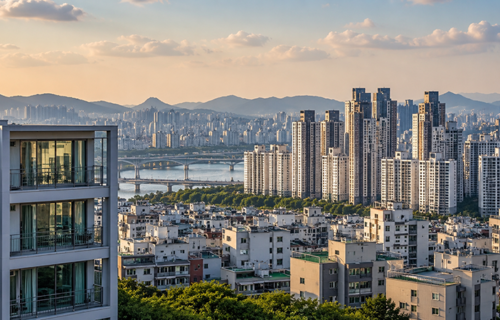
South Korea’s residential rental market is coming under increasing pressure as a shortage of available apartments pushes lease deposits higher in Seoul and begins to affect other major cities across the country.
At the centre of the issue is jeonse, South Korea’s distinctive housing arrangement under which tenants provide landlords with a substantial refundable deposit instead of making conventional monthly rental payments. The system has traditionally provided households with an alternative to both home ownership and standard renting, but rapidly increasing deposit requirements are making this option considerably more expensive.
Seoul has experienced the strongest pressure. Apartment jeonse prices in the capital had increased by approximately 6.27% from the beginning of 2026 through the fourth week of July. The increase was more than five times the growth recorded over the comparable period of 2025, illustrating the extent to which rental conditions have changed within a year.
The acceleration became particularly visible during the second quarter. Seoul apartment jeonse values increased by 0.32% in the second week of June, marking the strongest weekly movement in more than a decade. Across June as a whole, prices rose approximately 1.37%, the largest monthly increase recorded in almost 13 years.
July brought some moderation, but rental costs continued to rise. Seoul apartment jeonse prices increased by approximately 1.03% during the month, maintaining considerable pressure on households looking to renew existing contracts or find alternative accommodation.
A lack of available apartments is one of the principal factors behind the increase. Tenants are competing for fewer suitable properties as new housing availability remains constrained in parts of the capital. Redevelopment and reconstruction projects can temporarily remove apartments from the market, while occupancy requirements and other regulatory changes can also influence how many properties are available to tenants.
The imbalance is increasingly affecting areas outside Seoul’s traditionally expensive neighbourhoods. Households priced out of preferred districts are searching farther afield, transferring demand into comparatively affordable locations and putting upward pressure on deposits across a wider part of the metropolitan market.
Higher jeonse deposits are also contributing to changes in the way South Koreans rent their homes. Monthly rental agreements have become increasingly important as some households find it difficult to finance the large deposits required for traditional leases.
In June, contracts involving monthly rental payments accounted for approximately 54% of Seoul apartment leases. The balance shifted again during July, when jeonse agreements returned to slightly more than half of transactions, demonstrating that the transition is not occurring in a straight line. Nevertheless, the growing use of monthly payments indicates a gradual change in a housing system historically dominated by large deposits.
The financial calculation has also changed for landlords and tenants. Financing a substantial jeonse deposit can be expensive for households dependent on bank lending, while landlords may increasingly prefer regular rental income rather than relying exclusively on large refundable deposits.
What began as an acute Seoul problem is also becoming more visible elsewhere in South Korea. By late July, apartment jeonse prices had increased by approximately 4.09% since the beginning of the year in Ulsan, while Sejong recorded growth of around 3.64% and Busan approximately 2.62%.
Across the country, apartment jeonse prices were approximately 2.91% higher than at the beginning of 2026. The increase was considerably stronger than during the corresponding period of the previous year, suggesting that rental-market pressure is becoming more geographically widespread.
The consequences extend beyond tenants renewing their leases. Households unable to afford higher deposits may have to accept monthly rental payments, move to less expensive locations or reconsider whether purchasing a property offers a more attractive long-term alternative.
This interaction between rental deposits, monthly rents and home purchases makes South Korea’s housing market particularly sensitive to shortages. Pressure in one part of the system can quickly influence another as households adjust their housing decisions.
The situation also highlights the importance of future apartment supply. If new completions remain insufficient in areas experiencing strong household demand, competition for existing homes is likely to continue. Redevelopment may eventually increase the housing stock, but during construction it can temporarily intensify shortages by displacing residents and removing existing properties.
For investors and developers, sustained rental inflation provides evidence of underlying housing demand but also increases the political and regulatory sensitivity surrounding residential development. Affordability, financing conditions and the delivery of new housing will remain central issues as authorities seek to prevent temporary shortages from becoming structural problems.
Seoul remains at the centre of the current rental squeeze, but developments in Ulsan, Sejong, Busan and other markets suggest that the pressure can no longer be viewed solely as a capital-city phenomenon.
If housing availability remains constrained, 2026 could become an important turning point for South Korea’s rental sector, accelerating a gradual movement towards monthly payments while further challenging the affordability of the traditional deposit-based system.
Source: © CIJ.World India Research & Analysis Team