Friday, 23 October 2026
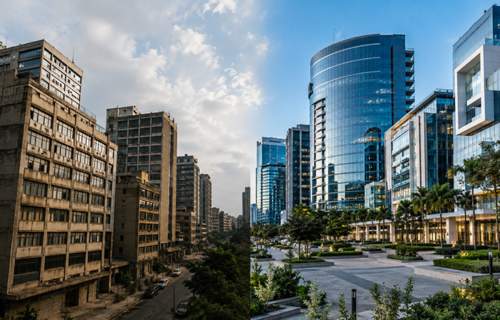
Africa’s office markets are recovering from the disruption of the pandemic, but the improvement is not being shared equally across the property sector. Companies have not abandoned the workplace as extensively as once feared. Instead, hybrid working has changed what occupiers expect from it, concentrating demand on modern, efficient and well-located buildings while increasing the pressure on ageing offices that require substantial investment to remain competitive.
This distinction is becoming increasingly important for property investors. The post-pandemic office story is no longer simply about how many employees have returned to their desks. The more important question is which buildings companies are prepared to occupy when employees are spending fewer days each week in them. Businesses that need less space can often afford to become more selective about the space they retain, strengthening demand for the best offices even while weaker buildings struggle.
South Africa provides some of the clearest evidence of this divide. During the first quarter of 2026, national office vacancy fell to approximately 12.6%, its lowest level since 2020. The improvement, however, concealed substantial differences between property grades. Prime offices recorded vacancy of around 5.1%, compared with approximately 10.1% for A-grade space and close to 17% for both B- and C-grade properties.
Those figures also demonstrate why it would be misleading to claim that Grade A offices have a fixed 10% occupancy advantage across Africa. Even within South Africa, the difference changes significantly depending on the building categories being compared. The available evidence supports a clear preference for higher-quality offices, but not a single percentage that can reliably be applied across Johannesburg, Cape Town, Nairobi, Lagos, Cairo and other African markets.
Cape Town has emerged as one of the continent’s strongest examples of a genuinely tightening office market. Vacancy was approximately 6% during the first quarter of 2026, significantly below the South African national average, while some of the city’s leading decentralised business districts had substantially less space available. At the V&A Waterfront vacancy was exceptionally low, while Century City was also operating with very limited availability.
This tightening market has supported stronger rental performance. The combination of controlled new development, occupier demand and limited availability in established business districts is giving landlords of high-quality properties greater pricing power. For investors, Cape Town increasingly resembles a market where the shortage of the right type of office is becoming as important as the overall level of demand.
Yet the recovery remains highly localised. An ageing building in a weaker location does not automatically benefit simply because Cape Town’s metropolitan vacancy rate is falling. Differences between the CBD, Waterfront, Century City and other office districts demonstrate why investors increasingly need to analyse individual precincts rather than rely on city-wide averages.
Johannesburg illustrates the other side of the recovery. Overall vacancy remains considerably higher than Cape Town, but that figure masks major differences between individual locations and buildings. Prime offices in established districts such as Rosebank and parts of Sandton can operate in a very different leasing environment from older secondary properties elsewhere in the metropolitan area.
The definition of prime property is also changing. Tenants increasingly consider the reliability and cost of occupying a building alongside its address and physical appearance. Solar generation, backup electricity, water storage, efficient cooling and modern environmental specifications have become increasingly important in South Africa’s leasing market.
This creates a particularly African dimension to the flight towards quality. In many global markets, efficient buildings are primarily associated with sustainability objectives and lower operating costs. In Johannesburg and other cities exposed to infrastructure constraints, building resilience can also determine whether an occupier can continue operating normally during interruptions.
Older buildings therefore face several challenges simultaneously. They may have outdated interiors, inefficient cooling, higher electricity consumption and limited backup infrastructure. Correcting these weaknesses can require substantial capital expenditure, forcing owners to decide whether future rental income justifies the investment.
That calculation is becoming central to office investment strategy. A well-located B-grade property purchased at the right price may offer an attractive refurbishment opportunity. The same building in a structurally weaker location could become increasingly difficult to reposition regardless of how much capital is spent on it.
Nairobi is experiencing a different form of recovery. Office occupancy improved during 2025 while asking rents also increased, suggesting that the market has moved beyond the weakest period of post-pandemic adjustment. However, the Kenyan capital continues to contain substantial differences between its major office districts.
Westlands, Gigiri, Kilimani, Upper Hill and other business locations compete for different occupiers and have different levels of supply. New development continues to add modern space, meaning improving city-wide demand does not guarantee stronger performance for every property.
The strongest Nairobi buildings increasingly compete through a combination of location, modern specification, reliable infrastructure and amenities. International organisations, multinational companies and larger domestic businesses can be particularly selective about the properties they occupy. Environmental performance is also becoming part of this quality assessment as newer developments incorporate more efficient building systems.
Hybrid working has reinforced this process. When employees are expected to come into the office for collaboration, meetings and team interaction rather than simply because they must be physically present every day, companies have a stronger incentive to provide workplaces employees are willing to use.
Lagos provides another version of the same trend. Its office market has been recovering gradually rather than experiencing a dramatic rebound, with Grade A occupancy improving while landlords continue competing strongly for tenants. The result is better utilisation of high-quality buildings without necessarily producing equally strong rental growth.
That is an important distinction for investors. Increasing occupancy can be achieved through competitive rents, incentives and flexible lease structures. A recovering vacancy rate therefore does not automatically mean landlords have regained pricing power.
The operating cost of buildings also plays a particularly important role in Lagos. Reliable power and efficient cooling can materially influence the total cost of occupying an office. Properties capable of reducing dependence on expensive backup generation or providing more dependable infrastructure can consequently offer tenants a direct financial advantage.
This means Lagos may be better understood as a quality-led recovery rather than a broad office-market rebound. Companies continue to require offices, but they are increasingly selective about the buildings they choose and the costs associated with occupying them.
Cairo presents a different investment equation. Egypt’s capital continues to expand its modern office inventory as new business districts and large developments bring additional Grade A accommodation to the market. Demand for high-quality space remains significant, but developers are also increasing the level of competition.
For investors, Cairo’s challenge is therefore not simply recovering from hybrid working. It is ensuring that individual buildings remain competitive as occupiers are offered an increasing number of modern alternatives.
This places pressure on older properties even when overall demand remains healthy. A company comparing a conventional ageing office with a newly delivered building offering modern technology, better amenities, efficient building systems and flexible layouts may require a significant rental discount before choosing the older property.
Flexible workspace has become another component of this changing market. Hybrid working makes it more difficult for companies to predict precisely how much permanent office space they will need over long lease periods. Managed and flexible accommodation allows occupiers to respond more quickly as employment and working patterns change.
For landlords, flexible space can also form part of a wider building strategy rather than simply competing with conventional leasing. Shared meeting facilities, temporary project rooms and expansion space can increase the usefulness of an office building while allowing tenants to avoid permanently leasing areas they use only occasionally.
The larger investment consequence, however, is the accelerating risk of property obsolescence.
Older offices have always competed partly through lower rents, but price alone may become less effective as the difference between buildings grows. Occupiers increasingly compare energy consumption, power resilience, water security, technology, environmental performance, amenities and accessibility alongside the rent they pay.
Bringing an older property up to those standards can require substantial expenditure on façades, air-conditioning, lifts, common areas, energy systems, renewable generation and workplace configuration. Owners must determine whether the additional income achievable after refurbishment provides an acceptable return.
This is likely to widen the valuation difference between prime and secondary offices. Buildings capable of maintaining strong occupancy and increasing rents should remain attractive to institutional investors. Assets suffering persistent vacancy while requiring increasing amounts of capital will be valued much more cautiously.
The situation also creates opportunities. Investors prepared to acquire well-located secondary offices at sufficiently attractive prices may be able to reposition them through refurbishment, alternative uses or redevelopment. The key will be distinguishing between a building that has become outdated and a location that has lost its relevance.
That distinction will become increasingly important as the African office market matures. Some ageing buildings occupy excellent sites and can be modernised successfully. Others may no longer justify substantial reinvestment and could ultimately be better suited to residential, hospitality, education or mixed-use conversion where planning and economics allow.
Africa therefore does not have a single post-hybrid office recovery.
Cape Town increasingly resembles a supply-constrained market where high-quality space in the strongest locations is becoming difficult to find. Johannesburg remains highly polarised, with prime districts recovering much more strongly than ageing secondary stock. Nairobi is improving while continuing to face competition from new supply. Lagos is experiencing a quality-led stabilisation where occupiers retain considerable negotiating power, while Cairo is expanding its modern office inventory and continuously raising the standard required for older buildings to compete.
The common feature is not simply that employees are returning to their workplaces. It is that companies are becoming more demanding about the offices they are willing to return to.
Hybrid working may therefore have caused less permanent damage to African office demand than initially feared. Its more lasting effect could be the acceleration of a structural divide between buildings capable of meeting modern occupier requirements and those that increasingly cannot.
For investors, that shifts the central question away from how many days employees work remotely. The more important issue is whether an individual asset can continue attracting companies as businesses become increasingly selective about the space they retain.
The next phase of Africa’s office cycle is therefore likely to be determined as much by asset quality as by overall economic growth. Rental performance, vacancy, refurbishment requirements, energy resilience and environmental standards are increasingly interconnected, creating stronger income prospects for the best buildings while exposing the weaknesses of ageing stock.
Africa’s office recovery is underway in several major cities, but it is not carrying every property with it. The widening distance between prime and secondary buildings may ultimately prove to be the most important legacy of the hybrid-working era for the continent’s commercial real estate market.
Source: © CIJ.World Africa Research & Analysis Team