Tuesday, 27 October 2026
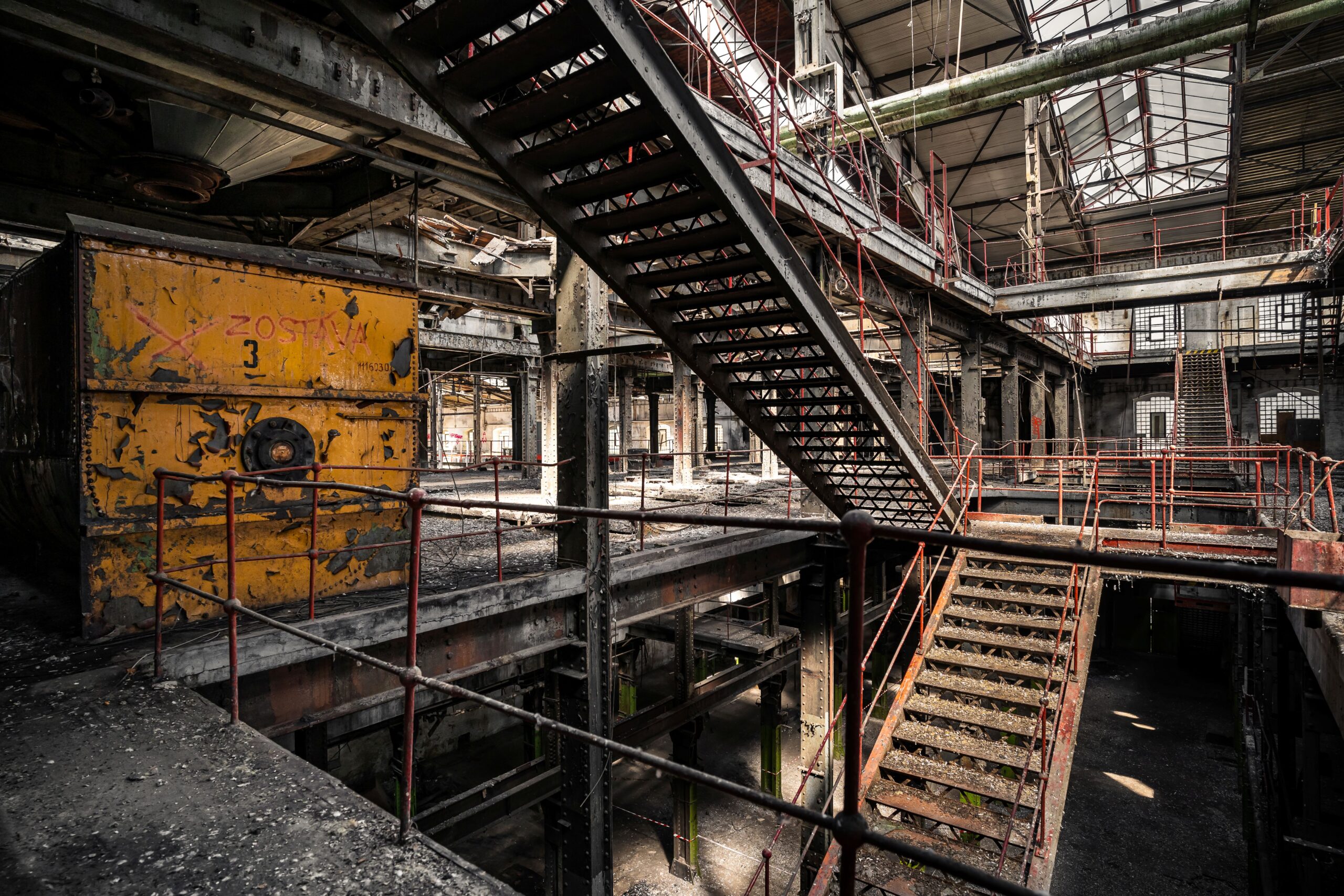
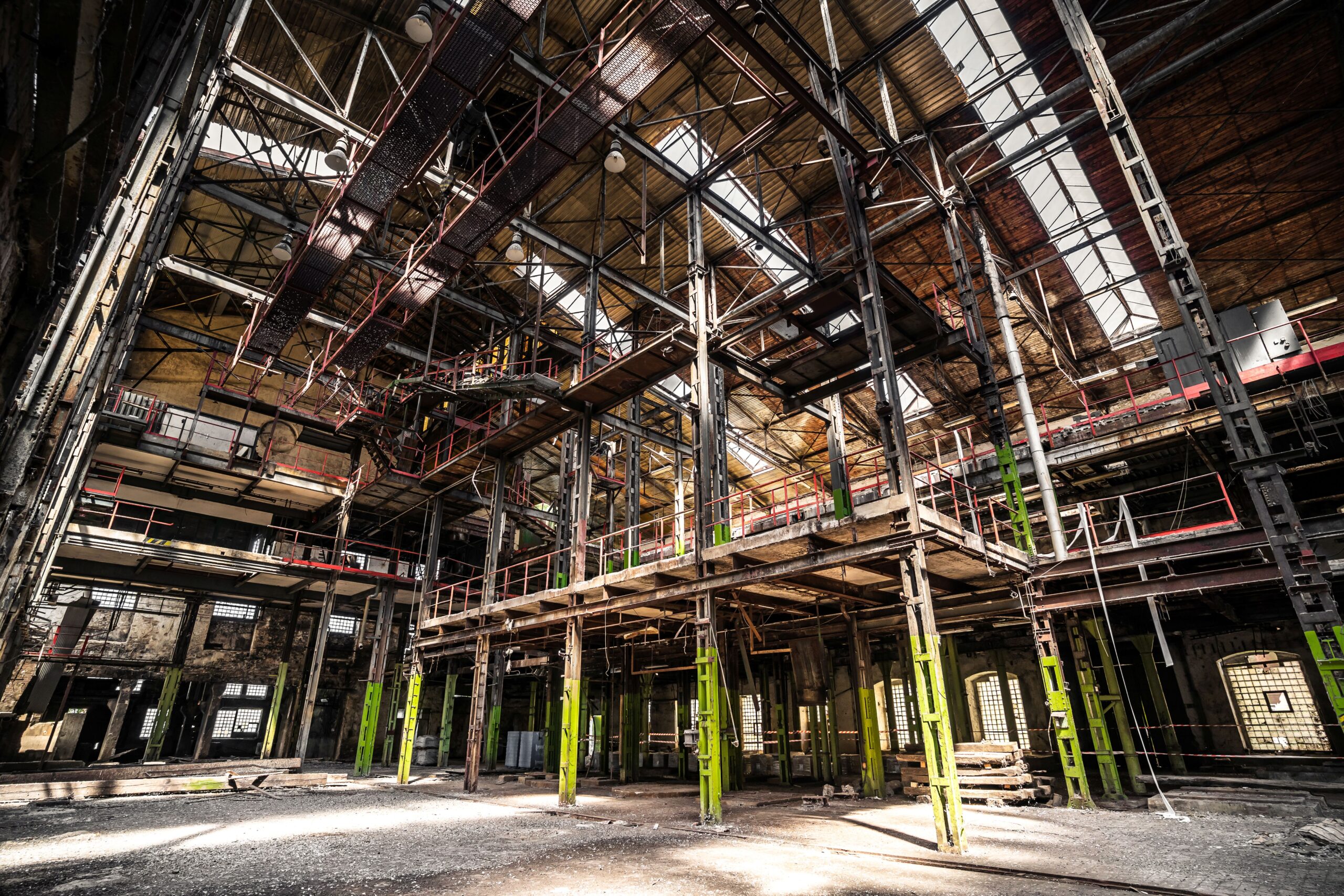
The transformation of Trnava’s former sugar factory into a residential and commercial district is entering a new phase, with UNITED Real Estate preparing an estimated €80 million investment in the restoration of historic industrial buildings, public spaces and infrastructure. The regeneration programme covers four hectares and includes seven surviving buildings, four of which are protected as national cultural monuments. The budget excludes VAT but includes contingency allowances and professional fees, with architectural design costs accounting for €5.6 million.
While residential development at Cukrovar continues to attract buyers, restoring the former industrial complex requires a different financial approach. Some buildings will be converted into residential and commercial properties and subsequently sold, helping to finance the restoration of the main production building, which the developer does not expect to generate a conventional investment return. An international architectural competition involving five shortlisted teams is underway, with the winning proposal expected in spring 2027 and work on the first historic building targeted for 2029. The former workshop building is already earmarked for premium supermarket operator Yeme, which plans to establish its first Trnava store there.
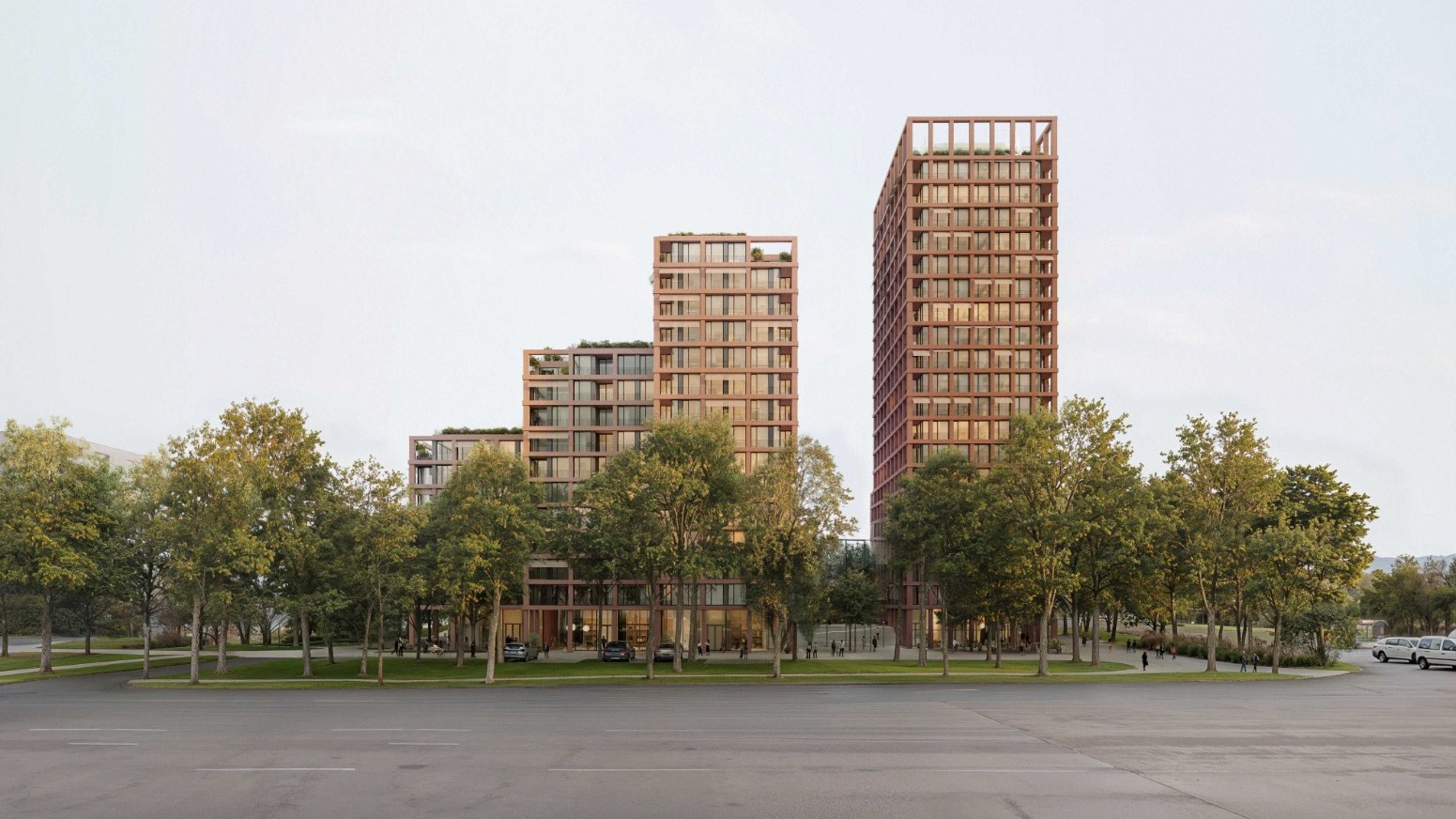
Beyond Cukrovar, UNITED Real Estate is preparing another residential development in Trnava. The company acquired the former site of Slovakia’s first BILLA supermarket from the city in 2025 for €7.1 million and intends to develop a residential building approximately 70 metres high. The project, currently using Spartakovská as its working title, is based on the winning architectural proposal by What Architects. Its final name is expected to be decided in the coming weeks, while architectural preparation continues ahead of environmental assessment and permitting.
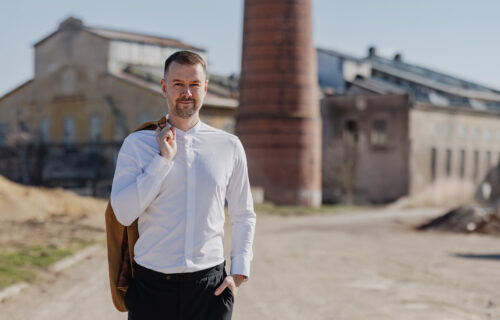
In an interview with CIJ.World, Karol Šebo, CEO of UNITED Real Estate, discusses the economics of industrial regeneration, the international architectural competition, financing protected buildings, Trnava’s residential market, infrastructure requirements and the long-term commercial strategy behind Cukrovar.
CIJ.World: The restoration of Cukrovar’s historic industrial buildings represents one of the most complex elements of the redevelopment. What investment is required, and what makes the project particularly challenging?
Karol Šebo: We are not talking only about restoring historic buildings. The project also includes technical infrastructure, public spaces and integrating the former industrial complex into the surrounding city. The architectural competition covers approximately four hectares, comprising 2.4 hectares of public spaces and 1.6 hectares occupied by buildings. The estimated investment for the entire area is €80 million, excluding VAT. This includes contingency allowances, professional fees, architectural design, engineering and associated costs. Design services alone account for approximately €5.6 million. We consider Cukrovar one of the largest industrial brownfield regeneration projects in Slovakia, and comparable examples of this scale are relatively uncommon in Central Europe. Many historic industrial complexes in the former Czechoslovakia were demolished during the past three decades. Even in Bratislava, relatively few have survived and been successfully adapted to new uses. The restoration of the Jurkovič Heating Plant demonstrates what can be achieved, but Cukrovar presents a considerably larger challenge.
The main production building dates from 1900, when it was reconstructed following a fire in 1899. Of the seven surviving historic buildings, four have the highest level of national cultural monument protection: the main production building, Warehouse No. 1, Warehouse No. 2 and the former administrative building. The workshop building, which we intend to restore first, is recognised as an urban landmark. The former high-voltage station and a residential villa previously occupied by the sugar factory’s management do not have individual heritage protection. These classifications influence what can be done with each building. Where national cultural monument protection applies, important interventions must be agreed with the heritage authorities and comply with strict conservation requirements. We have worked with the Regional Monuments Board for approximately four years. Initially, building trust was not straightforward because heritage authorities are understandably cautious when dealing with developers. Over time, however, we have developed a constructive relationship, and the authorities have contributed to establishing the conditions for the architectural competition. These requirements inevitably increase costs compared with conventional construction, but they are necessary to preserve the site’s authenticity. Our objective is to begin restoration work on the first historic building in 2029, provided the design, permitting and preparation processes proceed according to plan.
CIJ.World: You have launched an international architectural competition for the historic complex. Why was this approach necessary, and what will determine the winning proposal?
Karol Šebo: Given the importance and complexity of the project, we wanted to examine different architectural approaches rather than appoint a single practice directly. We therefore organised an international competition and selected five teams with experience in regenerating existing buildings, particularly industrial heritage. The shortlisted teams bring together architects and landscape designers from several European countries, combining international experience with knowledge of local heritage and planning requirements.
The five finalists are Caruso St John Architects, Architekti BKPŠ and VOGT Landscape Architects; 6a architects, TEN and S2L Landscape Architecture; CRIT., Superatelier and Landscape Practice; GUTGUT, DOXA, OUEST Architecture and Jan Minne; and KOSMOS Architektur & Design, Vidic Grohar Arhitekti and studio boden. Each collaboration brings a different approach to architecture, landscape design and the adaptation of existing buildings. We deliberately selected teams with varied professional backgrounds because we wanted the competition to explore different possibilities for the historic complex rather than concentrate on a single architectural direction.
The experience of the shortlisted practices includes work on cultural institutions, historic buildings, public spaces and complex urban environments. Among the projects associated with the participating teams are Tate Britain’s Millbank redevelopment, Newport Street Gallery in London, Lycée Hôtelier de Lille in France, Tate Liverpool, Chiesi Gardens in Parma and CARA in New York. These references illustrate the range of experience represented in the competition, but every shortlisted team was selected on the strength of its qualifications and potential contribution to Cukrovar.
Experience with industrial regeneration was an important selection criterion. We wanted architects who understand how to work with historic structures without removing the characteristics that make them valuable. Some have completed projects where original industrial machinery and architectural elements were retained and incorporated into new functions. Local knowledge is equally important when dealing with heritage legislation, technical requirements and permitting, which is why several international teams include Slovak partners. We expect an interim review at the end of November 2026, allowing us to assess the initial concepts and provide feedback before the final submissions.
The winning proposal should be selected in spring 2027, and we expect to work with the chosen team for approximately seven years as restoration progresses. The decision will not simply be about architectural appearance. The proposal must demonstrate that the buildings can accommodate different functions, remain economically sustainable and adapt to changing requirements. We do not want to create spaces that can serve only one purpose, because demand could look very different in ten or twenty years.
CIJ.World: What commercial, residential and public functions are planned for the restored buildings, and how advanced are discussions with potential occupiers?
Karol Šebo: Our strategy is to introduce a combination of commercial, residential and public functions, with different uses allocated according to the characteristics of each building. We are considering offices, rental housing, conventional apartments, hospitality, coworking, fitness facilities, restaurants and other services. Warehouse No. 2 is intended for residential conversion, including loft-style apartments, while Warehouse No. 1 is being considered for hotel use. The former workshop building will be the first property we intend to restore. We have already signed a memorandum of cooperation with premium supermarket operator Yeme, which plans to establish its first Trnava store there, with a preliminary opening targeted for 2030. The company already operates in Bratislava and Nitra, and we believe the historic workshop provides an interesting location for its expansion. Having a prospective occupier involved at this stage also helps demonstrate the commercial potential of the restored buildings.
We are discussing possible public functions with the City of Trnava and the regional authorities. One option is to introduce educational facilities, potentially including an elementary school, within the former industrial complex. These discussions are still at the planning stage, but they are important because we want the historic district to serve the wider city as well as Cukrovar residents. The precise combination of functions will depend on demand and the suitability of individual buildings. Our objective is to establish a framework that can accommodate different occupiers while respecting the architectural and heritage requirements of the site.
CIJ.World: The development will eventually accommodate a substantial residential population. How are you addressing transport connections, public infrastructure, schools and everyday services?
Karol Šebo: Transport infrastructure is an important part of the development. We are preparing four roundabouts and a new road connection linking important routes around the northern part of Cukrovar. The construction of all four roundabouts is not yet a contractual obligation, but the City of Trnava intends to formalise this requirement through an agreement in the coming months, and we are prepared to accept it. We expect to obtain the relevant permits in 2027, with the objective of completing the infrastructure by 2029. However, Trnava’s wider traffic situation cannot be solved by Cukrovar alone. The city continues to experience congestion partly because its bypass system remains incomplete, particularly the western and southern sections, which are primarily state responsibilities. What I appreciate about Trnava is that the municipality has taken a proactive approach by preparing documentation for important infrastructure projects rather than waiting until funding becomes available. This puts the city in a stronger position when national or European resources can be allocated.
We have also reached an understanding with the city regarding future public transport stops within Cukrovar. Land has been reserved for these facilities, including a location between the first and third residential phases. The introduction of bus services will depend on the completion of the road infrastructure and the growth of the local population. Regarding education, Trnava benefits from an established network of schools and public facilities. The city has experienced a long-term decline in its registered population, meaning some infrastructure was originally designed to accommodate more residents than it currently serves. Nevertheless, we are planning additional educational amenities within Cukrovar, including a private kindergarten envisaged for the ground floor of the eighth residential phase.
Everyday services are equally important. Commercial activities already operating within the completed development include a small retail store, fitness facilities and a barber shop, while a wine shop is expected to open in 2027. Residents should be able to access services and spend time within their immediate surroundings rather than relying entirely on other parts of the city. One of Cukrovar’s advantages is that the former industrial site is already integrated into Trnava’s established urban area, with existing infrastructure and amenities nearby.
CIJ.World: With several residential phases already underway, how confident are you about continued housing demand in Trnava, and what factors could influence future sales and development decisions?
Karol Šebo: We remain confident about Trnava’s residential market, and that confidence is reflected in our decision to acquire another development site in the city. In 2025, we purchased a property from the City of Trnava for €7.1 million. It is the former location of Slovakia’s first BILLA supermarket, which opened in 1993, situated opposite the city’s largest shopping centre. We are preparing a separate residential development, currently using Spartakovská as its working title, although the final project name will be decided in the coming weeks. The development will include a building approximately 70 metres high, based on the winning architectural proposal by What Architects, with construction currently expected to begin in 2029. The site’s land-use designation has permitted residential development of this height for approximately twenty years. The original planning framework would have allowed a taller structure, but following the architectural competition, we concluded that a more restrained height would be more appropriate for Trnava’s historic skyline.
The project does not yet have a building permit. The architects are completing the architectural study, which will provide the basis for the next stages of preparation. We then intend to begin the environmental impact assessment process while preparing documentation for building-intent approval, which we are targeting for the end of 2027. At Cukrovar, we are seeing an evolution in the profile of our customers. During the first phase, a considerable proportion of purchasers were investors buying apartments for rental purposes. Perhaps around half were primarily interested in investment rather than living in the development. As more residential phases have been completed and the neighbourhood has become established, we have seen stronger demand from owner-occupiers.
One particularly encouraging development this year has been increased sales of three-bedroom and four-bedroom apartments. These larger properties are generally more attractive to families, suggesting that Cukrovar is increasingly recognised as a permanent residential neighbourhood rather than simply an investment opportunity. Buyers can now see completed buildings, operating commercial premises and public spaces taking shape, which gives them greater confidence in the development. We are also introducing another green space in the next phase, including recreational facilities and playgrounds. This reflects our approach to restorative urbanism, where green areas, walkability and opportunities for social interaction are incorporated into the development to improve residents’ quality of life.
Commercially, the results have been encouraging. We have sold approximately 150 apartments annually for three consecutive years, and we consider Cukrovar one of the strongest-performing residential developments in Slovakia outside Bratislava. Nevertheless, the market remains exposed to economic conditions. A serious downturn could reduce annual sales considerably, perhaps from 150 apartments to 100 or fewer, although we believe the established character of the development provides some resilience.
There are also broader demographic factors supporting demand. Western Slovakia continues to attract people from other regions because of employment opportunities, while Trnava benefits from its proximity to Bratislava, including a rail connection that can take approximately 29 minutes. For households unable or unwilling to pay Bratislava residential prices, Trnava offers an alternative while maintaining access to the capital’s employment market. Migration is another factor. Ukrainian residents have contributed to Trnava’s rental market and local economy, and I believe international migration will remain important for Slovakia’s economic development. Foreign residents support housing demand, employment and consumption. If substantial numbers were to leave, rental demand could weaken, while longer-term settlement would provide greater stability.
Mortgage financing also influences purchasing decisions. Interest rates have increased considerably from the period when borrowing costs were below 1%, with rates approaching 4% affecting affordability. Buyers initially hesitated as financing became more expensive, but the market has gradually adjusted. Further increases in borrowing costs or a deterioration in economic conditions would naturally influence demand. Overall, our confidence is based on Trnava’s economic position, transport connections and the growing attractiveness of Cukrovar as an established residential neighbourhood.
CIJ.World: Restoring the main production building will require substantial capital, yet its commercial return may be limited. How do you intend to finance the restoration while maintaining the overall project’s financial viability?
Karol Šebo: This is one of the most important questions concerning the historic part of Cukrovar. We have to approach the restoration realistically because not every building can generate a return that justifies its reconstruction costs. Our strategy is to restore and commercialise the properties gradually, using proceeds from certain buildings to help finance the more challenging parts of the complex. We intend to begin with the former workshop building, followed by Warehouse No. 2, which is planned for residential conversion. We are also considering an additional building connected to the warehouse to create further residential accommodation. These properties can subsequently be sold, with the proceeds contributing towards the restoration of the main production building.
The main production building is the largest and most technically demanding structure within the historic complex. It will require the greatest capital commitment, and we do not expect it to generate a conventional development return. If we manage to restore the building and operate it without making a financial loss, I would consider that a successful outcome. We are not approaching this particular property primarily as a profit-making investment. Its restoration is part of our responsibility for the wider regeneration of Cukrovar. People purchasing apartments in the new residential district expect the surrounding historic environment to be restored, and the wider population of Trnava also has an interest in preserving this part of the city’s heritage.
We do not necessarily intend to retain ownership of every restored building. Several properties are expected to be sold, while their long-term operation will depend on the functions established and the arrangements with future owners or investors. The principal square within the historic complex is intended to be transferred to the City of Trnava so that it becomes part of the public realm.
We are also examining whether European funding could contribute to certain elements of the regeneration, particularly public spaces, green infrastructure and sustainable mobility. However, we have not based the project’s financial feasibility on receiving grants. The €80 million investment estimate does not assume that European funding will cover part of the programme. Support for restoring commercial buildings is more limited under current funding priorities than it was in some previous programmes, but opportunities may exist for public infrastructure and environmental improvements. Any such funding would help reduce the financial burden, although our investment planning does not depend on it.
CIJ.World: Once the historic buildings have been restored and ownership of some properties has transferred to investors or occupiers, how will you ensure that Cukrovar remains an attractive, accessible and commercially successful neighbourhood over the long term?
Karol Šebo: The long-term success of Cukrovar depends on creating an environment that people want to use, not simply restoring individual buildings. Once we sell certain properties, we will no longer have complete control over their future commercial functions. That makes it important to establish the right concept from the beginning and identify owners and occupiers who understand what we are trying to achieve. We have developed five principles to guide the regeneration: the historic sugar factory should become open, connected, accessible, regenerative and authentic. For approximately 150 years, the industrial complex was enclosed by walls and separated from the surrounding city. One of the most significant changes will be opening the site and creating pedestrian connections that allow people to move through it from different directions.
This will transform an inaccessible industrial area into a public urban environment and create the pedestrian activity needed to support shops, restaurants and other commercial facilities. The historic district must become part of everyday life in Trnava rather than operate as a separate destination. Another important development is the municipality’s acquisition of land in the southern part of the former industrial area. The City of Trnava intends to establish a new administrative centre there, potentially bringing together municipal and other public services. We supported this initiative because it could generate regular activity within the neighbourhood, with visitors to public offices also using nearby commercial facilities.
The residential population will provide another important source of demand. Under the current zoning framework, sections A and B of Cukrovar are expected to accommodate approximately 2,000 apartments. The historic industrial area forms another section, while additional residential development may be considered elsewhere within the wider site. As these phases are completed, the growing population should support a broader range of businesses. However, the historic district should not rely exclusively on residents. We also want to introduce functions capable of attracting visitors from other parts of Trnava and the surrounding region. This will help maintain commercial activity throughout the day and improve the long-term viability of the restored properties.
There is also an important architectural dimension. Trnava has a remarkable historic centre, but parts of the city were significantly altered during the second half of the twentieth century. The former sugar factory represents another layer of its history, and its industrial buildings have a character that cannot be recreated through new construction. Architects sometimes refer to this as genius loci, the distinctive atmosphere of a place. You can construct new buildings, streets and public spaces, but you cannot manufacture more than a century of history. Preserving that identity while introducing contemporary functions is what makes the regeneration particularly important.
If we achieve the right balance, Cukrovar can become an attractive part of Trnava and demonstrate how Slovakia can successfully preserve and reuse its industrial heritage. The challenge now is to deliver the historic restoration with the same long-term commitment that has guided the residential development.
Source: © CIJ.World