Monday, 19 October 2026
Dubai’s residential property market is moving into a more demanding stage of its expansion as a growing volume of completed housing reaches the market at the same time as sales activity begins to moderate.
During the first half of 2026, 104 real estate projects with an investment value exceeding AED 111 billion were completed across Dubai, compared with 75 projects during the same period last year. The number of completed projects increased by almost 39%, while their combined investment value rose by 52%, according to Dubai Land Department data cited by Kamco Invest.
Residential delivery was an important part of that increase. Some 24,537 new homes were completed during the first six months of the year, up from 18,043 in H1 2025. The value of land associated with completed developments also increased sharply, reaching AED 19.5 billion compared with AED 8.3 billion a year earlier.
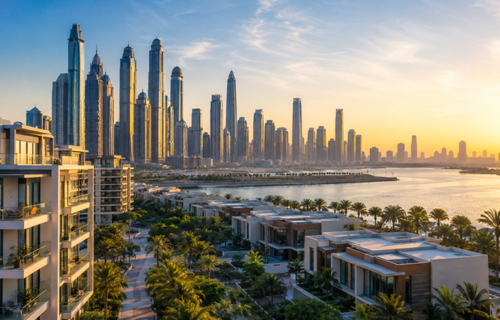
The figures demonstrate the scale of Dubai’s development pipeline moving from construction into completed property. However, Q2 market research suggests this new supply is arriving as conditions in the residential market become more balanced after several years of exceptional growth.
Savills recorded around 35,900 residential transactions during Q2, representing a 19% decline from the previous quarter. Off-plan properties continued to dominate activity, accounting for approximately three-quarters of transactions, but average apartment prices declined by around 4% quarter-on-quarter while villa and townhouse values showed a smaller adjustment.
Research from Cushman & Wakefield Core similarly identified a change in market direction during Q2. More than 13,000 residential units were completed during the quarter, while average citywide sales prices and rents came under downward pressure. A further substantial volume of housing was expected to reach completion during the second half of 2026.
The combination marks an important transition for Dubai. For much of the recent property cycle, attention centred on the strength of off-plan sales and rapidly rising residential values. Increasingly, the investment question is shifting towards how effectively the market can absorb properties as projects reach completion and investors take possession.
This does not necessarily point to a market-wide oversupply problem. Dubai continues to benefit from population growth, international capital inflows and its position as a regional business centre. Furthermore, the number of properties formally scheduled for delivery frequently exceeds the number ultimately completed within the original timetable.
There are nevertheless signs that supply exposure is becoming more important in determining individual asset performance. Communities receiving large numbers of competing apartments may experience greater pressure on rents and resale pricing than established districts where new construction remains more restricted.
Developers also appear to be responding. Cushman & Wakefield Core reported a significant reduction in residential launches during the first half of the year compared with 2025. This could eventually moderate the volume of future supply, although projects already under construction will continue to feed completed stock into the market.
The change is particularly significant for investors who purchased properties during the recent off-plan boom. As developments are handed over, units that previously existed primarily as investment contracts become homes competing for tenants and buyers in the secondary market. Rental performance, service charges, location and the amount of competing supply within individual communities consequently become more important to investment returns.
Prime residential property continues to show greater resilience. Knight Frank recorded 296 Dubai homes sold for more than $10 million during H1 2026, with a combined value of approximately $5.1 billion. Of these, 131 transactions occurred during Q2. The figures underline how conditions at the top of the market can differ substantially from those affecting mainstream apartment developments.
The emerging picture is therefore less one of a broad correction than a market becoming increasingly differentiated. Prime locations, established communities and developments with constrained competing supply may continue to perform differently from districts experiencing intensive construction and large numbers of simultaneous handovers.
There are signs of similar caution in the listed market. Dubai’s stock-market real estate sector declined 2.2% during August even as the broader DFM General Index increased 0.7%. Emaar Properties nevertheless remained the exchange’s most actively traded company by value during the month, with AED 4.2 billion of shares changing hands.
Dubai’s next property test will therefore be less about its ability to launch and sell projects than its capacity to absorb the homes already moving through the construction pipeline. With more than 24,500 residential units delivered during the first half alone, the transition from off-plan growth to completed stock is becoming increasingly visible.
For developers, investors and lenders, that makes absorption rates, rental performance and secondary-market liquidity increasingly important indicators. Dubai’s property expansion remains substantial, but the market entering the second half of 2026 is becoming more selective — and the performance gap between individual locations and projects is likely to become more important than the direction of the citywide market as a whole.