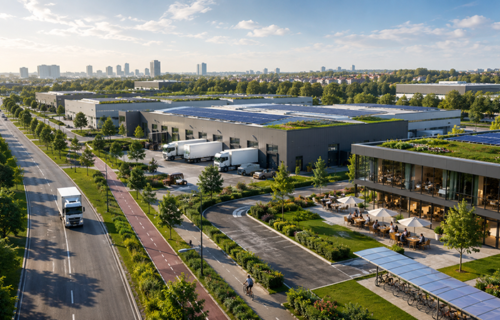
Industrial real estate is evolving beyond its traditional role as a location for manufacturing and warehousing. Labour shortages, automation, sustainability requirements and the growth of urban logistics are influencing how companies assess industrial space. In addition to location and building specifications, occupiers are placing greater emphasis on employee accessibility, workplace quality and the availability of on-site services, according to Colliers.
The Czech industrial market has gradually shifted in recent years. While transport connections, warehouse specifications and rental costs remain important, companies are increasingly evaluating how industrial parks support their workforce.
“Companies are placing greater emphasis on the overall environment offered by industrial parks. In addition to technical parameters and transport access, factors such as employee facilities and services have become more important during the site selection process,” said Jan Kurfürst, analyst at Colliers.
Employee accessibility gains importance
Labour availability has become an increasingly important consideration when selecting industrial locations. Beyond freight transport, companies are evaluating how easily employees can reach workplaces using public transport, rail services, cycling infrastructure and road networks.
According to a survey by recruitment company Grafton Recruitment / Gi Group, 57% of respondents said they would prefer a commute of no more than 30 minutes. The survey also found that younger employees place increasing value on work-life balance, transport accessibility and workplace quality when choosing an employer.
Higher expectations for workplace quality
Automation and advanced manufacturing technologies are changing workforce requirements across logistics and industrial operations. As companies employ more technicians, engineers and other skilled workers, demand has grown for workplaces offering better employee amenities.
Developers are responding by incorporating facilities such as cafeterias, cafés, retail outlets, fitness areas and landscaped outdoor spaces into new projects. Some developments also include plans for residential components. One example is Urbanity Campus Tachov, where residential housing has been proposed alongside industrial and logistics facilities.
Environmental performance also continues to influence new developments. Certifications such as BREEAM and LEED, photovoltaic systems, rainwater management, electric vehicle charging infrastructure and increased green space have become increasingly common in new industrial projects. Occupiers are also requesting more natural daylight within warehouse and production facilities to improve working conditions.
Demand grows for smaller industrial units
Colliers also reports growing interest in Small Business Units (SBUs), typically ranging from 300 sqm to 1,000 sqm. These units generally combine warehouse space, offices, showroom facilities and operational areas within a single building.
SBUs are commonly sought by companies involved in e-commerce, urban logistics, light manufacturing, technical services and retail, where proximity to customers and rapid delivery are important operational requirements.
According to Colliers’ market data, demand for SBUs has nearly doubled since 2023, although supply remains relatively limited as much of the Czech industrial development pipeline has historically focused on larger logistics and manufacturing facilities.
“Developers increasingly recognise that smaller occupiers can expand over time within the same business park or portfolio, creating opportunities for long-term tenant growth,” said Kurfürst.
Industry research from several international property consultancies indicates that flexibility, sustainability, employee wellbeing and urban accessibility are becoming increasingly important considerations for industrial occupiers across Central Europe, reflecting broader changes in manufacturing, logistics and workforce expectations.