Sunday, 4 October 2026
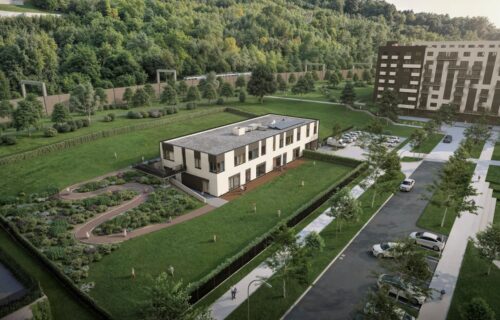
AFI has started construction of a new kindergarten within its AFI City mixed-use development in Prague’s Vysočany district, expanding public infrastructure as the former industrial area continues its transformation into a residential and business neighbourhood.
Located near Kolbenova metro station, the facility will accommodate 96 children across four classrooms and is scheduled for completion in November 2027. Once completed, the kindergarten will be operated by Prague 9 Municipality.
The two-storey building has been designed to meet current standards for early childhood education and will include food preparation facilities, support space for children’s sports activities and outdoor areas for recreation, education and physical exercise. The project was designed by architectural studio ORTOGONAL, while Metrostav CZ has been appointed as the general contractor.
The kindergarten forms part of a broader programme of infrastructure improvements accompanying the development of AFI City. At the same time, AFI has begun the second phase of a cycling route running through the development alongside the railway corridor, improving east-west connectivity within the district.
Additional works include extending the railway noise barrier to a total length of 372 metres and delivering new landscaping around both the kindergarten and the wider development to enhance public space and environmental quality.
The investment responds to growing demand for preschool facilities generated by the ongoing redevelopment of the former Vysočany brownfield area, where residential construction has significantly increased the local population in recent years.
AFI has been active in the Czech market since 1997 and currently manages a portfolio of office and residential properties. Its office assets include AFI Karlín, AFI Vokovice, AFI City, Classic 7 Business Park, Avenir Business Park and AFI Port7. Under the AFI Home brand, the company also operates nearly 900 rental apartments across Prague and is currently developing additional residential projects in Strašnice and Nová Elektra.
The project reflects a broader trend across Prague’s large-scale mixed-use developments, where developers are increasingly incorporating schools, childcare facilities, transport infrastructure and public spaces alongside residential and commercial buildings. As the city continues to regenerate former industrial districts, investment in social infrastructure has become an increasingly important component of long-term urban development.