Saturday, 19 September 2026
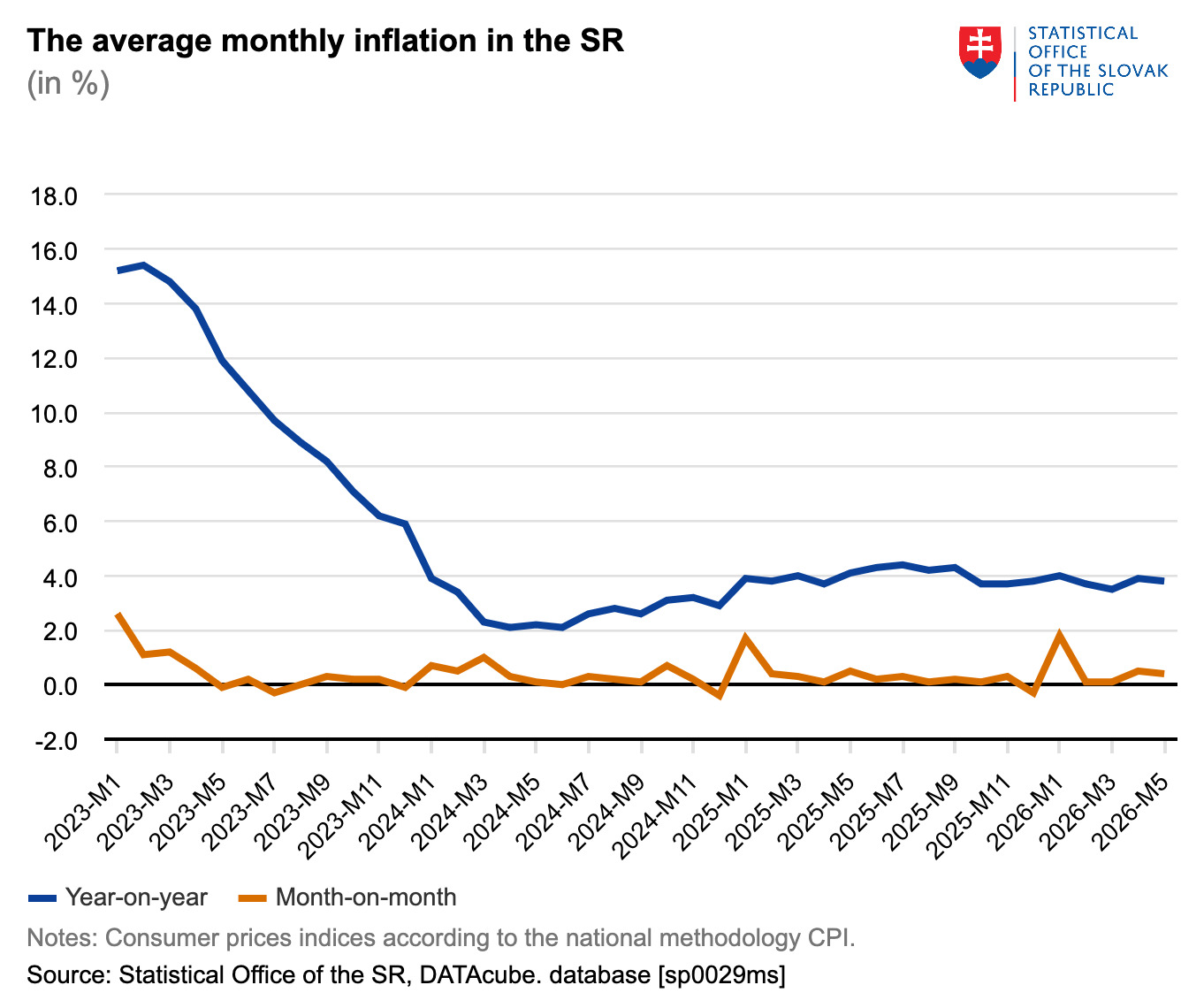
Consumer price growth in Slovakia slowed slightly in May, with annual inflation easing to 3.8% from April, according to data published by the Statistical Office of the Slovak Republic. On a monthly basis, consumer prices increased by 0.4%.
The moderation in inflation was supported by lower food prices compared with a year earlier, while transport and housing-related costs remained among the main drivers of overall price growth.
Food and non-alcoholic beverages, which account for around 21% of household spending, rose by 0.6% month-on-month in May after three consecutive months of declines. Higher prices for meat and fruit contributed to the increase, although food prices were still 0.3% lower than a year earlier. This marked the first period of annual food price deflation since late 2025 and the weakest annual growth rate for the category in more than two years.
Housing and energy costs continued to exert significant upward pressure on inflation. Prices in the housing, water, electricity, gas and other fuels category increased by 0.5% month-on-month and were 6.7% higher than a year earlier. The increase reflected higher costs for owner-occupied housing, rents, water supply and sewerage services. Heat energy prices were up 28% year-on-year, largely due to regulatory changes introduced at the start of the year.
Transport prices rose by 1% compared with April, although the pace of growth slowed significantly from the 4.6% increase recorded a month earlier. On an annual basis, transport prices were 9.4% higher, representing the fastest increase in the category since late 2022. Fuel prices rose by 19.7% year-on-year, while postal and courier services also became more expensive.
Other categories contributing to inflation included recreation, sport and culture, where prices increased by 4.8% year-on-year, and restaurants and accommodation services, where prices rose by 5.2%.
The Statistical Office noted that inflationary pressures also eased in furnishings and household equipment, as well as clothing and footwear. Growth in prices for alcoholic beverages and tobacco moderated, although tobacco prices continued to reflect the gradual impact of higher excise duties.
During the first five months of 2026, consumer prices increased by an average of 3.8% compared with the same period last year.
Core inflation, which excludes regulated prices and administrative measures, stood at 2.3% year-on-year in May, while net inflation, which additionally excludes food prices, reached 3.3%. Both measures increased by 0.4% on a monthly basis.
The Statistical Office also highlighted methodological changes introduced in January 2026, including the adoption of the revised COICOP 2018 classification and an updated consumer basket based on household spending patterns in 2024. Under the revised basket, housing and energy account for 21.8% of household expenditure, while food and non-alcoholic beverages represent 20.9%.