New EU Prospectus Rules Create Opportunities, and Headaches, for Polish Issuers

From December 2024, listed companies across Europe gained wider freedom to raise capital without preparing a full prospectus. The reform, known as the EU Listing Act, was published in the Official Journal on 14 November 2024 and took effect on 4 December 2024.

The most visible change is the new 30 percent threshold. Companies can now admit additional shares equal to almost a third of their existing capital in a 12-month period without a full prospectus. For those listed for at least 18 months, there is an even more flexible option: any volume of identical shares can be offered and admitted with only a short disclosure document capped at 11 pages, instead of a multi-hundred-page prospectus.

It remains important to analyse the rules separately for offerings and for admissions to trading. A company may be exempt from preparing a prospectus for the offer itself, for example when addressing a limited circle of professional investors, but still be required to produce the short disclosure document for the admission of those shares to the exchange.

The definition of a public offer under EU law is broad: it covers any communication that contains enough detail about securities and their terms to allow an investor to make a decision. The “fewer than 150 persons” rule is not part of the definition but an exemption threshold.

Polish companies face an additional layer of complexity. Domestic company law requires that the terms of closed or open subscriptions be published in the official court and business journal. That obligation is waived for offers based on a full prospectus or an information memorandum under Polish law, but the new EU “short disclosure document” is not yet mentioned in the statute.

Until the code is updated, issuers that use the EU exemptions but follow an open or closed subscription process must still place announcements in the journal. This can cause difficulties, since Polish practice often sets the issue price only at the final stage, with the board empowered to decide. The workaround is to publish the authorisation in the announcement and notify the final price separately in a current report.

Private placements are less affected, as individual offers to designated investors fall outside the announcement format. In these cases, companies can rely more directly on the new EU exemptions.

The broader message is that while Brussels has simplified the rules to cut costs and speed up equity fundraising, national company law in Poland still imposes extra steps. For Warsaw-listed firms, the reforms open the door to quicker follow-on offerings, but legal teams will need to navigate carefully until domestic rules are aligned.


CONTERA Brings Its CITYSITE Concept to Brno with Vídeňská Acquisition

The Czech developer and investment group CONTERA has expanded into Brno with the takeover of a well-known business park on Vídeňská Street. Public filings confirm that the company Hampshire Brno, the previous owner of the site, was recently renamed Citysite Brno, Vídeňská and is now managed by CONTERA partners. The firm also shifted the entity’s headquarters to its own offices near Prague, leaving little doubt that the Brno complex has joined the group’s portfolio.

The site, often referred to locally as Bibus, sits in the southern part of the city with direct access to major roads leading to Vienna and Bratislava as well as tram links to the centre. It includes a mix of office and light-industrial buildings, many of them in active use. According to registry changes made in September, CONTERA intends to re-shape the complex under its CITYSITE brand, which emphasises flexible small-business units that can be tailored for different uses, from showrooms and research labs to medical practices or sport facilities.

The group has not disclosed the size of the deal or the scale of its planned investment. Company representatives have previously said CITYSITE schemes are designed to combine workspace with services, high design standards, and sustainability features such as renewable power and charging stations. The specific programme for Brno has not yet been confirmed, but the company’s existing projects suggest a mix of redevelopment and new construction.

For CONTERA, Brno marks an important geographic step. The developer has already launched CITYSITE parks in Říčany near Prague and is advancing similar projects in Ostrava, Liberec, and Bratislava. Each is being built on revitalised brownfield plots, in line with the group’s stated strategy of giving a second life to underused sites.

The Brno complex is expected to be placed within CONTERA’s investment fund, which holds non-industrial assets in Czechia and Slovakia. The fund, created last year, groups together CITYSITE, office, retail, and residential developments for qualified investors.

While detailed plans for Vídeňská have yet to be unveiled, the registry changes leave no doubt that CONTERA is making its entry into Brno. For the Moravian capital, the arrival of the CITYSITE brand suggests that one of its older business parks will soon be transformed into a more modern and versatile hub.

Poland’s Outlet Market: From Niche to Notable in Europe’s Retail Landscape

For years, outlet centres in Poland were seen as a small and secondary part of the retail sector. That perception is beginning to shift. A series of high-profile openings and expansions in 2025, coupled with stronger brand interest and investor appetite, has brought the format into sharper focus.

Today, Poland counts 15 outlet centres, which together make up just 2% of the country’s retail floor space. By comparison, retail parks and convenience centres dominate development pipelines, with nearly 545,000 square metres of new retail added in 2024 alone. Yet outlets are carving out a stronger role. The opening of Designer Outlet Kraków in May, with more than 21,000 square metres and over 100 shops, was among the largest debuts of its kind in Europe in recent years. In Gdańsk, an expanded food court and an enlarged sportswear offer have underscored how operators are moving well beyond the traditional focus on discounted fashion.

This repositioning mirrors a wider European trend. Across leading schemes, food and beverage has grown from a marginal share of units to a central feature. At Portsmouth’s Gunwharf Quays in the UK, for example, the proportion of dining outlets has risen from about a tenth of the total five years ago to around a sixth today. Operators are also investing in aesthetics, comfort, and leisure experiences, blending retail with hospitality to keep visitors on site longer.

The numbers show why Poland is catching attention. Outlet space density here stands at roughly 7 square metres per 1,000 inhabitants, compared with 11–13 square metres in the UK and Italy. Spain is at about 8, while France is closer to 6. In practice, this means Poland remains under-supplied by European standards, leaving room for new schemes or conversions of weaker shopping centres into outlets.

Investors are noticing. Transaction volumes in European factory outlet centres reached €653 million in the first half of 2025, topping €1 billion by late summer. Outlets have shown resilience compared to traditional malls, offering attractive returns at a time when other retail formats face pressure. Operators such as VIA Outlets have reported sales growth across their portfolios, with stronger contributions from food, sports, and lifestyle brands.

The tenant landscape in Poland is broadening as well. Premium names like Baldinini and Wellensteyn are joining popular labels such as adidas and New Balance, while the return of GAP shows that even global brands see outlets as a core sales channel. Recent surveys indicate that 16% of international retailers now list Poland as a target for expansion, up from just 10% a year earlier.

The country’s economic backdrop makes this shift even more significant. While many Western European markets are only edging out of a slowdown, Poland’s economy is expected to grow by more than 3% in both 2025 and 2026—among the strongest forecasts on the continent. Rising household consumption and expanding car ownership are strengthening the catchment for suburban outlet schemes, which often rely on improved road networks to draw visitors.

In a European landscape where new outlet centres remain scarce and most growth is delivered through store additions or expansions, Poland is becoming a case study in untapped potential. Outlets remain a niche, but they are increasingly seen as a strategic tool: for brands, a way to connect with customers while controlling costs; for investors, a resilient retail asset class; and for the market overall, a format with room to grow in both scale and sophistication.

Source: comp.

Visa Fees, Talent Wars, and the Global Race for Growth

The United States and the United Kingdom are charting sharply different courses on how they treat the world’s brightest workers. Washington has announced a new six-figure charge for firms that bring in expatriate staff, while London is weighing plans to cut or even waive fees for graduates of top universities. Together, these moves highlight how immigration policy is becoming a frontline tool in the battle for economic advantage.

In America, the forthcoming charge—set at $100,000 per hire beginning in 2026—aims to encourage firms to rely more heavily on domestic talent. Supporters say this will open jobs for local graduates. Yet industry leaders caution that the cost could push innovative work abroad, especially for smaller companies that lack the resources of global giants. Many of the firms that helped create Silicon Valley were founded by immigrant entrepreneurs, and analysts warn that higher barriers could erode one of the country’s main strengths.

In Britain, the Labour government is signalling a different intent. Officials are considering scrapping or sharply reducing fees for highly skilled individuals, particularly those with elite academic backgrounds. The move would address long-standing complaints from universities and research institutes that current charges discourage talent from coming. Advocates argue that lower costs would strengthen the country’s position in fields such as artificial intelligence, life sciences, and clean energy, where competition for specialists is intense.

Other countries are already competing with clearer and often cheaper systems. Canada charges a little over C$1,500 for skilled worker applications and offers a direct route to residency. Australia’s independent skilled visa is priced under A$5,000. Germany’s Blue Card sets a salary floor of roughly €48,000, while France and the Netherlands use similar thresholds with modest state fees. Ireland requires salaries of €38,000 or more for its critical skills permits. Outside Europe, Singapore and the United Arab Emirates link their visas to high salaries, but their systems are streamlined and designed to draw in top earners. Japan uses a points system rewarding qualifications, while Taiwan offers a “gold card” with clear salary benchmarks.

Experts stress that lowering barriers pays dividends. Research shows that skilled migrants contribute disproportionately to patents, start-ups, and scientific breakthroughs. Raising costs, by contrast, tends to divert talent to other destinations. For the U.S., the risk is that companies will shift projects abroad or slow hiring, while the U.K. could gain ground if it follows through with lower charges.

Recruitment agencies are caught in the middle. In the U.S., the complexity and cost of compliance may increase demand for specialised advice, relocation support, and workforce planning, even as some firms retreat from international hiring. In Britain, lower fees could intensify the scramble for skilled workers, prompting agencies to focus more on employer branding and strategy. But agencies that rely mainly on processing paperwork may see their role diminish as systems become more digital and transparent.

For policymakers, the advice from economists and business leaders is clear: talent mobility is not just a migration issue, it is an economic strategy. Countries with aging populations and slowing productivity cannot afford to turn away researchers, engineers, and entrepreneurs. Those that keep costs low and pathways clear are more likely to capture the investment and innovation that follows. Those that make entry prohibitively expensive may protect some local jobs in the short term but risk falling behind in the industries that shape the future.

The outcome of these competing approaches will determine not only where talented people choose to live and work, but also where new companies are founded, where research is carried out, and ultimately where growth and prosperity take root.

Air Travel’s Next Test: Planes, People, Climate, and Safety in an Era of Growth

The world’s aviation sector is growing faster than at any time since the pandemic, but its success rests on far more than passenger numbers. Behind the surge in demand is a complex mix of production backlogs, maintenance bottlenecks, workforce shortages, environmental pressures, and safety concerns that will define the next two decades of flight.

Airbus and Boeing are under pressure to deliver jets at a scale never seen before. Together, they are expected to hand over more than 1,300 aircraft in 2025, with ambitions to exceed 2,000 annual deliveries later this decade. Yet the global order backlog is so large it equals more than half of today’s active fleet, signalling years of unmet demand. Airbus is pushing toward higher monthly production rates, while Boeing’s output remains under strict oversight.

Alongside new deliveries, airlines face heavier bills for repair and maintenance. Annual spending on servicing aircraft is set to climb toward $120 billion in 2025. Older jets are flying longer than planned, while newer models are showing teething problems that require fixes earlier than expected. With limited repair slots and staffing shortages, airlines are forced to ground aircraft longer, driving up costs and limiting capacity.

A shortage of skilled mechanics is one of the sector’s biggest headaches. Retirements are outpacing training, leaving airlines short of licensed technicians. Even optimistic forecasts suggest the gap will persist into the 2030s. Training schools and apprenticeship schemes are expanding, but the pipeline is struggling to match demand. Without enough qualified workers, airlines risk delays, higher ticket prices, and compromised turnaround times.

Growth in fleets collides with climate pledges. Aviation contributes a modest share of global carbon dioxide emissions, but high-altitude effects mean its warming impact is greater. Sustainable aviation fuel use doubled in 2024, yet it still makes up less than one percent of total jet fuel consumption. Research into hydrogen and electric aircraft is advancing, but large-scale deployment is decades away. This leaves governments and airlines facing tough questions: can airport expansions and record jet orders be squared with climate targets?

The demand boom is not evenly spread. Asia and the Middle East are leading with new airports and fleet growth, while Europe and North America focus more on replacing ageing planes. India alone has two major airports scheduled to open by 2026, while Gulf carriers continue to anchor global hubs with new long-haul fleets. This uneven geography raises questions about where future maintenance and training capacity should be built.

By historical standards, flying remains remarkably safe. Accident rates have fallen over decades thanks to better technology and procedures. Yet 2024 saw a spike in incidents and fatalities compared with the year before, a reminder that safety cannot be taken for granted. Runway excursions and landing-gear failures remain the most common events. With production lines under pressure and airlines relying on stretched maintenance teams, regulators warn that vigilance is critical to avoid slipping standards.

For travellers, the implications are both visible and hidden. Delivery delays mean older aircraft are staying in service longer, affecting comfort and raising questions about reliability. Congestion at airports may worsen as capacity struggles to keep up with demand. Ticket prices could edge higher if repair bottlenecks and workforce shortages increase airline costs. At the same time, passengers are being asked to support climate goals through higher levies, encouragement to use rail on short routes, or offset schemes that remain controversial.

Aviation’s growth is both a sign of recovery and a source of strain. The industry must deliver thousands of new aircraft, overhaul its maintenance and training pipelines, and keep safety and climate promises intact. For governments and airlines, the challenge is to balance global connectivity with environmental limits, workforce realities, and public trust. If those balances hold, the skies will remain open and safe; if not, congestion, costs, and climate contradictions may cloud the horizon.

Source: comp.

Russia’s Energy Grip on Europe Falls Sharply Since 2021, But Influence Persists in the South

Europe’s reliance on Russian oil and gas has undergone a dramatic reversal since 2021, with Moscow’s once-dominant position in the continent’s energy markets reduced to a fraction of its former share. A combination of sanctions, nationalisations, and supply diversification has left Russian firms with far less influence over European households and industry than before the war in Ukraine.

In 2021, Russian suppliers provided close to half of the European Union’s imported natural gas—around 155 billion cubic metres per year. That flow was underpinned by pipelines such as Nord Stream 1, Yamal–Europe and transit routes through Ukraine, with additional volumes moving via the Black Sea into Türkiye and the Balkans. Many countries in Central and Eastern Europe were almost entirely dependent on Russian molecules for heating and power, while Russian companies also controlled major underground storage facilities in Germany, Austria and the Netherlands. By contrast, in 2024 Russia accounted for only about 11 percent of Europe’s pipeline gas and less than 19 percent once liquefied natural gas is included.

Oil followed a similar path. Before the war, Russia was the largest single source of crude for the EU, covering nearly a third of imports, and supplied close to 40 percent of refined oil products such as diesel. Companies like Rosneft and Lukoil held strategic positions inside the bloc, including majority stakes in three German refineries and full ownership of major facilities in Romania and Bulgaria. Today, seaborne crude from Russia has been largely eliminated under EU bans, reducing its share to roughly 2 percent, while Berlin has placed Rosneft’s German refinery stakes under state trusteeship. Lukoil has sold or is in the process of selling assets, including its 84-megawatt Romanian wind farm, which passed to Greece’s PPC in 2024, and its Burgas refinery in Bulgaria, now on the market.

The restructuring has been especially visible in Germany, where Gazprom’s former subsidiary Gazprom Germania was nationalised and reborn as Securing Energy for Europe (SEFE), a state-owned company that now controls key storage, trading, and pipeline interests. Poland has taken similar steps, removing Gazprom from the Yamal–Europe pipeline on its territory and seizing Novatek’s local assets.

Renewable energy, once a minor sideline for Russian groups, has also slipped away. Lukoil’s wind and solar investments in Romania and Bulgaria were small compared with its fossil portfolio and have largely been divested. Gazprom Neft’s Serbian unit NIS continues to build modest solar capacity, but larger wind projects remain stalled.

Yet while Moscow’s overall position has been cut back sharply, it has not disappeared altogether. Gas still flows to Türkiye and onward to southeast Europe through pipelines under the Black Sea, feeding countries such as Hungary, Slovakia, and Serbia. Russian companies also remain active in Serbia’s oil and gas group NIS and in Bosnia’s refinery network, while Moldova continues to wrestle with the legacy of Gazprom’s role in its gas distributor.

Another enduring channel is liquefied natural gas. Shipments from Russian producers continue to arrive at European ports, particularly in France, Belgium, Spain, and the Netherlands, making up a notable share of imports. Brussels has set a 2027 deadline to end these purchases, but the trade remains one of the most sensitive political questions in energy policy.

Europe’s households have felt the impact of these shifts most directly. Gas once accounted for nearly a third of domestic energy use, leaving families exposed to swings in Russian deliveries. But with new LNG terminals, pipeline links to Norway and Azerbaijan, and an EU-wide policy of filling storage to over 90 percent before winter, that vulnerability has eased. Italy and Hungary remain relatively gas-heavy in their household mix, while non-EU countries such as Serbia, Moldova and Türkiye still source significant volumes from Russia.

The transformation is stark: in 2021 Moscow was both the EU’s largest gas supplier and its top crude provider, with controlling stakes in critical refineries, storage hubs and cross-border pipelines. By 2025, its share of Europe’s energy mix is a fraction of what it was, its refinery stakes are neutralised under trusteeship, and its renewables footprint has almost vanished. What remains are contractual ties in a handful of countries, physical flows through Black Sea pipelines, and continued sales of liquefied gas, which the EU has pledged to phase out by 2027.

Source: comp.

EREN Puts Brașov at the Centre of Its Long-Term Development Strategy

Brașov has become one of Romania’s most dynamic regional hubs, with rapid growth creating both opportunities and pressure on infrastructure and public services. EREN Cons SRL, a Brașov-based contractor with 20 years of experience and more than 400 projects nationwide, is playing a central role in this transformation. With a turnover of €42.25 million in 2024 and major contracts under execution across infrastructure, healthcare, and residential projects, the company is using its hometown as the showcase for its long-term vision.

In a Q&A with CIJ EUROPE, Horia Sontelecan outlined EREN’s involvement in Brașov, the challenges of building in a fast-expanding city, and how the company is adapting to wider economic conditions.

Q: What is EREN’s current involvement in Brașov, and how do you see these projects contributing to the city’s real estate growth?

At EREN, we are currently advancing several major projects in Brașov that touch directly on public services and private development. The Park & Ride Bartolomeu, a four-level facility valued at 85.6 million lei, will deliver over 700 parking spaces and 13 electric charging stations, supported by an automated access and smart traffic system. We are also building the new RAT Brașov garage and repair complex, worth 132 million lei, which will house and service 157 buses and incorporate photovoltaic panels and charging infrastructure for the city’s electric fleet.

In parallel, we are constructing the new regional headquarters for the Romanian Fiscal Authority and modernizing hospitals in Sfântu Gheorghe and Zărnești, while developing a new healthcare and hospital centre in Bușteni. On the private side, we continue to deliver residential and mixed-use schemes such as Onix Residence Nord, one of the largest residential projects in our portfolio. Together, these initiatives add new capacity to mobility, healthcare, and housing while directly supporting the city’s appeal for residents and investors.

Q: What are the main challenges you have encountered in executing projects in Brașov, and how have you addressed them?

The most significant challenges remain zoning and permitting, which can take up to 24 months in urban centres, along with the logistics of building in high-growth districts and the shortage of skilled labour. Shifting demand patterns can also alter project timelines. To manage these issues, we work closely with local authorities, apply structured project management, and use digital tools such as Building Information Modelling to track progress in real time. This allows us to adjust schedules and designs efficiently. For example, BIM has enabled us to detect and resolve design clashes before construction, reducing potential delays and costs. By building flexibility into procurement and applying value engineering, we maintain project efficiency without compromising quality.

Q: How do EREN’s construction projects in Brașov differentiate themselves from others in the region?

Our focus is on measurable sustainability and long-term operational value. For instance, the RAT Brașov garage includes photovoltaic panels designed to generate renewable power for the complex, while the Park & Ride Bartolomeu will feature a partially green roof terrace designed as a landscaped public space. Across our portfolio, we integrate smart building controls and heat recovery ventilation systems, and we align our designs with Romania’s NZEB (Nearly Zero Energy Building) standards. We also maintain ISO 9001, ISO 14001, and OHSAS 18001 certifications, which ensure compliance with international quality, environmental, and safety benchmarks. Our goal is not only timely delivery but ensuring buildings remain cost-efficient and environmentally responsible throughout their lifecycle.

Q: How is EREN adapting its Brașov strategy to changing interest rates, higher construction costs, and wider economic conditions?

Our approach is based on diversification and resilience. By balancing infrastructure, healthcare, industrial, and residential projects, we spread exposure to economic shifts. We also include indexation clauses in contracts to offset cost increases, and we re-baseline schedules against clear milestones to maintain delivery. In practice, this means recalibrating procurement when materials such as steel and concrete face sharp price swings. Strong partnerships with both public and private stakeholders are vital to sustaining progress, and we continue to invest in digitalization and staff training. With 130 employees and more than 300 subcontractor partners, we rely on continuous skills development to adapt to market pressures while keeping projects on track.

Q: Looking ahead, what role does Brașov play in EREN’s overall strategy?

Brașov is central to our long-term vision. It is where our headquarters are located and where many of our most visible projects are being delivered. From large-scale mobility infrastructure to hospital modernization and landmark residential schemes, Brașov allows us to integrate public and private projects into a coherent urban growth strategy. These efforts reflect our commitment to building sustainable, durable, and efficient solutions that can set a benchmark not only for the city but for the wider region.

© 2025 www.cijeurope.com

Canadian Pension Fund QuadReal to Lend £2.5bn Into UK Property as Market Pressures Mount

QuadReal, the property arm of one of Canada’s largest pension investors, is preparing to channel £2.5 billion into loans for British housing, data centres and industrial assets over the next few years. The decision highlights how international capital is stepping in to support sectors where traditional lenders have been more cautious.

The group has already built a significant presence in Britain through equity holdings in rental housing and student accommodation. It now plans to expand into debt finance, with the UK potentially becoming one of its biggest global markets.

A shortage of new homes continues to weigh heavily on the housing market. Recent figures show the number of new build-to-rent projects starting construction fell during the first half of the year, raising concerns that supply is slipping even further behind demand. Analysts note that additional sources of financing could be crucial for schemes that might otherwise struggle to secure backing. QuadReal’s lending will be aimed at rental housing, student residences and managed apartment blocks, all sectors where need is high and where institutional investors see steady returns.

The Canadian fund is also eyeing digital infrastructure. Britain’s demand for data storage and processing power has surged with the growth of cloud computing and artificial intelligence, but funding for these facilities has not always kept pace. By stepping into this space, QuadReal expects to support projects that banks have been hesitant to underwrite. Forecasts from industry bodies suggest that logistics and industrial property will also remain resilient, adding another reason to focus on these areas.

Industry surveys confirm that property lending in Britain is recovering, although a large volume of debt will come up for refinancing between now and 2027. The Bank of England has said the system remains stable but continues to flag refinancing as a potential pressure point. That backdrop makes the arrival of long-term pension-backed lenders particularly significant, as they can provide flexible funding where conventional banks are more limited.

Risks remain for overseas investors. Delays in the planning system continue to frustrate developers, and the value of sterling can affect returns once converted back to Canadian dollars. Even in lending, defaults and swings in property values cannot be ruled out if the wider economy falters. Recent data from the Royal Institution of Chartered Surveyors shows tenant demand holding steady rather than growing, underlining a cautious outlook.

QuadReal’s planned lending programme reflects a broader shift in global property finance. Large institutions are increasingly acting not only as landlords but also as financiers. By focusing on Britain’s housing shortage and the race to expand digital infrastructure, the Canadian group is positioning itself as a central player in markets that are both commercially attractive and socially pressing.

Hybrid Warnings and a Decade of Pressure: Russia’s Shadow Tactics Come Into Focus

In the space of a few days, a series of incidents has exposed how fragile Europe’s security has become. Polish and NATO pilots scrambled to guard airspace as Russian strikes neared Poland’s border. Estonia accused Moscow of flying fighter jets into its skies, prompting calls for emergency consultations within the alliance. Both episodes followed earlier shocks, including the 2022 explosion in the Polish village of Przewodów that killed two people when a missile landed during Russian attacks on Ukraine.

Civilian systems have proved equally vulnerable. European airports were thrown into disarray after a digital breakdown hit software used for check-in and boarding. A day earlier, major airports in Dallas suffered mass delays when a telecommunications outage crippled air traffic communications. U.S. officials confirmed the Dallas disruption was technical, not hostile, but the two incidents illustrated how dependent global aviation has become on fragile infrastructure.

Such weaknesses are not new. Russia has been tied to cyberattacks on Ukraine’s power grid in 2015 and 2016, and the NotPetya malware that spread worldwide in 2017. Pro-Moscow groups have since carried out disruptive attacks on European and U.S. airport websites, while navigation authorities report rising cases of satellite jamming across the Baltic and Nordic regions.

Beyond Europe, Washington has stepped up operations in the Caribbean. U.S. warships and fighter jets have been deployed, and strikes have sunk vessels described as part of smuggling networks with links to Caracas. In July, Washington officially labelled the Cartel de los Soles a terrorist organisation and later raised the reward for information leading to President Nicolás Maduro’s arrest to $50 million. Venezuela responded with militia mobilisation and live-fire exercises, insisting that it is defending its sovereignty. Russia’s financial and military ties with Caracas, from oil deals to occasional bomber flights, ensure that this theatre also has wider geopolitical weight.

Amid these events, retired British General Sir Richard Shirreff has resurfaced with a stark warning. His scenario begins with a sudden blackout in Lithuania and escalates quickly into conflict across Europe. Analysts view his account not as a forecast but as a reminder of how attacks on infrastructure could be used to test NATO’s unity. The timeline may be exaggerated, but the vulnerabilities it highlights echo what has already been witnessed in recent weeks.

A decade of recurring patterns is now clear. From airspace violations and drone incursions to cyber operations and sabotage, Russia and its allies have relied on pressure that unsettles opponents without crossing into outright war. For NATO and its partners, the challenge lies in strengthening defences while avoiding overreaction.

The theatre of contest has widened. It now spans Eastern Europe, cyberspace, and the Caribbean, with each front linked by the same thread: the use of unconventional tactics to probe, disrupt, and remind adversaries of their exposure.

Editor’s note: This analysis is based on verified reports and public scenario exercises. Speculative elements are included as illustrative warnings, not predictions.

Diplomatic Expulsions and Baltic Airspace Tensions Signal Rising Strain Between Belarus and Europe

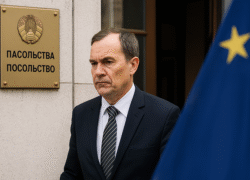
Belarus has ordered a Czech diplomat to leave the country within three days, escalating a row that began when Prague and Warsaw expelled Belarusian envoys earlier this month. The decision is the latest step in a dispute that has grown from allegations of espionage into a broader security standoff involving borders and military activity.

Authorities in the Czech Republic and Poland said their expulsions were part of a coordinated effort to dismantle a spy network they believe was directed by Belarusian security services. Investigators in Romania and Hungary were also reported to have contributed to the probe. Czech intelligence officials argued that the network was able to function because Belarusian and Russian diplomats face few restrictions on travel inside the EU’s open borders. They have since called on Brussels and member states to tighten rules on where such diplomats can move.

Minsk rejected those claims and accused Prague of long-standing hostility, describing the expulsion of its diplomats as politically motivated. In its statement announcing the removal of the Czech envoy, the Belarusian foreign ministry said the episode was a response to measures already taken by Prague and Warsaw and insisted that Minsk considered the issue resolved unless further steps were taken against it.

The timing of the expulsions coincided with large-scale Russian–Belarusian military exercises, which prompted Poland to close its crossings with Belarus in mid-September. Lithuania also reinforced security on its frontier, citing the risk of incidents while the drills were underway. These moves underline how quickly espionage accusations can spill into wider security actions along NATO’s eastern flank.

The sense of heightened tension was reinforced in the Baltic this week, when Estonia said three Russian fighter jets crossed briefly into its airspace near Vaindloo Island. NATO aircraft were scrambled to shadow the planes, and Tallinn summoned the Russian envoy to protest. Moscow denied any violation, insisting the aircraft remained in international airspace on their way to Kaliningrad. While airspace disputes are not new in the region, the timing—just as Belarus was trading expulsions with EU states—fed into a broader narrative of rising friction.

What emerges is a picture of multiple strands converging: espionage allegations inside the EU, reciprocal diplomatic measures, military drills on NATO’s border, and contested flights in the Baltic sky. Each episode on its own might have been contained, but together they paint a picture of growing mistrust. European officials are now debating whether to introduce tighter restrictions on Belarusian and Russian diplomats, while border and air patrols are likely to remain on high alert in the weeks to come.

Source: comp.

LATEST NEWS