LEG Immobilien joins ATechX as new partner

Startup accelerator ATechX, the innovation and venture platform of Aroundtown, has added LEG Immobilien to its network of partners. Existing partners include Vonovia, Round Hill Capital, Fifth Wall and noa. The expanded network will allow participating startups to test solutions across a combined portfolio valued at approximately €130 billion.

ATechX works with early-stage companies developing technological, digital or sustainability-focused solutions for different phases of the real estate lifecycle, from planning and financing to management and operations. Its four-month accelerator programme provides access to a network of major industry players and real-world testing environments within the European portfolios of Aroundtown and its partners. The current third cohort will be the first to gain access to the LEG portfolio.

LEG, which owns around 172,000 rental apartments, is one of Germany’s largest listed residential landlords. Its focus on affordable housing, emissions reduction and climate protection aligns with the themes targeted by ATechX. The company has been developing its own innovation initiatives, including intelligent heating control (termios), high-efficiency heat pump deployment (dekarbo) and digital, serial renovation solutions (RENOWATE).

“ATechX’s mission is to rethink the real estate industry by giving unique proptech ideas the opportunity to accelerate into market-ready solutions. With LEG, the accelerator is gaining a strong partner that will empower startups to transform the industry,” said Barak Bar-Hen, CEO of Aroundtown.

LEG’s CEO Lars von Lackum commented: “The collaboration between LEG and ATechX gives us early insights into innovative technologies and enables us to support startups in developing market-ready solutions for the housing industry. Together, we want to shape the living spaces of tomorrow.”

Poland’s largest independent logistics operator expands lease with MLP Group

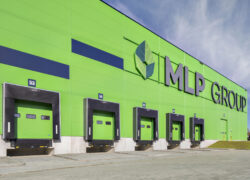
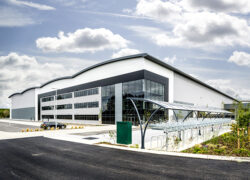
Poland’s largest independent logistics operator has leased 8,100 sqm of warehouse space at the MLP Gorzów Wielkopolski logistics park, bringing its total occupied space within MLP Group’s portfolio to more than 34,000 sqm. The newly delivered facility was developed speculatively and was ready for immediate use.

This marks the fourth MLP location used by the tenant, complementing its existing operations at MLP Poznań West, MLP Gliwice and MLP Wrocław West.

“The decision by Poland’s largest independent logistics operator to expand our cooperation is the best confirmation that we provide warehouse and logistics space of the highest, world-class standard. It also demonstrates the quality, functionality, and strategic location of our centres. The readiness of the new building at MLP Gorzów Wielkopolski for the tenant’s immediate move-in highlights the effectiveness of our investment model and our flexibility in responding to market needs. We are proud to support the growth of such an innovative company and to contribute to enhancing the efficiency of its supply chain network,” said Tomasz Pietrzak, Leasing Director Poland at MLP Group.

MLP Gorzów Wielkopolski is a newly developed logistics park located on an 11.7-hectare site. Once completed, it will provide 56,700 sqm of warehouse, light production and Big Box space. The project has been designed to meet BREEAM standards and includes a range of sustainability features intended to reduce operational costs and improve energy efficiency. Target occupiers include companies in e-commerce, logistics, distribution and light manufacturing.

The park is located on the western side of Gorzów Wielkopolski, approximately 9 km from the city centre and near the S3 expressway junction. It is also accessible via public transport. MLP Group retains completed parks under its “build & hold” strategy and manages them directly, with a focus on well-connected locations and ongoing support for tenants throughout the lease term.

Poland’s Warehouse Market Remains Stable After Three Quarters of 2025

Poland’s warehouse market maintained overall stability in the first three quarters of 2025, with supply, take-up and vacancy levels remaining broadly balanced, according to AXI IMMO’s latest report summarising the period January–September 2025.

Gross take-up reached 4.54 million sqm, up 20% year-on-year, with renegotiations accounting for 52% of total leasing activity. The structure of demand reflects occupiers’ ongoing focus on cost control and operational optimisation. The most active regions included Mazowieckie (1.036 million sqm), Dolnośląskie (709,000 sqm), Śląskie (699,000 sqm) and Łódzkie (625,000 sqm).

New completions amounted to 1.55 million sqm, marking a slowdown compared with high delivery volumes in earlier years. Despite the reduced pace of development, the national vacancy rate remained stable at 8.2% at the end of Q3 2025, a level similar to that recorded in previous quarters.

Investment activity also strengthened. Industrial and logistics assets accounted for 35% of all commercial real estate transactions concluded in Poland between January and September, totalling more than €870 million. The largest transaction was a record-breaking sale & leaseback deal in which Realty Income Corporation acquired two properties from manufacturer Eko-Okna for €253.5 million. Other significant deals included Reico IS’s purchase of the LPP distribution centre near Bydgoszcz and Adventum’s acquisition of Tenneco’s portfolio in Upper Silesia.

“After a period of limited activity and pricing uncertainty between buyers and sellers, 2025 has brought long-awaited stabilization and a return of liquidity. Industrial & logistics remain a haven for investors due to their resilience in times of macroeconomic volatility,” says Grzegorz Chmielak, Head of Capital Markets at AXI IMMO. “This year’s surge was largely driven by sale & leaseback transactions, which helped corporates free up capital while securing long-term income for buyers.”

Several notable leasing deals shaped the market in the first three quarters, including Agata Meble’s renewal and expansion at Mapletree Piotrków II for 128,200 sqm, a lease renewal of 78,100 sqm at P3 Wrocław II, and a 67,800 sqm new lease at 7R Park Gdańsk III.

“Poland’s industrial & logistics sector remains resilient to broader macroeconomic challenges,” says Anna Głowacz, Head of Industrial & Logistics at AXI IMMO. “Take-up is being driven primarily by consumer-facing industries such as e-commerce, retail, and logistics. Manufacturing expansions are more selective and largely dependent on sector-specific demand.”

Total modern warehouse stock reached 36.45 million sqm at the end of September 2025, an increase of around 7% year-on-year. At that time, 1.56 million sqm was under construction, with most activity concentrated in Mazowieckie, Pomorskie and Śląskie. Developers continue to apply cautious strategies, reducing speculative development compared to previous years.

Headline rents remained stable across core logistics locations. Big-box facilities continued to command between €3.60 and €6.00 per sqm per month, with modest upward pressure in select new schemes.

According to Renata Osiecka, Managing Partner at AXI IMMO, “The past several months have shown that the warehouse sector in Poland has reached maturity. Emotions have given way to strategic planning and long-term thinking. Take-up remains solid, and the limited new supply is helping stabilize vacancy and rental levels.”

AXI IMMO expects renegotiations linked to leases signed in 2021–2022 and ongoing space optimisation to continue influencing market activity into the end of the year.

The Kingdom of the Netherlands opens an honorary consulate in Brno as CTP highlights the city’s technology potential

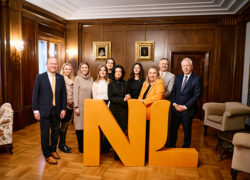
CTP hosted a business meeting in Brno to coincide with the opening of the new Honorary Consulate of the Kingdom of the Netherlands. The event, organised in cooperation with the Netherlands-Czech Chamber of Commerce, aimed to draw attention to Brno’s position as a European technology and innovation centre and to support further development of Dutch-Czech business relations. CTP, founded by Dutch entrepreneur Remon Vos, has longstanding ties to the Netherlands.

The establishment of the honorary consulate reflects the growing significance of the South Moravian region for bilateral cooperation. Brno has become one of Central and Eastern Europe’s most active technology locations, supported by universities, research institutions and modern infrastructure. CTP has operated in Brno and the wider region since 2001, where it owns and manages several technology and industrial parks. CTPark Brno hosts companies including Garrett Motion, Inventec, Honeywell, Hitachi, and Thermo Fisher Scientific.

“Each year, Brno confirms its position as a technology centre. The opening of the new Honorary Consulate of the Kingdom of the Netherlands is a clear signal of the business potential in the South Moravian region and the growing interest of international companies in the local innovation environment. We believe that the new consulate will further strengthen mutual ties and support further investment projects that will benefit the entire region,” says Bert Hesselink, Group Client Relationship Director at CTP.

The event programme aimed to provide participants with an overview of Brno’s technological ecosystem and to facilitate an exchange of experience among companies. The morning session at Vlněna included presentations from CTP, the City of Brno’s Department of Strategic Development and Cooperation, and NTS, followed by discussions on technological trends and investment prospects. The afternoon continued at Villa Stiassni and concluded with a tour of the Starobrno brewery.

“Our chamber has long supported an environment where new business relationships can be formed. Brno is extremely promising in this regard and today offers more business opportunities than ever before. It is home to a number of innovative companies, including CTP, which have long contributed to the development of the ecosystem and attracted experts from abroad to the city. We greatly appreciate such partners,” says Wiegert Smallegange, Director of the Netherlands-Czech Chamber of Commerce.

The new Honorary Consul, Pavel Ivanyi, who also serves as Chairman of the Netherlands-Czech Chamber of Commerce, commented on the decision to open the consulate: “I have been living in Brno for many years, and I can see how quickly the city is changing and how significantly its importance is growing internationally. The opening of the honorary consulate is therefore another logical step that will enable the Kingdom of the Netherlands to be closer to the people, companies, institutions, and talents operating in this dynamic region.”

Cain secures £350m refinancing from KKR for UK logistics portfolio

Cain has obtained a £350 million refinancing facility from funds and accounts managed by KKR for its UK industrial and logistics portfolio. The financing is structured as a whole loan with a five-year term.

The new facility repays the existing development loan and offers Cain additional flexibility to continue its leasing strategy and manage the portfolio in line with its business plan.

The portfolio consists of 24 units totalling approximately 3.2 million sq ft, located in established logistics markets across the UK. Developed from 2022 onward, the units were built to Grade A specifications, including high clear heights, large service yards and layouts designed for modern industrial occupiers. All assets were delivered on a net-zero carbon basis and include BREEAM Excellent certifications, enhanced energy-performance features and building systems designed to meet future regulatory and operational requirements.

Over the last 12 months, Cain has completed around 1 million sq ft of leasing across the portfolio, reflecting continued demand for high-quality logistics space.

“This refinancing with KKR reflects the strength and quality of our logistics portfolio and the positive shift we are seeing across occupational markets,” said Tim Brazier, Senior Vice President at Cain. “The transaction comes at a time when enquiry levels are increasing meaningfully in our key regions, particularly for highly specified and energy-efficient industrial space, which this portfolio delivers. We were able to agree the financing directly with KKR without running a broader market process given the strength of our relationship as well as our confidence in their execution capabilities.”

Ali Imraan, Head of European Real Estate Credit at KKR, added: “We are pleased to support Cain on the refinancing of this prime portfolio of well-located, high-quality industrial real estate assets. This significant transaction reflects our confidence in the long-term fundamentals of the sector and our commitment to providing tailored financing solutions to leading sponsors.”

Premium residential prices in Bucharest have doubled as supply remains highly constrained

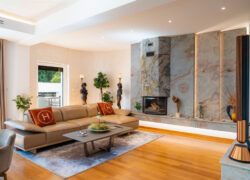
Prices in Bucharest’s premium residential market have risen sharply in recent years, reaching record levels in established central areas such as Primăverii, Kiseleff, Aviatorilor and Dorobanți. The increase reflects a combination of limited supply, strict planning restrictions and sustained demand for high-quality properties.

Prices for premium units completed after 2018 have largely doubled over the past two to three years, now ranging between €6,000 and €8,000 per sq m in prime locations, with some exceptional properties priced significantly higher. In several cases, investments amounting to millions of euros have been made solely in finishes or amenities, making standard price-per-square-metre calculations difficult.

Properties completed within the past eight years—including apartments and villas—have also seen substantial value appreciation. High specifications such as restoration works, smart home systems, automated parking, landscaped gardens, swimming pools and enhanced security systems have contributed to this trend.

“One of the main drivers of this price growth relates to the extremely limited supply. In the past 5 or 6 years, no new developments received the necessary permits required in order to commence construction in these premium locations, and vacant land plots are virtually non-existent. The current legislation imposes strict restrictions on the demolition and conversion of older buildings in these protected areas, thus making the existing properties increasingly exclusive and difficult to replicate,” said Raluca Plavita, Head of Residential Agency at Cushman & Wakefield Echinox.

Premium buyers generally take longer to complete transactions, often already owning several properties in Romania or abroad. They typically seek specific attributes such as large plots, generous layouts, privacy, and high-quality amenities. Private investors looking for rare opportunities or rental potential for embassies or multinational tenants form only a small segment of overall demand, resulting in transaction timelines of 6 to 12 months.

Price variations remain notable even within traditionally premium areas. For example, although Floreasca is located near a major office district, its prices usually do not reach those of Primăverii or Dorobanți except in isolated cases. Micro-locations, building age and construction quality continue to strongly influence values.

According to Cushman & Wakefield Echinox, the upward price trend is expected to continue for high-quality properties in key locations, particularly given the absence of new development opportunities. These homes are increasingly regarded as long-term “portfolio properties” rather than typical residential purchases.

The shortage of supply is reflected in the agency’s portfolio, where some properties are now being marketed for the second time, and certain buildings have shifted from residential to other permitted uses. Changes of use have become more complicated due to legal restrictions and long permitting procedures, especially in protected areas or where buildings have historical monument status.

Defining a premium residence involves several criteria. Location is central—particularly Primăverii, Kiseleff, Aviatorilor and Dorobanți—followed by interior and exterior space, configuration, ceiling height, en-suite bathrooms, terraces, swimming pools, high-quality finishes, and advanced security systems.

“The premium residential market continues to set new records, both in terms of prices and exclusivity levels. The extremely limited supply of villas and penthouses in established destinations such as Primăverii, Dorobanți, Aviatorilor, and Kiseleff fuels this dynamic, making each transaction a complex and personalized process. Our clients are searching for more than a home; they seek a secure investment and a distinctive lifestyle, where details make all the difference – from top-quality finishes to smart amenities and generous outdoor spaces. In this context, our role is to identify those unique properties which meet both functional and aesthetic requirements, and to provide a truly tailor-made consultancy,” said Raluca Plavita.

Cushman & Wakefield Echinox’s residential department manages a significant portfolio of high-end properties, including villas and penthouses valued at over €200 million, and has been involved in several high-value transactions.

Among the most expensive listings is a property priced above €13 million, featuring over 200 metres of lake frontage, an 8,000 sq m landscaped garden and a 3,000 sq m building, notable for its scale and customised finishes.

Another property, offered at more than €12 million, is located near the Ministry of Foreign Affairs. The building was converted into office space, fully renovated while retaining its 1940s façade, and includes two underground levels for 25 cars, glass lifts, open-plan floors and a top level with 360° glazing.

The portfolio also includes a listed property with dual frontage on Aviatorilor Boulevard, designed by architect Duiliu Marcu, known for works such as Palatul Victoria, Palatul CFR and Palatul Elisabeta. The villa underwent a five-year consolidation and renovation, preserving key façade elements.

Source: Cushman & Wakefield Echinox

Photo: Raluca Plavita, Head of Residential Agency at Cushman & Wakefield Echinox.

Seven per cent of people aged 66 and over are still in employment

Seven per cent of people aged 66 and over are still in employment – and many work in occupations facing skilled-labour shortages.

A DIW study based on the 2022 microcensus examined the employment of older people in Germany. According to the findings, one in 15 people aged 66 or older is still working. Health and education play a decisive role in labour-force participation at older ages.

After reaching the standard retirement age, seven per cent of older people remain in employment, working an average of 19 hours per week. The better their health and the higher their level of education, the more likely they are to continue working. Among people aged 66 to 69 in good or very good health, around one in five is still employed. These are the key results of a recent study by the German Institute for Economic Research (DIW Berlin), conducted by researchers from the Government and Crime, and Labour and Inequality departments, using data from the 2022 microcensus.

“Even beyond the standard retirement age, older people make a significant contribution to the labour market, especially if they are in good health and have a higher level of education,” says study author Johannes Geyer, Deputy Head of the Government Department. Co-author Anna Bindler, Head of the Crime, Labour and Inequality Department, adds: “Whether people continue to work in old age depends not only on legal regulations, but also heavily on individual circumstances.”

Self-employed workers are particularly well represented: 37.4 per cent of employed people over 66 are self-employed, compared with nine per cent among the working population as a whole.

Older workers in shortage occupations

The study also assesses the extent to which older workers are represented in professions classified as suffering from, or at risk of, skilled-labour shortages. Higher labour-force participation among older people is often viewed as one way of addressing these gaps.

According to the analysis, 23 per cent of employed people over 66 work in occupations where labour demand already exceeds supply. This is a similar proportion to that of younger workers. However, older people are somewhat less represented in occupations where a skilled-labour shortage is only anticipated: around 40 per cent of workers under 66 are employed in such occupations, compared with 30 per cent of older workers.

“Greater efforts should be made to ensure that a higher proportion of workers remain in the labour market beyond the standard working age,” says Peter Haan, Head of the State Department. “Health-promotion measures, further education and training even in old age, and reforms in tax and social law can help to achieve this.”

International comparisons suggest further potential. Countries such as Sweden have significantly higher employment rates among older people. “Changes in tax and social-security regulations are also crucial, for example a reform of the mini-job regulation,” says Hermann Buslei. “It is important to create incentives for more employment and longer working hours. This could help increase the relatively low employment rate among older women. In addition, pensioners should receive more support in finding work.”

Source: DIW Berlin

Modern community building in Zamarski reflects local heritage and contemporary design

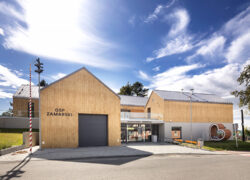
A new multi-functional public building—the Municipal Cultural Center “STODOŁA”—has been completed in Zamarski, one of the oldest villages in Cieszyn Silesia. The project, designed by ARCHiTEKT studio under architect Paweł Kuczyński, is a contemporary interpretation of traditional rural architecture and brings together three public functions: the Municipal Cultural Center, the Volunteer Fire Service unit, and the local community meeting space (sołtysówka). The scheme is intended to support local activities while fitting into the historical and landscape context of the village.

The architectural concept by Bartosz Kuczyński is based on three separate volumes resembling rural houses and barns, linked by a shared ground-floor area. This division allows each function to operate independently while forming a cohesive structure that integrates with the surroundings. The building is partially recessed into the terrain, with its form adapted to the natural topography and the pedestrian route connecting the park and the historic St. Roch church.

“When in 2019, during the commune harvest in Zamarskie, I announced the construction of this facility, I knew one thing – it is supposed to be an investment that will set a new standard in our municipality. From the beginning, I wanted the Municipal Cultural Center of the BARN to be not only functional, but also architecturally bold and made of the highest quality materials. Today I can say that this vision has been fully realized. This building is an example of conscious, responsible design and the effect of consistent work of many people, but also a proof that the local government can be a true architect of success – if it thinks long-term, courageously and with respect for local heritage,” said Grzegorz Sikorski, Mayor of Hażlach Commune.

According to the design team, one of the priorities was to ensure that the exterior reflected the rural landscape while the interior met contemporary operational needs. “When designing a multifunctional building, we wanted the form to be rooted in the local landscape, but the interiors correspond to modern utility standards. We were looking for materials that will provide both durability and a friendly, warm environment for the daily activities of residents. We decided on HERADESIGN® Superfine and HERADESIGN® Creative Effect ceiling tiles, because their natural structure, acoustic properties and aesthetics perfectly fit into our vision of the social space – modern, but close to man,” said architect Paweł Kuczyński.

The project incorporates HERADESIGN® acoustic materials from Knauf Ceiling Solutions, used in both standard and decorative versions. The natural wood wool panels in the Nature 13 finish appear throughout public areas, classrooms, and the main performance hall, providing consistent acoustics and referencing materials found in local wooden architecture.

Given the building’s intended role as a venue for events, rehearsals, meetings and everyday community activities, acoustic performance was a central focus. “This is a building used by children, seniors, music bands and residents during meetings. Good acoustics are the basis – not only for performances, but also for everyday work and conversations. The solutions used really make a difference – in the performance hall you can talk without reverb, in the other rooms there is silence needed to talk with residents, and classes for children run in comfortable conditions. This changes the quality of stay in this place,” said Cecilia Gasz-Płońska, Director of the Municipal Cultural Centre in Hażlach.

The HERADESIGN® ceilings contribute not only to interior acoustics but also to sustainability objectives. The materials hold PEFC, FSC, and Cradle to Cradle® certifications, reflecting the use of renewable inputs and suitability for recycling—factors increasingly expected in public-sector developments.

The “STODOŁA” Cultural Center is presented as an example of a community building that integrates functional requirements with sensitivity to local history and contemporary design standards. Its combination of public programmes, architectural form and material choices aims to create a long-term, adaptable space for village residents.

ZEITGEIST opens new Warsaw headquarters in revitalised tenement on św. Barbary Street

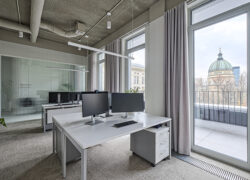
ZEITGEIST Asset Management has opened its new Warsaw headquarters in a renovated tenement building at 6/8 św. Barbary Street. The company, known for projects in which architectural form reflects the function and history of the site, has created a 250 m² office space designed to align with the modernist character of the building.

“We decided to create an office in Warsaw that would reflect the most important values of our projects,” said Peter Noack, Co-Founder and CEO of ZEITGEIST Asset Management. “The headquarters are located in the heart of the capital, in a historic building that we have carefully renovated, right above the flats we manage. Importantly, it is located near ZEITGEIST’s largest project in Central and Eastern Europe – the quarter of buildings between Nowogrodzka and Poznańska Streets.”

The opening highlights the company’s growing scale in Poland. Since 2019, the value of ZEITGEIST’s assets in the country has increased significantly, spanning both the revitalisation of historic residential properties and the development of new rental projects in central locations.

“Thanks to the new location, we can be closer to our clients and partners, and our team gains a comfortable, high-quality space needed for focused work, away from market turmoil,” said Tomasz Dąbrowski, Managing Director of ZEITGEIST Asset Management in Poland.

Functionalist design with flexible use

The tenement on św. Barbary Street is a gallery-type building constructed as part of the former Telecommunications and Telegraph Office complex at 45 Nowogrodzka Street. In consultation with the heritage conservator, ZEITGEIST added a lightweight rooftop extension, creating an intimate office space featuring extensive glazing and a surrounding terrace.

“The terrace with a view of the green square and historic buildings, as well as the well-lit conference room, are now our favourite places,” Dąbrowski noted. The interior has been designed with flexibility in mind: the office can operate as a single space today, but can also be divided into four separate apartments in the future.

The design references ZEITGEIST’s Prague headquarters, with a minimalist aesthetic, light materials inspired by natural wood and stone, and Art Deco-influenced details such as rounded wooden wall corners.

Revitalisation supported by long-term use

The company emphasises that revitalised buildings remain sustainable only when continuously occupied and managed. “Filling renovated buildings with tenants extends their durability, guaranteeing long-term care and attention to quality,” said Dąbrowski.

ZEITGEIST retains management responsibility for its revitalised Warsaw properties – Barbary 6/8, Wrzesińska 2 and Solec 22. “As the operator of HOME by Zeitgeist, we manage long-term apartment rentals, and together with our subsidiary ZEITRAUM, we are developing a network of student residences and serviced apartments,” added Noack.

Ground floors of ZEITGEIST projects are typically activated through commercial units such as shops, medical services and restaurants. At 6/8 św. Barbary Street, this approach resulted in the creation of a glazed street-level corner that now houses the VaBene Centro restaurant, alongside additional spaces used to promote art and community activity.

Skanska wins NOK 950 M contract for Illvatn hydropower plant in Norway

Skanska has signed a contract with Hydro to build the Illvatn pumped-storage hydropower plant in the municipality of Luster, Vestland County, Norway. The contract value is NOK 950 million (about €77 million), roughly equal to SEK 900 million (about €74 million). The order will be recorded in Skanska’s Nordic orders for the fourth quarter of 2025.

The agreement covers construction of an underground power station and related tunnel and infrastructure works. The scope includes building a pressure tunnel of approximately 8 kilometers between the Fivlemyrane and Illvatn reservoirs, part of a larger tunnel network totalling about 9 kilometers. Additional work involves constructing a permanent access road, a tunnel to the transformer and station halls, and a surge system stretching 250 meters. Given that portions of the project area are currently inaccessible by road, helicopter transport will be required during certain phases.

The new Illvatn pumped-storage facility will leverage the elevation difference between the Fivlemyrane and Illvatn reservoirs, increasing Illvatn’s storage capacity by 90 million cubic metres. The plant is expected to enable more efficient use of water resources by pumping water uphill during summer months or periods of low electricity demand and price, and generate approximately 84 GWh of electricity annually.

Preparatory works are already underway. Construction is scheduled to be completed by August 2030.

Currency: At the time of writing: 1 NOK ≈ €0.081, 1 SEK ≈ €0.082

LATEST NEWS