
Tony Blair’s Return to the Middle East: Statesman, Controversy, and the Question of Trust

Tony Blair, once Britain’s longest-serving Labour prime minister, has remained an active and controversial figure in global affairs nearly two decades after leaving office. His name has surfaced again in discussions around Gaza, where international actors are exploring the creation of a transitional authority to guide the territory out of the current conflict. While nothing has been confirmed, diplomatic circles have floated Blair as a possible leader of such an interim structure, a prospect that has been greeted with both interest and suspicion.

Blair’s involvement in the Middle East is not new. He spent eight years as envoy for the Quartet of the UN, US, EU and Russia, building relationships in the region and carving out a reputation as a broker of complex negotiations. Yet his legacy remains overshadowed by the 2003 invasion of Iraq, which continues to colour perceptions of his judgment and integrity. The Chilcot Inquiry, published years later, criticised the decision-making process that led Britain into war, but it did not find him legally liable. This divide between moral outrage and legal accountability has ensured that the question of Blair’s suitability for any new Middle East role is fiercely debated.

Central to the discussion is the question of whether Blair, now at the helm of the Tony Blair Institute for Global Change, would stand to benefit personally from such an appointment. The institute, which provides advisory services to governments and works on policy projects worldwide, has grown into a large organisation with hundreds of staff and significant turnover. Recent financial statements show Blair himself receives no salary from the institute, though other directors are well paid. Public filings confirm that one senior executive earned over a million dollars in 2023, underscoring the professionalised and well-funded nature of the organisation. At the same time, the institute attracts government and philanthropic funding, including support from US agencies and international foundations, which are subject to audit and disclosure rules.

These figures matter because they frame how any future role in Gaza would likely be structured. If Blair were appointed to lead a transitional authority through his institute or an international body, his compensation would almost certainly be limited to expenses or a fixed salary overseen by donors and subject to scrutiny. That arrangement would be very different from the perception of private enrichment that has dogged his post-premiership career, during which he took on lucrative speaking and advisory contracts for banks and governments. Transparency over who pays, how much, and under what terms will be crucial if Blair takes on a new mandate.

The wider question is one of trust. To some, Blair’s experience and network make him a pragmatic choice at a moment when Gaza’s future governance is deeply uncertain. To others, his record in Iraq and his past commercial work disqualify him from a role that would require broad legitimacy among Palestinians and regional stakeholders. In this tension lies the enduring challenge of Blair’s career: a politician who still commands global attention, but whose legacy remains contested, and whose every new step is measured against the most controversial decisions of his time in power.

Tony Blair’s Return to the Middle East: Statesman, Controversy, and the Question of Trust

Tony Blair, once Britain’s longest-serving Labour prime minister, has remained an active and controversial figure in global affairs nearly two decades after leaving office. His name has surfaced again in discussions around Gaza, where international actors are exploring the creation of a transitional authority to guide the territory out of the current conflict. While nothing has been confirmed, diplomatic circles have floated Blair as a possible leader of such an interim structure, a prospect that has been greeted with both interest and suspicion.

Blair’s involvement in the Middle East is not new. He spent eight years as envoy for the Quartet of the UN, US, EU and Russia, building relationships in the region and carving out a reputation as a broker of complex negotiations. Yet his legacy remains overshadowed by the 2003 invasion of Iraq, which continues to colour perceptions of his judgment and integrity. The Chilcot Inquiry, published years later, criticised the decision-making process that led Britain into war, but it did not find him legally liable. This divide between moral outrage and legal accountability has ensured that the question of Blair’s suitability for any new Middle East role is fiercely debated.

Central to the discussion is the question of whether Blair, now at the helm of the Tony Blair Institute for Global Change, would stand to benefit personally from such an appointment. The institute, which provides advisory services to governments and works on policy projects worldwide, has grown into a large organisation with hundreds of staff and significant turnover. Recent financial statements show Blair himself receives no salary from the institute, though other directors are well paid. Public filings confirm that one senior executive earned over a million dollars in 2023, underscoring the professionalised and well-funded nature of the organisation. At the same time, the institute attracts government and philanthropic funding, including support from US agencies and international foundations, which are subject to audit and disclosure rules.

These figures matter because they frame how any future role in Gaza would likely be structured. If Blair were appointed to lead a transitional authority through his institute or an international body, his compensation would almost certainly be limited to expenses or a fixed salary overseen by donors and subject to scrutiny. That arrangement would be very different from the perception of private enrichment that has dogged his post-premiership career, during which he took on lucrative speaking and advisory contracts for banks and governments. Transparency over who pays, how much, and under what terms will be crucial if Blair takes on a new mandate.

The wider question is one of trust. To some, Blair’s experience and network make him a pragmatic choice at a moment when Gaza’s future governance is deeply uncertain. To others, his record in Iraq and his past commercial work disqualify him from a role that would require broad legitimacy among Palestinians and regional stakeholders. In this tension lies the enduring challenge of Blair’s career: a politician who still commands global attention, but whose legacy remains contested, and whose every new step is measured against the most controversial decisions of his time in power.

Amazon’s $2.5 Billion Fine Sparks Calls for Deeper FTC Oversight

The record-breaking $2.5 billion settlement Amazon has agreed to pay for allegedly tricking millions of customers into enrolling in its Prime service has been hailed as a milestone for consumer protection. But while regulators celebrate the largest civil penalty in the Federal Trade Commission’s history, critics argue the fine does not go far enough — and that systemic changes are needed to curb so-called “dark patterns” in online subscriptions.

The FTC accused Amazon of using manipulative design tactics that nudged shoppers into Prime memberships without clear consent, and of making it unnecessarily difficult to cancel. The case ended in a sweeping financial settlement: $1 billion in penalties to the U.S. government and $1.5 billion earmarked for customer refunds. Amazon has denied wrongdoing but agreed to simplify its sign-up and cancellation flows and submit to compliance monitoring.

Yet consumer advocates and policy experts say the sheer scale of Amazon’s operations makes even a multibillion-dollar fine look like a manageable cost of doing business. With annual revenue surpassing half a trillion dollars, they argue, the company could absorb the penalty without significantly changing its behavior. The concern is that fines alone may not alter corporate incentives when subscription revenues are so lucrative.

Calls are growing for the FTC to impose deeper, structural remedies. One idea gaining traction is a “one-click cancel” requirement, ensuring cancellation is as simple as enrollment. Critics of Amazon’s previous practices note that customers sometimes had to wade through multiple screens, a process that even carried the internal code name “Iliad” — a nod to its length and complexity. A mandated single-step process would make such tactics impossible.

Others propose independent usability testing, with outside auditors measuring how long it takes real users to sign up versus cancel, and publishing those results annually. Another suggestion is pre-approval of future subscription design changes, forcing companies to submit new user interfaces to regulators before deployment. Such measures, advocates say, would prevent deceptive design at the source rather than punishing it after the fact.

There are also calls for personal accountability. Under this model, senior executives responsible for subscription design would be required to certify compliance with consumer protection rules under penalty of perjury. If manipulative practices reappear, executives themselves could face fines or even bans. Supporters argue that holding individuals — not just corporations — responsible would ensure stronger internal oversight.

On the consumer side, reformers want broader redress. While the current settlement grants automatic refunds to customers who used few Prime benefits, many believe all affected subscribers should be compensated, with pre-filled claims and follow-up outreach to ensure refunds do not go unclaimed. Transparency could also be heightened with a public FTC dashboard reporting subscription metrics, cancellation times, and refund totals, along with a “dark pattern registry” that documents manipulative designs.

Some observers say legislative action may be required. The Restore Online Shoppers’ Confidence Act, the statute underpinning the Amazon case, does not explicitly define dark patterns. Amendments could codify rules that opt-ins must be clear, cancellations must take no more steps than enrollment, and free trials must disclose renewal terms in a standardized format. Clearer laws, they argue, would help prevent the next Amazon-style case before it begins.

For now, the Amazon settlement sets a precedent in scale but leaves questions unresolved. Has the FTC truly changed the way big tech companies handle subscriptions, or simply collected another penalty from a giant that can afford to pay? With dark patterns increasingly under scrutiny across the digital economy, what regulators do next could determine whether this case becomes a turning point or just another line on the balance sheet.

Amazon’s $2.5 Billion Fine Sparks Calls for Deeper FTC Oversight

The record-breaking $2.5 billion settlement Amazon has agreed to pay for allegedly tricking millions of customers into enrolling in its Prime service has been hailed as a milestone for consumer protection. But while regulators celebrate the largest civil penalty in the Federal Trade Commission’s history, critics argue the fine does not go far enough — and that systemic changes are needed to curb so-called “dark patterns” in online subscriptions.

The FTC accused Amazon of using manipulative design tactics that nudged shoppers into Prime memberships without clear consent, and of making it unnecessarily difficult to cancel. The case ended in a sweeping financial settlement: $1 billion in penalties to the U.S. government and $1.5 billion earmarked for customer refunds. Amazon has denied wrongdoing but agreed to simplify its sign-up and cancellation flows and submit to compliance monitoring.

Yet consumer advocates and policy experts say the sheer scale of Amazon’s operations makes even a multibillion-dollar fine look like a manageable cost of doing business. With annual revenue surpassing half a trillion dollars, they argue, the company could absorb the penalty without significantly changing its behavior. The concern is that fines alone may not alter corporate incentives when subscription revenues are so lucrative.

Calls are growing for the FTC to impose deeper, structural remedies. One idea gaining traction is a “one-click cancel” requirement, ensuring cancellation is as simple as enrollment. Critics of Amazon’s previous practices note that customers sometimes had to wade through multiple screens, a process that even carried the internal code name “Iliad” — a nod to its length and complexity. A mandated single-step process would make such tactics impossible.

Others propose independent usability testing, with outside auditors measuring how long it takes real users to sign up versus cancel, and publishing those results annually. Another suggestion is pre-approval of future subscription design changes, forcing companies to submit new user interfaces to regulators before deployment. Such measures, advocates say, would prevent deceptive design at the source rather than punishing it after the fact.

There are also calls for personal accountability. Under this model, senior executives responsible for subscription design would be required to certify compliance with consumer protection rules under penalty of perjury. If manipulative practices reappear, executives themselves could face fines or even bans. Supporters argue that holding individuals — not just corporations — responsible would ensure stronger internal oversight.

On the consumer side, reformers want broader redress. While the current settlement grants automatic refunds to customers who used few Prime benefits, many believe all affected subscribers should be compensated, with pre-filled claims and follow-up outreach to ensure refunds do not go unclaimed. Transparency could also be heightened with a public FTC dashboard reporting subscription metrics, cancellation times, and refund totals, along with a “dark pattern registry” that documents manipulative designs.

Some observers say legislative action may be required. The Restore Online Shoppers’ Confidence Act, the statute underpinning the Amazon case, does not explicitly define dark patterns. Amendments could codify rules that opt-ins must be clear, cancellations must take no more steps than enrollment, and free trials must disclose renewal terms in a standardized format. Clearer laws, they argue, would help prevent the next Amazon-style case before it begins.

For now, the Amazon settlement sets a precedent in scale but leaves questions unresolved. Has the FTC truly changed the way big tech companies handle subscriptions, or simply collected another penalty from a giant that can afford to pay? With dark patterns increasingly under scrutiny across the digital economy, what regulators do next could determine whether this case becomes a turning point or just another line on the balance sheet.

Europe Weighs €140 Billion Loan for Ukraine as Kremlin Issues Fresh Warning

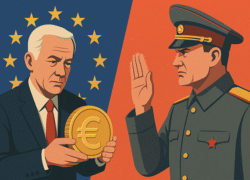
Germany’s Chancellor Friedrich Merz has called on the European Union to deepen its support for Ukraine by converting frozen Russian reserves into a vast interest-free loan. The plan, now being debated in Brussels, would build on earlier measures by the G7 that tapped profits from immobilised Russian funds, scaling them into a much larger package worth up to €140 billion.

Unlike outright confiscation, which remains legally contested, the scheme would keep the underlying assets locked but use their returns and balances as collateral for long-term borrowing. Officials say this structure could provide Kyiv with a reliable stream of financing while limiting legal exposure for the bloc. One option under review is to issue new securities to replace the frozen ones, with a separate vehicle managing repayment.

For Ukraine, the potential loan would offer a financial anchor at a time when its budget remains under severe strain and American political support looks uncertain. European leaders argue that such a facility could sustain salaries, defence production, and essential services, while also boosting the continent’s own industrial capacity for arms and air defence.

The proposal has already provoked sharp reactions. Moscow has denounced past moves to redirect profits from its reserves and is expected to challenge any expanded plan in court. Some European capitals remain wary of the legal and financial risks, though others are prepared to push ahead even without unanimous backing.

The timing coincides with growing pressure on Russia’s own economy. Defence spending has climbed to nearly eight percent of national output, funded by new tax increases and reliance on oil and gas sales at discounted rates. Partnerships with North Korea and Iran have provided Moscow with ammunition and drones, while trade with China continues to supply key goods. Analysts believe this can sustain the war effort for now but at mounting economic cost.

Western governments stress that their objective is to defend Ukraine’s independence and uphold international justice, not to engineer political change in Moscow. Yet the size of the proposed loan underscores the scale of Europe’s commitment and its determination to ensure Ukraine can keep fighting.

Supporters of the plan say anchoring Ukraine’s support to Russian state assets would send a strong message that the costs of the war will ultimately fall on the aggressor. They also argue that the approach could insulate EU budgets from fatigue as the conflict drags on.

Sceptics counter that the plan risks unsettling confidence in Europe’s role as a safe place for sovereign reserves. Some legal specialists warn that even carefully designed mechanisms may face challenges in European courts.

Ukrainian leaders have welcomed the debate as proof that Europe remains committed for the long term, while Russian officials continue to condemn such measures as economic aggression.

As the financial discussions play out, rhetoric between Moscow and the West has sharpened. Russia’s envoy to France warned this week that any attempt by NATO to shoot down Russian aircraft would be seen as an act of war. The statement highlights how economic initiatives and military risks are increasingly connected, underscoring the tense environment in which the EU is weighing one of its most ambitious financial undertakings since the conflict began.

Britain Reconsiders National Digital ID as Europe Moves Ahead

The British government has announced plans to introduce a mandatory digital identity card, known as the “Britcard,” for all adults by July 2029. The card would be tied to the right to work and access public services, but the proposal still requires consultation and new legislation. If it goes ahead, it would mark a sharp departure from the policy Britain adopted in 2010, when the Identity Documents Act repealed the previous ID card system and dismantled the national register.

Until now, the UK has relied on a patchwork of non-compulsory systems such as GOV.UK’s “One Login” and the Digital Identity & Attributes Trust Framework. These initiatives have provided the foundation for secure authentication but have not been imposed as universal requirements. The introduction of Britcard would therefore represent a decisive step toward a compulsory, nationwide scheme.

While Britain debates, Slovakia already operates a comprehensive digital identification system. Citizens are issued an electronic ID card with an embedded chip that functions as a standard form of national identification. It enables access to e-government platforms and the signing of official documents. Since December 2022, Slovakia has also introduced biometric cards, incorporating facial recognition and fingerprint data, which serve as the primary tool for authentication across public services.

The UK’s new direction places it in line with broader European trends. Most EU member states issue national ID cards, and in 2024 Brussels adopted regulations requiring that by 2026 every citizen be offered an EU Digital Identity Wallet. The new framework, sometimes called eIDAS 2.0, has been refined through rules adopted in 2024 and 2025, with the goal of ensuring cross-border recognition of digital credentials. Estonia is often cited as the model case, where secure e-identities are used seamlessly across both public and private sectors, from healthcare and banking to contracts and voting.

Globally, India’s Aadhaar programme illustrates the scale of what digital ID systems can achieve, but also their risks. Aadhaar was designed to improve welfare delivery and reduce fraud, but it has faced legal challenges over privacy and data protection. The Supreme Court eventually upheld its use for government services but restricted its mandatory adoption in the private sector, highlighting the balance between efficiency and civil liberties.

The experience of COVID-19 has also shaped perceptions. Vaccine passes in the UK and the EU were primarily designed to certify vaccination or recovery status in order to reopen travel and venues. The European Union issued more than two billion such certificates, while Britain deployed the NHS Covid Pass through its app. Although concerns were raised about function creep, post-pandemic reviews concluded that while the systems carried privacy risks, they did not evolve into broader surveillance tools.

Advocates of digital IDs point to convenience, faster service delivery, and reduced fraud as the main benefits. For governments, the attraction lies in stronger verification of identity, lower administrative costs, and better protection against misuse of benefits or tax evasion. Estonia demonstrates how a mature system can save time and simplify access to services. India shows how fraud can be reduced, though its challenges underline the need for strict legal limits.

The risks remain substantial. Centralised databases are attractive targets for hackers, and if digital IDs become the sole gateway to essential services, technical failures could exclude vulnerable groups. Critics warn of “function creep,” where a system created for employment or welfare checks could be extended to policing or credit scoring. European regulations attempt to address these risks by mandating on-device storage and selective disclosure, but it is not yet clear whether Britain will adopt similar safeguards.

Some commentators have compared the UK’s proposal with identity systems in authoritarian regimes such as China or North Korea. Analysts caution against such analogies, noting that the relevant comparison is with European systems built under GDPR and eIDAS, where data protection and oversight are embedded into law.

For those opposed to any digital identity, the idea of living “off the grid” is often raised. In practice, avoiding digital credentials would severely restrict access to banking, employment, travel, and healthcare. Experts argue that the more effective path is to demand robust protections, clear limits on use, independent audits, and alternative ways to access services without relying on smartphones or internet connections.

Digital ID is already a reality across much of Europe, with the EU’s wallet due to arrive in the next two years and Slovakia embedding its system into daily governance. India has demonstrated the benefits of scale as well as the dangers of weak safeguards. Britain’s proposal is therefore less about innovation and more about whether it can catch up without repeating past mistakes.

The ultimate question is whether Britcard becomes a tool of empowerment or a source of controversy. That outcome will depend less on the technology than on governance: whether the UK commits to decentralised credentials, minimal central data collection, legally enforced limits on use, robust non-digital alternatives, and transparent oversight. Without those, scepticism is unlikely to fade.

Life, Death, and Choice in the European Union

Questions of life and death test Europe’s conscience like few others. Assisted dying, abortion in cases of rape, and the limits of autonomy are contested across the continent. With no common EU law, each member state has drawn its own line, creating a patchwork that reflects history, religion, politics and shifting social values.

On assisted dying, approaches vary widely. Belgium, the Netherlands, Luxembourg and Spain permit doctors to administer life-ending medication under strict safeguards. Austria and Germany allow assisted suicide after constitutional rulings, while Italy has a narrow pathway overseen by courts. Slovenia in 2025 became the first Central and Eastern European state to adopt assisted dying, restricted to terminal illnesses and subject to multiple reviews. France’s parliament has advanced a bill linking access to stronger palliative care, though it has yet to become law. Portugal’s efforts have been repeatedly shaped by its constitutional court. Poland, Hungary and Ireland prohibit assisted dying entirely, often under religious influence.

Switzerland, though not an EU member, has shaped the debate. Its system allows assisted suicide but not euthanasia, with organisations such as Dignitas attracting foreigners. This “suicide tourism” has put pressure on EU neighbours where such choices remain illegal.

Supporters of assisted dying highlight autonomy and dignity, arguing that those in terminal decline should control the manner of death. They point to compassion for those whose suffering persists despite palliative care. Transparency, they argue, is another advantage, as legal frameworks reduce the risk of unsafe, hidden practices. Opponents warn of abuse, citing Belgium and the Netherlands where eligibility has widened to psychiatric cases. They stress the sanctity of life, risks of coercion on vulnerable people, and the danger of underfunding palliative care.

Public opinion is divided but influential. A Dutch survey in 2019 showed 87 percent support for euthanasia under conditions, while Spain’s new law was used by only 383 people in its first 18 months, a fraction of deaths compared with the Netherlands or Belgium. Surveys across Europe show far higher acceptance in the west than in the east, where cultural and religious traditions dominate.

Abortion laws also divide the Union. Western Europe generally permits abortion on request up to 12 to 24 weeks, with exceptions later. France went further in 2024, writing abortion rights into its constitution. Ireland liberalised in 2018 after a referendum. Central and Eastern Europe, by contrast, remain restrictive. Malta allows abortion only in emergencies, and Poland bans it in most cases except rape, incest or serious risks to the mother’s life. In practice, even these exceptions can be difficult to access.

Poland has become a focal point of the European abortion debate. In 2020 its Constitutional Tribunal struck down the fetal impairment exception, creating what amounted to a near-total ban. Protests swept the country, and opinion polls showed most Poles disagreed with the ruling. The European Court of Human Rights has since ruled against Poland in several cases, including one involving a 14-year-old rape survivor who was obstructed and harassed before eventually receiving a lawful abortion. Another case saw doctors convicted after a woman known as Iza died of sepsis at 22 weeks when intervention was delayed. Activists such as Justyna Wydrzyńska have been prosecuted for helping women obtain abortion pills, drawing condemnation from rights groups.

Here too the arguments echo those around assisted dying. Supporters stress autonomy and compassion, particularly in cases of rape and serious medical risks. Opponents insist the moral status of the fetus is paramount, regardless of how conception occurred. Middle positions allow abortion up to a certain time limit, with conscience clauses for doctors but referral obligations to ensure access.

Placed side by side, assisted dying and abortion highlight a shared tension: both concern the limits of autonomy and the definition of dignity. In assisted dying, the issue is the right of a patient to end suffering. In abortion, it is the right of a pregnant woman to decide in light of competing claims about fetal life. Both force societies to decide where personal choice meets collective morality.

The EU’s patchwork reflects deeper divides. Liberal systems embed safeguards such as cooling-off periods, independent reviews and oversight commissions. Restrictive systems often rely on constitutional or religious arguments. Public opinion frequently drives change, as seen in Spain, Ireland and France. Courts play a supervisory role: the European Court of Human Rights recognises national discretion but has ruled against states that fail to make lawful procedures truly accessible.

The cultural fault line between east and west remains sharp. Catholic and Orthodox traditions continue to anchor restrictive policies in Poland, Malta and Hungary, while secular traditions underpin permissive regimes in the Low Countries and Scandinavia. Cross-border realities add complexity, with citizens travelling for procedures they cannot obtain at home.

Extreme hypotheticals about punishing children of criminals or collective responsibility fall outside legitimate debate. Under EU treaties and international law, collective punishment is unlawful and incompatible with human rights. Assisted dying and abortion, by contrast, remain live questions precisely because they focus on individual choice within the framework of medicine and ethics.

Europe does not speak with one voice. Belgium, the Netherlands and Spain have normalised assisted dying. France and Portugal are cautiously reforming. Poland and Malta restrict abortion severely while rejecting assisted dying. The Union contains some of the world’s most liberal and most restrictive regimes side by side. For policymakers and doctors, the challenge is to ensure that laws, wherever they stand, are applied transparently and fairly. For citizens, the challenge is to reconcile conscience with democratic outcomes. For patients and survivors, the challenge is immediate and deeply personal.

Life and death will never lend themselves to easy consensus. The European Union’s diversity shows both the risks of fragmentation and the resilience of pluralism. It demonstrates that even in matters of profound disagreement, societies can continue to test, challenge and refine where they draw the line between autonomy and morality, suffering and dignity, life and death.

The Mystery of Airline Wet Wipes: Why They Don’t Smell the Same

For years, the ritual was familiar. A flight attendant would hand over a warm or chilled towelette. Lately, though, passengers on European airlines—from local to European airlines—have been raising eyebrows, and noses. Instead of the clean hit of spirits, the scent has shifted toward something sharper, even bleach-like.

These wipes are not new. Long before the pandemic, they were a small luxury in business or first class, offered as a refreshing touch before meals. What changed during COVID was their scale and purpose. Airlines began handing them to every passenger, repackaged as a hygiene measure, and often reformulated them with stronger disinfectant properties. What was once a comfort amenity became part of the visible theater of safety, reinforcing that cleanliness was now as important as champagne.

Airlines rarely announce what goes into those little packets, but the answer lies in how inflight hygiene has evolved. Behind the curtain, aviation suppliers produce a whole range of wipes for carriers to choose from. Some are designed to evaporate quickly, leaving no trace; others linger on the skin, providing longer-lasting protection. These heavier-duty versions can leave behind a smell that feels more chemical than refreshing.

Some airlines, or the companies that supply them, use quaternary ammonium compounds in place of alcohol. These substances last longer, giving extended antimicrobial protection. The trade-off is that they often leave a faint film on the skin and can cause irritation or allergic reactions in people with sensitivities. They don’t dry hands in the same way alcohol does, but the residue may feel sticky and, with frequent use, trigger rashes. For travelers with eczema or sensitive skin, these wipes can cause flare-ups, redness, or a lingering itch that undermines the intended comfort of the service.

A local airline has not publicised any change to its onboard wipes, and other European carriers have kept quiet too. What is clear, however, is that airlines have flexibility in what they order. Procurement managers can switch suppliers or wipe types without fanfare, meaning travelers might encounter different smells—and different effects on their hands—on separate flights, even within the same fleet.

The confusion is compounded by the wide variety of disinfectant technologies available on the market. From fast-acting solutions that vanish in seconds to surface treatments that linger, each comes with its own sensory footprint. That variety helps explain why one week your towelette might dry off in a flash, while the next it leaves a residue and a scent that clings.

For frequent flyers, the takeaway is that wipes have become another part of the patchwork of inflight experience. The promise of a quick freshen-up remains, but the character has shifted, depending on what the airline ordered. For those who miss the old familiar smell, the simplest solution may be to bring along a personal stash of alcohol wipes and reclaim a little consistency at 30,000 feet.

The Mystery of Airline Wet Wipes: Why They Don’t Smell the Same

For years, the ritual was familiar. A flight attendant would hand over a warm or chilled towelette. Lately, though, passengers on European airlines—from local to European airlines—have been raising eyebrows, and noses. Instead of the clean hit of spirits, the scent has shifted toward something sharper, even bleach-like.

These wipes are not new. Long before the pandemic, they were a small luxury in business or first class, offered as a refreshing touch before meals. What changed during COVID was their scale and purpose. Airlines began handing them to every passenger, repackaged as a hygiene measure, and often reformulated them with stronger disinfectant properties. What was once a comfort amenity became part of the visible theater of safety, reinforcing that cleanliness was now as important as champagne.

Airlines rarely announce what goes into those little packets, but the answer lies in how inflight hygiene has evolved. Behind the curtain, aviation suppliers produce a whole range of wipes for carriers to choose from. Some are designed to evaporate quickly, leaving no trace; others linger on the skin, providing longer-lasting protection. These heavier-duty versions can leave behind a smell that feels more chemical than refreshing.

Some airlines, or the companies that supply them, use quaternary ammonium compounds in place of alcohol. These substances last longer, giving extended antimicrobial protection. The trade-off is that they often leave a faint film on the skin and can cause irritation or allergic reactions in people with sensitivities. They don’t dry hands in the same way alcohol does, but the residue may feel sticky and, with frequent use, trigger rashes. For travelers with eczema or sensitive skin, these wipes can cause flare-ups, redness, or a lingering itch that undermines the intended comfort of the service.

A local airline has not publicised any change to its onboard wipes, and other European carriers have kept quiet too. What is clear, however, is that airlines have flexibility in what they order. Procurement managers can switch suppliers or wipe types without fanfare, meaning travelers might encounter different smells—and different effects on their hands—on separate flights, even within the same fleet.

The confusion is compounded by the wide variety of disinfectant technologies available on the market. From fast-acting solutions that vanish in seconds to surface treatments that linger, each comes with its own sensory footprint. That variety helps explain why one week your towelette might dry off in a flash, while the next it leaves a residue and a scent that clings.

For frequent flyers, the takeaway is that wipes have become another part of the patchwork of inflight experience. The promise of a quick freshen-up remains, but the character has shifted, depending on what the airline ordered. For those who miss the old familiar smell, the simplest solution may be to bring along a personal stash of alcohol wipes and reclaim a little consistency at 30,000 feet.

Mitzilinka-Business Class Roulette: Austrian Bus Yoga, BA Curry Club, and LOT Rocking Chair Airways

Flying business class in Europe should feel like slipping into a leather armchair with champagne on tap. Instead, it’s more like spinning a roulette wheel: sometimes you land on caviar, sometimes you land on curry and a bus ride.

Austrian Bus Yoga set the tone. The lounge offered soup that was surprisingly edible, which gave me hope. That hope evaporated the moment I descended not one, but two staircases into what looked like a locked greenhouse door and a reversing truck. My “premium boarding”? A bus so overcrowded it doubled as a yoga studio. Elbows everywhere, luggage swinging like wrecking balls, and one grumpy German growling, “Economy has arrived.” By the time I unfolded myself from a pose resembling Downward-Facing Pretzel and climbed the tarmac stairs, I was begging for champagne, or at least a chiropractor. Inside, I got apple juice or water and seatmates armed with duty-free bags, blasting enough cologne to asphyxiate a horse. Luxury, Austrian style.

Then came BA Curry Club on the Bucharest–London hop. The legroom was about as generous as a hotel conference chair stack — you half-expected to be handed a shoe horn with your boarding pass. The flight attendants, with their warm East London accents, compensated by pouring double drinks as an apology for the hour-long delay. Dinner service was comedy gold: by row five, the pork chops had vanished, leaving only curry or vegetarian. “No worries, love, I’ll bring you another whiskey.” Somewhere in economy, an Austrian passenger erupted over personal space, prompting a Brit to bellow, “Throw another shrimp on the Barbie, mate!” The entire cabin erupted in laughter. BA may not have legroom, but they know how to stage a sitcom at 35,000 feet.

Finally, LOT Rocking Chair Airways delivered the ultimate plot twist. The seat legroom was positively royal, but the chair itself swayed side to side like a boat on the Danube. Before I knew it, I was softly crooning Rod Stewart’s “I Am Sailing,” accompanied by the rhythm of the turbulence. Middle seats were treated with respect — no handbags, no jackets, just a silent pact that “this space belongs to nobody.” Service was polite but minimalist: water, apple juice, and a wistful reminder that champagne is now reserved for travel documentaries from the 1980s. The ending was pure slapstick: a minibus appeared to whisk business passengers off the tarmac like VIPs. For a fleeting moment, I felt chosen. Then I stood at the baggage carousel for 45 minutes while my so-called “priority” suitcase came out almost last. “Priority,” in LOT-speak, apparently means “when we get around to it.”

The moral? Forget glamour. Flying European business class is less about champagne flutes and more about survival instincts, bus choreography, and improvisational comedy. You’ll get your drink, but you’ll also get yoga poses on the tarmac, curry lotteries in the sky, and bags that arrive on “priority delay.” And honestly? That’s the real entertainment upgrade.

Author: Mitzilinka (Turning grim reality into comic relief—without losing the truth)

LATEST NEWS