Poland’s Jobless Rate Edges Higher as Fewer Vacancies Emerge

Unemployment in Poland has inched upward through the summer, with labour market data pointing to both a slowdown in hiring and changes in how jobseekers are registered.

Official figures show that the number of people listed as unemployed has been rising since the spring. The rate stood at about 5.4 percent in July and climbed to 5.5 percent in August. That translates into more than 800,000 people out of work, up by over 65,000 compared with a year earlier.

Part of the increase reflects a weaker flow of new job offers. Statistics from public employment offices show that the number of vacancies has been shrinking steadily, falling by around 15 percent in August from the previous year and dropping to about half the levels seen earlier. Separate surveys of online job ads also point to a decline, marking the lowest volume since the beginning of 2025.

Another factor is institutional. A law introduced in June broadened access to unemployment registers, allowing farmers to sign up, enabling people to register in their home district, and curbing automatic removals from the rolls. Officials have acknowledged that these changes are raising the headline figures, even if the number of people without work has not risen as sharply in practice.

At the same time, more workers are entering the register after being laid off by employers, with four consecutive months of increases. While the absolute number is still modest, the pace of growth — about five percent month on month in recent weeks — suggests that companies are trimming staff in response to softer demand.

Business surveys hint at a mixed picture. More managers are reporting stability in employment expectations, though job cuts still outweigh plans to expand headcount. Industrial firms remain relatively optimistic about their overall outlook, even as service providers show more caution.

Taken together, the data suggest that Poland’s labour market is under gentle but sustained pressure. Whether this reflects a temporary adjustment or the beginning of a more pronounced cooling will depend on how hiring intentions develop in the months ahead.

Source: BIEC

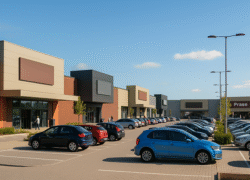
Poland’s Retail Parks Strengthen Position as Leasing Models Adjust

Retail parks have emerged as the most resilient segment of Poland’s retail property market in 2025, with new projects, steady investment activity and a changing approach to lease agreements reshaping the sector.

Industry data indicate that more than 170,000 square metres of new retail space was delivered in the first half of the year, with forecasts suggesting that total completions could reach close to 400,000 square metres by December. Developers are also pressing ahead with projects that will add another half a million square metres in 2026, signalling the strongest construction pipeline the sector has seen to date.

The surge in supply has not discouraged investors. Mid-year reviews by international brokerages highlight that retail parks continue to draw capital, with yields holding in the range of seven to seven and a half percent, and prime assets in established catchments trading slightly below that. Analysts point to consistently strong tenant demand and stable occupancy as reasons for this steady pricing.

Market commentators describe retail parks as one of the most active property formats in Poland, with many investors viewing them as defensive assets in uncertain economic conditions. Reports also highlight that landlords and tenants are increasingly negotiating around how service charges and maintenance costs are handled.

A study prepared jointly by Avison Young, CMS, BIG Poland and the Polish Council of Shopping Centres notes that while the principle of tenants covering property operating costs remains intact, agreements are more frequently being adapted to include safeguards such as cost ceilings, inflation-linked fees or fixed monthly contributions. Legal experts argue that these changes, once confined to large shopping centres or key tenants, are now becoming more common across the retail park sector.

Brokers confirm that retailers are seeking greater predictability in their occupancy costs and that landlords are responding with more flexible arrangements. This reflects a broader shift in bargaining power and the growing maturity of the market.

The overall picture shows a sector that continues to expand, both in scale and sophistication. Strong construction pipelines, a healthy investment market and evolving lease practices suggest that retail parks are set to remain a cornerstone of Poland’s retail landscape in the coming years.

Allegro to Relocate Prague Office to Karlín

Allegro, the European online marketplace, will relocate its Prague office from Holešovice to Danube House in Karlín, part of the Riverside Karlín complex currently under renovation. The move follows a search process carried out with real estate consultancy Colliers.

The company has leased 2,850 square metres of space across two floors at Karolinská 650/1. The building, which holds a LEED Platinum sustainability certification, was chosen for its location, design standards, and environmental performance. Allegro expects the new office to better align with its corporate values and environmental goals.

The fit-out, set to begin in early 2026, will incorporate employee feedback and consultations with team leaders. Plans include a kitchen with a terrace overlooking the Vltava River, a dedicated visitor zone with meeting space, and areas for corporate events. Smaller features such as telephone booths and relaxation zones are also planned.

Danube House is designed with measures to improve efficiency and comfort, including renewable energy use, smart heat pumps, shading systems, and automated ventilation in meeting rooms. Shared facilities will include a garden and landscaped areas intended for informal meetings.

Allegro intends to complete the relocation in the summer of 2026. The company has described the move as part of its long-term commitment to operations in the Czech market.

Poland’s Fitness Chains Face Scrutiny Over Contracts and Consumer Complaints

Poland’s fitness industry is drawing renewed attention from consumers and legal experts as complaints about contract terms, debt collection and service quality continue to circulate. At the same time, official data and past regulatory decisions point to a sector that has already faced scrutiny for how its largest operators conduct business.

Zdrofit, part of the Benefit Systems group, is among the country’s leading fitness brands, with more than 100 clubs nationwide, including a flagship location in Warsaw’s Westfield Mokotów shopping centre. According to the company’s own website, membership plans are promoted as flexible, with access to facilities across Poland. However, users posting on online forums have reported difficulties canceling contracts, citing unclear procedures, automatic renewals and subsequent demands for payments. In some cases, individuals stated they were contacted by debt collection agencies such as Kaczmarski Inkasso after attempting to terminate their memberships.

The Office of Competition and Consumer Protection (UOKiK) confirmed in 2021 that it had fined several operators, including entities connected to Zdrofit, more than PLN 32 million for engaging in anti-competitive agreements to divide local markets. The ruling was partially upheld by Poland’s Competition and Consumer Protection Court. According to UOKiK, these practices reduced consumer choice and distorted competition between fitness chains.

Additional financial stress is evident across the sector. Data published by the National Debt Register (KRD) shows that by 2025, Polish fitness operators carried arrears of more than PLN 36 million, compared with PLN 30 million two years earlier. Analysts told local media that such indebtedness may increase pressure on companies to enforce contract terms more strictly, potentially contributing to disputes with customers.

Criticism has not been limited to contract terms. Comments posted on consumer review sites and social media point to overcrowding, broken equipment and locker security issues, although these are anecdotal accounts rather than verified findings. Employee reviews reported by platforms such as GoWork and Glassdoor also describe staff facing heavy sales pressure and stretched resources, suggesting wider operational strains in some clubs.

Despite these concerns, Zdrofit and other chains continue to expand. Benefit Systems announced the opening of new clubs in Warsaw and other cities in 2025, underlining the brand’s ongoing presence and investment. The company has not publicly responded to the recent wave of online complaints.

While there has been no new investigation into fitness chains’ consumer practices, legal experts note that contract features such as automatic renewals or unclear cancellation procedures could fall under UOKiK’s remit on unfair commercial terms if proven systemic. A spokesperson for UOKiK recently reiterated that consumers should first turn to local ombudsmen for assistance, but added that if widespread abuses are documented, the regulator has the power to launch further inquiries.

For now, Poland’s fitness industry remains a legitimate and expanding business sector, but its history of antitrust violations and a steady flow of consumer complaints point to vulnerabilities. Whether the next intervention comes from ombudsmen, courts, or regulators may depend on how many more clients formally challenge the fine print of their contracts.

Nathan Law Blocked From Entering Singapore as Hong Kong Tightens Grip on Exiled Critics

Democracy campaigner Nathan Law was stopped at Singapore’s border over the weekend and put on a return flight to the United States, the latest setback for one of Hong Kong’s most prominent exiled figures.

Law said he was detained for several hours after landing, questioned by immigration officials and then told he would not be allowed to stay. Authorities in Singapore later explained that, although he held a valid visa, his presence was not considered to serve the country’s national interest. He spent around 14 hours in the city-state before being flown back to the US, where he has been based in recent months.

The activist, who came to prominence during the 2014 Umbrella Movement and was once the youngest lawmaker in Hong Kong’s legislature, has lived abroad since the national security law was imposed on the territory five years ago. Since then, he has been a vocal critic of Beijing, lobbying in Western capitals and urging sanctions against Chinese and Hong Kong officials.

His denied entry coincides with intensified measures against overseas dissidents by Hong Kong authorities. In 2023, police in the city announced rewards for information leading to the capture of Law and seven others, accusing them of offences under the sweeping security law. The bounties were set at one million Hong Kong dollars each. This year the government went further, using new security powers to cancel the passports of 12 activists abroad and to ban local institutions from providing them financial or property support.

Human rights groups say such steps are part of a broader effort to extend political control beyond Hong Kong’s borders. They have criticized Singapore’s handling of Law’s case, warning that governments risk reinforcing Hong Kong’s campaign against dissent. Lawmakers in Britain and the United States, where Law has testified on human rights issues, have also voiced concern.

Singapore has pushed back against claims of outside influence, stressing that it makes its own immigration decisions. The city-state has long kept a firm line against foreign political activity on its soil, and analysts note it has previously barred entry to activists from other countries.

For Law, the episode highlights the narrowing options for travel and advocacy in Asia. With his Hong Kong passport now voided under the new rules and a bounty still in place, his movements are increasingly restricted. For Singapore, the case reflects the challenge of maintaining neutrality in a region where ties with Beijing are central to trade and diplomacy.

The outcome is a reminder that Hong Kong’s security legislation is not only reshaping life inside the territory, but also influencing how other governments respond to its critics abroad.

Spain’s Growth Story Extends to Housing, but Structural Strains Remain

Spain has secured a position as one of Europe’s more dynamic economies, with growth figures surpassing those of its neighbours and a property sector that continues to attract investors and households alike. The picture is encouraging, yet the underlying conditions point to challenges in productivity and in providing enough homes to meet demand.

The economy expanded strongly through the first half of 2025, supported by a larger workforce, vigorous services exports, and tourism that has rebounded to near record levels. Public investment, partly financed through European Union programmes, has also added momentum. The result has been growth rates far above the euro-area average, at a time when many member states are struggling to maintain output.

Immigration has been central to this performance. Spain has admitted large numbers of newcomers over the past three years, many of them of working age, which has helped offset demographic decline and filled labour market gaps. Economists note that this influx has contributed directly to income growth, while also sustaining the consumption and services base of the economy. Recent reforms have eased the process of regularising undocumented workers, broadening the pool of legal employees, and nearly half of all new jobs since 2022 have gone to foreign nationals.

The property sector has mirrored the country’s economic upswing. Home sales rose strongly in 2024, with both new and existing units seeing significant increases. The trend has continued into 2025: in the first quarter alone, nearly 185,000 transactions were completed, a sharp increase on the previous year. Analysts expect that by year’s end, sales could reach the highest level since before the financial crisis. Prices have moved upwards as well, averaging close to €2,000 per square metre nationwide, with considerably higher figures in major cities and coastal regions.

Despite the surge in activity, weaknesses are evident. Supply has not kept up with demand. While construction starts and completions have risen, they remain far short of what would be required to close the estimated housing shortfall, which runs into the hundreds of thousands of units. Rents have also climbed quickly, and in many urban areas families are now devoting an ever larger share of income to housing costs. A tightening of rules on tourist rentals and new rent caps have been introduced in an attempt to ease pressures, but their long-term effectiveness remains uncertain.

Financing conditions are somewhat more favourable than during the peak of Europe’s rate-hiking cycle. Mortgage costs have eased as banks offer more competitive fixed and variable products, helping households access credit. Yet an increase in foreclosures in recent months points to vulnerabilities among more stretched borrowers, especially in regions where prices have risen fastest.

The government has announced plans to expand social housing, tripling budget allocations over the coming years in an effort to raise Spain’s public housing stock closer to the European average. Authorities have also taken steps to increase data transparency and rein in speculative practices. But industry players argue that permitting delays, land shortages and a lack of skilled construction labour continue to constrain delivery.

Beyond housing, the broader economy faces the question of productivity. Output per worker remains well below the euro-area norm, limiting the extent to which rapid growth can translate into sustainable gains in living standards. International institutions have urged Spain to modernise regulations, support innovation and help companies scale up.

Spain has positioned itself as one of Europe’s few bright spots, showing how demographic renewal and service-led expansion can drive results. The challenge now is to ensure that this momentum translates into more efficient output and adequate housing for its growing population. Without that, the risk is that today’s success will prove cyclical rather than transformative.

The Grounds Narrows Losses in First Half of 2025, Reaffirms Full-Year Outlook

The Grounds Real Estate Development AG reported a significant reduction in its consolidated loss for the first six months of 2025, even as revenues fell compared with the previous year. The company reaffirmed its guidance for the full year, projecting revenues between €9 million and €11 million and a balanced operating result.

Revenue for the first half of the year stood at €2.9 million, down from the same period in 2024, reflecting weaker activity in property and portfolio sales as well as cautious demand from private buyers. Nevertheless, the company’s operating performance improved, with EBIT narrowing to –€1.1 million from –€4.3 million a year earlier. Net loss after tax decreased to –€3.7 million, compared with –€8.1 million in the first half of 2024, with earnings per share improving to –€0.19 from –€0.30.

Total assets rose slightly to €169.9 million at mid-year, up from €168.3 million at the end of 2024. A reclassification of projects in Schorfheide and Rauen boosted inventories to €122.8 million, while investment property values declined to €29.5 million. The company also acquired residential portfolios in Werder (Havel) and Potsdam-Fahrland, contributing to higher inventories. Cash reserves fell to €5.6 million from €27.6 million at the end of last year, reflecting property acquisitions, a further stake in The Grounds App2 GmbH, and debt repayments.

On the liabilities side, equity decreased to €44.1 million, reducing the equity ratio to 26 percent from 30 percent at the end of 2024. Long-term debt rose to €68.6 million, driven by new financing for recent acquisitions and an increase in bond liabilities.

Chief Executive Officer Jacopo Mingazzini said the company continued to face hesitant demand from private buyers during the first half of the year, but noted that completed sales and discussions with prospective clients indicated a recovery in the second half. He also highlighted the company’s takeover of asset management activities for parts of the insolvent Ziegert Group on behalf of H.I.G. Capital, describing it as a milestone that strengthened The Grounds’ workforce and broadened its scope.

Chief Financial Officer Andrew Wallis said the expansion into asset management was expected to generate more than €3 million in sales revenue and contribute over €1 million to EBIT this year, adding that project developments in Magdeburg and Erkner would further support earnings in 2026.

Despite ongoing pressure in the housing market, The Grounds said it remains confident in its outlook, with management reaffirming its forecast of €9–11 million in consolidated revenues for 2025 and a balanced EBIT at year’s end.

The Grounds Narrows Losses in First Half of 2025, Reaffirms Full-Year Outlook

The Grounds Real Estate Development AG reported a significant reduction in its consolidated loss for the first six months of 2025, even as revenues fell compared with the previous year. The company reaffirmed its guidance for the full year, projecting revenues between €9 million and €11 million and a balanced operating result.

Revenue for the first half of the year stood at €2.9 million, down from the same period in 2024, reflecting weaker activity in property and portfolio sales as well as cautious demand from private buyers. Nevertheless, the company’s operating performance improved, with EBIT narrowing to –€1.1 million from –€4.3 million a year earlier. Net loss after tax decreased to –€3.7 million, compared with –€8.1 million in the first half of 2024, with earnings per share improving to –€0.19 from –€0.30.

Total assets rose slightly to €169.9 million at mid-year, up from €168.3 million at the end of 2024. A reclassification of projects in Schorfheide and Rauen boosted inventories to €122.8 million, while investment property values declined to €29.5 million. The company also acquired residential portfolios in Werder (Havel) and Potsdam-Fahrland, contributing to higher inventories. Cash reserves fell to €5.6 million from €27.6 million at the end of last year, reflecting property acquisitions, a further stake in The Grounds App2 GmbH, and debt repayments.

On the liabilities side, equity decreased to €44.1 million, reducing the equity ratio to 26 percent from 30 percent at the end of 2024. Long-term debt rose to €68.6 million, driven by new financing for recent acquisitions and an increase in bond liabilities.

Chief Executive Officer Jacopo Mingazzini said the company continued to face hesitant demand from private buyers during the first half of the year, but noted that completed sales and discussions with prospective clients indicated a recovery in the second half. He also highlighted the company’s takeover of asset management activities for parts of the insolvent Ziegert Group on behalf of H.I.G. Capital, describing it as a milestone that strengthened The Grounds’ workforce and broadened its scope.

Chief Financial Officer Andrew Wallis said the expansion into asset management was expected to generate more than €3 million in sales revenue and contribute over €1 million to EBIT this year, adding that project developments in Magdeburg and Erkner would further support earnings in 2026.

Despite ongoing pressure in the housing market, The Grounds said it remains confident in its outlook, with management reaffirming its forecast of €9–11 million in consolidated revenues for 2025 and a balanced EBIT at year’s end.

Southeast Asia’s Coastal Cities Turn to Reclamation to Secure Space and Shorelines

Coastal reclamation is moving to the centre of urban strategy across Southeast Asia and the wider Asia-Pacific, as governments try to balance land scarcity with the growing risks of climate change. From Singapore to Manila and Ho Chi Minh City, a new generation of large-scale projects is reshaping coastlines while raising questions about financing, ecology, and long-term resilience.

In Singapore, planners are studying an ambitious “Long Island” scheme off the East Coast that would combine flood barriers with new land for housing and a freshwater reservoir. Officials have signalled that defending the city against rising seas could cost tens of billions of dollars, with a dedicated state fund receiving fresh injections this year. Work is also continuing at Pulau Tekong, where engineers are experimenting with “polder” methods to reduce reliance on imported sand.

Manila Bay is undergoing its own transformation. The Pasay Harbor City project, spread across more than 250 hectares of new land, aims to create space for businesses, leisure, and convention facilities. Local authorities see it as part of a broader effort to revitalise the bayfront, but it has also sparked controversy. Environmental agencies placed multiple reclamation plans on hold last year, citing concerns about fisheries and coastal ecosystems.

Further south, Ho Chi Minh City is advancing the Cần Giờ coastal development, a project backed by billions of dollars in private investment. The plan calls for a vast new urban district with housing for hundreds of thousands of people and space for millions of tourists. Supporters argue it will anchor the city’s expansion, while critics warn it could put pressure on the surrounding mangrove forest, a UNESCO-listed reserve that acts as a natural flood defence.

Elsewhere, international precedents are influencing the debate. Lagos has pushed ahead with Eko Atlantic City, a new commercial hub built on reclaimed land and protected by a massive sea wall. The project is often cited as proof that coastal defence and real estate development can be combined, though some analysts say nearby communities have experienced unintended shoreline changes.

Timetables for these schemes vary widely. In Singapore, work on the Tekong polder is nearing completion, with handover expected soon. In Indonesia, a vast sea wall designed to protect Jakarta is still considered a decades-long undertaking. And in Hong Kong, plans for a large artificial island in the Lantau area have been scaled back, reflecting cost pressures and environmental pushback.

Financing approaches also differ. Singapore is paying directly through its national budget, while projects in the Philippines and Vietnam rely on joint ventures with local governments and private investors. In Sri Lanka, Colombo Port City has been promoted with tax incentives to attract foreign firms, offering another model for funding.

For real estate markets, the projects are pitched as both a safety measure and a growth engine. Singapore’s Long Island is expected to create new housing land in parallel with coastal protection. Manila’s new districts are tied to tourism and events. Cần Giờ is marketed as a “green city,” designed to draw residents and visitors alike.

Underlying all of this is the climate challenge. Scientific projections show sea levels continuing to rise through the century, prompting governments to raise minimum land heights and design features with long horizons in mind. In Singapore, new reclaimed plots must now sit at elevations well above earlier standards.

Industry specialists, academics, and officials are meeting throughout the year at forums in Singapore to review case studies and technical advances, from dredging practices to soil stabilisation. The gatherings reflect a common goal: making reclamation both more efficient and more sustainable, while ensuring new districts can withstand the pressures of climate change.

The pace of reclamation underscores how coastal cities are confronting two urgent realities at once. They must create space for growing populations and economies, but they must also defend themselves against seas that are steadily rising. The outcome of these efforts will determine not only the shape of new districts, but the long-term safety and livability of the region’s urban coastlines.


BuildGreen and Zorile Announce Moldova’s First LEED Platinum Office Certification

BuildGreen, together with developer Zorile S.A., has announced that the Zity Office project in Chișinău has achieved LEED v4.1 Existing Buildings – Platinum certification. The distinction is being presented as the first of its kind on the Moldovan office market, positioning the building alongside projects that follow the most rigorous international standards of sustainability.

Zity Office is part of a mixed-use complex that integrates office and retail functions, with the office component comprising a seven-story building and the upper levels of Zity Mall. The project has been promoted as offering a gross leasable area of around 12,200 square meters, hosting companies such as Orange Moldova, Ericsson, Victoriabank and others. Local listings confirm that Zity’s offices are marketed with modern amenities and direct connection to the retail center, situated in Chișinău’s Buiucani district and easily accessible by public transport. Romanian business media reported that the certification process resulted in a score of 80 points across the LEED system, with strong performance in energy efficiency, waste management, and indoor environmental quality.

For BuildGreen, which has offices in Bucharest and Prague and works across Central and Eastern Europe, the certification underlines its role as a regional consultant for sustainable building practices. The firm has been active since 2010 and has advised on numerous projects seeking BREEAM, WELL and LEED ratings. Zorile S.A., a company with roots as a footwear manufacturer, has reinvented itself over the past two decades as a real estate developer, with Zity Office and Zity Mall forming its flagship complex.

The announcement is significant because it places Chișinău into the broader network of cities where internationally recognized green building standards are being applied. For tenants, the certification signals operational efficiency, environmental safeguards and occupant comfort. For the wider market, it provides an early precedent in a country where certified office stock has been virtually absent.

Some details surrounding the certification remain subject to verification. BuildGreen has said that Zity Office achieved a high score in categories such as energy and waste performance, but the official LEED project directory does not yet show a public entry for the project. The total size of the complex has also been reported differently in various outlets, with figures ranging from 12,200 to more than 15,000 square meters depending on whether the retail areas are included. Nevertheless, the project is now being promoted as Moldova’s first office development to secure LEED Platinum, and its developers argue that it sets a new standard for sustainable real estate in the country.

If the certification is upheld in practice, Zity Office could help raise the profile of Chișinău’s business environment, attract further international investment, and stimulate the adoption of sustainable practices across the Moldovan property sector.

LATEST NEWS