Smaller Towns Driving Romania’s Retail Park Expansion

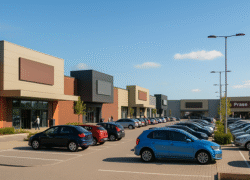
Romania’s modern retail market is entering a new growth phase, with developers increasingly focusing on small and medium-sized towns as the next wave of expansion. According to the “ExCEEding Borders | Retail Parks: Diverse Growth, Shared Momentum” report by Colliers, published in October 2025, communities of 20,000 to 50,000 inhabitants are becoming prime targets for investment as rising incomes and growing demand for modern retail formats reshape regional markets.

While large cities have traditionally accounted for roughly three-quarters of Romania’s modern retail stock, Colliers’ research shows that towns with fewer than 100,000 inhabitants currently offer only about 70 square metres of modern retail space per 1,000 residents—a level several times lower than comparable markets across Central and Eastern Europe.

“Romania still has significant growth potential in the modern retail sector,” said Simina Niculita, Director | Partner | Retail Agency at Colliers Romania. “We see solid demand fuelled by rising consumption and the interest of international brands in expanding, particularly through retail parks. These projects provide attractive yields for investors and an adaptable format for tenants, which makes them a winning long-term solution. In the coming years, every town with an active local economy and a population of at least 15,000 to 20,000 inhabitants will become a focal point for this type of development.”

Across Central Europe, the same pattern is visible. In Slovakia, developers are increasingly targeting secondary cities. “People don’t want to travel 30 minutes for shopping anymore,” explained Milan Šarközi, Managing Director of Mayflower Slovakia, in an interview with CIJ EUROPE in November 2024. “They welcome local retail schemes that meet their daily needs.” The company’s recent projects include compact retail parks in towns such as Šaľa and Nové Zámky—schemes designed to fit populations between 5,000 and 15,000.

In Poland, developers are also filling supply gaps outside major metropolitan areas. “There are still cities in central Poland where there are no modern shopping facilities,” a 2024 CIJ EUROPE report quoted regional retail specialists as saying. “Retail parks fit perfectly into that supply gap—they complement online trade and often constitute the final link in the chain of goods ordered by consumers online.”

Back in Romania, private investors are actively expanding retail-park networks in small towns. “Most of the chain’s retail parks will be located in small towns,” confirmed Victor Căpitanu, Co-Founder of One United Properties, when the developer announced its entry into the retail-park segment earlier this year. The company’s strategy focuses on provincial locations where purchasing power and infrastructure are improving faster than the existing retail supply.

Analysts say this evolution reflects both market maturity and new consumer expectations. The expansion of retail parks into secondary and tertiary cities is helping balance regional development, offering modern retail experiences to consumers who previously had to travel long distances to shop. “As incomes rise, every town with an active local economy will eventually attract at least one modern retail park,” said Simina Niculita of Colliers.

Colliers’ data shows that Romania’s modern retail density in major cities with over 100,000 inhabitants is roughly on par with peers such as Poland and Hungary, though still below Czechia. The largest gap remains in towns with populations between 10,000 and 50,000, where the country’s retail stock per capita lags far behind regional averages.

Developers are also integrating ESG-focused designs—energy-efficient buildings, green spaces and facilities for electric vehicles—and are turning these parks into community hubs combining shopping, dining and leisure. Discount and value retailers such as Pepco, Lidl, Jysk and KiK continue to anchor most of the new schemes, ensuring steady footfall and dependable income streams.

The trend signals a broader transformation across Central and Eastern Europe: retail is no longer confined to the big cities. Instead, it is evolving into a local service infrastructure—bringing modern retail and social spaces closer to smaller communities while offering developers and investors a new, resilient growth frontier.

Source: Colliers Romania and CIJ EUROPE

JP Hospitality Launches PAN AM HOTEL: A New Era of Airport Hospitality

JP Hospitality has officially introduced its new international brand, PAN AM HOTEL, signalling a bold reinvention of the airport hotel experience. Inspired by the glamour and optimism of the golden age of air travel, PAN AM HOTEL blends mid-century design aesthetics with contemporary service and functionality, creating a new category that merges lifestyle and travel convenience.

The concept challenges the traditional perception of airport hotels — often seen as convenient but uninspiring. PAN AM HOTEL aims to transform this segment into one defined by quality, comfort, and creativity. Each property will combine timeless design with 24-hour service and flexible spaces that cater to modern travellers’ diverse needs, from short stays and layovers to business meetings and wellness breaks.

“With the launch of PAN AM HOTEL, we are setting a new benchmark in airport hospitality,” said Gebhard Schachermayer, CEO of PNMB Brand GmbH and Managing Partner at JP Hospitality. “Airports deserve hotels that reflect the excitement of travel — not inflated prices and average service. Our goal is to bring innovation and genuine hospitality back to this category.”

Dietmar Ploberger, Brand Development Director of PNMB Brand GmbH and Managing Director at JP Hospitality, added: “Demand for airport accommodation continues to rise, yet guest satisfaction remains low. We saw an opportunity to fill this gap by offering a high-quality product designed around the real needs of travellers.”

The new brand is also strategically significant for JP Hospitality, marking its first step into hotel operations in addition to development and investment. This move positions the company as a fully integrated hospitality platform, capable of managing the entire value chain from project development and rebranding to long-term operation and exit.

The rise of airport business districts and the steady growth in overnight stays have made airport hotels one of the most resilient asset classes in the hospitality sector. PAN AM HOTEL’s model targets this strength, combining strong branding with operational efficiency and a lifestyle appeal that extends beyond traditional transit accommodation. The brand’s framework is also designed to support rebranding opportunities for existing airport hotels, offering owners and investors a path to revitalise assets and increase revenue potential.

The first PAN AM HOTELS are set to open at key European airports in 2028, with a pipeline of properties already under negotiation. Discussions are also underway for projects in major international hubs, underscoring the scalability of the concept and its global growth ambitions.

Founded in 1996 by Dr. Daniel Jelitzka and Reza Akhavan, the JP Immobiliengruppe has delivered over 560 real estate projects in Austria, including major developments in Vienna’s urban core. Through its hospitality arm, JP Hospitality, the group focuses on the development and support of lifestyle hotel concepts that meet modern traveller expectations while offering investors sustainable, long-term value. With PAN AM HOTEL, JP Hospitality now enters a new chapter — one that merges the romance of aviation history with the efficiency and design of contemporary hospitality.

Hospitality’s New Blueprint: From Longevity to Leadership, How Hotels Are Redefining Value

Europe’s hospitality sector is entering a new phase of transformation — one driven not just by travel demand, but by shifts in health, culture, technology, and finance. The modern hotel is no longer defined by occupancy rates or design trends; it is shaped by how well it adapts to a rapidly changing society. Across the continent, operators, investors, and developers are rethinking the meaning of hospitality and the sources of long-term value.

Health has quietly become the defining luxury of the new era. Hotel operators are investing heavily in longevity programs that merge medical science, data tracking, and holistic wellness. From sleep optimisation and nutritional diagnostics to integrated spa therapies, these experiences are designed to deliver measurable health outcomes rather than just relaxation. The model is proving financially viable, as guests increasingly pay significant premiums for wellness-focused stays. Yet the challenge remains whether such medically influenced hospitality can retain authenticity or if it risks turning well-being into another symbol of exclusivity.

At the same time, the hotel has become a stage for culture, retail, and community. The traditional lobby and restaurant are being redesigned as multifunctional spaces for locals and travellers alike. Many new hotels host art exhibitions, retail pop-ups, and culinary events that blur the boundaries between hospitality and urban culture. The food and beverage division, once considered secondary, now serves as a core identity driver. Operators are experimenting with a mix of in-house dining concepts and partnerships with independent chefs to strike the right balance between creative control and financial return. Those that succeed are turning their properties into social landmarks rather than transient spaces.

Another dynamic reshaping the industry is the rise of active and sports-based travel. Performance-driven holidays centred on cycling, hiking, or endurance training are becoming a reliable source of revenue, extending occupancy beyond traditional seasons. Hotels that align with fitness brands or sporting events are finding new pathways to profitability, particularly as travellers prioritise experiences that combine wellness with achievement. The growing intersection between sport, health, and leisure is transforming how resorts design facilities and how investors assess potential growth markets.

The rapid expansion of branded residences has emerged as both a solution and a risk within the development pipeline. Developers see the model as a way to generate liquidity while offering buyers the prestige and convenience of a managed lifestyle. Buyers, in turn, are drawn to the security and design standards associated with global hotel brands. Premiums can be high, but so can the risks if supply outpaces demand or if brand consistency falters. For now, the concept continues to attract investors who view it as a stabilising force, though analysts warn that speculative enthusiasm could inflate a new asset bubble.

The transformation of hospitality extends behind the scenes, where labour shortages, rising wages, and shifting migration policies are reshaping workforce strategies. Automation is becoming a vital support system, with robots and digital platforms handling logistics, cleaning, and certain guest services. Yet most industry leaders agree that technology should enhance rather than replace human contact. The modern hospitality team is smaller, more skilled, and increasingly reliant on digital systems that allow for real-time operations, predictive maintenance, and data-driven decision-making.

Future-proofing has become a strategic priority, not a design trend. Operators are rethinking sustainability to ensure buildings are flexible, energy-efficient, and adaptable to future uses. Heritage properties are being converted into modern, carbon-neutral hotels, while developers experiment with modular construction and smart-building systems. Leadership succession is also moving into focus, particularly for family-owned hotel groups preparing for generational transitions. The next wave of leadership is expected to prioritise innovation, diversity, and technological integration.

Behind these operational and design evolutions lies a shifting financial reality. Access to capital remains limited, with banks imposing stricter lending conditions and developers increasingly turning to private equity or joint-venture partnerships. Energy upgrades and environmental compliance are consuming larger shares of investment budgets. While transaction volumes remain subdued, activity is concentrated in resilient destinations such as Spain, Portugal, Croatia, Poland, and Slovenia, where tourism fundamentals remain strong.

Profitability is returning across the sector, but not evenly. Food, beverage, and wellness divisions are outperforming room revenue in many cases, reflecting a broader change in consumer priorities. For hotels to thrive, they must offer more than accommodation — they must deliver experiences that align with the rhythms of modern life.

In this new environment, success depends on adaptability. The future of hospitality will belong to those who can blend health science with cultural identity, digital efficiency with human empathy, and sustainability with long-term financial discipline. The industry’s challenge is no longer simply to fill rooms, but to create living ecosystems where people can work, rest, connect, and renew — places that make staying not just an experience, but a choice for well-being and meaning.

STRABAG PFS Expands Building Technology Portfolio with Acquisition of Kagerer Group

STRABAG Property and Facility Services GmbH (STRABAG PFS) has signed an agreement to acquire 100% of the shares in Elektro-Kagerer GmbH & Co. KG and Kagerer Services GmbH. The transaction, which will be applied retroactively from 1 March 2025, marks a strategic expansion of STRABAG PFS’s capabilities in building technology and reinforces its position as a leading integrated building solutions provider in Austria. The purchase price remains undisclosed.

The Kagerer Group, employing more than 120 specialists and generating annual revenues of approximately €23 million, is one of the region’s established names in electrical engineering and technical building services. With offices in Pasching and Vienna, the company’s expertise spans electrical installations, IT infrastructure, photovoltaic systems, and maintenance services for both commercial and residential developments.

“With the Kagerer Group, we are gaining a regionally established partner with strong technical competence and deep craftsmanship roots,” said Stefan Babsch, Managing Director of the STRABAG PFS Group. “The acquisition is fully aligned with our strategy. The fields of facility management and building services engineering are increasingly interlinked, and together we will be able to provide clients with comprehensive solutions covering the entire life cycle of a property — from operation and modernisation to decarbonisation. We are delighted to welcome Kagerer’s employees into our group.”

The integration of Kagerer into STRABAG PFS will maintain existing jobs while creating new development and training opportunities within the STRABAG Group. Clients of the Kagerer Group will benefit from access to an extended service portfolio and STRABAG’s digitalised operational systems.

“Our integration into STRABAG PFS is an important step in the evolution of our company,” added Christian Ebner, Managing Director of the Kagerer Group. “It allows us to broaden our offering, enter new market segments, and position ourselves for long-term growth.”

The acquisition remains subject to regulatory approval and is expected to be finalised by the end of 2025.

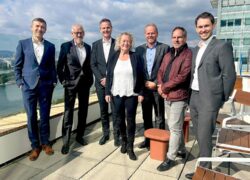
Photo: (from left to right): Hermann Wagner (Head of Operations TGA Austria), Stefan Babsch (Managing Director, STRABAG PFS Group), Norbert Herzog (Head of Operations TGA Austria), Irene Ebner (Kagerer GmbH & Zenodom GmbH), Christian Ebner (Kagerer Group & Zenodom GmbH), Gerald Reichinger (Kagerer Services), and Paul Köster (STRABAG M&A).

Trends in Foreign Purchases of New Flats in Poland

Foreigners have been increasingly active in the Polish residential market, particularly in purchasing new flats. The number of foreign buyers is rising year by year. Among them, the largest group is investors from other EU countries. These purchasers most often seek compact, modern apartments in well-connected city locations, with good access to transport and amenities.

Agnieszka Majkusiak, Sales and Marketing Director at Atal
The share of foreigners in the purchase volume of new flats in Poland is more or less stable, but may vary depending on the agglomeration. In our practice, it is a few percent, but there are periods when it is higher. This was recently the case in Poznań. Ukrainians and Belarusians predominate among buyers, but there is a growing number of people from India. Buyers are usually interested in flats for their own use. Depending on their budget, these are two- to four-room flats.

Tomasz Kaleta, managing director of sales and marketing at Develia
Sales of flats purchased by foreigners are growing in Poland. Last year, foreigners bought over 20 per cent more flats in Poland than in the previous year, which confirms the growing interest of foreign investors in our property market. Currently, the share of foreigners in our housing market may be around 5 per cent.
Foreigners account for over 9% of Develia’s customers. This group is dominated by Ukrainian citizens, who make up about half of all foreign buyers. Customers from Ukraine buy flats both in the more affordable popular segment and in more expensive, higher-standard developments. This group of buyers is most interested in three-room flats, which are chosen primarily with families in mind. The second largest group of foreign customers are Belarusians.

Barbara Marona, Sales Office Manager, Matexi Polska
Recently, we have noticed an increase in interest in our offer among foreigners in Warsaw, although this group has been among our customers for a long time. The largest group are Ukrainian citizens, but there are also buyers of other nationalities. Foreigners are mostly interested in three- and four-room flats for their own needs, as well as for investment purposes. In Krakow, foreigners also constitute a noticeable, though not as large as in Warsaw, group of flat buyers.

Joanna Chojecka, Sales and Marketing Director for Warsaw and Wrocław at the Robyg Group
In recent years, we have observed a gradual increase in the share of foreigners in the structure of flat buyers in Poland. This was particularly evident after 2022, due to the influx of Ukrainian citizens. Among foreign customers, Ukrainians currently constitute the largest group of buyers, both for investment and residential purposes, often deciding to stay in Poland permanently.

Among foreign buyers, there are also people from Belarus, Georgia, Kazakhstan, but also from Germany, the United Kingdom and Scandinavian countries. They are often Poles from abroad or investors looking for stable and safe forms of capital investment.

Foreigners are most often interested in two- and three-room flats in good locations with developed infrastructure and easy access to public transport. The quality of finish, the security of the estate and the availability of amenities such as green areas, playgrounds and smart home solutions are becoming increasingly important to them. For foreign investors looking for rental properties, central locations with good transport links to universities and business districts are key.

The share of foreign customers in our sales structure is gradually growing, which confirms that Poland – despite global economic challenges – remains an attractive housing market, both for living and for investment.

Agnieszka Gajdzik-Wilgos, Sales Manager, Ronson Development
Currently, we are not seeing an increase in the number of flats purchased by foreigners in Warsaw. Our new Startowe housing estate in Wrocław is the most popular among foreigners, where people from Ukraine and Belarus actually predominate.

Piotr Dobrzyński, Head of Operations and Technical BPI Real Estate Poland – Builder
We are seeing growing interest from foreigners. Most enquiries come from customers from the East, mainly from Ukraine, but also from other countries in the region. There are also customers from the USA and Asia among the buyers. This is still a relatively small group in terms of the entire market, but its presence is growing. Foreigners are most often interested in flats in central, prestigious locations, both for investment purposes and for their own needs. For us, this confirms that premium projects in top locations have supra-local, international potential.

Witold Kikolski, member of the management board of MS Waryński Development S.A.
In recent years, there has been a noticeable increase in the activity of foreigners on the Polish housing market, but their share remains relatively small compared to domestic buyers. The largest group is still made up of Ukrainian citizens, who most often look for flats in large agglomerations with good transport links and a developed labour market. Some of them treat the purchase as an investment in a flat for rent, while others buy with their own housing needs in mind.

In the case of our Stacja Ligocka investment in Katowice, we have not seen any interest from foreign customers. This is largely due to the local nature of the project, which primarily responds to the needs of the region’s residents. However, we expect that in Warsaw projects, such as the planned investment in the prestigious Mokotów district, the share of buyers from outside Poland will be more pronounced, especially in the premium and higher standard segments.

Damian Tomasik, President of the Management Board of Alter Investment
The share of foreigners in the buyer structure is indeed growing, with Ukrainian citizens constituting the largest group. There is also visible demand from citizens of Germany, Scandinavia and the United Kingdom, who often invest in flats for investment or holiday purposes. The most popular properties are those in large cities, especially in the Tri-City and Warsaw, as well as properties in coastal areas and in the mountains. Foreigners are keen to choose two- and three-room flats in good locations.

Piotr Ludwiński, sales director at Archicom
Poles dominate among buyers of properties from Archicom’s portfolio. Foreigners account for about 15 per cent of all transactions, and their share remains stable. The largest group of foreign customers are citizens of Ukraine. Increasingly, couples from different countries, especially from southern Europe, are also choosing flats from our offer.

Renata Mc Cabe-Kudla, Country Manager at Grupo Lar Polska
Foreigners have slightly increased their numbers among our buyers, but this is not on a scale that would have a significant impact on our supply, prices or what and how we design.

Michał Witkowski, Sales Director at Lokum Deweloper
Foreigners account for less than 20% of our customers. The largest group are Ukrainian citizens, followed by buyers from European Union countries. Among foreign customers, there is a clear presence of mixed marriages, in which the Polish woman is usually the one making the purchase.

Foreign buyers are most likely to choose spacious, family-friendly three- or four-room flats. They are motivated by the desire to secure a comfortable space for permanent residence or long-term stay in Poland. They perceive such high-standard properties, located in attractive parts of Wrocław, not only as a safe and comfortable place to live for themselves and their families, but also as a good investment.

Andrzej Swoboda, Vice-President of the Management Board, CTE Group
In recent years, we have seen a marked increase in the number of foreigners buying flats in Poland. The largest group are Ukrainian citizens, who since 2022 have been actively investing in both properties for their own use and flats for rent. Buyers from Belarus, Germany, Scandinavia and the Middle East are also increasingly present on the market, most often interested in properties in large cities and attractive business or tourist locations.
Foreigners currently account for about 10 per cent of CTE Group’s customers. They most often choose two- and three-room flats, which work well as an investment product, and in the premium segment, there is growing interest in high-standard apartments in central city districts. The share of foreigners in the housing market is steadily growing, and their preferences focus on functional flats that are well located and retain their value over time.

Source: compress.pl

Colin Lovering on Real-Estate Dialogue, Negotiation & Leadership: Advice for 2026

With over 15 years’ experience advising real-estate firms and individuals in Romania, Colin C. Lovering is a familiar voice in the regional market. As founder of Lovering & Partners, a consultancy focused on business and people performance, he helps organisations sharpen not only their technical operations but also their communication, mindset and strategic approach. As the real-estate sector heads into 2026, Lovering offers actionable advice on how professionals can build trust, deliver value and lead teams effectively in a CIJ EUROPE Q&A article.

Talk less about yourself — and more about what you can do for your clients. Many young professionals can recite leases, valuations or tenant mix statistics — but fewer can frame that information in ways that matter to the client from the very first meeting. Since many buyers have already formed strong preferences before they engage with a provider, what differentiates an effective advisor or developer is the ability to bring fresh insight, to anticipate objections (“why wouldn’t you hire me?”), and present priorities in a compelling way. As Lovering says, it’s less about your firm’s history; more about your enthusiasm, your creativity and your relevance to the client’s world.

Negotiate early, and treat it as a normal part of the deal, not a battle to avoid. Some professionals believe the best approach is to keep issues hidden until the end; others dread negotiation as adversarial. Instead, Lovering recommends shaping the scope of the conversation from the start: outline your agenda, include negotiation as part of the meeting plan, and obtain agreement on timing. This reduces awkwardness and surprises, improving both tone and trust. Empathy helps; so does clarity.

Language and personality matter as much as fluency. In cross-border business, many technical people worry about making mistakes in English or appearing uncertain. While mistakes do draw attention, they rarely hurt more than a professional demeanour, clarity of thought, and warmth of delivery. Romania already scores highly in English proficiency; the next step for many is confidence. Rather than apologise for language level, focus on connection and clarity.

Remote or digital contact still requires human presence. Many meetings now happen via video, but too often the visual or interpersonal aspect is overlooked. Professionals should ensure that even in virtual meetings they present themselves optimally: proper camera angle, good lighting, upright posture. Regular outreach matters. Letting trusted clients or prospects know you are thinking about them — by sharing insights, asking their perspective, or suggesting a conversation — keeps relationships alive, even when in-person meetings are few.

Training teams means building presence more than perfecting slides. Technical knowledge is necessary, but the ability to communicate it convincingly is equally valuable — especially for younger staff. The goal of any meeting or presentation should be clarity, confidence, and a sense of partnership. Encourage individuals to enter meetings with one idea or data point that they know the client will remember. State the agenda clearly, secure agreement with the listener, and deliver. Rehearsal builds comfort; authenticity builds trust.

This year, more than ever, being the best technical provider isn’t enough — what matters is how professionals engage, how they negotiate, how they lead, and how they connect.

© 2025 www.cijeurope.com

Avestus Real Estate Leases 15,000 m² of Office Space Across Regional Polish Cities in 2025

Avestus Real Estate, a developer and investor active in Poland’s regional office markets, says it has leased approximately 15,000 square metres of prime workspace during the first three quarters of 2025. The leases span the company’s key developments in Kraków, Łódź and Wrocław.

Avestus reports that renegotiations of existing leases continue to dominate market activity even as new contracts are concluded. According to Mariusz Frąckiewicz, Avestus’ Country Director for Poland, tenant demand remains focused on flexibility, customised lease terms and responsive property management.

In Kraków, the Enterprise Park complex—consisting of six Class A buildings in the Podgórze district—recorded four new leases and two renewals in the period. The total area of the complex exceeds 60,000 m², with tenants including Aptiv, Aon, Cisco, Alight Solutions, Estarta Poland and Getinge Shared Services. The development also includes retail and service points.

In Wrocław, the Infinity building offers approximately 22,000 m² of premium office space. Completed in 2023 in partnership with Alchemy Properties, the building hosts tenants such as Avenga, Divante, NATEK, coworking operator The Shire, and ground-floor retail and service businesses.

In Łódź, the Imagine complex comprises two office buildings totaling about 17,200 m², along with ancillary parking. Major occupants include EY, Asseco Poland, GE, Philips, WWT, LUX MED and Bluerank. The site features a bespoke conferencing and coworking centre directly managed by Avestus.

Avestus says its approach—prioritising tenant-centred flexibility in regional cities—has helped sustain leasing activity even as market conditions tighten.

Many Basic-Pension Recipients in Germany Remain Economically Active, Study Finds

A new study from the German Institute for Economic Research (DIW Berlin) shows that older workers who receive the basic pension supplement are more likely to continue working than other pensioners. The basic pension was introduced to help older residents who spent many years in the workforce but ended up with low pension income. It aims to reduce the risk of poverty among long-contributing but low-paid retirees.

According to the research, among pensioners aged roughly 63 to 74, approximately one in five basic-pension recipients remain in paid employment, compared with a lower share among pensioners without this supplement. Many continue working in small part-time roles (known in Germany as “mini-jobs”).

The incentive to keep working is strongest among those who were already employed shortly before retirement; they are more likely to continue in some form of employment than those who stopped work before pension age. However, working retirees often face a trade-off: higher earnings may reduce or eliminate the supplement.

The authors argue that the basic pension alone does not fully protect against low income in old age. Because many retirees work out of economic necessity, tax and earnings-allowance incentives could help. One proposal is to raise the income threshold below which work does not reduce pension entitlements. Such measures could support older workers who want to continue contributing, while avoiding significant losses in income support.

In sum, the study suggests that many older Germans are willing and able to remain active in the labour market if the economic incentives are aligned; but persistent poverty risks require careful pension design and supportive labour policy.

Source: DIW Berlin

Foreign Capital Strengthens Its Grip on Romanian Real Estate

Romania’s property and construction industries have emerged as some of the country’s strongest magnets for foreign capital. According to data analysed by Cushman & Wakefield Echinox from the National Bank of Romania, the real estate and construction segment now accounts for roughly 17.5 percent of total foreign direct investment (FDI), ranking just behind industry as the leading destination for overseas funds.

Over the past decade, the value of foreign investments in the sector has grown sharply, reflecting the continued expansion of Romania’s commercial property market and the confidence of long-term investors. The total FDI stock reached around €118 billion by the end of 2023, and while global headwinds slowed new inflows in 2024, the country’s property market continues to attract sustained interest.

Foreign ownership plays a decisive role in shaping the modern real estate landscape. More than two-thirds of the country’s office, retail, and logistics stock is estimated to be held by non-resident investors, with the largest concentrations found in Bucharest and the country’s regional business hubs. Analysts note that investors are drawn by competitive yields and the relative stability of Romania’s property fundamentals compared with other Central and Eastern European markets.

Within the broader economy, four sectors—industry, construction and real estate, trade, and financial services—collectively account for the majority of foreign capital. Yet the property market has outperformed in terms of growth rate, adding billions in new investment and overtaking traditional sectors such as manufacturing and retail in year-on-year expansion.

Industry specialists describe Romania’s real estate sector as resilient and structurally attractive, even against a backdrop of political uncertainty and slower GDP growth. They highlight a mix of factors driving inflows: steady demand for logistics space, ongoing urban redevelopment, and a maturing investment ecosystem that includes both institutional and private capital.

The latest figures also suggest that Romania is playing a larger role in the regional investment map. With prime yields still 1–2 percentage points higher than in nearby EU markets, analysts say the country offers a clear risk-return advantage for investors seeking diversification within Central and Eastern Europe.

Crypto Law Shifts in U.S. Trigger IPO Buzz — India’s Heavier Tax Approach Contrasts Strongly

The past six months have witnessed a marked change in how the United States treats certain digital currencies. A new federal law now lays out a formal legal structure for “stablecoins” — digital tokens designed to maintain a constant value relative to a national currency. This law creates licensing, compliance, reserve and oversight requirements for issuers and service providers. The clarity has spurred greater enthusiasm among investors and firms considering large-scale token issuance or related services.

The political momentum has turned in favour of innovation in the U.S. crypto sector, particularly for stablecoins that meet regulatory standards. By contrast, in India, the government has adopted a stricter fiscal stance: earnings from digital-asset transfers are taxed heavily at a flat 30 % rate, and large transactions trigger a separate 1 % deduction at source whether or not there is profit.

The result is a growing divergence. In the U.S., clearer rules and legal certainty are encouraging institutional engagement, entrepreneurial launches, and capital formation in the digital-asset payment space. In India, the high tax burden and compliance demands are viewed by many smaller actors as a deterrent to frequent trading or token creation, though the tax regime may still help weed out non-serious speculation.

Yet the opportunities remain. Globally, demand for efficient, reliable digital payment tokens is rising. Firms in India may opt to handle large portions of work remotely, or to explore partnerships with jurisdictions that have more permissive regimes. Meanwhile, the U.S. model suggests what may be possible when regulation and innovation are brought into alignment.

Key takeaway: The direction of crypto policy in the U.S. emphasises enabling regulated growth; in India, the focus is more on revenue, control and risk. Which approach yields stronger digital innovation, investor protection, and market stability may become clearer in the months ahead — and other countries are likely watching.

LATEST NEWS