Slovakia’s Commercial Real Estate Market Enters H3 2025 on Cautious Momentum

Slovakia’s commercial property market heads into the second half of 2025 with solid investment figures but mixed signals across sectors. After a strong start to the year, investors are showing renewed confidence, though the pace of new leasing and development activity is uneven and increasingly influenced by broader European headwinds.

According to data from several international consultancies, investment volumes in Slovakia exceeded €500 million in the first six months of 2025 — already outpacing the full-year total for 2024. Most capital flowed into logistics and retail assets, with office properties representing a smaller share. Analysts attribute the rebound to improving access to financing and a more balanced pricing environment after two years of limited transactions.

The logistics and industrial segment remains the cornerstone of the market, supported by new infrastructure and Slovakia’s role as a regional production and distribution hub. Developers are continuing to build, with roughly 240,000 square metres of new warehouse space underway. However, rising vacancies — now above six percent — suggest that demand is cooling after several years of rapid expansion. Some developers have begun offering more flexible terms to attract tenants, while others are pausing speculative projects until absorption improves.

Retail properties have drawn increasing attention from both domestic and regional investors. Retail parks in medium-sized cities are performing particularly well, supported by stable consumer demand and the entry of new international brands. Nevertheless, analysts note that shoppers are becoming more price-sensitive, prompting investors to focus on efficient formats and strong tenant mixes rather than large-scale speculative retail schemes.

The office market remains stable but subdued. Leasing is concentrated in high-quality buildings in central Bratislava, while older or less energy-efficient properties face greater competition. Limited new supply may help maintain rental levels, but many occupiers are renegotiating leases rather than expanding.

Residential real estate continues to be one of the economy’s most resilient segments. Apartment sales in Bratislava rose sharply during the first half of 2025, driven by returning diaspora buyers and constrained new supply. Prices have reached new highs, despite slower construction activity nationwide, reflecting ongoing demand for well-located housing.

Analysts caution that the strong first-half results could give way to a more restrained second half. Across Europe, transaction liquidity remains thin, and investors are still adjusting to higher borrowing costs. Within Slovakia, industrial and retail assets are expected to remain the most active categories, while office investment will likely stay selective.

Despite these challenges, Slovakia continues to attract regional interest due to its central location, stable economy, and growing transport infrastructure. Industry experts suggest that 2025 could close with total investment approaching €800 million, provided that financing conditions and investor sentiment remain favourable.

As the market enters the final quarter, the focus is shifting from volume growth to long-term value — with sustainability, adaptability, and cost efficiency now central to how both developers and investors evaluate opportunities.


Deputy Finance Minister Małgorzata Krok Steps Down from National Tax Administration Role

The Polish government has confirmed that Małgorzata Krok has left her position as Deputy Minister of Finance and Deputy Head of the National Tax Administration (KAS), following a decision by the Prime Minister. The Ministry of Finance said her departure took effect on 8 October 2025, marking the end of her term that began in February 2024.

Finance Minister Andrzej Domański thanked Krok for her contribution to modernising the tax administration and for her role in strengthening KAS’s institutional capacity. During her time in office, she oversaw international cooperation, including coordination with European Union bodies on customs policy, as well as the introduction of new electronic systems for taxpayers and the development of the e-TOLL road charging platform.

Her responsibilities also covered improving taxpayer services and expanding the digital tools used by both citizens and businesses. She participated in policy work linked to the forthcoming changes to the EU Customs Code and represented KAS in international forums.

The Ministry’s announcement did not provide a reason for her departure, and no successor has yet been named. Government sources described the change as part of the normal rotation within the ministry’s leadership.

Before joining the ministry, Krok built her career as a lawyer and tax advisor, specialising in public finance and international cooperation. Her professional background includes postgraduate studies in international finance at the Warsaw School of Economics.

While her exit leaves a gap in the leadership of Poland’s tax and customs administration, officials said that ongoing digitalisation and service projects would continue under existing teams. The Ministry of Finance has not yet indicated when a new deputy will be appointed.

Slovakia Maintains Trade Surplus in August as Imports Slow Down

Slovakia’s foreign trade balance remained positive in August 2025, as weaker import activity outweighed a slight decline in exports, according to the latest data from the national statistics office. The surplus marks the fourth consecutive month in which the country exported more goods than it imported.

Exports in August were broadly stable compared with the same month last year, while imports fell more noticeably, reaching their lowest level since the end of 2023. The drop in import volumes was enough to lift the trade surplus to roughly €225 million, up from around €90 million a year earlier.

Energy-related goods continued to show the sharpest declines on both sides of the trade ledger, reflecting reduced prices and lower volumes in global energy markets. By contrast, exports of manufactured items, particularly machinery, electronics, and consumer goods, helped stabilise the overall figures.

Industrial products and transport equipment still make up the majority of Slovakia’s foreign trade. These sectors accounted for well over half of total exports and nearly half of imports, underscoring the country’s continued dependence on industrial supply chains — particularly in the automotive sector.

The data also confirms that most of Slovakia’s trade remains within the European Union. Roughly four-fifths of exports were destined for EU member states, while about two-thirds of imports originated from within the bloc. Sales to EU markets increased slightly, but exports to non-EU countries slipped compared with a year earlier.

Over the first eight months of 2025, total exports grew modestly while imports rose at a slightly faster pace. As a result, the country’s cumulative trade surplus narrowed to around €1.6 billion from roughly €2.6 billion in the same period of 2024.

The August figures highlight the impact of weaker energy imports and uneven demand across European markets. While Slovakia’s industrial exports have remained resilient, sustaining the trade surplus will depend on whether its manufacturing sector can maintain output in a slowing regional economy.

Source: Statistical Office of the SR

Budapest ONE Achieves Top Sustainability Rating

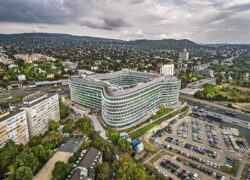
The second phase of the Budapest ONE office complex has received a BREEAM In-Use Outstanding certification for operational performance, the highest rating under the globally recognised sustainability system. Developed by Futureal, the building is now ranked as Hungary’s second most sustainable commercial property, following the company’s Etele Plaza project.

Located in Őrmező, one of Hungary’s key transport hubs, the 66,000 sqm complex achieved a score of over 90% in the BREEAM In-Use Asset Performance category. The assessment highlighted the building’s accessibility, flexibility, and efficient resource management. CBRE acted as consultant and assessor for the certification process.

Budapest ONE incorporates several features to reduce environmental impact, including a central building management system, a heat recovery ventilation network, and 150 rooftop solar panels with a total capacity of 81.76 kWp. The installation generates approximately 80,000 kWh of renewable electricity annually, cutting carbon emissions by about 18 tonnes. The on-site energy is supplied to tenants at no extra cost.

According to Gábor Radványi, Chief Architect and Head of Sustainability at Futureal, the certification confirms the developer’s commitment to long-term sustainability standards. “The Outstanding-level rating demonstrates that we are meeting international benchmarks while creating workplaces that combine environmental responsibility with user comfort,” he said.

The project has also been designed to achieve WELL Platinum certification, focusing on health and well-being, and has already earned Access4You Gold for accessibility. Amenities include a rooftop running track, gardens, bicycle facilities with showers, and charging stations for electric vehicles and scooters. A landscaped public square with seating and a stage provides open space for tenants and the surrounding community.

Futureal’s Budapest ONE continues to serve as a benchmark for modern office developments in Central Europe, combining environmental efficiency with high-quality urban design.

Romania Records Over 55,000 Property Transactions in September 2025

Romania Records Over 55,000 Property Transactions in September 2025

Romania’s real estate market remained active in September 2025, with 55,260 properties sold nationwide, according to data from the National Agency for Cadastre and Real Estate Advertising (ANCPI). The figure represents an increase of 1,827 transactions compared to August and 447 more than in the same month last year.

The Bucharest-Ilfov region continued to lead the market, recording 8,858 transactions in the capital and 4,090 in Ilfov County. Constanța ranked third with 2,697 property sales, while at the lower end of the scale were Teleorman (59), Covasna (398), and Călărași (476), reflecting the ongoing regional disparities in market activity.

Among county capitals, Brașov (930), Timișoara (838), and Cluj-Napoca (826) saw the highest numbers of completed sales. In contrast, Alexandria (4), Călărași (75), Slobozia (75), and Slatina (79) recorded the fewest.

The number of mortgage-backed transactions reached 30,660, up by 1,163 compared with September 2024. Bucharest again dominated this category with 5,245 loans, followed by Ilfov (2,643) and Prahova (2,527). The smallest volumes were reported in Covasna (67), Harghita (79), and Gorj (95).

Agricultural land trading also remained strong. The highest volumes were reported in Constanța (889 plots), Dolj (865), and Buzău (541), confirming the continued interest in farmland transactions.

The data suggest a steady national market, with the capital and major regional cities continuing to attract most real estate activity, while smaller counties show moderate and uneven growth.

Rohlig SUUS Logistics to Lease 15,500 sqm at Panattoni Park Szczecin Trzebusz II

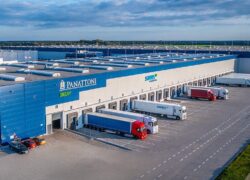
Panattoni has announced that Rohlig SUUS Logistics will occupy nearly 15,500 sqm in the first building at Panattoni Park Szczecin Trzebusz II, a new logistics complex currently under construction. The facility, which totals 25,500 sqm, began construction in August 2025, with completion scheduled for the second quarter of 2026.

Located in the eastern part of Szczecin, close to the S3 expressway and A6 motorway, the site offers direct access to both domestic and international transport routes. Its proximity to the German border and the Port of Szczecin makes it well-positioned for cross-border distribution. The development is targeting a BREEAM “Excellent” certification and will feature energy-efficient and environmentally friendly design elements. When fully completed, the park will comprise three buildings with a total area approaching 102,000 sqm.

According to Weronika Mioduszewska, Associate Leasing Director at Panattoni, the new lease highlights Szczecin’s growing role in north-western Poland’s logistics network. “The location and infrastructure make this an attractive base for companies operating between the Polish and German markets,” she said.

Marcin Grzelak, Regional Director at Rohlig SUUS Logistics, noted that Western Pomerania continues to strengthen its position as a logistics centre for northern Europe. “We have been present in Szczecin for over 15 years. By consolidating our operations into one logistics centre, we aim to improve efficiency and expand our service capacity,” he explained, citing the region’s growing infrastructure and the planned expansion of the container port in Świnoujście as key factors driving development.

Rohlig SUUS Logistics, Poland’s largest logistics operator, plans to begin operations at the new facility in 2026.

Mina Djordjević on The Dorćol Residence and Belgrade’s Luxury Market

Brixwell Investment is redefining Belgrade’s high-end residential landscape with The Dorćol Residence — a landmark project in one of the city’s most historic and sought-after districts. The development will deliver 459 apartments, including studios, executive suites, and penthouses exceeding 500 sqm, alongside 37 retail units and over 800 underground parking spaces. CIJ EUROPE spoke with Mina Djordjević, CEO of Brixwell, about the project’s vision, market positioning, and sustainability-driven approach.

Q: What is the estimated investment volume for The Dorćol Residence and how is the project being financed? Are you partnering with international or domestic investors?

Mina Djordjević: The Dorćol Residence represents a significant private investment within the premium residential segment of central Belgrade. While we prefer not to disclose precise figures at this stage, the project is entirely privately financed, reflecting a balanced and sustainable financial structure. Brixwell Investment is the sole investor and developer of the project, ensuring full control over quality, execution, and the long-term vision from concept to completion.

Q: Who is your target client base for these luxury apartments—local high-net-worth individuals, diaspora buyers, or international investors—and how are you positioning pricing to compete in the Belgrade market?

Djordjević: Our target clients are discerning buyers who value architecture, craftsmanship, and location above all. This includes local high-net-worth individuals, members of the Serbian diaspora, and international investors seeking a secure asset in Belgrade’s most authentic district. Pricing is positioned within the upper tier of the market, yet remains competitive given the project’s prime Dorćol location, design concept, and the scarcity of comparable developments. Our focus is on offering lasting value rather than just luxury.

Q: Luxury residential supply in Belgrade has increased in recent years. What demand indicators give you confidence in launching such a large-scale premium project now?

Djordjević: It’s true that supply has increased, but genuine premium inventory remains extremely limited—especially in established neighborhoods such as Dorćol. We have seen consistent demand from both local buyers and the returning diaspora for high-quality developments that combine location, amenities, and enduring value. Early market feedback and pre-sales activity have been very encouraging, confirming that demand for design-driven, centrally located projects continues to outpace supply.

Q: How are you addressing sustainability, energy efficiency, and ESG standards in the design and construction of The Dorćol Residence?

Djordjević: Sustainability is integral to our philosophy. The Dorćol Residence is being developed to high energy-efficiency standards, featuring advanced insulation systems, energy-efficient façades, and modern mechanical installations to optimise comfort and reduce energy use. We are committed to responsible material sourcing, incorporating water-saving systems, EV-ready parking, and full alignment with evolving ESG principles in construction and operation. Our goal is to create not only a luxury residence but also a future-ready, environmentally conscious building.

Q: Beyond The Dorćol Residence, what is Brixwell’s long-term strategy? Are you looking to expand outside Belgrade or diversify into other asset classes?

Djordjević: Beyond The Dorćol Residence, our focus remains on prime urban developments in Belgrade’s most desirable districts. Delivering this flagship project to the highest possible standard is our current priority. However, we are selectively exploring new opportunities in both residential and mixed-use projects that align with our design values and vision. For us, growth is not about scale—it’s about curation, consistency, and creating meaningful contributions to Belgrade’s evolving urban fabric.

The Dorćol Residence is scheduled for phased completion in 2027 and 2029, setting a new benchmark for contemporary living in one of Belgrade’s most storied neighborhoods.

© 2025 www.cijeurope.com

UK: FCA Faces Questions Over £11bn Motor Finance Redress Plan

The Financial Conduct Authority’s (FCA) proposed compensation scheme for millions of UK motor-finance customers is emerging as one of the largest redress programmes ever launched by the regulator. Yet during a detailed analyst call this week, officials faced pointed questions about the reliability of their data, the scale of projected costs, and the design of a process that relies heavily on consumers actively choosing to take part.

The plan, which follows years of legal disputes over commission disclosure in car finance, is expected to cover more than 14 million agreements made since 2007. The regulator’s working assumption is that roughly 85% of eligible customers will participate once contacted by lenders, resulting in total compensation of about £8 billion and a further £3 billion in administrative costs. Together, that implies an £11 billion bill for the industry.

FCA chief executive Nikhil Rathi told analysts that the regulator’s analysis had been limited by incomplete information from lenders. Many finance firms could not provide details of the minimum interest rates or exact annual percentage rates charged on individual loans, forcing the FCA to use broad models based on patterns from tens of millions of historic agreements. The data gaps, he said, meant the regulator had to construct an evidence base that was representative rather than comprehensive.

At the heart of the scheme is a simple principle: if a customer paid more because a dealer or lender failed to disclose a commission arrangement, that customer should receive a fair refund. The compensation formula aims to reflect the estimated difference between deals with discretionary commissions and those on fixed fees. In rare cases where undisclosed commissions were exceptionally high and tied to specific contractual relationships, the FCA proposes returning the full commission amount plus interest.

Consumer participation will be critical. Those who have not yet complained will be invited to opt into the scheme once contacted by their lender, while those who already lodged complaints will be included automatically unless they choose to opt out. Rathi said the regulator’s consumer research showed strong awareness of the issue but also lingering confusion about eligibility and process.

Surveys conducted for the FCA suggest that most borrowers now know they may be entitled to compensation, but many remain unsure who received the commission on their original deal or how to submit a claim. Roughly four in ten respondents said they might hesitate because they found the process unclear or time-consuming. Even so, most indicated they would prefer to claim directly rather than use third-party firms or claims managers.

Analysts on the call questioned whether the assumed participation rate was realistic given that some of the loans date back nearly two decades. The FCA countered that most major lenders hold sufficient customer data to make contact and can supplement it with information from credit reference agencies. The regulator also expects technology and automation to reduce processing costs over time.

The potential financial impact varies widely across the sector. Banks and car manufacturers’ in-house finance divisions are expected to bear the largest costs, while smaller independent lenders may face limited exposure. Industry sources estimate that around a fifth of the expected total relates to operational expenses such as staffing, systems upgrades, and quality assurance.

Despite the controversy, the FCA argues that a structured, regulated scheme will ultimately be less costly and faster for consumers than prolonged litigation. It also aims to restore confidence in a market that, according to the regulator’s own research, remains an essential part of household credit.

The consultation on the proposal runs until mid-November, with final rules expected early next year and payments likely to begin later in 2026. Officials insist that the priority is to conclude the issue quickly and consistently. Whether the market—and its millions of affected borrowers—shares that optimism will depend on how smoothly the data, technology, and participation challenges can be resolved in practice.

Source: CMS

GCC Project Activity Slows Sharply in Q3 2025 Amid Regional Downturn

The Gulf Cooperation Council’s (GCC) project market weakened significantly in the third quarter of 2025, with total contract activity falling by 27% year-on-year to USD 54.8 billion, according to the GCC Projects Market Update – Q3 2025 released by Kamco Invest. The decline marks one of the weakest quarters in recent years, driven primarily by lower activity in Saudi Arabia and the United Arab Emirates.

For the first nine months of 2025, project values across the GCC totalled USD 154.4 billion, a 30.5% drop compared to USD 222.2 billion in the same period of 2024. The slowdown follows two years of record investment, particularly in Saudi Arabia’s USD 1 trillion-plus giga-project programme and large-scale oil and gas developments.

Saudi Arabia Leads the Regional Decline
Saudi Arabia, the region’s largest projects market, saw activity fall 34.8% in Q3 2025 to USD 28.1 billion. The Kingdom’s total for the first nine months nearly halved to USD 61.5 billion from USD 116.6 billion in 2024, reflecting a marked slowdown in giga-project execution. Kamco Invest attributed the decline to “lower-than-expected foreign investment, sluggish oil prices, and cost inflation” affecting major schemes such as NEOM.

Despite this, Saudi Arabia’s broader economy remains relatively stable. The IMF has revised the Kingdom’s 2025 GDP growth forecast upward to 3.5%, supported by government-led projects and an expected easing of OPEC+ production cuts.

UAE Sees Sharp Drop but Outlook Improves
The UAE recorded one of the largest quarterly contractions, with project values down 65.8% year-on-year to USD 6.7 billion. The slowdown pushed the Emirates from the region’s largest projects market in Q2 to third place in Q3. For the first nine months, activity totalled USD 59.7 billion, down 18% year-on-year.

Kamco Invest expects a recovery in late 2025 and 2026, as the IMF projects UAE GDP growth of 4.8% in 2025 and 5% in 2026, led by non-oil sectors. Notable projects during the quarter included a USD 593 million contract for the Madar Mall in Sharjah and a USD 300 million project for the Erisha Smart Manufacturing Hub in Ras Al-Khaimah.

Qatar and Kuwait Show Growth
In contrast to the regional trend, Qatar and Kuwait posted increases in project activity. Qatar’s total surged 115.9% year-on-year to USD 13.6 billion, supported by preparations for the 2030 Asian Games. Key projects included USD 4 billion in contracts for offshore oil field works at Bul Hanine, awarded to China Offshore Oil Engineering.

Kuwait’s project market grew 33.8% year-on-year to USD 4.3 billion, driven by major infrastructure and energy investments. The largest project was the USD 4 billion Al Zour North IWPP Phases 2 and 3 power and desalination plant, followed by oil sector and residential construction contracts.

Sectoral Breakdown: Construction and Power Lead the Slowdown
Six of the GCC’s eight key industries recorded declines in Q3 2025. Construction activity fell by 62.4% to USD 11.1 billion, while Power dropped 13.3% to USD 17.1 billion. In contrast, the Oil and Gas sectors were the only segments to post growth.

Pipeline Remains Strong Despite Near-Term Weakness
Looking ahead, Kamco Invest expects project momentum to pick up in the fourth quarter as Saudi Arabia and the UAE resume tendering for delayed schemes. However, full-year 2025 totals are likely to remain below 2024 levels.

The GCC’s pre-execution pipeline remains substantial at approximately USD 1.78 trillion, with Saudi Arabia accounting for USD 887 billion—nearly half of the total—and the UAE contributing USD 434 billion. The Construction sector represents the largest share of upcoming projects (USD 624 billion), followed by Transport (USD 300 billion) and Power (USD 294 billion).

Kamco Invest noted that Saudi Aramco alone plans to launch 99 projects over the next three years, including major expansions in oil, gas, and treatment facilities. Across the region, 29 independent power projects are currently at bidding or evaluation stages, led by Saudi Arabia and the UAE.

While 2025 has marked a pause in the region’s two-year investment surge, Kamco Invest analysts expect medium-term momentum to remain positive, underpinned by large public-sector initiatives, infrastructure demand, and energy diversification strategies.

Source: Kamco Invest, “GCC Projects Market Update – Q3 2025” (October 2025).

Polish logistics operator Uniq Logistic Extends 38,000 sqm Lease in MLP Group Parks

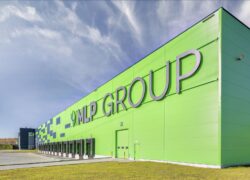
Polish logistics operator Uniq Logistic has extended its lease agreements for more than 38,000 sqm of warehouse and office space in two of MLP Group’s logistics parks — MLP Pruszków II near Warsaw and MLP Łódź. The company was represented in the negotiations by Querco Property.

At MLP Pruszków II, Uniq Logistic renewed its lease for 6,380 sqm of warehouse space and 145 sqm of office facilities. The extension at MLP Łódź covers 30,995 sqm of warehouse space and 863 sqm of office and social areas. Both sites are key operational hubs for the company’s logistics and distribution activities.

Tomasz Pietrzak, Leasing Director Poland at MLP Group, said the transaction reflects the long-term cooperation between both companies. “The lease extension was conducted transparently and efficiently, ensuring that the solutions implemented meet the tenant’s operational needs and our development standards,” he noted.

Jarosław Płusa, President of Uniq Logistic, said the decision to extend the leases was based on the company’s satisfaction with the existing facilities. “The warehouses meet our requirements in terms of infrastructure, safety, and location, enabling efficient logistics operations,” he explained.

Marek Boczula, COO at Querco Property, added that the negotiations focused on cost structure, relocation considerations, and continuity of operations. “This process resulted in an optimal solution for both the Łódź and Pruszków facilities, reflecting effective collaboration between all parties,” he said.

Uniq Logistic, active in Poland since 2008, provides warehousing, distribution, and value-added logistics services, including order picking, co-packing, labelling, and quality control. The company joined MLP Group’s tenant portfolio in 2020.

MLP Pruszków II, located 5 km from Pruszków, is one of the largest logistics parks in the Warsaw region, with a planned total area of 427,000 sqm. The site features buildings with BREEAM certification and rooftop photovoltaic installations as part of MLP Group’s ESG strategy.

MLP Łódź, situated in the Widzew district, is under phased development and will ultimately offer 86,600 sqm of space. The project is designed to meet sustainability standards and primarily serves tenants from the e-commerce, logistics, and light manufacturing sectors.

Both parks offer convenient access to national transport routes — MLP Pruszków II to the A2 motorway and rail connections, and MLP Łódź to the A1 and A2 motorways — supporting regional and international distribution operations.

LATEST NEWS