International Campus Secures €313 Million Refinancing for German Residential Portfolio

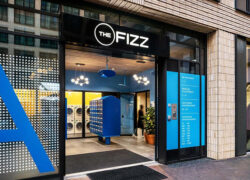
International Campus Group (IC), a major investor and operator in student housing and urban living, has completed a €313 million refinancing package for nine properties in Germany. The deal covers seven assets under its “The FIZZ” brand and two “HAVENS LIVING” properties aimed at young professionals.

The financing was arranged with BNP Paribas and Société Générale as lending partners. It includes an initial two-year term, with the option of three one-year extensions, giving the group greater flexibility for portfolio management and future growth.

IC received legal advice from Gibson Dunn, Greenberg Traurig, and Stibbe Advocats. Additional advisory roles were held by EY (tax), CBRE (valuation and technical due diligence), and Marsh McLennan (insurance).

Patrick Hanisch, CFO of International Campus Group, said the refinancing ensures financial stability at a time of tighter credit conditions. “The agreement provides both flexibility and planning security for our ongoing development,” he noted.

Representatives from both banks highlighted the transaction as part of their ongoing commitment to support the growing student accommodation sector. Société Générale emphasized the group’s consistent strategy and strong market position, while BNP Paribas described the partnership as a continuation of its support for residential and purpose-built student housing across Germany.

The refinancing reinforces International Campus’s role as one of Europe’s established providers of professionally managed housing for students and young professionals, amid continued demand for affordable and high-quality living options in university cities.

HIH Invest Expands Logistics Portfolio with New Acquisition in Pfaffenhofen

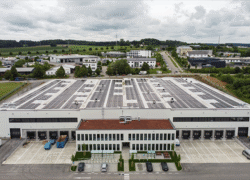
HIH Invest Real Estate has strengthened its logistics portfolio with the purchase of a newly completed property in Pfaffenhofen an der Ilm, Bavaria, for its HIH Deutschland+ Core Logistik Invest fund. The 12,500-square-metre facility, developed by the Intaurus Group, was finalised in June 2025 and is fully leased to New Flag GmbH, a Munich-based international distributor of hair and beauty products. The purchase price remains confidential.

Located in the Kuglhof industrial park at Schäfflerstraße 14, the site benefits from direct access to the A9 motorway and lies roughly 40 kilometres from Munich Airport. The building comprises 10,200 square metres of warehouse space, 1,330 square metres of mezzanine, and 910 square metres of office and social areas, complemented by 57 parking spaces. New Flag GmbH has signed a ten-year lease with an option to extend.

Designed to meet DGNB Gold Standard sustainability criteria, the property features a photovoltaic system and a heat pump for energy efficiency. Its modular design allows for flexible future use, with the potential to divide the premises into two independent units.

“Pfaffenhofen is an ideal logistics location,” said Maximilian Tappert, Head of Transaction Management Logistics at HIH Invest. “Its proximity to Munich and Ingolstadt, coupled with competitive rental levels, makes it especially appealing to companies in e-commerce, pharmaceuticals, and industry.”

Andreas Strey, Co-Head of Fund Management and Head of Logistics at HIH Invest, emphasised the long-term stability of the investment: “The combination of a prime location in southern Germany and sustainable construction standards ensures strong tenant appeal and reliable income for our investors.”

Representing the seller, Oliver Raigel, Managing Director of Intaurus Group, highlighted the partnership: “We are pleased to have delivered a state-of-the-art logistics property that aligns with modern ESG requirements. Our collaboration with HIH Invest was built on trust and professionalism.”

This acquisition marks the eighth addition to the HIH Deutschland+ Core Logistik Invest fund, which now holds assets in both Germany and the Netherlands. The vehicle targets a portfolio volume of at least €300 million, focusing on modern core logistics assets with strong third-party usability and high sustainability standards. Around 70% of the fund’s capital is allocated to Germany, with the remainder invested in neighbouring markets including the Netherlands, France, and Austria.

Due diligence for the transaction was conducted by Baker Tilly (legal and tax) and JT Solutions (technical and ESG), while Realogis acted as broker. The Intaurus Group received legal advice from Glock Liphart Probst & Partner.

Germany’s Housing Investment Market Rebounds, but Shortages Deepen

Germany’s residential investment market has regained strength after a difficult two years, but its recovery comes amid worsening supply shortages and mounting affordability pressure, according to new research by Colliers and corroborating data from the Federal Statistical Office (Destatis), JLL, and vdp Research.

Transaction volumes climbed to roughly €42.5 billion in 2024, a jump of almost 30% year-on-year, signalling renewed investor confidence in housing as an asset class. Residential properties now account for more than 60% of all real estate transactions nationwide — reaffirming their position as the most active segment of Germany’s property market. Analysts say stabilising yields, strong rental demand, and the relative resilience of residential income streams have brought institutional investors back into the market.

At the same time, construction activity continues to falter. Just over 250,000 new dwellings were completed in 2024, the lowest figure in nearly a decade and a drop of 14% from the previous year. The average time between permit approval and completion has stretched beyond two years, while new building permits have fallen sharply, fuelling forecasts of a housing shortage that could approach one million units by 2030.

The federal government has earmarked €23.5 billion for social housing through 2029, but experts from the Cologne Institute for Economic Research and Deutsche Bank Research warn that the sum will only address part of the growing shortfall. Lower-income tenants are already bearing the brunt of the squeeze, as vacancy levels in affordable housing reach record lows across major cities.

Despite these pressures, rental growth remains strong. In the seven largest metropolitan areas, average rents for existing units have risen by around 4% over the past year to roughly €16.50 per square metre, while new-build apartments are commanding close to €22 per square metre. The rent-to-income ratio in these cities now averages 35%, a level economists describe as “manageable but tightening” for households without dual incomes.

Demographic trends are also shaping the market. Germany is projected to add over one million new households by 2040, with single-person households driving much of the growth. This has boosted demand for micro-living and compact apartments, which now represent more than 40% of urban rental listings in some cities. Developers and institutional investors view the segment as a short-term buffer against the housing deficit, although returns are narrowing as new supply enters the market.

Investment activity is spreading beyond the major hubs, with strong momentum in secondary cities such as Leipzig, Hanover, and Nuremberg. Prime yields in Germany’s largest markets have stabilised around 3.8–4.0%, while those in regional centres remain closer to 4.5%. Analysts say this stability, combined with declining construction volumes, is likely to support modest price appreciation into 2026.

Market experts, however, warn that Germany’s housing imbalance remains structural. Rising land prices, elevated construction costs, and complex planning procedures are preventing the “supply catch-up” policymakers have promised. Even with government stimulus and rent control debates ongoing, most forecasts suggest that meaningful relief will not materialise before the late 2020s.

For now, the market’s resilience reflects both opportunity and strain: investors are returning, but tenants are paying the price of years of underbuilding. Germany’s housing sector may have stabilised financially — yet socially, the pressure is still building.

Source: Colliers Germany

Hungary Stands Firm on Energy and Sovereignty Amid EU Tensions

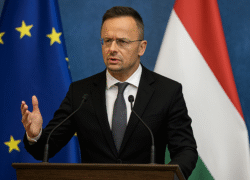
Hungary’s government continues to test the limits of Brussels’ patience, pursuing a foreign policy that places national energy security and sovereignty above EU solidarity. Foreign Minister Péter Szijjártó’s latest trip to Moscow — his thirteenth since Russia’s invasion of Ukraine — has reignited criticism from fellow member states, but it also underscores Budapest’s consistent message: Hungary will not compromise its access to reliable energy supplies.

At the heart of the dispute lies Hungary’s insistence that its energy policy is a matter of survival, not politics. Officials in Budapest argue that the country’s dependence on imported fuel, coupled with its landlocked position, leaves few alternatives to existing pipeline arrangements with Russia. While the EU is pressing ahead with plans to phase out Russian energy imports by 2027, Hungary maintains that this timeline is unrealistic and potentially damaging. The government insists that current supply routes — including the Druzhba pipeline — are critical to the stability of both prices and domestic industry.

By attending an energy forum in Moscow and defending long-term contracts with Russian suppliers, Szijjártó sought to reinforce Hungary’s view that cutting off traditional energy partners too quickly could create more risks than benefits. “Diversification cannot mean giving up secure routes,” he told journalists before leaving for the conference, reiterating that Budapest supports gradual, not forced, change.

This stance has drawn a sharp rebuke from the European Commission, which argues that the visit undermines the bloc’s united position toward Moscow. EU officials maintain that reducing dependency on Russian energy is not only a political necessity but also an economic safeguard against future shocks. Yet, Hungary’s leadership views its engagement with Russia as pragmatic — a way to balance energy reliability with fiscal stability at home.

Analysts say Hungary’s approach is part of a broader strategy to assert autonomy within the EU while leveraging its position for concessions. By taking an independent line, Budapest signals that it expects Brussels to acknowledge its specific vulnerabilities and adapt policy timelines accordingly. The tactic has, at times, yielded results, such as negotiated exemptions from energy sanctions and additional funding flexibility.

Behind the confrontations, however, lies a deeper calculation. Hungary’s leaders are not seeking to isolate themselves from Europe but to shape the debate around what they see as a more realistic path toward energy security. “We are not against diversification,” one government source noted recently, “but we must ensure that the lights stay on while others debate the rules.”

As the EU finalizes another sanctions package against Russia, Hungary’s resistance highlights the growing tension between collective European principles and individual national interests. Whether Budapest’s strategy secures practical benefits or deepens its political isolation may depend on how far it continues to test the boundaries of Brussels’ tolerance — and how the rest of Europe chooses to respond.

Spain’s Global Pledge: Bold Commitment or Modest Step Toward Real Debt Justice?

Spain’s recent pledge of €19.5 million to the World Bank’s Livable Planet Fund, announced in Washington on 15 October 2025, has drawn praise across international development circles. Framed as a push to “deliver concrete results—from debt relief to decarbonization,” the package reinforces Spain’s image as one of Europe’s most engaged donors in sustainable finance. Yet beyond the celebratory tone of official statements, economists and policy experts are divided over whether this marks a turning point in global debt relief or simply another symbolic gesture in a system that still struggles to deliver real change.

Under the agreement, Spain will channel funding to several World Bank-led initiatives: €19.5 million for the Livable Planet Fund, €66.67 million for the Multilateral Debt Relief Initiative (with €40.52 million paid immediately), €20 million for the Spanish Fund for Latin America and the Caribbean, and €5 million for the Global Fund for Decarbonizing Transport. According to Spain’s economy minister Carlos Cuerpo, the package aligns with the so-called “Sevilla Commitment,” a framework Spain has used to advocate for debt-for-sustainability swaps and new debt-pause clauses for vulnerable economies.

World Bank President Ajay Banga called the move a “true partnership” that will help scale up projects addressing global issues such as energy transition, water security, and nature protection. From the Bank’s perspective, the initiative fits neatly into its new Framework for Financial Incentives, which rewards countries for expanding local projects that also yield global benefits—a strategy meant to make development financing more performance-driven.

For many, Spain’s leadership represents a welcome contrast to donor fatigue elsewhere. The Guardian recently described Spain as an “outlier in solidarity,” one of the few developed economies still increasing its official development assistance amid widespread austerity across Europe. The government has also been instrumental in launching the Global Hub for Debt Swaps, designed to free up fiscal space in poor countries by exchanging debt payments for climate investments.

Yet critics argue that the approach, while innovative, may not be transformative. Analysts at the Center for Global Development have questioned whether new funds like the Livable Planet Fund risk layering more conditionality onto already complex aid systems, potentially limiting borrower autonomy. Others point out that the World Bank’s track record in disbursing climate and debt-relief funding has often fallen short of its ambitions, with delivery bottlenecks and competing political priorities.

A more fundamental critique concerns scale. “€19.5 million is meaningful, but not game-changing,” says one European economist quoted in BBVA Research. “Spain’s fiscal space is limited, and these contributions—while symbolically strong—will not solve the underlying structural problems facing the global South.” Scope Ratings similarly cautioned in a recent note that debt-relief mechanisms, though politically popular, often “ease liquidity pressures without fixing governance and productivity weaknesses.”

At the opposite end of the debate, development activists argue that even large multilateral programs fail to address the root causes of debt dependency. A recent opinion piece in The Guardian called for “outright debt forgiveness, not incremental relief,” suggesting that the current system merely postpones financial crises in poor countries rather than preventing them.

For Spain, the challenge now lies in proving that its new commitments lead to measurable outcomes. If the Livable Planet Fund successfully channels investments into climate-resilient infrastructure or water projects, and if the MDRI’s renewed payments meaningfully expand fiscal space in debt-burdened economies, Madrid could help set a precedent for a more integrated approach to global finance—one balancing environmental priorities with social equity.

Until then, Spain’s new pledge stands as both a symbol and a test: a statement of intent in a financial architecture still wrestling with the balance between ambition and delivery. Whether it becomes a milestone or a missed opportunity will depend on how quickly the world’s development institutions can turn promises into progress.

US Mortgage Rate Decline May Stall as Inflation Keeps Pressure on Long-Term Yields

After easing from the highs seen earlier this year, mortgage rates in the United States are showing signs of settling rather than falling further. The average 30-year fixed mortgage now hovers around 6.3%, its lowest point in nearly a year, but analysts expect it to remain close to this level through 2026 even as the Federal Reserve continues to lower short-term interest rates.

The reason lies in the bond market. While the Fed controls overnight lending costs, mortgage rates are tied more closely to long-term Treasury yields, particularly the 10-year note. These yields reflect investor expectations about inflation, fiscal policy, and economic growth—and despite the Fed’s recent cuts, they remain stubbornly high. Concerns over the growing U.S. deficit and the lingering effects of tariffs have kept borrowing costs elevated, limiting how far mortgage rates can fall.

Economists at several institutions, including Fannie Mae and Pantheon Macroeconomics, foresee only modest relief ahead. Both expect the average rate on a 30-year mortgage to hover around 6% in 2026, little changed from current levels. That prediction mirrors recent analyses from Reuters, PBS, and HousingWire, which all point to steady rather than sharply declining borrowing costs.

In essence, while the Fed’s policy shift toward easing has already been priced into financial markets, the long end of the yield curve remains anchored by broader forces—persistent inflation, strong consumer demand, and uncertainty about the government’s debt trajectory. The result is a disconnect between short-term rate cuts and mortgage affordability, a pattern familiar to anyone watching the post-pandemic housing market.

Some analysts still see room for a slight improvement. If inflation continues to cool or growth slows more than expected, bond yields could edge lower, nudging mortgage rates closer to the 6% mark. But others caution that a stronger economy or renewed price pressures could easily halt the decline.

For prospective homebuyers, that means relief will likely come gradually, not dramatically. Even a small drop from 7% to 6% can expand the pool of qualified buyers by millions of households, but the days of ultra-low rates below 3% remain firmly in the past. In the current environment, stability—not sharp cuts—appears to be the new normal for the U.S. mortgage market.

Source: Morningstar, Reuters and CBS

Fico Blocks EU Sanctions, Demands Economic Concessions as Tensions Rise in Brussels

Slovakia’s Prime Minister Robert Fico has once again thrown the European Union’s sanctions process into disarray, vetoing the latest package of measures against Russia and demanding that the bloc address what he calls “Europe’s real crises” — spiralling energy costs and a struggling automotive sector. The decision, taken in mid-October, left Slovakia and Austria standing alone against a deal that most other member states had expected to pass smoothly.

The sanctions package, the EU’s nineteenth since the invasion of Ukraine, includes new restrictions on Russian liquefied natural gas, oil infrastructure, and financial networks used to circumvent previous measures. But at a meeting of EU ambassadors in Brussels, Slovakia confirmed it would block the agreement, forcing its postponement until at least November.

Fico’s stance has become increasingly confrontational toward Brussels. Speaking after a call with European Council President António Costa, he said he would not back any new measures targeting Moscow until EU leaders commit to practical steps that relieve pressure on Europe’s traditional industries. In his view, the bloc’s focus on supporting Ukraine has overshadowed the economic hardship facing European citizens.

Behind Fico’s objections lies Slovakia’s heavy dependence on Russian energy and the country’s concentration in automotive manufacturing, which together make it vulnerable to both sanctions and the EU’s green transition. Bratislava has long argued that sanctions are damaging national economies already stretched by inflation and high electricity prices.

The Slovak leader’s latest move echoes his tactics from earlier in the year, when he withheld consent for a previous sanctions package until Brussels provided assurances about energy security and state-aid flexibility. This time, his demands extend to broader economic policy, insisting that next week’s EU summit deliver concrete measures for the car industry.

Austria, meanwhile, has complicated negotiations further by pressing for a partial unfreezing of Russian assets to compensate Raiffeisen Bank International for a legal defeat in Moscow. Vienna’s proposal has been met with resistance from other EU members, who warn it could set a dangerous precedent.

European diplomats expressed frustration at what some called “hostage diplomacy,” arguing that Fico and his allies are using the unanimity rule for leverage unrelated to Ukraine. France, Poland, and the Baltic states have urged the Commission to find ways of limiting individual veto power in foreign policy decisions — an idea gaining traction as divisions deepen.

Fico, however, remains defiant. His government insists that Slovakia’s priority is to protect domestic jobs and competitiveness. He has also criticised the EU’s planned 2035 ban on new combustion-engine vehicles, calling it unrealistic and harmful to Europe’s industrial base.

The European Commission maintains that sanctions remain a vital tool in limiting Moscow’s capacity to finance its war. Commission President Ursula von der Leyen has warned that sacrificing political unity for short-term national concerns risks undermining both Europe’s credibility and its security.

With the next European Council meeting set for late October, Slovakia plans to present detailed proposals on energy affordability and industrial competitiveness. Until then, the EU’s latest sanctions package — months in the making — remains frozen, a symbol of how internal divisions can stall the bloc’s response to one of the most consequential conflicts in modern European history.

Equites Records Steady Gains as Demand for Modern Logistics Space Accelerates

The first half of 2025 proved strong for Equites Property Fund, which continues to benefit from growing appetite for high-quality logistics space across South Africa. The company reported a solid increase in earnings and asset value, supported by resilient rental income, active portfolio management, and the steady expansion of its development pipeline.

Over the past six months, Equites increased its distributable income, strengthened its balance sheet, and maintained one of the lowest vacancy levels in the local listed property sector. The fund’s portfolio value climbed above R28 billion, boosted by development completions, fair-value gains, and a healthy pipeline of new tenants. Chief Executive Andrea Taverna-Turisan said the business is now firmly positioned to deliver growth that outpaces inflation while keeping leverage at sustainable levels.

The group continued to rebalance its holdings, selling older and non-core properties while deploying proceeds into newer, energy-efficient developments. Recent disposals included several South African assets and one in the United Kingdom, with the company signalling a gradual exit from the UK market to focus more capital on domestic projects offering higher returns.

In South Africa, demand for premium warehousing remains robust as retailers, manufacturers and logistics operators invest in modern distribution infrastructure. Equites is currently developing new facilities in Meadowview and Riverfields, including a large-scale project for a JSE-listed consumer goods company, which will serve as a new regional logistics hub.

Despite higher interest rates, the company managed to lower its overall financing costs while maintaining healthy liquidity. It also repurchased shares during the period, taking advantage of a discount to asset value to enhance shareholder returns.

Sustainability continues to play a central role in the group’s investment strategy. Solar generation capacity has expanded to more than 27 megawatts across its portfolio, and additional rooftop systems and water-efficiency projects are in progress. The company has also introduced new biological treatment technology to reduce dependence on municipal water networks.

Equites’ management expects the second half of the year to build on this momentum, driven by continued rental growth, high tenant retention and new long-term lease agreements. With a portfolio largely occupied by blue-chip clients on extended leases, the fund remains one of the most stable income generators in the listed property sector.

Photo: Andrea Taverna-Turisan, Chief Executive Officer at Equites Property Fund Limited

Redefine Properties Launches €3.3 Million Upgrade at Park Meadows Shopping Centre

Real estate group Redefine Properties has begun a €3.3 million redevelopment of the Park Meadows Shopping Centre in Johannesburg’s East Rand, aimed at refreshing the retail mix, improving accessibility, and enhancing the customer experience.

The upgrade is part of Redefine’s broader strategy to reposition and strengthen its convenience-led retail portfolio in response to changing consumer behaviour. According to the company, the investment will “future-proof” the asset by introducing new anchor tenants, modernising facilities, and improving visitor flow.

At the heart of the revamp is the arrival of Woolworths Food, supported by its in-house café concept WCafé and the WCellar wine and liquor format. These additions expand the centre’s grocery and dining options, reinforcing Park Meadows’ role as a local, everyday destination.

The redevelopment also includes access and parking improvements, a refreshed building façade, and upgrades to internal circulation areas designed to make shopping quicker and more comfortable. Construction is being rolled out in phases to minimise disruption for tenants and customers.

“Park Meadows has been a key community hub for many years,” said Leon Kok, Chief Operating Officer at Redefine Properties. “This investment reflects our focus on maintaining relevance and convenience across our retail assets while creating long-term value for shoppers, tenants, and investors.”

The project aligns with trends across South Africa’s retail market, where well-located neighbourhood centres combining daily essentials with premium experiences are showing stronger performance than larger regional malls. Redefine continues to reinvest in similar centres nationwide, adapting layouts, access, and tenant compositions to maintain competitiveness.

Located in Bedfordview, Park Meadows serves surrounding residential and business communities with a mix of grocery, lifestyle, and service retailers. Once completed, the redevelopment will further position the centre as a modern and convenient shopping choice in the East Rand area.

Italy’s Construction Sector Sees Modest Recovery in Spring, But Annual Activity Still Lags

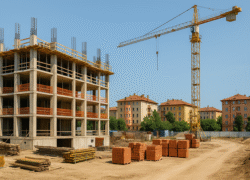
Italy’s building sector showed tentative signs of recovery during the second quarter of the year, as new data from the national statistics office pointed to a modest rise in construction approvals compared with the previous quarter.

Between April and June, the number of homes granted planning permission increased slightly, alongside a small expansion in total floor space dedicated to housing projects. Developers also secured more permits for non-residential buildings, marking a notable short-term rebound following earlier declines.

However, when measured against the same period last year, the overall picture remained less encouraging. The number of new dwellings authorised fell by more than seven percent, while total residential floor area slipped marginally. The downturn was even more pronounced for commercial and industrial projects, which recorded a year-on-year drop after several quarters of steady growth.

Economists say the figures highlight the mixed momentum in Italy’s construction market. Demand for new housing remains constrained by higher borrowing costs and stricter financing conditions, while corporate investment in logistics and manufacturing space has slowed after peaking in 2023. Despite this, quarterly data suggest the sector may be stabilising, helped by continued renovation incentives and gradual improvement in building activity in northern regions.

Industry observers note that construction output across much of Europe is experiencing a similar slowdown, reflecting tighter credit and a cautious approach from investors. Italy’s modest quarterly growth indicates resilience in some local markets, but analysts warn that a sustained recovery will depend on broader economic confidence and renewed private-sector investment.

The next update from the national statistics office, covering the third quarter of 2025, is expected later this year and will show whether the early signs of stabilisation can translate into lasting growth for the country’s construction industry.

Source: Istat

LATEST NEWS