Biedronka Fined Nearly PLN 105 Million for Misleading Promotional Practices

The Office of Competition and Consumer Protection (UOKiK) has imposed a penalty of almost PLN 105 million on Jeronimo Martins Polska, the operator of the Biedronka retail chain, after finding that customers were misled by two one-day promotions run early last year. The campaigns, branded “Special Wednesday” and “Valentine’s Wednesday,” encouraged shoppers to buy selected products with the promise of receiving a “100% refund in the form of a voucher.”

According to UOKiK’s findings, the advertisements—broadcast on radio, displayed in stores, promoted through the chain’s app and on social media—gave the impression that the voucher could be used freely for future purchases. In practice, the vouchers were subject to conditions that were not communicated upfront. Customers often learned about the restrictions only after paying at the checkout and receiving the voucher together with their receipt.

The vouchers could be redeemed only for specific types of goods chosen by the retailer, and often these categories had no connection to the items originally purchased. For example, buying meat or chocolate could result in a voucher valid only for cosmetics, household cleaners or produce. In several cases, shoppers were required to spend more than the voucher’s value in order to redeem it. Limits on the number of vouchers per customer and rules on returns applied as well, yet these details were not stated in the promotional materials.

Many of these conditions appeared only in regulations posted on the company’s website, on notice boards positioned behind checkout counters or printed directly on the voucher itself—long after consumers had already committed to the promotion. UOKiK concluded that key information was withheld at the moment when customers made their purchasing decision.

The authority stated that this approach could have influenced shoppers’ choices by creating an impression that the promotion offered more flexibility and value than it actually did. According to UOKiK, this constituted a deliberate violation of collective consumer interests.

The fine totals PLN 104,722,016. The decision is not yet legally binding, and Jeronimo Martins Polska has the right to appeal.

Construction Begins on Hall C1 at City Point Targówek

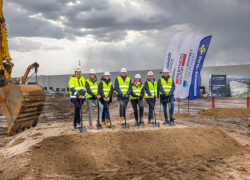
Peakside Capital Advisors has started construction of Hall C1 at City Point Targówek, with representatives of the investor and general contractor Depenbrock Polska attending the groundbreaking ceremony. The new facility will provide 17,000 sqm of space, more than 10,000 sqm of which has already been leased. Completion is scheduled for the third quarter of 2026.

Hall C1 is being developed on a revitalised site following demolition and cleanup works. It will offer warehouse modules with space for offices and social areas, as well as the option for light industrial operations. Most of the space has been reserved by “one of the leading companies operating in the food sector,” according to Peakside.

The project incorporates a range of sustainability and energy-efficiency measures. These include mitigation of heat-island effects through light-coloured façades and a white and green roof, photovoltaic installations, and rainwater reuse for sanitary purposes. Energy performance will be verified through leak testing and thermal imaging. Skylights will cover 5–12% of the roof to increase natural light, and district heating will serve the building. Outdoor areas will include rest and recreation spaces for employees, as well as charging stations for electric vehicles and covered bicycle shelters. The building will pursue BREEAM, LEED and WELL Health-Safety certifications.

Roman Skowroński, Managing Director at Peakside Capital Advisors, said: “City Point Targówek is a project that we are consistently building as a new generation urban park – multifunctional, accessible and ready to serve both urban logistics and light manufacturing or specialized activities. Hall C1 fits perfectly into this vision, providing modern, flexible spaces for businesses that want to operate close to the city and their customers.”

Michał Berus, Construction Manager at Depenbrock Polska, added: “This project requires high engineering precision, among other things due to the advanced infrastructure of one of the future tenants, who has planned a cold store and freezer room with a temperature of –20°C on its premises. We are currently reinforcing the ground with displacement columns and carrying out preparatory work for the foundations.”

City Point Targówek is the largest logistics park within the Warsaw city limits and is planned to reach 100,000 sqm of modern space. Located in a former industrial zone, it is designed to accommodate urban logistics, light manufacturing and specialised operations. The complex forms part of the urban logistics portfolio developed by the joint venture between Partners Group and Peakside Capital Advisors, aimed at delivering adaptable warehouse and production facilities in key urban locations.

SPM Invest Acquires Major Office Complex in Brno for Over CZK 2.3 Billion

Investment group SPM has completed the purchase of one of Brno’s largest office parks, The Campus Science Park in Bohunice, in a transaction valued at more than CZK 2.3 billion. The acquisition adds more than 50,000 sqm of modern workspace to SPM’s growing real estate portfolio. The seller was Corebridge Real Estate Investors.

The office campus, developed in several phases between 2009 and 2018, sits next to the Brno University Hospital and the Masaryk University campus. The location has attracted a strong mix of corporate occupiers, including firms operating in telecommunications, media, banking and digital services.

According to Kateřina Skalická, partner at SPM Invest, the group intends to build on the property’s existing position in the market. She noted that the immediate priority is to raise occupancy while keeping service standards at a high level. She added that SPM plans to focus on new residential opportunities, particularly in Prague 5, while remaining attentive to other attractive investment prospects.

The acquisition strengthens SPM’s presence in both Prague and Brno. In previous years, the group has taken ownership of prominent assets such as the Křižík Palace office complex in Prague’s Smíchov district, along with other holdings that include residential and mixed-use sites and an industrial facility near Tachov.

The purchase of The Campus Science Park ranks among the most notable transactions of the year in the Czech commercial property market and marks another step in SPM’s long-term expansion strategy.

Czech Budget Deficit Reaches CZK 232.4 Billion by November, Lowest November Figure in Six Years

The Czech state budget ended November with a deficit of CZK 232.4 billion, according to new data from the Ministry of Finance. The gap widened by CZK 49.3 billion during the month but remains below last year’s November shortfall of CZK 259.2 billion. Despite the improvement, it is still one of the deepest deficits recorded since the country’s establishment.

By the end of November, state revenues totalled CZK 1.87 trillion, a year-on-year increase of 7.6 percent. Higher tax receipts and stronger collection of compulsory insurance payments were the key drivers of this rise. Expenditures reached CZK 2.102 trillion, up 5.3 percent compared with the same period last year.

Finance Minister Zbyněk Stanjura, who is leaving office following the government’s resignation, said the budget will be handed over to the next administration in a stronger position than the one his cabinet inherited. He pointed to a significantly smaller deficit at this stage of the year compared with 2021.

Analysts, however, cautioned that challenges remain. PwC analyst Dominik Kohut noted that only a small margin separates the current deficit from the full-year target of CZK 241 billion. He stressed that the long-running pattern of large deficits cannot be resolved without substantial structural changes to public finances, warning that technical revisions to economic forecasts are insufficient without deeper reforms.

Corporate income tax collection recorded the strongest growth among major tax categories, rising 14.7 percent year-on-year to CZK 175.8 billion. Revenue from the windfall tax applied to energy, petrochemical companies and major banks amounted to CZK 32.8 billion, higher than at the same point last year. Personal income tax generated CZK 167.6 billion, reflecting wage growth across the economy, which also contributed to a 7.1 percent increase in insurance contributions to CZK 730.8 billion.

Value added tax (VAT) receipts reached CZK 377.4 billion, an 8.4 percent increase attributed in part to stronger household consumption. Excise duties brought in CZK 153.4 billion, up 2.9 percent year-on-year. Higher excise tax rates on alcohol and tobacco supported the rise, while economic activity and transport volumes boosted fuel-related revenues.

Social benefits remained the largest expenditure item, amounting to CZK 845.6 billion by November, including CZK 656 billion for pensions. Debt-servicing costs climbed to CZK 86 billion, an increase of 15.7 percent. Analysts highlighted that the cost of servicing public debt has grown sharply over the past decade; Raiffeisenbank’s Tereza Krček noted that such expenses are now two and a half times higher than in 2010. Kohut added that rising debt costs reduce the government’s capacity to invest.

Capital spending reached CZK 197.1 billion, 20.2 percent higher year-on-year, though representing just over 74 percent of the amount planned for the full year. Transfers to the State Fund for Transport Infrastructure rose markedly to CZK 76.9 billion, an increase of 43.3 percent.

For 2025, the budget framework allows for revenues of CZK 2.086 trillion and expenditures of CZK 2.327 trillion, corresponding to a planned deficit of CZK 241 billion. Last year’s budget finished CZK 271.4 billion in the red, the lowest deficit since the start of the COVID-19 pandemic but still among the largest in modern Czech history.

Source: CTK

New-Home Prices Hold Steady Across Major Cities in November

New-build housing prices in Poland’s largest urban markets showed little movement in November, according to data tracking developers’ offers in major cities. With one exception, average asking prices remained close to October levels, suggesting that the rapid increases seen earlier in the year have eased.

Warsaw was the only city where the average price per square metre slipped slightly. Analysts attribute the decline to a wave of lower-priced units added to the market rather than a broad-based adjustment by developers. In other cities, including Kraków, Wrocław, Tri-City, Poznań, Łódź and the Upper Silesian-Zagłębie Metropolis, the averages were essentially unchanged.

Despite the lack of visible reductions in official price lists, market observers note that the final prices paid by buyers can differ. Many developers rely on promotions, seasonal incentives and limited-time offers, particularly toward the end of the year, to stimulate demand without altering headline prices.

Łódź currently stands out as the most stable of the major markets, with the average price of new apartments sitting slightly below its level from a year earlier. The Upper Silesian-Zagłębie Metropolis has also shown minimal fluctuation over the year. Kraków has seen a modest rise, while Wrocław has experienced somewhat stronger growth. Warsaw and Poznań recorded increases of around 3 percent over the past twelve months.

November’s results reinforce the picture of a market that has cooled after a period of strong growth. Although demand remains steady in many regions, a broader mix of pricing and product types—especially in the capital—has helped to keep average values in check.

Chamber Raises Outlook for Czech Economic Growth, Sees Stronger Momentum Through 2027

The Czech Chamber of Commerce now expects the economy to expand by 2.4 percent this year, revising its June outlook upward. The organisation presented the updated figures at a briefing, noting that domestic demand has been recovering faster than anticipated. A combination of rising household spending and continued wage growth is credited with supporting the improvement.

According to the Chamber, the current year’s performance is benefiting from stronger pay increases than previously assumed. Higher earnings, combined with easing inflation, are helping restore purchasing power after several years of decline. Chamber president Zdeněk Zajíček said that wage pressures appear to reflect efforts by employees to recoup earlier losses in real incomes. A tight labour market, he added, is also shaping wage negotiations.

The Chamber expects growth to moderate slightly in 2026, estimating a 2.3 percent expansion. The forecast suggests that while household spending will remain important, investment by companies should play a greater role next year. A temporary rise in unemployment to around 4.5 percent is also anticipated, though analysts involved in the forecast emphasise that this reflects movement between sectors rather than a broader downturn.

Looking ahead to 2027, the Chamber predicts an acceleration in economic activity, projecting growth of 2.7 percent. It expects that consumer demand and business investment will continue to reinforce each other, while the contribution of international trade could also turn mildly positive.

Other institutions have released more cautious projections. The Czech National Bank recently downgraded its outlook, now expecting the economy to rise by 2.3 percent this year and 2.4 percent in 2026. By contrast, the Ministry of Finance has slightly improved its own assessment and now anticipates 2.4 percent growth for 2025, followed by a 2.2 percent increase next year.

While the individual forecasts differ, all point to a gradual improvement in the Czech economy, supported by firmer household finances and a rebound in private investment.

Nhood Services Poland Expands Tenant Mix at Auchan Krasne Shopping Center

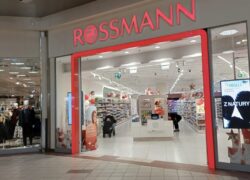
Nhood Services Poland has broadened the retail offering at the Auchan Krasne Shopping Center in Podkarpacie, where Rossmann, Coccodrillo and Wakacje.pl opened new units in November. The centre, owned by Ceetrus Polska, has served local customers for nearly twenty years with a mix of fashion, cosmetics, jewellery, children’s products, services, an Auchan hypermarket and a Leroy Merlin store.

The expansion forms part of Nhood Services Poland’s ongoing work to enhance the facility’s appeal and align it with local demand. Rossmann has opened a 470 sqm drugstore, extending the centre’s health and beauty offering with products ranging from personal care and cosmetics to hygiene, household items, children’s goods and seasonal assortments.

Coccodrillo has added an 82 sqm shop featuring clothing, footwear and accessories for babies and children, with an emphasis on quality materials and comfortable, colourful designs.

Travel agency Wakacje.pl has taken a 60 sqm unit, offering travel packages from major operators, including long-haul and European destinations, as well as city breaks, last-minute trips, airline tickets, hotel bookings, parking and travel insurance.

“For several months now, we have been gradually expanding the portfolio of tenants at the Auchan Krasne Shopping Center. We want to build an offering that will be popular with customers, primarily because it allows them to do their shopping for the whole family in one visit. We are delighted that the trust placed in us by our tenants allows us to effectively pursue this goal,” says Joanna Nowacka-Jankowska, Senior Leasing Manager at Nhood Services Poland, who oversees the centre’s commercialisation.

Alongside retail development, Nhood Services Poland continues to run an extensive programme of community-focused activities at the centre, including free workshops and a year-round family theatre series aimed especially at families with children.

Uniq Logistic Expands Presence in MLP Group Parks to Nearly 50,000 sqm

Uniq Logistic has increased its footprint within MLP Group’s logistics parks after securing an additional 9,400 sqm of warehouse space at MLP Łódź. The expansion brings the company’s total leased area across MLP Łódź and MLP Pruszków II to more than 47,000 sqm.

The new lease follows the renewal of approximately 38,000 sqm of existing space in the two parks. The latest unit at MLP Łódź is scheduled for handover in the first quarter of next year, allowing the company to further consolidate its operations within the region.

MLP Group said the continued cooperation reflects a stable, long-term relationship with one of its established tenants. Tomasz Pietrzak, Leasing Director Poland, noted that the company’s decision to expand within MLP Łódź reinforces the appeal of the parks’ technical standards and their ability to support the operational needs of logistics providers.

Uniq Logistic also emphasised the importance of the partnership, citing the landlord’s flexibility and responsiveness. According to the company, access to modern facilities and consistent support has played a role in its ability to scale operations and take on larger projects.

The logistics provider, active in Poland since 2008, has been a tenant of MLP Group since 2020. At MLP Pruszków II, it currently occupies more than 6,000 sqm of warehouse space and 145 sqm of offices. At MLP Łódź, the company makes use of over 30,000 sqm of warehouse space and nearly 900 sqm of office and staff facilities. Under the new agreement, its footprint at the Łódź park will rise by an additional 9,360 sqm.

MLP Łódź is located in the Widzew district in the south-eastern part of the city, offering direct access to the A1 motorway and convenient links to the A2 route. The development is being built to BREEAM standards and will ultimately offer more than 86,000 sqm of space for logistics, e-commerce and light manufacturing.

MLP Pruszków II, positioned near Warsaw, is one of the region’s largest logistics complexes with a planned capacity of 427,000 sqm. The park benefits from access to the A2 motorway, regional transport links and selected buildings with BREEAM certification. Photovoltaic systems are being added in line with the group’s wider sustainability strategy.

Audit Finds Major Gaps in EU VAT Scheme for E-Shops; Czech Traders Among Those Avoiding Tax

A recent audit by the Supreme Audit Office has revealed significant weaknesses in the European Union’s VAT system for cross-border e-commerce. According to the findings, flawed data and systemic loopholes have enabled some online sellers to under-declare or evade VAT, particularly when importing low-value goods into the EU. Authorities warn that shortcomings affect not only overseas vendors, but also create enforcement challenges for member states — including the Czech Republic. 

The audit highlighted misuse of the EU’s “import regime” (under what is commonly known as the Import One-Stop Shop, or IOSS) — a scheme designed to simplify VAT payment for goods imported into the EU from third countries. Under IOSS, the seller is meant to remit VAT at the point of sale, rather than leaving payment to the end customer at customs. However, the SAO found that a substantial share of shipments declared under IOSS were misreported, often showing values far below what the buyer actually paid. In checks on thousands of consignments, the error rate was alarmingly high. 

Officials say the problem is compounded by incomplete and unreliable data provided by Czech authorities to EU-wide anti-fraud tools. Gaps in data exchange undermine the effectiveness of cross-border VAT controls — which rely heavily on transparent and accurate information flows among member states. The Czech Ministry of Finance acknowledged the concerns outlined by the SAO and noted that similar issues have been raised by the European Court of Auditors, stressing the need for a coordinated, EU-wide solution. 

In response to the audit, Czech authorities have pledged support for tighter oversight measures. Proposed reforms — part of a broader EU initiative to modernise VAT and customs procedures — would strengthen verification of IOSS registrations, require greater transparency from online sellers importing goods from non-EU countries, and mandate fiscal representation for non-EU vendors selling into the EU market. These changes are expected to begin phasing in between 2026 and 2028. 

Why the System Is Vulnerable

The IOSS regime was introduced to streamline cross-border trade: sellers can register once in an EU country and declare VAT centrally for all their EU customers. It especially targets imports of low-value goods (typically under €150), a segment that exploded with the rise of online shopping. 

Yet the SAO’s audit shows that some importers — especially from outside the EU — exploit loopholes by undervaluing parcels or misclassifying goods. In one documented case, a consignment declared at low value turned out to contain high-value items upon inspection, indicating deliberate undervaluation to avoid VAT. 

Because customs authorities in the Czech Republic inspect only a tiny fraction of the millions of incoming parcels every year, most misuse goes undetected. The SAO warned that this not only deprives tax authorities of revenue but also distorts competition, favouring non-compliant sellers over legitimate EU-based retailers. 

What Happens Next

The Czech government says it supports upcoming EU reforms that aim to tighten control over e-commerce imports. Among the measures under discussion are mandatory registration and fiscal representation for non-EU sellers, more rigorous cross-checking of customs data and VAT returns, and stricter penalties for mismatches and under-reporting. These changes could help close current loopholes and restore fairness between domestic and foreign sellers. 

Still, experts warn that effective implementation will require real-time data sharing, digital customs infrastructure and better coordination across member states — changes that may take years to fully deploy. Until then, the risk of evasions will likely remain a challenge.

Poland Introduces New PIT and CIT Tax Relief for Employers Hiring Territorial Defense and Active Reserve Soldiers

From 1 January 2025, employers in Poland can make use of a new tax preference in both PIT and CIT when they employ soldiers serving in the Territorial Defense Forces (WOT) or the Active Reserve. The incentive, introduced under the Act of 1 October 2024 amending several laws to support employers of WOT and Active Reserve soldiers, allows businesses to deduct specific amounts from their tax base depending on the soldier’s length of uninterrupted military service.

The relief applies to employees who are soldiers and who, under their employment contract, receive a monthly salary of at least the statutory minimum wage. The period of military service is determined as of the last day of the tax year or the final day of the soldier’s employment during that year. If the soldier is employed for only part of the tax year, the deductible amount is reduced proportionally. The deduction is claimed in the employer’s annual tax return for the year in which the soldier was employed.

The value of the deduction rises with the duration of continuous service: PLN 12,000 after at least one year, PLN 15,000 after two years, PLN 18,000 after three years, PLN 21,000 after four years and PLN 24,000 after five years of service. Micro-entrepreneurs and small entrepreneurs may increase these amounts by a factor of 1.5, while larger businesses employing at least five full-time workers may increase the deduction by a factor of 1.2. The deduction cannot exceed income from business activity, but unused relief may be carried forward for up to five tax years. The rules are set out in Article 26he of the Personal Income Tax Act of 26 July 1991 and Article 18eg of the Corporate Income Tax Act of 15 February 1992.

Beyond the tax benefit, the amending act provides employers with additional advantages, including preferential treatment in public procurement procedures and exemption from paying a two-week severance benefit to an employee who is a WOT soldier.

LATEST NEWS