German real estate sentiment weakens as market adjusts to new conditions

Confidence in the German real estate market has slipped back to levels last seen in 2023, according to the latest sentiment survey by HIH Invest Real Estate and the Ypsilon Group. The overall sentiment index fell to –0.41, down from –0.06 in 2024, signalling a renewed sense of caution following a brief period of recovery last year.

The study, which gathered input from 153 industry professionals, including investors, developers and property managers, suggests the sector is moving through a stabilisation phase. While property and facility managers continue to report positive conditions with an index of 0.75, sentiment among investment and asset managers declined sharply from a positive +0.07 last year to –0.77. Project developers remain in negative territory at –0.88, although their outlook has improved modestly compared to 2024.

Expectations for the next six to twelve months remain subdued, with the index at 0.06, while the long-term outlook is more optimistic at 0.88—still below last year’s 1.59. According to Alexander Eggert, Managing Director of HIH Invest, the results show a market becoming more pragmatic after several challenging years. He noted that those who invest strategically and take advantage of cyclical lows are likely to benefit over the long term from the sector’s strong fundamentals.

Ulrich Creydt, Managing Director of Ypsilon Group, added that the survey reflects short-term uncertainty but points toward gradual improvement. He said the market continues to adjust to recent economic disruptions, with access to financing remaining one of the key constraints influencing the pace of recovery.

Investor interest continues to concentrate on residential and logistics properties, which are viewed as the most resilient asset classes. In the residential sector, 63 percent of respondents expect demand for rental housing to increase, and 91 percent anticipate further rent growth, typically around five percent. In contrast, expectations for condominiums are more divided, with nearly half predicting stronger demand and two-thirds expecting prices to rise.

The logistics sector also remains in focus, though optimism has cooled slightly compared to last year. 44 percent of respondents foresee growing demand, 40 percent expect rents to rise, and roughly one-third anticipate higher prices. Felix Meyen, Managing Director at HIH Invest, commented that both residential and logistics segments continue to provide stability and growth potential due to demographic trends, urbanisation and the reorganisation of supply chains.

The office market remains the weakest link. 61 percent of respondents expect demand to decline, 54 percent predict falling rents, and two-thirds foresee a drop in property values. Retail properties are also under pressure, with just over half of respondents expecting steady demand, while close to 40 percent anticipate further declines in rents and sale prices. According to Peter Lenz, Partner at Ypsilon Group, this divergence between asset classes highlights how the market is fragmenting—residential and logistics assets remain strong, while offices and retail continue to face structural challenges.

The outlook for industrial and corporate real estate is mixed, with just over half of respondents expecting stable demand and roughly a third foreseeing downward pressure on rents and prices. Investors see the strongest opportunities in residential developments within A and B cities, followed by logistics assets in B locations, while offices are primarily attractive in core urban centres.

Alternative asset classes such as data centres, digital infrastructure and energy storage are attracting growing interest. Around one-fifth of respondents view these as highly attractive, while renewable energy projects elicit more cautious optimism, with opinions split between supporters and those still undecided. Ulrich Creydt noted that these alternatives appeal particularly to institutional investors seeking stability and diversification in a more uncertain market environment.

Overall, the 2025 sentiment survey portrays a market adapting to slower growth and shifting investor priorities. While the near-term mood remains cautious, the long-term view suggests gradual recovery supported by structural demand, new investment strategies and an ongoing rebalancing of asset preferences within Germany’s real estate sector.

Swiss Life Asset Managers names Tim Alexander as Head of Marketing and Corporate Communications

Swiss Life Asset Managers has appointed Tim Alexander to lead its newly established Marketing and Corporate Communications division, effective 17 November 2025. In his new role, Alexander will oversee marketing and communications activities across all countries where the company operates, reporting directly to Per Erikson, Chief Investment Officer of Swiss Life. He will also become a member of the extended Executive Board as Executive Director.

The new division consolidates marketing and communications under one corporate structure aimed at improving consistency and client engagement. Alexander’s mandate includes aligning communication strategies more closely with customer expectations and modernising the firm’s approach to brand management and outreach.

Per Erikson said the appointment reflects the company’s goal of strengthening its marketing and communications functions to support ongoing business growth. “Tim Alexander brings significant transformation experience and a strong understanding of customer-focused strategy and digital marketing,” Erikson noted.

Before joining Swiss Life Asset Managers, Alexander was Head of Global Brand & Marketing at Deutsche Bank, where he helped establish the bank’s customer management division. His previous roles include Head of Marketing and Communications at Swisscom and Vice President of Brand Management at Telefónica (O2) Germany.

Commenting on the appointment, Mark Fehlmann, Head of Sales at Swiss Life Asset Managers, said the decision reflects the increasing convergence of marketing and corporate communications in a digital environment. He added that Alexander’s experience in both strategic leadership and digital engagement would be instrumental in advancing the company’s communication goals.

Ananda Group advances construction of Ananda Residence II with focus on sustainability and efficiency

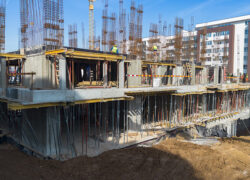
Construction on the second phase of Ananda Residence, a residential project in the southern part of the capital near the border of Sector 4 and Ilfov, is progressing ahead of schedule. Developer Ananda Group announced that two of the buildings within the complex may be completed earlier than initially planned, with delivery expected in 2026.

Located on Biruinței Street in Popești-Leordeni, one of the area’s fastest-growing corridors, the project aims to balance construction quality, sustainability and accessibility. The development, which received its building permit in July 2025, has an average height of 2S + G + 4 + 5Er and is designed with both underground and surface parking to address growing demand in the area.

According to Attila Ivacson, CEO of Ananda Group, the company intends to maintain a faster construction pace while improving build quality. “Our goal is to deliver a higher standard for structural performance, thermal comfort and finishing quality,” he said. As of October 2025, reinforced-concrete work on two of the buildings has reached upper-floor levels, marking a significant milestone for the project’s second phase.

The new phase introduces energy-efficient measures in response to rising electricity costs and the shift toward sustainable urban housing. Photovoltaic panels will be installed to reduce maintenance expenses, while electric-vehicle charging stations will support future mobility needs. The project also includes over 30 percent of its site area as landscaped green space, in line with the latest sustainability requirements.

To address the chronic shortage of parking in Popești-Leordeni, Ananda Residence II will include dedicated spaces for each apartment, ensuring that pedestrian zones and green areas remain unobstructed. The complex’s proximity to the M2 Metro line and several commercial and wellness facilities positions it as a practical housing option for residents working in central Bucharest.

From an investment perspective, the developer highlights both affordability and long-term potential. Pre-sales are currently under way, with prices starting from €55,900 + VAT and an average rate of €1,275 per sqm, notably below the €2,333 per sqm average for new apartments in the capital as of September 2025. Buyers can access discounts of up to 7 percent for full payment.

Ananda Group reports that previous projects in its portfolio have appreciated by over 40 percent within two years, with average rental yields above 6 percent per year. The company’s strategy for Ananda Residence II combines that investment logic with a focus on long-term livability—prioritising energy efficiency, accessible pricing and infrastructure suited to a growing metropolitan edge.

New apartment prices in Prague continue to rise as sales remain strong and supply tightens

Demand for new apartments in the Czech capital continues to exceed supply, with 2025 shaping up to be one of the most active years in the city’s residential market. Developers report steady absorption across projects, supported by lower mortgage rates and renewed buyer confidence.

Average prices for new apartments in Prague climbed again in mid-2025, reaching between CZK 164,000 and 168,000 per square metre, according to several market analyses. Deloitte’s latest data show that by the second quarter of the year, prices had risen by nearly 2 percent quarter-on-quarter, bringing the average close to CZK 169,300 per square metre. Transaction data for completed deals show slightly lower figures—around CZK 157,000 per square metre—but still among the highest levels recorded since 2021.

Price differences remain wide across the city. The most expensive locations continue to be the historic core and inner districts, where average prices in Prague 2 hover around CZK 177,000 per square metre. In Prague 5, long a target for new residential development, prices average roughly CZK 148,000 per square metre, while in Prague 4 they remain close to CZK 130,000 per square metre. Despite these variations, the overall upward trend is consistent across all districts.

Developers estimate that roughly 6,000 new apartments have been sold in Prague during the first nine months of 2025, with year-end totals likely to exceed the highs seen in 2021. Analysts say this level of activity reflects both delayed demand from previous years and the gradual easing of financing conditions, with average mortgage rates now hovering around 4.5 percent.

However, supply continues to lag behind demand. Official statistics show that while construction starts increased early in the year, the number of completed apartments remains well below what the market requires. Fewer than 6,000 units are currently available for sale in the capital, a figure that has barely changed over the past three years.

Market observers warn that unless the permitting process accelerates, the imbalance between demand and available stock will persist, keeping prices high. For now, Prague’s residential market remains one of the most resilient in Central Europe—supported by population growth, limited new supply, and sustained investor interest in long-term property assets.

Catella Names Dominik Röhrich as Head of Investment Management

Catella Group has appointed Dominik Röhrich as its new Head of Investment Management, effective 1 March 2026. He will oversee the company’s pan-European investment management operations, which span fund and asset management activities across twelve countries with total assets under management exceeding EUR 14 billion.

Röhrich succeeds Timo Nurminen, who will retire at the end of the year after 27 years with Catella. Nurminen has led the Investment Management division since its establishment in 2015. Since March 2025, Jyrki Konsala has served as Acting Head of Investment Management and will take on the role of Head of Separate Accounts when the new appointment takes effect.

According to Rikke Lykke, Group CEO of Catella, the appointment supports the company’s long-term strategy of strengthening its investment platform and expanding its presence in European markets. “Dominik’s experience and leadership will be key as we continue to refine our investment management offering and deepen relationships with institutional partners,” she said. Lykke also thanked Nurminen for his contribution to the development of Catella’s investment operations over the past decade.

Röhrich brings more than 20 years of experience in real estate investment and fund management. He joins from PATRIZIA, where he held several senior roles including Managing Director of PATRIZIA Real Assets KVG GmbH and CIO DACH & Head of Fund Management – Core Commercial at PATRIZIA SE. Earlier in his career, he worked at Catella Real Estate AG KAG, giving him previous familiarity with the company.

In his new position, Röhrich will oversee Catella’s investment strategy and coordinate between fund and asset management teams to support performance, develop new investment vehicles, and integrate sustainability into operations.

“I am pleased to be returning to Catella and look forward to working with its experienced team,” Röhrich said. “My goal is to build on the company’s existing strengths and continue developing a robust and forward-looking investment platform that serves clients across Europe.”

Catella manages real estate and investment funds in twelve European markets and focuses on sustainable and performance-driven strategies for institutional investors.

CASPYAN launches apartment sales in Konstanta Karlín project in Prague

CASPYAN FUND SICAV, an investment fund with projects valued at over CZK 850 million, has begun selling apartments in its latest development, the Konstanta Karlín residential project. Located in one of Prague’s most in-demand districts, the building will feature 44 apartments ranging from 1+kk to 3+kk layouts, alongside three commercial units.

CASPYAN, active on the Czech real estate market for more than a year, focuses on residential investments within the capital. The fund’s leadership, with over a decade of experience in property development, said its strategy combines financial performance with urban revitalisation.

“We have confidence in our projects and believe they bring long-term value to both investors and the city,” said Miroslav Kašpar, a member of CASPYAN’s supervisory board. “Our approach centres on quality architecture, functional design, and locations with potential for lasting growth. Many of our developments involve transforming underused areas into vibrant, livable spaces.”

The fund’s current portfolio is concentrated in Karlín, a district known for its mix of industrial heritage and modern urban lifestyle. Completed investments include the redevelopment of the former František Křižík steam power plant into the Fabrička office building, which offers around 1,000 m² of leasable space, and the renovation of a historic residential property on Kollárova Street.

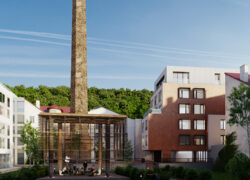
The Konstanta Karlín project, located in a quiet courtyard with easy access to the city centre, reflects the district’s industrial character through a Corten steel façade. The development’s highlight will be a 351 m² penthouse on the top floor, accessible by a private elevator and featuring panoramic views of Prague. Construction began in August 2025, with completion planned for Q2 2027.

CASPYAN is also preparing to launch the Dvory Vysočany project in Prague 9 by the end of the year, part of a joint venture with Corwin. The brownfield revitalisation aims to transform the area into a new residential zone as part of the fund’s broader urban renewal strategy.

According to Kamil Jankovský, another member of the fund’s supervisory board, Konstanta Karlín exemplifies CASPYAN’s investment philosophy. “Karlín represents a balance of history, design, and urban energy. The project delivers both long-term value for investors and quality housing for residents,” he said.

Over the next three to five years, CASPYAN expects its portfolio to deliver up to 450 new residential units to the Prague market. The fund projects a target annual return of around 10%, supported by active construction timelines that reduce delivery risk.

With assets nearing CZK 1 billion, CASPYAN plans gradual expansion while prioritising completion of its existing developments. “Our goal is steady, well-managed growth,” Kašpar said. “We are open to new opportunities but remain committed to maintaining the boutique nature of our fund and ensuring each project reaches its full potential.”

IMF revises Gulf growth forecast upward as OPEC+ cuts ease and regional demand strengthens

The International Monetary Fund (IMF) has revised its economic outlook for the Gulf Cooperation Council (GCC), forecasting stronger growth through 2025 and 2026 as oil production rises and non-oil sectors continue to expand. The findings, published in the IMF’s October 2025 Regional Economic Outlook and summarised by Kamco Invest, point to broad-based resilience across Middle Eastern economies despite global trade disruptions and ongoing geopolitical uncertainty.

The IMF now expects GCC real GDP growth to reach 3.9% in 2025, an increase of 0.9 percentage points from its May projection, and 4.3% in 2026, with all six member states receiving upgrades. Oil GDP is forecast to grow by 4.2% in 2025, up from 1.7% previously, as OPEC+ producers unwind voluntary output cuts earlier than anticipated. Non-oil GDP growth is projected at 3.8% in 2025 and 3.6% in 2026, driven by ongoing diversification programmes and private-sector expansion.

The report notes that GCC economies have so far avoided significant fallout from U.S. tariffs and global supply-chain disruptions. Domestic demand, fuelled by government investment in infrastructure, tourism, and technology, has helped cushion the region against external shocks. The UAE is expected to lead Gulf growth in 2025 at 4.8%, followed by Saudi Arabia at 4.0% and Kuwait at 2.6%.

Oil markets remain central to the regional outlook. The removal of OPEC+ voluntary production cuts — amounting to roughly 2.2 million barrels per day introduced in late 2023 — added close to one million barrels per day of GCC output between February and June 2025. The IMF warns, however, that a faster-than-expected supply rebound could pressure prices below the current baseline of USD 69 per barrel for 2025 and USD 66 per barrel for 2026.

Inflation across the GCC is forecast to remain subdued, averaging 1.7% in 2025 and 2.0% in 2026, well below central bank targets. This compares with double-digit inflation across parts of the wider MENA region, where energy and food costs remain elevated.

Fiscal conditions are also improving. The IMF now projects the GCC to post a fiscal surplus of 0.8% of GDP in 2025 and 0.9% in 2026, reversing earlier expectations of a small deficit. The region’s current account surplus has been revised up to 4.9% of GDP for 2025 and 4.3% for 2026, reflecting firmer oil receipts and restrained spending. Kuwait is set to record the highest surplus at 26.5% of GDP, followed by the UAE at 13.2%.

Globally, the IMF foresees growth in 2025 remaining below pre-tariff averages, with continued headwinds from trade barriers and financial-market volatility. The Fund warns that a sudden tightening of global financial conditions could undermine household wealth and consumption, posing a risk to the otherwise stable regional outlook.

For MENA oil importers, lower energy prices, tourism recovery, and steady remittance inflows are expected to support moderate expansion. Overall, the IMF upgraded the MENA region’s growth forecast to 3.3% for 2025 and 3.7% for 2026, emphasising that resilience across both oil exporters and importers remains the defining feature of the region’s economic recovery.

Source: GCC

Europe’s service sectors turn global as London leads a new wave of post-pandemic migration

The bustling cafés, hotels, and airport terminals of Europe’s capitals are now staffed by one of the most globally diverse workforces in modern history. What began as a short-term response to post-Brexit and post-pandemic labour shortages has become a defining feature of the continent’s urban economies — with London standing at the forefront of this transformation.

In the United Kingdom, the shift has been most visible in London, where more than one in three hospitality and retail workers now comes from outside Europe. Official data from the Office for National Statistics (ONS) show that as of mid-2025, over 43% of hospitality workers in the capital were foreign nationals, a sharp rise from 31% before Brexit. The majority of new arrivals have come from India, the Philippines, Nigeria, Nepal, and Sri Lanka, with smaller but rising numbers from Bangladesh, Ghana, and Colombia.

Recruitment firms and trade groups estimate that roughly 200,000 overseas workers have entered the UK service economy since 2021 under the reformed visa system, with about half of them based in Greater London. This shift has been underpinned by new bilateral labour agreements — particularly the UK–India Migration and Mobility Partnership, which allows young professionals to live and work in Britain for up to two years — and by streamlined sponsorship processes for large employers in hospitality and logistics.

The result is plain to see: in central London, staff from India and the Philippines now occupy prominent roles in hotels, restaurants, and retail outlets. At Heathrow Airport, multinational teams from across Asia and Africa manage daily operations for retailers, catering firms, and duty-free chains. In districts such as Kensington, Westminster, and Canary Wharf, Indian and Nigerian professionals are increasingly visible in both front-of-house and management roles, reflecting the city’s evolving labour profile.

London’s reliance on global labour mirrors broader developments across Europe. In Berlin, the shortage of service workers has driven recruitment from South Asia and the Balkans. Paris, preparing for major tourism events, has turned to West African and Latin American staff to meet demand. Amsterdam and Rotterdam now hire directly from India, Kenya, and Indonesia to fill logistics and airport roles. Milan, Rome, and Barcelona have each expanded entry quotas for Asian and Latin American workers to sustain their post-pandemic tourism rebounds.

In each case, governments have relaxed visa requirements or created fast-track programmes for critical sectors. The Migration Advisory Committee in the UK and similar bodies in France, Germany, and Italy continue to identify hospitality, healthcare, and logistics as the hardest-hit areas, arguing that migration remains the only immediate solution to demographic and economic pressures.

London’s service sector, however, remains Europe’s largest and most international. Industry analysts describe the city as a “microcosm of global mobility,” where more than 150 nationalities now contribute to the daily operation of its hospitality and retail infrastructure. Employers say this diversity is no longer a stopgap but a cornerstone of competitiveness — bringing language skills, customer empathy, and cultural fluency to a global city that hosts nearly 20 million international visitors a year.

While policy debates around migration continue, London’s experience has demonstrated that international labour has become essential to keeping its hotels, restaurants, and retail floors open. As Europe’s cities adapt to demographic decline and shifting work patterns, the new face of their service industries is unmistakably global — and London, once again, has become both the model and the measure of that change.

Discreet works underway at Starwood’s Mercer Street and Bond Street hotels amid portfolio transition

Subtle construction activity has been observed at two of the central London hotels acquired by Starwood Capital Group from Edwardian Hotels — the properties on Mercer Street in Covent Garden and Granville Place near Bond Street. According to local observations, light drilling and minor interior works have taken place in recent weeks while both hotels have remained open to guests.

The two properties form part of the £800 million acquisition completed by Starwood Capital in January 2024, which included ten Radisson Blu Edwardian hotels across central London, together offering more than 2,000 rooms. The transaction, one of the largest hotel deals in the UK that year, expanded Starwood’s presence in the capital’s upper-upscale hospitality market.

Although no major planning applications have been lodged publicly for either the Mercer Street or Bond Street sites, the works appear consistent with early-stage refurbishment or systems upgrades often undertaken ahead of broader redevelopment. Staff and nearby contractors confirm that day-to-day operations continue, with guests largely unaffected.

Starwood Capital stated at the time of acquisition that it planned to invest substantial capital into upgrading the portfolio and enhancing guest facilities. However, the company has yet to publish a detailed renovation or rebranding schedule. Market observers suggest that the discreet activity seen in recent weeks could mark the preparatory phase of that programme, which may roll out gradually to maintain occupancy levels and revenue.

Both hotels occupy prime locations within London’s West End, where room demand and footfall remain strong. Maintaining operations while conducting preliminary works fits with Starwood’s wider European strategy of phased reinvestment — balancing asset improvement with continued cash flow.

Edwardian Hotels London, which continues to manage the portfolio under a transitional agreement, has not commented on the current works. Industry analysts expect Starwood to outline a more comprehensive refurbishment plan in 2026, once planning and design phases across the ten-hotel portfolio are complete.

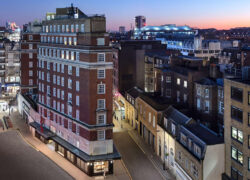
Photo: Radisson Blu Hotel, London Bond Street

EPG Group Completes Modernization of Varyáda Shopping Center in Karlovy Vary

After almost two years of phased construction, EPG Group has completed the modernization and expansion of the Varyáda Shopping Center, the largest retail complex in the Karlovy Vary region. The €40 million investment increased the leasable area by one third to 27,000 square metres, introduced a new food court and a Premiere Cinemas multiplex, and upgraded the center’s overall interior. The redevelopment was carried out while operations continued, with the public reopening taking place on October 18.

According to Barbora Tesnerová, CEO and Managing Director of EPG Group, the modernization was designed to reflect the changing nature of shopping and the expectations of visitors. She noted that customers now look for an integrated experience that combines convenience, design, and leisure. The upgrade, she explained, was a response to increasing competition and the rising demand for higher-quality facilities. “Varyáda represents an investment in the future of retail in Karlovy Vary and ensures the center remains competitive for years to come,” Tesnerová said.

EPG Group’s Marketing Director Martin Malý said that the aim was to reinforce Varyáda’s role as a central part of community life. “It’s a place where people come not only to shop but also to meet friends, relax, and spend time. The new design, expanded offer of stores, and improved transport accessibility all strengthen the center’s position as a key destination for the wider region,” he said.

The modernization began in January 2024 and proceeded in stages so that shopping could continue without major disruptions. The first phase focused on the northern wing, where a 3,800-square-metre Albert hypermarket was built. The original store closed in August 2024 and reopened in late September in a new format featuring self-service checkouts and improved technology for customer convenience. Work on the Premiere Cinemas multiplex, with six screens and capacity for 1,000 viewers, began in June 2024 and finished in July 2025. In parallel, a new food court with ten restaurants opened in November 2024, followed by the completion of the front entrance passage in April 2025, which introduced several new fashion brands and a modern information point.

Ludvík Kucharič, project manager at Metrostav, which carried out the construction, said the main challenge was keeping the center open while undertaking structural works. This required precise coordination and planning, with more than 120 night shifts completed during the project. He explained that the construction team had to reinforce existing piles and reconfigure roof trusses to integrate the extensions while keeping the schedule intact.

The project was implemented in coordination with the City of Karlovy Vary, especially concerning transport connections and the organisation of construction phases. The investment has contributed to the area’s urban revitalization, expanded local services, and created new jobs. Martin Nikodém, Director of the Varyáda Shopping Center, said the modernization supports the city’s economic growth. “Varyáda plays an important role in the local economy. It creates employment, supports the service sector, and enhances Karlovy Vary’s attractiveness for residents and visitors alike,” he said.

Opened in 2005, Varyáda is celebrating its twentieth anniversary this year as the most visited shopping destination in the Karlovy Vary region. After the modernization, the center now offers 27,000 square metres of retail space, more than 100 stores, a new food court, the Albert hypermarket, and the Premiere Cinemas multiplex. The shopping center attracts visitors from across western Bohemia and neighboring parts of Germany.

Varyáda forms part of EPG Group’s Czech portfolio, which also includes the Central Most shopping center. The company focuses on the long-term development and management of commercial real estate, with an emphasis on sustainable modernization and high-quality design in regional markets.

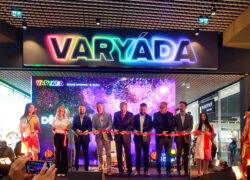
Photo: From left: Barbora Tesnerová, CEO of EPG Group, Martin Malý, Director of Marketing and Communications at EPG Group, Martin Nikodém, Director of OC Varyáda, Jan Kropáček, Project Manager at OM Consulting, Roman Uljanov, Project Manager at OM Consulting, Ivan Trojan, Director of Metrostav DIZ, Michal Mrštný, Architect at Ateliér SAEM.

LATEST NEWS