Regional Office Markets in Poland: Fewer New Projects, Leasing Activity Holds Steady

Poland’s regional office markets are showing signs of stability amid a sharp slowdown in new development. According to Savills’ latest Market in Minutes – Office Market in Regional Cities Q3 2025 report, which analyses performance across the first three quarters of the year, total modern office stock in the eight largest regional cities reached 6.73 million square metres as of the end of September.

Between January and September 2025, developers completed only 18,000 square metres of new offices — a fall of 76% compared with the same period in 2024. Development activity also remains at historically low levels, with around 191,700 square metres currently under construction, down 11% year-on-year and well below the 2020–2024 average of more than half a million square metres. The most active markets remain Kraków (55,400 m²) and Poznań (49,600 m²).

Despite limited new supply, leasing volumes have remained relatively healthy. Over the first three quarters, tenants leased a total of 521,800 square metres, up 6% from the same period last year. The most active markets were Kraków (203,900 m²), Wrocław (107,400 m²), and the Tri-City (71,700 m²).

Demand continues to be led by the IT sector, which accounted for around 20% of total leased space, followed by business service centres and manufacturing firms, each with a 16% share.

Average vacancy across regional cities edged up to 17.7%, an increase of 40 basis points year-on-year. Szczecin (6.8%) and Lublin (10.3%) reported the lowest vacancy levels, while Wrocław (21.8%) and Katowice (23.4%) recorded the highest.

“Regional office markets are adjusting to new economic conditions. The prevalence of contract renegotiations shows that tenants are focused on optimising space while maintaining flexibility,” said Jarosław Pilch, Head of Tenant Representation at Savills.

Lease renewals accounted for 54% of all transactions, while new leases, including owner-occupier deals, represented 38%. Pre-leases were limited to 2%, and expansions made up the remaining 6%.

“Market activity will remain closely tied to economic stability and access to financing. We expect developers to maintain current activity levels over the next two years,” added Daniel Czarnecki, Head of Landlord Representation at Savills.

Prime rents for Class A offices stayed stable in Q3, ranging from €11.50 to €17.00 per square metre per month, with the highest levels in Poznań and Kraków. Service charges averaged between PLN 20 and PLN 35 per square metre per month.

Savills concludes that regional cities remain attractive to IT, business service, and advanced manufacturing companies, which continue to drive steady demand for well-located, high-quality offices — even as new construction slows and developers take a more cautious approach going into 2026.

Source: Savills
PSN to reopen Pardubice’s Grand Department Store after major renovation

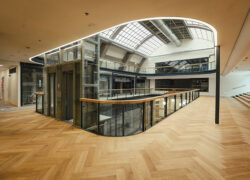
The functionalist Grand Palace by architect Josef Gočár will reopen to the public on 29 October 2025 following nearly two years of renovation. Developer PSN has completed the restoration of the landmark building, transforming it into a modern department store that connects historical architecture with contemporary city life.

Originally conceived as a multifunctional complex for the growing city of Pardubice, the Grand has now regained its original purpose. The refurbishment, carried out by the OVA studio in collaboration with PPP design, preserves the building’s early 20th-century character while introducing modern design and technology.

According to Ondřej Heřman, director of PSN’s Pardubice branch, the project was shaped by public feedback. “We focused on everyday convenience – adding parking, essential shops, and varied dining options – while restoring one of Pardubice’s most valuable architectural buildings,” he said.

The renewed Grand Department Store will include 29 commercial units with more than 3,500 m² of retail and service space. Tenants include BILLA, dm, Pompo, and several food and beverage brands such as Popeyes, Lviv Croissants, Costa Coffee, and a restaurant from the Together group under the name Struhadlo. A CineStar Boutique Cinema, due to open in spring 2026, will add cultural programming to the complex, while a co-working space beneath a glass vault will provide workspace in the restored upper level.

The renovation also introduces a glass hall on Míru Street, opening the building visually to the surrounding city. Art installations curated by Ondřej Škarek’s Art Lines and works by Jiří Machta, Marek Schovánka, and Maxim Velčovský provide artistic accents to the interior.

Construction work was carried out by companies within the Enteria group, including Marhold and Chládek a Tintěra Pardubice. The project represents an investment of more than half a billion crowns.

The reopening marks a significant moment for Pardubice, restoring one of its most notable architectural landmarks and adapting it for contemporary use as a place for shopping, dining, and community life.

Luxent launches sales of apartments in the first phase of the Kladno Living project

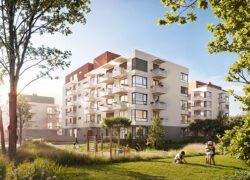
Real estate agency Luxent – Exclusive Properties has begun sales of the first phase of the Kladno Living residential project in the Kladno-Kročehlavy district. The new development will eventually comprise five apartment buildings with a total of 371 units, bringing modern housing to one of Kladno’s fastest-growing neighbourhoods.

Sales have opened for the first 56 apartments in Building A, with another 69 units in Building B to follow shortly. The first phase of construction is scheduled for completion in spring 2028.

The project’s apartments range from 1+kk to 4+kk, with sizes between 31 and 101 m². Most include a balcony, loggia, or terrace, and residents will have access to basement storage and on-site parking. The design aims to blend contemporary architecture with green surroundings, complemented by a playground and shared garden for residents.

The interiors are designed for practicality and comfort, featuring vinyl floors, ceramic tiling, triple-glazed windows, and flush interior doors. Energy efficiency plays a central role in the project’s design, which includes heat recovery systems, underfloor heating, green roofs, and photovoltaic panels to help reduce energy use and operating costs.

According to Zdeněk Jemelík, real estate agent at Luxent, the project has already attracted strong interest from both Prague-based buyers and local residents. “The development offers affordable, energy-efficient housing with modern layouts suitable for individuals, families, and investors alike,” he said.

Located on Pražská Street in Kladno’s Kročehlavy district, the project benefits from good transport links to Prague. Bus connections run directly to the A metro line at Nádraží Veleslavín in about 25 minutes, while Zličín (B line) and major shopping areas are 20 minutes away by car. The airport can be reached within 15 minutes.

Kladno, the largest city in the Central Bohemian Region, continues to develop as a residential destination offering full civic amenities, schools, healthcare, sports facilities, and parks such as Dlouhé Boroviny. The Kladno Living project aims to contribute to this growth by offering new, sustainable housing in a calm yet well-connected part of the region.

Global Emissions Continue to Climb as Key Economies Fail to Reverse Trend

Global greenhouse gas emissions have climbed to their highest levels on record, underscoring the growing gap between climate goals and real-world progress. Data from international climate agencies show that both atmospheric carbon dioxide concentrations and energy-related CO₂ emissions increased sharply in 2024, continuing a trend of steady growth despite global investment in clean energy.

Average concentrations of carbon dioxide in the atmosphere rose by nearly four parts per million in 2024 — the largest single-year increase since modern measurements began more than six decades ago. Scientists now estimate the global average at over 423 parts per million, a level not seen for millions of years. Methane and nitrous oxide, two other key greenhouse gases, have also reached record highs.

At the same time, global carbon emissions linked to energy use climbed to almost 38 billion tonnes last year, according to leading energy analysts. The rise was driven by continued reliance on coal and gas, particularly in fast-growing economies, as well as higher energy demand following post-pandemic recovery and industrial expansion.

The use of coal — the most carbon-intensive fossil fuel — hit a new record, with growth in Asia offsetting declines elsewhere. Renewables such as wind and solar made substantial gains, but not enough to replace the overall increase in fossil fuel consumption.

While Europe and parts of North America recorded slight declines in emissions thanks to cleaner power generation and improved efficiency, these reductions were outweighed by increases in developing regions. Experts warn that if the current trajectory continues, the remaining global carbon budget compatible with limiting warming to 1.5°C could be exhausted within the next decade.

Scientists also point to signs that the planet’s natural carbon sinks — forests and oceans that absorb roughly half of human emissions — may be weakening due to rising temperatures and deforestation, making the atmosphere more sensitive to future emissions.

The record rise in both atmospheric carbon and global emissions serves as a stark reminder of how difficult it remains to slow climate change. Despite record growth in renewable energy, global emissions continue to rise, highlighting the need for deeper reductions in fossil fuel use and faster progress on climate commitments if the world is to avoid the most severe consequences of global warming.

Swiss Life Asset Managers Nordic announces leadership change: Knut Ekjord appointed CEO

Swiss Life Asset Managers Nordic has announced that Knut Ekjord will take over as Chief Executive Officer on 1 January 2026, succeeding Christian Ness, who is stepping down from the position after successfully overseeing the company’s integration phase.

Ekjord, who joined Swiss Life Asset Managers Nordic in 2021 following the acquisition of NRP’s real estate business, brings more than two decades of experience in real estate investment management. During his earlier career at NRP, where he served as Head of Transactions from 2010, he led numerous high-profile property acquisitions across the Nordic region. In his new role, he will focus on strengthening the firm’s local presence and continuing its growth across Nordic markets.

Alongside this appointment, Erlend Torsen will assume the role of Head of Transactions. With 22 years of industry experience, including 14 years as Senior Transaction Manager at NRP, Torsen has overseen more than 100 real estate deals in his career and will now be responsible for all transaction activities in the Nordic portfolio.

Jan Plückhahn, Head of Real Estate at Swiss Life Asset Managers, thanked Christian Ness for his leadership during the integration of NRP into the company’s European platform. “Under Christian’s direction, and through the investment expertise of Knut Ekjord and Erlend Torsen, we have successfully expanded our local reach across the Nordic region,” he said. Ness will continue to contribute to the company’s development as a member of the Board of Directors.

Plückhahn added: “We wish Knut Ekjord every success in his new position as CEO and look forward to seeing him further deepen our client relationships and build new strategic partnerships across the region.”

The leadership transition marks a new phase for Swiss Life Asset Managers Nordic, as the firm continues to strengthen its position as a leading player in the Nordic real estate investment market.

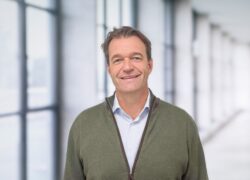
Photo: Knut Ekjord, CEO, Swiss Life Asset Managers Nordic

Czech Industrial Market Maintains Strong Momentum Through Q3 2025

The Czech Republic’s industrial property sector continued to show resilience in the third quarter of 2025, supported by sustained construction activity and a healthy level of leasing demand. According to market data from leading consultancies, the country’s total stock of modern industrial space now exceeds 12.8 million square metres, reflecting the steady pace of new development across key regions.

Although the overall vacancy rate edged up slightly to around 4%, availability remains limited in the most sought-after areas such as Prague and the Central Bohemian region, where vacant space is still below the national average. Developers continue to build, with approximately 1.2 to 1.3 million square metres of warehouse and production facilities currently underway—one of the highest levels recorded in the past two years.

Market activity was notably stronger during the summer months. Leasing volumes rebounded after a quieter first half of the year, driven by a mix of pre-leases and new occupiers taking space in large-scale logistics parks. Demand was strongest among retailers, manufacturing firms, and distribution companies, particularly those consolidating operations into more efficient modern premises.

Rents remained largely stable. Prime industrial properties in Prague continue to command between €7.00 and €7.50 per square metre per month, while prime regional locations are achieving around €5.50 to €6.50. Despite a modest increase in supply, landlords have maintained pricing levels, supported by limited availability of high-quality space and ongoing construction costs.

Developers are also showing signs of cautious optimism. While speculative building remains a smaller share of the total pipeline, construction timelines are closely tied to tenant commitments, with many schemes moving from shell-and-core only after lease agreements are secured.

Overall, the Czech industrial sector remains one of the most dynamic in Central Europe. Its combination of strong fundamentals, steady rent performance, and rising leasing activity underscores the continued confidence of both investors and occupiers heading into 2026.

Source: IRF

RENOMIA | Gallagher targets CEE growth with cross-border broking hubs, cyber expertise and facultative firepower

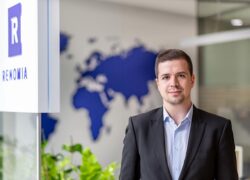
RENOMIA | Gallagher plans to scale its corporate and reinsurance offering across Central & Eastern Europe, building on a three-hub model and a wholesale collaboration strategy that has already lifted intermediated premiums to roughly €80 million, with €30 million generated through the Romanian Hub, Business Development Leader CEE & CIS Dan Ungureanu told CIJ EUROPE in an interview. Ungureanu, who also leads the International Broking Centre (IBC) hubs in Romania and Poland, said the co-brand combines Prague-headquartered RENOMIA — the largest independent insurance broker and risk consultant in the region — with US-listed Gallagher, which acquired a 30 percent stake in 2019. The IBC concept, launched with twin hubs in Bucharest and Prague, is now adding a third in Warsaw.

Ungureanu explained that the Romanian operations, traditionally focused on retail and SME markets, have evolved through the IBC into handling complex risk placement, multinational programmes, and alternative risk transfer. The hubs now serve large clients operating in multiple jurisdictions, combining insurance, reinsurance, and ART tools such as captives and parametric structures. A key differentiator is wholesale collaborationRENOMIA | Gallagher places and services risks for partnering brokers that lack international reach. The Bucharest hub has expanded from one employee to 16 specialists in four years, with multi-market programmes driving most of its recent growth.

The Warsaw hub is in recruitment, reflecting Poland’s market scale and labour dynamics. Ungureanu identified Poland, Czechia and Romania as the core IBC markets, with operations extending “from the Baltics to the Balkans.” He expects Ukraine to become a key market for reconstruction once conditions allow.

Commenting on market conditions, Ungureanu said large corporates are prioritising programme efficiency over cutting protection. He pointed to two- to three-year arrangements, portfolio clustering across borders, and combined insurance-reinsurance structures to improve pricing. Some firms still limit cover to bank-mandated levels, but most focus on optimising structure rather than reducing scope. Consolidating multiple national programmes into a single master policy takes 12–24 months of adjustment before clients see benefits in administration, unified wording, and capacity leverage.

Cyber risk has become the top concern for corporate boards, followed closely by natural catastrophe exposure. RENOMIA | Gallagher has built a dedicated cyber division providing vulnerability scanning, maturity assessments, phishing drills, and penetration testing before designing insurance layers. Demand is rising across real estate, healthcare, and professional services as companies move from reactive cover to proactive resilience.

Ungureanu noted that global catastrophe events still influence local premiums through reinsurance and retrocession, even without local claims. He highlighted strong global reinsurance capital in 2024, with new entrants such as MGAs in financial lines. While treaty terms have tightened, the advantage lies in facultative reinsurance, which enables brokers to assemble bespoke capacity for complex risks.

He expects alternative risk transfer and captive use to expand among corporates paying eight-figure annual premiums, using captive layers for retentions and buying excess layers on the open market. Looking ahead, he forecasts property and casualty rates to stay broadly flat, with financial lines trending lower due to increased capacity and competition.

Regulatory ESG pressure is intensifying, but markets still avoid absolute exclusions. Pricing and terms are expected to favour stronger ESG performers, while hard-to-place sectors may rely on captives or partial retentions.

Ungureanu said knowledge transfer happens through cross-hub teams rather than national silos, supported by digital client portals offering real-time visibility of policies, spend, and loss ratios. The group continues acquiring brokers across CEE, positioning itself as a long-term, family-backed consolidator.

For RENOMIA | Gallagher, Central & Eastern Europe remains “home ground.” The strategy integrates consultative broking, wholesale alliances, facultative and ART expertise, and cyber and nat-cat services to deliver global solutions locally. With Romania, Poland and Czechia at the centre, the firm expects demand for complex, multi-market risk management solutions to rise as regional corporates expand and reconstruction opportunities emerge.

© 2025 www.cij.world

Momentum Builds for the 21st CIJ Awards Slovakia in Bratislava

Excitement is growing across Slovakia’s property sector as preparations continue for the 21st annual CIJ Awards Slovakia, set to take place on 20 November 2025 at the historic Moyzes Hall in Bratislava. Organised by CIJ EUROPE, the event will once again bring together key figures from the country’s real estate and investment community to recognise outstanding projects, companies, and professionals from the past year.

Now in its third decade, the CIJ Awards Slovakia remains the country’s longest-running and most respected real estate awards programme. Since its launch in 2001, the event has mirrored the evolution of Slovakia’s property market — from early commercial developments to today’s complex, sustainable, and diversified investment environment. Winners from the national competition will advance to the Hall of Fame Awards 2026, where the top performers from across Central and Southeast Europe will compete for the title of “Best of the Best.”

This year’s categories span the full spectrum of the market, including residential, office, retail, logistics, and mixed-use projects, as well as recognition for financial institutions, legal and advisory firms, and asset management companies. Special awards such as Leadership of the Year and the Grand Prix honour individuals and organisations whose work has demonstrated integrity, strategic vision, and lasting impact on Slovakia’s built environment.

Integrity in judging remains at the core of the CIJ Awards’ reputation. Results are determined through a combination of public and professional input: 39% of the score is based on online voting by active market participants, while 61% is decided by a senior jury of independent real estate experts. All voting is confidential and audited, ensuring transparency and fairness in every category.

The gala evening will feature a full programme of networking and celebration, beginning at 19:00 with a cocktail reception, followed by a formal dinner and the awards ceremony. The evening will close with a social gathering of developers, investors, bankers, architects, and consultants, reflecting the collaborative spirit that defines Slovakia’s real estate industry. Tickets are available for €425 plus VAT, which includes full access to the event.

Nominations remain open until the end of October 2025, with companies able to submit up to ten entries through awards.cijeurope.com. Eligible projects must have been active between November 2024 and December 2025.

For more information about entries, jury participation, or sponsorship, contact Robert Fletcher, CEO of CIJ EUROPE, at fletcher@cijeurope.com, or Zuzana Rusnakova, Sales & Events Manager for Slovakia, at rusnakova@cijeurope.com.

As the countdown continues, the CIJ Awards Slovakia promises not only to honour excellence but also to reaffirm the strength, creativity, and ambition driving one of the most dynamic property markets in Central Europe.

Gemo Completes Horácká Multifunctional Arena in Jihlava

The construction company GEMO a.s. has completed and handed over the new Horácká Multifunctional Arena (HMA) to the City of Jihlava. The project, which began in July 2023 and took just over two years to complete, represents one of the largest investments in public infrastructure in the Vysočina Region. Designed by the architecture studio CHYBIK + KRISTOF, the facility will serve as both a sports and cultural venue, providing a modern hub for events in the city and surrounding area.

The arena, which cost CZK 1.9 billion to build, was financed by the City of Jihlava with the support of the Vysočina Region and the National Sports Agency. GEMO acted as the general contractor, responsible for all stages of construction, including demolition, structural work, and final technical installations.

Architecturally, the new arena is marked by its distinctive red shell and open, interconnected layout. Above ground, the design emphasizes transparency and access, while below ground, all three main buildings are linked through a shared underground structure. The roof features a lighted exterior that can display colors and patterns, creating a visual connection between the arena and the city.

The complex will host a variety of functions. In addition to its 5,581-seat ice hockey arena (expandable to 7,416 for concerts), the development includes a hotel with 29 rooms, a fitness center, a public gym, a sports store, and eight food and beverage outlets. A running track on the roof, accessible to the public, offers views of the city. The arena will serve as the new home of HC Dukla Jihlava, which is scheduled to play its first game there against Zlín on October 25.

According to Petr Kráčmar, project manager at GEMO, the build presented a complex logistical challenge: “We coordinated dozens of specialist teams working in a dense urban environment while maintaining a tight schedule. Innovative energy systems were introduced, including the reuse of waste heat and cold from the ice rink’s cooling system to heat water and ventilate other parts of the building.”

The facility integrates energy-efficient technologies, a modern sound system, LED screens, and a large multimedia cube above the ice. Notably, it features a pioneering LED display directly beneath the ice surface, allowing for animations and visual effects during games and events.

City Councilor David Beke, who oversaw the project for the city, described the arena as a multi-purpose venue intended to revitalize central Jihlava. “Our goal was to create a space that brings together sports, culture, and community life – a place for everyday activity and shared experiences,” he said.

With its mix of design, technology, and public accessibility, the Horácká Multifunctional Arena is set to become a major landmark in Jihlava and one of the most advanced sports and event facilities in the Czech Republic.

Foxconn Installs Czech-Made Photovoltaic System to Improve Energy Self-Sufficiency

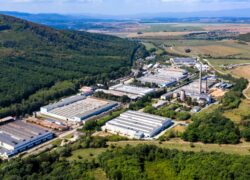
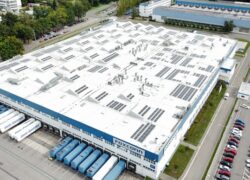
Foxconn, the global electronics manufacturer, has installed a new photovoltaic system at its production plant in Pardubice to improve energy efficiency and reduce reliance on external electricity suppliers. The project, delivered by Czech renewable energy company Greenbuddies, features a 457.5 kWp solar installation using lightweight panels designed for industrial roofs.

More than 1,000 panels have been fitted to previously unused roof space, converting it into a source of clean energy that will begin supplying the facility by the end of the year. The panels weigh up to 50 percent less than standard glass units, allowing them to be installed without reinforcing the building’s structure. According to Greenbuddies Commercial Director Dan Štajner, the system’s design minimizes disruption during installation and reduces the risk of roof damage, while enabling faster deployment and lower overall costs.

The project covered all stages from planning and materials procurement to installation and commissioning. Foxconn’s Pardubice facility produces tens of millions of electronic devices and components each year for international clients, including major consumer technology brands. The new solar plant is expected to lower operating costs, increase energy independence, and reduce the site’s carbon emissions.

“We see the adoption of solar power as a key part of our long-term sustainability strategy,” said Martin Vencl, PR and Communication Supervisor at Foxconn. “Generating our own electricity helps reduce environmental impact and dependence on external suppliers. The project also benefited from available subsidies, improving the overall return on investment.”

For Greenbuddies, the Pardubice installation follows several recent industrial solar projects, including a 280 kWp rooftop system at the P3 Logistic Parks complex in Olomouc, which supplies renewable power to tenants such as Raben Logistics, PPL CZ, and Kaufland.

New regulations taking effect in January 2026 will further expand the potential for solar projects in the Czech Republic. An amendment to the Building Act will allow companies to install photovoltaic systems on unused land within their premises without reducing the legally required share of green space. This change is expected to encourage broader adoption of solar technology across industrial zones and logistics parks.

Greenbuddies reported consolidated revenues of CZK 796.6 million in 2024, representing year-on-year growth. Its core company, Greenbuddies s.r.o., achieved a 15 percent higher turnover in the first half of 2025 compared with all of 2024 and is currently serving as general contractor for what will be the Czech Republic’s largest solar power plant with integrated battery storage.

LATEST NEWS