Polish Economy Shows Fragile Signs of Recovery Amid Persistent Uncertainty

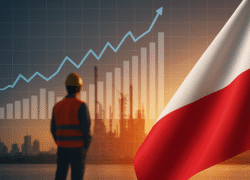
Poland’s leading economic indicator recorded a modest improvement in October, suggesting that the country’s economy may be edging out of a prolonged period of stagnation. The Leading Economic Situation Indicator (WWK), published monthly by Statistics Poland (GUS), rose by 1.1 points compared with September, ending three months of flat performance.

The increase, however, has yet to translate into sustained optimism. Four of the eight sub-components that make up the composite index improved in October, but GUS analysts caution that none show a clear upward trend.

Industrial order inflows—one of the key measures of business activity—rose slightly compared with the previous month, both domestically and abroad. Yet overall volumes have remained largely unchanged for almost a year, and companies with shrinking order books still outnumber those reporting growth by about 14 percentage points. Among the 22 manufacturing industries surveyed, only producers of computers, electronic and optical goods have recorded a consistent rise in demand since early 2025.

The lack of a clear rebound in orders has kept the financial situation of manufacturing companies virtually unchanged. Managers report that profitability has neither improved nor deteriorated over the past year, reflecting a cautious operating environment shaped by rising costs and muted demand.

Business leaders continue to view high labour costs, economic uncertainty, and tax burdens as the main barriers to expansion. According to GUS’s October survey, 57% of respondents cited labour costs as their most pressing challenge, followed by 43% pointing to macroeconomic unpredictability and 40% mentioning fiscal pressures.

On the capital markets, the Warsaw Stock Exchange’s WIG index gained slightly in October, although it remained below its August peak. The benchmark has nonetheless been trending upward for more than a year—currently the only indicator in the WWK showing a sustained positive pattern.

Economists describe the situation as a painstaking recovery: measurable progress in sentiment indicators, yet fragile and easily reversible without a stronger rebound in industrial demand. For now, Poland’s growth outlook remains stable but subdued, with businesses adapting to a climate defined more by caution than by confidence.

Source: BIEC, GUS and Warsaw Stock Exchange data.

China–Gdańsk Route via the Arctic Opens a New Chapter in Global Shipping

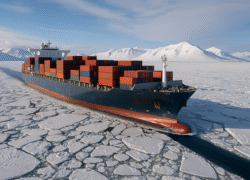
A container ship sailing from China has arrived in Poland after navigating through the Arctic Ocean, marking the first time a commercial vessel has used this northern route to reach Europe. The ship, Istanbul Bridge, operated by Singapore-based Sea Legend Shipping, departed from Ningbo in late September and docked in Gdańsk in mid-October after a 26-day journey — nearly two weeks faster than the traditional passage through the Suez Canal.

The voyage demonstrates that the Northern Sea Route—which traces Russia’s Arctic coastline—can serve as a practical, if seasonal, trade corridor between Asia and Europe. The shortcut not only saves time but reduces fuel costs and exposure to security risks in the Red Sea and Suez regions, where congestion and conflict have recently disrupted traffic.

For shipping companies, the reduced travel time translates into lower operating costs and faster goods turnover. Yet the route’s viability is shaped by geopolitical and environmental realities: ships must coordinate closely with Russian authorities for navigation support and icebreaker escort, and the passage is navigable only during a limited summer window.

Industry observers describe the voyage as both a proof of concept and a geopolitical signal. China gains a shorter, more secure path to Europe, while Russia strengthens its influence over Arctic trade. Analysts note, however, that widespread adoption remains uncertain. Large container lines such as MSC and Maersk have stated they will avoid the Arctic corridor for now due to environmental risks and unpredictable weather.

For Poland, the milestone could carry long-term significance. The Port of Gdańsk, already among the fastest-growing in Europe, could emerge as a key terminus for future Arctic cargo flows. Analysts at Baltic trade institutes say this would require sustained investment in deepwater berths, intermodal transport links, and cold-climate infrastructure. Without such upgrades, Gdańsk risks serving as a mere transit point rather than a regional logistics hub.

The Istanbul Bridge voyage may prove a turning point in global trade geography — but for now, it is as much an experiment in strategy as it is a feat of navigation.

Source: WEI

LIP Invest Acquires First Property for Logistics Fund V in Bremen

LIP Invest has completed the acquisition of a new 31,000 m² logistics property on Bergener Straße 9 in Bremen, marking the first purchase for its “LIP Real Estate Investment Fund – Logistics Germany V.” The building, developed by Peper & Söhne, was acquired off-market, with financing provided by Sparkasse Bremen AG, which supported both the project development and the acquisition.

The property, completed at the end of 2024, represents a new generation of sustainable, flexible logistics facilities. It holds DGNB Platinum certification and is designed for third-party usability, allowing for conversion between production and distribution uses. The site includes 13 ground-level loading gates, one ramp gate, and provision for additional ramp access if required.

Two companies have signed long-term leases: Große-Vehne, a logistics specialist serving the automotive industry, and OPmobility, an automotive supplier focused on vehicle front-end modules. Both tenants will operate supply-chain services for Mercedes-Benz, whose main European plant is located approximately seven kilometres from the site. The property’s proximity to the A1 motorway and Bremen’s port and freight facilities offers further logistical advantages.

LIP Invest Managing Partner Sebastian Betz said the acquisition underscores the importance of long-term partnerships and reliable financing in a changing market environment. “Securing this property early for our new fund was possible thanks to the trust and continuity among all parties involved,” he noted.

Christoph Peper, Managing Partner of Peper & Söhne, emphasised the project’s sustainability credentials, describing it as an example of “modern production logistics — flexible, future-proof, and built to the highest environmental standards.”

The facility incorporates a fossil-free heating system using an air-to-water heat pump, underfloor heating, photovoltaic panels, green façades, and e-charging infrastructure. Green lease clauses have also been included in tenant agreements.

Advisers to the transaction included REIUS (legal), Forvis Mazars (tax), Mocuntia (technical), and Enviro Sustain (ESG). The general contractor was Goldbeck Nord.

This acquisition expands LIP Invest’s logistics footprint in northern Germany and establishes the foundation for its fifth logistics-focused investment vehicle targeting institutional investors.

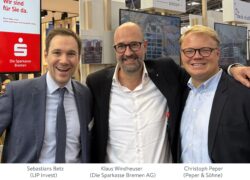
Photo: S.Betz, K. Windheuser, C. Peper. Copyright: LIP Invest

Swiss Life Asset Managers Acquires Majority Stake in Madrid-Based Educare

Swiss Life Asset Managers has acquired a majority stake in Educare, an operator of private educational institutions in Madrid that serves children from kindergarten through secondary school. The investment was made through several of Swiss Life’s infrastructure and long-term funds, including Swiss Life Funds (LUX) Global Infrastructure Opportunities IV SCSp, Privado Infrastructure S.A., SICAV-ELTIF, and Anlagestiftung Swiss Life Infrastruktur Global ESG (EUR).

The transaction involves the purchase of shares from Gestión de Centros Educativos (GECESA) and Alma Terra Mater (ATM), marking Swiss Life Asset Managers’ eighth investment in Spain. The group said it will provide additional capital to support Educare’s development plans while maintaining the company’s existing management structure. Carlos Madruga, CEO of Educare, will remain a shareholder and continue to lead the organisation.

Founded in 1977, Educare has expanded from a single school to a network of eight institutions across Madrid, employing more than 900 staff and educating around 10,000 students. The company’s focus is on holistic education and community engagement, values that Swiss Life said it intends to preserve through future investment in facilities and programs.

Swiss Life Asset Managers said the acquisition aligns with its strategy of investing in stable, long-term infrastructure sectors, including education. “Educare’s reputation for quality and continuity makes it a suitable partner for our funds’ objectives,” said Gabriele Damiani, Head of Core/Core+ Infrastructure International at Swiss Life Asset Managers.

Educare’s CEO, Carlos Madruga, noted that the transaction would allow the company to continue expanding while strengthening the quality of its schools and maintaining its educational philosophy.

The acquisition underscores continued investor interest in Spain’s education sector, where demographic growth and demand for high-quality private schooling have drawn institutional capital in recent years.

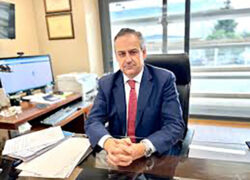
Photo: Educare’s CEO, Carlos Madruga

HSBC Profit Falls 14% After Setting Aside $1.1 Billion for Madoff-Linked Legal Case

HSBC’s third-quarter results revealed a setback as the bank’s profit fell 14% year-on-year, largely due to a substantial legal provision connected to an ongoing case stemming from the collapse of Bernard Madoff’s investment empire more than 15 years ago.

The London-based lender confirmed that it has allocated around $1.1 billion to cover potential costs following a court ruling in Luxembourg related to its past business ties with funds that had invested through Madoff’s fraudulent operation. The case, which dates back to the early 2000s, concerns HSBC’s role in servicing investment vehicles later found to be part of the scheme that unravelled in 2008, causing losses across the global financial system.

Although the charge weighed heavily on quarterly results, HSBC stressed that the impact on its capital strength is manageable. The bank continues to contest aspects of the ruling through appeals and maintains that it has adequate provisions to meet potential liabilities.

Aside from the legal provision, the bank’s underlying business performance remained broadly solid. Revenue from core lending activities and fee income improved compared with last year, suggesting that the group’s diversified operations across Asia, Europe, and the Middle East continue to perform despite a more challenging environment.

The provision, however, has revived questions about the long shadow cast by legacy cases on global financial institutions. Analysts say the Madoff-related charge underscores how historical compliance risks can still disrupt balance sheets years later, even for banks that have since overhauled their governance frameworks.

The timing is also sensitive: investors have been watching how Europe’s largest banks manage rising costs, higher regulatory scrutiny, and slower economic growth. HSBC’s management said that despite the legal setback, its balance sheet remains strong and its overall income outlook for the year is unchanged.

The Madoff scandal, one of the most notorious frauds in financial history, continues to generate litigation as investors seek restitution from institutions that acted as intermediaries or custodians. For HSBC, the renewed legal costs are a reminder that the past can still shape the future — even as it focuses on streamlining its global business and adapting to shifting economic conditions.

Source: FNLondon, Reuters, FT and HSBC

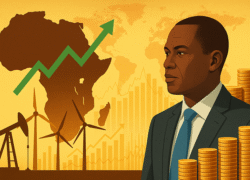
The Great Reset in African Private Equity: Rethinking Risk, Returns, and Resilience

Private equity in Africa is undergoing a deep recalibration. While the continent remains a small player in global private markets, the role of private capital here is outsized — it drives growth, job creation, and infrastructure in economies where public funding and traditional lending fall short. As investors navigate a volatile landscape shaped by global conflicts, currency instability, and tighter monetary conditions, Africa’s private equity sector is rebalancing: on valuations, exits, and the smarter use of capital.

Shifting Fundamentals

In early 2025, disclosed private-capital activity in Africa totalled about $1.6 billion across 105 deals. By the second quarter, that figure nearly doubled to $3 billion over 147 transactions, according to Stears’ Private Capital in Africa report. While these totals appear small against a global private-markets pool estimated above $13 trillion, they represent essential lifelines for African economies — financing factories, power plants, digital networks, and fintech ecosystems.

However, Africa’s private markets are uneven and cyclical. In the first quarter, southern Africa dominated with roughly three-quarters of deal volume, led by South Africa. By mid-year, momentum had shifted to West Africa, where investment activity reached nearly half of all deals on the continent.

Yet this cycle feels distinctly different. Valuations have compressed, returns are harder to generate, and traditional valuation models no longer apply. With capital costs rising, investors can no longer rely on multiple expansion — profits must come from operational improvements and sustainable growth.

From Growth at Any Cost to Value with Discipline

The new calculus in African private equity prioritises real earnings, sound unit economics, and strong leadership. Investors are less focused on top-line expansion and more on fundamentals: procurement, working-capital management, and cash conversion. This shift reflects both necessity and maturity. “When market conditions are volatile, the businesses that survive are the ones that know how to run efficiently,” a Johannesburg-based fund manager told CIJ EUROPE.

Deal structures are evolving accordingly. The second quarter of 2025 saw larger, more complex transactions underpinned by private credit and blended equity — a pragmatic response to higher borrowing costs and cautious public markets. Private credit, often paired with strategic equity, has become an important stabiliser for deal flow.

The DFI Anchor and the Search for Flexibility

Another defining feature of Africa’s investment landscape is the dominance of Development Finance Institutions (DFIs). With many global limited partners — pension funds, insurers, and endowments — reducing exposure after subdued cycles, DFIs have become the cornerstone of fundraising. Their governance standards and ESG criteria help build credibility and attract follow-on capital, particularly in renewables, social infrastructure, and inclusive finance.

However, their processes can be slow and constrained by strict mandates. To counter this, fund managers are diversifying their investor base. Regional pension funds are cautiously raising their allocations to alternatives, while family offices are emerging as agile co-investors. New capital is also flowing from the Middle East, particularly into energy and infrastructure, where long-term returns match institutional timelines. The challenge ahead is structuring funds that combine DFI stability with the flexibility private investors demand.

Fintech and the Reality Check

Fintech remains Africa’s most visible private-equity success story, responsible for nearly all of the continent’s unicorns. The sector has expanded access to digital payments, credit, and insurance, but it now faces a valuation reckoning. Many start-ups were priced for Silicon Valley growth trajectories that do not align with Africa’s regulatory complexity and slower profitability curves.

The result is an emerging disconnect between founders’ exit expectations and buyers’ focus on cash flow and durability. Investors are adapting by planning exits earlier, shaping companies for acquisition from the outset, and strengthening governance to ensure smoother transitions. Increasingly, founder-led firms are appointing independent chairs and non-executive directors to professionalise management and prepare for long-term sustainability.

Building Enduring Value

Across renewables, logistics, and data infrastructure, private investors are experimenting with shared management teams to run multiple portfolio assets efficiently — an approach that blends private-equity discipline with infrastructure scale. The emphasis is shifting from chasing large ticket sizes to building operationally robust, cash-generating businesses capable of surviving external shocks.

Ultimately, Africa’s private-equity reset is not a retreat but a maturation. The continent’s investors are learning to balance discipline with dynamism, blending global capital standards with local insight. As interest rates begin to stabilise, a clearer pricing environment could revive confidence and liquidity.

What emerges from this cycle will not be defined by megadeals but by resilient mid-sized enterprises — firms that compound value through better governance, smarter exits, and sustainable growth. In a continent where private investment remains essential to development, this shift towards quality over quantity may prove to be the most durable outcome of all.

Source: CMS

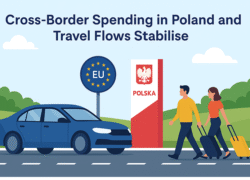
Cross-Border Spending in Poland Reaches PLN 77.7 Billion in 2024 as Travel Flows Stabilise

Poland recorded nearly 286.4 million border crossings in 2024, underscoring its position as one of Central Europe’s busiest transit and shopping destinations. New data from Statistics Poland (GUS) show that 160.4 million crossings were made by foreigners entering Poland and 126 million by Polish residents travelling abroad .

Total cross-border expenditure climbed to PLN 77.7 billion, an 8.2 percent increase compared with 2023. Foreign visitors spent PLN 46.64 billion (+5.3%), while Poles spent PLN 31.05 billion (+12.9%) abroad . Average spending per trip reached PLN 585 for foreigners and PLN 494 for Poles .

Most journeys were short day-trips concentrated along Poland’s western and southern frontiers. Shopping remained the main motive: 57.6 percent of foreigners entered Poland primarily to purchase goods, followed by professional or business visits (12.7 percent) and leisure or family travel (8.9 percent). Among Polish travellers, 43.6 percent went abroad for holidays or recreation, 22.8 percent for shopping, and 15.7 percent for professional purposes .

Spending patterns differed on each side of the border. Non-residents visiting Poland devoted most of their budgets to non-food retail goods, whereas Poles abroad directed a larger share to services such as accommodation and dining. Travellers arriving by air and sea reported the highest average outlays per person, reflecting longer stays and higher incomes, while those crossing by land remained the majority in total volume.

Local border movement between Poland and Ukraine rebounded strongly. Under the small-border-traffic (LBT) scheme, 758.2 thousand crossings were made in 2024—an 18.3 percent increase over the previous year—with total spending of PLN 310.4 million (+16.6%) and an average of PLN 819 per person . LBT travellers represented 4.4 percent of all foreign crossings on the Polish-Ukrainian border and allocated roughly 85 percent of their expenditure to non-food goods .

Traffic volumes remained highest along Poland’s western and southern borders, particularly with Germany, Czechia, and Slovakia, while eastern crossings with Ukraine, Belarus, and Lithuania continued to grow following eased visa procedures for selected categories .

Economists note that the figures highlight a stabilising trend: while overall border movements have levelled off, total spending continues to rise, reflecting improved purchasing power, steady inflation, and resilient consumer demand. Analysts view the strong performance of retail-driven trips as both a strength and a vulnerability—sustaining local economies yet underscoring Poland’s reliance on short-term, consumption-based cross-border trade.


Source: GUS

Czech Economic Confidence Strengthens as Consumers Regain Optimism

Confidence in the Czech economy improved again in October, reflecting a cautious return of optimism among both businesses and households. According to the Czech Statistical Office, sentiment rose for the second consecutive month to reach its highest level in nearly four years. The findings suggest that the economic slowdown that followed the post-pandemic energy shock may be giving way to a period of gradual recovery.

Manufacturers reported stronger order books and a better outlook for production in the months ahead, particularly in engineering and automotive supply chains. While cost pressures and weak foreign demand remain concerns, companies indicated that overall market conditions are stabilising. Factory capacity use inched higher, and managers expressed greater confidence in short-term output. Although many firms still cite insufficient demand as their main obstacle, the share of businesses reporting no major barriers has increased compared with the summer, signalling a more favourable operating climate.

The recovery has yet to spread evenly across all sectors. Builders have turned slightly more cautious following a strong summer season, citing staff shortages and rising wage costs as key constraints. Hiring expectations have softened, and some companies expect slower activity in the winter months. Retailers, meanwhile, also reported weaker confidence in October as household spending remains selective and inventories continue to build. While traders remain hopeful for next year, many say customers are focusing on essential purchases rather than larger discretionary items.

In services, sentiment edged upward, supported by stable demand in finance, hospitality and real estate. Business owners described conditions as steady, with some improvement in bookings and expectations for future orders. Roughly half of respondents said they were operating without major constraints, while others pointed to regulation, competition and energy costs as limiting factors.

The sharpest rise came from consumers, whose confidence climbed to its strongest level since early 2020, before the pandemic. Fewer households now expect the national economy to deteriorate, and more foresee improvements in their personal finances. Although some still report tighter budgets than a year ago, fears of unemployment and inflation have eased noticeably. Economists link this renewed optimism to wage growth, moderating prices and greater stability in energy costs, which have supported purchasing power in recent months.

Overall, the October data portray an economy gradually regaining balance after two challenging years. Industry is rebuilding momentum, households are less anxious about the future, and inflation pressures are receding. Yet the pace of recovery remains uneven, with construction and retail still underperforming other sectors. Analysts expect growth to strengthen only slowly through early 2026 as higher borrowing costs and global uncertainty continue to temper investment and demand.


Source: Czech Statistical Office

Belgium Blocks EU’s Ukraine Loan Plan as Leaders Struggle to Maintain Unity

Europe’s long-promised financial lifeline for Ukraine ran into trouble this week after Belgium refused to sign off on a €140 billion loan package designed to help Kyiv fund its defence and reconstruction. The impasse at the Brussels summit underscored how difficult it has become for EU governments to balance solidarity with financial caution as the war with Russia grinds on.

Loan Plan Stalls at the Top Table

The proposal, drafted by the European Commission, would channel funds to Ukraine through a new loan facility guaranteed by profits from Russian state assets frozen at the Euroclear clearing house in Brussels. In theory, the measure would allow Europe to lend without directly seizing Russian holdings — a legal workaround meant to satisfy central-bank lawyers wary of confiscation.

Belgian Prime Minister Bart De Wever said his country could not approve the plan until questions of liability and risk-sharing were resolved. He warned that, as host to most of the frozen assets, Belgium would bear a disproportionate legal burden if Moscow or private claimants launched court action. Other capitals, including Berlin and Vilnius, urged rapid progress but acknowledged that further technical work was needed before the scheme could move forward.

Leaders ultimately watered down their summit conclusions, asking the Commission to present alternative models before the December meeting. Diplomats described the discussion as pragmatic rather than divisive, yet the delay left Ukraine without a clear timetable for the next tranche of large-scale European aid.

Zelenskyy Calls for Urgency

Ukrainian President Volodymyr Zelenskyy attended the opening day of the summit, pressing for more air-defence systems, long-range missiles, and economic support as winter approaches. In his remarks, he thanked EU partners for their continued backing but cautioned that any hesitation would embolden the Kremlin. He urged the bloc to find legal and political solutions quickly, describing Ukraine’s struggle as “a fight for Europe’s own security.”

The visit followed what Ukrainian officials described as a difficult meeting with former U.S. President Donald Trump earlier in the week, which heightened Kyiv’s anxiety about wavering Western resolve.

Legal and Political Crossroads

Belgium’s caution reflects deeper unease among several member states about using frozen Russian assets as collateral. Although the European Commission and the G7 have explored mechanisms to harness the interest income from those funds, lawyers fear that any attempt to spend or pledge them could breach international-law protections for sovereign property. Brussels insists the assets would remain immobilised until Russia pays reparations, but even the symbolic step of drawing on related revenues has sparked debate over precedent and exposure.

Behind closed doors, officials also discussed how to structure repayment. Under current drafts, the EU would front the money, using the asset profits as a guarantee, and expect repayment once Russia settles post-war obligations. That legal fiction — lending now, collecting after reparations — still leaves open who bears the risk if Moscow never pays.

Beyond Ukraine: Broader Tensions in Brussels

The summit’s agenda extended beyond the war. Leaders debated how to set the bloc’s 2040 climate targets, reviewed new export restrictions on advanced technologies bound for China, and considered a further tightening of sanctions on Russian trade. Yet it was the stalled Ukraine loan that dominated corridors and press briefings, symbolising both Europe’s determination and its internal hesitation.

While Germany and most eastern states pushed for urgency, several southern and neutral members backed Belgium’s call for legal caution. The resulting communiqué reiterated “unwavering solidarity” with Ukraine but stopped short of committing to any new funding mechanism.

Unfinished Business Before Winter

For Kyiv, the message was mixed. The political backing remains, but the cash — at least for now — is on hold. EU officials will revisit the proposal before year’s end, hoping to bridge legal and political gaps and to show that the bloc can still act decisively under pressure.

As one senior diplomat put it after the meeting, “The unity is real, but the machinery moves slowly.” For Ukraine, facing renewed Russian attacks and a harsh winter ahead, that machinery cannot move fast enough.


Editorial Disclaimer: This article is for informational and analytical purposes only. CIJ.World verifies all facts at the time of writing and maintains strict neutrality on policy outcomes.

Warsaw Stock Exchange Sets Its Sights on Developed Market Status

Poland’s financial ambitions are growing bolder. The head of the Warsaw Stock Exchange (WSE), Tomasz Bardziłowski, says he wants the country’s capital market recognised among the world’s most advanced within the next three to five years. The goal: to persuade index provider MSCI to promote Poland from “emerging” to “developed” market status — a change that would mark a major milestone for Central Europe’s largest economy.

For now, the aspiration remains just that — a long-term target rather than a near-term expectation. While Poland’s economic fundamentals already resemble those of Western Europe, the structure of its financial market still falls short of the standards MSCI requires.

A Growing Economy Seeking Recognition

Few doubt that Poland qualifies as an advanced economy by traditional metrics. It is now among the EU’s top-performing members in growth, with stable public finances and rising household incomes. Its GDP per capita, measured by purchasing power, rivals that of Portugal or Greece. In everyday economic terms, Poland already looks “developed.”

Yet MSCI’s criteria extend beyond output and income. The index group examines how well a financial market operates — from liquidity and trading depth to investor access and regulatory transparency. On those counts, Warsaw remains a work in progress.

The exchange’s capitalisation has surpassed €250 billion, making it the largest in the region. But trading remains uneven: activity is concentrated in a small number of major companies, leaving hundreds of smaller listings thinly traded. Average daily volumes remain modest by international standards, and the number of firms large enough to meet MSCI’s size and liquidity benchmarks is limited.

Structural Barriers Remain

Poland has made steady progress in opening its market to global investors, but certain practical barriers persist. Some companies still lack comprehensive English-language reporting, and international funds face administrative hurdles when registering holdings or exercising shareholder rights. The limited scope for share-lending and short-selling also restricts foreign institutional participation — a key test for MSCI when judging whether a market can absorb and manage large cross-border capital flows.

These weaknesses mean that while Poland’s economy functions like a developed one, its stock market still behaves like an emerging market. The same pattern has kept other advanced economies, such as South Korea, from securing the “developed” label from MSCI despite their technological and industrial strength.

Policy Support and Domestic Reform

Bardziłowski and other financial officials argue that new reforms could help close the gap. The government’s OKI investment account scheme — allowing individuals to invest up to PLN 100,000 tax-free — aims to deepen the domestic investor base and broaden liquidity. Financial authorities are also pushing companies to adopt clearer disclosure standards and streamline settlement systems.

The Warsaw Stock Exchange has already been recognised as a “developed market” by another major index provider, FTSE Russell, which made the upgrade in 2018. That decision reflected confidence in Poland’s regulatory and economic stability, even if liquidity and access still lag behind peers.

Expert Skepticism

Not everyone shares the WSE’s optimism. Economists caution that building a truly self-sustaining capital market takes time. They note that when global shocks strike, Polish equities tend to move in step with emerging-market peers — a sign of continued dependence on foreign capital rather than domestic savings.

Analysts warn that sustained progress will require several years of consistent liquidity growth and continued reform, not simply an improved headline economy. In other words, Poland’s challenge is no longer macroeconomic but institutional: ensuring that the mechanics of trading, clearing and disclosure match those of Western Europe’s mature exchanges.

Regional Implications

If achieved, Poland’s reclassification would be historic. It would make the WSE the first market in post-communist Europe to reach developed-market status under MSCI’s methodology — a symbolic leap for a country that, within a generation, has transformed from a command economy into a key EU financial hub.

For investors, such an upgrade would likely channel billions of euros in passive inflows through exchange-traded funds and global portfolios benchmarked to developed-market indices. For Poland, it would affirm its role as the financial anchor of Central Europe.

But for now, the road ahead looks long. MSCI typically waits for structural reforms to take hold across several review cycles before adjusting its classifications. Even countries with larger markets — such as South Korea and Taiwan — have been waiting for years.

Aiming High, Building Gradually

The Warsaw Stock Exchange’s goal is therefore best seen as part of a gradual evolution rather than a quick leap. With reforms under way, liquidity expanding, and domestic investment growing, Poland may well strengthen its claim by the end of the decade.

Whether MSCI’s verdict comes in three years or in ten, the effort itself underscores how far the country has come since its market opened three decades ago. From the first privatizations in the 1990s to today’s global aspirations, Warsaw’s exchange has become both a symbol and a driver of Poland’s transformation — one still writing the next chapter of its economic story.

Editorial Disclaimer: This publication is for general informational purposes only. CIJ.World verifies factual accuracy at the time of writing and maintains editorial neutrality regarding market forecasts or investment outcomes.

LATEST NEWS