Jet Industrial Lease Acquires Industrial Development Project in Rzeszów, Poland

Jet Industrial Lease, a real estate fund managed by the Jet Investment group, has completed the acquisition of a project for the construction of a new industrial complex in Rzeszów, southeastern Poland. The planned facility will provide 42,344 m² of leasable space on a 127,398 m² site, with construction scheduled to begin in October 2025.

The project, which already holds a valid building permit, aims to achieve BREEAM New Construction certification at the “Excellent” level. It will be developed in cooperation with Panattoni, a leading European industrial and logistics real estate developer, which will oversee the project’s construction and management.

According to Pavel Drabina, Managing Director of Jet Industrial Lease, Rzeszów offers strong potential for long-term investment. “With its strategic location, infrastructure, and growing regional importance, Rzeszów is positioned to strengthen its role as a logistics hub in eastern Poland,” he said.

The new complex will be located in the northern part of Rzeszów, near the A4 motorway and S19 expressway (Via Carpathia), providing direct links to major industrial centres across Poland and Central Europe. The design includes energy- and water-saving technologies, enhanced natural lighting, improved acoustic performance, and provisions for a future photovoltaic installation.

The first phase of the project is 72% pre-leased, with tenants from the logistics and light manufacturing sectors. Completion and handover of the initial units are expected in the first half of 2026. The development is also anticipated to support regional employment and strengthen the Podkarpackie region’s industrial base.

This investment continues Jet Industrial Lease’s strategy of acquiring and managing modern industrial and logistics assets across Central Europe. The fund already holds six properties in Poland and, since its establishment in 2020, has completed 11 acquisitions. The management team is currently assessing additional projects to expand its portfolio with new logistics and production capacities across the region.

Survey: Two-Thirds of Young Czechs Could Only Manage Three Months Without Income

A new survey has revealed that most young Czechs would struggle to maintain their current lifestyle for more than a few months if they lost their income. According to research conducted by Ipsos for the investment company XTB, nearly two-thirds of respondents aged 18 to 30 said their financial reserves would last no longer than three months, with 30 percent managing only a single month and another 33 percent up to three months.

The study, based on responses from 1,000 participants, highlights significant differences in financial preparedness by education level. Among those with only basic education, 42 percent said their savings would cover just one month’s expenses. In contrast, only 14 percent of university students or graduates were in that position. Roughly one in five young Czechs reported savings that would sustain them for at least five months, while among undergraduates that share rises to over a third.

The findings also show a clear gender gap in financial resilience. More than a third of women (38%) said they could manage just a month without income, compared to 23 percent of men. “A financial cushion covering three to six months of expenses is the foundation of stability,” said Vladimír Holovka, Director of XTB for the Czech Republic, Slovakia and Hungary.

When it comes to money management tools, 93 percent of young people regularly use mobile banking apps. Investment platforms are gaining ground, used by 32 percent overall, but participation is uneven: 46 percent of men invest compared with only 18 percent of women. Regional differences are also notable—Prague leads with investment activity above 40 percent, followed by Moravia (34 percent) and Bohemia (29 percent). Among university-educated respondents, nearly 42 percent invest, while only 18 percent of those with basic education do so.

Holovka noted that the gender gap in investing remains pronounced. “Men actively look for investment opportunities, while women tend to be more cautious. Removing barriers that discourage women from investing is not just a task for financial institutions but for society as a whole,” he said.

Saving habits remain modest. Almost 45 percent of respondents save less than CZK 1,300 a month, with women and those with lower education levels most represented in this group. Another 36 percent put aside between CZK 1,300 and 5,000 monthly, while 13.5 percent save up to CZK 12,500. Only 5 percent of young Czechs save more than that amount.

Despite limited savings, many respondents demonstrate a long-term outlook. More than half (56 percent) save for future goals such as housing, retirement or financial independence. Short-term goals like travel or consumer purchases were the priority for just 18 percent.

Social media plays an increasing role in shaping financial awareness: nearly one-third of respondents said they seek financial advice on TikTok, YouTube or Instagram. However, friends and family remain the most trusted advisers, followed by banks and financial consultants.

The survey paints a mixed picture of financial literacy among young adults in the Czech Republic—showing widespread awareness of the need to save and invest, yet persistent inequalities in access, behaviour and financial confidence.


Source: XTB / Ipsos Survey (October 2025)

U.S. Housing Market Faces Uneven 2025 Outlook as Regional Shifts Challenge Recovery

The U.S. residential property market is heading into 2026 with cautious optimism, as forecasts point to a year of modest growth and persistent regional divergence. While overall home prices are expected to rise slightly, the pattern across the country is proving more complex than in past cycles, with some high-growth regions from the pandemic era now showing signs of fatigue.

Recent analyses from international and U.S. property experts suggest that the market’s resilience rests on stable, though elevated, borrowing costs and a gradual return of inventory. Mortgage rates have hovered near 6 percent for most of 2025, easing from last year’s peaks but still high enough to limit affordability for many buyers. This has slowed price acceleration, leaving national averages largely flat compared to 2024, with expected gains of around 1 to 2 percent in the year ahead.

Where growth occurs, it is increasingly selective. Official housing data show that price appreciation remains concentrated in smaller and mid-sized cities where supply is tight and job growth strong, while several Sun Belt metros — long the engine of the housing boom — have cooled. Markets in Texas, Florida, and Arizona that surged during the pandemic now face slower demand and rising listings, particularly in new-build suburban areas. Analysts note that some local markets, such as Austin and Jacksonville, have already seen minor price corrections as buyers gain leverage.

In contrast, parts of the Midwest and Northeast have emerged as relative bright spots. Cities like Buffalo, Cincinnati, and Pittsburgh continue to attract buyers seeking affordability and steady employment opportunities. These regions, which avoided the sharp price spikes of 2021–2022, now show steadier fundamentals and stronger year-on-year appreciation than many coastal or southern markets.

At the national level, property values remain supported by low housing supply, demographic demand, and a cautious lending environment that has kept defaults limited. Industry observers note that the market’s current balance — neither overheated nor in decline — represents a normalization rather than a downturn. Transaction volumes are expected to pick up gradually if borrowing costs fall further in 2026, though few predict a return to the rapid growth rates seen earlier in the decade.

For investors and homeowners alike, the message is clear: the next phase of the U.S. housing cycle will be defined by selectivity over speculation. Regional fundamentals — from wage growth and population inflows to infrastructure and climate resilience — will determine which cities outperform. As the market transitions from the volatility of recent years, 2025 is shaping up to be a period of quiet recalibration rather than dramatic change.


Sources: Engel & Völkers Market Insight (Oct 2025); Federal Housing Finance Agency (FHFA); National Association of Realtors; Zillow; Redfin; Reuters; U.S. Census Bureau.

Slovak Housing Market Remains Stable Over the Summer, With Modest Regional Price Increases

The Slovak housing market showed remarkable stability during the summer months, with average prices fluctuating only within a narrow range. Despite this calm, most regional data still point to a mild upward trend, according to analysts and the latest statistics from property monitoring platforms and the National Bank of Slovakia (NBS).

Among the cities that stood out, Trenčín recorded one of the strongest gains. The average price of a two-room apartment there rose by about 7.5 percent during the summer quarter, reaching roughly €142,000. Analysts attribute the increase to the city’s strong connectivity with Bratislava and Žilina, improving local infrastructure, and continued affordability compared to other regional centres.

“Trenčín remains one of the more accessible regional markets with genuine growth potential,” said property analyst Michal Pružinský, noting that the city is becoming increasingly attractive both to residents and investors seeking long-term appreciation.

In Košice, prices of two-room apartments have been rising steadily for nearly a year, led by Košice IV, where values grew by nearly 7 percent in the third quarter. Other districts showed milder gains, while Košice I was a rare exception, posting a 1 percent decline—one of the few cases of price contraction recorded anywhere in the country.

The strongest growth among three-room apartments was reported in Žilina, where prices rose by about 7 percent. Local agents say the shift reflects the sale of lower-priced units earlier in the year and the dominance of new, higher-standard developments on the market. Banská Bystrica also posted a solid increase of around 6.5 percent, driven by new construction activity, while Nitra saw similar growth.

The Bratislava Old Town remained Slovakia’s most expensive location despite a marginal price dip of about 1 percent. A typical three-room flat there now sells for roughly €410,000, underscoring the district’s continuing status as a premium residential zone.

Data from the NBS Housing Price Index for Q3 2025 confirm that national housing prices rose by 0.7 percent quarter-on-quarter, with annual growth still subdued compared to pre-2023 peaks. Most regional markets are showing balanced supply-demand dynamics, supported by stable mortgage conditions and the gradual completion of new residential projects.

Overall, Slovakia’s housing market appears to be entering a period of sustained equilibrium. While prices continue to rise modestly in several regional centres, the pace remains steady, reflecting a maturing property landscape driven more by local fundamentals than speculative demand.


Source: TASR, NOW.sk, National Bank of Slovakia (NBS), NARKS, Reality.sk, and Nehnutelnosti.sk.

Non-Bank Loan Market in Poland Expands in September 2025, Driven by Short-Term Cash Lending

Poland’s non-bank loan sector recorded another month of strong growth in September 2025, according to the latest figures from the Credit Information Bureau (BIK). Both cash and installment loans increased in value and volume compared to the same period last year, highlighting ongoing consumer demand for short-term financing amid tighter household budgets.

The total value of cash loans with maturities of up to 60 days reached PLN 1.16 billion in September, marking a 24.8 percent year-on-year increase. Lenders issued 467,000 such loans, up 11 percent from a year earlier. These short-term loans accounted for 71 percent of the total loan value and 86 percent of all cash loans granted. The average loan size rose by 12.5 percent year-on-year to PLN 2,476, suggesting that borrowers are taking on slightly larger amounts to meet current expenses.

Loans with maturities longer than 60 days also grew sharply, reaching PLN 475 million across 76,000 new contracts. This represents a 31.2 percent increase in value and a 22.6 percent rise in volume compared with September 2024. The average loan amount in this category was PLN 6,208, up 7 percent on the year. Together, short- and long-term cash loans continue to form the backbone of Poland’s non-bank lending market, reflecting their role in supporting both short-term liquidity and larger consumer purchases.

In the installment loan segment, which covers credit granted for specific goods or services rather than direct cash disbursement, loan companies issued 892,000 contracts worth PLN 580 million. The number of loans increased by 28.6 percent year-on-year, while total value rose by 19.1 percent. The average installment loan amount declined to PLN 650, 7.4 percent lower than a year earlier. According to BIK’s chief analyst, Dr. Waldemar Rogowski, this indicates that more loans were granted for smaller-value purchases, leading to a drop in the average amount.

Rogowski noted that purpose-based installment loans dominate the market by volume, while cash loans account for the largest share by value—a structure typical of Poland’s non-bank credit market.

Between January and September 2025, lending activity remained strong across all categories. Compared with the same period in 2024, the number of cash loans up to 60 days increased by 14.2 percent, and loans exceeding 60 days grew by 20.6 percent. Installment loans rose by 25.4 percent in volume. In value terms, lending was up 28.5 percent for short-term cash loans, 29.4 percent for longer-term loans, and 16.8 percent for installment credit.

The latest BIK data confirm that Poland’s non-bank loan institutions are expanding steadily, with rising volumes across both short-term cash and consumer-specific lending. While the sector continues to serve as a flexible alternative to bank credit, the growing number of smaller loans also reflects the pressures facing Polish households in 2025.


Source: Credit Information Bureau (BIK) – “Sales Data on the Market of Loan Institutions, September 2025”

How Investors Are Recalibrating Strategies for an Uncertain 2026

As 2025 draws to a close, investors across Europe are repositioning rather than retreating. Inflation is easing, central banks are signalling interest-rate cuts for 2026, and liquidity is gradually returning to risk assets. Yet confidence remains fragile. Political volatility, uneven growth across EU economies and rising energy and technology demands are forcing asset owners to rethink how and where they deploy capital, particularly across private equity, infrastructure, private debt and real estate.

From return-seeking to resilience-building

The investment mood in late 2025 is cautious but deliberate. The post-pandemic era of rapid expansion has been replaced by a cycle of measured discipline. Institutional and family investors are trimming exposure to opaque or illiquid strategies and reallocating toward income-producing real assets and infrastructure with inflation-linked revenues. In Central and Eastern Europe this shift is visible in the steady inflow to regulated real-estate funds and renewable-energy platforms capable of delivering yield without heavy leverage.

After two years of market shocks and liquidity squeezes, most investors now prioritise predictable cash flow and flexible exit routes. As one Bratislava-based fund manager observed, the priority is no longer growth at any cost but building portfolios that can breathe with the market.

Private equity: selectivity replaces scale

Fundraising across Europe has become highly concentrated. In 2025, capital flowed mainly to large, sector-specialist managers with proven operational credentials. In Central Europe, private-equity activity held steady in deal count but values were driven by a handful of mid-market control deals and buy-and-build strategies. Countries such as the Czech Republic and Poland continued to dominate volumes, while late-stage growth capital remained thin.

For 2026, limited partners are expected to reinvest proceeds from maturing funds into targeted thematic strategies such as healthcare, energy services and digital infrastructure, while avoiding broad generalist buyout vehicles. With rate cuts likely by mid-year, a modest reopening of the exit market is anticipated, though fundraising will remain slow for emerging managers.

Private debt: structure over scale

Direct lending remained one of the most resilient private-market segments in 2025, but fundraisings took longer and became more selective. In Central Europe, lenders backed sponsor-led refinancings and platform roll-ups, while new interest emerged in opportunistic and special-situations credit as borrowers adapted to prolonged high rates.

As liquidity returns, 2026 is shaping into a two-track market. Capital is expected to continue flowing to top-tier direct lenders and hybrid vehicles offering both debt and equity upside. At the same time, secondary trading in private credit is expanding as investors seek to unlock liquidity from older vintages. Analysts forecast that regional defaults should decline into mid-2026, supporting new issuance and refinancing across Central Europe’s mid-market companies.

Infrastructure: the energy-security anchor

Infrastructure remains the standout winner in 2025’s capital flows. Globally, fundraising for unlisted infrastructure reached record highs, while Europe channelled unprecedented sums into power generation, grid expansion and digital connectivity. In Central and Eastern Europe, energy transition remains the dominant theme, with heavy investment into renewables, storage and cross-border grid projects in Poland, Hungary and Romania.

The coming year is expected to extend that momentum. As AI and data-centre power demand accelerates, investors see opportunity at the intersection of digital infrastructure and energy security. Managers predict that 2026 will bring more partnerships between funds, utilities and public-sector agencies, focusing on co-investment and shared risk rather than outright ownership. The sector’s long-term contracts and inflation-protected income continue to make it the most sought-after asset class in the region.

Real estate: cautious recovery takes hold

After two years of correction, Europe’s property market is stabilising. In Central and Eastern Europe, investment volumes rebounded by more than fifty percent in the first half of 2025, led by the Czech Republic, Slovakia and Romania. Capital continues to avoid outdated office buildings but is flowing strongly into logistics, living sectors, retail parks and data-centre-ready assets.

Investors are adjusting to higher financing costs by favouring joint-venture and club-deal structures that spread exposure while maintaining control over capital expenditure. ESG retrofits and energy efficiency remain non-negotiable conditions for new funding. As interest rates begin to ease in 2026, analysts expect more transaction activity and selective repricing, with prime green offices and modern industrial assets likely to lead the recovery.

Data centres and digital assets: the new frontier

The fusion of real estate, infrastructure and technology is redefining capital allocation. Data-centre development has emerged as one of the most dynamic investment niches worldwide. In 2025, hyperscale and edge facilities posted record occupancy, and power constraints turned grid access into a strategic asset. In Europe, particularly in Warsaw, Bucharest and Budapest, funds are forming hybrid vehicles that combine real-estate ownership with infrastructure-style income models.

This convergence is expected to intensify through 2026 as demand for AI-driven computing continues to surge. Investors view it as both a growth opportunity and a defensive play, linking long-term digital expansion with predictable infrastructure cash flow.

The 2026 outlook: disciplined optimism

Across all asset classes, investors are approaching 2026 with a measured sense of optimism. Monetary easing should help narrow pricing gaps, revive exit markets and unlock debt refinancing, while infrastructure remains the anchor for long-term capital. Real estate is entering a gradual, sector-led recovery. Private credit continues to offer liquidity and yield, and private equity is recalibrating toward operational depth and faster, more focused execution.

For Central and Eastern Europe, the message is clear: capital will keep flowing where fundamentals are tangible — in energy transition, logistics, living and data-driven infrastructure — while it will continue to bypass speculative or over-leveraged segments. As one Vienna-based fund-of-funds manager observed, 2026 may not deliver a boom, but it will mark the year when disciplined investors quietly rebuild their advantage.

Produced by CIJ.World Newsroom as part of the publication’s ongoing analysis of investment trends and capital flows shaping the Central and Eastern European markets in 2026.


Industrial Prices in Slovakia Remain Flat, While Agricultural and Construction Costs Continue to Rise

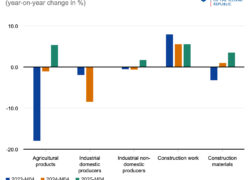
Industrial production prices in Slovakia held steady in September, as lower energy costs offset gains in most other sectors, according to the Statistical Office of the Slovak Republic (ŠÚ SR). While industrial prices showed no year-on-year change, agricultural and construction producer prices continued to climb, reflecting higher costs in key domestic sectors.

Industrial Production: Stability Driven by Energy Costs

Producer prices for the domestic industrial market in September 2025 were unchanged from a year earlier. Out of 16 monitored sectors, 12 reported price increases, while four sectors declined, including the energy industry, where prices fell by 3.4%. The decline in energy costs effectively neutralised the upward movement seen in manufacturing segments such as transport equipment (+5%) and food, beverages, and tobacco products (+3.9%).

For the first nine months of 2025, domestic industrial producer prices were 0.5% higher than a year ago but declined 0.3% compared with August. On foreign markets, prices rose 1.7% year-on-year, with a cumulative increase of 1.1% since the beginning of the year.

Agriculture: Animal Production Drives Price Growth

In agricultural primary production, producer prices rose 5.4% year-on-year in September, marking the second-lowest increase of 2025. The moderate pace reflects slower growth in crop prices, which rose 2%, while animal production continued to grow at a double-digit rate of 12.2%.

Within crop production, cereal prices were stable, and oilseed and oleaginous fruits rose by 6.5%. After nearly a year of declines, fresh vegetable prices increased by 6.9%, while fruit and nut prices saw only minor growth (+1.4%). Potato (-11.5%) and legume (-1.4%) prices remained below last year’s levels.

In animal production, price growth remained strong for hen eggs (+29.7%), raw cow’s milk (+17%), and beef (+18.8%), while slaughter pigs continued to sell for less than in 2024 (-8.7%).

Construction: Continued Upward Pressure

The construction sector saw prices rise 5.6% year-on-year in September and 5.2% for the first nine months of 2025. The cost of materials used in construction grew 3.5% compared to the same month last year, with a cumulative 2.2% increase since January.

Revised Data and Extended Statistics

The Statistical Office confirmed that all price indices have been recalculated from January 2024 following changes in methodology and the adoption of a new classification by kind-of-activity units. Expanded datasets are now available in the DATAcube database, covering industrial, construction, agricultural, and forestry price statistics.

Overall Outlook

The September data underline a divergent trend across Slovakia’s production sectors: industrial prices are stabilising as energy costs remain subdued, while agriculture and construction continue to face moderate inflationary pressure. The combination points to a mixed outlook for the final quarter of 2025 — steady output costs in manufacturing but continued strain on food and building inputs.


Source: Statistical Office of the Slovak Republic (Štatistický úrad SR) – Price Indices in Production Area, September 2025.

Renters’ Rights Act Receives Royal Assent, Marking Historic Overhaul of England’s Rental Market

The long-debated Renters’ Rights Bill has now become law, gaining Royal Assent and officially transforming into the Renters’ Rights Act 2025. The legislation represents the most significant reform of England’s private rental housing system in decades, introducing sweeping changes aimed at strengthening tenant protections while redefining the framework for landlords.

The Act applies retrospectively, meaning that both new and existing tenancies will fall under its provisions. Its declared objective is to increase tenant security and improve housing standards, although the long-term impact on landlord confidence and investment remains a key question for the property sector.

End of Section 21 and Assured Shorthold Tenancies

At the heart of the reform is the abolition of “no-fault” evictions under Section 21 of the Housing Act 1988. Landlords will no longer be able to terminate tenancies without providing a valid reason. Existing Assured Shorthold Tenancies (ASTs) — once the mainstay of England’s rental market — will be replaced by assured periodic tenancies, effectively ending the fixed-term model.

Landlords seeking possession will now have to rely on expanded Section 8 grounds, such as intending to sell the property or move in themselves. However, analysts expect this to make regaining possession slower and more complex, putting further strain on the already burdened court system.

New Framework for Rent Increases and Tenancy Terms

Under the new law, landlords can raise rents only once a year and must follow a formal process by serving a Section 13 notice with at least two months’ warning. Tenants can challenge the proposed increase at a First-tier Tribunal, which will determine the fair market rent. This process could delay rent adjustments, and the outcome will not be backdated.

Rent controls are not being introduced, but the Act standardises the way rent increases are made. All other rent review mechanisms — including contractual clauses — will be invalid once the legislation takes effect.

Tenants, meanwhile, gain the right to end their tenancy with two months’ notice, a feature that offers flexibility but also introduces uncertainty for landlords and investors relying on stable cash flows.

Expanded Tenant Protections and New Obligations for Landlords

The Act incorporates several new tenant-friendly provisions. Landlords will be barred from requesting multiple months of rent in advance, a practice often used to secure tenancy agreements. Tenants will also have the right to keep pets, and landlords will be unable to refuse requests unreasonably or demand additional deposits or insurance coverage.

The law introduces the Decent Homes Standard and Awaab’s Law into the private rented sector, requiring landlords to maintain minimum housing standards and promptly address health hazards such as damp and mould. Non-compliance could trigger enforcement action from local authorities, who will retain the proceeds from fines.

Oversight and Enforcement Infrastructure

To support implementation, the Government will establish a Private Rented Sector Landlord Ombudsman Service. All private landlords — including those using managing agents — must register and join the scheme. Tenants will be able to file complaints free of charge, and the Ombudsman will have the authority to compel landlords to issue apologies, take corrective measures or pay compensation.

In addition, a new Private Rented Sector Database will require landlords to register their properties before marketing them. Failure to do so could lead to financial penalties or prosecution.

Student Accommodation and Exceptions

The Act makes an exception for new tenancies within Purpose Built Student Accommodation (PBSA), provided the operator belongs to an approved code of practice such as ANUK/Unipol or Universities UK. Existing PBSA tenancies, however, will transition into the new system over time.

Tenancies not classified as “assured” — such as company lets or properties rented at more than £100,000 per year — remain outside the Act’s scope. The Tenant Fees Act 2019 also continues to apply, meaning that existing limits on deposits and prohibitions on extra charges remain unchanged.

Implementation Timeline and Penalties

Although the legislation has received Royal Assent, most provisions will not take effect immediately. A transition period of approximately six months is expected, suggesting that the majority of the new rules could apply from Spring 2026. The Government retains the power to stagger implementation across different sections, but the abolition of Section 21 evictions is expected to be among the first measures enforced.

Local authorities will play a central enforcement role. Minor breaches may result in civil penalties of up to £7,000, while serious or repeated offences could attract fines of up to £40,000 or criminal prosecution.

Market Response and Outlook

Industry observers describe the Renters’ Rights Act as a turning point that shifts the balance of power toward tenants. Proponents argue that it creates a fairer and more stable rental market, while critics warn it could discourage private investment and reduce housing supply.

Whether the Act succeeds in improving housing security without damaging landlord confidence will depend largely on how swiftly the Government addresses court backlogs and implements the new enforcement mechanisms.

For now, both landlords and tenants are preparing for a new era in the English rental sector — one defined by greater regulation, longer tenancies and stricter compliance expectations.

Source: CMS

CPK Launches Tender for Tunnel and Rail Station Beneath New Airport

Centralny Port Komunikacyjny (CPK) has begun the next major phase of its transport megaproject, launching a tender for the design and construction of a railway tunnel and underground station directly beneath the new airport complex west of Warsaw. The move marks one of the most technically ambitious components of Poland’s national transport programme, linking the future airport with the country’s emerging high-speed rail network.

The project, announced in late October, will create an underground connection forming part of the Warsaw–Łódź high-speed corridor, positioning the airport as the central interchange of the national rail system. The tunnel, stretching several kilometres, will house the platforms and passenger facilities of the new CPK railway station. The structure will serve both regional and long-distance services, allowing passengers to transfer between air and rail within a single integrated hub.

According to the programme outline, CPK aims to select contractors through a multi-stage process, with initial expressions of interest due by December 2025. Construction is expected to begin after design development and environmental review phases, with completion targeted around the start of the next decade. Once finished, the underground station will anchor one of Europe’s most advanced intermodal hubs, combining airport, rail and highway infrastructure.

The tender is divided into several packages covering the tunnel’s eastern and western sections and the central area where the station will be located. Each contract will include design, construction and fit-out works, requiring expertise in both large-scale civil engineering and rail systems integration.

The new tunnel is part of CPK’s wider investment plan to expand Poland’s transport capacity and improve connectivity between regions. The entire CPK programme, which also includes new high-speed lines and a greenfield airport, represents one of Europe’s most extensive infrastructure undertakings.

Officials describe the tunnel and station as a “backbone element” of the future system — a piece of infrastructure that will enable passengers to travel from Warsaw or Łódź to the airport in under 20 minutes. When completed, the project will not only reshape domestic mobility but also strengthen Poland’s role as a regional transport hub connecting Central Europe’s major corridors.

Futureal Secures New €165 Million Financing for Etele Plaza

Futureal Group, the owner of Etele Plaza in Budapest, has signed a new €165 million loan agreement with a consortium of Erste Bank Hungary Zrt., Erste Group Bank AG, and UniCredit Bank Hungary Zrt. to refinance existing loans and extend credit for long-term operations.

The new facility refinances the previous financing concluded in 2018, which was at that time the largest shopping-centre development loan in Hungary in a decade. The agreement extends the loan maturity to 2035. Legal support for the transaction was provided by DLA Piper.

Etele Plaza, which opened in 2021, is located at Etele Square, adjacent to Kelenföld railway station and Metro Line 4, forming part of Hungary’s largest transport interchange. The 55,000 sqm complex includes over 150 retail units, restaurants, a supermarket, cinema, fitness facilities, and family-oriented amenities.

According to János Gárdai, CEO of Futureal, the refinancing reflects the centre’s stable performance and the group’s long-term credibility with financial institutions. He said the new structure “ensures continued operational stability and competitiveness in the years ahead.”

Representatives of the financing banks highlighted the project’s steady results, sustainability credentials, and established relationship with Futureal. Erste Bank’s Head of Real Estate Financing, György Salamon, noted that Etele Plaza’s “consistent growth and ESG-compliant solutions” were key factors in securing favourable terms. UniCredit Bank’s Head of Real Estate Financing, András Zölei, confirmed that the bank provided half of the total financing.

Etele Plaza was developed with a focus on energy-efficient operations and digital management systems. The property holds a BREEAM In-Use Outstanding certification — currently the only shopping centre in Hungary with this rating. Its building management system integrates energy recovery and adaptive climate control, reducing total energy consumption by approximately 15% since 2023.

The refinancing agreement reinforces the long-term cooperation between Futureal and its financial partners and ensures the continued stable management of one of Budapest’s key retail and entertainment destinations.

LATEST NEWS