PSN launches luxury Pecháčkova renovation in Smíchov

PSN has begun the renovation of a neoclassical building in Prague 5’s Smíchov district as part of its ambitious Pecháčkova project. Once completed, the building will house 21 luxury apartments, one atelier, and two commercial units, blending historical elegance with modern conveniences. The project is scheduled for completion by the end of 2025, with new residents expected to move in early 2026.

The renovation will transform the seven-story building into a high-end residential space, offering a mix of apartment layouts to suit various lifestyles. Smaller units, including 1+kk, 1+1, 2+kk, and 2+1, will cater to compact living needs, while larger 4+kk apartments will provide up to 124 sqm of luxurious space. Each unit will include a private storage cellar, and select ground-floor apartments will feature private gardens.

The crown jewel of the development will be penthouse units in the attic, offering sweeping views of Prague Castle and the Smíchov embankment, perfect for buyers seeking an unparalleled living experience.

The renovation promises to preserve the historical essence of the building while incorporating cutting-edge features. Interior spaces will showcase terrazzo flooring, Venetian stucco walls, and elegant polished glass lighting fixtures. Modern additions include a glass elevator, secure chip-based entry systems, and a camera surveillance network in communal areas.

The building’s façade will be completely restored, and shared spaces such as staircases and lobbies will feature premium finishes, including custom-designed petrol blue panel doors. Residents will also have access to a landscaped inner courtyard with greenery, private gardens, a sauna, and a relaxation zone.

“The Pecháčkova project combines timeless architectural charm with modern luxury to create a unique living experience. With breathtaking views, premium materials, and state-of-the-art amenities, it offers an exceptional opportunity for discerning buyers who value quality and design,” said Jaroslav Macháč, Director of Residential Projects at PSN.

Situated in one of Prague’s most vibrant districts, Pecháčkova benefits from its proximity to cultural and recreational hotspots. Smíchov is renowned for its theaters, galleries, and iconic venues such as Jazz Dock, Švandovo Theater, and Galerie Portheimka. Shoppers will find everything they need at OC Nový Smíchov, home to two multiplex cinemas and numerous stores.

The location also offers excellent transportation options, with the Anděl metro station and several tram lines just minutes away. By car, the city ring road is easily accessible, providing seamless connections across Prague.

For outdoor enthusiasts, the Vltava River and Smíchov embankment offer recreational opportunities, including riverside dining, playgrounds, and a skate park. Parks such as Portheimka, Sacre Coeur, and the Kinský Gardens are perfect for jogging, walking, or simply relaxing.

PSN’s Pecháčkova project is set to redefine luxury living in Prague, combining historical architecture with modern sophistication. Its prime location in Smíchov, paired with high-end finishes and thoughtful amenities, is expected to attract a wide range of buyers seeking an elegant yet convenient urban lifestyle.

Construction is well underway, and the project is already generating significant interest in the real estate market as it promises to become a sought-after address in the Czech capital.
Panattoni secures €20.7 million financing for Auchan Distribution Center near Warsaw

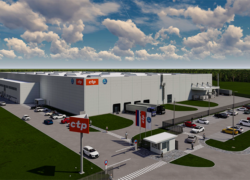
Panattoni has obtained €20.7 million in financing from Bank Millennium to develop a state-of-the-art, fully robotic logistics hub for Auchan Polska. The build-to-suit facility will be located in Wilcza Góra, near Warsaw.

Emilia Taczewska-Trojańska, Head of Debt Finance Poland at Panattoni, highlighted the significance of the project:

“This financing from Bank Millennium enables us to deliver a technologically advanced facility of strategic importance to our client. The integration of automated systems will allow Auchan to enhance operational efficiency and scale its e-commerce business in Poland.”

The 18,000 sqm distribution center will support Auchan’s modernized internet platform, leveraging cutting-edge technology from Ocado. Key aspects include:
• Automation & AI Integration: Advanced systems powered by artificial intelligence and machine learning for streamlined order processing.
• Expanded Product Range: Enhanced storage capacity allowing for up to 40,000 products, including fresh produce, groceries, and non-perishables.
• Enhanced E-Commerce Infrastructure: Faster and more efficient order fulfillment, strengthening Auchan’s position in Poland’s e-commerce market.

Construction commenced in Q3 2024, with completion slated for June 2025. Operations are expected to begin by Q4 2025.

The facility is being developed with sustainability in mind and aims for a BREEAM Excellent certification, ensuring lower operating costs and an environmentally friendly design.

This project exemplifies Panattoni’s commitment to delivering cutting-edge logistics solutions tailored to the needs of leading global retailers.

MLP Group launches construction in Spreenhagen

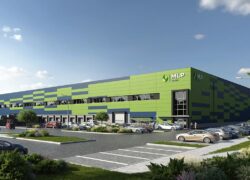
MLP Group is starting the development of its second warehouse park in close proximity to the German capital. The MLP Spreenhagen park will eventually offer 39,000 sqm of modern space. The general contractor role has been assigned to LIST Bau Bielefeld, with the project scheduled for completion and occupancy in Q3 2025.

MLP Group is strengthening its position in the German market, particularly in Brandenburg. The company is beginning construction of a new logistics park in Spreenhagen, marking its second project in the Berlin area. For the first time, MLP Group has appointed LIST Bau Bielefeld as the general contractor. According to plans, potential tenants will be able to start moving into MLP Spreenhagen by September 2025, with construction slated for completion in Q3 2025.

“Germany is our strategic direction for expansion. It’s the largest market in Europe with immense growth potential. Recently, we successfully launched our first green bond offering, raising €300 million. A significant portion of the funds will be allocated to further development in this country. Spreenhagen is our fifth project in the German market, with more in the pipeline,” emphasized Radosław T. Krochta, CEO at MLP Group S.A.

The project will provide a total of 39,000 sqm of modern space, including 33,800 sqm of warehouse areas, 3,300 sqm for comfortable office and social spaces, and 1,900 sqm of mezzanines. The hall’s height will exceed 12 meters. MLP Spreenhagen will offer flexible modules ranging from 3,500 sqm to 24,500 sqm. The spaces are designed primarily for companies in light manufacturing, logistics, and retail, including e-commerce. The new facility will complement the fully leased MLP Business Park Berlin in Ludwigsfelde, also located in Brandenburg and focusing on light industry, retail, and services.

“The start of construction is a significant milestone in the development of MLP Spreenhagen. We are pleased to collaborate with LIST Group and benefit from their extensive experience for our second project in the Berlin-Brandenburg metropolitan area. This is our first joint venture, and construction work will begin in December this year, with the modern park ready for use by Q3 2025,” said Martin Birkert, Chief Country Officer Germany at MLP Group.

“We are delighted to partner with MLP Group on this exciting project. In addition to our expertise as a general contractor, we are proud to bring our knowledge in sustainable development. LIST engineers will handle construction, structural, and installation aspects, allowing us to support MLP Group with the broad range of services LIST Group offers,” added Stephan Langer, Managing Partner at LIST Bau Bielefeld.

The new logistics center will be built on a plot of over 8.4 hectares in the municipality of Spreenhagen, approximately 15 km from Berlin’s outskirts and only 10 km from Tesla’s Gigafactory in Grünheide. The federal A12 highway, connecting Berlin with Frankfurt (Oder) and Poland, provides excellent links to Eastern, Western, and Central Europe.

In line with its sustainability strategy, MLP Group aims for DGNB Gold certification for the facility. To minimize environmental impact, the warehouse will feature photovoltaic installations and high-efficiency heat pumps. Additionally, the sprinkler system will meet FM Global’s highest standards, allowing storage of batteries and accumulators.

In keeping with its build & hold strategy, MLP Group retains completed logistics parks in its portfolio and manages them. All projects undertaken by MLP Group are distinguished by highly attractive logistics park locations, built-to-suit solutions, and ongoing tenant support throughout the lease term.

Red Bull joins Churchill Square office complex managed by Českomoravská Nemovitostní

The investment group Českomoravská Nemovitostní (ČMN) has announced that Red Bull is the newest tenant at Churchill Square II, a prestigious office complex managed by the company. This addition underscores the continued demand for high-quality office space in Prague and boosts the building’s occupancy rate, which now stands at an impressive 95% of its 33,000 sqm leasable area.

The Churchill Square office complex is celebrated for its prime location in Prague 2 and its modern facilities, which cater to the needs of international companies. Nicol Bejček Panská, Head of Asset & Property at ČMN, commented:

“We are delighted to welcome Red Bull as a new tenant at Churchill Square. We are confident that our modern and inspiring space will support their dynamic team’s growth and success. We look forward to a long-term and fruitful collaboration.”

In November 2024, ČMN finalized the acquisition of the remaining 25% interest in Churchill Square, achieving full ownership of the project in a transaction valued at CZK 4 billion. Alongside Red Bull, other prominent tenants include Deloitte and Fortuna, further demonstrating the complex’s appeal to high-profile companies. This significant investment aligns with ČMN’s strategy to strengthen its position in the premium office market.

Josef Eim, Vice-Chairman of the Board of Directors at ČMN, highlighted the market dynamics:

“Prague offices remain a stable investment with promising growth potential. However, challenges such as administrative hurdles and rising costs complicate the development of new projects.”

ČMN has solidified its reputation as a leading player in the Prague office market. Its portfolio includes not only Churchill Square but also Blox, City West C1 and C2, Václavské náměstí 62, and Crystal. Additionally, through its NEMO fund, ČMN manages properties such as Corso Karlín, Apeiron, Mezi Vodami, and Aragonit. With high occupancy rates and a diversified portfolio, ČMN demonstrates resilience and a strong growth trajectory in the real estate sector.

Minimalism or a wealth of features: How companies view offices

The office market showcases two polar opposite trends in how companies approach leasing and arranging spaces, which can be described as a wealth of features and minimalism.

Two Dominant Tenant Strategies

The first approach focuses on companies trying to cater to the needs of all employees—both those working in the office and remotely. To attract as many people as possible back to the office, such firms invest in new layouts and designs. However, this often leads to spaces that ultimately serve no one. Incorporating too many concepts into one space results in a lack of cohesion, failing to achieve the intended goals and even discouraging employees from returning to stationary work.

Most companies, however, adopt the second approach, prioritizing cost reduction. They renegotiate lease terms to remain in the same location, frequently downsizing their space. These companies insist employees return to the office but avoid major redesigns. Instead, they optimize the existing layout, implement minor updates, or leave the space unchanged. Often, firms take no action, conscious of rising office maintenance costs, focusing instead on calculating whether changes are truly necessary.

Optimization, Optimization, Optimization

A flagship example of this cost-conscious strategy is a project we are managing for a large publishing company. It is based on the renegotiation of a lease agreement covering several thousand square meters for a large media sector company, with the contract being extended for another five years at this location. Previously, during the pandemic, the office underwent a complete overhaul. This time, the focus is solely on financial terms, as the space remains modern, functional, and well-suited to the company’s needs. Moreover, the office is heavily utilized, making this a noteworthy trend compared to other projects.

Another striking example is the transaction involving Kruk, a company in Wroclaw. After 15 years, the company relocated from its office in an older facility within a technology park, where it occupied over 10 thousand sq m., to the modern B10 building in the Business Garden complex, where it took up 6 thousand sq m. However, this move marked a significant improvement in quality. The new office was designed based on Workplace surveys, addressing organizational and employee needs in terms of functionality, technology, and design.

Shifting Narratives

Overall, the market is seeing a predominance of lease renegotiations, increasingly driven by financial pressures rather than redesigns. High construction costs are forcing companies to optimize expenses by making use of existing layouts. The traditional open space remains the standard for most office layouts.

When design changes are made, they are often based on Workplace surveys, analyzing team needs, space functionality, and interdepartmental connections. Discussions on new workplace functionalities and evolving narratives—such as designing spaces for active office workers rather than persuading remote employees to return—were covered in our recent report, ‘25 Trends That Will Transform Offices by 2025.’

A growing trend is designing offices for employees who regularly use them. This involves creating smaller zones for teamwork and hubs for small groups, with modular layouts revitalizing office interiors. Flexible solutions, such as adjustable acoustic panels, sliding doors, and movable curtains, allow for easy reconfiguration to meet changing needs.

Flexibility in Leasing

Flexibility in leasing is becoming increasingly important. The flex space and co-working sector is growing rapidly, especially in Warsaw. These spaces are no longer the exclusive domain of startups and small businesses; larger organizations now use them for specific operations. Flexible offices, once primarily chosen by IT firms, are now appealing across industries.

Demand for office space in Poland’s major markets has remained stable compared to last year. Utilization rates vary by sector and organizational culture, with hybrid work (three days in the office and two remotely) being the most common model. In IT, a sector that adopted hybrid work even before the pandemic, employees continue to return to offices less frequently. This sector, historically a growth driver, is now downsizing due to globalized recruitment and remote work preferences.

Clients often optimize space by reinvesting savings from smaller office spaces into modern offices in better locations, aligning with ESG trends. Warsaw, home to corporate headquarters, is experiencing a supply gap, particularly in prime central areas. While the city’s average office vacancy rate exceeds 10 percent, central areas and Wola district have much lower rates, whereas Mokotow experiences vacancy rates of several dozen percent. Regional markets, however, maintain a stable supply.

Subleasing

A new market standard is the 7-year lease agreement. Previously, 5-year leases came with substantial financial incentives and turnkey design services. Today, such benefits are increasingly tied to leases longer than seven or even ten years.

Sublease clauses are also becoming more common, alongside assignment clauses. Landlords are open to subleases, provided certain conditions are met, such as the subtenant’s financial standing, alignment with the building’s profile, and adherence to non-compete rules. Subleasing offers security for landlords due to the joint liability between the original tenant and the subtenant, increasing its appeal.

Author Mateusz Strzelecki, Partner/Head of Tenant Representation at Walter Herz

NEPI Rockcastle finalizes €405 million acquisition of Silesia City Center in Katowice

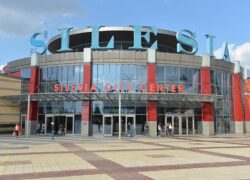
NEPI Rockcastle, Europe’s third-largest listed retail real estate company, has completed the €405 million acquisition of the Silesia City Center mall in Katowice, located in Poland’s Silesia province. This marks one of the most significant shopping center transactions in Central and Eastern Europe (CEE) in recent years. The sellers in this landmark deal are Allianz, Kamsa Luxco, and Cura.

Spanning 88,400 m² of gross lettable area (GLA), Silesia City Center stands as the dominant retail destination in Katowice, an economically robust city where per capita spending surpasses the national average by 35%.

The acquisition was largely funded by NEPI Rockcastle’s €300 million equity raise in October, further underscoring the company’s robust financial strategy. This deal follows the €373 million purchase of the Magnolia Park shopping center in Wroclaw earlier this year, which was the largest single-asset retail transaction in the CEE since 2022.

The addition of Silesia City Center to NEPI Rockcastle’s portfolio—the largest in the CEE—is expected to enhance the mall’s operational performance. The company plans to leverage its asset management expertise to unlock long-term value growth opportunities.

Rüdiger Dany, CEO of NEPI Rockcastle, commented: “We deeply appreciate the trust of our investors during the recent equity raise, which enables us to pursue acquisitions like Silesia City Center. This premier shopping destination holds a commanding position in Katowice, one of Poland’s largest and most affluent cities. We are eager to apply our asset management capabilities to drive further value in this strategic investment.”

Silesia City Center enjoys an unparalleled market position in the Katowice region, with a prime location offering easy accessibility and visibility. Its immediate catchment area includes over 280,000 people within a 15-minute drive, while the broader regional catchment extends to nearly 2.2 million people within a 45-minute drive. The mall is also well-connected by car and public transport.

Currently boasting a 98.4% occupancy rate, the shopping center hosts prominent anchor tenants such as Cinema City, Half Price, H&M, Kaufland, Media Markt, Primark, Reserved, TK Maxx, and Zara.

Katowice itself is a dynamic hub, balancing a legacy of heavy industry with a growing focus on modern business services, research, and development. This industrialized and urbanized region remains one of Europe’s most significant economic areas, further solidifying the strategic importance of this acquisition.

Real estate lending sentiment rises for fifth consecutive quarter: BF.Quartalsbarometer Q4 2024

The latest BF.Quartalsbarometer reveals a continued improvement in sentiment among real estate lenders in Germany. For the fifth straight quarter, the sentiment index has climbed, rising by 3.9 points to -9.89 in Q4 2024 from -13.79 in Q3. While the index still falls below the neutral zero mark, this progression highlights a steady recovery from its record low of -20.22 in Q3 2023.

Key Trends Driving the Recovery

1. Revival in New Lending Activity

A notable factor behind the improved sentiment is the growing optimism in the new lending business. According to the survey, 38.9% of respondents reported stable or increasing new lending activity—a 17.7 percentage point jump from Q3. Meanwhile, only 19.4% noted a decline in new lending, a significant drop from 36.3% in the previous quarter.

2. Improved Financing Conditions

The perception of financing conditions has also brightened. The proportion of respondents with a negative outlook fell dramatically from 72.7% in Q3 to 38.9% in Q4. Moreover, a small but notable group (8.3%) expressed a progressive or positive view, marking a return to optimism after several quarters of stagnation.

Industry Perspectives

Francesco Fedele, CEO of BF.direkt AG, highlighted the market’s changing dynamics:
“We’ve seen a clear shift in sentiment since the Expo Real trade fair in October, which has translated into more financing transactions. I expect this positive trend to continue into 2025 as confidence rebuilds.”

However, caution remains. Professor Dr. Steffen Sebastian, chair of real estate financing at the University of Regensburg and scientific advisor to the Quartalsbarometer, emphasized the persistent challenges:
“The index is still below zero, reflecting ongoing difficulties. External factors like the war in Ukraine, Germany’s weak economic growth, and preparations for Basel III regulations pose significant risks. Banks are adjusting margins and building capital buffers in response to these challenges.”

Key Financial Metrics: Margins and Ratios

Margins

Financing margins saw an increase of approximately 10% in Q4. Margins for inventory financing rose by 22.3 basis points to 239.5 basis points, while development financing margins increased by 25 basis points to 337 basis points. These increases reflect banks’ efforts to adjust to evolving regulatory and market conditions.

LTV and LTC Ratios

Loan-to-Value (LTV) and Loan-to-Cost (LTC) ratios also experienced moderate growth. The LTV ratio for inventory financing rose by 2.0 percentage points to 60%, while the LTC ratio for property developments increased by 1.4 percentage points to 68.7%.
“These trends indicate easing strain in the market,” Fedele noted. “However, value adjustments in properties may be influencing these ratios, and this should be closely monitored.”

Challenges Ahead

Despite the positive trajectory, significant uncertainties remain. Banks are preparing for the next phase of Basel III regulations, set to take effect in January 2025, which will impact capital adequacy requirements. Additionally, geopolitical instability and weak economic performance in Germany continue to weigh on lender sentiment.

About the BF.Quartalsbarometer: The BF.Quartalsbarometer, compiled by bulwiengesa AG for BF.direkt AG, offers a detailed analysis of sentiment and business conditions among real estate lenders in Germany. The quarterly survey collects insights from over 110 experts directly responsible for loan approvals across a range of financial institutions. Key factors evaluated include changes in financing terms, new lending performance, risk tolerance, and liquidity costs.

Nearshoring momentum grows as CTP signs 19,000 sqm deal with Chinese manufacturer in Serbia

CTP has signed a lease agreement with Shanghai Huizhong Automotive Manufacturing Co. Ltd. (SHAC), a prominent Chinese supplier of automotive parts and systems. The deal includes 19,000 sqm of warehouse and office space at CTPark Novi Sad East in Serbia.

Located in northern Serbia, CTPark Novi Sad East offers strategic advantages with its proximity to the European Union border (just 100 kilometers away) and Belgrade (90 kilometers to the northwest). Its direct access to the international railway network and the A1 highway enhances connectivity, making it an ideal hub for cross-border business operations. Novi Sad, recognized as an industrial and financial center, provides an optimal base for SHAC to efficiently serve the European market.

This site will host SHAC’s first European manufacturing facility, marking a significant step in the company’s global expansion strategy. The facility will initially focus on producing chassis components for BMW, with construction of Phase I slated to begin in February 2025. Operations are expected to commence by December 2025. The first phase encompasses 19,000 sqm, with room for future expansion to 30,000 sqm.

SHAC’s investment underscores the increasing trend of nearshoring, as multinational companies move production closer to their key markets to mitigate supply chain disruptions and adapt to shifting geopolitical dynamics. Nearshoring reduces logistical complexities, shortens supply chains, and enhances access to European customers.

Petar Kolognat, Business Development Director at CTP, emphasized the significance of the deal:
“With an increasing number of Asian companies expanding in Central and Eastern Europe, we are proud to support SHAC as they establish their first European manufacturing facility. This highlights the growing appeal of the region for global manufacturers, particularly Asian companies, which accounted for 20% of our leases in 2024. Demand across industries remains robust, and we expect the nearshoring trend to accelerate.”

Gong Min, Deputy General Manager at SHAC, commented on the milestone: “We are thrilled to establish our first manufacturing facility in Europe at CTPark Novi Sad East. The site’s strategic location and excellent connectivity to regional markets allow us to enhance our production capabilities and deliver products efficiently to our OEM customers. This facility will serve as a cornerstone for our growth and expansion in the region.”

Liberty welcomes new tenants, expanding its diverse occupant base

The Liberty mixed-use complex, developed by WING, continues to attract high-profile tenants, reinforcing its reputation as a premier destination for businesses. Recent leases include Zenitech Consulting Zrt. (formerly Autsoft), which has secured 1,500 square meters of office space, and the Hungarian representative office of a major international corporation, leasing an additional 2,000 square meters. These agreements bring Liberty’s occupancy rate to nearly 80%, further solidifying its position in the Hungarian real estate market.

The tenant base at Liberty is complemented by an expanding range of amenities designed to enhance the working environment. Notably, the newly established Gourmenza restaurant, which opened in September, adds to the list of premium services available to current and future occupants.

The recent leasing agreements were facilitated by CitiReal Advisors and iO Partners Hungary, highlighting the strategic appeal of the Liberty complex.

Gábor Angel, Deputy CEO responsible for WING’s office portfolio, emphasized the significance of Liberty’s growing tenant base: “We are honored that Liberty has been chosen by such prominent companies. This is a strong validation of our project’s unique position in the Hungarian market. By offering diverse services and maintaining a steadfast commitment to ESG principles, we provide an environment where tenants from any sector can thrive. We extend our gratitude to the new tenants and are confident Liberty’s innovative features and services will support their success.”

Krisztina Major, Director of Office Transactions at iO Partners Hungary, echoed these sentiments: “We are delighted to have advised on the 2,000 sqm lease agreement with an international FMCG company at Liberty. The project aligns perfectly with the tenant’s global standards for ESG compliance, architectural solutions, and employee-focused services. This collaboration strengthens Liberty’s position as a top-tier option for quality and sustainability-conscious businesses.”

Liberty is among WING’s most forward-thinking developments, integrating high-quality office spaces with a hotel, restaurants, and commercial units. The building meets the strictest sustainability standards, as evidenced by its BREEAM Excellent and Access4you Gold certifications. Tenants benefit from premium services, including a skybar, conference rooms, and seamless access to additional amenities at the adjacent Telekom Campus.

Located at the intersection of Könyves Kálmán Körút and Albert Flórián Út, Liberty offers excellent transport links, serving as a gateway to central Budapest and Liszt Ferenc International Airport.

Liberty’s construction was made possible with public funds from the Real Estate Fund sub-programme of the Baross Gábor Capital Programme, managed by the Hungarian Development Bank. These investments supported Liberty’s energy-efficient, green development, fostering increased investment activity and sustainability within the Hungarian real estate market.

As Liberty continues to attract prestigious tenants and set benchmarks for sustainability, it establishes itself as a model for mixed-use developments in Hungary. With its combination of innovative design, premium amenities, and strategic location, Liberty is poised to remain a top choice for businesses seeking a high-quality, environmentally conscious workspace.

What Does It Take to Make ESG a Reality in Real Estate?

In 2024, Environmental, Social, and Governance (ESG) considerations have become central to commercial real estate activities, driven by increasing regulatory pressures. While investors increasingly view ESG as a value-added opportunity rather than a burden, the market continues to grapple with significant challenges, says Radosław Jodko, investment expert at RRJ Group.

Is ESG Making a Real Difference?

Companies across industries are introducing ESG reporting, spurred by investor, tenant, and customer demand for sustainable practices. However, questions remain: Are these sustainability policies truly impactful, and to what extent?

Investors and stakeholders are scrutinizing companies’ operations for adherence to sustainable development principles, yet there is much work ahead to overcome persistent barriers.

Key Challenges in the ESG Landscape

1. Data Scarcity and Costly Analysis Tools

A critical hurdle is the lack of comprehensive ESG data and the high cost of analysis tools.
“Insufficient market data hinders the accurate valuation of risks associated with sustainability transitions,” explains Jodko.

New regulations, such as the Corporate Sustainability Reporting Directive (CSRD), are raising the stakes, requiring companies to adopt more robust reporting practices. Collecting and analyzing the necessary data has become a major challenge for many.

2. Decarbonization and Building Modernization

Retrofitting existing buildings to meet sustainability standards presents another significant obstacle.
“Many companies still lack the strategies or technologies to effectively reduce CO2 emissions,” Jodko points out.

The Buildings Directive adopted by the European Parliament mandates that the worst-performing non-residential buildings must undergo energy efficiency renovations by specific deadlines:
• 16% of such buildings by 2030
• 26% by 2033

By 2050, all buildings are expected to be zero-emission. However, modernizing older properties remains a costly and complex challenge, limiting their market attractiveness and increasing financial risk for owners.

3. Lack of Uniform ESG Reporting Standards

The absence of a unified ESG reporting standard adds to the complexity.
“A consistent market practice for ESG reporting is still lacking. I expect this to start taking shape by 2025,” Jodko predicts.

Without standardization, companies face difficulties in demonstrating compliance, and those failing to implement ESG practices risk restricted access to financing and reduced asset valuations.

The Role of Tenant Expectations

Tenants are increasingly factoring ESG considerations into their choices, particularly in office spaces.
“ESG aspects now play a key role in creating competitive advantages in the property market,” notes Jodko.

Under the CSRD, approximately 50,000 companies in the EU—and 3,500 in Poland—must report on their environmental and community impact, along with management standards. This includes emissions from the buildings they occupy, making landlords’ ESG compliance essential for tenants.

Failure to provide accurate data can lead to severe consequences, including criminal tax liability, equivalent to penalties for unreliable financial reporting.

Looking Ahead to 2025

To make ESG a reality in real estate, the industry must overcome these challenges:
• Develop accessible, cost-effective tools for data collection and analysis
• Establish clear, standardized reporting practices
• Accelerate modernization of older buildings to meet stringent sustainability targets

As tenants, investors, and regulators continue to prioritize ESG, companies that adapt proactively will secure a competitive edge.
“The costs of inaction are significant, driving investors and tenants to favor sustainable options. Meeting ESG expectations is not just a regulatory requirement—it’s a business imperative,” concludes Jodko.

The path to fully integrating ESG is complex, but with collective effort and innovation, the real estate sector can rise to the challenge and lead the transition to a sustainable future.

Author: Radosław Jodko, investment expert at RRJ Group

LATEST NEWS