Macquarie Signals Strategy Shift as Slower Commodities Trading Pulls Down Quarterly Performance

Macquarie Group — long known for its ability to generate large profits from commodities trading and energy markets — reported softer results for the first half of its financial year, with earnings held back by a slowdown in activity within its trading division. Despite this, the Australian financial group continues to grow its investment-management platform and expand assets under management, positioning itself for a more stable, fee-driven future.

The company posted a net profit of approximately A$1.66 billion for the six months ending in September, a slight increase on the previous year but below market expectations. The weaker result was largely due to a drop in income from its commodities and trading business, which has been a key profit driver in recent years. With calmer energy markets and fewer opportunities for high-margin trading than during the volatility of 2022–2023, earnings from this division fell by roughly 15 percent, now accounting for just over a quarter of total profit.

The market reaction was swift. Macquarie’s shares fell on the morning of the results announcement, reflecting investor surprise at the earnings miss and uncertainty over how long the quieter trading environment may continue.

At the same time, several other parts of the business continued to grow. Macquarie increased its total assets under management to more than SEK 160 billion (around €13.5 billion), supported by new investment mandates across Europe and continued interest from institutional capital. The firm highlighted stronger recurring revenue from its asset-management and banking operations, helping offset weaker trading income.

The company also confirmed that it has taken an impairment charge of more than A$150 million relating to renewable-energy investments, including offshore wind projects in North America. Rising costs and slower permitting timelines in the renewables sector have affected profitability across the industry, and Macquarie’s adjustment reflects wider challenges, not a retreat from the sector.

Looking ahead, Macquarie said it expects more stable conditions over the coming quarters. Inflation continues to moderate and long-term interest rates are showing signs of settling — two factors the bank says are necessary for investment activity to recover. The group has also signalled that it will push harder into its core strength: asset management. Work is already underway to integrate its principal investment activities into the investment-management platform, allowing the firm to seed new funds and build investment vehicles in partnership with external capital providers rather than holding assets directly.

The focus is shifting toward predictable, long-term fees instead of depending heavily on trading swings.

Leadership changes are reinforcing this direction. Macquarie has appointed new senior executives to oversee its corporate finance and investment management operations in Europe, with a goal of strengthening its market position and growing its institutional client base.

Although the latest earnings reflect a quieter period for commodities trading, Macquarie is signalling confidence — both in the evolving market environment and in its ability to generate steady income from investment management. The company describes 2025 as a transitional phase, one where it moves from opportunistic trading toward a more balanced model built on recurring revenues, long-term mandates, and disciplined deployment of capital.

Source: Reiters, FT, The Australian and CIJ.World Analysis Team

Polish Buyers Maintain Strong Presence in Spain’s Residential Market in 2025

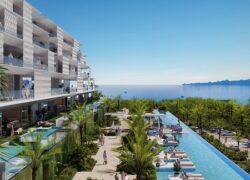
Polish interest in Spanish residential real estate remains strong this year, with more than 3,000 homes purchased in the first three quarters of 2025, according to the latest figures from the Spanish Land Registry (Registradores de España). In the third quarter alone, Polish buyers acquired 1,087 apartments and houses across Spain. While below the record-breaking level achieved during the same period in 2024, the volume confirms that demand remains structurally high.

Foreign buyer statistics from Registradores de España and market insights from Idealista News and Fotocasa Research indicate that Poland now consistently ranks among the top 10 nationalities investing in Spanish residential property. In Q3 2025, British buyers remained the largest group, followed by German and Dutch purchasers. Romanian and Moroccan buyers also showed strong activity in the quarter. Poles ranked eighth overall, representing 4.63 percent of international purchases.

The concentration of demand continues to favour the southern coast, particularly the Costa del Sol, where the combination of mild climate, established infrastructure and strong rental appeal drives investment interest. Marbella, Estepona and Málaga remain the most popular destinations for Polish buyers, according to Dream Property Marbella, a Polish brokerage operating in the region.

“Many clients see Spain not only as a place to enjoy better weather but also as a safe long-term investment,” said Tatiana Pękala, owner of Dream Property Marbella. “Even though quarterly results are slightly below last year’s record, the market continues to offer stable value growth and protection against volatility at home.”

There are, however, emerging challenges. Certain regions are debating limitations on non-resident purchases due to pressure on local housing affordability. Rental regulations for tourist use are also tightening, particularly in coastal municipalities with strong short-stay rental markets. Despite these factors, market analytics platforms including Fotocasa Research describe Polish activity as part of a longer-term behavioural trend rather than a temporary surge. Transaction volumes fluctuate quarter to quarter, but overall demand remains consistently high.

Spain remains attractive for second-home buyers and investors seeking diversification abroad. Market analysts note that property in southern Europe is increasingly perceived as a hedge against inflation and geopolitical uncertainty—factors that are particularly relevant for Central European investors. With stable pricing and continued demand in key coastal markets, international activity, including purchases by Polish investors, is expected to remain resilient heading into 2026.

Greenstone acquires Brain Park C in Kraków from Echo Investment

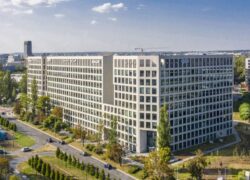
Echo-Arena, a subsidiary of Echo Investment, has signed an agreement to sell the Brain Park C office building in Kraków to Greenstone Brain Park sp. z o.o. for EUR 32.37 million (net). The transaction was disclosed through Echo Investment’s regulatory filing. Closing will take place after standard conditions are met.

Brain Park is a three-building office complex located in the Grzegórzki district of Kraków. The current agreement concerns Building C. The buyer, Greenstone Brain Park, is part of the Greenstone investment group, which has been increasing its presence in Poland’s regional office markets.

Echo Investment develops projects across the residential, commercial and office sectors and has been listed on the Warsaw Stock Exchange since 1996. According to its latest published financial results, the company generated PLN 1.08 billion in consolidated revenue in 2024.

The transaction continues the trend of selective office disposals by developers in Poland’s regional markets, where investment activity is increasingly driven by stabilised, income-producing assets.

Catella CEO: Assets Under Management Rise to SEK 160 Billion Despite Slower Deal Activity

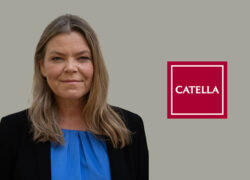
Catella, one of Europe’s most active cross-border real estate investment managers, has reported continued growth despite a quieter transaction market in the third quarter of 2025. Under the leadership of newly appointed Group CEO Rikke Lykke, the company increased assets under management to SEK 160 billion (approx. €13.5 billion) and advanced its strategic repositioning toward long-term, fee-driven investment management. Speaking to investors and stakeholders, Lykke outlined a focused plan to grow AUM, concentrate on recurring revenues, and strengthen Catella’s market presence across twelve European countries — even as deal activity temporarily slowed.

Catella closed Q3 with SEK 160 billion (approx. €13.5 billion) in assets under management, up nearly SEK 4 billion (approx. €335 million) from the previous quarter. Operating profit for the quarter reached SEK 7 million (approx. €590,000) compared to SEK 19 million (approx. €1.6 million) in the same period of 2024 — a result linked primarily to lower transaction volumes.

“The European real estate market continued to stabilize, although transactional activity declined slightly — a temporary setback in our view,” said Rikke Lykke. “At the same time, assets under management grew to SEK 160 billion.”

Despite the softer transaction market, Lykke remains confident that improving macroeconomic conditions — particularly the easing of inflation and the stabilisation of long-term interest rates — will support investment activity across Europe.

“I maintain a positive outlook regarding the progression of the European real estate market,” he said. “Catella is well-positioned to capitalise on emerging market opportunities.”

Focus on AUM Growth and Recurring Revenues

Lykke outlined a strategy shift placing greater emphasis on expanding recurring revenue streams, strengthening the company’s investment platform, and deepening institutional partnerships. A key part of this shift is integrating Catella’s Principal Investments division into the company’s investment management operations at the end of the year.

“Catella does not intend to independently own or develop real estate assets,” Lykke explained. “The aim of the investments is to grow assets under management… and secure long-term asset management mandates.”

The change will allow Catella to use seed capital and co-investments to develop new funds and mandates, while keeping the company’s core focus squarely on investment management.

Investment Management Steady, New Mandates Added

The Investment Management division delivered stable earnings, with operating profit of SEK 31 million, only slightly below the previous quarter. Catella also secured several new mandates that strengthened its base of recurring fees, even as lower transaction revenues affected the quarterly outcome.

Lykke noted that efficiency improvements helped offset weaker deal flow and expressed confidence that transactions will rebound.

“Transactional activity is expected to improve during the fourth quarter and in 2026.”

Preparing for New Market Cycle

Catella reported progress on disposing of assets in the Principal Investments portfolio and said stabilizing property valuations are creating a favourable environment for new opportunities.

“Property valuations have reached a stable equilibrium,” Lykke said. “We have established a robust platform for pursuing new, attractive investment opportunities.”

The company also strengthened its leadership team. During Q3, Daniel Gorosch took over as Head of Corporate Finance Europe, and Catella announced the appointment of Dominik Röhrich as the next Head of Investment Management, effective March 2026.

Confidence in Outlook

In his first quarterly statement as CEO, Lykke reiterated that Catella’s strength lies in its people, pan-European reach, and balance sheet.

“Catella operates as a people-oriented business,” she said. “We are strategically positioned to capitalise on emerging opportunities, with a clear emphasis on expanding assets under management.”

With a strong capital position and a sharpened strategic focus, Catella expects a busier deal environment in late 2025 and into 2026.

CIJ EUROPE News Report: Final Nominations Announced for CIJ Awards Slovakia 2025

The shortlist for the CIJ Awards Slovakia 2025 has been officially released, recognising the country’s most successful and forward-thinking real estate firms, projects, and leaders across investment, legal, advisory, agency, and development sectors. This year’s nominations honour the most dynamic and innovative achievements shaping Slovakia’s built environment — from residential regeneration and office redevelopment to logistics, retail, and mixed-use construction. Together, they reflect a property market that has matured through economic turbulence while maintaining a strong focus on quality, sustainability, ambition, and balanced regional growth.


Residential Excellence: Standard and Premium Segments

In the Best Standard Residential Development of the Year category, projects such as Green Atrium by HABERL Real Estate, and Čerešne Residence by ITB Development showcase the shift toward sustainable and community-focused housing. Nova Merina by Occam Real Estate, Kubániho Dvory by BEGBIE & 360.invest, Nová Devínska by ITB Development, and CUKROVAR in Trnava by United Real Estate highlight regional diversification, adaptive reuse, and new standards of living.

In the Premium Residential Development category, Vila Sandberg by BS Real Estate & 360.invest, Millhaus by IMMOCAP, and Metropolis by MINT Investments define high-end urban living. Together, these projects reflect how developers are balancing luxury with sustainable design and integrated city living.


Office and Commercial Innovation

The Best Office Development of the Year category celebrates architectural revitalisation and adaptive reuse. Nominations include Pošta 1930 by ARKON in Košice—a model for historical restoration—ZWIRN Office by YIT Slovakia, and Zváračák in Bratislava by a local developer. Each project demonstrates how modern workspaces can merge history, efficiency, and flexibility.

In the Best Office Buildup in Development category, leading projects like Chalupkova Offices by Penta Real Estate, Einpark Offices II by Corwin, and Pribinova 40 and Downtown Yards by J&T Real Estate showcase how Bratislava’s business districts are evolving. These developments combine strong sustainability credentials with mixed-use integration, shaping a modern skyline defined by design and connectivity.


Retail and Regional Expansion

This year’s Best Retail Development of the Year nominees—Spektrum Nové Zámky and Spektrum Lučenec by Mayflower, OC Klokan Chorvátsky Grob II by KLM Real Estate, and OC Point Liptovský Mikuláš and OC Point Revúca by OPC—illustrate how Slovakia’s retail market is expanding beyond major cities. Each project demonstrates how smaller retail parks are revitalising suburban and regional shopping habits with modern, convenient formats.

The Best Retail Buildup in Development category further reinforces this trend with eight projects that extend across the country, including Point Žiar nad Hronom and Point Revúca by OPC, Hornbach Trnava and LOGspot Kostolné Kračany by ATRIOS, and four Mayflower retail parks in Námestovo, Martin, Levice, and Nové Zámky. These investments highlight the ongoing decentralisation of Slovakia’s retail infrastructure and the rise of modern regional hubs.


Industrial and Logistics Growth

The logistics sector has seen another record-breaking year. Nominations for Best Warehouse/Logistics Development include major completions such as Mountpark Bratislava (86,000 m²), SLI Park Sereď (40,000 m²), CTPark Voderady, Besico Banská Bystrica, and VGP Park Bratislava (47,000 m²), alongside VGP Triblavina, VEDOS Petrovany, VGP Zvolen, and Sihot Park Trenčín. These projects collectively underline Slovakia’s growing role as a key logistics hub within Central Europe, driven by strategic location and investment in sustainable operations.


Residential Expansion and Mixed Urban Projects

The Best Residential Buildup in Development nominations include some of the year’s most high-profile residential schemes: Rezidencia Tesla by Occam Real Estate, Éclair Bottova and The Mill (Mlynské Nivy 55) by IMMOCAP, and Čerešne UP and Čerešne Plaza by ITB Development. Together, they represent the new generation of Slovak housing—projects that blend architecture, community, and environmental awareness.

In Košice, Rezidencia Tesla highlights regional momentum through design-led urban regeneration. In Bratislava, IMMOCAP’s Éclair Bottova and The Mill continue to transform the Nivy district into a mixed-use hub, while ITB’s Čerešne community expands with new phases focused on green space and community life.


A Celebration of Progress

The CIJ Awards Slovakia 2025 recognises how the country’s property sector has matured through resilience and innovation. Whether through adaptive office reuse, regional retail expansion, or sustainable housing design, this year’s nominees exemplify the ambition driving Slovakia’s built environment forward.

The winners will be revealed at the CIJ Awards Slovakia Gala 2025, where the country’s leading developers, investors, and professionals will gather to celebrate excellence and long-term impact within the real estate industry.

Investment Transactions of the Year

Three of Slovakia’s most notable property deals of 2025 headline this year’s nominations for Best Commercial Property Investment Transaction of the Year.

WOOD & Company’s joint-venture acquisition of VIVO! Bratislava from CPI Property Group stands out as one of the largest mixed-use transactions since the pandemic. The deal includes the VIVO! shopping centre, the myhive Tower I & II office buildings, and adjoining land, positioning WOOD & Company as a major player in Bratislava’s urban retail landscape.

The Galvaniho 19 – GBC V office complex in Bratislava’s Ružinov district changed hands from Asseco Group / Kron Real to ERSTE Asset Management, marking renewed confidence in Slovakia’s office sector. With 14,000 m² of leasable space and strong tenants such as Asseco Central Europe, the transaction represents a return of liquidity to the business park segment.

Finally, ZFP Investments, coordinated by IAD Investments, completed the acquisition of Bory Mall from Penta Real Estate in one of the year’s largest retail transactions. The 55,000 m² mall reinforces institutional appetite for well-performing shopping assets with stable tenant structures.

Together, these transactions underscore Slovakia’s appeal to domestic investment funds and the steady return of institutional capital to core commercial sectors.


Service Sector Excellence

In the Best Tax & Finance Advisor of the Year category, nominees include TPA, LeitnerLeitner, Grant Thornton, Crowe, TMF Slovakia, BDO, ASB Group, Ernst & Young (EY), and Edcase. These firms shaped Slovakia’s real estate finance landscape throughout 2025, advising on structuring, compliance, and fiscal strategy amid new tax reforms and cross-border investments.

TPA maintained its profile as a leading advisor to funds and developers, while LeitnerLeitner continued to focus on acquisition-phase taxation for international investors. Grant Thornton and Crowe guided clients through regulatory updates, and ASB Group expanded its transaction footprint with mandates such as Mitiska REIM’s acquisition of OC Cassovia in Košice.

In property law, nominees for Best Property Law Firm of the Year include Dentons, Kinstellar, Relevans, Wolf Theiss, CMS, Barger Prekop, Bartošík Šváby, Havel & Partners, Giese & Partner, and DLA Piper Weiss-Tessbach.

2025 saw these firms advise on major financing and acquisition deals, from Dentons’ work on Eurovea and Zwirn developments to Kinstellar’s role in logistics and retail-park transactions. Domestic leaders such as Relevans and Havel & Partners continued to strengthen their influence through complex commercial mandates and banking-related real estate work.


Agency and Brokerage Nominations

The Best Local Commercial Real Estate Agency of the Year category highlights firms that sustained market momentum amid cautious investor sentiment.

Nominees include Holland & Company, Space Brokers, JV Real, ADMS, and KNB Commercial Real Estate. These agencies bridged the gap between domestic investors and occupiers, handling leasing, regional sales, and off-market transactions that kept liquidity flowing in 2025.

For Best Local Residential Real Estate Agency of the Year, nominees include HERRYS, RE/MAX Slovakia, Bosen Group, MAXREAL, and ARTHUR Real Estate Company. Each played a role in stabilising Slovakia’s housing market as mortgage activity revived and buyer confidence returned.

HERRYS led with data-driven market insight, RE/MAX leveraged its nationwide network, while Bosen, MAXREAL, and ARTHUR each strengthened their presence through premium listings, local expertise, and digital innovation.


Project Management and Leadership

In the Best Project Management Company of the Year category, ATRIOS, ENG2, Gleeds, and KAMI PROFIT are recognised for driving quality and technical excellence across Slovakia’s major projects.

ATRIOS combined design and development leadership through projects such as PARQ Zátišie and LOGSpot Logatec, while ENG2 managed complex regeneration schemes including Slnečnice and Jarabinky. Gleeds brought international project governance to landmark assets like Eurovea 2 and Zuckermandel, and KAMI PROFIT continued to deliver large-scale commercial and industrial builds with turnkey precision.

The Best Real Estate Leadership of the Year category celebrates individuals whose vision shaped Slovakia’s property market in 2025.

Nominees include Gabriel Balog, Jozef Šimovčík, and Juraj Bielik (365.invest), Martin Šmigura (WOOD & Company), Miroslav Tavel (OPC Holding), Richard Churý (UPgreat Real Estate Network), Vladimír Jakša, Peter Kysela, Michal Bubán, and Matej Jelínek (ATRIOS), Vladimír Bolek (IAD Investments), Tomáš Ostatník (Holland & Company), Karol Šebo (United Real Estate), and Martin Beňuška (HERRYS).

Their leadership reflects the full spectrum of Slovakia’s real estate success — from investment and development to community regeneration and professional education.


Recognising Market Progress

The CIJ Awards Slovakia 2025 showcase an industry that has matured through strategic investment, regulatory evolution, and environmental responsibility. From law firms structuring landmark deals to local agencies driving sales recovery, this year’s nominees highlight the depth and professionalism of Slovakia’s real estate sector.

Winners will be announced at the CIJ Awards Slovakia Gala later this month, celebrating the achievements that continue to define and elevate the country’s property market.


Master Management Group broadens food offer at Brama Jury ahead of opening

Master Management Group has announced that three food concepts will open at Brama Jury, the new shopping centre scheduled to launch on 14 November. The centre will be the first of its kind in the city to combine retail with leisure, including a four-screen Planet Cinema, a fitness club and service tenants.

The dining lineup includes The Flame restaurant, Cafe Crema café and Dolce Isola dessert point. Together, they introduce varied food formats ranging from hot meals to coffee and desserts.

The Flame restaurant will serve a menu combining American-style dishes with elements of Polish and Italian cuisine. The menu will change seasonally. According to the operator, the restaurant is designed as an all-day dining space suitable for lunches, meetings or evening visits.

Cafe Crema will offer Italian-style coffee and gelato. The operator says the ice cream and desserts are prepared from imported ingredients, while the coffee is supplied from a roastery in Tuscany. The café features pastel interior design and seating areas inside the mall, with plans for an outdoor terrace during summer months.

Dolce Isola, situated near the cinema, will serve ice cream, waffles and takeaway coffee. The location targets visitors waiting for screenings or moving between shops.

Brama Jury is developed and managed by Master Management Group. The centre combines retail, food and service tenants in a single format, with the developer positioning it as a new commercial hub for Zawiercie and surrounding areas.

CIJ.World Mobile Apps Now Live on Apple iOS and Android

CIJ.World, the digital home of Central Europe, South East Europe, Europe, India, Asia, Arabia, Africa and the USA investment, real estate and business platform, is expanding its reach with the launch of its official updated mobile applications—now available for free on Apple iOS and Android.

The Apple iOS CIJ.World app is available to download from the App Store while Android users can access the Google Play version. Both versions are designed to deliver CIJ.World’s full range of industry news, insights, and event updates directly to mobile users across Europe and beyond.

The CIJ.World app provides seamless access to the latest regional property news, exclusive interviews, market analyses, and real-time coverage of the CIJ Awards and HOF Awards, as well as major events like CEDER and the HOF Awards. Users can also follow country-specific news feeds, receive tailored notifications, and browse event galleries and winner lists from all CIJ.World markets.

Robert Fletcher, Editor-in-Chief of CIJ.World, commented:

“The launch of our iOS and Android apps marks a major step in making CIJ.World’s premium business journalism and event coverage more accessible. Whether you’re in Central Europe, South East Europe, Europe, India, Asia, Arabia, Africa or the USA, professionals can now stay connected with world’s property market in real time—anytime, anywhere.”

Both apps are free to download and feature a clean, intuitive interface optimised for mobile use, ensuring that CIJ.World’s trusted content remains at readers’ fingertips.

Download today:

📱 Apple iOS – CIJ.World App

🤖 Android – CIJ.World App

For more information, visit www.cij.world

Asia’s Family Offices Redefine Real Estate Investment as Generational Wealth Transforms the Market

Asia’s family-controlled investment entities are emerging as some of the most influential sources of private capital in real estate. As the region enters a decade marked by unprecedented wealth transfer, these family offices are reshaping investment models, favouring more direct control, transparency, and alignment of interests. Their growing prominence is forcing general partners and managers to rethink how they engage with investors who no longer fit traditional institutional moulds.

Recent research by leading financial institutions indicates that family offices across the Asia-Pacific region have become far more structured and professional in recent years. Many have established clear governance and succession frameworks, reflecting a generational shift from founder-led wealth to institutional-style management. At the same time, their appetite for alternative assets continues to rise, particularly in private real estate, where stability, diversification, and tangible value are seen as long-term stores of wealth. Managers seeking capital from this group are learning that these investors expect deeper visibility into decision-making, greater alignment on fees, and access to direct opportunities rather than pre-packaged fund products.

The preference for co-investment and direct transactions has become one of the defining features of Asia’s new capital class. Instead of committing to traditional pooled funds, many family offices now favour participation in individual assets alongside trusted partners. This structure allows them to reduce intermediaries, preserve flexibility, and ensure that investment decisions align closely with their own priorities. For general partners, the challenge lies in adapting their offering to accommodate these preferences—often through bespoke partnerships or flexible deal structures that combine institutional rigour with the responsiveness family offices value.

The values guiding these investors are also shifting. Across Asia, wealth owners increasingly view their role not merely as asset managers but as long-term stewards of capital. Their investment strategies often integrate sustainability, impact, and legacy considerations. Real estate plays a central role in this approach, as it offers the ability to combine stable income with tangible community and environmental impact. Analysts point to rising allocations toward sectors such as logistics, data infrastructure, mixed-use urban developments, and sustainable living spaces—areas that blend durable returns with a measurable contribution to society and resilience against economic cycles.

For fund managers and developers, this transformation demands adaptation. The traditional commingled fund model is no longer sufficient to attract the next generation of family capital. Instead, managers are being asked to offer greater transparency, faster reporting, and more meaningful collaboration throughout the investment lifecycle. Some are developing hybrid products that allow direct participation in assets, while others are focusing on building long-term advisory relationships that extend beyond a single vehicle. Those who fail to adapt risk losing access to a rapidly growing pool of sophisticated and values-driven investors.

The implications for Asia’s real estate market are profound. As these family offices allocate more to property and private markets, they are influencing how projects are financed, structured, and managed. The shift towards patient, long-term ownership is changing the investment horizon and encouraging a focus on operational value creation rather than quick exits. Managers are also recognising that these investors seek reliability and personal connection over scale and marketing. What was once a quiet segment of private capital has become one of the defining forces shaping Asia’s investment landscape in 2026 and beyond.

As generational wealth continues to move into the hands of professional family offices, the dynamic between investors and managers is being rewritten. This is not merely a story of new money entering the market, but of a fundamental change in how capital behaves—more discerning, more strategic, and more aligned with purpose. For those managing real estate in Asia, understanding this class of investors is no longer optional; it is central to staying relevant in a rapidly evolving marketplace.

Source: CIJ.World Analysis Team

Nonko Leases 4,100 sqm at MLP Wrocław

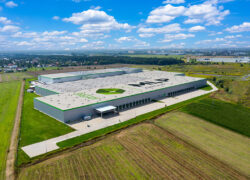
The transport and logistics company Nonko has leased more than 4,100 sqm of warehouse space at MLP Wrocław. The tenant moved into the facility at the end of October, with Litwiniuk Property advising on the lease process.

Nonko provides domestic and international transport, warehousing, and logistics services, including cross-docking and full supply chain management. Headquartered in Wrocław, the company coordinates its operations across Poland and Europe.

“As part of an international logistics group, Nonko has established a logistics centre in Poland to support customers in China and across the EU,” said Jingyi Wang, Director of Nonko sp. z o.o. “MLP has offered us effective support and flexible solutions, and we look forward to a long-term partnership.”

Agnieszka Góźdź, Management Board Member and Chief Development Officer at MLP Group S.A., commented: “We are pleased to welcome Nonko to MLP Wrocław. The project continues to attract companies seeking high-quality, well-located warehouse space with sustainable features.”

MLP Wrocław is a logistics park located in the Psie Pole district, approximately 14 km from Wrocław city centre. The complex comprises five Class A buildings with a total area of around 66,000 sqm. The development incorporates sustainable design elements such as LED lighting, low-emission heating, water-saving systems, and rooftop photovoltaic panels. The park is BREEAM certified and includes biodiversity features such as retention ponds and green landscaping.

The location provides convenient access to the E67 national road and the S8 expressway, connecting Wrocław with Warsaw and major European transport corridors. Existing tenants include Electrolux Poland, SPM Poland (BCUBE Group), Europe Distribution Group (EDG), and OL&D Poland.

“During the selection process for Nonko’s new logistics centre, we conducted a full analysis of Class A warehouse options in Wrocław,” said Patryk Litwiniuk, General Director at Litwiniuk Property. “MLP Wrocław met all key operational and technical criteria.”

Wrocław and the wider Lower Silesia region form one of Poland’s largest logistics markets, with over 5 million sqm of modern industrial space. The region continues to attract logistics, e-commerce, and manufacturing companies due to its strong infrastructure, cross-border connections, and skilled workforce.

Cukrovar: Breathing New Life into Trnava’s Industrial Heritage

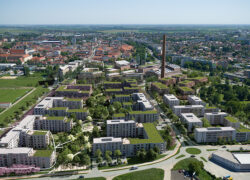
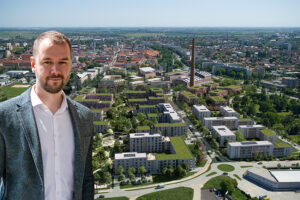
The Cukrovar project in Trnava stands as one of Slovakia’s most ambitious brownfield redevelopments — transforming a historic sugar factory into a contemporary urban district that unites housing, culture, commerce, and green public space. In an exclusive conversation with Karol Šebo, CEO of UNITED Real Estate, CIJ EUROPE explored the project’s vision, progress, and its delicate balance between heritage conservation and modern urban living.

“The site was originally a brownfield on the outskirts of Trnava 120 years ago — now it’s surrounded by the city,” said Šebo. “That makes it ideal for a mixed-use redevelopment. The challenge was how to integrate new residential buildings with the four national monuments on site, which are legally protected. We also decided to preserve three additional industrial structures that aren’t protected by law, bringing the total to seven.”

To achieve this, UNITED Real Estate formed two dedicated teams — one for the residential portion and another for the historical buildings, bringing together architects, historians, and conservation experts. “This dual approach allows us to start construction while developing a long-term plan for heritage renewal,” Šebo explained. “The residential part is helping fund the restoration, so the success of one leg supports the other.”

Even before reconstruction, the development is already celebrating its past. “We’re integrating history into public spaces,” said Šebo. “There are interpretive panels showing old photos of the sugar plant, and our new playground design takes direct inspiration from the original factory facades. Every piece of the playground is handmade and unique, featuring historic details like multilingual inscriptions — Slovak, German, and Hungarian — reflecting Trnava’s past. We even used the initials of the founder, Carl Stummer, as a motif throughout the project.”

The scale of Cukrovar underscores its significance for Trnava’s future. The 20-hectare site is divided into four main zones — A, B, C, and D — that will eventually deliver over 2,000 homes. “About 500 units are already built or under construction,” Šebo noted. “We’re finishing Phase 3 within months, with Phases 4 and 5 ongoing and Phase 6 about to start sales. Our goal is to launch one new phase each year to maintain consistent activity. In 2024, we sold 148 apartments, making Cukrovar the second best-selling project in Slovakia after Downtown Yards. We expect to match those numbers again this year.”

According to Šebo, buyers are evenly split between families and investors. “Roughly half are end-users and half are investors purchasing to rent out,” he said. “Our communications focus on the residential lifestyle, but that in turn attracts investors naturally. The playground, central park, and other amenities help build a sense of community, which strengthens long-term demand.”

The project’s seven historical buildings are also being carefully revitalised through a detailed program developed with local authorities and stakeholders. “About one-third will be for public uses — community and cultural spaces,” Šebo explained. “Another third will host semi-private functions like restaurants, hospitality, and flexible offices that can generate revenue. The final third may include residential lofts.” He added that UNITED Real Estate is working with a Czech consultancy to finalise a cost and operations model, ensuring that the restored buildings remain financially sustainable. “In early 2026, we’ll launch an architectural competition for the restoration design,” he said. “We’ve also reached an agreement with a specialty retail operator that will anchor one of the historic structures — a brand not yet present in Trnava, which should boost both the project’s visibility and its value.”

Among the most visible remnants of Cukrovar’s industrial past is its towering chimney — a 114-metre landmark that still dominates the skyline. “Absolutely, it will remain,” said Šebo. “The chimney is protected by law, it’s structurally sound, and it will stay as a visual centrepiece of the whole area. It symbolises the continuity between the industrial past and the new neighbourhood we’re creating.”

Sustainability is another defining element of the masterplan. “We’re creating a large central park, green roofs, and blue-green systems that retain water and reduce heat,” Šebo said. “All residential buildings meet A0 energy standards. The city’s unique heating system — using recycled thermal energy from the nearby nuclear plant — keeps energy costs low. Our landscaping also uses drought-resistant plants that require minimal irrigation, ensuring lower long-term maintenance for residents.”

When asked what the biggest lesson from the project has been so far, Šebo pointed to the lasting value of heritage. “Preserving history adds real value,” he said. “Destroying old industrial buildings might seem easier, but you lose character, community attachment, and long-term identity. At Cukrovar, history isn’t an obstacle — it’s an asset. The more we integrate it into daily life, the stronger and more meaningful the neighbourhood becomes.”

By blending historic preservation with modern living, sustainability, and a focus on community, Cukrovar is redefining what post-industrial regeneration can look like in Slovakia. UNITED Real Estate’s vision is turning a 19th-century sugar factory into a 21st-century community — one that honours Trnava’s past while driving its future growth.

© 2025 cij.world

LATEST NEWS