Jakub Parys returns to Savills Poland to strengthen office property advisory services

Savills Poland has announced the return of seasoned commercial real estate professional Jakub Parys to its team. As the new Associate Director, Parys will focus on advising office property owners, driving the commercialisation of key office buildings, and enhancing the value and profitability of these assets. He will work under the leadership of Daniel Czarnecki, Head of Landlord Representation at Savills Poland.

Parys, a highly experienced manager with over 12 years in the commercial real estate sector, is no stranger to Savills. From 2014 to 2019, he specialized in representing investment funds and developers in office leasing processes, contributing to notable transactions in prestigious Warsaw properties such as IBC International Business Center, North Gate, and the Ethos complex at Trzech Krzyży Square.

In his new role, Parys will lead landlord representation efforts, devising and implementing leasing strategies for high-profile office locations. He will also manage lease negotiations and renegotiations, helping property owners maximize the potential of their assets.

“We are thrilled to welcome Jakub back to Savills. His deep knowledge of the office property market, extensive experience, and proven track record will significantly enhance the advisory services we provide to our clients,” said Daniel Czarnecki, MRICS, CCIM. “Jakub’s expertise in commercialisation and re-commercialisation will further strengthen our ability to build value and profitability for the properties in our portfolio. His return underscores our commitment to attracting top talent and maintaining our market-leading position.”

Before rejoining Savills, Parys held leadership roles at CPI Property Group and GTC, where he managed leasing activities for major office projects across Warsaw, Kraków, Katowice, and Łódź. Notable assignments included coordinating leasing strategies for prominent Warsaw office complexes such as Park Postępu in Mokotów, Eurocentrum Office Complex on Jerozolimskie Avenue, and the IO-1 building on Puławska Street.

Parys holds a degree in finance and accounting from the Warsaw School of Economics and has completed postgraduate studies in real estate valuation. His expertise and academic background position him as a key asset in advancing Savills’ landlord representation services.

With Parys’s appointment, Savills Poland continues to bolster its capabilities, ensuring that its clients benefit from top-tier advisory services in an increasingly competitive and dynamic office property market.
P.A. Nova to construct shopping centre for Kaufland Polska

P.A. Nova has signed a contract with Kaufland Polska Markety for the construction of a new shopping center. The project will include parking facilities and associated infrastructure, with a net lump sum for the contract representing approximately 7% of P.A. Nova’s group revenues. The handover of the completed facility is scheduled for 28 August 2025, the company announced.

Kaufland, an international retail chain, operates over 1,500 stores across Europe and employs approximately 155,000 people. In Poland, the chain boasts 250 stores and a workforce of around 15,500 employees, offering a wide range of groceries and everyday products.

P.A. Nova specializes in comprehensive construction investment services and the management of its own real estate portfolio. The company, listed on the Warsaw Stock Exchange since 2007, reported consolidated revenues of PLN 350.5 million in 2023. This new collaboration with Kaufland underscores P.A. Nova’s continued role in significant commercial construction projects in Poland.

Source: ISBnews

Anwim plans significant expansion of Moya service station network in 2025

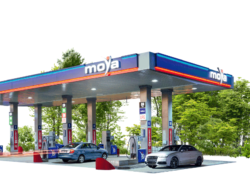
Moya, the service station network managed by Anwim, celebrated a major milestone in 2024, reaching 500 outlets. In 2025, the network is set to grow by at least 40 new stations, according to Anwim CEO Rafał Pietrasina.

Pietrasina highlighted the network’s current structure, which has remained consistent over the years: approximately 30% of the stations are owned by Anwim, while the remaining 70% operate under partner agreements. This includes around 340 partner stations and 160 owned outlets, most of which are traditional service stations featuring retail shops and Caffe Moya catering points. Additionally, the network includes about 40 maintenance-free Moya Express facilities and 12 fleet-focused stations near border areas designed for truck traffic.

“This structure, developed historically over the years, has proven optimal and is unlikely to undergo significant changes in the future,” Pietrasina said.

The CEO confirmed that Moya’s expansion will continue in 2025, albeit at a slightly slower pace than previous years. The company plans to open approximately 30 franchise stations and at least 10 of its own outlets next year.

However, Pietrasina noted that future growth will depend on the evolving market landscape. Anwim’s initial strategy aimed for the network to grow by 50 stations annually, targeting 800 outlets by 2030. Still, the company is prepared to adjust its development plans in response to market conditions.

“The hallmark of a company like Anwim is flexibility in responding to a changing market environment. We are closely monitoring economic trends and the pace of electromobility adoption. These factors, alongside any unexpected events, will influence our strategy. If necessary, we will adapt our plans to reflect the new reality,” Pietrasina stated.

While organic growth remains the primary focus, Anwim is open to acquisitions as part of its development strategy.

“In Poland, our primary approach is organic expansion, complemented by occasional acquisitions of individual stations. We may also consider acquiring small networks of five to ten outlets, similar to our earlier purchase of 12 stations from Circle K Polska,” Pietrasina explained.

Since 2009, Anwim has managed the Moya brand, which has grown to become the fifth-largest service station network in Poland. With 450 outlets at the end of 2023, the company achieved its 2024 goal of reaching 500 sites and remains focused on further expansion to meet its 2030 target of 800 stations.

Moya’s growth trajectory underscores its commitment to adapting to market demands and providing quality service across its network. With plans for continued expansion and a flexible approach to market challenges, Anwim is positioning itself for sustained success in the competitive service station industry.

Source: ISBnews

Slovakia plans major investment to modernize busy Zvolen-Fiľakovo railway line

The Slovak government has announced plans to invest hundreds of millions of euros in modernizing one of the country’s busiest railway lines, connecting Zvolen and Fiľakovo. The 65-kilometer section is in poor condition, with over two-thirds of it being a single track. The proposed upgrades include electrification, which would reduce environmental impacts, and the potential addition of a double track.

Economy Minister Jozef Ráž emphasized the significance of the project, which aims to improve safety, reduce travel times, and enhance passenger comfort. The preferred modernization option is estimated to cost €295 million, with an additional €20 million required for partial double-tracking. “The current state of this section is far from ideal. We aim to change that, though the project is still in the preparation phase,” Ráž said. He noted that key permitting processes, including a territorial ruling and an Environmental Impact Assessment (EIA), are nearing completion.

The preferred plan includes full electrification of the line, increasing the maximum train speed to 120 km/h, and implementing a new control center along with advanced safety features. These improvements are expected to significantly enhance the technical level of the railway, making it safer and more comfortable for passengers.

Ráž highlighted the environmental benefits, stating that electrification would reduce the negative impact of diesel locomotives by up to 60%. The modernization is also expected to cut travel times—saving 4.5 minutes for standard trains and nearly 10 minutes for express services.

The upgrades are projected to reduce operating costs, including personnel expenses. According to Ráž, the need for railway staff could decrease by up to 100 positions after modernization, thanks to the automation and centralized control systems. Additionally, the improved infrastructure would allow for the introduction of more frequent services, including hourly trains during peak times and two-hour intervals during off-peak periods. The feasibility study estimates that these changes could lead to a 35% increase in passenger numbers.

The total cost of the recommended modernization variant is approximately €295 million, with the partial double-tracking option pushing the figure to €315 million. Ráž stressed the importance of continuing the preparatory and permitting processes to ensure the project’s progress. “We are prepared to secure the necessary building permits and move forward swiftly. I believe we can advance this project significantly in a short time,” he said.

With these plans, Slovakia aims to modernize a critical railway link, boosting regional connectivity, supporting environmental goals, and meeting the growing demand for efficient public transportation.

Source: Korzár

Gelnica in Slovakia plans new apartment buildings to attract residents

The town of Gelnica is advancing plans to construct two new apartment buildings in a bid to improve its housing options and attract new residents. Currently, the town is in the process of securing a building permit for an apartment building in the SNP housing estate and has initiated the contractor selection process. This information was shared by Milo Janáč from the town hall, following a series of articles highlighting housing challenges in the city.

The proposed building in the SNP housing estate will consist of over 20 residential units, offering a mix of one, two, and three-bedroom apartments. These units will be allocated based on criteria set by the State Housing Development Fund. “They will be designated for applicants meeting the specific conditions outlined by the fund,” Janáč explained.

In addition to the SNP housing estate project, the town is planning a smaller four-story apartment building on Športova Street. This development will replace the existing multifunctional playground, which will be relocated to the primary school grounds. The new building is expected to include nine flats.

Currently, Gelnica rents out apartments in two four-story buildings on Športova Street and three units on Záhradná Street. However, demand far exceeds supply, with over 40 applications for municipal rental flats on the waiting list. Janáč noted that the eligibility of these applicants is assessed only when a unit becomes available, leaving some uncertainty about the actual number of qualifying applicants.

The town hall emphasized its commitment to addressing housing needs and fostering growth. By expanding housing options, Gelnica hopes to meet the demand of local residents while attracting new people to the area. “Increasing the population base is a key condition for the town’s further development,” the town hall stated.

Currently, Gelnica is not in discussions with any private investors interested in constructing additional apartment buildings, but the town remains optimistic about its ongoing initiatives to enhance the local housing market.

Source: Korzár

Provident Barometer: Poles plan increased savings in 2025

According to the latest Provident Barometer survey, nearly 51% of Poles intend to save more frequently in 2025, marking a proactive shift in financial planning. This trend is particularly pronounced among younger respondents, with 85.1% of individuals aged 18-24 indicating plans to bolster their savings.

The survey revealed that 47.5% of Poles are planning higher expenditures in 2025, a slight decrease from 51.7% the previous year. Nearly half of respondents (45.1%) plan to rely on savings to finance major expenses, a strategy that is especially prevalent among younger people and seniors, with 57.7% and 56.2% respectively turning to their savings. Around 24.3% plan to fund expenditures from current income, while others are considering loans (8.4%), installment plans (7.4%), or even deferred payment services (0.7%).

Daily living costs, such as bills and groceries, topped the list of planned expenses for 2025, surpassing last year’s focus on holiday travel. About one-third of respondents cited these as their primary budgetary concern. Renovations came in second at 29.8%, closely followed by holiday trips at 29.7%.

The survey indicates a cautious outlook for 2025, with more than half of Poles (53%) not expecting an improvement in their financial situation. Optimism is higher among the youngest respondents, with 56.3% of those aged 18-24 expecting an increase in their financial resources. Men are also slightly more optimistic than women, with 34.1% of male respondents predicting better finances compared to 27.5% of women.

These tempered financial expectations are motivating Poles to adopt cost-cutting measures and plan their spending more carefully. A significant portion of the younger demographic is focusing on expenses such as car purchases, while those aged 54-64 prioritize home renovations.

In 2025, 47.1% of respondents plan to reduce unnecessary expenses, reflecting a year-on-year increase of two percentage points. About 29.6% aim to better plan their household budgets, while 21.6% seek to maintain their current financial status. Other financial goals include finding additional income sources (18%), debt repayment (17.5%), and taking advantage of sales (17%).

Dining out and food delivery are among the top areas where Poles plan to cut back, with 42.4% of respondents—more men (46%) than women (39%)—intending to reduce these expenditures. Additionally, 30.2% aim to lower their daily expenses, such as grocery bills. Other planned reductions include savings on utilities (28.7%), entertainment and culture (28.6%), clothing and footwear (28.1%), and travel (26.9%). Gym memberships and sports activities may also see cuts, with nearly one in five respondents intending to forgo these expenses.

Methodology: The Provident Barometer is a recurring survey designed to analyze and understand the financial behaviors of Polish consumers. The December 2024 edition was conducted by Danae sp. z o.o. using the CAWI method, surveying a representative sample of 1,000 adult Poles.

As Poles look toward 2025, their plans reflect a mix of caution and proactive financial management, signaling a commitment to greater savings and prudent spending.

Source: Provident Barometer and ISBnews

YIT and RSJ partner to launch Toivo Roztyly residential development in Prague

is expanding its successful collaboration with RSJ Investment Group by embarking on the Toivo Roztyly project in Prague 11, following their earlier joint ventures, including the Vesi Hostivař project in Prague 15 and an upcoming residential development in Brno. This new project will deliver 204 apartments in two phases, with YIT handling the development, construction, marketing, and sales, while RSJ provides financial support.

YIT Stavo CEO Marek Lokaj expressed enthusiasm for the partnership, highlighting the success of their prior collaboration. “Our initial partnership on the Vesi Hostivař project yielded exceptional results,” Lokaj said. “We’re thrilled to expand this cooperation with Toivo Roztyly and continue working together on the Brno development. By combining our expertise in residential development with RSJ’s strong financial support, we’re creating optimal conditions to deliver high-quality housing. Toivo Roztyly, with its focus on sustainability and housing quality, will be a valuable addition to the area.”

Lukáš Musil, a member of RSJ Investment Group’s Board of Directors, underscored the project’s alignment with RSJ’s vision for sustainable developments. “Toivo Roztyly exemplifies the type of forward-thinking, environmentally conscious projects we prioritize. We’re excited to partner again with YIT, whose expertise ensures the project’s success. The location, combined with modern architectural design and eco-friendly features, makes this a standout development,” Musil noted.

Located in Prague 11, Toivo Roztyly will provide a total of 204 apartments ranging from 29 to 120 square meters, with layouts from one to five bedrooms. The project is being developed in two phases. The first phase, which is already under construction, includes 88 apartments across four buildings, while the second phase will add another 116 units.

Designed by ABM architects, Toivo Roztyly emphasizes minimalist aesthetics and thoughtful integration with the local environment. The project incorporates numerous sustainability features, including LED lighting, heat recovery ventilation systems, public charging stations for electric vehicles, green retention roofs, and a sophisticated rainwater management system. These eco-friendly elements are intended to minimize the development’s environmental footprint while providing residents with modern, sustainable living spaces.

The first phase of Toivo Roztyly is expected to be completed in late 2025 or early 2026. The development is set to enhance the locality by combining quality housing with a commitment to environmental stewardship.

This project underscores YIT and RSJ’s shared dedication to delivering sustainable and innovative residential solutions. By prioritizing quality, sustainability, and community integration, Toivo Roztyly represents a significant step forward in modern urban living.

Slovak labor market stagnation: workers stay put, hindering growth

The unemployment rate in Slovakia has reached record lows, a development that is undoubtedly positive for job seekers but less favorable for employers grappling with a labor shortage. Compounding the issue is a significant rigidity in the labor market, with many employees opting to remain in their current roles rather than seeking new opportunities. According to a recent analysis by the Financial Policy Institute (IFP), this lack of mobility is detrimental not only to companies but also to workers themselves, as it limits wage growth and career advancement.

Employee turnover in Slovakia reached its lowest point in 15 years in 2023. “The labor market experienced its highest turnover during economic booms before the pandemic,” the IFP noted. Historically, low unemployment rates have driven employers to attract talent from competitors while emboldening workers to pursue better opportunities. However, recent crises—including the COVID-19 pandemic, the energy crisis, and soaring inflation—have drastically reduced labor market fluctuations. According to the IFP, turnover rates are now three times lower than during pre-pandemic periods of economic expansion.

This reluctance to change jobs is tied to economic uncertainty. During crises, workers are more hesitant to leave stable positions for the unknown, contributing to a stagnation in labor market mobility.

Slovakia’s labor market rigidity is particularly stark when compared to other countries. Employee turnover is more than five times lower than in nations like the Netherlands, Finland, or Denmark, which are characterized by highly flexible and dynamic labor markets. Even within Central and Eastern Europe, Slovakia lags behind, with fluctuation rates half as low as those in Poland or Hungary.

“The labor markets in newer EU member states, including Slovakia, exhibit significantly lower flexibility compared to their Western European counterparts,” the IFP highlighted.

Low labor mobility has broader implications for both workers and employers. Employees often remain in roles where wages stagnate, missing opportunities to negotiate higher salaries or advance their careers. Meanwhile, companies face challenges in filling open positions, which can stifle productivity and growth.

“Employers must work harder to attract and retain employees in an environment where the workforce is increasingly immobile,” the analysis stated. “This dynamic underscores the need for policies that encourage greater labor market flexibility and support for individuals willing to transition to new roles.”

While Slovakia’s record-low unemployment rate reflects economic progress, the labor market’s rigidity poses challenges. Encouraging greater mobility among workers could benefit both employees, through higher wages and career opportunities, and employers, by addressing labor shortages. In the long term, fostering a more flexible and dynamic labor market will be crucial for sustaining economic growth and competitiveness in Slovakia.

Source: Pravda.sk

GUS: Foreign workers comprise 6.8% of Poland’s workforce as of July 2024

Foreign workers accounted for 6.8% of the total workforce in Poland as of the end of July 2024, according to data from the Central Statistical Office (GUS). This translates to approximately 1.04 million foreigners employed in the country, with 405,400 engaged under mandate contracts and related agreements.

Ukrainian nationals constituted the largest group of foreign workers in Poland, with 701,300 individuals employed as of July 2024. However, their share in the total foreign workforce has declined by six percentage points since January 2022, reflecting a gradual diversification of foreign labor in Poland.

The workforce among foreigners has seen a shift in gender balance. While men still represent the majority, their share dropped from 64.7% in January 2022 to 59.7% in July 2024, indicating a relative increase in the proportion of women among foreign workers.

The share of foreign workers in Poland’s overall workforce increased by 1.6 percentage points compared to January 2022, signaling a growing reliance on international labor to meet employment demands.

Foreign employees in Poland hail from over 150 countries, underscoring the internationalization of the labor market. While Ukrainian citizens remain predominant, the data highlights the breadth of nationalities contributing to Poland’s workforce.

The figures are part of GUS’s experimental work aimed at leveraging administrative data to assess the number of foreigners in the workforce. Unlike standard national economic statistics, which exclude individuals engaged under civil law contracts, this report incorporates all “persons performing work,” encompassing both those formally employed in the national economy and those under civil law agreements, such as mandate contracts.

Poland’s labor market continues to evolve, with foreign workers playing an increasingly vital role in addressing workforce needs across various sectors.

Source: GUS and ISBnews

Poland’s residential market sees 4.9% quarterly growth in Q4 2024 despite annual sales decline

In the fourth quarter of 2024, developers in Poland’s six largest markets sold 9,600 apartments, marking a 4.9% increase compared to the previous quarter, according to data released by JLL. However, annual sales fell sharply, with fewer than 40,000 units sold—a 31% year-on-year decrease.

Despite subdued sales, developers continued to bring new projects to market, leading to a record surplus of 17,000 unsold units compared to annual sales. In 2024, developers introduced over 56,500 new apartments to the market, resulting in an inventory of 54,400 units by year-end, a 50% increase year-on-year. Warsaw, Wrocław, Kraków, and Poznań were the markets where the gap between new supply and sales was most pronounced.

Quarterly sales growth was observed across most markets, with Poznań experiencing the most significant increase at 18% compared to Q3. However, Warsaw saw disappointing annual sales, with approximately 12,800 units sold—33% less than in 2023. Other major markets, including Kraków, Wrocław, and the Tri-City, each recorded sales of around 1,500 units in Q4, with annual sales hovering between 6,000 and 6,200 units. Kraków saw the steepest year-on-year decline at 42%, a drop that also pushed its annual sales below 2022 levels.

Developers focused heavily on high-end projects targeting wealthier buyers, resulting in a limited supply of affordable housing. Average apartment prices in major markets saw modest quarterly changes, with increases ranging from 1% in Kraków to 3.7% in Warsaw. Over the 12-month period, Łódź recorded the highest price growth at 16.4%, followed by Warsaw, Kraków, and the Tri-City, which each posted increases of 8-10%. Wrocław and Poznań saw smaller annual gains of 4.5-5%.

The average price for newly introduced luxury projects in Warsaw reached a record PLN 19,700 per square meter in Q4. The limited availability of affordable housing discouraged credit-dependent buyers, many of whom are waiting for state subsidies or more favorable loan conditions.

Amid a challenging sales environment, developers ramped up marketing efforts to attract buyers, offering discounts, flexible terms, and other incentives. However, data indicates that high-net-worth individuals remained the most active buyers, with average prices of sold units increasing in markets like the Tri-City, Wrocław, and Poznań by up to 5.2%. In contrast, Warsaw recorded a 2.9% quarterly decline in the average price of sold units, despite achieving its second-highest price level historically.

The residential market has faced turbulence since 2020, fueled by the pandemic, geopolitical tensions, and macroeconomic fluctuations. In 2023 and 2024, political uncertainty further complicated the landscape, with housing policies becoming a focal point of election campaigns. Analysts expect the government’s unclear long-term housing strategy to hinder market stability in early 2025.

Kazimierz Kirejczyk, Senior Strategy Advisor at JLL, highlighted two potential catalysts for market recovery: a forecasted reduction in interest rates, which could bring mortgage costs closer to 5-6%, and a buyer support program vaguely outlined by the Ministry of Development. However, he cautioned that the effects of these measures are unlikely to materialize quickly, with interest rate adjustments expected to unfold over the next two years.

The market faces a mix of challenges and opportunities as it enters 2025. While demand remains subdued, particularly outside major cities where the sales cycle stretches to nearly two years, developers and buyers alike are pinning hopes on economic and policy changes to restore balance and drive renewed growth in Poland’s residential real estate sector.

Source: JLL and ISBnews

LATEST NEWS