Pepco Group appoints Willem Eelman as new CFO

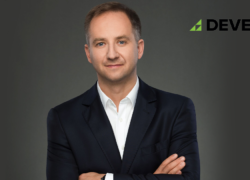
Pepco Group has appointed Willem Eelman as its new Chief Financial Officer (CFO), the company announced today. He will assume the role following the group’s Annual General Meeting (AGM) on 12 March 2025.

Eelman will officially join Pepco Group on 3 February 2025 and take over as CFO after the AGM. He replaces Neil Galloway, who will step down as CFO and Executive Director and leave the company in early March after a transition period to pursue new career opportunities outside the company.

Additionally, Andy Bond has resigned as Chairman of the Board, effective after the AGM. He will remain on the board as a non-executive director, while Frederick Arnold, currently an independent non-executive director since June 2024, will take over as Chairman.

As part of an updated cooperation agreement, IBEX Topco Ltd., Pepco Group’s majority shareholder, will have the right to appoint a non-executive director and recommend the appointment of the Chairman of the Board and the Remuneration Committee, provided it retains more than 30% of voting rights in the company.

Source: Pepco Group and ISBnews

CCC Group to acquire 75% of shares in Szopex for PLN 27.8 million

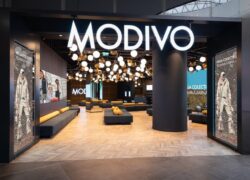
CCC Group has signed an agreement to acquire a 75% stake in Szopex through its subsidiary Modivo, one of Poland’s largest shoe retailers. Szopex operates well-known brands such as SklepBiegacza, WarsawSneakerStore, and SKstore. The deal is valued at PLN 27.8 million, with completion expected in Q2 2025, subject to regulatory approvals.

The acquisition aims to enhance CCC Group’s presence in the premium footwear segment and strengthen partnerships with global brands. Additionally, the deal allows CCC to expand its portfolio of licensed sports brands, including Shaq and Reebok, where it holds licensing rights.

“Expanding into the premium segment is a key element of our growth strategy,” said Dariusz Miłek, President of CCC Group. “This acquisition gives us access to top-tier models from partner brands and strengthens our licensing brands across all sales channels, including CCC, HalfPrice, eobuwie, Modivo, and Worldbox. The expertise and specialization of the Szopex team make them a perfect fit for CCC, and together we will build an even stronger market position.”

Szopex’s management team will remain unchanged. The transaction includes an option for CCC to pay half of the purchase price (PLN 13.9 million) in Modivo shares, equivalent to 0.1988% of its total shares. The remaining 25% of Szopex shares will be available for purchase in 2029, with valuation based on 2028 financial results.

“This partnership with CCC Group presents a fantastic opportunity for further growth,” said Jeremiusz Dutkiewicz, President of Szopex. “With CCC’s support, we will gain access to advanced logistics, broader procurement opportunities, and international expansion potential, especially in key capital markets where CCC is already present.”

In 2024, Szopex recorded operating revenues exceeding PLN 215 million, with a strong online sales presence. The company maintains a profitable EBITDA margin and offers products from premium brands such as Nike and Adidas. It currently operates 10 physical stores and a well-developed e-commerce platform.

CCC Group is Poland’s leading footwear retailer and one of the country’s largest manufacturers. Listed on the Warsaw Stock Exchange since 2004, CCC is part of the mWIG40 index, with consolidated revenues of PLN 9.44 billion in the financial year 2023 (February 2023 – January 2024).

DIW Economic Barometer: Trade conflicts weigh on outlook, domestic demand remains weak

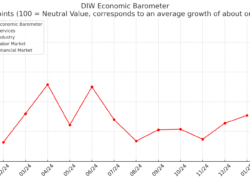
The economic barometer of the German Institute for Economic Research (DIW Berlin) showed a modest increase at the start of the year, rising 1.3 points to 87.7 in January. However, the index remains well below the neutral 100-point mark, signaling continued economic weakness.

Slow Recovery Amid Uncertainty

“The German economy is progressing in small steps but remains in wait-and-see mode,” said Geraldine Dany-Knedlik, DIW’s Director of Economic Research. With parliamentary elections approaching, political uncertainty is discouraging investment. Meanwhile, foreign trade risks, exacerbated by ongoing trade conflicts and geopolitical tensions, pose additional challenges for export-dependent industries. A stable government post-election could offer new economic momentum, providing a much-needed boost.

Industrial Sector Under Pressure

The manufacturing sector continues to struggle. While there was a marginal improvement in orders and a brief uptick in production, DIW experts warn that this may be temporary, driven by companies rushing to fulfill orders before potential tariff increases. “German industry remains under strain from global trade risks and weak domestic demand,” noted Laura Pagenhardt, a DIW economic analyst. Business expectations for the coming months have deteriorated again, signaling no clear recovery trend.

Services Sector Shows Resilience

The services sector has performed slightly better, with improved business sentiment and employment expectations. However, retail sales continue to decline, suggesting consumer spending remains weak despite a slight rise in consumer confidence. The labour market remains divided, with job losses in manufacturing but some stabilization in services.

Outlook: Stability Needed for Growth

“The small uptick in the economic barometer suggests the economy may have hit bottom,” said Guido Baldi, DIW economic expert. “But geo-economic fragmentation and uncertainty surrounding the new U.S. administration remain major concerns. A stable post-election government must provide clear policies on the economy, energy, and infrastructure to restore business confidence and investment.”

Source: DIW

Galeria Bronowice expands tenant portfolio and strengthens market position

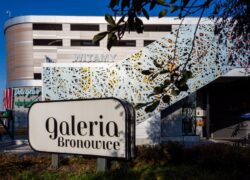
Nhood Services Poland has expanded its tenant portfolio at Galeria Bronowice, closing 2024 with a record footfall and multiple new brand openings. The company signed 370 lease agreements for 66,000 sqm, reinforcing its role in Poland’s commercial real estate sector.

Galeria Bronowice, the largest mall managed by Nhood Services Poland, recorded a 10% rise in footfall over 2019. New tenants include dm Drugstore, iDream, Verona, Okaidi, Fairytale Labyrinth, The Burgers, Anex Tour, and Kamalion. The introduction of Mr. DIY’s second Polish store and the expansion of Ochnik, Tatuum, and Etulio further enriched the shopping experience. The mall also saw seven major tenants, including Smyk, Deichmann, and KFC, renovate or expand their stores.

“Our focus is on creating a comprehensive retail experience that enriches shopping journeys while ensuring strong financial performance for our tenants,” said Marcin Matysiak, Commercialization Director at Nhood Services Poland. “We are delighted that our leasing strategy has resulted in outstanding year-end results, with new brands choosing to expand in our managed centers.”

Galeria Bronowice offers public services like a passport office and municipal service center, alongside cultural events in collaboration with local museums and art schools. The Superhero Sphere supports charities such as Anna Dymna’s Mimo Wszystko Foundation, while seasonal events include the Cracovian Nativity Trail and Conrad Festival.

New Hladnovská Clinic opens in Ostrava

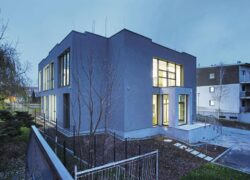
Residents of Ostrava now have access to a state-of-the-art medical facility with the completion of the Hladnovská Clinic, a modern healthcare center designed to improve accessibility and expand civic amenities in the region. Built by HSF System, part of the PURPOSIA Group, the new clinic is located on Na Pěčonce Street in Silesian Ostrava and provides a barrier-free environment for patients seeking a range of medical services, including neurology and dentistry.

The construction of the Hladnovská Clinic was a highly technical and complex project, requiring a meticulous approach to meet the specific demands of a medical facility. Miroslav Krop, director of the Ostrava branch at HSF System, emphasized the significance of the project, stating, “This development was a crucial opportunity for us to showcase our expertise in constructing specialized buildings. The clinic is a challenging project, both technically and operationally, and we are proud to have delivered a facility that will greatly benefit the citizens of Ostrava.”

The two-storey clinic, designed with a square layout, prioritizes accessibility and efficiency. Entry is facilitated by an external staircase and lift, ensuring full barrier-free access from the adjacent parking area. Inside, the building features comfortable patient and staff facilities, with an open-plan waiting area marked by a striking steel staircase. All consulting rooms are fully air-conditioned, enhancing patient comfort.

The glass façade plays a key role in the clinic’s design, allowing natural daylight to flood the waiting and circulation areas, while side windows illuminate consulting rooms. A distinctive façade color scheme is complemented by anthracite horizontal blinds, providing light control and a contemporary aesthetic.

Dr. Martin Roubec, neurologist and project investor, highlighted the clinic’s mission to offer comprehensive and high-quality healthcare. “With the new premises, we can provide patients with an expanded range of services in a modern and comfortable environment. Currently, our clinic offers neurology outpatient care, supported by three specialized laboratories (EEG, EMG, and neurosonology), along with two dental clinics, physiotherapy services, and a collection point. Further expansion is already planned in the coming weeks,” he said.

Construction on the Hladnovská Clinic began in February 2024 and was successfully completed in November 2024, adhering to the original schedule and the investor’s specifications. The clinic is set to play a vital role in Ostrava’s healthcare system, providing residents with modern, high-quality medical services in a welcoming and efficient setting.

Gulf Cooperation Council projects market hits record USD 273 billion in 2024

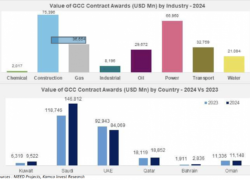
The Gulf Cooperation Council (GCC) projects market surged to new heights in 2024, reaching a record USD 273.2 billion in awarded contracts, marking a 9.6% year-on-year increase. The robust growth was primarily fueled by Saudi Arabia’s aggressive expansion in the energy sector, particularly renewables, alongside strong infrastructure investments across the region.

Saudi Arabia Leads with Renewable Energy and Infrastructure Megaprojects

Saudi Arabia continued to dominate the GCC projects market, accounting for USD 146.8 billion, representing 53.8% of the total projects awarded in the region. The kingdom’s commitment to Vision 2030 played a crucial role in driving investments, particularly in renewable energy, with 25 projects generating approximately 23 gigawatts of electricity signed in 2024.

The power sector overtook construction as the largest in terms of awarded projects, with contracts in the sector more than doubling to USD 55.0 billion, up from USD 25.0 billion in 2023. Similarly, the gas sector nearly doubled, reaching USD 19.1 billion, reflecting a substantial push toward energy diversification. However, construction sector projects declined by 10.6%, totaling USD 28.4 billion.

Notably, seven of the ten largest GCC projects in 2024, each exceeding USD 2 billion, were awarded in Saudi Arabia. These included the USD 4.7 billion NEOM Trojena Valley Cluster Dam project and the USD 3.73 billion high-voltage transmission line project connecting key industrial regions.

UAE Sees Decline in Contract Awards Despite Large-Scale Developments

Despite maintaining its position as the second-largest projects market in the GCC, the UAE experienced a 9.5% decline in awarded contracts, totaling USD 84.1 billion, down from USD 92.9 billion in 2023. The decrease was driven by a sharp 54.7% drop in gas sector contracts, which fell to USD 8.8 billion from USD 19.4 billion in 2023.

However, the construction sector remained dominant, accounting for 47.5% of total project awards, reaching USD 40.0 billion. The UAE also saw major transport investments, with Dubai Metro’s USD 5.6 billion Blue Line project and the USD 5.5 billion Ruwais Low Carbon LNG Terminal ranking as the largest two projects in the GCC in 2024.

Kuwait Achieves Highest Growth in Contract Awards

Kuwait recorded the highest percentage growth in the GCC, with a 50.7% year-on-year increase in awarded contracts, reaching USD 9.5 billion. The growth was largely driven by infrastructure investments under Vision 2035, particularly in the construction sector, which saw an over sixfold increase to USD 4.0 billion.

Key projects included the USD 142 million Kuwait substation contract and the USD 146 million maintenance works project in Mubarak Al-Kabeer Governorate.

Qatar’s Oil Sector Drives Growth Amid Decline in Gas Projects

Qatar saw a moderate 4.5% growth in contract awards, reaching USD 18.9 billion in 2024. The country’s oil sector experienced a nearly eightfold increase, totaling USD 6.3 billion, accounting for 33.5% of total awarded contracts. However, the gas sector—historically dominant—saw a sharp decline of 49.5%, dropping to USD 6.0 billion.

Two of the top 20 GCC projects were awarded in Qatar, including the USD 4.0 billion QatarEnergy LNG – North Field Production Sustainability Phase 2 and the USD 2.1 billion Al Shaheen Oil Field Development project.

Outlook for 2025: Continued Growth with Strong Pipeline of Projects

The GCC projects market is expected to maintain its momentum in 2025, with over USD 120 billion worth of projects already in bid evaluation. Saudi Arabia is projected to lead, driven by its NEOM giga projects and energy initiatives.

While oil price stability and interest rate reductions are expected to support further investment, concerns remain over global supply chain disruptions and OPEC+ production limits. Nonetheless, approximately USD 1.5 trillion worth of projects remain in the pre-execution stage, with Saudi Arabia holding the largest share at USD 770.5 billion.

Major projects expected in 2025 include:
• USD 5.0 billion Taziz Industrial Chemicals Zone – Phase II
• USD 3.7 billion National Grid Battery Energy Storage Systems
• USD 3.0 billion Taweelah C Combined Cycle Gas Turbine IPP

The GCC’s industrial, utilities, and technology sectors are expected to witness significant investment, particularly with increased focus on AI-driven projects and data centers.

The region’s commitment to sustainability and economic diversification will continue to shape its infrastructure and energy landscape, positioning the GCC as a global leader in megaproject development.


Germany’s energy transition: Next government must sustain progress and accelerate key sectors

Germany’s energy transition has made significant strides under the current ‘Ampel’ coalition government, particularly in solar energy expansion and infrastructure improvements for electricity and hydrogen networks. However, challenges remain, especially in wind power, heat pump deployment, and electric mobility. To meet the 2045 climate neutrality goal, the next federal government must maintain momentum and accelerate sector coupling, ensuring the efficient integration of renewable energy across heating, transport, and hydrogen production.

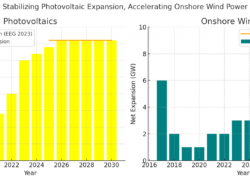
Solar power has seen rapid growth, with installed capacity reaching 99 gigawatts (GW) by the end of 2024, marking a 60% increase during the coalition’s tenure. This expansion is on track to double by 2030, requiring an annual addition of 18 GW. Meanwhile, wind energy is lagging behind schedule, with onshore wind capacity at 64 GW, a modest 14% increase. To reach the 2030 target of 115 GW, expansion must accelerate to at least 7 GW per year. While the government has improved permitting and land allocation, the next administration must ensure continued support to sustain this momentum.

Offshore wind expansion has been slower, reaching just over 9 GW by the end of 2024. However, recent tenders for 16.8 GW in 2023 and 2024 are expected to drive growth in the coming years. To meet the ambitious 30 GW target by 2030, the next government must continue issuing tenders and enhancing infrastructure development.

Beyond renewables, Germany must rapidly advance sector coupling. Heat pump adoption is far behind schedule, with only 1.9 million installed by 2024—far from the 6 million target for 2030. Clear policy direction and stable incentives are essential to drive adoption and phase out fossil-fuel heating systems. Similarly, electric vehicle (EV) expansion is progressing too slowly, with just 1.7 million battery-electric cars registered. To reach the 15 million target by 2030, stronger incentives and an expanded fast-charging network are needed.

Hydrogen infrastructure also requires urgent action. Germany’s National Hydrogen Strategy aims for 10 GW of electrolysis capacity by 2030, but currently, only 1% has been achieved. The next government must accelerate project approvals, secure green hydrogen imports, and support domestic electrolysis to ensure supply meets demand.

Efficient integration of renewable energy into the system is another priority. Flexibility in electricity markets must be enhanced through smart meters, improved grid management, and incentives for energy storage solutions. Policymakers should also shift from a broad “one million charging points” target to a more strategic focus on fast-charging infrastructure for both passenger and freight transport.

The phase-out of fossil fuels must also be clearly defined. While coal is set to be eliminated by 2038 at the latest, a structured exit strategy for natural gas is still lacking. Without clear policies, ongoing LNG terminal investments may create false expectations about the long-term role of gas. A managed decommissioning of gas networks and stronger support for electric heating alternatives are necessary. Similarly, Germany must accelerate the transition away from oil-based heating and transportation fuels.

Carbon capture and storage (CCS) should remain a last-resort solution for hard-to-decarbonize industries rather than an excuse to prolong fossil fuel use. The next government must prioritize electrification and green hydrogen over reliance on CCS.

The new administration has a crucial role in maintaining the pace of Germany’s energy transition. Policymakers must provide clear direction, accelerate the deployment of renewables, and enhance energy system integration while ensuring fossil fuel phase-outs remain on track. A stop-and-go approach would undermine investor confidence and delay the country’s path to climate neutrality. By building on the progress made, the next government can secure Germany’s leadership in the global energy transition.

Authors: Von Wolf-Peter Schill, Claudia Kemfert, Adeline Guéret, Franziska Holz, Alexander Roth and Felix Schmid
Source: DIW Berlin – Deutsches Institut für Wirtschaftsforschung

German office property market 2024: Rising rents and stable yields define the year

The German office property market in 2024 is characterized by rising rents and stable prime yields, despite ongoing economic uncertainties. Demand for office space remains strong, particularly in major cities like Berlin, Munich, and Frankfurt, where high-quality office properties continue to attract investors.

Rising Rents Amid Economic Challenges

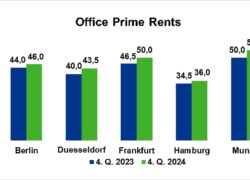
Despite sluggish economic growth and geopolitical uncertainties, the office market in Germany’s top cities—Berlin, Düsseldorf, Frankfurt, Hamburg, and Munich—has shown resilience. Berlin and Munich, in particular, witnessed strong demand for large office spaces exceeding 10,000 square meters, fueled in part by public sector leasing activity. This trend has contributed to a moderate increase in rental prices across key business districts.

Vacancy Rates Rise Slightly, but Premium Spaces Remain in Demand

With an increased supply of newly completed office buildings, the average vacancy rate across Germany’s five major office markets rose by 90 basis points to 7.7% in 2024. However, premium office spaces continued to see high pre-letting rates, reflecting strong demand for modern, well-located properties. Limited availability of top-tier office buildings pushed prime rents up by an average of 6.8% year-on-year.

Prime Yields Hold Steady

Prime yields for German office properties remained stable throughout 2024, following a minor increase in early Q1. By year-end, the average prime yield across Germany’s top five office markets settled at 4.4%, reflecting investor confidence in the sector despite market fluctuations.

Outlook for 2025: Continued Growth in Prime Locations

Looking ahead, the demand for premium office space in prime locations is expected to drive further rent increases in 2025. Additionally, improved financing conditions following ECB interest rate cuts could revive transaction activity, leading to increased competition and potential downward pressure on yields.

With the continued flight to quality and ESG-compliant office spaces, the German office property market is set to remain a key focus for both domestic and international investors in the coming year.

Source: ‌Union Investment Real Estate
Photo: Newly positioned TRIIIO office building in Hamburg

Cordia unveils ambitious 1,000+ apartment development in Budapest for 2025

Hungary’s new home market is poised for significant growth in 2025, with strong momentum already evident in late 2024. Property sales in Budapest surged in Q4, nearly matching the total transactions for the entire previous year. In response, Cordia, the country’s leading residential developer, is set to launch over 1,000 new apartments, spanning nearly 120,000 sqm, providing a diverse range of real estate investment opportunities.

New Home Sales on the Rise

Experts predict that Hungary’s housing market will see sustained growth, driven by increasing demand. In Budapest alone, 2,600 new apartments were sold in Q4 2024, marking the highest quarterly figure since 2018. This surge has led to a sharp decline in available inventory, with just 6,000 new units remaining—barely sufficient to meet demand for the coming year unless new projects enter the market. In total, 7,300 newly built apartments were sold in Budapest last year, nearing the dynamic sales levels of 2016–2018.

Rapid Expansion Underway

Cordia is responding swiftly to this market shift, launching multiple projects in early 2025. The developer will introduce more than 1,000 new apartments this year, with 75% hitting the market in Q1 alone—boosting Budapest’s supply of new homes by 20% compared to the previous year-end figures.

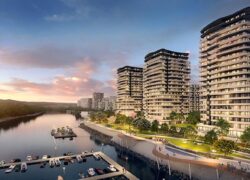
The company’s diverse portfolio includes everything from compact city-center studio apartments ideal for investors to family-friendly homes in green-belt areas and luxury penthouses with panoramic views. A major highlight is the Marina City development, a 14-hectare, car-free riverside project along the Danube. The third phase of this sought-after district is set to launch in 2025, with the fourth phase planned for the latter half of the year. The Marina City area accounted for 14% of all new apartment sales in Budapest during Q4 2024, reflecting its high popularity.

Cordia is also advancing the next phases of Sasad Resort, one of Buda’s premier residential communities, and the much-anticipated fifth phase of Thermal Zugló in District 14. In District 9’s Millennium Quarter, the second phase of the Woodland project is now underway, offering energy-efficient, long-term value-retaining homes.

Prime Investment Opportunities

Early-stage investment in new developments typically yields the best returns, as developers offer the most attractive pricing at the outset. With a conservative 5% annual appreciation, an apartment valued at HUF 100 million (approx. €245,000) could rise to HUF 116 million (€284,000) over a typical three-year construction period, generating a gross profit of HUF 16 million (€39,000).

To further enhance investment potential, Cordia is introducing a 10/90 financing model in February. This structure allows buyers to secure a property with just 10% of the purchase price, deferring the remaining 90% until completion—potentially increasing overall returns.

Property price trends have already outpaced the projected 5% appreciation. In 2024, average prices per square metre rose by 13% in Buda (to HUF 1.93 million / €4,700) and by 9% in Pest (to HUF 1.58 million / €3,870), signaling a strong upward trajectory.

Higher Rental Yields for New Builds

Newly built apartments continue to command higher rental prices compared to older properties. In Budapest’s Corvin Promenade, Cordia’s studio apartments achieve average monthly rents of HUF 270,000 (€662), one-bedroom units rent for HUF 330,000 (€809), and two-bedroom apartments fetch approximately HUF 500,000 (€1,225)—averaging 25% more than older properties in the same area.

With a thriving residential market, strong investor appeal, and rising demand for high-quality living spaces, Cordia’s ambitious 2025 development plan is well-positioned to meet Budapest’s growing housing needs while offering lucrative investment opportunities.

Develia acquires prime Wrocław site for 600-room student housing development

Develia has acquired a plot of land in Wrocław’s city center, where it plans to develop a student dormitory with approximately 600 rooms and two commercial units. The property, located at Plac Orląt Lwowskich, was purchased from a company within the Puro Hotels financial group for PLN 40.6 million.

Karol Dzięcioł, a member of Develia’s management board, emphasized the strategic importance of the location, noting its excellent transport connections to universities and other parts of the city. He highlighted that this investment aligns with Develia’s strategy to diversify its core residential development business. Poland ranks among the leading European countries in terms of student population, yet the availability of student accommodation remains low. The average dormitory coverage rate stands at just 9.4%, with private student housing accounting for only 1.2%—significantly below the levels observed in Western Europe. Dzięcioł pointed out that the PBSA (Purpose-Built Student Accommodation) market in Poland is far from saturation and has strong growth potential.

The newly acquired 3,200-square-meter site is located at Plac Orląt Lwowskich 13-18, just 300 meters from Wrocław’s Świebodzki Railway Station. The sale of the property aligns with Puro Hotels’ revised post-pandemic strategy, which prioritizes expansion into new markets. According to Przemysław Wieczorek, CEO of Puro Hotel Development, the group is focusing on growing its hotel portfolio, with plans to open a second hotel in Warsaw at Canaletta Street 4 in the coming days. Additionally, Puro Hotels is currently developing two properties abroad in Budapest and Prague, with further investments planned.

Develia’s preliminary schedule envisions construction of the Wrocław student dormitory beginning in 2026, with completion expected two years later.

LATEST NEWS