Walter Herz expands into the premium real estate market with luxury residential division

Walter Herz, a Polish real estate consulting firm, is expanding its service portfolio with the launch of Walter Herz Luxury Residential, a new division dedicated to premium real estate services. This strategic move marks the company’s entry into the luxury property segment, offering comprehensive support for clients in buying, selling, and renting high-end residences across Poland.

Katarzyna Goryszewska has been appointed Head of Luxury Residential Agency and will lead the new division. A lawyer by education, she brings 19 years of experience in the residential real estate market, having previously served as Operations Director at Złota 44. Throughout her career, she has collaborated with Orco Poland, BBI Development, and Agro-man, building a reputation as a leading expert in premium real estate transactions.

Walter Herz Luxury Residential will provide market forecasting, investment analysis, client representation during negotiations, and full transaction management. Under Goryszewska’s leadership, the division will implement specialized procedures for premium client services, ensuring high standards in luxury property transactions.

According to Bartłomiej Zagrodnik, Managing Partner & CEO of Walter Herz, the new division is part of the company’s broader development strategy. Following the success of Walter Herz Invest, which focuses on retail, logistics, and residential investments, the company is now expanding into the high-end residential sector. Zagrodnik emphasized that this move strengthens Walter Herz’s position in the market, allowing the firm to offer a full spectrum of real estate services to its clients.

Goryszewska expressed enthusiasm about her new role, highlighting the company’s commitment to quality, reliability, and excellence in the premium real estate segment. She noted that the Walter Herz team will support investors from the initial stages through to the final transaction, ensuring a seamless and high-value experience.

With its deep understanding of Poland’s luxury real estate market, Walter Herz is well-positioned to capitalize on growing demand for premium properties. The launch of Walter Herz Luxury Residential reinforces the company’s commitment to innovation, strategic expansion, and top-tier client service, further solidifying its leading role in the Polish real estate industry.
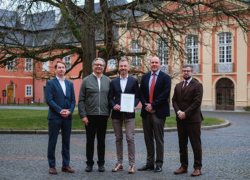

Panattoni and Colloredo-Mannsfeld launch forest conservation project to offset carbon footprint

Panattoni, Colloredo-Mannsfeld spol. s r.o., and Tree.ly have introduced a unique initiative focused on carbon storage, forest conservation, and sustainable development in the Czech Republic. This partnership enables private-sector investment in local forests, reinvesting funds from industrial construction carbon offsetting into certified forest management projects.

Panattoni, a sustainable industrial development, will finance forest adaptation strategies to enhance carbon sequestration and biodiversity, with oversight from Tree.ly and independent certification by TÜV Austria. This initiative aligns with Panattoni’s broader decarbonization efforts, allowing the company to offset up to 14,000 tonnes of CO₂ while supporting EU climate goals.

With climate change intensifying, forest conservation is increasingly critical. In 2023 alone, wildfires destroyed over 600,000 hectares of forests in Europe, while the Czech Republic continues to battle a bark beetle infestation, increasing risks of fires, floods, and soil erosion. This project supports reforestation with climate-resilient species, biodiversity conservation, and educational programs to strengthen long-term forest stability.

Colloredo-Mannsfeld manages over 17,000 hectares of PEFC-certified forests and has reduced timber harvesting to increase carbon storage capacity, sequestering up to 17,284 tonnes of CO₂ annually. The company also runs educational initiatives, such as “A Day with a Forester,” teaching children sustainable forestry principles.

Tree.ly, a leading European climate solutions provider, ensures scientific verification of carbon credits, using the SILVACONSULT® ISO methodology. Projects are monitored annually by TÜV Austria and must demonstrate measurable environmental impact before credits are issued.

According to Christian Lutz, CEO of Tree.ly, this partnership sets a new benchmark for corporate climate action, providing regional solutions for biodiversity and carbon sequestration. Robin Ambrož, Director of Colloredo-Mannsfeld, emphasized the importance of active forest management in improving ecosystem resilience.

Panattoni’s Managing Director, Pavel Sovička, highlighted that industrial construction cannot yet achieve carbon neutrality, making offset projects like this essential. Regional Sustainability Manager Pavel Fojtík added that this initiative will meet the growing demand for sustainable operations from global corporate clients while reinforcing Panattoni’s commitment to local environmental impact.

By integrating local carbon offsetting into industrial projects, this collaboration demonstrates how businesses can drive climate action. As environmental challenges grow, this model offers a scalable solution for balancing development with sustainability and sets a precedent for private-sector-driven climate resilience.

Cities raise property taxes, extract hundreds of millions of euros from residents

Across Europe, cities are significantly increasing property taxes, withdrawing hundreds of millions of euros from residents as local governments seek to cover budget deficits, rising infrastructure costs, and growing social expenditures. The tax hikes, implemented in several major urban centers, are sparking frustration among property owners, businesses, and housing advocates, who warn that the higher costs will further strain household finances and discourage investment in the real estate market.

Municipalities in Germany, France, Spain, and Poland have announced double-digit increases in property tax rates, arguing that rising expenses for public services, energy costs, and social programs necessitate greater revenue collection. In Berlin, property tax rates have increased by 15%, with officials citing the need to fund affordable housing projects and improve public transportation. In Paris, local authorities have raised property tax levies by 59% over the past two years, a move they justify by pointing to mounting debt and maintenance costs for aging infrastructure.

In Warsaw, the city council has approved an 8% rise in property taxes, expected to generate an additional €120 million in revenue. Meanwhile, in Barcelona, officials are preparing for a 12% hike, which will disproportionately impact homeowners in central districts where real estate values have soared in recent years.

For property owners, the higher taxes are another financial burden on top of rising mortgage rates, inflation, and utility costs. Homeowners associations and small business groups argue that the new rates are being imposed without sufficient public consultation, forcing many to reconsider their long-term housing and investment plans.

“Increasing property taxes in a period of economic uncertainty and high interest rates is reckless,” said Thomas Müller, head of a property owners’ association in Munich, where tax rates are set to rise by 10% this year. “It places additional strain on middle-class families who are already struggling to cope with rising living costs.”

Business groups are also warning of potential knock-on effects on commercial real estate, as landlords pass the costs on to tenants. Higher property taxes could lead to increased rents for shops, offices, and warehouses, further exacerbating the challenges faced by retailers and small enterprises.

City officials argue that higher taxes are necessary to maintain and expand essential services, including public transportation, schools, and healthcare facilities. Many municipalities have seen budget shortfalls due to lower-than-expected economic growth and declining revenues from other tax sources.

“In order to ensure the continued quality of our city’s public services and infrastructure, we need to adjust property tax rates,” said Anne Durand, deputy mayor of Lyon, where property tax rates are rising by 17%. “Without this increase, we would be forced to cut funding for vital projects.”

Despite these arguments, many residents remain skeptical. Critics claim that local governments are using property owners as an easy source of revenue, rather than seeking alternative funding solutions or cutting administrative costs.

The tax hikes could have wider economic and political repercussions, especially in cities with upcoming elections. In Madrid, opposition parties have pledged to reverse recent property tax increases, while in Warsaw, protests have erupted over the latest tax adjustments.

Real estate analysts also warn that higher taxes could slow down property sales and investment, as buyers factor in the additional costs of ownership. “Property taxes have a direct impact on the profitability of real estate investments,” noted Julia Kowalska, an economist specializing in housing markets. “If rates continue to rise, we could see a slowdown in transactions, particularly in city centers where costs are already high.”

As cities continue to raise property taxes to balance their budgets, the debate over fair taxation, public spending, and financial burden-sharing is likely to intensify. While municipalities argue that these increases are necessary for maintaining essential services, critics warn that the measures could exacerbate economic inequality and discourage homeownership and investment.

With millions of euros being extracted from property owners across Europe, the question remains: are local governments making the right fiscal decisions, or are they unfairly shifting the financial burden onto homeowners and businesses?

Poland’s housing market stabilizes in 2025, favoring developers

The Polish housing market is expected to stabilize in 2025, with no significant price drops anticipated, according to a report by Otodom and Polityka Insight. This environment will be favorable for developers, allowing them to meet sales targets without the risk of a market collapse.

“This will be a year of relative calm as the market moves toward stabilization,” said Lewicki, co-author of the report, during a webinar discussing the findings from “Kwartalnik. Report on the Housing Market in Q4 2024”. Despite speculation, real estate prices have not started to decline, and localized promotions or discounts should not be seen as the beginning of a broader trend. Instead, these price reductions reflect individual strategies by developers or property owners aiming to boost sales.

The report highlights that demand remains strong, enabling developers to proceed with planned investments. While sales will not reach the highs of 2020-2021 or 2023, they are expected to remain stable, preventing any significant industry downturn or developer bankruptcies.

Banks are expected to ease mortgage lending, reversing the restrictions imposed over the past two years due to interest rate hikes and tighter mortgage regulations. The Safe Credit 2% program, launched to assist young buyers, has granted over 90,000 loans in 2023 and 2024. However, the program’s impact was uneven, failing to reach the most financially vulnerable buyers while driving up prices, particularly for smaller apartments in major cities.

With inflation slowing and wages recovering, housing affordability is expected to improve in 2025, allowing more first-time buyers to enter the market.

Young Poles continue to prefer property ownership, as the rental market remains expensive and underdeveloped. Poland has one of the highest rates of young adults living with their parents in Europe, primarily due to limited affordable rental options. While there is increasing support for social housing initiatives, private ownership remains the dominant choice.

The secondary housing market is becoming more attractive, particularly in urban centers. While city centers were previously dominated by wealthier buyers, demand shifts may revive mid-tier developments in central areas, especially as smaller developers acquire land from housing cooperatives or resolve legal uncertainties on urban plots. These conditions could lead to the creation of affordable housing in prime locations, catering to buyers priced out of the luxury segment.

Despite expectations for major policy shifts, 2024 saw little legislative action in the housing sector. Investors are still awaiting regulatory clarity, particularly on measures to ease land availability and improve spatial planning. The lack of reforms, such as eliminating parking space requirements in urban developments, continues to hinder new construction projects.

However, as 2025 is an election year, sudden policy changes remain a possibility. “Housing policy is unpredictable. New regulations can emerge unexpectedly, drastically reshaping the market,” the report warns. Past government interventions have stimulated demand temporarily, only to create instability when programs were discontinued.

The last quarter of 2024 signaled a return to stability, with quarterly price growth slowing to 1.4%. Price increases are now more evenly distributed across different apartment sizes, except for luxury units over 90 m², which saw larger price hikes due to high-end investments.

Notably, prices of older apartments have declined, with pre-1990 properties losing 0.3% in value, and pre-war buildings dropping 1.8%. Meanwhile, housing supply continues to expand, increasing 3% from Q3 2024 and 29% year-on-year, with newly built apartments now representing 57% of available listings.

Land prices have risen slightly, reaching PLN 253 per m², a 4.1% increase compared to last year.

“The past five years in Poland’s housing market have been a rollercoaster, with periods of rapid price growth alternating with slower phases,” said Katarzyna Kuniewicz, Director of Market Research at Otodom. The current market resembles late 2022, just before the introduction of government stimulus programs. While it remains uncertain whether price growth will slow further in early 2025, all signs point toward long-awaited stabilization.

Source: Otodom/Polityka Insight and ISBnews

Polish retail tenants shift to e-commerce amid rising lease pressures

The Polish retail market in 2025 will continue to experience tensions due to fundamental inequalities in lease agreements, according to the Association of Polish Employers of Trade and Services (ZPPHiU). In response, many shopping center tenants are actively increasing their e-commerce sales share to mitigate risks stemming from landlords’ leverage over lease terms.

ZPPHiU highlights that Polish law does not prevent shopping center owners from shifting the full cost of business operations onto tenants, who are often forced to challenge these financial burdens in court. It is common practice for smaller businesses to bear the expenses of maintaining spaces occupied by major tenants. However, courts are increasingly questioning contract clauses that allow such practices, offering some hope for fairer lease agreements.

A significant challenge for retail tenants is the modernization of aging shopping centers, as more than half of Poland’s malls were built before 2010. Many of these properties are energy-inefficient and require expensive upgrades in areas such as thermal insulation, electrical installations, and fire safety systems. There is growing concern that landlords will attempt to transfer these upgrade costs to tenants, despite property managers publicly committing to sustainability initiatives.

Another financial strain comes from rising insurance premiums, which landlords typically pass on to tenants through service charges, without negotiations. Similarly, property taxes are often shifted onto tenants, further increasing their financial burden.

Fluctuations in foreign exchange rates and inflation-linked service costs also pose challenges. Tenants are now actively seeking contractual limitations on such expenses while simultaneously focusing on revenue growth. One key strategy is expanding e-commerce operations, leveraging online marketing, direct distribution through owned stores, and partnerships with digital platforms. These efforts aim to reduce reliance on physical retail spaces, giving tenants greater control over their business operations.

Zofia Morbiato, CEO of ZPPHiU, emphasizes that Poland’s overregulated retail environment exacerbates these challenges. The complexity of national and EU legislation creates barriers for businesses, particularly smaller entities that lack resources for costly legal audits and consultations. As a result, regulatory burdens widen the gap between dominant and struggling retailers while increasing operational costs related to energy, labor, and compliance.

The “green annexes” in lease agreements present yet another financial risk, as they allow landlords to shift additional costs to tenants under the pretext of sustainability initiatives. ZPPHiU argues that many of these forced upgrades—such as replacing store floors, windows, or installations—do not benefit the environment or improve the shopping experience. Moreover, landlords often undertake common area renovations without prior tenant consultation, later incorporating the costs into service fees.

With these mounting pressures, tenants are expected to continue adapting their business models, placing an even stronger emphasis on e-commerce and digital retail solutions to navigate the evolving retail landscape.

Source: ZPPHiU and ISBnews

Polish loan market sees 32.5% growth in Q4, driven by existing customers

The total value of loans granted by companies in the non-bank lending sector rose by 4.1% quarter-on-quarter and 32.5% year-on-year, reaching PLN 4.52 billion in Q4 2024, according to a report by the Association of Financial Enterprises in Poland (ZPF) and CRIF. During this period, loan institutions issued 1.13 million loans, reflecting a 15% increase compared to the previous year.

“Data shows that loan institutions reject up to three-quarters of customer applications. In December, the rejection rate stood at 77%, highlighting the sector’s focus on portfolio quality and responsible lending. Credit assessment processes continue to evolve, with risk management remaining a top priority,” said Marcin Czugan, President of ZPF, as quoted in the report.

The share of new customers among total borrowers has been declining, falling to 9.4% in December 2024, compared to 10.9% in December 2023 and 19.1% two years earlier. Czugan noted that the simultaneous increase in loan volume and decline in new customer share reflects the sector’s strategy of prioritizing relationships with existing, well-established clients.

According to the December 2024 study, the average loan amount granted by non-bank institutions was PLN 3.9 thousand, marking a 2.8% year-on-year and 3.6% month-on-month decline. Additionally, 46.5% of loans issued in December had a value of no more than PLN 2,000.

A growing trend in recent quarters has been the increasing demand for short-term credit products, with loans up to 90 days becoming more common, particularly for smaller amounts, the report concluded.

Source: ZPF/CRIF and ISBnews

31% of Poles plan a winter trip, but only 12% will travel during school holidays

A survey commissioned by BIG InfoMonitor reveals that 31% of Poles plan to take a winter trip, yet only 12% intend to travel during the school holidays. This cautious approach may reflect an effort to avoid higher costs during the peak season, when prices tend to surge.

According to the study conducted by Quality Watch for the InfoMonitor Economic Information Bureau, many travelers are opting for more flexible arrangements, steering clear of high-season travel. More than half of Poles (54%), an increase of 19 percentage points compared to 2023, will fund their winter trips with savings, while 46% plan to cover expenses from their current income. Only 5% of respondents intend to rely on loans from family or financial institutions, marking a six-percentage-point decrease compared to two years ago.

Another challenge for the domestic tourism industry is that 30% of those planning a winter holiday prefer international destinations, with 67% choosing locations warmer than Poland. Travel agencies are benefiting from this trend, offering packages tailored to customers seeking sun and relaxation in milder climates.

Among those taking winter trips, 53% prefer self-organized domestic travel, followed by 33% who opt for visiting family. Independently planned foreign trips account for 16%, while 10% rely on travel agencies or specialized entities. This ranking remains consistent for winter vacations taken outside the holiday period as well.

Waldemar Rogowski, chief analyst at BIG InfoMonitor, noted that this shift poses challenges for Polish hoteliers, particularly three- and four-star hotels, which are struggling amid increasing income polarization. While luxury accommodations attract affluent travelers and budget options remain popular, mid-tier hotels face difficulties, especially as foreign competitors, such as Alpine resorts, offer better weather conditions, lower prices, and comparable or superior service quality.

The study, titled “Examining and Directions of Trips of Poles in Winter Holidays,” was conducted using the CAWI method by Quality Watch on behalf of BIG InfoMonitor. It surveyed a sample of 1,068 Poles aged 18 and older in January 2025.

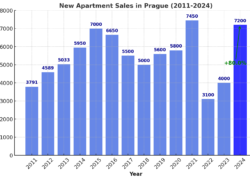
Prague’s new apartment sales Nearly Double in a Year, Prices Surge 7%

The Prague real estate market saw unprecedented demand for new apartments in 2024, with 7,200 units sold, marking an 80% year-on-year increase. This surge, driven by lower mortgage rates, has outstripped supply, pushing prices up by 7%, according to a market analysis published by Central Group, Skanska Residential, and Trigema.

Near-Record Sales Despite Supply Stagnation

In the final quarter of 2024 alone, 1,850 apartments were sold, bringing annual sales close to 2021’s record of 7,450 units. This trend mirrors the mortgage market, where new loan volumes surged by 83% over the previous year.

“The demand for real estate as a secure investment with consistently rising value remains strong, and I expect it to continue this year,” said Marcel Soural, Chairman of Trigema Investment Group.

Prices Climb Faster Than Expected

By year-end, the average listing price for new apartments in Prague reached CZK 163,203/m², a 7% annual increase, while sales prices jumped 10% to CZK 156,851/m², both hitting new record highs. The Czech National Bank (CNB) had previously warned that supply constraints could drive prices even higher, and the current market conditions suggest continued growth of 5-10% this year.
• Most affordable districts: Prague 9 and 10, where prices hover around CZK 149,000/m².
• Most expensive districts: Prague 1, 2, and 7, where prices exceed CZK 200,000/m².
• Fastest growth: Prague 3, with a 21% annual increase.

“The rise in prices was driven by new premium projects, reductions in promotional discounts, and rising construction costs,” explained Petr Michálek, Chairman of Skanska Residential. “However, the biggest issue remains Prague’s long-standing approval delays, which keep supply far below demand.”

Persistent Supply Deficit Threatens Further Price Increases

At the end of 2024, only 5,700 new apartments were available in Prague—a stagnant figure for the past two years. While more units entered the market than in previous years, this failed to meet demand, as most were delayed projects launched when market conditions improved.

The slow approval process remains a major bottleneck. Prague approved just 6,340 new flats from January to November 2024, far below the 10,000 units needed annually. Meanwhile, an increasing share of new developments is being absorbed by the growing rental market, further tightening supply.

“The lack of new housing approvals has made apartments at least 15% more expensive,” said Dušan Kunovský, Chairman of Central Group. “This is costing the state tens of billions in lost taxes and fees, making housing even more unaffordable. It’s baffling that this issue hasn’t been resolved for so long.”

With mortgage rates expected to fall further in 2025, demand could reach record highs, intensifying Prague’s housing shortage and driving prices even higher.

Source: Central Group, Skanska Residential and Trigema

Sonar Real Estate finalizes sale of ‘Lombardhaus’ in Hamburg to Re.Invest-Managed Fund

Sonar Real Estate has successfully facilitated the sale of the prominent ‘Lombardhaus’ office building at Pelzerstraße 9-13 in Hamburg, acting as the transaction manager and commercial advisor. The sale was completed on behalf of the CCP 5 ‘long-life’ core-plus fund, advised by Tristan Capital Partners, a leading pan-European real estate investment manager. The property was acquired by a fund managed by Re.Invest on behalf of DEVK, as part of the Selection Portfolio originally purchased in 2020. The financial terms of the deal remain undisclosed.

Located on a prime city-centre site spanning approximately 1,200 square metres, Lombardhaus was built in 2002 and comprises 6,760 square metres of lettable space. The building’s tenant mix is predominantly office-based (90%), with retail (6%) and storage areas (4%) making up the remainder. Currently 98% occupied, its anchor tenant is online retailer About You Holding SE, with a weighted average lease term (WALT) of four years.

Sina Huppermann, Head of Sonar Real Estate’s Hamburg office, remarked:
“Successfully closing the sale of Lombardhaus in a challenging market highlights the depth of expertise within our team and our strong grasp of the German real estate sector. The asset’s robust leasing profile was instrumental in enabling Sonar, as asset manager, to achieve this result for our client.”

The seller received legal counsel from Clifford Chance and tax advisory services from PwC, while the buyer was represented by McDermott Will & Emery Rechtsanwälte Steuerberater LLP, with TA Europe providing technical and environmental due diligence. BNP Paribas Real Estate, Hamburg, advised the seller on the transaction.

Panattoni closes EUR 375 million in industrial park sales in Poland during 2024

Panattoni finalized warehouse and industrial facility sales in Poland worth over €375 million in 2024, reinforcing the high demand for industrial real estate and the strong investment appeal of the company’s projects.

“The value of last year’s sales reflects the continued confidence of investors in both the industrial real estate sector and Panattoni’s developments. Our transactions accounted for nearly one-third of the total volume in the Polish industrial market. Additionally, we anticipate increased activity from international capital in the coming quarters, as market liquidity rises with new investors. Poland remains a strategic hub, benefiting from its location, advanced infrastructure, skilled workforce, and modern facilities that attract financial institutions,” said Michał Stanisławski, Co-Head of Capital Markets at Panattoni.

Among Panattoni’s most significant deals was the sale of Panattoni Park Poznań XI, a major e-commerce project, for over €90 million. Another notable transaction involved the logistics park in Zgorzelec, acquired by Arete Investment Group. Additionally, City Logistics Warsaw IV, a 39,000 sqm logistics complex located 11 km from Warsaw’s city center, also found a buyer, further strengthening the developer’s market presence.

Industrial real estate transactions accounted for over 25% of Poland’s total commercial property market, which reached an estimated €5 billion in 2024. Panattoni’s deals not only underline the high quality of its investment products but also confirm the growing dominance of the industrial sector over other real estate segments.

LATEST NEWS