GCC markets kick off 2025 with strong gains despite mixed performance across sectors

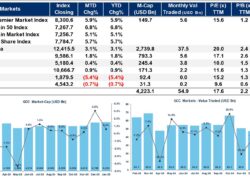
The GCC equity markets started the year on a strong footing, mirroring global trends and rebounding from the declines witnessed in December 2024. According to the latest GCC Markets Monthly Report – January 2025 by Kamco Invest, most regional stock markets recorded gains, with Kuwait leading the pack with a 5.7% surge—the highest monthly gain in a year.

Saudi Arabia’s Tadawul followed with a 3.1% rise, while the UAE’s Abu Dhabi and Dubai stock exchanges saw more modest increases of 1.8% and 0.4%, respectively. However, not all GCC markets fared well; Bahrain’s All Share Index posted the sharpest decline, plummeting 5.4% to a 25-month low, driven by an 18.5% drop in Aluminum Bahrain’s shares after merger talks with Saudi Arabia’s Maaden fell through.

Sectoral Performance: Retail and Pharma Outperform

January saw broad-based gains across most market sectors, with only the Utilities and Energy indices registering slight declines. The Retailing index led the charge with an 8.6% increase, followed by a 7.0% rise in Pharma stocks, reflecting strong investor confidence in consumer-driven businesses. The Telecom sector also posted a 6.2% gain, buoyed by positive movements in shares of major players like STC, Ooredoo, and Vodafone Qatar.

Global Market Trends and Oil Prices

On the global stage, equity markets witnessed a solid start to the year, with the MSCI All-Country World Index (ACWI) climbing 3.3% in January. European markets recorded their strongest rally in over a year, led by Germany’s DAX index, which jumped 9.2%, alongside gains in France and Italy. The UK’s FTSE 100 also registered a notable 6.1% increase. Meanwhile, crude oil prices saw a 6.4% gain during the month, despite a weaker performance in the latter half.

Outlook: Investor Sentiment Remains Positive

Market analysts anticipate continued momentum in the GCC’s investment landscape, with expectations of steady capital inflows into key sectors. While macroeconomic uncertainties persist, particularly in inflation trends and monetary policy adjustments, the region’s equity markets remain well-positioned for growth in 2025

Cushman & Wakefield Echinox advises MAS PLC on the sale of Romanian strip malls to M Core Group

Cushman & Wakefield Echinox has successfully advised MAS PLC, a leading property investor and operator in Central and Eastern Europe, on the sale of its strip mall portfolio in Romania to M Core Group.

The portfolio includes seven retail assets with a total gross leasable area (GLA) of approximately 32,000 square meters, strategically located in Slobozia, Focșani, Râmnicu Sărat, Târgu Secuiesc, Sebeș, Făgăraș, and Gheorgheni. These properties are situated in densely populated areas adjacent to Kaufland hypermarkets, ensuring high foot traffic and sustained demand. The assets boast a 100% occupancy rate and house a diverse mix of national and international tenants, including JYSK, Pepco, C&A, CCC, Deichmann, Sinsay, Altex, KFC, and McDonald’s.

Cushman & Wakefield Echinox provided strategic advisory services and transaction support, with the project led by Cristi Moga, Head of Capital Markets, and Bogdan Marcu, Partner, Capital Markets. M Core Group was advised by CMS Cameron McKenna, Deloitte, and IO Partners throughout the transaction process.

Commenting on the deal, Cristi Moga, Head of Capital Markets at Cushman & Wakefield Echinox, emphasized its significance in confirming the recovery trend in Romania’s investment market. “The retail sector continues to be recognized as a stable and secure asset class. The quality of the portfolio was a key factor in securing the transaction, while the professionalism of all parties involved facilitated a smooth process.”

Bogdan Marcu, Partner, Capital Markets at Cushman & Wakefield Echinox, noted the increasing investor interest in Romania as the economy stabilizes. “We are witnessing the start of a new economic cycle, bringing renewed interest from both existing investors looking to expand their portfolios and new entrants to the market. Romania’s young and dynamic retail sector holds significant growth potential, and this transaction highlights the resilience, liquidity, and overall positive sentiment in the retail investment market.”

MAS PLC continues to focus on high-quality, income-generating assets across the CEE region. The company has demonstrated exceptional operational performance, achieving a 97.4% occupancy rate across its retail portfolio as of mid-2024, with a 7.2% year-on-year net rental income growth. The decision to divest its Romanian strip mall assets aligns with MAS PLC’s long-term strategy, which prioritizes maximizing shareholder returns through selective capital reallocation.

This transaction marks another milestone in the evolution of Romania’s commercial real estate market, reinforcing the retail sector’s attractiveness to both regional and international investors.

Photo: Cristi Moga, Head of Capital Markets & Bogdan Marcu, Partner Capital Markets from Cushman & Wakefield Echinox

Swiss Life Asset Managers acquires 100,000 sqm Brownfield Site in North Rhine-Westphalia

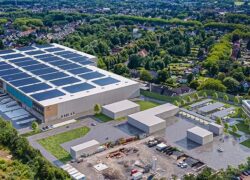
Swiss Life Asset Managers is expanding its logistics portfolio in North Rhine-Westphalia with the acquisition of a 100,000-square-metre brownfield site in the Rhine-Ruhr region. The site, located in Bottrop, will be transformed into a modern logistics hub and office development, adding over 33,000 square metres of leasable space to the company’s growing portfolio.

The new “Central Ruhr” project, situated on Hiberniastraße, will feature state-of-the-art logistics facilities, including 33,400 square metres of rental space, a dedicated office building, and extensive outdoor storage areas. Development is set to commence in 2025, with RUHR REAL acting as the broker for the acquisition.

Bottrop, located within the Ruhr area—the largest urban agglomeration in Germany—is a prime logistics destination due to its central European location and strong transport links. The site offers easy access to major highways, including the A2, A31, and A52, all within five kilometres, and is just 25 kilometres from the Port of Duisburg, Europe’s largest inland port.

“The Ruhr area is a central European logistics region and an important location for our pan-European investment strategy,” said Ingo Steves, Managing Partner Logistics at Swiss Life Asset Managers. “With ‘Central Ruhr,’ we are strengthening our presence in North Rhine-Westphalia, adding another state-of-the-art facility to our ‘Roots’ development pipeline.”

Swiss Life Asset Managers is prioritizing sustainability in the project, aiming to revitalize the brownfield site in line with internationally recognized environmental standards. Alexander Schmid, Head of Development Logistics at Swiss Life Asset Managers, emphasized the importance of reusing industrial land rather than developing greenfield sites, contributing to environmental preservation in densely populated areas.

The logistics facility will feature three building units with 12-metre clear heights, allowing for flexible leasing to either a single tenant or multiple users. The total rental space includes 29,505 square metres of storage space, 1,800 square metres of office and social space, and 2,090 square metres of mezzanine areas. Additionally, a separate 842-square-metre office building and outdoor storage areas will complement the development.

The project’s sustainable energy concept includes the installation of heat pumps and a photovoltaic roof system, with the goal of achieving BREEAM “Very Good” certification, reflecting the company’s commitment to energy-efficient, eco-friendly real estate development.

The Central Ruhr project marks Swiss Life Asset Managers’ fourth logistics development in North Rhine-Westphalia. The company has already successfully delivered DeltaPort I in Wesel, DeltaPort II in Voerde, and Düsseldorf East in Wülfrath, all of which are fully leased under long-term agreements.

With strong demand for high-quality logistics space and a strategic focus on sustainability, Swiss Life Asset Managers continues to solidify its position as a key player in Germany’s evolving industrial real estate market.

Brno’s new zoning plan comes into effect today

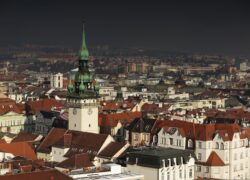
After more than 20 years of planning, Brno’s long-awaited new zoning plan has officially come into effect today, marking a major milestone in the city’s development. The new plan replaces the outdated 1994 document, which ceased to be valid on Thursday, and introduces a framework that balances urban expansion with environmental and heritage protection.

The zoning plan designates specific stabilized areas where existing developments will be preserved while allowing for the construction of new neighborhoods that integrate housing, work, and leisure activities. It also aims to maximize environmental protection while opening new opportunities for sustainable urban growth.

The approval process for the new zoning plan has been a long and complex one. In June 2022, Brno’s city council rejected a completed version, opting instead for revisions. The final proposal was approved last December. According to Petr Bořecký (ANO), Brno’s councilor for urban planning, the updated plan restores clarity and truthfulness to zoning regulations. He emphasized that stabilized areas will effectively protect existing neighborhoods, while redevelopment zones will facilitate sustainable expansion. The plan adds nearly 40 hectares of new construction areas, providing significant opportunities for development.

One of the key aspects of the new zoning plan is the utilization of over 100 brownfields, creating potential housing for up to 170,000 new residents. The city, currently home to 400,000 people, is expected to expand in conjunction with the development of transportation infrastructure, technical utilities, and public services. Among the specific projects enabled by the new zoning framework is the construction of an elementary and kindergarten school in the New Zbrojovka area, with design work set to be completed within two years and construction potentially beginning in mid-2027. The plan will also simplify the construction of flood protection measures, a critical improvement for the city’s resilience.

The zoning plan was drafted by the Office of the Architect of the City of Brno in collaboration with the municipal department of urban planning. Bořecký played a central role in overseeing the process, which faced thousands of objections and modification requests from stakeholders. He anticipates that lawsuits and additional proposals for changes will follow, though only minor amendments to the conceptual document are expected in the near future.

With the zoning plan now in place, Brno is poised for a new chapter of structured urban growth, balancing modern development with sustainability and historical preservation.

AXI IMMO – Warsaw Office Market in 2024: Stability, Centralization, and Future Challenges

The Warsaw office market in 2024 experienced a period of stabilization, with new supply increasingly concentrated in the city center and a high number of lease renegotiations shaping market dynamics. Despite marginal annual increases, the vacancy rate maintained a downward trajectory, indicating steady demand. According to the latest “Office Market in Warsaw 2024” report from AXI IMMO, key market drivers for 2025 will include a shortage of large office spaces, the growing influence of ESG criteria, and the continued rise of flexible office solutions.

The supply of modern office space in Warsaw expanded by 100,000 square meters in 2024, bringing the city’s total office stock to 6.29 million square meters. Notable new office completions included The Form by Lincoln Property, Lixa Buildings D and E by Yareal, Saski Crescent by CA Immo, and the first phase of the Vibe complex by Ghelamco. Development activity remained heavily focused on the city center, particularly around Rondo Daszyńskiego, which has emerged as the leading investment hub for office properties. Central districts accounted for 83% of new office supply, reflecting strong occupier demand for prime locations.

Emilia Trofimiuk, Research Manager at AXI IMMO, highlighted that while new projects continue to be delivered, the overall office stock remains relatively stable as outdated buildings are increasingly repurposed, often for residential use. Currently, over 230,000 square meters of office space is under construction in Warsaw, with 86% located in the central business districts. Major projects in the pipeline include The Bridge by Ghelamco, Upper One by Strabag, the redeveloped V Tower by Cornerstone, Office House by Echo Investment, Studio A by Skanska, and Skyliner II by Karimpol.

At the close of 2024, Warsaw’s office vacancy rate stood at 10.6%, reflecting a slight year-on-year increase of 0.2 percentage points. However, on a quarterly basis, the trend remained downward, with a marginal decline of 0.1 percentage points. The highest vacancy rates were observed in the Służewiec business district, where 19.7% of office space remained unoccupied due to an oversupply of outdated stock. In contrast, the central office zones recorded a significantly lower vacancy rate of 8.8%, underscoring the continued demand for prime locations.

Office leasing activity in Warsaw totaled 740,000 square meters in 2024, reflecting a slight 1% year-on-year decline. Lease renegotiations dominated transaction activity, accounting for 46% of all deals, marking a three-percentage-point increase from the previous year. Net take-up, which includes new leases and expansions, declined by 6% year-on-year, reaching 400,000 square meters. This drop was largely attributed to a limited supply of large office spaces and a growing trend of subleasing as companies sought cost-optimization strategies.

The largest leasing deal of the year was Santander Bank’s pre-let of 24,500 square meters in The Bridge. Other major transactions included lease renewals and renegotiations at Atrium Garden, Varso Place 2, T-Mobile Office Park, and Domaniewska Office Hub, with spaces averaging between 13,000 and 14,000 square meters. The most active tenant sectors in 2024 were finance, manufacturing, business services, and IT, demonstrating a continued corporate presence in Warsaw’s office landscape.

Rental levels in prime office buildings in central Warsaw ranged between EUR 19.00 and EUR 26.50 per square meter per month, with premium spaces exceeding EUR 30.00 per square meter. In non-central locations, rental rates started at approximately EUR 9.00 per square meter per month. Despite inflationary pressures and rising construction costs, rental prices remained stable compared to the previous year. However, service charges increased significantly, ranging from PLN 12.00 to PLN 45.00 per square meter per month, largely due to higher operational expenses and ongoing building modernizations.

Looking ahead to 2025, development activity in Warsaw is expected to remain concentrated in central locations, particularly around Rondo Daszyńskiego, where approximately 140,000 square meters of new office space is scheduled for completion. Market trends are likely to revolve around the limited availability of large office units, the growing preference for flexible office solutions, the optimization of occupied spaces, and the renovation of older buildings to align with ESG standards.

Jakub Potocki, Associate Director at AXI IMMO, predicts that tenants will increasingly prioritize office design and quality, while landlords will adapt their offerings to accommodate shifting market demands. With evolving workplace preferences and sustainability considerations shaping investment strategies, Warsaw’s office market is set for another dynamic year.


CBRE’s Nordic Hotel Market snapshot: Strong investment outlook for 2025

CBRE’s latest market analysis suggests that transaction volumes in the hotel sector will gain momentum in 2025, with strong interest from investors. There is a clear preference for assets with high operational exposure, meaning investors are particularly drawn to opportunities where they can assume vacant possession. Even core investors are becoming more active, given that most Nordic hotel leases include revenue-linked upside potential. Luxury hotels continue to outperform mid-market properties, with notable growth in the high-end segment. Demand for independent properties with a distinct Nordic identity and personalized guest experiences remains strong, catering to affluent travelers seeking authenticity and exclusivity.

Performance across the Nordic countries has varied significantly, influenced by local economic and investment conditions. Norway has seen exceptionally strong operational hotel performance in most areas, with certain cities emerging as clear market leaders. However, persistently high interest rates and unique tax policies differentiate Norway’s investment landscape from its regional counterparts. Sweden has faced prolonged economic challenges due to a slowing industrial sector, social issues, and higher unemployment, though a series of interest rate cuts are expected to boost economic recovery, leading to increased hotel demand and investor confidence. Finland continues to struggle with geopolitical and economic challenges, including a weakened position as a key transit hub to Asia. While investors remain cautious, hotel operators express greater optimism regarding future performance. In Denmark, hotel operations remain solid, but investment activity has been subdued, particularly in Copenhagen, where investors are waiting for the market to absorb existing oversupply before committing to new deals.

The Nordic hotel investment market recorded EUR 648 million in transaction volume in 2024, marking a 27% increase year-over-year. Among the most notable transactions were NREP’s acquisition of Clarion Hotel Stockholm, one of the city’s largest hotel assets, and its purchase of Comfort Hotel Karl Johan in Oslo, further solidifying its regional presence. Other significant deals included Pandox’s acquisition of Radisson Blu Hotel Tromsø, a key asset in Norway’s growing hospitality market, and Balder’s purchase of Clarion Hotel Karlatornet in Gothenburg, reflecting continued investment in Sweden’s major cities. The return of institutional capital to the hotel segment was highlighted by Folksam’s acquisition of Villa Dahlia in Stockholm, a transaction in which CBRE acted as the vendor’s broker on behalf of Vernum Fastigheter.

As inflation stabilizes and central banks maintain favorable interest rate policies, CBRE expects investment activity to pick up in the latter half of 2025. Investors are likely to focus on value-add opportunities, with a preference for vacant possession properties and short lease terms, ideal for repositioning strategies. While core capital remains cautious, there is a steady flow of capital targeting the sector, signaling renewed confidence in the Nordic hospitality market. With an increasing number of investors seeking opportunities across the region, 2025 is set to be a pivotal year for hotel transactions, driven by strategic acquisitions and a recovering economic outlook.

Authors: Erik Myklebust & Jussi Niemistö (CBRE)

Market reaction to the ECB interest rate decision: Views from the real estate industry

The European Central Bank today cut its deposit rate by 25 basis points to 2.75 per cent – a move that was widely expected. However, the reactions from the real estate and financial sectors show a differentiated picture of the effects on the market and the economy.

Peter Axmann, Head of Real Estate Clients at Hamburg Commercial Bank (HCOB), sees the decision as a further step towards a normalised interest rate structure. ‘In a healthy economy, the price of money rises the longer it is available. Long-term interest rates have already risen by 20 basis points since the beginning of the year. We consider a medium-term interest rate cut to be unlikely as long as neither inflation picks up again nor a sustained recession threatens.’

Prof. Dr. Felix Schindler, Head of Research & Strategy at HIH Invest, also views the interest rate cut as expected and predicts further steps in the coming months. ‘The situation at the middle of the year will be interesting when the interest rate gap with the USA widens further and puts the euro under pressure. At the same time, growth momentum in Europe will remain weak, while core inflation and price pressure in the service sector are likely to remain above the ECB target. Discussions about the ECB’s monetary policy could then become more controversial.’

A more critical assessment is provided by Francesco Fedele, CEO of BF.direkt AG. He points out that inflation in the eurozone is still not under control. ‘It rose from 2.2 per cent in November to 2.4 per cent in December. Price developments in the service sector in particular are driving inflation. Nevertheless, the ECB is lowering the key interest rate again – this could have consequences.’

Prof. Dr. Steffen Sebastian from the IREBS Institute for Real Estate is cautious about the decision. ‘While key interest rates often have a delayed effect on the real economy, capital markets react immediately. If the interest rate cut raises expectations of rising inflation, long-term interest rates could even rise. After the last ECB meeting on 12 December 2024, the ten-year swap jumped from 2.22 to 2.50 per cent. The ECB should proceed cautiously with further interest rate cuts – especially since the US Federal Reserve (Fed) has recently refrained from a further interest rate cut.’

By contrast, Patrick Brinker, Head of Real Estate Investment Management at Hauck Aufhäuser Lampe, does not expect any significant impact on the real estate industry. ‘Even a psychological effect is not to be expected. The market has adjusted to the current interest rate level, and the industry can work with it again. Although there is still a certain reluctance to invest, we see selective opportunities for niche strategies with attractive yields.’

Dr Tim Schomberg, CEO of KINGSTONE RE, expects a stabilising effect in the long term. ‘The further interest rate cut was announced, and the ECB aims to gradually reduce the deposit rate to around 2.0 percent by the end of 2025. The impact on ten-year government bonds is limited, but a more stable interest rate structure makes long-term real estate investments more attractive. A normalised interest rate market gives investors more planning security and strengthens the value of real estate.’

Opinions on the ECB decision vary: while some market participants see a positive normalisation of interest rates, others warn of possible risks for inflation and capital markets. How interest rates develop in the coming months is likely to be of great importance not only for real estate investors.

Photo’s: Peter Axmann, Leiter Immobilienkunden, Hamburg Commercial Bank, Prof. Dr. Felix Schindler, Head of Research & Strategy, HIH Invest, Francesco Fedele, CEO, BF.direkt AG, Prof. Dr. Steffen Sebastian, Lehrstuhl für Immobilienfinanzierung, IREBS Institut für Immobilienwirtschaft, Universität Regensburg, Patrick Brinker, Head of Real Estate Investment Management, Hauck Aufhäuser Lampe and Dr. Tim Schomberg, CEO, KINGSTONE RE

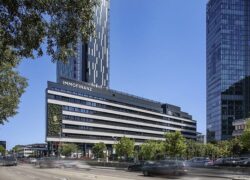
IMMOFINANZ rebrands as CPI Europe

IMMOFINANZ Rebrands as CPI Europe

At today’s extraordinary general meeting, shareholders approved the renaming of IMMOFINANZ AG to CPI Europe AG, following an amended resolution proposed by majority shareholder CPI Property Group. This rebranding reinforces the company’s affiliation with CPI Property Group and strengthens its strategic positioning as a leading real estate player in Europe.

The new company name is expected to be officially registered in the Company Register by March 2025.

Additionally, after the successful squeeze-out of S IMMO AG, Vladislav Jirka and Matej Csenky—formerly Supervisory Board members of S IMMO AG—have been appointed to the Supervisory Board of IMMOFINANZ AG. The board now comprises six shareholder-elected members and two representatives from the Works Council:
• Miroslava Greštiaková (Chairwoman)
• Martin Matula (Vice-Chairman)
• Iveta Krašovicová
• Matúš Sura
• Vladislav Jirka
• Matej Csenky
• Philipp Amadeus Obermair (Works Council representative)
• Anton Weichselbaum (Works Council representative)

CIJ Awards Poland 2024: Celebrating excellence in real estate and investment

Warsaw is set to host one of the most prestigious events in the real estate industry—CIJ Awards Poland 2025. As the longest-running commercial property awards in Poland, CIJ Awards continues to recognize and celebrate outstanding achievements in real estate development, investment, and innovation. This highly anticipated event brings together the country’s top developers, investors, and industry professionals, offering a unique platform to honor those shaping the future of Polish real estate.

CIJ AWARDS POLAND 2024 Gala Event
27th February 2025
Hotel Verte Warsaw Marriott Autograph Collection***** Warsaw

Scheduled to take place in Warsaw’s exclusive event venue, CIJ Awards Poland 2025 will highlight the best residential, office, retail, warehouse, and mixed-use projects, as well as recognize the industry’s leading investors, property management firms, and real estate professionals. With categories designed to reflect the evolving market landscape, the awards serve as a benchmark for excellence and innovation in real estate.

The CIJ Awards Poland are judged by a carefully selected panel of industry experts and professionals who evaluate nominees based on innovation, sustainability, investment value, and overall impact on the market. Winners are chosen through a transparent three-stage voting process, including a jury of over 100 industry specialists, ensuring credibility and prestige for the honored projects and professionals.

Winners Advance to the Prestigious CIJ Hall of Fame. A defining feature of the CIJ Awards series is that winners in each category automatically qualify for the Best of the Best CIJ HOF (Hall of Fame) Awards, where they will compete against the top projects and companies from across Central and Eastern Europe. This international competition further elevates the recognition and influence of Poland’s top real estate players on a broader European stage.

Networking, Recognition, and Business Growth. More than just an awards ceremony, CIJ Awards Poland 2024 is a premier networking and business development opportunity. With key decision-makers from leading real estate firms in attendance, the event fosters high-value connections, strategic partnerships, and new investment opportunities. It is a night where the most influential voices in real estate come together to celebrate success, exchange ideas, and set the tone for the industry’s future.

Be Part of the CIJ Awards Poland 2025
Whether you are a developer, investor, property manager, or industry service provider, the CIJ Awards Poland 2024 is the event to showcase your success. The CIJ Awards Poland offers companies the chance to gain industry-wide recognition and solidify their place among Poland’s real estate elite.

Join us for an unforgettable evening of celebration, recognition, and networking as we honor the best in Polish real estate. Don’t miss your chance to be part of this prestigious event!

Panattoni appoints Maciej Zawada as Head of Business Development for BTS operations

Panattoni has appointed Maciej Zawada as the Head of Business Development at Panattoni BTS, reinforcing its commitment to expanding its build-to-suit (BTS) operations. This strategic move comes as the company continues to strengthen its presence in both the Polish and European industrial sectors.

In his new role, Zawada will oversee the development strategy and execution of BTS projects, focusing on delivering tailored solutions that meet individual client needs. Panattoni has already developed over 4 million square meters under the BTS model in Poland, with a portfolio that includes highly advanced manufacturing facilities. The expansion of this segment has been fueled by nearshoring and friendshoring trends, which have positioned Poland and Central Europe as prime locations for industrial investment.

“Panattoni continues to lead the way in BTS project execution, adapting to the evolving demands of clients and the market. The shift of production closer to end customers presents a major opportunity for Poland and the broader region. I am excited to play a role in shaping the future development of this crucial sector,” said Maciej Zawada, newly appointed Head of Business Development at Panattoni BTS.

With nearly seven years at Panattoni, Zawada has been instrumental in driving the company’s BTS expansion. In 2024 alone, Panattoni completed several BTS projects, including the TRILUX factory in Świdnik (23,000 sqm), the Maxcess plant in Łubowo (13,500 sqm), a facility for Fortaco Group in Knurów (34,000 sqm), and the seventh phase of the K-FLEX campus in Uniejów (20,000 sqm). The company has also begun construction on a new facility for Valmet Automotive in Żary (8,800 sqm) and expanded into the Baltic markets of Lithuania, Latvia, and Estonia.

Prior to joining Panattoni, Zawada built a strong background in real estate at CBRE Poland. He holds a degree in International Relations from the University of Warsaw and another in Marketing and Management from the Warsaw School of Economics.

His appointment marks a new chapter for Panattoni’s BTS division, as the company aims to further capitalize on industrial and logistics trends reshaping the European market.

LATEST NEWS