Specialisation shifts office demand in Poland’s BPO/SSC sector

Poland’s business services sector is moving into a new stage of development, with companies shifting away from traditional cost-driven outsourcing toward high-value functions such as IT, advanced analytics, cybersecurity and R&D. This evolution is changing the structure of employment and altering office leasing strategies across the country, according to market observations from Walter Herz.

Rising labour costs and higher operational expenses mean that Poland is no longer chosen primarily as a low-cost outsourcing destination. At the same time, automation and the growing use of AI are reducing the need for repetitive transactional roles. Instead, business service centres are expanding into specialised activities that require highly qualified talent and deliver higher added value. Industry data indicates that more than 435,000 to 450,000 people are currently employed in business services in Poland, with the sector still adding new jobs despite global relocation trends. Rather than withdrawing, companies are upgrading the complexity of services delivered from Polish locations.

This transformation is strongly influencing the office market. Poland’s regional office cities, which previously attracted large-scale outsourcing projects, are seeing higher vacancy rates as demand for extensive back-office space decreases. Nevertheless, business services remain one of the most important groups of tenants, accounting for roughly 16 percent of total office demand nationwide. Kraków and Wrocław continue to record the highest leasing activity among regional markets, supported by renegotiations from companies such as Motorola Solutions and Shell.

Tenant behaviour is shifting from expansion to consolidation. Companies are opting for smaller but better located office spaces, choosing modern Class A buildings with strong transport accessibility and workplace amenities that support collaboration. The trend is particularly visible in Warsaw, where the vacancy rate in the city centre has fallen to approximately 6.9 percent. With very limited new supply under construction, competition for premium space is increasing.

At the same time, leasing strategies are changing. Instead of occupying large, single-purpose office space, companies are organising their portfolios around a central office that serves managerial and cultural functions, complemented by flexible space used for temporary projects or recruitment needs. Subleasing is gaining popularity as firms optimise underused space. Relocations typically involve a reduction of around 20 to 30 percent in leased area, although expectations around hybrid work and return-to-office policies can limit the scale of these reductions.

As Poland solidifies its position as a competence hub rather than a cost-based outsourcing market, investment decisions are shifting toward improving workplace standards, supporting advanced processes and prioritising ESG compliance. The sector is no longer expanding its office presence through added floor area, but through higher-quality, more efficient and more specialised workspace environments.

Author: Mateusz Strzelecki, Partner / Head of Tenant Representation at Walter Herz
German hotel market shows mixed sentiment as polarisation increases

The outlook for the German hotel investment market remains divided, according to the 13th HospitalityInside Investment Barometer, a survey conducted annually by Union Investment and HospitalityInside. The results indicate that expectations are recovering in some areas, while uncertainty persists in others.

The Development Index, which reflects perceptions of market and investment momentum, increased significantly compared to last year. Thirty percent of respondents now assess future development as good or very good, up from 17% in the previous survey.

In contrast, the Operations Index, which reflects expectations for hotel revenue performance, has continued its downward trend since 2023. Only 39% of respondents forecast positive revenue development, compared with 55% in the previous year, while 30% now expect weaker performance.

Despite this divergence, the combined results of the index survey point to a modest improvement in overall sentiment, with selective opportunities expected rather than broad-based growth.

Investor focus is shifting toward specific markets and hotel categories. Southern Europe continues to attract attention, particularly Spain, driven by strong demand in both leisure and business segments. Yield compression in Spain is increasing interest in Italy, while the DACH region (Germany, Austria, Switzerland) remains important for domestic investors.

There is also a clear polarisation in preferred hotel types. Investor interest is concentrated at both ends of the pricing spectrum — budget/economy hotels and luxury or lifestyle concepts — while the midscale segment faces stronger competition.

According to Andreas Löcher, Head of Investment Management Operational at Union Investment, concepts positioned in the budget and luxury segments are generally outperforming midscale hotels. He notes that midscale projects will require strong locations and well-recognised operators to remain competitive.

The survey gathered responses from hoteliers, investors, owners and consultants. Eighty-five percent of participants completed the survey, and 56% are primarily active in the DACH region. Data collection took place from 26 September to 28 October 2025.

Silverton secures full occupancy at office property in Meerbusch

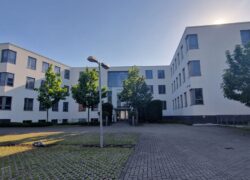
Silverton Group has completed leasing at its office property on Otto-Hahn-Straße 10 in Meerbusch, achieving full occupancy of the approx. 3,100 sqm building. Two new tenants — Lehmann Natur GmbH and Bolton Deutschland GmbH — have signed long-term leases for a combined 950 sqm of office space.

Bolton Deutschland will occupy around 500 sqm and will establish its administrative headquarters at the location. The lease was brokered by Aengevelt Immobilien GmbH & Co. KG.

Lehmann Natur, which specialises in organic food production, has leased approximately 450 sqm of office space within the same building. The space will be fitted out to contemporary workplace standards. The company has also taken storage areas, parking spaces and a kitchen located in the basement. Legal advisory for the landlord was provided by Dentons Europe (Germany).

The building is part of the Elephant portfolio, acquired in 2019 by Silverton together with EPISO 5, a fund managed by Tristan Capital Partners. Silverton acts as the asset manager for the property. The building holds a BREEAM “Good” certification and is also home to GEL Express Logistik GmbH and Corall Ingenieure GmbH.

According to Silverton Asset Solutions Managing Director Sebastian Steinert, achieving full occupancy reflects the results of active asset management and positions the property for further improvements through targeted fit-out and maintenance measures.

The three-storey office building was constructed in 2006 and includes 64 outdoor and 19 underground parking spaces, with electric vehicle charging points. The property has direct access to the A44 motorway and nearby public transport connections.

AFI begins construction of rental housing project in Prague’s Strašnice

AFI Czech Republic has started construction on AFI Home V Korytech, a new rental residential development in Prague 10–Strašnice. The project will deliver 519 apartments of various sizes, from studios to four-room layouts. Nearly half of the units will be 2+kk or 2+1, reflecting the current demand for medium-sized rental apartments.

Construction is divided into two phases, both of which have commenced. The first phase is scheduled for completion in the second quarter of 2028, with the second phase expected to finish in 2029. The general contractor is Metrostav DIZ.

The development consists of two residential buildings designed by m4 architekti. Shared facilities will include an underground garage with approximately 400 parking spaces, tenant storage rooms, and seven ground-floor commercial units. A reception and on-site property management services will be available to residents.

The design incorporates sustainability features such as green roofs and photovoltaic panels, aimed at reducing the building’s operational energy use. The scheme includes charging points for electric vehicles, bicycle storage, and a landscaped internal courtyard reserved for residents.

Strašnice is a well-connected residential district with access to metro, tram, and train services. The area is set to undergo additional public infrastructure improvements, including a planned conversion of a former railway corridor into a pedestrian and cycling route linking Strašnice and Vršovice.

AFI Czech Republic continues to expand its rental housing portfolio in Prague, with several projects under preparation or construction in the city.

Pytloun Hotels acquires building on Wenceslas Square for new five-star hotel

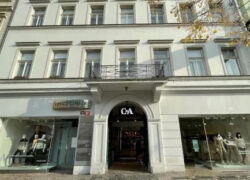
Pytloun Hotels has purchased the building at Wenceslas Square 33 in Prague and plans to convert it into a five-star hotel scheduled to open in 2027. The property was acquired from VN33 Building, part of the Alca Group. Both parties agreed not to disclose the transaction price.

The building currently includes retail units, including a store operated by the fashion chain C&A. According to the company, the retail space will remain part of the scheme after the renovation. The planned hotel is expected to offer around 220 rooms. The acquisition will be financed through a combination of company funds and bank financing.

Pytloun Hotels already operates a hotel on the lower part of Wenceslas Square — the Pytloun Boutique Hotel Prague, opened in 2018. The company currently operates 15 hotels across the Czech Republic, mainly in Prague and Liberec, along with several restaurants. Pytloun Hotels was founded in 2003 by Lukáš Pytloun.

Alca Group, the seller, stated that its intention was to find a partner able to redevelop the building and give it a new use appropriate to its location.

Recent market data indicates increasing investor activity in the Czech hotel sector. According to figures published earlier by Cushman & Wakefield, hotel transactions in 2024 totalled EUR 153 million, a 28% increase year-on-year, although still below the 2019 pre-pandemic peak.

Tourism in Prague continues to recover. In 2024, accommodation facilities in the capital recorded 8.1 million guests, an 8.6% year-on-year increase, surpassing 2019 levels by roughly 35,000 visitors, according to the Czech Statistical Office.

Norway adjusts ethical approach for its USD 1.6 trillion sovereign wealth fund

Norway has decided to temporarily scale back part of the screening process that governs which companies its sovereign wealth fund may invest in, opening the door to a review of how ethical rules should function in a more politically charged global environment.

The Government Pension Fund Global, created to invest revenue from North Sea oil production, is managed by Norges Bank’s investment division. The fund exists to safeguard national wealth and help finance future public expenditure, including pensions. Over the past two decades it has become the world’s largest sovereign wealth fund and a significant shareholder in global financial markets. According to public disclosures, the fund holds stakes in thousands of companies and owns just under 1.5% of all publicly listed equities worldwide.

Norway has long applied ethical guidelines that allow certain companies to be excluded due to environmental, social or governance concerns. In recent months, however, those rules have sparked tensions, particularly after the fund divested from firms linked to activities in politically sensitive regions. The move prompted criticism from several U.S. lawmakers who viewed the exclusions as politically motivated. During the subsequent parliamentary debate in Oslo, supporters of the rule review argued that Norway must avoid triggering diplomatic disputes through investment decisions.

The new approach does not abandon responsible investing, but it pauses some exclusion decisions while Parliament reassesses the criteria. Lawmakers argued that overly rigid rules might force the fund to sell positions in major global companies—especially in the technology sector—where the fund has some of its strongest returns.

The fund’s recent voting stance at Tesla illustrates the balance Norway is trying to strike. It holds slightly over 1% of the carmaker’s shares and voted against Elon Musk’s large pay package, citing concerns about governance and the concentration of decision-making power. Although its vote did not carry the day, the decision was consistent with the fund’s long-standing emphasis on board accountability.

Since 1998, the fund has generated an average annual return of roughly 6–7%, reinforcing Norway’s belief that responsible, long-term investing can support public finances while maintaining influence on global markets.

Judging Committee Finalises Voting for This Year’s CIJ Awards Slovakia 2025

Slovakia’s Leading Real Estate Experts Finalise Results

CIJ EUROPE is pleased to announce that the judging committee process for the CIJ Awards Slovakia 2025 has been successfully completed. The awards jury, composed of prominent figures from the Slovak real estate and investment community, has independently evaluated and scored this year’s entries, selecting the most outstanding developments, companies, and professionals operating in the market.

This year’s judging committee included respected leaders across development, investment management, brokerage, legal advisory, and media. Each member contributed deep sector knowledge and practical insight into the market performance and innovation efforts of the nominees.

Karol Sebo, CEO of UNITED Real Estate, brought expertise in complex urban redevelopment projects, particularly through the transformation of brownfield sites such as the Cukrovar mixed-use district in Trnava. Lukáš Šarközi, Partner at Mayflower, contributed his understanding of regional commercial and retail development, based on the company’s active pipeline of retail parks across Slovakia. Representing the investment side of the market, Vladimír Bolek, Member of the Board at IAD Investments, drew on his experience in real estate fund management and long-term strategic asset allocation.

Additional market insight was provided by Miroslav Tavel, Managing Director at OPC, known for his advisory experience in commercial development and investment structures. Filip Matovič, COO of ITB Development, evaluated submissions with a focus on execution quality and residential community design, reflecting ITB’s strong development presence in Bratislava. Robert Fletcher, CEO and Editor-in-Chief of CIJ EUROPE, participated both as jury chairman and industry observer, drawing on more than two decades of market knowledge across Central and Eastern Europe.

The professional advisory side of the jury included legal, brokerage, and fund-management specialists. Dominika Bajzáthová, Counsel at international law firm Kinstellar, assessed nominations based on regulatory readiness, transaction structuring, and ESG compliance. Tomáš Ostatník, Real Estate Executive at Holland & Company, provided a regional investment perspective, especially regarding cross-border buyers and the entry of new capital into Slovakia. Residential market expertise was contributed by Filip Žoldak, Partner at HERRYS, recognised for advancing professional brokerage standards and market transparency. Completing the panel, Andrej Lehocký, Head of Real Estate Funds Management at Tatra Asset Management, evaluated performance potential and long-term value outcomes from the investment manager’s perspective.

The judging process followed a secure digital voting system, ensuring independent scoring from all participants. Submissions were evaluated on measurable performance, sustainability, design quality, user benefit, and positive market impact.

The CIJ Awards celebrate measurable performance and visionary development. This year’s entries show that Slovakia continues to evolve with projects that combine strong concepts, sustainability, and execution quality, shaping the future of the market.Robert Fletcher, CEO / Editor-in-Chief, CIJ EUROPE/CIJ.World

The winners will be announced at the CIJ Awards Slovakia 2025 Gala in Bratislava. All national winners qualify automatically for the Best of the Best HOF Awards 2026 in Prague, where they will compete against award winners from 13 countries across Central and Eastern Europe.

365.invest Maintains Disciplined Growth and ESG Focus Amid Market Shifts, Says CIO Juraj Bielik

With Slovakia’s real estate fund sector surpassing €3 billion in total assets, 2025 has marked a period of growth, consolidation, and cautious optimism. In an interview with CIJ EUROPE, Juraj Bielik, Chief Investment Officer of 365.invest, outlined how the company is positioning its real estate funds to stay competitive while maintaining a disciplined, long-term investment strategy anchored in quality, sustainability, and stability.

“The growth of the real-estate landscape in Slovakia is a positive sign of maturity in our market, but signs of saturation are also emerging,” Bielik said. “For us, competitiveness is not about expanding at any cost, but about being measured, selective, and deeply analytical in how we deploy our clients’ capital.”

According to Bielik, 365.invest’s strength lies in its distribution through 365.bank and its integration with the KBC Group, providing a diversified investor base that allows for a long-term perspective.

The company’s portfolio remains diversified across retail parks, logistics, and residential development partnerships, each contributing to balanced performance despite a challenging macroeconomic environment.

“In retail parks, we focus on well-managed properties anchored by resilient tenants such as grocery stores, pharmacies, and essential service providers,” Bielik explained. “The aim is to create balanced tenant ecosystems that support community life rather than just attract occasional visitors.”

In the logistics sector, 365.invest targets strategic locations connected to major supply routes, with an emphasis on reliable tenants and long-term lease covenants. “We evaluate not only current demand but the depth of the surrounding ecosystem to ensure that properties remain relevant across market cycles,” Bielik said.

For residential investments, the company continues to form partnerships with trusted developers and selectively supports new collaborations where “the economics are sound and the project meets real market needs.” He added that the fund’s approach to housing investments remains broad but consistent in principle: “construction quality, responsible materials, ESG alignment, and economic viability.”

Portfolio Performance and Outlook

Over the first three quarters of 2025, the 365.invest Real Estate Fund remained close to its performance target, despite slightly lower year-on-year returns. Bielik said the firm completed ten acquisitions—eight for the large retail fund and two for qualified-investor funds—and executed three divestments to optimise liquidity and balance risk.

“Retail parks continued to show resilience supported by long lease terms, low tenant turnover, and occupancy above 95 percent,” he noted. The office segment, meanwhile, experienced continued lease renegotiations and tenant incentives. “Premium buildings in strong locations maintained occupancy, and we focused on extending leases and upgrading systems in line with ESG standards.”

In logistics, performance remained stable, underpinned by long-term contracts with an average lease duration of over five years. Bielik said the company had prioritised energy efficiency upgrades, including photovoltaic panels, LED lighting, and automated management systems.

“We focused on improving cash-flow predictability and planning for future reinvestment,” he said. “This year’s results are transitional and an opportunity to strengthen the foundation for long-term performance.”

Integrating ESG and Long-Term Resilience

Sustainability continues to be a key theme in the company’s investment philosophy. “Sustainability and energy performance have become meaningful factors in property selection, but they remain part of a broader evaluation framework,” Bielik explained. “We hold several BREEAM and WELL certified assets, and in both standing acquisitions and new developments, ESG considerations are integrated into our analysis.”

He added that 365.invest aims to “prioritise responsible improvements such as CapEx and operational efficiency dedicated to ESG standards rather than certification for its own sake.” The firm’s ESG roadmap for 2026–2028 includes carbon monitoring, building audits, and expanded certification under BREEAM-In-Use.

“ESG is not an overlay or a marketing label for us,” Bielik said. “It is a structural part of the investment process, applied in a way that strengthens the long-term quality and resilience of the portfolio while ensuring that financial performance remains paramount.”

Navigating Economic Headwinds

Bielik acknowledged that the 2025 investment environment remains challenging due to high interest rates, construction costs, and energy volatility. “The most tangible challenge has been maintaining attractive yields in a market where financing costs and required returns are not always aligned,” he said.

Nonetheless, he emphasised that disciplined pricing and active management have helped the company maintain stability. “Some rental renegotiations, particularly in secondary retail or older offices, reflect a more cautious stance from tenants, but this is a normal market recalibration,” Bielik noted.

He described the current market as a period of adjustment that will open opportunities for well-capitalised investors. “We see this phase as a transition that will ultimately create opportunities for disciplined investors. Our strategy remains consistent—stay selective, maintain liquidity, and focus on assets and partners that can perform across cycles. All of this, with a strong emphasis on innovation, which is our key advantage in a competitive environment.”

© 2025 CIJ EUROPE

Metropolis Bratislava: A New Benchmark for Premium Residential Living

Metropolis has officially joined the skyline of the New Downtown in Bratislava, and its arrival marks more than the completion of another residential scheme. It introduces a new standard of premium living in Slovakia — where architecture, comfort, technology and sustainability are treated as equal priorities rather than competing interests.

Developed by Mint Investments, Metropolis is now one of the most technically advanced residential buildings in the capital. Designed by architect Juraj Sonlajtner, the project consists of two slender towers rising to 63 metres, forming a striking M-shaped silhouette that now serves as a visual reference point in the evolving city centre. The geometry of the façades and the deliberate sculpting of volumes give the towers a recognisable identity, positioning the project among the city’s most distinctive contemporary buildings.

With an investment exceeding €60 million, Metropolis is the flagship residential scheme for Mint Investments in Slovakia, and the level of detail reflects that ambition. The development comprises 298 homes, ranging from compact studios to generous penthouses and five-room residences. Every unit benefits from a private outdoor space — whether a balcony, terrace or ground-floor garden — ensuring that residents maintain a tangible connection to the outdoors even in a vertical community.

Metropolis emphasises well-being through building technologies that are still uncommon in residential projects in the region. Ceiling cooling and heating systems are paired with decentralised heat-recovery ventilation, maintaining constant fresh air without losing temperature efficiency. External shading on the façades reduces heat load and helps stabilise indoor conditions, supporting energy-efficient operation throughout the year.

The interiors are finished to a standard that positions Metropolis firmly within the premium segment. Homes feature large-format porcelain tiles, solid wood parquet flooring, German sanitary equipment, floor-to-ceiling internal doors and carefully integrated hardware. The intent was not to follow trends, but to ensure that every interior element contributes to a high level of acoustic comfort, durability and visual coherence.

Metropolis also brings new urban functions to the district. The ground floor includes 20 retail units, intended to support daily urban life and activate the surrounding public realm. Between the towers, a semi-private green park offers space for residents and visitors to gather, bringing greenery to an area dominated by office towers and commercial buildings. By opening part of the space to the public, the project supports the evolution of the neighborhood into a liveable, mixed-use district rather than an isolated enclave of residential towers.

Market response has validated the concept. More than 80% of all apartments were sold before completion, demonstrating not only strong demand for premium urban living, but also confidence in both the developer and the location. Buyers cite the project’s technical sophistication, architecture and urban lifestyle as the main reasons for choosing Metropolis — elements that traditionally define success in more mature residential markets.

Metropolis signals an important shift in Bratislava’s residential sector. Instead of building solely for density or speed, Mint Investments chose to prioritise long-term comfort, efficiency and architectural quality. The project shows that downtown living in Bratislava can match the expectations of international buyers and residents looking for the standards found in Vienna, Prague or Warsaw.

With its distinctive architecture, advanced technology and comprehensive approach to liveability, Metropolis stands as a new reference point for premium residential development in the Slovak capital — not only raising the bar but redefining what future urban living in Bratislava should aspire to be.


Silverton reaches full occupancy at Meerbusch office building as new leases are signed

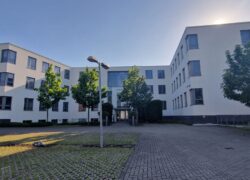
The Silverton Group has filled all remaining space at its office property on Otto-Hahn-Straße in Meerbusch after securing leases with two companies, Lehmann Natur and Bolton Deutschland. The agreements bring the roughly 3,100 sqm asset to full occupancy shortly after a previous deal with Corall Ingenieure, underscoring ongoing tenant demand for modern, efficiently managed space in the Düsseldorf region.

Bolton Deutschland, part of an international consumer goods group, will relocate its administrative operations to the property and has taken approximately 500 sqm of office space. The lease was arranged by brokerage firm Aengevelt Immobilien.

Organic food producer Lehmann Natur is also moving within the building into new premises covering around 450 sqm. The space will be tailored to contemporary workplace expectations, and the company has additionally secured auxiliary areas including storage rooms, parking, and kitchen facilities. The landlord received legal support from Dentos Europe during the agreement process.

The property belongs to the Elephant portfolio, acquired in 2019 by Silverton together with Tristan Capital Partners’ EPISO 5 fund. Silverton has overseen asset management of the building since acquisition. The property has a BREEAM Good sustainability rating and already hosts tenants such as GEL Express Logistik and Corall Ingenieure.

Sebastian Steinert, Managing Director of Silverton Asset Solutions, noted that the rapid absorption of space illustrates the effectiveness of hands-on asset management, even during more cautious market conditions. According to Steinert, upcoming small-scale investments and tailored fit-outs will continue to enhance the building’s appeal.

Completed in 2006, the three-storey building sits on a plot of around 4,000 sqm and offers both outdoor and underground parking, including charging stations for electric vehicles. The site benefits from easy access to the A44 motorway and public transport links.

LATEST NEWS