Geosan Development completes infrastructure works and releases final plots in Choťánky near Poděbrady

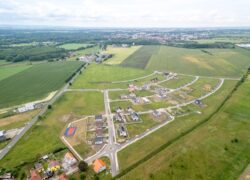
Geosan Development has completed another stage of technical infrastructure in the village of Choťánky in the Central Bohemian Region. The latest phase (1.C) has delivered 30 serviced residential plots ranging from 566 to 934 sqm, now connected to water, sewerage, electricity, and public lighting. New internal roads and sidewalks have also been finished to provide access to the plots. According to the company, eight plots remain available.

The land is prepared for individual family house construction, and the developer plans to launch the next phase of the project in spring 2026, with completion scheduled by the end of that year.

Choťánky is located approximately three kilometres from Poděbrady, with daily services available in the village and wider amenities—including schools, retail, and healthcare—provided in Poděbrady. Travel to Prague takes around 30 minutes by car to Černý Most or approximately one hour by direct public transport.

The surrounding area offers recreational options such as the Elbe cycling route, the golf course in Poděbrady and leisure activities around Jezero Poděbrady.

Study: Germany’s GHG quota system favours hydrogen trucks over battery-electric models

A new study from the German Institute for Economic Research (DIW Berlin) and the Institute for Energy and Environmental Research Heidelberg (ifeu) concludes that Germany’s current greenhouse gas reduction quota (GHG quota) creates uneven incentives for zero-emission heavy vehicles, favouring hydrogen fuel cell trucks over battery-electric models.

The GHG quota requires fuel suppliers to reduce emissions from the fuels they place on the market and allows them to meet targets by supporting the use of alternative drive systems. According to the DIW/ifeu analysis, the quota methodology currently overestimates the emissions associated with power supplied to battery-electric trucks and underestimates their efficiency advantages. In addition, the system applies flat-rate mileage assumptions that do not reflect the typical use of heavy battery trucks, resulting in a lower calculated emission reduction compared to hydrogen vehicles.

The report notes that battery-electric trucks have recently recorded the strongest growth in the German heavy-duty segment and represent the most energy-efficient option for decarbonising freight transport. However, under the current quota mechanism, fuel cell trucks receive a greater quota benefit, which could influence fleet investment decisions.

The authors recommend a short-term adjustment of default electricity emissions and consumption assumptions, followed by a broader reform to ensure that the quota accurately reflects real energy efficiency and climate impact.

IWG Reports Solid Q3 Growth in Managed & Franchised Network as Occupancy Strengthens Across Portfolio

International Workplace Group (IWG), the world’s largest hybrid workspace operator, reported steady network expansion in the third quarter of 2025, supported by strong growth in its Managed & Franchised segment and continued improvements in occupancy across its company-owned centres. The company generated $1.1 billion in system-wide revenue, up 4% year-on-year, with performance underpinned by a capital-light expansion strategy and rising demand for flexible workspace.

The Managed & Franchised portfolio delivered the strongest contribution, with 36% system-wide revenue growth and an 83% increase in recurring management fees, reflecting the acceleration in new signings and openings following increased H1 investment. The group signed 335 new centre deals during the quarter and opened 215 locations, representing year-on-year growth of more than 40% in both categories. By the end of September, IWG operated 245,000 rooms and 1,519 centres across its managed and franchised network.

Company-owned operations remained broadly stable, recording $806 million in revenue, in line with Q3 2024. Occupancy improvements from the first half of the year continued to feed into performance, with management expecting these trends to support revenue growth into 2026. RevPAR softened slightly by 3%, consistent with the company’s strategy to prioritise occupancy gains before pricing adjustments.

Digital & Professional Services reported revenue of $106 million, an 8% decline year-on-year, though underlying revenue remained stable after adjusting for an exited contract.

The group continued to return capital to shareholders, with more than $100 million distributed year-to-date. Net financial debt rose to $813 million, driven by a share repurchase of 16.7 million shares for $47 million during the quarter. IWG confirmed that $173 million of its 2027 convertible bond will be repaid on 9 December, leaving no material debt maturities until 2029.

Management reiterated full-year 2025 guidance, including expectations for higher centre growth than in 2024, stable adjusted EBITDA and net debt forecasts, and continued commitment to achieving at least $1 billion in medium-term EBITDA. The company will outline its updated strategic framework at an Investor Day in New York on 4 December.

Mark Dixon, Chief Executive of IWG, said the quarter’s results demonstrate the strength of the group’s hybrid operating model. “The incremental investment we have made in our Managed & Franchised segment has already led to an acceleration in the number of locations we have opened and added to the pipeline,” he said. “The evolution of occupancy and pricing sets us up well for further growth in the remainder of the year and into 2026.”

Photo: Mark Dixon, Chief Executive of IWG

Kamco Invest posts KWD 7.9 million net profit for first nine months of 2025

Kamco Invest has reported a net profit of KWD 7.9 million for the nine months ending 30 September 2025, up from KWD 3.5 million in the same period last year. Earnings per share increased to 23.07 fils, compared to 10.14 fils in 2024.

Total revenues rose 35.1% year-on-year to KWD 25.0 million. Fee and commission income amounted to KWD 11.5 million, slightly below the KWD 12.1 million recorded in the first nine months of 2024. The increase in total revenues was mainly attributed to investment portfolio performance and proceeds from a legal case in favour of the company.

Assets under management totalled USD 16.4 billion as of the end of September, a 3% increase since the beginning of the year. Kamco Invest said its managed portfolios outperformed their benchmarks, with equity funds ranking among the stronger performers on Boursa Kuwait and Tadawul, based on public disclosures.

In the alternatives segment—which includes real estate, private equity, and structured products—the company completed the acquisition of a 60% stake in European Green Logistics Space (EGLS), a developer and manager of logistics properties in Europe. Kamco Invest also exited its investment in Turkish fashion retailer Yargici, selling the stake to TIMS Group.

The firm continued to deploy capital through its private equity platform, with investments in technology companies Foodics and Unifonic. Its closed-end JEDI Fund, focused on U.S. technology investments, reported a multiple on invested capital of 1.3x.

Kamco Invest’s investment banking division advised on several transactions during the period, including acting as joint lead manager on USD 4.3 billion of bond and sukuk issuances across Kuwait, Saudi Arabia, the UAE, and Qatar.

The brokerage subsidiary continued to expand its client base through digital trading services. Meanwhile, the company’s operations in Saudi Arabia and Dubai International Financial Centre reported growth in asset management activities. Kamco Invest – Saudi signed a partnership with Flexam Invest to offer leasing investment products and relocated to new offices in Riyadh’s King Abdullah Financial District.

Total assets rose 4.8% to KWD 136.1 million, while shareholders’ equity increased 10.1% to KWD 68.5 million. The company maintained a “BBB” long-term credit rating and “A3” short-term rating with a stable outlook from Capital Intelligence as of May 2025.

Company representatives said the year-to-date results reflect disciplined execution of the firm’s strategy and continued expansion of investment offerings.

Garbe Industrial and Logicenters mark progress on new light industrial project in Leipheim

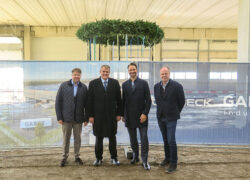
Garbe Industrial and Logicenters, the logistics development platform of Urban Partners, have held a topping-out ceremony for a new light industrial building in Leipheim, Germany. The project, located on a former military airfield that is being redeveloped into the 112-hectare “Areal Pro” industrial park, will provide approximately 11,600 sqm of space on a 20,000-sqm plot. The investment value is roughly €17 million.

Construction began in Q2 2025 following a rapid permitting process and preparatory demolition works. The scheme will offer around 10,400 sqm of hall space and 1,200 sqm of office and ancillary areas, along with ten loading docks, one ground-level door, 40 car parking spaces and two truck parking spaces. Completion is planned for early Q2 2026. Goldbeck is serving as general contractor.

The project includes several sustainability-focused features, such as photovoltaic panels designed for up to 1 MWp of power generation and heating via air-source heat pumps. Certification under the DGNB Gold standard is being pursued.

Garbe Industrial reports ongoing leasing discussions for the new premises. The site benefits from proximity to the A8 motorway and direct access to the A7 via the Ulm/Elchingen junction, linking the location to the Ulm, Stuttgart, Augsburg and Munich metropolitan areas.

Romania: Real estate transactions edge up in October, but remain below last year’s level

Romania recorded 58,502 real estate transactions in October 2025, according to data from the National Agency for Cadastre and Land Registration (ANCPI). The monthly total represents an increase of 3,242 transactions compared with September, but activity remained lower than a year earlier. The number of properties traded — including houses, land and apartments — was 9,496 fewer than in October 2024.

Bucharest continued to lead the market with 8,829 transactions, followed by Ilfov (3,981) and Cluj (2,929). The lowest activity was reported in Teleorman (56 transactions), Covasna (394) and Sălaj (411).

At city level, most sales were recorded in Cluj-Napoca (1,096 transactions), Brașov (1,079) and Iași (877). The smallest number of transfers took place in Alexandria (21), Slatina (64) and Slobozia (71).

Mortgage activity also slowed. A total of 34,084 mortgages were registered nationwide in October, down 4,268 compared to the same month of 2024. Bucharest again led with 4,381 mortgages, followed by Constanța (2,942) and Ilfov (2,876). The lowest numbers were recorded in Sălaj (82), Harghita (88) and Covasna (102).

Sales of agricultural land were most active in Dolj (1,341 transactions), Timiș (613) and Buzău (580).

Source: ANCPI

Strategic Shift in Slovakia’s Industrial Market: Efficiency Over Expansion

Rising vacancy rates, cautious occupiers and a slowdown in automotive production have reshaped Slovakia’s industrial and logistics market. Speculative projects completed in 2025 added significant new supply, just as demand from Germany weakened and e-commerce occupiers became more selective.

To explore how developers and investors are adjusting, CIJ EUROPE sat down with Tomáš Ostatník, Real Estate Executive at Holland & Company, a commercial leasing and development specialist active across Slovakia.

After an unprecedented wave of new industrial completions, Slovakia’s logistics property market has entered a new phase — one defined less by rapid expansion and more by strategic consolidation and technical efficiency. The surge in supply collided with a shift in tenant behaviour and weaker leasing activity from automotive suppliers, forcing both developers and occupiers to rethink how space is planned and used.

According to Ostatník, the market continues to function, but the conversation has changed. Instead of competing for any available space, tenants are now focused on specifications that support automation, lower operating costs and meet ESG requirements. “Demand hasn’t stopped,” he says. “But tenants now focus on quality — clear height, automation readiness, ESG — not just square meters.”

A recent relocation of a major e-commerce company from GLP Senec to Mountpark Bratislava illustrates this shift. The decision was driven not by rent levels, but by technical parameters: ceiling height, layout, and the ability to integrate automation systems.

The investment market is undergoing a similar transformation. Institutional demand is high, but buyers want long-term income security. The sale-and-leaseback transaction involving DSV in Senec demonstrated that assets leased for ten years or more remain highly competitive. Ostatník notes that more logistics and production companies are exploring built-to-own and then sell models: developing a tailored facility that fits their needs, then selling the property to an investor once it is operational. “This allows tenants to monetize development gains instead of simply committing to a long lease with a third-party developer,” he explains.

Geography is also evolving. Historically, development concentrated on the Bratislava–Trnava corridor. Now, attention is shifting eastward, driven by new investments connected to the Volvo automotive plant and, longer term, the anticipated reconstruction of Ukraine. While the western region will stay strong due to established logistics routes, Ostatník says the east “is where the new opportunities are forming.”

At the same time, tenant behaviour reflects a more cautious economic environment. Rather than moving into new facilities, many occupiers are renegotiating existing leases or seeking small expansions. Higher vacancy rates mean developers with speculatively completed stock are more willing to offer incentives to attract tenants, while build-to-suit landlords are maintaining firmer positions.

Sustainability and efficiency have become universal themes in negotiations. Tenants expect modern buildings to be energy-efficient, solar-ready and adaptable to advanced automation. Consolidation is accelerating, with companies looking to bring multiple smaller units into one larger, more efficient facility to reduce energy costs and transportation complexity.

Ostatník believes that the stabilization seen at the end of 2025 is healthy for market maturity. “Well-located assets will remain competitive, but the next wave will come from new regions and new occupier profiles,” he says. Urban-adjacent last-mile logistics and strategically positioned projects in eastern Slovakia are expected to generate the next phase of investment and leasing activity.

Slovakia’s industrial and logistics sector is no longer driven by the speed of development, but by performance. The focus has shifted toward flexibility, efficiency, ESG compliance and the ability to adapt to new supply chain models. In a maturing market, one constant remains: strong tenants and good locations always find capital.

© 2025 cij.world

Market value of Prague’s municipal development land reaches CZK 9.4 billion

Market value of Prague’s municipal development land reaches CZK 9.4 billion

The Prague Development Company (Pražská developerská společnost – PDS), the municipal organisation responsible for managing selected city-owned development sites, reports that the market value of its real estate portfolio has risen to CZK 9.409 billion as of 1 June 2025.

The valuation was conducted by Knight Frank and covers 757,000 sqm of land entrusted to PDS by the City of Prague, with most locations earmarked for future residential construction, including planned municipal rental housing. The updated valuation forms part of regular annual assessments, which are intended to support strategic decisions on asset management and financing structures for upcoming projects.

PDS has commissioned annual market valuations since 2021, when the portfolio was first assessed at CZK 2.939 billion. Subsequent valuations show continuous increases:

  • 2022: CZK 4.298 billion

  • 2023: CZK 7.123 billion

  • August 2024: CZK 8.843 billion

  • June 2025: CZK 9.409 billion

The increase is attributed both to active development preparation by PDS and to planning decisions made by the Prague City Council, particularly zoning changes approved in mid-2024 for the Nové Dvory and Palmovka areas, which expanded development potential on several sites.

One segment of the portfolio — ten locations included in the first valuation in 2021 — increased in value from CZK 2.993 billion to CZK 6.994 billion by 2024, representing a gain of more than CZK 4 billion.

Deputy Mayor for Spatial Development, Petr Hlaváček, stated that the city’s upcoming Metropolitan Plan aims to further strengthen the value and development possibilities of Prague’s municipal land. According to him, PDS is currently preparing projects that could deliver around 8,000 municipal apartments, while the new zoning plan identifies potential for roughly 50,000 apartments on municipal land in the longer term.

PDS director Petr Urbánek said that regular market valuations are a tool for transparent asset management and help the city select suitable financing models for planned projects. He noted that the increased valuation reflects proactive preparation of development sites, particularly in the Palmovka and Nové Dvory areas.

Prague’s Councillor for Property, Adam Zábranský, emphasised that the city’s current policy focuses on retaining ownership of municipal land rather than selling it to address budgetary pressures. Retaining ownership, he said, allows the city to control future development and use the land for municipal housing and other public-interest projects.

PDS was established in June 2020 as a contributory organisation of the City of Prague. It manages selected municipal land intended primarily for residential development, including rental housing for key worker groups and single parents. The organisation estimates that 6,000 to 8,000 new apartments could be developed on the entrusted land over the next 10–12 years.

GARBE appoints Zuzana Štěpánková as Business Development Manager in the Czech Republic

GARBE Industrial Real Estate is expanding its Czech team with the appointment of Zuzana Štěpánková as Business Development Manager. The company, active in logistics and industrial real estate across Central and Eastern Europe, is strengthening its local development and leasing activities.

Štěpánková previously worked at IO Partners (formerly JLL) between 2020 and 2025, where she held the role of Senior Consultant. Her responsibilities included advisory services and tenant representation in the leasing of industrial and logistics space, managing lease processes from initial contact to transaction completion.

In her new position at GARBE, Štěpánková will focus on business development, leasing support for current and planned projects, communication with tenants and market partners, and maintaining long-term client relationships.

Martin Stratov, Country Head Czech Republic & Slovakia at GARBE, commented that her market experience and client network will contribute to the company’s activity in the Czech Republic.

Romania’s Audit Market Enters a New Era: Efficiency, Transparency and ESG Drive Change

Romania’s audit and assurance market is undergoing a period of rapid change. Regulatory expectations are rising, investors are demanding deeper transparency, and the introduction of new standards — including the International Standard for Less Complex Entities — is reshaping how small and medium-sized businesses access professional verification. At the same time, digital reporting, ESG data requirements, SAF-T submissions, and new European regulatory frameworks are transforming how auditors work across Central and Eastern Europe.

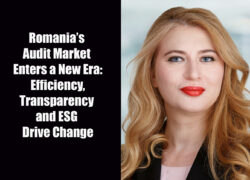
To understand how these developments are reshaping audit and ESG reporting, CIJ EUROPE turned to one of the sector’s leading voices: Claudia Bratu, FCCA — Audit & Advisory Partner and Head of ESG Services at TPA Romania.

In this Q&A, Bratu explain how the audit market is structured, how firms ensure proportional fees for low-activity companies, what every engagement letter must include to protect both auditor and client, and how the future of assurance will be shaped by technology, ESG reporting, and the new “less complex entity” standard.

  1. How is the auditing and assurance market structured in Romania and across CEE? How do professional service providers segment their offerings — from statutory audits and agreed-upon procedures to financial reviews or due diligence — depending on a company’s size, level of activity, and investor expectations?

There is a three-tiered audit and assurance market in Romania, built on a common framework of European regulation and international standards.

Romania’s audit market reflects the broader European structure, grounded in the EU Audit Directive, Law 162/2017 and the International Standards on Auditing (ISA).

Statutory audits are regulated and overseen by ASPAAS -the Statutory Audit Public Oversight Authority and conducted by auditors registered with CAFR – Chamber of Financial Auditors in Romania. It is worth mentioning that in Romania all the entities subject to statutory audit must have an internal audit function implemented and the internal audit reports shall be issued by an active member of CAFR. Noncompliance with the requirement might lead to penalties up to RON 100,000 (approximately EUR 20,000).

At the top, the Big Four dominate the audit of PIEs and large groups, banks and other financial institutions, offering not only statutory audits but also complex assurance services — from IFRS audits to assurance on sustainability reporting and IT controls and due diligence services.

Beneath them, a layer of mid-tier international networks serves medium-sized companies providing statutory audits, audits on the special purpose financial information, IFRS audits, limited reviews and agreed-upon procedures in most cases for subsidiaries of the multinational companies but also for local companies. Internal audit and assurance on sustainability reporting are also included in the offering of these mid -tier companies.

Finally, local and boutique practices often perform audits of local companies, limited reviews, or agreed upon procedures.

  1. Cases such as AUDIRE’s offer in Poland — a three-year “financial verification” priced at PLN 34,000 for a small, non-operating company — raise questions about proportionality. How do firms in Romania and CEE determine fair and appropriate fees for engagements involving micro or low-activity entities? Are there professional or ethical standards that guide such assessments to ensure alignment between cost, scope, and client size?

Across CEE, in general auditors base their fees not on company size alone, but on risk, effort, and professional responsibility. Even a dormant company triggers essential procedures: independence checks, risk assessment, documentation, and quality control under ISQM 1 These baseline requirements create a natural cost threshold below which professional quality cannot be maintained.

Ethically, firms are guided by the IESBA Code of Ethics, which requires that fees be reasonable and reflective of the nature and scope of work, without compromising independence or quality. Proportionality, in this sense, means aligning the engagement type with the client’s characteristics and industry in which it operates — not simply lowering prices. For very small entities, the solution often lies in adjusting the level of assurance rather than reducing audit quality: substituting a full audit with a limited review (ISRE 2400) or agreed-upon procedures engagement (ISRS 4400) focused on specific figures or transactions.

  1. One recurring issue in smaller due diligence or verification projects is the lack of clearly defined deliverables and methods. From your perspective, what are the minimum elements that a professional engagement letter or addendum should contain — in terms of methodology, liability, and scope definition — to ensure transparency and protect both the client and the auditor?

A well-drafted engagement letter is indispensable — it protects both auditor and client, ensuring that the scope and limitations of the work are understood from the outset.

At minimum, such a document should specify:

-The parties and scope of work of the engagement, including the intended users of the report.

-Applicable standards — whether ISA, ISRE 2400, ISRS 4400, or another framework.

-Deliverables and format of the report, with any confidentiality or distribution restrictions.

Responsibilities of both management and the auditor, emphasizing that the latter provides assurance, not absolute guarantees.

-Fees, timelines, and liability terms.

An annex listing all agreed-upon procedures can be particularly effective. It transforms what might otherwise be an informal “verification” into a structured, defensible engagement grounded in professional standards.

  1. With increasing use of digital tools, data analytics, and standardised reporting, how is the audit profession in Romania and the wider region adapting? Is there a noticeable convergence toward regional norms in pricing, timelines, and deliverable formats, or do national markets still differ significantly in how engagements are designed and costed?

It is clear that digitalization is reshaping how audits are performed across CEE. In Romania, most large and mid-sized firms now use audit platforms, data analytics, and secure portals for client communication and document exchange.

This digital shift is also fostering regional convergence. The use of common standards (ISA, ISRE, ISRS) and shared templates by international networks has aligned methodologies, deliverable formats, and reporting styles across borders.

However, significant differences persist in pricing, timelines, and market maturity. While methodologies may now look similar from Warsaw to Bucharest, actual fee levels remain anchored in local cost structures and competitive dynamics.

  1. Looking ahead, what do you see as the main trends shaping the future of audit and assurance services for SMEs and micro-enterprises? How can smaller companies — including those with little or no revenue — still access proportionate professional verification without facing corporate-scale costs?

The audit profession faces both challenges and opportunities. As regulatory expectations evolve, the demand for “right-sized assurance — proportionate, transparent, and technology-enabled — will continue to grow.

In recent years, the audit profession — governed by the International Auditing and Assurance Standards Board (IAASB) — has recognized that the traditional, one-size-fits-all application of International Standards on Auditing (ISAs) can be overly burdensome for small or less complex entities (LCEs). These are companies that have straightforward business models, simple financial reporting, and limited internal control structures — such as family-owned businesses, start-ups, or micro-enterprises with low transaction volumes.

To address this, the IAASB introduced the “International Standard on Auditing for Audits of Financial Statements of Less Complex Entities” (ISA for LCE), finalized in 2023. The standard is designed to maintain the same quality and credibility expected under the full ISAs, but with a simplified, risk-based approach that is scalable and proportionate to smaller businesses. The standard will become effective for audits of financial statements beginning on or after 15 December 2025, in jurisdictions adopting or permitting its use.

In Romania, statutory audits are not mandatory for micro-entities, except for banks, insurance companies, and other regulated financial institutions. Most small companies are not required to undergo a statutory audit of their financial statements. However, many such businesses still face increasing demands for financial credibility — from investors, lenders, or European grant providers — and seek a form of professional verification that is both credible and proportionate.

Under this context, some key trends shaping the future of audit and assurance for SMEs and micro-entities include:

  • Modular and scalable assurance services — tailored specifically to smaller businesses through flexible formats such as agreed-upon procedures (AUPs), limited reviews. This enables small and micro-entities to obtain professional services  focused on specific risks or on reporting areas, without the cost of a full audit.
  • Standardized and template-based engagements — using structured methodologies and digital templates (such as VSME for voluntary sustainability reporting) to deliver consistent, high-quality outcomes while keeping engagements efficient and affordable.
  • Growing demand for ESG and sustainability assurance — even among smaller companies, as banks, investors, and supply chains increasingly require verified sustainability or carbon data to support lending, procurement, or compliance decisions.
  • Digital transformation and automation — with cloud accounting, data analytics, and AI-assisted testing allowing auditors to review transactions more efficiently, reduce manual work, and improve the quality of insights provided to Small and micro entities.
  • Transparent pricing models — offering micro and small entities clear, tiered service options aligned to their size, complexity, and assurance needs, helping to ensure proportionality and predictability in costs.
  • Collaborative based approaches — where professional bodies, regulators, and technology providers develop shared tools, guidance, and digital platforms to support the consistent delivery of proportionate assurance across the SME sector.
  • Focus on education and capacity building — as professional organizations invest in training auditors to apply simplified, risk-based standards (like the new ISA for Less Complex Entities) effectively while maintaining the integrity and credibility of the assurance process.
  • Use of new data sources introduced through fiscal legislation — such as the SAF-T declaration — is becoming an emerging trend in the Romanian audit landscape. As companies are now required to submit extensive, standardized financial and tax data in electronic format, auditors have access to richer, structured datasets directly from client systems. The SAF-T file (Standard Audit File for Tax) enables more efficient analytical procedures, automated reconciliations, and risk assessments, significantly improving both audit quality and efficiency.

For small and low-revenue companies, proportional assurance need not mean “cheap” — it means fit for purpose. By combining scalable methodologies, digital efficiency, and ethical fee-setting, auditors across Romania and CEE can provide credible verification that aligns with client needs and market realities, without imposing corporate-scale costs.

© 2025 cij.world

LATEST NEWS