Digital technologies drive sustainable resource recovery in the construction industry

The construction industry is navigating a complex landscape, facing simultaneous demands for faster project completion and stricter environmental sustainability standards. As one of the largest contributors to environmental pollution, the sector is under increasing pressure to adopt circular economy principles, emphasizing responsible material management and waste reduction. According to Adam Heres Vostárek of PlanRadar, while individual companies ultimately decide how to integrate these principles, their collective actions will shape the industry’s future.

“In an era where the construction industry significantly impacts the environment, a proactive approach is essential for sustainable progress. Digital solutions play a crucial role by enabling comprehensive monitoring of materials throughout a project’s lifecycle, maximizing their reuse and reducing waste,” says Heres Vostárek.

Transforming Material Management with Digital Solutions

Specialized digital tools, such as PlanRadar, are revolutionizing material tracking in construction projects. By consolidating all project data on a single platform, construction teams can monitor material movement in real time, streamlining decision-making processes. Using mobile devices like smartphones and tablets, workers can record material usage on-site through checklists, photos, audio recordings, and notes. This system enables seamless documentation of material recycling and reuse decisions, simplifying project management from initial planning to the demolition of existing structures and the implementation of new developments.

Enhancing Recycling Efficiency Through Digital Documentation

Modern digital tools provide instant access to detailed building documentation, significantly aiding the recycling of materials after demolition. With historical records of construction phases, structural designs, and material specifications, companies can plan demolition projects more efficiently and optimize material sorting processes. Digital registration systems categorize materials based on technical parameters, dimensions, and weight, making the sorting and reuse process far more efficient.

When demolishing buildings, materials such as bricks, concrete, and steel can be systematically sorted and repurposed. High-quality steel beams, for example, can be reused in new projects, while crushed demolition debris can be incorporated into concrete mixes or used as a foundation layer for paved surfaces. Additionally, materials can be sold to specialized firms, with comprehensive documentation providing buyers with transparency on material quality and history, increasing trust in recycled building components.

Reducing Waste in New Construction Projects

Beyond recycling, digital tools also play a crucial role in preventing material waste during new construction. Architects and designers can leverage these technologies to optimize material use from the outset, minimizing excess and waste. Furthermore, they enable the integration of design-for-deconstruction principles, ensuring that buildings are designed with future dismantling and material reuse in mind.

According to the European Environment Agency, Europe leads globally in resource efficiency, with productivity rates over 2.5 times the world average. Nearly half of all waste is recycled. However, the average European still consumes 14 tonnes of materials and generates 5 tonnes of waste annually, one of the highest rates worldwide. The construction industry plays a major role in this footprint and must be part of the solution.

A Digital Future for Sustainable Construction

“If we aim to reverse the negative impacts of climate change, construction companies must act now to implement sustainable practices. The future of the industry lies in sustainability, and digitalization is the key to unlocking its potential,” concludes Heres Vostárek.

By integrating digital solutions into everyday operations, the construction industry can significantly improve material efficiency, reduce environmental impact, and transition toward a truly circular economy.

JD.com expands in Poland with new logistics hub at MLP Pruszków II

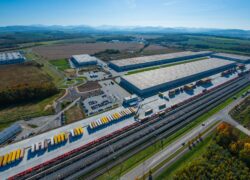
JD.com is strengthening its presence in Poland by securing a lease at MLP Pruszków II. Through its logistics subsidiary, JINGDONG Logistics, the Chinese retail giant will take over 9,600 sqm of modern warehouse and office space tailored to its operational needs. The company is set to commence operations at the site in March, with full facility availability expected by July 2025. BNP Paribas Real Estate Poland represented JINGDONG Logistics in the transaction.

JINGDONG Logistics, a global leader in advanced supply chain solutions, continues to expand its international reach. As the logistics arm of JD.com, it specializes in servicing key sectors such as FMCG, fresh produce, apparel, household goods, and children’s products. Headquartered in Beijing, JD.com ranked 47th on the Global Fortune 500 list in 2024. The company operates an extensive network of over 1,600 warehouses in China and nearly 100 worldwide, amounting to a total of 32 million sqm of logistics space.

The logistics provider has gained a strong reputation for setting new industry standards with innovations such as same-day delivery and 24-hour local market distribution. Leveraging AI, big data, cloud computing, and the Internet of Things (IoT), JINGDONG Logistics has embraced automation and digital operations, driving efficiency and intelligent decision-making across its supply chain.

“2025 will be a transformative year for JINGDONG Logistics Poland as we expand our warehousing network to shorten delivery times and enhance efficiency. Poland is a market with enormous potential, and we are committed to strengthening our position here,” said Veysel Isik, Country Manager of JD Logistics Poland.

The choice of MLP Pruszków II as the company’s new Polish base underscores the attractiveness of the location. As the largest logistics complex in the Warsaw region, the facility offers a total target leasable area of 420,000 sqm. Strategically positioned in the Brwinów municipality, just five kilometers from Pruszków and near the A2 motorway, the site ensures excellent transport links to Warsaw and other key regions in Poland and Europe.

JINGDONG Logistics’ decision to establish its Polish hub at MLP Pruszków II reflects the growing appeal of Poland as a prime destination for global logistics operators. Tomasz Pietrzak, Leasing Director Poland at MLP Group, emphasized the flexibility and sustainability of the park’s facilities: “With our built-to-suit solutions, we can adapt spaces to tenants’ specific needs, offering modern and environmentally friendly infrastructure.”

The transaction also highlights Poland’s role as a strategic gateway for international supply chains. “This deal reinforces Poland’s significance as a top logistics destination in Europe. JINGDONG Logistics will benefit from state-of-the-art facilities in a prime location, significantly enhancing its European operations,” said Michał Rdzanek, Director at BNP Paribas Real Estate Poland.

As JD.com and JINGDONG Logistics continue to expand in Europe, their investment in MLP Pruszków II signals a long-term commitment to the Polish market, further cementing the country’s role as a central hub for e-commerce logistics.

Concens Investments expands Ostrava Airport Multimodal Park with new construction for BMW Group

Developer Concens Investments has commenced construction on the third phase of the Ostrava Airport Multimodal Park (OAMP) at Leoš Janáček Airport in Mošnov. The latest expansion, which will be used by the BMW Group as an overseas logistics center, is a significant milestone in the continued development of the strategically located industrial park.

The construction of three new logistics halls is expected to be completed by the first quarter of 2026. This expansion is a result of a long-term lease agreement signed with BMW Group, reinforcing the site’s importance as a major logistics hub. “Thanks to this partnership, we can continue developing a location where we have been operating since 2018. It is unique due to its geographical position and the ideal combination of air, truck, and cargo rail transport,” said Tomáš Novotný, CEO of Concens Investments.

BMW Group’s decision to expand its operations in the Czech Republic further strengthens its presence in the country. “I’m very pleased about the expansion of activities and the increased importance of the Czech Republic for BMW Group. Alongside the Future Mobility Development Center near Sokolov, this unique logistics center in Ostrava will play a crucial role in our operations,” said Maciej Galant, General Manager of BMW Czech Republic.

Concens Investments has been actively developing the Ostrava Airport Multimodal Park in phases since 2018. The first phase saw the construction of four halls, covering a total of 138,000 sqm, which were leased to leading logistics and manufacturing companies. This phase also included a railway terminal spanning 151,000 sqm. In 2021, part of the complex, along with an industrial park in Nošovice, was sold to U.S. real estate investment fund EQT Exeter.

The second phase, currently under construction, involves the development of four additional halls totaling 120,000 sqm of commercial space. These A-class facilities are designed for logistics and light manufacturing and are available for leasing.

The newly launched third phase, now underway, is being built on a 513,000-sqm plot acquired by Concens Investments from the Statutory City of Ostrava. The development includes three new halls that will serve as BMW Group’s distribution center under a 10-year prelease agreement. Construction also includes access roads and a private railway terminal to facilitate transport efficiency.

Looking ahead, a fourth phase is in preparation, which will feature a 97,500-sqm industrial hall on a 155,000-sqm site. With a valid building permit already secured, this phase will further expand the park’s capacity.

Once fully completed, the Ostrava Airport Multimodal Park is expected to exceed 550,000 sqm of gross leasable area, positioning it as one of the largest and most advanced logistics hubs in the region. The expansion aligns with the Czech Republic’s growing role as a key European logistics and manufacturing destination, particularly for automotive and industrial sectors.

Sonar Real Estate focuses on portfolio optimization and market expansion

Sonar Real Estate navigated a year of subdued transaction activity in 2024 by strategically optimizing its managed portfolios, expanding its workforce, and positioning itself as a key player in workout advisory services. Despite a challenging market, the company ended the year with a strong asset base, increasing its assets under management to approximately EUR 3.0 billion. Staffing across its five branches in Germany grew from 51 to 59 employees, reinforcing its operational capabilities.

CEO and Managing Partner, Christoph Wittkop, reflected on the past year, emphasizing the company’s proactive approach in enhancing operational efficiency. “As expected, 2024 saw fewer transactions. Nevertheless, for Sonar, it was a good year, as we benefited from our diversified business areas. More importantly, we utilized this period to optimize the portfolios under our management, which comprise 144 individual properties. Alongside a series of lettings, we implemented ESG initiatives, capital expenditure investments, and refurbishment projects totaling approximately EUR 95 million. The property management team we established in 2023 has proven highly effective, playing an increasingly vital role in our business,” Wittkop stated.

Throughout 2024, Sonar successfully closed three transactions, including two sales and one acquisition, amounting to a total volume of approximately EUR 90 million. The company also secured new asset management mandates as investors shifted their preferences, including the management of a large office property at Berlin’s BER Airport. Sonar anticipates further mandates in 2025 as asset managers realign their strategies.

In leasing activity, Sonar secured agreements for approximately 63,000 square meters of space, with 31,000 square meters of new lettings and 32,000 square meters in lease extensions. A key achievement was the completion of the revitalization of Chausseestrasse 23 in Berlin-Mitte, where the company successfully handed over the fully modernized office building to a new long-term public-sector tenant. The 21,500-square-meter office property had undergone a sustainable value-add transformation following the previous tenant’s departure in 2021.

Sonar Development, the company’s development arm, embarked on a major office-to-residential transformation in 2024. Acting on behalf of an institutional investor, it began repurposing two vacant office buildings at 71–79 and 87 Eschborner Hauptstrasse into approximately 200 modern residential units. This project, designed to address the growing housing demand in the region, integrates sustainable solutions and aims to achieve the KfW-55 energy efficiency standard. A comprehensive feasibility study was conducted in collaboration with planning partners to maximize the use of existing structures while ensuring sustainable redevelopment.

The company also made significant strides in workout advisory services, securing mandates to assist lenders with restructuring and asset management solutions for distressed portfolios. Sonar has already taken on assignments involving senior or partially secured loans, with a total volume in the triple-digit million range. The firm anticipates an increase in workout mandates from banks, pension funds, insurance companies, and insolvency administrators, particularly as lenders tighten their pressure on investors and developers amid looming refinancing challenges in 2025 and 2026.

Looking ahead to 2025, Sonar expects only a gradual recovery in transaction activity. Instead, market trends will continue to be driven by ESG initiatives, refurbishments, and potential changes in property usage. These endeavors require capital investment, which remains difficult due to high interest rates and cautious lending by traditional banks. “However, our experience demonstrates that implementing ESG measures does not necessarily entail high costs. We aim to showcase economically feasible solutions, leveraging the expertise of Sonar Development, which is in demand for both new builds and refurbishments,” said Wittkop.

With banks exercising caution, alternative financing sources such as real estate debt funds are becoming increasingly relevant. However, questions remain about whether the return expectations of these financiers will align with available financing options. While office properties in prime locations are expected to recover as an investment class, residential and logistics assets are likely to remain dominant in 2024. Foreign capital remains abundant, with investors actively seeking value-add opportunities, though transaction volumes have been constrained by significant pricing gaps and a limited number of distressed asset sales.

“Current workout mandates remind me of the final phase of the last crisis. However, rather than individual properties or projects, we are now seeing entire portfolios in distress,” Wittkop noted.

Sonar Real Estate has positioned itself as a strategic partner for investors, offering expertise in capital raising, redevelopment, and asset repositioning. The company’s capabilities extend to the disposal and transformation of underperforming assets, which are attracting growing interest from value-add investors. “With our nationwide presence and in-house capabilities in development and revitalization, we provide real estate investors with sustainable, future-oriented solutions,” Wittkop concluded.

Trei sells third U.S. multi-family development and expands residential pipeline

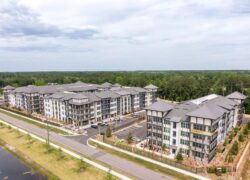
Trei Real Estate has successfully sold its third multi-family development in the United States, marking another milestone in its expansion strategy. The “Queens Wedgewood-Houston” project in Nashville, Tennessee, was acquired by a U.S. investor. Developed in partnership with Proffitt Dixon Partners, the 220-unit rental complex was completed in May 2024 at a total investment cost of approximately €58 million.

Between May 2024 and January 2025, Trei completed four multi-family projects, including developments in Jacksonville, Charlotte, and Raleigh, in addition to the Nashville property. Collectively, these projects delivered 1,153 rental apartments. Meanwhile, construction began on the company’s latest project in Nashville, “Chamberlain House” (formerly “Germantown Stockyard”), which will provide 345 rental apartments upon completion in 2026. The total investment volume for these five developments amounts to approximately €406 million.

The sale of “Queens Wedgewood-Houston” reflects the strong demand for rental housing in Sunbelt states. “Selling this project allowed us to free up capital for new residential developments. The rental housing segment in the Sunbelt remains highly attractive for both developers and investors, as evidenced by this transaction, which achieved an internal rate of return of approximately 15%,” said Trei Real Estate CEO Pepijn Morshuis. He emphasized Nashville’s strategic importance to Trei’s U.S. portfolio, reaffirming the company’s commitment to continued investment in the region.

In addition to ongoing projects, Trei is actively acquiring land for new developments. Upcoming projects include a site on Merritt Island in Florida’s “Space Coast,” an area experiencing economic growth driven by the aerospace industry and the Port Canaveral facilities. Another land acquisition is planned in Charlotte, North Carolina, home to Trei’s U.S. headquarters.

Morshuis highlighted the company’s confidence in the southeastern U.S. multi-family market, citing strong population growth, sustained rental demand, and favorable investment conditions. “The region offers an ideal environment for long-term property development with attractive construction costs and reliable returns. Our expansion strategy aligns with these economic trends, ensuring steady growth in our residential portfolio,” he added.

ATAL expands Skwer Harmonia residential project in Kraków with 251 new apartments

ATAL is expanding its Skwer Harmonia residential investment in Kraków with the introduction of 251 new apartments in both multi-family and single-family buildings. Located in the Podgórze district, near Półłanki Street, the modern housing estate is characterized by its Scandinavian-style architecture, low-rise buildings, and proximity to green areas, offering a blend of tranquility and urban convenience. Prices for the new apartments range from PLN 9,800 to PLN 13,500 per square meter.

The development is designed to attract those seeking a peaceful living environment with easy access to Kraków’s city center. According to Agnieszka Majkusiak, Sales Director at ATAL, the variety of available units—ranging from compact studios to spacious five-room apartments—ensures that both individuals and families can find an ideal living space. Apartment sizes vary from 30 to 124 square meters, and the development includes 248 parking spaces in an underground garage, alongside practical amenities such as storage rooms and dedicated spaces for prams and bicycles.

Skwer Harmonia stands out with its thoughtfully designed, low-rise buildings, unique façades, and carefully landscaped green spaces, creating a welcoming residential environment. The apartments feature large windows for ample natural light, well-planned layouts, and stylish common areas to enhance residents’ comfort. Many units also include balconies or ground-floor gardens, providing additional outdoor relaxation areas.

Residents will benefit from the convenience of nearby retail and service facilities, including shops, gas stations, and educational institutions such as primary schools and nurseries. For those who enjoy outdoor activities, the location offers access to recreational spots like the Brzegi Marina, Bagry Beach, and the Com-Com Zone Development Centre, along with numerous cycling and walking trails.

Connectivity is another highlight of Skwer Harmonia. Public transportation options are readily available with city buses operating on Półłanki, Christo Botewa, and Śliwiaka streets. The estate is just 3.5 kilometers from a major transport hub, which includes a tram and bus terminus as well as the Mały Płaszów P+R car park. By car, residents can reach Kraków’s Main Market Square in approximately 30 minutes. The development is also well-positioned for regional travel, with quick access to the S7 eastern ring road and the A4 motorway, facilitating travel towards Tarnów and Rzeszów in the east or Balice, Katowice, and Wrocław in the west.

In addition to the newly available units, six apartments remain for sale in the already completed phase of the development. These are part of an ATAL promotional offer valid until the end of March, which includes a 50% discount on finishing services. The promotion applies to three different ATAL Design packages—Basic, Optimum, and Premium—providing buyers with a turnkey solution that includes expert consultations, professional interior design, high-quality materials, and precise execution to the highest standards.

With its prime location, contemporary design, and strong transport links, Skwer Harmonia continues to be a sought-after residential choice in Kraków, combining modern urban living with the comfort of green surroundings.

ZOOMLION partners with CTP for €100 million investment in Hungary

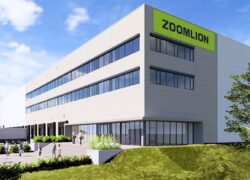
In a landmark deal for Hungary’s industrial and logistics sector, CTP, Europe’s largest listed developer, owner, and manager of industrial and logistics properties by gross lettable area (GLA), has secured a 10-year lease agreement with ZOOMLION. The agreement will see the Chinese construction and agricultural machinery giant relocate its operations to CTPark Tatabánya, with a €100 million investment in advanced production technology.

Under the agreement signed on 20 February, ZOOMLION will establish its new manufacturing base at CTPark Tatabánya, where CTP will customize a 35,000 sqm logistics facility (TBN5) to meet the company’s specific production needs. The facility will be adapted for the manufacturing of high-quality and efficient scissor lifts and boom lifts. Additionally, ZOOMLION will benefit from outdoor service areas and a newly developed 20,000 sqm testing zone, ensuring optimal conditions for its operations.

ZOOMLION Heavy Industry Science and Technology Co., Ltd., a global leader in construction and agricultural machinery, has been present in Hungary since 2021. The expansion to CTPark Tatabánya represents a major milestone in the company’s local and European growth strategy, reinforcing Hungary’s importance as a key market.

The decision to establish operations at CTPark Tatabánya was driven by the park’s state-of-the-art built-to-suit (BTS) capabilities, which include custom-built, sustainably designed buildings equipped with environmentally conscious technologies. Beyond the modernization of the existing 35,000 sqm facility, ZOOMLION will also gain access to additional services within the logistics park, further enhancing its operational efficiency.

The location of CTPark Tatabánya played a crucial role in ZOOMLION’s decision. Positioned near the M1 highway, the park provides direct connectivity to key transit routes linking Eastern and Western Europe. Its proximity to major regional capitals—including Budapest, Bratislava, and Vienna—ensures smooth logistics operations and rapid service to partners across Central Europe.

The Tatabánya-Komárom region, one of Hungary’s fastest-growing industrial hubs, was another key factor in the company’s selection. The area is home to several international enterprises, including leading automotive manufacturers, making it a prime location for businesses seeking logistical and supply chain advantages.

CTP’s commitment to long-term client partnerships and its ability to tailor properties to specific business needs were instrumental in finalizing the deal. In this instance, CTP is not only adapting the facility to ZOOMLION’s exact requirements but also providing additional services in newly developed buildings within the park.

CTP’s business model ensures that it retains ownership of its properties over the long term, allowing it to provide top-tier property management services. This includes sustainable energy solutions, cost-effective maintenance, and rapid response times, guaranteeing high-quality service for its tenants.

Highlighting the strategic importance of the partnership, Wang Yongxiang, Co-President of ZOOMLION, emphasized the company’s focus on localized manufacturing. “We chose CTPark Tatabánya as the base for our operations because CTP offers high-quality, sustainable properties and services, allowing us to fully concentrate on our production and logistics activities. This move will enable us to provide products and services to local and European customers with greater efficiency and convenience, strengthening our service capabilities in the region.”

Dr. Ferenc Gondi, Managing Director of CTP Hungary, welcomed ZOOMLION’s arrival, describing it as a significant milestone in attracting global industry leaders to the logistics park. “We are delighted to welcome ZOOMLION to CTPark Tatabánya, one of the world’s leading manufacturers in its field. This partnership aligns with CTP’s long-term strategy of building lasting collaborations with globally renowned companies. CTPark Tatabánya continues to be a highly sought-after location due to its prime positioning in one of Hungary’s most rapidly developing economic zones.”

With this strategic investment, ZOOMLION is set to enhance its footprint in Hungary while reinforcing the country’s growing role as a major industrial and logistics hub in Central Europe.

OECD report highlights healthcare challenges in Czechia and Slovakia

A new report by the Organisation for Economic Co-operation and Development (OECD), Does Healthcare Deliver?, provides an in-depth analysis of healthcare system performance across its member countries. The study, based on the Patient-Reported Indicator Surveys (PaRIS), assesses healthcare delivery from the perspective of patients, focusing on chronic disease management, trust in the healthcare system, and overall quality of care. Czechia and Slovakia feature prominently in the findings, with both countries facing unique challenges in providing effective and accessible healthcare.

Czechia continues to rank favorably in several healthcare performance indicators, particularly in patient-reported experiences. Czech patients express a high level of trust in their primary care physicians, with over 90% reporting positive experiences in care coordination and accessibility. This positions Czechia above the OECD average in terms of patient satisfaction and healthcare efficiency. The Czech healthcare system is recognized for its cost-effectiveness and strong primary care network. However, long waiting times for specialist care and the growing burden of chronic diseases present ongoing challenges. More than 80% of Czech patients aged 45 and older suffer from at least one chronic condition, with over half managing multiple conditions. The report highlights the need for improved primary care coordination and digital health solutions to enhance patient management.

Despite these challenges, Czechia benefits from a well-established continuity of care, where many patients maintain long-term relationships with their general practitioners. This stability contributes to better health outcomes and higher patient satisfaction. Efforts to integrate digital health solutions are underway, but there remains a need for better electronic health record systems and improved online access for patients.

In contrast, Slovakia faces more pronounced difficulties in healthcare delivery, particularly in patient satisfaction and access to care. Slovak patients report lower levels of trust in the healthcare system, with many expressing dissatisfaction with doctor-patient interactions and the responsiveness of healthcare providers. Long waiting times and limited access to specialists remain significant obstacles, further exacerbating disparities in health outcomes. Socio-economic inequalities in healthcare are particularly concerning, as patients with lower education and income levels report significantly worse health outcomes than those in higher economic brackets. This suggests gaps in preventive care and a lack of engagement with vulnerable populations who require chronic disease management and consistent medical attention.

Slovakia also struggles with person-centered care, as fewer patients feel involved in treatment decisions compared to their Czech counterparts. The OECD report stresses the importance of improving doctor-patient communication and making healthcare more patient-centric. Without these improvements, healthcare disparities may continue to widen, affecting overall public health outcomes.

Trust in the healthcare system plays a critical role in determining patient satisfaction, and both Czechia and Slovakia show moderate levels of trust, with Czechia ranking higher. The OECD findings reveal that trust in healthcare is closely linked to factors such as waiting times, the perceived quality of care, and patient-centered interactions. Czechia performs well in these areas, whereas Slovakia still struggles to meet patient expectations. The adoption of digital healthcare solutions could be a key driver in improving these areas, as countries with better digital integration tend to report higher patient satisfaction and better care coordination. Czechia has made progress in this area, while Slovakia still faces challenges in implementing digital strategies that effectively enhance patient care.

The OECD report outlines several recommendations for both countries to improve their healthcare systems. Strengthening primary care services is essential to better manage chronic conditions and reduce the burden on hospitals. Digital health adoption needs to be accelerated, ensuring that electronic medical records are fully integrated and accessible to patients. Reducing waiting times for specialist care remains a priority to enhance patient satisfaction and improve health outcomes. Addressing socio-economic disparities is also critical, requiring expanded preventive care programs and equitable healthcare access for all citizens. Increasing transparency and improving doctor-patient communication can help build greater trust in the healthcare system and ensure that policies prioritize patient needs.

Czechia’s healthcare system, while strong, requires further enhancements in specialist care access and digital health integration. Slovakia, on the other hand, must focus on addressing access barriers and reducing disparities in healthcare quality. The OECD’s Does Healthcare Deliver? report provides a roadmap for policymakers in both countries to strengthen their healthcare frameworks, ensuring that patients receive better, more equitable, and more efficient medical care in the years to come.

Peach Property Group appoints Stefanie Koch as COO

Peach Property Group AG has announced the appointment of Stefanie Koch as its new Chief Operating Officer (COO) and Member of the Executive Management, effective March 15, 2025. The company is taking significant steps in its transformation strategy, with targeted personnel changes aimed at strengthening its operational capabilities and market position.

With over 15 years of leadership experience in the real estate sector, Stefanie Koch brings expertise in real estate management, process optimization, and digital transformation. In her new role, she will focus on enhancing the company’s operational performance, as well as overseeing its IT and digital infrastructure. By integrating technology-driven solutions with operational excellence, she aims to drive cost efficiency and profitability growth. Prior to joining Peach Property Group, Koch served as Principal at Ritterwald Consulting, leading mandates in restructuring, digitalization, and automation. She was previously Managing Director at Deutsche Wohnen Immobilien Management GmbH, where she managed a portfolio of 165,000 residential and commercial units and played a key role in strategic portfolio management and digitalization initiatives.

In addition to Koch’s appointment, Peach Property Group has named Dr. Holger Franz as General Representative of its German entities, further strengthening its extended Management Board. A qualified lawyer with extensive leadership experience in real estate and financial sectors, Franz has specialized in real estate transactions and financing throughout his career. He initially worked as a partner at an international law firm before holding senior positions in real estate and PropTech startups. Since joining Peach Property Group in mid-2024, he has played a key role in executing a major portfolio transaction and capital increase.

Commenting on these appointments, Michael Zahn, Chairman of the Board of Directors at Peach Property Group, emphasized the company’s commitment to operational excellence. “The appointment of Stefanie Koch as COO underlines our dedication to elevating the efficiency and service quality of our Group. Her expertise in digital transformation and operational process optimization will significantly enhance Peach Property Group’s customer orientation and market competitiveness. She embodies modern and efficient real estate management that aligns with the evolving demands of the industry. We are confident that with her leadership, we will strengthen our operational structures, improve profitability, and continue our successful trajectory.”

Expressing enthusiasm about her new role, Stefanie Koch stated, “I am excited about this new challenge and look forward to working with the entire team to optimize operational processes, increase letting performance, and reduce vacancy rates. My focus is on integrating digital solutions with efficient workflows. A modern IT infrastructure will also provide valuable support to our employees, who are the face and key representatives of Peach Property Group.”

Gerald Klinck, CEO of Peach Property Group, highlighted the significance of these leadership changes. “With the appointments of Stefanie Koch as COO and Member of the Executive Management, and Holger Franz as General Representative, we are significantly strengthening our leadership team. Holger Franz’s role in our recent portfolio transaction and capital increase has been instrumental, and his extensive experience in real estate and financing transactions will be invaluable as we move forward with portfolio management and refinancing initiatives. I look forward to working with both colleagues and the entire Peach Property Group team as we implement our strategic plans.”

As of March 15, 2025, the Executive Management of Peach Property Group will consist of Gerald Klinck as CEO/CFO and Stefanie Koch as COO. Dr. Holger Franz will assume the role of General Representative for the company’s German entities, reinforcing Peach Property Group’s leadership in the evolving real estate landscape.

NEINVER achieves record sales and visitor growth in 2024

NEINVER has reported record-breaking results for 2024, with total sales in its centres reaching €1.627 billion, an 8% increase compared to the previous year. The company’s 20 managed centres—comprising 16 outlet centres and four retail and leisure parks—welcomed over 69 million visitors across six European countries, further solidifying NEINVER’s position in the market.

The outlet and retail parks managed by NEINVER in Poland, Germany, Spain, France, Italy, and the Netherlands experienced a surge in both foot traffic and consumer spending, with the average amount spent per customer increasing by 6%. Among these markets, the Netherlands led in growth with a remarkable 19% year-on-year sales increase, attributed to an expanded retail offering that saw 19 new brands opening stores. Spain followed with a 13% rise in sales, further contributing to NEINVER’s strong performance.

CEO Daniel Losantos highlighted the significance of these achievements, stating, “Our portfolio of centres has achieved excellent results, breaking sales records, increasing the number of visitors, and recording strong demand for retail space. Despite the challenging market conditions, we are maintaining a stable growth path. This success is the result of the commitment of our team, which consistently implements a management model based on the best brands, competitive prices, and a unique shopping experience to attract customers.”

NEINVER also achieved a record occupancy rate of 98%, the highest in its history. Losantos emphasized the trust that retail brands place in NEINVER’s management model, reinforcing the company’s commitment to continued investment in growth and expansion.

Expansion of Retail Offerings and New Brand Partnerships

Throughout 2024, NEINVER continued to experience strong demand for retail space, signing 412 lease agreements. Several global brands expanded their presence in NEINVER’s centres, including Calvin Klein and Tommy Hilfiger, alongside major store expansions for Skechers, Only, Desigual, and Jack & Jones at Amsterdam The Style Outlets. Il Lanificio made its debut at The Style Outlets in Amsterdam and Roppenheim in France, while the Bestseller group entered the Polish market, opening Jack & Jones stores in all FACTORY centres, as well as in Roppenheim.

Other notable expansions included Guess, which strengthened its presence in FACTORY Gliwice and FACTORY Kraków in Poland, as well as Castel Guelfo The Style Outlets in Italy. Le Creuset and Vero Moda joined Halle Leipzig The Style Outlets in Germany, further enhancing NEINVER’s brand portfolio.

In the sportswear segment, adidas expanded its footprint in FACTORY Poznań in Poland and Las Rozas The Style Outlets in Spain, where it introduced a new sales concept, “The Pulse.” PUMA also made significant moves, doubling the size of its store in Las Rozas and launching its first Puma Kids store in Getafe The Style Outlets in Spain. Additionally, Asics made its debut at the centre in Amsterdam.

Luxury and lifestyle brands also saw considerable growth, with Samsonite, VF Group (Vans and Napapijri), JOTT, Munich, Swarovski, and the renowned book retailer Mondadori partnering with NEINVER to execute their expansion strategies. Lefties, one of Spain’s most prominent fashion brands, opened one of its largest stores to date, occupying 4,500 square meters in Nassica, Spain.

Growth in Food and Beverage Sector

The food and beverage (F&B) sector within NEINVER’s centres recorded a 10% increase in sales from 2023 to 2024, now accounting for 10% of total brand sales. Key brands such as Starbucks and Popeyes expanded their presence, while new entrants including Chalito, Harry, Miscusi, Parma Menú, Love It, and I Love Poke joined the portfolio.

In line with its strategy to enhance the shopping experience, NEINVER also launched a new food court at Vicolungo The Style Outlets, offering a diverse selection of more than 15 food outlets to cater to its growing customer base.

LATEST NEWS