Prague approves major zoning plan change for Žižkov freight station redevelopment

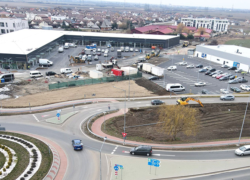
The Prague city leadership has approved a long-awaited change to the zoning plan, paving the way for significant development around the former Žižkov Freight Station. Alongside this decision, the city council also endorsed agreements with developers for financial contributions toward public infrastructure, a crucial step in transforming the area into a thriving residential district. The councilors will still vote on final approval of the plan and contracts.

The Prague City Hall has also acquired the historic station building from Czech Railways, securing a key element of the redevelopment plan.

Major Urban Transformation Underway

“This is a very significant change. The character of the area will evolve, allowing for the construction of apartments, schools, and public amenities. A new urban district will emerge here,” said Zdeněk Kovářík (ODS), Prague’s finance councilor.

The majority of land surrounding the station had previously been under a development ban, which necessitated the zoning plan change. Although a new construction law rendered the ban obsolete, an updated zoning framework remains essential for residential developments in the area. The city first initiated the plan change in 2008, with formal proceedings beginning in 2010.

Largest Zoning Plan Change in Prague’s History

The approved modification marks the largest zoning adjustment in Prague, allowing for housing for up to 20,000 residents. Approximately 95% of the area will be designated for residential use, based on an urban study commissioned by the city, which envisions a mix of housing, public services, schools, and parks. However, the project has faced criticism from local activist groups and environmental organizations over its impact on the area.

Developer Contributions & Infrastructure Commitments

To fund essential public infrastructure, the city has secured financial commitments from developers through so-called planning agreements. Contracts have already been signed with Finep and Prague 3, while additional agreements with Sekyra Group, Central Group, Penta, and MY Park were approved yesterday. In total, investors will co-finance 1.4 billion CZK in public infrastructure.

Developers have pledged to construct a kindergarten, social service facilities, four parks, and renovated public spaces. They will also provide land for a planned tram line, which Prague’s transport authority intends to begin constructing next year.

“A significant portion of these funds will go toward educational development in the area. The agreement with Central Group includes building a six-classroom kindergarten, while Sekyra Group will contribute over 411 million CZK for a new elementary school,” stated Pavel Dobeš (STAN), Deputy Mayor of Prague 3. Overall, the area will see the construction of five kindergartens and two elementary schools.

Future of the Historic Žižkov Freight Station

At the end of last year, Prague purchased the historic station building from Czech Railways for 1.43 billion CZK. The site will be revitalized to include a school, apartments, retail, and cultural spaces.

“The station building is monumental and plays a key role in the transformation of one of Prague’s largest brownfields. We aim to incorporate an extension with mixed-use facilities, though this will require discussions with heritage authorities,” said Adam Zábranský (Pirates), Prague’s property councilor.

Built in the functionalist style between 1934 and 1937, the Žižkov Freight Station ceased operations in 2002. With the new zoning plan and infrastructure commitments in place, the area is set for a major revival, turning it into one of Prague’s most significant redevelopment projects in the coming years.

Source: CTK
Photo: Zdeněk Kovářík (ODS)
Manoral Global acquires former Komerční banka branch in Smíchov

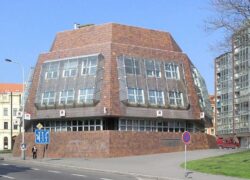
The former Komerční banka branch in Prague’s Smíchov has been acquired by Ústí-based company Manoral Global, owned by entrepreneur Radko Vrbík. Designed by renowned architect Karel Prager, the brutalist-style building, shaped like a truncated pyramid, was no longer suitable for the bank’s needs. The purchase price has not been disclosed, according to a report by the e15 server.

“We have sold it and are glad that the building is set to have some further life and hopefully a noble purpose. For us, it was no longer suitable; over the years, the building became inadequate for us,” said Jan Juchelka, CEO of Komerční banka. He noted that the Smíchov branch had been one of the bank’s least efficient properties in Prague, and the local team was “extremely happy” to have moved to a more modern space.

The new owner has not yet revealed future plans for the site. However, Zdenka Klapalová, head of the Czech branch of British real estate firm Knight Frank, suggested that the commercial nature of the building may lead to a similar function as in the past. Knight Frank served as Komerční banka’s advisory partner in the transaction.

The two-story structure, originally envisioned in the 1970s as a headquarters for the State Bank of Czechoslovakia, was completed in 1992. Komerční banka acquired it in 1993 and operated a branch there until 2022. Over the years, the building has drawn mixed reactions from both professionals and the public.

Karel Prager, one of Czechoslovakia’s most significant 20th-century architects, left a controversial mark on Prague’s skyline. His Research Institute of Macromolecular Chemistry in Břevnov was declared a cultural monument in 2000, yet many of his other projects have sparked divisive opinions. These include the former Federal Assembly building, the New Stage of the National Theatre, and the Smíchov bank branch.

Prager’s work also included the reconstruction of the Rudolfinum and the U Kříže residential complex in Jinonice, which won the Building of the Year award in 1999. As the fate of the Smíchov building unfolds, it remains to be seen whether it will retain its architectural legacy or undergo a dramatic transformation under its new ownership.

Source: CTK and e15
Photo: Wikidata

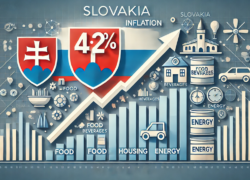
Harmonized inflation in Slovakia reaches 4.2% in January

Slovakia’s harmonized inflation rate, measured according to the uniform European methodology, reached 4.2% year-on-year in January 2025, while prices increased by 1.8% month-on-month.

The rise in prices was primarily driven by higher costs for alcoholic and non-alcoholic beverages, food, and housing with energy. The food and non-alcoholic beverages category had the highest impact on month-on-month inflation, contributing 0.32 percentage points, with food prices accounting for 0.11 percentage points and non-alcoholic beverages for 0.21 percentage points. Alcoholic beverages and tobacco added 0.26 percentage points, while housing, water, electricity, gas, and other fuels contributed 0.24 percentage points. Transport also played a significant role, contributing 0.24 percentage points. In contrast, price declines were recorded in health, which lowered inflation by 0.04 percentage points, and clothing and footwear, which decreased inflation by 0.05 percentage points.

The average annual HICP inflation rate, which measures the change in the average price level over the past 12 months compared to the previous 12-month period, stood at 3.1% in January 2025. This inflation metric is crucial for assessing price stability in Slovakia and forms part of the Maastricht criteria, which are necessary for euro area entry. The data underscores the importance of monitoring inflation trends as policymakers work to maintain economic stability in the region. As inflation continues to fluctuate, analysts will closely watch key sectors contributing to price changes, with particular attention to energy, food, and transport costs.

Source: Statistical Office of the SR

KINGSTONE RE acquires mixed-use residential and retail property in Weil am Rhein

KINGSTONE Real Estate (KINGSTONE RE) has acquired a mixed-use residential and retail development in Weil am Rhein from project and area developer BPD (Bouwfonds Immobilienentwicklung). The transaction was completed on behalf of the “KINGSTONE Bezahlbares Wohnen Deutschland” residential real estate fund, marking another strategic investment in affordable housing.

The development consists of 48 publicly subsidised rental apartments and 1,100 sqm of retail space. The forward deal includes both the 3,290 sqm plot and the turn-key construction of the building. Construction is set to begin by the end of the first quarter of 2025, with completion scheduled for late 2026. The deal was facilitated by HANSAINVEST Hanseatische Investment GmbH as the fund’s third-party AIFM. Estate agent Blue Tree Real Estate and legal advisors Heussen Rechtsanwaltsgesellschaft mbH supported the transaction, along with due diligence partners Case Real Estate, Arcadis Germany, and iib Consult. BPD received legal counsel from KFR Kirchhoff Franke Riethmüller Partnerschaft von Rechtsanwälten mbB. The financial details of the transaction remain undisclosed.

The development is located at the intersection of Hauptstraße and Riedlistraße, a prime spot in Weil am Rhein. The apartments, ranging in size from 55 to 100 sqm, will be distributed across three upper floors and an attic, catering to tenants seeking two- to four-room units. Residents will have access to an underground car park with 39 spaces, while an additional 33 surface parking spaces will be allocated to the retail units. Sustainability is a key feature of the project, with a green rooftop designed to capture rainwater, reduce particulate pollution, and provide natural insulation.

Dr. Tim Schomberg, Managing Partner and Co-Founder of KINGSTONE RE, highlighted the significance of this latest acquisition, stating: “We are pleased to secure our fourth real estate asset for the fund within a short period. Investor demand remains strong, reinforcing our commitment to affordable housing.”

Tobias Stüber, Head of Investor Sales & Strategic Projects at BPD, emphasized the importance of the project in addressing Germany’s housing shortage: “We are proud to contribute to the development of much-needed affordable housing in a challenging market. Finding a partner like KINGSTONE RE, which shares our vision, strengthens our commitment to future residential projects near the Swiss border.”

Ansgar Pape, Managing Director of KINGSTONE Residential Investments, underscored the security and long-term potential of subsidised housing investments: “The demand for affordable rental housing is at an all-time high, making these investments highly secure. We are actively evaluating additional properties and anticipate further acquisitions this year.”

Simon Lieb, Managing Director of KINGSTONE Residential Investments, noted that Bavaria and Baden-Württemberg are currently attractive markets for subsidised housing investments due to favorable public funding conditions. “This asset in Weil am Rhein aligns perfectly with our existing portfolio, which already includes two properties in Bavaria and another in Baden-Württemberg.”

Weil am Rhein, located in the South Baden region, offers strong infrastructure links and a prime location near the borders of France and Switzerland. Its proximity to the Rhine River and key international crossings makes it an attractive destination for both residents and businesses. The combination of affordability, strategic location, and sustainable features positions this development as a key addition to KINGSTONE RE’s growing real estate portfolio.

GTC completes sale of GTC X office building in Belgrade for €52 Million

Globe Trade Centre (GTC), a leading real estate developer and investor in Central and Eastern Europe, has successfully completed the sale of its GTC X office building in Belgrade for €52 million. The transaction underscores the growing investor appetite for premium office properties in Serbia’s capital and marks a strategic move for GTC in optimizing its property portfolio.

Located in one of Belgrade’s prime business districts, GTC X is a modern, Class A office building recognized for its high-quality design, energy efficiency, and strong tenant mix. The property has been a key component of GTC’s Serbian office portfolio, catering to multinational corporations and leading local businesses.

The sale aligns with GTC’s strategy of capital recycling, enabling the company to reinvest in new development projects and strengthen its presence in high-growth markets. The buyer of the GTC X building has not been disclosed, but the transaction highlights the continued interest of institutional investors in Belgrade’s commercial real estate sector.

“The successful sale of GTC X reflects both the strength of our portfolio and the demand for prime office assets in Belgrade,” said Yovav Carmi, CEO of GTC. “This transaction allows us to continue delivering on our long-term growth strategy and explore new opportunities in the region.”

The Serbian office market has remained resilient, with strong demand for modern office spaces driven by the expansion of international companies and a robust business environment. Investors are increasingly drawn to Belgrade due to its strategic location, competitive yields, and growing economy.

GTC has been active in Serbia for many years, developing and managing a portfolio of high-quality office buildings that meet the evolving needs of tenants. The completion of the GTC X sale marks another significant milestone in the company’s regional operations, reinforcing its reputation as a key player in the commercial real estate sector.

The €52 million transaction represents one of the largest office property sales in Belgrade in recent years and signals continued momentum in Serbia’s real estate investment market.

Slovakia’s hospitality sector sees strong growth in 2024, turnover exceeds EUR 600 million

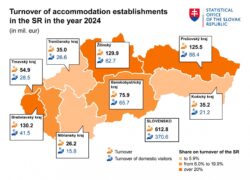
Slovakia’s hospitality sector experienced a solid year in 2024, with turnover from hotels, guesthouses, and other accommodation establishments reaching nearly EUR 613 million. This marked a year-on-year increase of almost 9%, driven largely by domestic visitors, who contributed over 60% of the total revenue.

The country’s top three tourism regions—Bratislavský, Žilinský, and Prešovský kraj—continued to dominate, generating more than half of the total accommodation turnover. In the fourth quarter alone, accommodation providers recorded EUR 143 million in revenue (excluding VAT), reflecting a 13% year-on-year increase. However, this growth rate was significantly lower than the previous year’s surge between 2022 and 2023.

Domestic tourism remained the primary revenue driver, with the highest turnover recorded in Prešovský, Žilinský, and Banskobystrický kraj, which together accounted for nearly two-thirds of Slovakia’s domestic accommodation revenue. Meanwhile, international visitors generated EUR 242 million, or 40% of the total turnover, with Bratislavský kraj leading in foreign visitor spending at EUR 89 million. In this region, foreign guests contributed 68% of total accommodation revenue, far surpassing the share of international visitors in other parts of the country.

The year also saw an increase in available accommodation capacity. In the fourth quarter of 2024, Slovakia had 4,623 accommodation establishments, 176 more than the previous year. These properties collectively offered 70,000 bedrooms and 191,000 bed places, including camping facilities. The net occupancy rate for permanent beds stood at 23.3%, while room occupancy reached 28.5%.

For the entire year, a total of 5,265 accommodation establishments operated in Slovakia, an increase of 234 compared to 2023. The hospitality sector provided an average of 64,000 bedrooms and 150,000 permanent bed places daily, with a net occupancy rate of 27.7% and a room occupancy rate of 32.4%.

With growing domestic demand and an expanding accommodation network, Slovakia’s tourism industry remains on an upward trajectory, further solidifying its position as a key economic sector.

Source: Statistical Office of the SR

Czech business confidence rises, consumer sentiment dips in February

The Czech economy displayed mixed signals in February, with business confidence improving slightly while consumer sentiment weakened, according to the latest data from the Czech Statistical Office (CZSO). The composite confidence indicator, which measures economic sentiment across industries and consumers, edged up by 0.4 points to 97.8 compared to January. This increase was primarily driven by a rise in business confidence, which climbed 0.5 points to 98.0, whereas consumer confidence declined by 0.5 points to 96.6. Despite the month-on-month fluctuation, all indicators remain at higher levels than in February 2024.

The industrial sector recorded a slight improvement in sentiment, with the confidence index rising by 0.3 points to 93.5. A smaller proportion of businesses reported negative demand assessments, while finished goods inventories increased slightly. Expectations for production activity growth over the next three months saw a minor uptick, while anticipated price increases in the sector remained largely unchanged following a notable decline in January. Compared to the same period last year, confidence in the industry sector remains stronger.

In the construction sector, confidence saw a significant increase, rising by 3.0 points to 114.7. Fewer entrepreneurs reported concerns about current demand for construction work, and expectations for employment growth over the next three months improved slightly. Forecasts for construction price hikes, however, remained unchanged for the second consecutive month. On a year-on-year basis, confidence in construction has strengthened considerably.

Similarly, business confidence in the trade sector rose sharply, increasing by 3.7 points to 99.9 from the previous month. Companies expressed a more optimistic outlook regarding their overall economic situation, and a greater number of respondents anticipated improvements in their economic conditions over the next three months. Inventory levels remained stable, while expectations for price increases declined slightly. Business sentiment in the trade sector is also higher compared to February 2024.

Meanwhile, confidence in selected service sectors, including finance, remained steady at 100.5, unchanged from January. While fewer businesses expressed positive views on current demand, there was an increase in the number of firms expecting demand to rise in the coming months. However, expectations for price increases declined slightly but remained above the long-term average. Overall, year-on-year confidence levels in the services sector are up.

Conversely, consumer confidence in the Czech economy dipped slightly in February, with the confidence index falling by 0.5 points to 96.6. A growing share of consumers expects the overall economic situation in the country to deteriorate over the next twelve months, continuing a trend observed over the past three years. The outlook for personal financial situations remained unchanged from January, though expectations for improvement in household finances weakened slightly. The number of respondents who do not plan to make major purchases in the coming year remained steady, while concerns over rising unemployment increased. Expectations of further price hikes, which had risen slightly in January, remained stable. Despite the monthly decline, consumer confidence is higher compared to the same period last year.

These findings indicate that while businesses, particularly in construction and trade, are seeing stronger sentiment, consumers remain wary of economic uncertainties, including potential inflation and job market instability. The evolving confidence trends will be closely monitored as they shape expectations for economic growth and stability in the coming months.

Source: Czech Statistical Office

CTP expands partnership with Delamode, adding over 30,000 sqm in CTPark Bucharest

CTP has expanded its partnership with Delamode, a leading provider of freight management services. In a move that strengthens their collaboration, Delamode is extending its lease at CTPark Bucharest and increasing its occupied space to 30,350 sqm.

Delamode first established its presence at CTPark Bucharest in 2017, initially leasing 18,500 sqm to support its expanding logistics operations. As business demand grew, so did Delamode’s storage needs, progressively increasing to 25,000 sqm. Now, with its latest lease extension and an additional 5,500 sqm of space, the company is reinforcing its commitment to the location, ensuring continued operational efficiency and service excellence.

According to Adrian Nica, General Manager of Delamode Romania, the expansion represents a strategic move to enhance storage capacity and maintain high service standards in logistics and distribution. He emphasized CTP’s role as a reliable and flexible partner, capable of accommodating Delamode’s growing operational demands while providing top-tier logistics spaces.

CTP Romania’s Senior Business Developer, Nicoleta Gavrilă, highlighted that the expansion underscores the trust and confidence businesses place in CTP’s industrial and logistics solutions. The ability for companies to scale up operations within the same park without disruption is a key advantage for logistics providers, ensuring seamless business growth.

Strategically located along the A1 Motorway at kilometer 13, CTPark Bucharest offers a prime logistics hub just 15 minutes from the Păcii and Preciziei metro stations. Covering 57.9 hectares with 570,000 sqm of built space, the park is designed to support a variety of tenants, from logistics equipment distributors to e-commerce and retail companies. It also features key amenities such as a canteen, a medical center, and green spaces, ensuring an optimal working environment.

Photo: Nicoleta Gavrilă, Senior Business Developer, CTP Romania

PORR reports strong growth in 2024 with increased orders and profitability

Construction giant PORR has reported significant growth across all key financial metrics in 2024, with strong order intake, a rising backlog, and an improved operating result. Preliminary figures confirm that the company achieved a production output of EUR 6.7 billion, a 2.6% increase compared to the previous year, with particularly robust growth in Romania and Austria. The order backlog also saw an uptick, reaching EUR 8.5 billion, while EBIT improved by 12.9% to EUR 158.4 million.

CEO Karl-Heinz Strauss expressed confidence in PORR’s broad market presence, stating that the company had successfully delivered on its objectives. “PORR delivered in the business year 2024. The EBIT margin stands at 2.6%, and the order situation remains highly positive. The numerous new orders, particularly in infrastructure, industrial construction, and healthcare, highlight the strength of our diverse portfolio,” Strauss noted.

The company’s order intake reached EUR 6.8 billion, demonstrating its strong foothold in civil engineering, which accounted for 55.4% of new projects, while industrial construction doubled. Among PORR’s latest major contracts are a large data center project in Germany worth nearly EUR 200 million, the renovation of Austria’s Luegbrücke bridge, a 34-kilometer high-pressure natural gas pipeline, a factory for wind power components in Poland, and the expansion of Prague’s motorway bypass in the Czech Republic.

PORR continues to solidify its position as a leading construction firm in Europe, leveraging its expertise across multiple sectors. While civil engineering remains a key growth driver, the company also sees rising opportunities in infrastructure, data centers, healthcare, and residential construction. CEO Strauss highlighted expectations for significant expansion in Poland and Romania in 2025, alongside a gradual recovery in Austria’s residential sector.

With its financial health strengthening, PORR maintains a dividend payout policy of 30-50%. The final figures for the 2024 financial year will be released in the PORR Annual and Sustainability Report on 27 March 2025.

Scallier expands Romanian retail portfolio with seventh Funshop Park in Arad

Poznań-based real estate company Scallier continues to strengthen its presence in Romania with the opening of its seventh retail park under the Funshop Park brand. Located in the Arad district, the newly developed retail park spans approximately 10,000 square meters and is set to officially open on March 6, 2025.

The new facility has already attracted a lineup of well-known brands, including DM, Sinsay, Pepco, KIK, Tedi, and Agroland. A popular fitness chain, Stay Fit Gym, will also be part of the retail park, along with several restaurants, an outdoor food court, and a playground. Lidl, the anchor tenant, has been operating at the site since December 2024, catering to the growing demand for modern retail services in the area.

According to Wojciech Jurga, Managing Partner at Scallier, the company sees Romania as a key market for expansion, leveraging the country’s rapid economic growth and significant investment in retail infrastructure. “The Romanian retail market is currently among the most dynamic in Europe, with over 800,000 square meters of modern retail space under construction—twice as much as in Poland. The country is benefiting from substantial EU funding and experiencing rapid retail sales growth that far exceeds the EU average. This creates an ideal environment for the development of new retail projects,” Jurga stated.

Scallier has identified significant gaps in Romania’s retail landscape, particularly in suburban and regional locations where modern retail offerings remain limited. While Romania’s total retail stock is significantly lower than Poland’s—by nearly three times—consumer demand for accessible shopping destinations is rising. “By strategically focusing on underserved areas, we aim to expand our retail park network and solidify our market presence in Romania,” Jurga added.

The new Arad investment marks the latest milestone in Scallier’s Romanian expansion. The company has already delivered a total of approximately 60,000 square meters of gross leasable area (GLA) across six other Funshop Parks in Roșiorii de Vede, Focșani, Timișoara, Turda, Vaslui, and Moșnița. All Scallier retail parks meet the highest sustainability standards and have received BREEAM certification.

Arad, a city in western Romania with a population of approximately 150,000, was chosen as the latest location due to strong demand for modern retail space. The development aligns with local consumer preferences for convenient, community-based shopping experiences.

Currently, about 95% of the Arad retail park’s space has been leased, reflecting strong tenant interest and market potential. The center will feature a mix of international retail brands and Romanian businesses, offering a diverse range of shopping and service options tailored to the needs of the local community.

LATEST NEWS