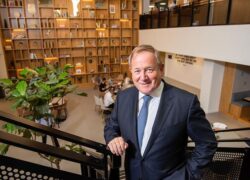
IWG Study: Hybrid businesses show stronger optimism for 2025 growth

A new study by the International Workplace Group (IWG) has revealed that businesses operating with hybrid work models are significantly more optimistic about their prospects for 2025 compared to those requiring full-time office attendance. The research, which surveyed more than 1,000 CEOs and senior business leaders, found that 75% of companies offering flexible work arrangements have a positive outlook for the year ahead, compared to 58% of businesses that do not offer hybrid options.

The findings indicate that flexible work arrangements contribute to reduced overhead costs, improved employee productivity, and a stronger ability to attract talent. More than three-quarters (79%) of hybrid businesses reported cost savings by reducing office space and utilizing short-term workspace solutions. Additionally, 75% of these businesses see hybrid work as a way to manage economic pressures such as rising taxes and market fluctuations.

The study also highlights that businesses prioritizing workplace flexibility are more confident about broader economic conditions. While 63% of hybrid businesses reported feeling more positive about the economy than they did a year ago, only 44% of non-hybrid businesses shared the same sentiment.

Impact on Productivity and Workforce Growth

Workforce productivity and employee retention emerged as key drivers behind the optimism among hybrid businesses. According to the survey, 72% of flexible businesses reported increased productivity, and 71% said their policies have strengthened their ability to attract and retain top talent. These findings align with research by Stanford professor Nicholas Bloom, which showed that hybrid work improves job satisfaction and reduces employee turnover by 33%, without negatively impacting productivity.

The study also found that companies with hybrid work policies are more confident in their ability to expand. Among these businesses, 67% expect growth in 2025, compared to 51% of non-hybrid businesses. Similarly, 48% of hybrid businesses anticipate increasing their workforce, compared to 38% of those requiring full-time office attendance.

Industry Perspectives

Mark Dixon, CEO of IWG, noted that businesses embracing hybrid work models are positioning themselves for long-term success. “In these challenging times, business leaders are thinking about the best way forward. Companies that prioritize talent retention and operational efficiency are the ones showing the most confidence. By adopting hybrid working, businesses are not only reducing costs but also fostering a more productive and satisfied workforce,” Dixon said.

As economic uncertainty continues, the research suggests that businesses with flexible work arrangements may have an advantage in navigating future challenges while maintaining a competitive edge.

Photo: Mark Dixon Founder and CEO IWG Copyright Ian McIlgorm
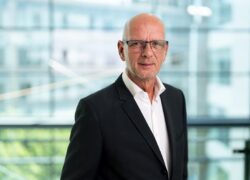
NEPI Rockcastle reports record €556 million net operating income in 2024

NEPI Rockcastle, Europe’s third-largest listed retail real estate company, achieved a record-high net operating income (NOI) of €556 million in 2024, marking a 13.2% increase from the previous year. The company’s strong financial performance was driven by higher retailer sales and resilient consumer spending in Central and Eastern Europe (CEE).

Distributable earnings per share (DEPS) for the second half of 2024 stood at 30.05 euro cents, bringing the full-year DEPS to 60.17 euro cents—5.6% higher than in 2023. The Board has declared a dividend of 27.05 euro cents per share for the second half of the year, maintaining a 90% dividend payout ratio.

Growth Through Acquisitions and Investments

NEPI Rockcastle expanded its portfolio significantly in 2024, acquiring two major retail properties in Poland—Magnolia Park in Wrocław and Silesia City Center in Katowice. These acquisitions, totaling €760 million, accounted for 40% of all retail real estate investment transactions in the CEE region last year. Portfolio value at year-end reached €7.9 billion, compared to €6.8 billion in 2023, solidifying the company’s position as a leading retail landlord in Europe.

To finance these acquisitions, the company raised €800 million in capital markets, including a €500 million green bond issue and a €300 million equity raise, the latter being its first since 2017. NEPI Rockcastle ended the year with a loan-to-value (LTV) ratio of 32.1%, below its 35% target, and a liquidity position of €1.1 billion, ensuring financial stability for future expansion.

Operational Performance and Market Trends

CEO Rüdiger Dany attributed the NOI growth to rising tenant sales, which allowed for increased base rents and a 15% rise in turnover rent. The occupancy cost ratio (OCR) remained stable, reflecting the company’s effective collaboration with retailers. Vacancy rates across the portfolio were reduced to 1.7%, a notable achievement in the sector.

Gross rental income grew by 10.9% year-on-year to €566 million, supported by rental indexation, higher occupancy, and increased turnover rent. Like-for-like tenant turnover rose by 8.5% (excluding hypermarkets), demonstrating strong consumer demand despite economic challenges. The average basket size increased by 8%, consistent with prior-year trends.

Sustainability and Green Energy Initiatives

NEPI Rockcastle advanced its sustainability commitments in 2024, focusing on emission reductions, renewable energy adoption, and waste management. The company completed the first phase of its renewable energy program, installing photovoltaic panels across 28 properties in Romania and Lithuania, with a total capacity of 38 MW. A second phase, set to add 15 MW across 23 properties outside Romania, is underway.

In the fourth quarter, the company acquired two project companies with land rights and permits for 159 MW of photovoltaic capacity, representing an estimated investment of €110 million. These projects are expected to enhance green energy production and contribute to long-term revenue growth.

Outlook for 2025

NEPI Rockcastle remains optimistic about the economic prospects of its CEE markets while acknowledging macroeconomic uncertainties. The company plans to continue expanding its portfolio through strategic acquisitions and development projects, with a pipeline totaling 187,900 square meters of gross leasable area (GLA) and a projected investment of nearly €788 million.

Looking ahead, NEPI Rockcastle aims to maintain financial discipline, strengthen its retail property portfolio, and further integrate sustainable practices. “Our record performance in 2024 has laid a strong foundation for future growth,” said Dany. “We will continue seeking opportunities that align with our strategic vision and deliver optimal returns for investors.”

Noli Studios expands to Gdańsk following success in Warsaw

Noli Studios, a Nordic residential concept developed by Nrep, is expanding its presence in Poland with two new locations in Gdańsk. Following the success of its seven sites in Helsinki and the Noli Mokotów project in Warsaw, the company is introducing Noli Gdańsk Wrzeszcz and Noli Gdańsk Riverside as part of its European growth strategy.

Noli Studios combines residential comfort with hotel-style services, offering flexible accommodation designed for young professionals, business travelers, and digital nomads. The concept emphasizes shared living spaces to foster a sense of community, a response to increasing urban isolation, particularly among remote workers and expatriates.

Noli Gdańsk Wrzeszcz, set to open in March 2025, is located in a central urban area near the Metropolia Gallery and Gdańsk Wrzeszcz railway station. The five-story building includes 190 fully furnished private studios, alongside 450 square meters of shared spaces such as a gym, sauna, communal kitchens, film and game rooms, and coworking areas.

The Wrzeszcz district is known for its blend of historic charm and contemporary culture, making it a desirable location for professionals seeking a well-connected and vibrant neighborhood.

Noli Gdańsk Riverside, expected to open in late spring 2025, is situated on Siennicka Street in Śródmieście, near the revitalized Gdańsk Shipyard. The site offers 233 fully equipped studios with access to shared facilities, including a gym, sauna, communal kitchens, coworking spaces, and entertainment areas. The location is a short distance from the Old Town and cultural venues such as Club B90 and 100cznia, a hub for dining and nightlife.

Noli Studios incorporates sustainable solutions such as heat pumps, photovoltaic panels, and water and waste management systems to minimize environmental impact. Both Gdańsk locations aim to secure LEED certification, aligning with high sustainability standards in urban development.

The concept also promotes community engagement through networking events, cultural programs, and wellness activities. Noli Studios partners with local businesses, including cafés and restaurants, to connect residents with the broader urban environment.

Noli Studios offers a range of fully furnished apartments tailored to different lifestyles. In Noli Gdańsk Riverside, unit sizes range from 19 to 31 square meters, with rents starting at PLN 2,550 per month. At Noli Gdańsk Wrzeszcz, options vary from 14-square-meter Mini Studios, priced at PLN 2,750 per month, to 39-square-meter Large Studios, available from PLN 5,000 per month.

By combining private living spaces with communal areas, Noli Studios aims to provide an alternative to traditional housing and hotels, emphasizing flexibility, well-being, and social connection in urban living.

Study examines future office trends and workplace preferences

A new study by the MOMENI Group and Union Investment, conducted in collaboration with the Fraunhofer Institute for Industrial Engineering IAO, explores the factors shaping the future of office real estate. As companies navigate return-to-office trends, the study highlights key aspects that make office spaces attractive to both employers and employees.

The research surveyed senior decision-makers from various industries as well as office employees across Germany, identifying clear trends influencing investment and development decisions. One of the central findings is the growing emphasis on high-quality office properties in prime locations. According to the study, 85 percent of decision-makers plan to maintain their focus on central urban locations, underscoring the importance of well-connected, future-proof properties with added amenities.

Sustainability and architectural quality are becoming essential considerations, with a strong preference for buildings that offer an enhanced working environment. Andreas Gladisch, CEO of the MOMENI Group, noted that premium office spaces with service offerings and a well-integrated urban setting are increasingly viewed as key to long-term success.

Despite the rise of artificial intelligence in workplace operations, the study suggests that AI-driven efficiency improvements do not necessarily translate into reduced office space needs. Only three percent of decision-makers expect AI to significantly cut space requirements, reinforcing the idea that offices will continue to serve as critical hubs for communication and collaboration.

Location remains a decisive factor for employees. Nearly a quarter of respondents stated they would consider changing employers for a better office location, highlighting the role of urban quality in employee satisfaction. Accessibility by public transport, as well as proximity to retail and dining options, ranked among the most important considerations for office workers. Alejandro Obermeyer, Head of Investment Management DACH at Union Investment Real Estate GmbH, emphasized that office spaces offering convenience and lifestyle amenities hold a competitive advantage over remote work options.

Flexibility in office design is also gaining importance. The study indicates that demand for multi-space office layouts is increasing, with traditional leasing models still dominating the market. A notable finding is the appeal of outdoor workspaces—71 percent of employees surveyed expressed interest in having access to terraces, gardens, or other open-air areas within office properties.

The findings provide valuable insights for investors, developers, and corporate real estate planners. As workplace expectations evolve, the demand for well-located, high-quality office environments with flexible use options continues to shape the future of office real estate.

The Grounds appoints Andrew Wallis as Chief Financial Officer

The Supervisory Board of The Grounds Real Estate Development AG has appointed Andrew Wallis as the company’s Chief Financial Officer (CFO), effective 1 March 2025. Wallis will join CEO Jacopo Mingazzini in leading the company, restoring the Management Board to two members after Mingazzini had temporarily overseen operations alone since May 2023.

Wallis brings extensive experience in real estate and finance, having previously held positions at Merrill Lynch, JP Morgan, and HSBC. Between 2014 and 2020, he served as Deputy CEO of Aroundtown S.A. in Berlin. Since 2020, he has worked as a consultant on mergers and acquisitions and has taken on interim management and board roles in restructuring projects.

Commenting on the appointment, Dr. Peter Maser, Chairman of the Supervisory Board, emphasized Wallis’s expertise and leadership background. “With Andrew Wallis, we are gaining a seasoned professional with over 30 years of experience in real estate and finance. His industry knowledge and management expertise will support the continued growth of The Grounds,” Maser stated.

The appointment marks a strategic move for the company as it aims to strengthen its leadership team and reinforce its position in the real estate sector.

Institutional investors return to real estate special AIF, with growing interest in debt investments

Institutional investors in Germany are once again expanding their exposure to real estate special alternative investment funds (AIF), with a noticeable increase in appetite during the second half of 2024. Real estate debt, data centres, and light industrial assets have emerged as key areas of interest, while secondary-market transactions are gaining traction as an alternative to primary market investments. Infrastructure investments are also becoming a priority, particularly in renewable energy and diversified funds.

These insights stem from the latest LAGRANGE Fund Monitor survey, conducted by LAGRANGE Financial Advisory GmbH in collaboration with INVESTMENTexpo. The study, based on interviews with institutional investors from insurance, banking, pension funds, and superannuation schemes, indicates a positive shift in sentiment toward real estate special AIFs. The index score for real estate AIF exposure within portfolios reached 6.83 points, up from 6.25 in the first half of the year. The level of interest in infrastructure investments remained steady at 7.10 points, suggesting continued demand.

Shift in Risk Appetite and Asset Preferences

Core-plus investments continue to dominate risk preferences, widening their lead over core investments. Core-plus assets now account for over 48% of investment activity, while core assets make up around 32%, slightly down from 33% in the first half of the year. Interest in value-add investments has declined to 17% from 22%, and opportunistic investments have also dropped to just 3%.

Among real estate asset classes, residential real estate remains the most sought-after, with interest rising to 16% from 13%. Logistics follows closely at 14%, up from 12%. Notably, real estate debt has gained prominence, accounting for 11% of investment activity, nearly doubling from the previous period. Light industrial and data centres, both receiving 10% of responses, have also gained traction, with the latter benefiting from increased demand driven by artificial intelligence and cloud computing. Food-anchored retail real estate attracted 9% of investor interest, while office assets continued to decline, representing just 5% of responses.

International Investment Preferences

Germany has regained investor interest, with 16% of respondents favoring it as a target market, up from 13%. The Benelux region remains popular, rising to 14%, while France and the United States each garnered 12% of responses. The United Kingdom followed with 10%, and Austria attracted 9%. The Nordics and Southern Europe received 6% each, with other markets drawing limited attention.

In infrastructure investments, renewable energy projects, particularly in photovoltaics and wind power, continue to be the primary focus. European markets remain the preferred investment destinations, with 38% of responses, while interest in North America stood at 19% and Asia at just 4%.

Market Challenges and Secondary Market Growth

Financing has emerged as the primary challenge for institutional investors, with 55% citing it as a concern, up from previous levels. High property prices and low cap rates were cited by 26%, while concerns over declining property values and rents were expressed by 13%. A low supply of available assets was identified by just 6% of respondents. In infrastructure AIFs, financing difficulties and the complexity of investment products were each flagged by 25% of investors.

Interest in secondary-market transactions is increasing, with the index score for purchasing real estate special AIF units on the secondary market rising to 7.39 points from 7.06. For the third consecutive period, secondary-market interest has surpassed primary market interest. The inclination to sell units has also grown, with the index score rising to 8.06 points from 7.19.

Preferred secondary-market acquisitions include residential real estate (32%), logistics (23%), and food-anchored retail real estate (22%). Conversely, office real estate funds are the most likely to be sold (59%), followed by logistics (14%), residential (11%), and food-anchored retail (11%).

Expert Insights

Dr. Sven Helmer, Managing Director at LAGRANGE, noted: “The results confirm what we observe in daily investor conversations. The secondary market is becoming an increasingly important exit strategy for special AIF investments.”

Monika Bednarz, also Managing Director at LAGRANGE, highlighted the financing challenges and the growing role of real estate debt: “Many banks are restricting financing, which presents challenges but also creates opportunities for investors to finance real estate debt directly. Current market conditions, with adjusted property values and higher margins, make this an attractive option—provided investors carefully assess the structure of the debt.”

The survey findings suggest that institutional investors are actively adapting to market conditions, with an increased focus on alternative investment strategies and a growing acceptance of new asset classes.

Photo: Monika Bednarz, Managing Director and Dr. Sven Helmer, Managing Director at LAGRANGE

Panattoni expands logistics hub in Zgierz with 70,000 sqm development

Panattoni is expanding Panattoni Park Zgierz by 70,000 square meters, increasing the total area of the logistics complex to 120,000 square meters. As part of this development, a leading drugstore chain has leased 50,000 square meters, establishing the facility as a key distribution hub for its operations in Poland.

Katarzyna Kujawiak, Development Director at Panattoni, noted that the selection of this site for a major distribution center reflects the company’s ability to deliver modern logistics infrastructure that meets industry standards.

The new logistics space will be designed to accommodate hazardous materials (ADR), including alcohols, deodorants, and household chemicals. It will feature advanced fire protection systems, such as in-rack sprinklers, smoke extraction, and ventilation systems, ensuring compliance with high safety standards.

Panattoni Park Zgierz is located 2.5 km from the A2 motorway junction and 13 km from the A1 motorway in Stryków, providing efficient connectivity to both domestic and international markets. Its proximity to Łódź and Zgierz offers access to a skilled workforce. The facility is set to achieve BREEAM Excellent certification, highlighting its commitment to sustainability and eco-friendly solutions.

UBM acquires full ownership of Rezidence Na Plzence in Prague

UBM Development Czechia has increased its stake in the Rezidence Na Plzence residential project from 50% to 100%, reflecting an improvement in market conditions and signaling the company’s intent for further expansion.

UBM reported strong sales in 2024, with 125 apartments sold in Prague, surpassing the company’s total apartment sales for 2023. Demand for high-quality residential properties in the Czech capital remains steady, prompting the company’s decision to increase its investment in the project. Thomas G. Winkler, CEO of UBM Development AG, stated that the residential market downturn has stabilized, with signs of recovery across all UBM markets.

The Rezidence Na Plzence development is situated in the Smíchov district and will comprise 160 apartments with 12,000 square meters of gross floor space and 122 underground parking spaces. The 3,850-square-meter site benefits from strong transport links, including a nearby metro station and a tram stop adjacent to the development. Construction and pre-sales have already commenced, with project completion expected in Q2 2027.

Colliers appoints Felix von Saucken as CEO for Germany

Colliers has announced the appointment of Felix von Saucken as Chief Executive Officer (CEO) of Colliers in Germany, effective 1 March 2025. He will report to Davoud Amel-Azizpour, CEO, EMEA, and will also become an equity partner in the company.

Von Saucken, who has led Colliers’ Residential division in Germany since 2018, is recognized for his expertise in local and cross-border capital markets, particularly in residential assets. With over 25 years of experience, he has established strong client relationships across various asset classes and service lines in the German and international real estate markets.

Expressing his outlook on the new role, von Saucken emphasized Colliers’ commitment to strengthening its market position in transaction services and professional services. He noted that despite the challenges of 2024, Colliers achieved leading market share positions in Lease Advisory and Capital Markets. He highlighted the company’s regional presence and global reach as key advantages for continued growth.

Von Saucken will succeed Achim Degen, who will remain with the company as Managing Director and will focus on establishing a Professional Services division in collaboration with von Saucken.

Commenting on the leadership transition, Davoud Amel-Azizpour, CEO, EMEA, acknowledged Degen’s leadership in navigating the German business through a challenging economic phase. While the market has not yet fully recovered, he noted signs of increased transaction volumes and improving sentiment. He expressed confidence that von Saucken’s experience and strategic approach will help drive Colliers’ growth in Germany. As an equity partner, von Saucken is expected to play a key role in shaping the company’s direction and enhancing its services for clients and stakeholders.

Western European investors dominate Romanian real estate market with €1.75 Billion in acquisitions

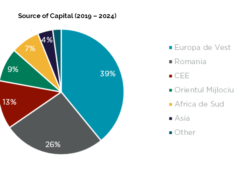
Western European investors, particularly from Austria, the Netherlands, Belgium, and the United Kingdom, have been the most active buyers of real estate assets in Romania over the past five years, investing a total of €1.75 billion. This represents 39% of the total transaction volume of €4.5 billion recorded between 2019 and 2024, according to real estate consultancy Cushman & Wakefield Echinox.

Romanian investors followed with acquisitions worth nearly €1.2 billion, accounting for 26% of the market. Investors from Central and Eastern Europe purchased real estate assets valued at €560 million (13% market share), while Middle Eastern investors contributed €388 million. South African investors saw a decline in activity, holding only a 7% share of the market.

Despite market volatility and global economic challenges, the Romanian real estate sector has continued to attract new international investors. Among the newcomers are M Core (UK), Supernova (Austria), Adventum Group (Hungary), Fortress (South Africa), Oresa Industra (Sweden), BT Property (Romania), Vectr Holdings (India), Vincit Union (Latvia), W&E Assets (USA), and AYA Properties (Belgium).

Existing players in the market made significant acquisitions, with Pavăl Holding, CTP, and AFI Europe leading the way. Pavăl Holding and AFI Europe expanded their office portfolios, while CTP focused on industrial and logistics parks. These transactions marked the exit of Austrian group CA Immo from Romania, NEPI Rockcastle’s withdrawal from the office sector, and Globalworth’s departure from the industrial segment.

According to Cristi Moga, Head of Capital Markets at Cushman & Wakefield Echinox, the Romanian real estate market has attracted capital from over 20 countries across four continents. European investors, including Romanian ones, accounted for approximately 80% of the total transaction volume. While Western European investors continue to demonstrate strong acquisition interest, growing activity from Central and Eastern European investors is also being observed.

Between 2020 and 2024, 159 real estate transactions were recorded in Romania, with an average transaction value exceeding €28 million. Office buildings were the most frequently traded assets, accounting for over €2.2 billion, nearly 50% of the total volume. Retail projects represented 24%, while industrial properties accounted for 19%.

Approximately 60% of the investment volume was directed toward Bucharest, while more than 25% involved portfolio acquisitions of properties in multiple Romanian cities.

LATEST NEWS