Czech energy company ČEZ wins arbitration against Gazprom

The Russian gas company Gazprom has been ordered to pay more than one billion Czech crowns (€40.1 million) to the Czech energy firm ČEZ for failing to deliver the agreed supply of natural gas. The ruling was issued by the arbitration tribunal of the International Chamber of Commerce (ICC), according to ČEZ and reports from news.cz and iDNES.cz.

ČEZ spokesman Ladislav Kříž confirmed that the arbitration panel fully upheld the company’s claim for damages. The dispute arose after Gazprom significantly reduced gas deliveries in 2022, despite prior contractual agreements made before Russia’s invasion of Ukraine. As a result, ČEZ had to purchase replacement gas at higher market prices, leading to financial losses.

In addition to the awarded compensation, Gazprom is required to pay interest on delayed payments and cover arbitration costs. If the Russian company does not comply voluntarily, ČEZ intends to enforce the ruling through legal means. “If Gazprom does not fulfill its obligation, ČEZ will proceed with the execution of the arbitration award through enforcement proceedings,” Kříž stated.

Despite the ruling, financial analysts remain skeptical about ČEZ successfully recovering the funds. Lukáš Kovanda, chief economist at Trinity Bank, noted that the market reaction was minimal, and precedent suggests that Gazprom may not comply with the decision. He cited similar cases where German energy firm Uniper and Austrian company OMV won arbitration against Gazprom but have yet to receive the awarded amounts.

The ruling underscores ongoing legal disputes between European energy firms and Gazprom following disruptions in gas supply linked to geopolitical tensions.

70% of EU citizens used online public services in 2024

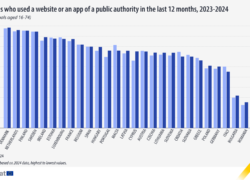
In 2024, 70.0% of EU citizens aged 16 to 74 reported using online public services via government websites or mobile applications in the past 12 months. This represents a modest increase of 0.7 percentage points compared to 2023, when the figure stood at 69.3%.

Denmark (98.5%), the Netherlands (96.0%), and Finland (95.4%) recorded the highest levels of e-government usage among EU countries. In contrast, Romania (25.3%), Bulgaria (31.5%), and Italy (55.1%) had the lowest adoption rates.

The most frequent use of e-government services was obtaining information about public services, benefits, laws, and administrative details, with 44.0% of EU citizens engaging in this activity, an increase of 2.4 percentage points from the previous year. Accessing personal information was the second most common service, used by 40.0% of individuals, reflecting a 0.8 percentage point rise from 2023.

Downloading or printing official forms was the third most widely used service, with 38.1% of citizens utilizing it, though this marked a 1.8 percentage point decline from the previous year. The least common use of online public services was submitting requests, claims, or complaints, reported by 5.3% of users, an increase of 0.5 percentage points from 2023.

The data highlights the continued expansion of digital public services across the EU, with some countries achieving near-universal adoption, while others still face challenges in increasing citizen engagement with online government platforms.

Source: Eurostat

Challenges in measuring carbon footprint in real estate

Calculating the carbon footprint in the real estate sector presents significant challenges due to the complexity of data collection and the lack of standardized methodologies. Companies often struggle to determine which data to consider, particularly across the entire construction lifecycle. “We lack standardization, and a single accepted model for calculation is missing,” notes Marcin Kosieniak, MEP specialist and co-owner of PM Projekt.

The carbon footprint of a building is influenced by multiple factors, including data comprehensiveness, emission sources, usage patterns, and technical constraints. Precise calculations require an extensive dataset covering the entire lifecycle of a building—from material production and transportation to construction, operation, and eventual demolition. However, obtaining complete and reliable data remains a major challenge.

Multiple Emission Sources and Methodological Gaps

Real estate emissions stem from various sources, including energy consumption for heating, cooling, lighting, elevator operations, and waste and water management. Each source requires a separate calculation methodology, adding to the complexity of assessing total emissions.

Changes in building usage over time also affect carbon footprint calculations. The number of occupants, operational hours, technological upgrades, and renovations all impact energy consumption and emissions, necessitating continuous updates to assessments.

Despite growing awareness of the importance of carbon footprint tracking, no universally accepted standards exist in the real estate sector. Different countries and organizations use varying methodologies, making it difficult to compare results and leading to inconsistencies in reporting.

Technical and Financial Barriers

Accurate carbon footprint calculations require advanced monitoring systems and infrastructure to measure energy and resource consumption. Older buildings, which often lack such technologies, face additional challenges in obtaining precise data.

The process is also resource-intensive, requiring both specialist knowledge and significant financial investment. “Accurately measuring emissions requires expertise in both the technical aspects of buildings and the methodology for emissions calculation,” says Kosieniak.

Forecasting Future Emissions and Verification Issues

Estimating future emissions over a building’s lifecycle involves multiple variables, including technological advancements, shifts in the energy mix, regulatory changes, and evolving building usage patterns. The complexity of these factors makes long-term forecasting difficult.

Verification of carbon footprint assessments is another challenge. The absence of independent institutions to validate results raises concerns about data reliability. A unified standard could improve transparency and consistency in reporting.

Opportunities for Precise Carbon Footprint Measurement

Despite these challenges, real estate projects that incorporate carbon footprint assessments from the outset can achieve more accurate tracking and better environmental outcomes. Kosieniak highlights that in new developments, emissions can be precisely calculated by integrating sustainable solutions into architectural designs, increasing long-term investment value.

Even in modernization projects or developments in post-industrial areas, strategies can be implemented to support decarbonization efforts and minimize climate impact. “By integrating sustainability measures, both new and existing buildings can contribute to reducing emissions and meeting environmental targets,” Kosieniak concludes.

As the industry moves toward greater environmental accountability, addressing standardization, verification, and technical challenges will be essential for accurate and reliable carbon footprint measurement in real estate.

Author: Marcin Kosieniak, MEP specialist and co-owner of PM Projekt

City Park Warsaw expands to meet demand for flexible commercial space

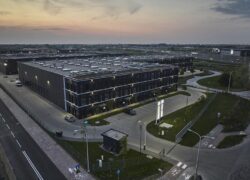
City Park Warsaw, Poland’s largest Small Business Unit (SBU) business hub, is set to expand in response to increasing demand for flexible commercial spaces. Developer Ideal Idea has already secured leases for more than half of the available units, even before receiving planning approval.

The expansion will add 10,000 sqm of net-zero commercial space, integrating technologies aimed at reducing tenants’ operating costs. The development will feature heat pumps, photovoltaic panels, electric vehicle charging stations, and greywater recycling systems, enhancing energy efficiency and sustainability. The project is designed to meet BREEAM Excellent certification standards.

City Park Warsaw is positioned for urban logistics, e-commerce, and light manufacturing, offering warehouse units starting at 500 sqm and office spaces from 110 sqm. The SBU model ensures tenants have independent access, with ground-level entry and dock levellers for warehouses and Grade A office spaces equipped with air conditioning and energy-efficient lighting.

The business hub benefits from a strategic location, just 2 km from Chopin Airport and 10 km from Warsaw Central Station, with direct access to key transport routes, including the A2 motorway, S2 expressway, and E67 corridor. Its proximity to the Warsaw ring road provides efficient connectivity for employees and logistics operations, with a 20-minute commute to the city centre.

Ideal Idea maintains high occupancy rates, regularly leasing 95% to 100% of units before securing occupancy permits. The expansion is set for completion in 2025, bringing the total area of City Park Warsaw to over 47,000 sqm.

German economy shows tentative growth but remains fragile

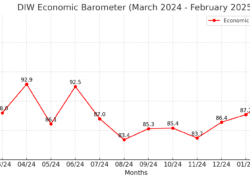
The German economy is showing early signs of recovery, according to the latest DIW Economic Barometer, which rose for the third consecutive month in February, reaching 90.4 points, an increase of 2.7 points from January. Despite this upward trend, the index remains well below the 100-point threshold, which represents average economic growth.

“There is a good chance that Germany’s economic output will at least stabilize in the first quarter,” said Geraldine Dany-Knedlik, head of economic research at DIW Berlin. “Domestic demand is expected to provide some support, but foreign trade remains a concern, with German exports declining significantly in the winter months. Additionally, both domestic and international political uncertainties remain high.”

Political and Global Trade Challenges Weigh on Growth

The formation of a new German government following recent parliamentary elections remains uncertain, adding to economic unpredictability. Meanwhile, US President Donald Trump’s trade policies continue to create global instability. Recent tariff increases on steel and aluminum have raised concerns, with further levies on automobile imports and pharmaceuticals potentially affecting the German economy.

On a more positive note, interest rate cuts by the European Central Bank (ECB) and a slight economic upturn in the eurozone are expected to provide some momentum. However, German industry continues to face challenges, including higher production costs and increased global competition. Industrial output fell again in December, and companies remain cautious about their current business situation.

Industrial and Service Sectors Struggling to Gain Momentum

While business expectations have improved, as reflected in the ifo Business Climate Survey, there is no clear sign of a turnaround yet. “German companies remain hesitant,” said Laura Pagenhardt, an economic expert at DIW. “Uncertainty over domestic policies and trade conflicts is still dampening investment activity.”

The service sector is also under pressure, with the ifo Business Climate Index for this industry deteriorating slightly in February. The manufacturing sector’s weakness is beginning to impact business service providers, and job losses in manufacturing are also being felt. Nevertheless, overall unemployment remains low, despite the sluggish economy.

Cautious Optimism Amid Uncertain Outlook

Economic expert Guido Baldi described the recent DIW Economic Barometer trend as a “small ray of hope” but warned that Germany’s economic recovery remains fragile. “A prolonged government formation process or an escalation in US trade tariffs could quickly stifle this tentative recovery,” he cautioned.

As Germany navigates ongoing political and economic challenges, domestic policy stability and potential fiscal stimulus could play a key role in shaping the country’s economic trajectory in the coming months.

Source: DIW Economic Barometer Reports by DIW Berlin

Poland Regional Office Market in 2024: Limited supply, shifting tenant strategies

At the end of 2024, the regional office market in Poland showed signs of recovering demand, but limited developer activity and a low supply of new office space created a supply gap. According to analysts at BNP Paribas Real Estate Poland in their latest report At a Glance: Office Market in the Regions, tenants increasingly opted to renegotiate existing contracts rather than relocate.

Limited New Developments

Developer activity in the office sector remained low, with just under 124,000 square meters of new office space added to regional markets throughout the year. High vacancy rates continued to slow down new developments, with only a few individual office buildings under construction.

Several projects were completed in the fourth quarter of 2024. The largest was Grundman Office Park A in Katowice, offering 20,600 square meters (Cavatina Holding), followed by the Medyczna Complex in Kraków with 9,700 square meters (ELITE GPS). In Wrocław, Aleja Architektów 7 added 6,000 square meters of office space (Entire M).

Some developers were forced to halt construction due to low pre-lease activity, which prolonged the commercialization process and led to difficulties in securing financing.

Recovery in Demand

The fourth quarter of 2024 saw a revival in leasing activity, with total lease transactions reaching 220,000 square meters—a 4% increase from the previous quarter and 5% higher than in the same period in 2023. Over the entire year, lease transactions totaled nearly 714,000 square meters, close to the 740,500 square meters recorded in 2023.

The demand structure was dominated by lease renewals, which accounted for 51% of all transactions. Companies preferred to extend existing agreements due to high fit-out costs, but when choosing to relocate, they prioritized newly built office buildings.

Among the largest transactions in the fourth quarter were a lease renewal of more than 14,000 square meters at Tertium Business Park II in Kraków and State Street Bank International’s renewal of over 10,000 square meters at Kazimierz Office Center, also in Kraków. New lease agreements included 6,600 square meters in Ocean Office Park B (Kraków) and 8,900 square meters in the .PUNKT office building (Gdańsk). The IT sector remained the most active tenant group, accounting for 27% of total demand in regional cities.

Rising Vacancy Rates

At the end of 2024, approximately 1.2 million square meters of office space was available for immediate lease in Poland’s eight major regional markets, resulting in a vacancy rate of 17.8%. This marked a 0.5 percentage point increase from the previous quarter and a 0.3 percentage point rise compared to the end of 2023.

Vacancy rates varied by city. The lowest was in Szczecin (7.7%), while Katowice (23.2%) and Łódź (22.7%) recorded the highest. In Wrocław (19.3%) and Kraków (19.0%), vacancies hovered around 20%, while in the Tri-City, Poznań, and Lublin, they remained below 14%. Older office buildings, particularly those over 10 years old, saw the highest vacancy rates, leading to more frequent renovations or conversions to alternative uses.

Office Optimisation and Modernisation Trends

The market continued to favor office consolidation and upgrades to higher-standard buildings. Fit-out projects increasingly focused on maximizing space efficiency and accommodating hybrid work models. Modular solutions gained popularity as companies sought flexibility and cost reductions.

Sustainability also played a growing role in office modernization. The reuse of resources became more prominent, driven by both economic factors and environmental, social, and governance (ESG) commitments. While the approach to sustainable solutions has become more pragmatic, it remains a key element of corporate strategies.

Looking ahead, stricter remote work policies and corporate investments, including those financed by the National Recovery Plan (NCP), may further influence market dynamics. Whether these factors will translate into sustained growth remains to be seen in the coming months.

Source: BNP Paribas Real Estate Poland

Deka Immobilien acquires Ruby Molly Hotel in Dublin for EUR 86 million

Deka Immobilien has acquired the Ruby Molly Hotel in Dublin for approximately €86 million. The property, previously owned by Creekvale Ltd., a subsidiary of real estate investment manager ESR Group, will be added to the portfolio of the open-ended real estate fund Deka-ImmobilienEuropa.

Completed in 2024, the hotel features a modern design and is fully leased on a long-term basis to Ruby Hospitality Ireland Ltd. The 4-star property spans approximately 9,800 square meters and includes 272 rooms designed under the “Lean Luxury” concept, along with a ground-floor restaurant. The acquisition marks the entry of Munich-based Ruby Hotels GmbH into the Irish market.

Situated in Dublin’s city center, north of the historic core, the hotel benefits from strong connectivity via the LUAS public transport system. The property meets Nearly Zero Energy Building (NZEB) standards, and certification under the BREEAM sustainability rating system at the “Very Good” level is being pursued.

The acquisition aligns with Deka-ImmobilienEuropa’s strategy of expanding its hotel portfolio in prime European markets. The fund management views the transaction as an opportunity to secure a high-quality, centrally located asset in one of Europe’s most competitive hospitality sectors.

Poland’s Business Cycle Index increases, signaling economic optimism

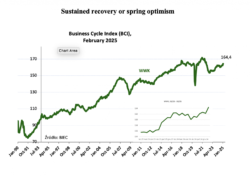
The Business Cycle Index (BCI), which provides an early indication of future economic trends, increased by more than two points in February 2025 compared to January. This marks the first notable improvement in the index since autumn 2023, raising hopes for a potential economic recovery. However, much of this growth is driven by improved sentiment among business leaders rather than changes in statistical economic data. Despite this, business optimism is often an early indicator of broader economic improvements that may not yet be reflected in official figures.

A key factor behind the index’s rise is the strong performance of the Warsaw Stock Exchange. The WIG index reached another peak, though in real terms it has only returned to levels seen in March 2024. Analysts suggest that while recent stock market momentum has contributed to positive sentiment, the potential for further rapid growth may be limited in the short term.

The manufacturing sector has also shown signs of stabilization. While the number of companies reporting a decline in new orders still exceeds those reporting an increase, the pace of decline has slowed, particularly in export markets. Industries such as electronics, chemicals, and paper have seen a rise in foreign orders, while the clothing and leather sectors continue to struggle.

The financial outlook for businesses has stopped deteriorating, though there are few signs of a tangible improvement. Companies continue to face weak demand, high labor costs, and elevated energy prices, with 60% of surveyed businesses citing energy costs as a major challenge—the highest level recorded in the past five years. In response, many firms have implemented cost-cutting measures, including reducing excess inventories and optimizing staffing levels. The decline in stockpiled finished goods has allowed companies to maintain production levels and prepare for potential increases in demand.

In the financial sector, the M3 money supply has decreased, a typical seasonal trend at the start of the calendar year. Consumer credit, including mortgage loans, remains weak, while household deposits continue to grow, reflecting cautious spending behavior.

While the latest data suggests cautious optimism, the extent to which improved sentiment will translate into sustained economic growth remains uncertain.

Source: BIEC

UBM Development Czechia receives permit for Rezidence Na Plzeňce in Prague 5 – Smíchov

UBM Development Czechia has obtained a building permit for Rezidence Na Plzeňce, a new residential project located in the attractive Prague 5 – Smíchov district. The development will be constructed on a plot of over 3,800 m² and is set to include 160 apartments and four commercial units, built with a focus on high energy efficiency.

The eight-story apartment building will feature a variety of energy-saving technologies including geothermal boreholes, heat pumps, photovoltaic panels, and charging stations for electric vehicles. Future residents can expect private front gardens with terraces, as well as access to a quiet, green courtyard. Construction is scheduled to begin in the first half of 2025, with completion anticipated in 2027.

Josef Wiedermann, Managing Director of UBM Development Czechia, stated that the project reflects a growing demand for quality, sustainable housing in Prague. He noted that the Rezidence Na Plzeňce development combines modern architectural design with respect for the historical context of the Smíchov conservation area. The project is strategically located near key transport links, including the Prague-Smíchov railway station, the metro, and the nearby Vltava River and Smíchov embankment.

The development will offer a range of apartment layouts from 1+kk to 4+kk, with sizes varying between 28 m² and 112 m². Most units will feature balconies, with ground-floor apartments including front gardens with terraces and top-floor apartments offering expansive views of the Prague skyline. The building will also include a two-story underground garage providing parking for both conventional and electric vehicles.

Designed by architects Tomáš Krejčí and David Lukas of UBM Development Czechia in collaboration with Srđan Marković from sm.A.A. studio, the project aims to integrate modern design with the character of the surrounding historic block. The building will be divided into four sections, with a shared garage located on two underground floors and an enclosed courtyard featuring front gardens for ground-floor residents.

Rezidence Na Plzeňce is located in an area that blends historical significance with modern urban life. The neighborhood offers a full range of amenities including shops, schools, medical facilities, restaurants, and recreational spaces. Excellent transport connections are available, with the Plzeňka tram stop nearby, the Na Knížecí bus station within a five-minute walk, and the Smíchov transport terminal currently under reconstruction to become the largest transport hub in Prague.

UBM Development Czechia’s Rezidence Na Plzeňce is expected to contribute to the ongoing transformation of Prague’s Smíchov district, providing both residents and investors with a high-quality, sustainable housing option in one of the city’s most sought-after locations.

New city park in Wilanów to align with residents’ expectations

A new city park will be developed in Warsaw as part of the Wilanów Park project, with plans to create a green space designed to meet the needs of local residents. The project, managed by Nhood Services Poland on behalf of real estate company Ceetrus, will offer a variety of landscapes and designated zones for different activities. The park is expected to open in 2028 and will provide a much-needed natural space for the community.

The two-hectare park is being designed in partnership with the local community and the Wilanów District Office. The concept was developed by RS Landscape Architecture, the winning firm in an open architectural competition organized by the Warsaw Branch of SARP. The park’s layout is intended to reflect the natural landscape of the area, incorporating varied terrain, water reservoirs, and diverse vegetation.

“The aim is to create a space that appeals to people of all ages, whether they are looking for active recreation or a quiet place to relax,” said Agnieszka Gasparska, a landscape architect from RS Landscape Architecture. “Our design draws inspiration from the natural features of the valley, integrating water elements and multi-species greenery.”

The park will occupy over 20,000 square meters, approximately one-third of the total Wilanów Park development area. The investment, including the park, has already received environmental approval.

The park will be divided into zones that accommodate various activities, including sports, relaxation, and community events. It will feature playgrounds, picnic areas, and pet-friendly spaces. A designated area will host outdoor events, and a café with a rest area for cyclists will be included. The park will also be designed with accessibility in mind, featuring wheelchair-friendly paths and spaces suited for visitors with different mobility needs.

The landscape will include water reservoirs that serve both aesthetic and functional purposes, supporting sustainable water management by collecting rainwater from roofs and paved surfaces. The park’s biodiversity will be enhanced with plant species that attract birds and small wildlife, as well as flower meadows maintained to support pollinating insects. Insect boxes will be installed throughout the area.

The city park will be developed alongside the Wilanów Park project, which is being built in the southern part of Warsaw, near Miasteczko Wilanów. The development is located within the area of Uprawna, Przyczółkowa, Karuzela, and Aleja Rzeczypospolitej streets.

Nhood Services Poland is overseeing the project’s planning and execution. The development has received the BREEAM Communities Interim certificate, a sustainability standard for projects at the design stage. Further environmental certifications, including the BREEAM New Construction Interim and Final certificates, will be pursued before and after construction.

The new park aims to enhance the quality of life in Wilanów by offering a well-designed green space that balances recreational functions with ecological sustainability.

LATEST NEWS