Kellner Family Foundation withdraws CZK 500 mil. donation for Motol Oncology Centre amid uncertainty

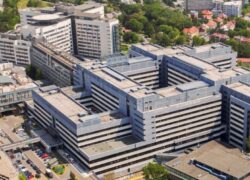
The Kellner Family Foundation has terminated a contract to provide a CZK 500 million donation for the construction of the Oncology Centre at Motol University Hospital due to uncertainties surrounding the project. The decision follows an ongoing investigation into public contracts at the hospital, which led to the former hospital director, Miloslav Ludvík, being taken into custody. Police have charged those involved with bribery, subsidy fraud, financial damage to the European Union, and money laundering.

The foundation had initially agreed with the hospital and the Ministry of Health to support the establishment of a scientific and diagnostic oncology center. Of the CZK 500 million donation, CZK 300 million was allocated for construction, while CZK 200 million was intended to fund scientific research following the center’s opening. Under the agreement, the research facility was to include the name of Petr Kellner.

Despite withdrawing its financial commitment, the foundation has expressed a willingness to resume cooperation if the circumstances surrounding the project are resolved. Spokesman Michal Kříž confirmed that the foundation remains supportive of the initiative and continues to collaborate with the Ministry of Health. “If the situation regarding the construction of the Motol Cancer Centre is clarified, the foundation is ready to renew its cooperation,” Kříž stated.

The Ministry of Health has acknowledged the foundation’s concerns and decision. Ministry spokesman Ondřej Jakob confirmed ongoing communication with the Kellner Family Foundation. Health Minister Vlastimil Válek emphasized that the Motol Cancer Centre is expected to be funded primarily through European resources from the National Recovery Plan (NPO). The planned CZK 4.5 billion construction was set to receive a European subsidy of CZK 3.7 billion. If financial mismanagement is proven, the European Commission may withhold reimbursement for the project.

Initial plans for the oncology center projected that the facility would be fully operational by July 2026 to comply with European funding regulations. The project included advanced medical equipment, such as two linear irradiation accelerators, along with a 60-bed oncology ward and a day care center for chemotherapy treatment for over 80 patients. The Kellner Family Foundation’s donation was originally intended to support the Scientific and Diagnostic Cancer Center, which was to be integrated with the Motol facility.

Source: CTK

Austrian economy declined by 0.5% in Q4

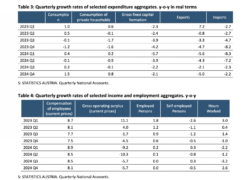
Austria’s economic output declined by 0.5% in the fourth quarter of 2024 compared to the same period in 2023, according to preliminary data from Statistics Austria. On a quarterly basis, seasonally and calendar-adjusted real GDP fell by 0.4% compared to the third quarter of 2024. For the entire year, Austria’s GDP contracted by 1.1% in real terms compared to 2023, marking the country’s longest period of economic weakness since 1995.

The economy has been in recession for two years, with declines recorded in almost all sectors. The contraction in the fourth quarter was less severe than in previous quarters, where GDP dropped by 1.9% in the first quarter, 1.4% in the second, and 0.8% in the third quarter of 2024. The downturn was driven primarily by declining activity in manufacturing, construction, and accommodation and food services. However, trade showed signs of recovery towards the end of the year.

The manufacturing sector recorded a 5.6% contraction in the fourth quarter, while construction and accommodation and food services declined by 2.5% and 2.6%, respectively. In contrast, public administration, health, and education grew by 3.5%, and wholesale and retail trade registered a slight increase of 0.4%. For the full year, manufacturing shrank by 5.5%, construction by 4.4%, and accommodation and food services by 3.9%. Public administration, health, and education increased by 2.0%, while wholesale and retail trade declined by 1.7%.

Austria’s economic downturn was also influenced by weaker investment and export activity. In the fourth quarter, gross fixed capital formation fell by 2.1%, with investment in construction down by 3.1%. Exports declined by 5.0%, driven by an 8.4% drop in goods exports. However, consumption showed growth, with a 1.5% increase in the fourth quarter. Private household consumption rose by 0.8% after two quarters of decline, while public consumption increased by 3.1%.

For the full year, gross capital formation fell by 3.4%, with investment in construction down by 5.4%. Exports contracted by 4.3%, while imports declined by 5.0%. Private household consumption stagnated, while public consumption increased by 1.6%.

Compensation of employees at current prices rose by 8.1% in the fourth quarter compared to the previous year, resulting in an 8.5% increase for 2024. Employment remained stable in the fourth quarter, while the number of self-employed persons decreased by 0.5%. Over the year, employment increased slightly by 0.1%, while self-employment declined by 0.2%. Total hours worked grew by 2.6% in the fourth quarter but declined by 1.0% over the course of the year.

Source: Statistik Austria

Hungary’s construction output declines by 4.2% in December, annual output down 0.4% in 2024

In December 2024, Hungary’s construction output experienced a year-on-year decline of 4.2%, according to the Hungarian Central Statistical Office (KSH). However, on a monthly basis, there was a modest growth of 0.7% compared to November 2024. 

Throughout 2024, the construction sector faced challenges, with the overall output decreasing by 0.4% compared to 2023. Despite this downturn, construction producer prices rose by an average of 5.9% during the January to December period, indicating increased costs within the industry. 

These figures highlight the mixed performance of Hungary’s construction industry in 2024, reflecting both declining output and rising production costs.

Source: Hungarian Central Statistical Office

Mitiska REIM closes €310 million MEREP 3 Fund, expands European real estate investments

Mitiska REIM has announced the final closing of its MEREP 3 European value-add fund at €310 million, surpassing its initial target of €300 million. This represents a 39% increase in funds raised compared to the previous fund at final close.

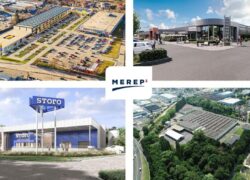
MEREP 3, the third flagship fund from Mitiska REIM, focuses on the growing demand for convenience real estate across Europe. The fund targets food-anchored retail parks, multi-let light industrial properties, self-storage facilities, and urban logistics projects. It aims to invest in urban infill sites that offer accessible locations, flexible design, and sustainable solutions.

The investment strategy includes repositioning, reconfiguring, and retrofitting existing properties, as well as risk-mitigated development projects. The fund builds on the track record of its predecessors, which have delivered returns across different economic conditions.

MEREP 3 has attracted a diverse group of institutional investors, including pension funds, insurance companies, family offices, and banks. In January, Mitiska REIM secured a €50 million co-investment from the European Bank of Reconstruction and Development (EBRD). With debt financing, the fund will have an investment capacity of up to €1 billion for convenience real estate projects across Europe.

Aligned with Mitiska REIM’s ESG strategy, MEREP 3 aims to develop sustainable assets, targeting BREEAM “Very Good” to “Excellent” ratings and a GRESB rating at the fund level. The ESG policy includes a commitment to keeping each asset at least 10 years below the CRREM pathway after the value-add program is completed.

To date, 35% of the fund’s capital has been allocated to a diversified portfolio, with eight investments totaling €107 million secured and additional assets under due diligence and negotiation.

Managing Partner Sylvie Geuten-Carpentier stated that exceeding the initial fundraising target reflects strong support from investors. She expressed appreciation for investor confidence in Mitiska REIM’s strategy and the efforts of the team in securing opportunities across European markets.

Managing Partner Axel Despriet noted that current market conditions present an opportunity for specialized value-add investors. He emphasized that convenience real estate is well-positioned for investments requiring capital expenditure and hands-on asset management, adding that MEREP 3 has the resources to capitalize on evolving market opportunities.

YIT sells first phase of Portti Kladno project, launches second phase for private ownership

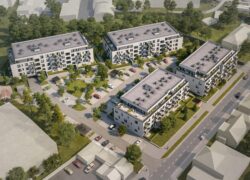
YIT has sold the first phase of its Portti Kladno residential project to the Portti Kladno Housing Cooperative. The first phase consists of 85 units, and construction has already begun, with completion expected in autumn 2026. The project is being developed on the site of a former freezing plant and will eventually include 187 apartments designed with modern architecture and an emphasis on quality living in a green environment.

The first phase was planned as cooperative housing from the outset, and negotiations with investors led to an agreement with the Portti Kladno Housing Cooperative. YIT will construct the buildings, and the cooperative will handle the sale of individual apartments. According to Marek Lokaj, CEO of YIT Stavo, cooperative housing provides an alternative for those unable to secure mortgage financing due to current interest rates and lending conditions.

The Portti Kladno complex is located on Ke Stadionu Street and will be developed in two phases across four low-rise buildings. The project will offer apartments ranging from one- to four-room layouts, with front gardens, balconies, or terraces. Demand for new housing in Kladno is high, attracting both local residents and people who cannot afford property in Prague but need to commute regularly. Kladno offers lower property prices while maintaining good transport connections to the capital, with train and bus journeys taking between 30 and 40 minutes. The planned high-speed railway will further improve travel times.

Designed by ABM architects, the development integrates with its surroundings and preserves mature trees on the brownfield site. Sustainability is a key focus, with YIT incorporating new greenery, photovoltaic panels, a rainwater retention system, and modern prefabrication techniques to improve construction quality and efficiency. The project will include a semi-private courtyard with a small park and a children’s playground, enhancing the living environment for future residents.

New tenants move into Budapest ONE and Corvin Innovation Campus as office occupancy rises

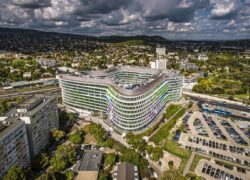
New tenants have moved into the Budapest ONE and Corvin Innovation Campus office buildings, leasing nearly 10,000 square meters of space across Futureal’s two developments. Office occupancy at Budapest ONE in Őrmező has now reached 98%, while the Corvin Innovation Campus, located along the extension of Corvin Promenade, is at 86%.

Futureal has signed agreements with seven new tenants for Budapest ONE, a 66,000-square-meter complex developed in Őrmező, one of Hungary’s largest transport hubs. The building has achieved the highest level of WELL Platinum certification, which evaluates workplace health and well-being, and has also been awarded the BREEAM Excellent sustainability rating. It complies with the Access4You system, ensuring full accessibility. The building features calming interior colours, a WELL room, a rooftop green garden, a bicycle storage area with showers, and a 500-meter-long rubber-coated running track with panoramic views.

The Corvin Innovation Campus has also continued to attract new tenants, including two international office occupants. The first phase of the 16,650-square-meter development has earned a BREEAM Excellent certification and an AA+ energy rating, making it one of Hungary’s most energy-efficient office buildings. IBM Hungary has already established its headquarters in the complex. Located near a metro station, the pet-friendly building is designed with eco-friendly and employee-focused solutions. It offers extensive bike storage, dedicated showers, lockers, and amenities such as a café and restaurant. At the main entrance, Futureal has created a memorial park named after Irén Psota, an esteemed Hungarian actress.

Dr. J. János Berki, Futureal’s International Director of Office Leasing and Asset Management, noted that as companies increasingly return to office-based work, the demand for high-quality workplaces has risen. He emphasized that eco-friendly and people-centered designs are becoming fundamental expectations. Futureal adheres to the strict standards set by WELL and BREEAM certifications to ensure that employees’ needs and well-being are prioritized in its developments.

Ukrainian refugees in Germany: Growing participation amid persistent challenges

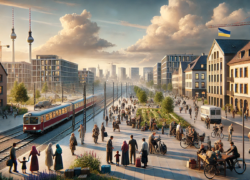
Since the Russian invasion of Ukraine in February 2022, around one million refugees, primarily women and children, have sought protection in Germany. While integration into society and the labour market has been progressing, challenges such as limited childcare availability and bureaucratic hurdles in the recognition of foreign qualifications continue to pose obstacles. A recent report based on data from the IAB-BAMF-SOEP Survey of Refugees provides insights into the realities of life for Ukrainian refugees in Germany. The survey was conducted between July 2023 and January 2024 and distinguishes between two waves of arrivals: those who arrived between February and May 2022 and those who arrived from June 2022 onward.

The report highlights progress in family reunification and more stable living conditions. Women still make up the majority of adult refugees, accounting for 75 per cent of the group, but the number of men joining them has increased since 2022, helping to stabilize families. Two-thirds of adult refugees now live in stable relationships, and the proportion of women aged 20 to 49 living with minor children without a partner has fallen from 46 per cent in 2022 to 20 per cent in late 2023. Childcare participation has also increased, with 76 per cent of children aged three to six and 23 per cent of those under three attending childcare. However, both figures remain approximately 15 percentage points below the national average. Alternative childcare models could help bridge this gap and enable more mothers to enter the workforce, according to Sabine Zinn, provisional director of the Socio-Economic Panel and co-editor of the report.

School integration has generally been successful, with most Ukrainian children attending regular German classes. Only 16 per cent of school-age children remain in separate preparatory classes. However, a significant number of Ukrainian children are enrolled in middle and secondary modern schools, which may not always align with their academic potential. The report suggests that improvements are needed to ensure access to schools that match students’ abilities and aspirations.

Education remains a priority for Ukrainian refugees, with 61 per cent aspiring to vocational training or a university degree in Germany, and 16 per cent already enrolled in education programs. One-fifth of adults have applied for recognition of their qualifications, particularly in the fields of health, social services, teaching, and education. However, 73 per cent of those surveyed reported needing additional information and support in the recognition process, particularly regarding financial aspects and document requirements. Language skills have improved significantly, with 70 per cent of refugees having completed or currently attending an integration course. While 78 per cent had no knowledge of German upon arrival, this figure has now dropped to 12 per cent. More than half of respondents consider their German skills to be at least “sufficient.” Nina Rother, head of the Integration Research Department at BAMF, emphasized that flexible course formats and accessible childcare would further support language acquisition.

Labour market integration has improved, with an employment rate of 22 per cent in the second half of 2023. The likelihood of employment increases with time spent in Germany, rising from 13 per cent after 13 months to 31 per cent after 22 to 23 months. Women generally enter the workforce later than men, though their employment rate has increased by 10 per cent. Many refugees work in jobs below their qualification level, particularly in cleaning, food preparation, and social work. While 75 per cent of Ukrainian refugees hold a vocational or university degree, and nearly 90 per cent have professional experience, their potential remains underutilized in the German labour market. The report suggests that flexible working hours, expanded childcare, early career guidance, and streamlined qualification recognition processes could improve employment outcomes. Yuliya Kosyakova, head of Migration and Integration Research at IAB, stressed that reducing bureaucratic barriers and providing better access to information could accelerate integration efforts.

A majority of Ukrainian refugees intend to remain in Germany. Among those who arrived in the first wave, 59 per cent plan to stay long-term, while the figure rises to 69 per cent for later arrivals. Economic conditions in Ukraine play a significant role in these decisions, with 60 per cent citing the economic situation as a determining factor. Most refugees now live in private housing, though finding accommodation remains difficult for single individuals and those with lower educational qualifications or limited social connections.

The report also highlights the psychological strain many refugees face. Ukrainian refugees in Germany report higher levels of mental health issues compared to the general population, with 19.4 per cent experiencing depressive symptoms and 14.2 per cent showing signs of anxiety disorders. The authors recommend increasing access to low-threshold psychotherapeutic services and strengthening psychosocial support for refugees.

The findings are published in an IAB Research Report, a BAMF Research Report, and as part of the DIW Berlin’s ‘Politikberatung kompakt’ series.

Source: DIW Berlin

PORR to construct Kolnik-Gdansk gas pipeline, strengthening Europe’s energy infrastructure

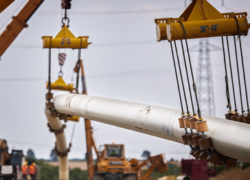
The Polish state-owned company GAZ-SYSTEM has awarded a contract to PORR for the construction of a 34-kilometer natural gas pipeline between Kolnik and Gdansk. This project marks the first onshore section of a pipeline system that will transport liquefied natural gas from a floating LNG terminal to inland Poland. The initiative represents a significant step in enhancing Poland’s and Europe’s energy infrastructure.

The high-pressure pipeline, with a diameter of one meter, forms a crucial part of the Floating Storage Regasification Unit (FSRU) programme. Under this initiative, a floating LNG terminal is being developed in the Gdansk area to receive large volumes of liquefied natural gas delivered by tankers. The terminal will serve as a hub, distributing natural gas throughout Poland via an extensive pipeline network.

PORR has been commissioned to construct the Kolnik-Gdansk section within a period of 25 months, with the contract valued at EUR 90.5 million. The new pipeline will operate under a gas pressure of 8.4 MPa and will pass through five towns in the Pomeranian Voivodeship: Gdańsk, Pruszcz Gdański, Cedry Wielkie, Suchy Dąb, and Pszczółki. The contract also includes the construction of an FSRU measuring station and the installation of a fibre-optic cable.

Karl-Heinz Strauss, CEO of PORR, emphasized the strategic importance of the project in securing and diversifying Europe’s energy supply. He stated that by integrating the new pipeline into the LNG terminal network, Poland and Europe will gain additional supply routes, reducing dependency on individual suppliers.

PORR brings extensive expertise in pipeline construction, having already completed over 300 kilometers of pipelines for GAZ-SYSTEM through multiple projects. The Kolnik-Gdansk pipeline further strengthens this cooperation and reinforces PORR’s position as a key player in Europe’s energy infrastructure development.

European logistics investment rises 14% in 2024, indicating further growth

Investment in the European logistics sector increased by 14% in 2024, reflecting strong demand and continued expansion in the market. According to a report from Savills, total industrial and logistics take-up across Europe reached 27.5 million square meters during the year, signaling resilience in the sector despite broader economic uncertainties.

The rise in investment is driven by sustained demand for logistics space, fueled by the ongoing growth of e-commerce, supply chain diversification, and increased nearshoring efforts. Many occupiers are seeking modern, energy-efficient warehouses to optimize distribution networks and reduce operational costs. This demand has led to increased development activity, particularly in key logistics hubs across Western and Central Europe.

The market outlook remains positive, with further growth expected in 2025. Investors are increasingly attracted to logistics assets due to their stable returns and long-term growth potential. Despite economic challenges such as inflation and interest rate fluctuations, the sector continues to be a key focus for institutional investors seeking defensive real estate opportunities.

Savills’ findings highlight that the logistics sector’s expansion is set to continue, supported by structural shifts in supply chain management and ongoing demand from occupiers. Market participants are closely watching economic conditions and policy changes that could impact investment trends, but the overall trajectory for European logistics remains strong.

Growing demand for small and micro apartments in Bratislava

The demand for small and micro apartments in Slovakia is increasing, particularly in Bratislava. Rising housing prices and higher interest rates on loans have made smaller apartments an attractive option for young couples, individuals, and investors looking for rental opportunities, according to RE/MAX Slovakia.

Currently, the most sought-after apartments in Bratislava range from 20 to 35 square meters. Despite their high price per square meter, these properties tend to sell quickly. Rental prices in the city range from 15 to 18 euros per square meter, making small apartments a profitable investment. The increasing demand for these properties is also driven by limited mortgage availability, which has made larger apartments financially out of reach for many buyers.

According to Katarína Suchá of RE/MAX Vista, real estate prices have been rising faster than wages, forcing buyers to opt for smaller and more affordable housing. She noted that the rise in interest rates since 2022 has significantly increased monthly mortgage repayments, further influencing the trend. Demographic shifts also contribute to the demand, as more people are living alone and prefer owning a home rather than renting.

Investors find small apartments appealing due to their rental potential and steady passive income. This trend is visible not only in Bratislava but also in regional centers such as Košice, Žilina, Nitra, and Trnava. These cities are home to a growing population of young professionals, students, and service workers who prefer to live near their workplaces or universities. However, Bratislava remains the most in-demand location due to its concentration of job opportunities, higher wages, and dynamic real estate market.

Small apartments are particularly attractive in cities with a high proportion of rental housing. They offer lower initial costs and provide rental yields between four and six percent annually, depending on location and whether they are used for short-term or long-term rentals. According to RE/MAX Slovakia, these properties serve as stable assets that retain value even during economic uncertainty. However, real estate expert Ján Hámorský cautioned that investors should also consider potential risks such as maintenance costs, tenant issues, and legislative changes that could impact returns.

Despite their advantages, micro apartments may not be suitable for long-term living for everyone. Experts highlight the limitations of smaller spaces, including restricted storage, reduced comfort, and limited flexibility in housing quality. Such properties may serve as a temporary solution for individuals or couples without children rather than a permanent housing option.

Source: TASR

LATEST NEWS