Addressing challenges and changes in the development industry

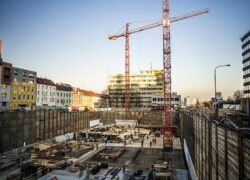
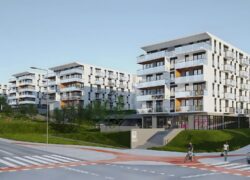
The real estate development industry in Poland continues to evolve, shaped by regulatory challenges, market conditions, and shifting consumer expectations. While large development companies have adopted modern practices and higher standards, public perception remains influenced by past industry shortcomings and the actions of smaller, less established firms. Jakub Sobczyński, Managing Director of Megapolis, one of the largest real estate sales companies in Kraków, discusses the current situation and the factors affecting the industry’s image.

Regulatory Challenges and Local Planning Issues

A key issue affecting real estate development is the lack of comprehensive local zoning plans in many Polish cities. Many investments proceed based on individual development conditions rather than structured, long-term urban planning. Even in cities like Kraków, some zoning documents date back more than a decade and do not reflect current needs. Local governments, despite their competencies, struggle to update plans quickly enough to adapt to economic and social changes, such as the impact of the pandemic on retail and office spaces. This lack of coordinated planning often results in chaotic urban development, which contributes to public criticism of the industry.

Housing Prices and Market Conditions

Rising apartment prices are another concern for buyers, but Sobczyński explains that developers are not the primary drivers of these increases. Housing costs reflect market conditions, financing costs, and rising wages in the construction sector. Banks play a significant role, as buyers not only take loans for their apartments but also indirectly cover financing costs incurred by developers for land purchases, construction, and contractor payments. Over the past two decades, housing prices have increased in parallel with average wages, as the cost of labor and materials continues to rise.

Public Perception and Industry Reputation

Public perception of developers is often shaped by limited personal experience and online discourse, rather than direct interactions with companies. Additionally, smaller, short-term developers that complete only a few projects before exiting the market may not prioritize long-term reputation or customer satisfaction. This contrasts with larger, established developers who implement structured procedures and quality standards.

The industry’s image is still influenced by past issues, particularly from the 1990s and early 2000s, when the sector was fragmented and professional standards were less established. While larger companies now dominate the market, smaller firms still exist, some of which may not operate with the same level of transparency or reliability. Scandals involving failed development projects, where companies sold unfinished properties before disappearing, have further shaped public distrust. Sobczyński emphasizes that choosing reputable developers with a strong track record is essential for minimizing risk.

Improving Industry Standards and Customer Focus

According to Sobczyński, larger developers must take responsibility for improving industry standards and transparency. Megapolis, for example, is a member of the Polish Association of Developers and follows the Code of Good Practices, aimed at addressing industry challenges and ensuring ethical business operations.

A key focus for Megapolis is customer satisfaction, ensuring that projects are developed with long-term livability in mind. The company avoids introducing innovations that may increase profits at the expense of buyers, instead prioritizing solutions that enhance functionality and value. During the pandemic, for example, coworking spaces were added to new developments to accommodate remote work, providing residents with dedicated spaces separate from their homes.

To maintain quality control, Megapolis has established its own internal contractor unit, overseeing all aspects of project execution. Unlike many large firms that outsource construction, this approach ensures consistency in building standards and customer service. Additionally, the company has an after-sales care department, staffed by engineers who manage maintenance and support for completed developments.

Megapolis also encourages community engagement, allowing residents to have a say in managing shared spaces. Through competitions and participatory decision-making, residents can choose property managers and influence aspects of their living environment.

Shaping the Future of the Development Industry

The real estate development industry in Poland is gradually improving its standards, transparency, and customer focus, though public perception remains influenced by past challenges and the actions of smaller, less reliable firms. Megapolis and other large developers aim to reshape the industry’s reputation by prioritizing quality, customer engagement, and ethical business practices. While the full impact of these efforts will take time to materialize, research indicates that the industry is moving in the right direction.

Source: Megapolis

OECD urges Czechia to strengthen fiscal sustainability, innovation, and workforce skills

Czechia has made significant economic progress since joining the Organisation for Economic Co-operation and Development (OECD) three decades ago, benefiting from its open trade policies, stable institutions, and a well-educated workforce. However, an ageing population, slowing productivity growth, and fiscal sustainability challenges require further policy action, according to the latest OECD Economic Survey of Czechia.

The OECD forecasts that economic growth will accelerate to 2.1% in 2025 and 2.5% in 2026, while inflation is expected to decline to 2.3% in 2025 and 2.0% in 2026. However, risks to this outlook remain, including geopolitical uncertainties, potential disruptions in supply chains, and slowing demand from key trade partners like Germany.

OECD Secretary-General Mathias Cormann, presenting the report in Prague alongside Prime Minister Petr Fiala, emphasized the need to improve education, workforce skills, innovation, and business competitiveness to sustain long-term growth. He also called for continued fiscal consolidation to prepare for rising public spending pressures, particularly related to population ageing and the green transition.

Recent pension system reforms should be fully implemented, the report states, while linking the retirement age to life expectancy could help contain future spending. Adjustments to family benefits, such as shortening parental leave and shifting towards greater investment in childcare, would support higher female workforce participation.

The OECD highlighted that productivity growth has stalled since the pandemic, widening the gap between Czechia and other OECD economies. Supporting research and development (R&D) funding for small and young firms, improving access to capital markets, and simplifying business regulations could foster greater economic dynamism. Additionally, streamlining insolvency procedures and strengthening the start-up ecosystem would help innovative businesses expand.

In the education sector, while Czechia’s overall school outcomes remain strong, disparities persist. Expanding access to affordable, high-quality childcare could improve long-term educational outcomes for children from vulnerable backgrounds. The OECD also recommends enhancing teacher working conditions, including offering more career progression opportunities, to attract and retain qualified educators.

Skill shortages and mismatches in the labour market remain a challenge. The OECD suggests reforming vocational education and training to better align graduates’ skills with employer needs. Increasing tertiary education attainment and upskilling opportunities for adult workers would further enhance workforce adaptability in response to changing labour demands.

On climate policy, the OECD calls for a cost-effective mitigation strategy to support Czechia’s transition to net-zero emissions. The planned phase-out of coal by 2033 is considered essential, requiring faster deployment of renewable energy sources. Stronger incentives for housing renovations are also recommended to reduce energy consumption and emissions in the building sector. The report further notes that carbon pricing in sectors outside the EU Emissions Trading System is too low to meet climate targets, suggesting adjustments to make pricing more effective.

The OECD’s findings underline the importance of targeted reforms in fiscal policy, workforce development, business competitiveness, and climate strategy to ensure sustainable economic growth and long-term resilience in Czechia.

Source: OECD

President von der Leyen announces ReArm Europe Plan to strengthen EU defence

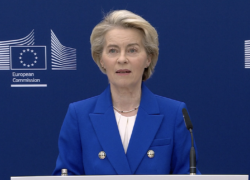
European Commission President Ursula von der Leyen has outlined a new defence package aimed at significantly increasing Europe’s military capabilities. Speaking ahead of the European Council meeting, she emphasized that Europe must act decisively to address growing security threats and take greater responsibility for its own defence.

Von der Leyen acknowledged that European security is under direct threat and that member states are prepared to increase defence spending. She stated that Europe is entering an era of rearmament and must respond both to immediate security challenges, including support for Ukraine, and to long-term defence needs. To facilitate this, she introduced the ReArm Europe Plan, a set of financial measures designed to help EU countries rapidly expand their defence investments.

The plan includes five key components. The first is a proposal to activate the national escape clause of the Stability and Growth Pact, which would allow EU member states to increase defence spending without triggering the Excessive Deficit Procedure. Von der Leyen noted that if countries raised their defence budgets by 1.5% of GDP, it could generate fiscal space of nearly EUR 650 billion over four years.

The second measure involves a new financial instrument offering EUR 150 billion in loans for member states to invest in military capabilities. The focus will be on joint procurement of key defence assets, including air and missile defence systems, artillery, drones, ammunition, cyber defence, and military mobility. This approach aims to reduce costs, enhance interoperability, and strengthen Europe’s defence industry, while also ensuring immediate military support for Ukraine.

Von der Leyen also outlined plans to leverage the EU budget to direct more funds toward defence investments. She proposed additional options for member states to use cohesion policy funds for this purpose.

The final two elements of the plan focus on mobilizing private capital. This will be achieved by accelerating the Savings and Investment Union and working with the European Investment Bank to finance defence-related projects.

Von der Leyen stressed that the ReArm Europe Plan could mobilise nearly EUR 800 billion to enhance Europe’s security and resilience. She reaffirmed the EU’s commitment to NATO and continued cooperation with its partners. With these measures, she stated, Europe is ready to take responsibility for its own defence and step up to the challenges ahead.

Source: EC

Slovak wages rise faster than inflation in 2024, marking real growth for first time in two years

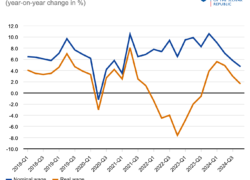
In 2024, the average monthly wage in Slovakia increased faster than inflation, marking a real wage growth of 3.7% for the first time in two years. The average nominal monthly wage for the year reached EUR 1,524, reflecting a 6.6% year-on-year increase. This growth was supported by a combination of lower inflation, which dropped to 2.8%, and continued wage increases across most sectors of the economy.

Throughout the year, wages maintained both nominal and real growth, though the pace of increase gradually slowed. By the fourth quarter of 2024, the average nominal monthly wage stood at EUR 1,643, up 4.7% from the previous year, with a real growth of 1.6% after adjusting for inflation. Seasonally adjusted wages also increased by 1.4% compared to the third quarter of 2024.

Despite the overall positive trend, two of Slovakia’s 19 monitored sectors saw wages fall behind inflation by the end of the year. The real estate sector recorded a 2.9% decline in real wages, while public administration saw a 0.6% drop. However, 17 sectors posted real wage growth, with the electricity, gas, and steam supply sector seeing the highest increase of 10.9% in nominal terms.

Wage Trends Across Key Sectors

Industry, which employs the largest number of Slovak workers, recorded its highest real wage growth in a decade. In the fourth quarter, wages in industry rose by 6.3% to EUR 1,765, translating to 3.1% real growth, exceeding the national average. Trade, the second-largest sector by employment, saw nominal wage growth of 4.1%, bringing the sector’s average wage to EUR 1,513, though real growth remained lower at 1%.

The highest average monthly earnings—exceeding EUR 2,700—were recorded in the electricity, gas, and steam supply sector, as well as in information and communication. In contrast, nine of the 19 monitored sectors had wages below the national average. The lowest wages were found in accommodation and food services, where the average salary was EUR 936, making it the only sector that has yet to surpass the EUR 1,000 threshold.

Regional Disparities Persist

From a regional perspective, Bratislavský kraj remained the only region with above-average wages, reaching EUR 1,975 in the fourth quarter. Other regions saw wages ranging from EUR 1,320 in Prešovský kraj to EUR 1,566 in Trenčiansky kraj. While all eight regions experienced nominal wage growth, only Nitriansky kraj recorded a decline in real wages, down 0.4%. The highest wage growth was reported in Banskobystrický kraj, where nominal wages increased by 6.3%.

For the full year, Bratislavský kraj continued to lead in wages, with an average salary of EUR 1,858. Other regions reported average wages ranging from EUR 1,195 in Prešovský kraj to EUR 1,419 in Trenčiansky kraj. All regions saw real wage growth in 2024, with Banskobystrický kraj again recording the most significant increase—8.1% in nominal terms and 5.2% in real terms.

Wages by Company Size

The largest wage increases were observed in large enterprises, where wages are often determined by collective agreements. Companies with 500 to 999 employees saw wages rise by 9.8% to EUR 1,885, with real growth at 6.8%. Companies with 1,000 or more employees reported an 8.2% increase in nominal wages, reaching EUR 2,121, translating to 5.3% real growth.

Outlook for the Labor Market

The rise in wages across Slovakia in 2024 was driven by a combination of factors, including lower inflation, sustained labor market demand, and adjustments in various sectors to retain workers. While most industries saw wages keep pace with or exceed inflation, the slowdown in wage growth toward the end of the year indicates that future increases may be more moderate.

The disparities between higher wages in urban centers, particularly Bratislava, and lower wages in other regions remain a challenge, though steady wage increases suggest some narrowing of the gap over time. If inflation remains controlled, real wage growth could continue in 2025, providing greater purchasing power for Slovak workers.

Source: Statistical Office of the SR

VGP reports strong financial results for 2024

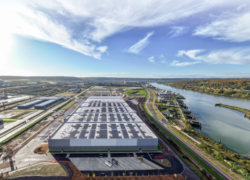
VGP NV, a European provider of logistics and semi-industrial real estate, has announced its financial results for the year ending 31 December 2024, reporting significant growth in profitability, leasing activity, and renewable energy capacity.

The company recorded a net profit of EUR 287 million, reflecting an increase of EUR 200 million or 229% compared to the previous year. Net asset value rose by 8.4% to EUR 2.4 billion, supported by strong earnings across rental, development, and renewable energy activities. EBITDA increased by 57%, with rental income contributing EUR 204.3 million (up 19%), development activities generating EUR 144.8 million (up 178%), and renewable energy projects adding EUR 5.4 million (up 236%).

Leasing activity reached record levels in 2024, with new and renewed lease contracts worth EUR 91.6 million, bringing the total volume of signed lease contracts to EUR 412.6 million, a 17.6% increase year-over-year. 34 projects were under construction at the end of the year, covering 780,000 square meters, with EUR 60.4 million in additional annual rental revenue expected upon completion. These projects were 80% pre-leased, and nearly all developments met sustainability certifications, with 97% achieving at least BREEAM Excellent or equivalent.

During the year, 21 projects totaling 584,000 square meters were completed, adding EUR 36.1 million in annual rent. As a result, net rental income grew by 20.9%, from EUR 159.1 million to EUR 192.4 million, with rental cash flow at year-end increasing by 10.5% to EUR 214.7 million. The occupancy rate for VGP’s property portfolio reached 98%, with an average building age of 4.2 years.

In terms of land acquisitions, 702,000 square meters were secured for future development, while 1.17 million square meters of land were used for ongoing construction. By the end of 2024, VGP had secured 8.7 million square meters of land, with a total development potential exceeding 3.6 million square meters.

The company also advanced its renewable energy initiatives, increasing photovoltaic (PV) capacity by 53% year-over-year to 155.7 MWp, up from 101.8 MWp in 2023. Additional PV projects totaling 41.0 MWp are under development, with another 90.9 MWp planned. VGP also commenced construction on its first 6.8 MWh battery storage project, with further installations in advanced planning stages.

A series of transactions in 2024 strengthened the company’s financial position, including the closure of four joint ventures and the sale of LPM, generating a record EUR 809 million in cash recycling and contributing EUR 92.9 million in realized gains.

The company ended the year with a solid balance sheet, reporting EUR 493 million in liquidity, compared to EUR 210 million in December 2023. Undrawn credit facilities totaled EUR 500 million, while the debt-to-equity ratio improved to 33.6% from 40.3% in 2023. The loan-to-value (LTV) ratio decreased to 48.3% from 53.4%.

As a result of its financial performance, the Board of Directors has proposed an ordinary dividend of EUR 90 million, marking a 12% increase from the previous year, or EUR 3.3 per share.

Zeitgeist Asset Management nears completion of rental apartments in Prague’s Old Town

Zeitgeist Asset Management Nears Completion of Rental Apartments in Prague’s Old Town

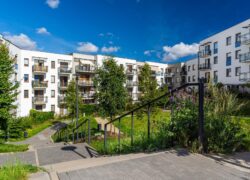
Prague, March 4, 2025 – Zeitgeist Asset Management is finalizing the renovation of three historic apartment buildings in Prague’s Old Town on Karolíny Světlé Street. The project, which began in September 2022, is set to deliver 37 rental apartments, with move-ins scheduled to begin in May.

The development offers a range of apartment layouts, from compact 1+kk units to larger 6+1 apartments, with sizes between 22 and 177 square meters. Some of the units are designed as duplexes. The project adds to Zeitgeist’s HOME by Zeitgeist portfolio, which currently includes 15 rental residences across Prague.

The renovation preserves the architectural character of the original 15th-century buildings, integrating modern residential features. Historic elements such as coffered doors and wooden parquet flooring have been retained or replicated, while kitchens and bathrooms have been modernized. Ground-floor units include private front gardens, and residents will have access to a private courtyard garden.

The buildings consist of two five-storey structures, each with 14 apartments, and a third four-storey building accessed via a courtyard with nine units. The project also includes four commercial spaces on the ground floor, intended for shops and services.

According to Peter Noack, CEO of Zeitgeist Asset Management, the development addresses a gap in the Prague rental market for larger apartments, which are in demand among expatriates and professionals working from home. The units provide flexibility for tenants seeking dedicated workspaces, children’s rooms, or additional living areas.

The apartments are located near the Rotunda of the Finding of the Holy Cross, within walking distance of cultural landmarks, theatres, museums, and shopping centers. The area is well connected by public transport, with tram stops on Smetanovo nábřeží and metro stations at Národní třída and Staroměstská.

The Karolína Světlé 12 and 14 project expands Zeitgeist Asset Management’s presence in Prague, reinforcing its position as a leading provider of institutional rental housing. The company manages more than 500 apartments across the city, ranging from historic properties to newly developed residential areas.

What trends will shape the Polish housing market in 2025?

What challenges will the housing market face in 2025? What changes have taken place in the past year? What strategies have development companies adopted?

Tomasz Kaleta, Managing Director of Sales and Marketing at Develia
This year, uncertainty continues to dominate among both developers and customers due to the reduction in interest rates and the introduction of government support programmes, which could significantly affect the residential property market. In addition, concerns about the health of the market are exacerbated by changes in global politics and economics and the war in Ukraine.

The challenge for customers remains the cost of credit, which is among the highest in Europe. For developers, it is the high level of supply, especially in smaller markets. Last year, sales of flats on the primary market fell by around 30% y/y, which, however, did not stop companies from increasing their supply. As a result, a record number of 56,000 flats were available in Poland’s largest cities at the end of 2024. While in larger markets the supply has returned to the level before the pandemic and the beginning of the conflict in Ukraine, in smaller markets it has reached a level well above the average of previous years, especially in Łódź, Poznań and Katowice. This means that companies need to adjust their strategies and limit supply.

Despite a drop in sales in 2024, some companies managed to maintain their results year-on-year or even, as in the case of Develia, to record an increase. In these challenging market conditions, only the strongest companies that offer a product that meets the growing demands of customers will be able to maintain their market position. Therefore, in 2025, we can expect further consolidation of the market, which is still highly fragmented, which will translate into an increase in the quality and security of investments from the customers’ perspective.
Our priorities for this year are to continue our dynamic organic growth, expand our land bank and gradually diversify our activities in the PRS and PBSA markets by completing at least two projects in the living segment.
In 2025, we aim to sell 3,100-3,300 apartments, i.e. maintain a level comparable to last year, and hand over 2,900-3,100 units, which will allow us to exceed the previous record number of 2,865 apartments handed over in 2024. At the same time, we want to introduce 3,100-3,300 units to our offer and start construction, adjusting the portfolio to the current level and structure of demand.

Tomasz Łapiński, President of the Management Board and Managing Director of Residential Investments at Cordia Polska
This year, we will see a continuation of the trends that have already emerged over the past few months, as well as new challenges. We expect further increases in construction costs and land prices, taking inflation into account. We still have a significant shortage of land for housing developments, which will particularly affect the prices of new flats. The minimum wage has also increased since January this year, which will certainly have an impact on the increase in the cost of project implementation. It is worth bearing this in mind, as it is often overlooked by those expecting property prices to fall.

Other important factors are high interest rates and rising cost of living, which can limit the availability of mortgages and, consequently, weaken purchasing power. Therefore, this year we expect an increase in the share of loan-assisted purchases, provided that interest rates are lowered and banks improve their credit offerings. We are also expecting a new housing programme, which has been announced since last year.
The outlook also concerns the supply of new flats in particular. After years of shortages, the supply was rebuilt by developers last year. This means that buyers have more choice. We will carry out investments this year according to the planned schedule, hoping that the above-mentioned areas will translate into the assumed level of sales.

Zbigniew Juroszek, president of Atal
The economic situation on the new housing market will largely depend on interest rates and factors related to the political and legislative environment, including the form of possible state support for housing, both in terms of supply and demand. In an optimistic scenario, we assume that interest rates will be lowered in 2025, which will improve buyers’ creditworthiness and have a positive impact on real estate purchase decisions.
However, such a demand impulse will not trigger significant price increases, i.e. beyond the level of inflation, due to the large supply of new flats. Their prices remain stable, and we do not see any indications of a dynamic increase or decrease. The costs of construction and building materials are not currently changing much. Land prices, which are high in the largest cities, remain a challenge. However, when balancing these factors, prices are not expected to fluctuate significantly.

The political and legislative environment is an unknown factor. It can influence the market situation, as exemplified by the months-long decision-making stalemate on loan subsidies, which has put buyers in a state of limbo. It is still difficult to predict what the government’s housing policy will look like. The housing market certainly needs regulatory stability and streamlined administration, which have a significant impact on the cost of housing construction.

In 2025, we intend to continue the investments that have already been started and to introduce new ones, thus building a wide range of flats, which will allow us to meet the increased demand in each market segment in the medium term.

Cezary Grabowski, Sales and Marketing Director of Bouygues Immobilier Polska
In 2025, the residential property sector will face challenges similar to those of the previous year, although new circumstances that will affect the market cannot be ruled out. House prices may remain at last year’s level or even increase. This is due to rising construction costs, stricter building regulations and the need for ecological solutions in investments. The lack of a government support programme weakened demand in 2024 – some customers refrained from buying a flat, hoping for a new programme or a drop in prices. A similar trend may continue this year. Another factor holding back purchasing decisions is the difficulty in obtaining mortgages and the high level of interest rates. Potential reductions could increase customers’ purchasing power and interest in buying flats.

New challenges may also arise in the near future. The release of funds from the Operational Programme Infrastructure and the large infrastructure investments being made with them have the potential to divert construction workers away from smaller property development investments. This would translate into an increase in construction costs and housing prices. The situation behind our eastern border is a big question mark. The potential end of military operations in Ukraine means that some of our neighbours will be leaving. This, in turn, may affect the housing market and the market for investments in rental properties.

Mariusz Gajżewski, Head of Sales, Marketing and Communication BPI Real Estate Poland
The year 2025 certainly brings new challenges for the development industry, especially in the context of ever-changing macroeconomic conditions. High inflation, fluctuating interest rates and rising costs of building materials are factors that continue to affect the profitability of projects. The trends we are observing this year are, above all, the growing importance of sustainable development, the use of environmentally friendly building materials and energy-saving technologies.

Over the past year, we have also noticed changes in the purchasing preferences of customers, who are increasingly opting for investment property. As for our strategy for 2025, we are focusing on the further development of sustainable projects in the premium investment segment, which are becoming increasingly popular among investors. In terms of sales, we are focusing on greater flexibility by offering options tailored to the individual needs of our customers. Our goal is also to maintain stable profitability while maintaining the high quality of the investments we carry out, which is crucial in the current market conditions.

Mirosław Bednarek, Regional Business Director, Chairman of the Board of Matexi Polska
The year 2025 may bring significant changes in the real estate sector, determined by macroeconomic and regulatory factors and changing consumer preferences. The decline in inflation and expected interest rate cuts will increase the availability of mortgage loans, which may increase interest in buying flats.

Customers are looking for modern and functional properties, which is why we focus on projects that combine comfort, high quality and attractive locations. The growing importance of ecological construction and EU regulations on energy efficiency also remain important trends, which affects the standards of the investments carried out.

The government’s decision to abandon the Mieszkanie na Start (Housing for the Start) programme may have mixed effects. The lack of subsidies will limit support for less affluent buyers, but the decline in inflation and lower interest rates will increase the availability of loans, allowing more people to buy a flat. We intend to continue our strategy of long-term growth by realising further residential projects and developing the institutional rental segment (PRS). We also plan to expand our land bank and purchase land in key metropolitan areas, which will allow us to further strengthen our market position and respond to the needs of our customers.

Source: dompress.pl
Photo: Wolne Miasto, Eco Classic

Passerinvest Group advances construction of Hila, a mixed-use development in Prague

Construction of the Hila building in Prague’s Brumlovka district is progressing on schedule, with completion expected by the end of 2026. Located on Vyskočilova Avenue, the project by Passerinvest Group will introduce a combination of office, retail, and residential spaces within a single development.

By the end of 2024, excavation work removed 68,000 cubic meters of soil, and more than 200 piles were drilled. In early 2025, the concrete foundation slab was completed, and construction of the basement levels is now underway, with completion expected in spring. The building will include 20,200 square meters of office space and 2,400 square meters of retail space, with 71 rental apartments set to be available in the first half of 2027.

According to Eduard Forejt, Director of Development and Business at Passerinvest Group, the demand for new office space in Prague remains strong despite a slowdown in new office developments. He noted that 636,700 square meters of office space transactions were recorded in 2024, exceeding the 10-year average of under 500,000 square meters. Given this trend, companies considering relocation or new offices in the city are encouraged to explore leasing opportunities at Hila before completion.

Designed with a focus on sustainability and efficiency, the building incorporates air ionization technology, enhanced fresh air supply, and radiant ceiling heating and cooling to optimize indoor comfort while reducing energy consumption. The project aligns with Passerinvest’s ESG strategy, prioritizing employee well-being and environmental responsibility. The development also features terraces for relaxation, both shared and private, as well as access to Balance Club Brumlovka, a fitness and wellness center. Underground garages will offer 418 parking spaces, including charging stations for electric vehicles. Hila is targeting LEED Gold certification for sustainability.

Architect Jan Aulík of Aulík Fišer architects, the studio behind the project, highlighted the challenge of integrating offices, retail, and residential spaces in a vertical layout. Unlike previous developments in Brumlovka, Hila combines multiple functions within a single structure, aiming to create an active and dynamic urban environment.

Passerinvest Group continues to develop Brumlovka as a business and residential district, and Hila represents a new step in this transformation. The project is expected to contribute to the evolving landscape of Prague’s commercial and residential real estate market.

Fabryka Mebli AKORD relocates main warehouse to MLP Teresin logistics center

Fabryka Mebli AKORD has signed a lease agreement for approximately 21,800 square meters of modern warehouse space at the MLP Teresin logistics center. The move marks a significant expansion for the Polish furniture manufacturer, which will use the facility as its main warehouse alongside its existing distribution centers in Germany and France. The decision to relocate was influenced by the availability of high-storage capacity, which is expected to improve logistics efficiency and support the company’s continued growth in European markets.

Under the lease terms, Fabryka Mebli AKORD will receive early access to the warehouse in April 2025, with full handover scheduled for September. Of the total leased space, around 21,200 square meters will be dedicated to storage, while the remainder will be used for office and social facilities. The transaction was facilitated by AXI IMMO.

Founded in 1995, Fabryka Mebli AKORD specializes in modern, e-commerce-ready furniture, offering a range of products for living rooms, offices, bedrooms, and kitchens. The company emphasizes fast order fulfillment, maintaining a 99% product availability rate and ensuring rapid delivery times, often within 24 hours. The relocation to MLP Teresin is expected to enhance its logistics operations and improve service efficiency for its growing customer base.

The MLP Teresin logistics center spans approximately 38,000 square meters on a 10-hectare site in Gnatowice Stare, 45 kilometers west of Warsaw. It offers direct access to Route 92, which connects Warsaw and Poznań, and is near the A2 motorway and the Wiskitki junction, ensuring strong transport links. The facility is designed to meet high technical standards, featuring reinforced flooring, multiple loading docks, and a spacious maneuvering area.

MLP Group, which owns and manages the logistics center, has been developing and retaining logistics parks under a build-and-hold strategy. The company focuses on providing flexible, tenant-oriented solutions, ensuring that facilities meet the evolving needs of their clients. The relocation of Fabryka Mebli AKORD to MLP Teresin aligns with this approach, offering modern infrastructure tailored to the requirements of a growing manufacturer in the furniture sector.

Executives from both companies have highlighted the advantages of the partnership. Agnieszka Góźdź, Member of the Management Board and Chief Development Officer at MLP Group S.A., emphasized that the agreement reflects the strong alignment between MLP Teresin’s capabilities and Fabryka Mebli AKORD’s expansion plans. Władysław Zając, owner of Fabryka Mebli AKORD, noted that the facility’s high-storage capacity and modern infrastructure will optimize logistics processes and enhance service efficiency.

The transaction also received support from AXI IMMO, whose Senior Advisor, Rafał Jełowicki, pointed to the facility’s proximity to Fabryka Mebli AKORD’s existing factory, allowing for smooth logistics integration and workforce retention. He also highlighted the flexibility of the space and the developer’s ability to accommodate the company’s technical requirements.

The relocation represents a strategic move for Fabryka Mebli AKORD, reinforcing its position in the European furniture market and enhancing its operational efficiency as it continues to expand.

King Cross Zagreb reopens first renovated section amid major modernization effort

King Cross Zagreb has reached a significant milestone in its ongoing redevelopment, with the reopening of the first fully renovated section of the shopping center on February 27. The refurbishment is part of a broader modernization plan led by SES, the owner and operator of the mall, which is investing more than EUR 40 million to upgrade the entire complex. The transformation is set to be completed by fall next year, with improvements being carried out in phases to allow the center to remain open throughout the process.

The renovation project includes a comprehensive upgrade of technical infrastructure, enhanced parking facilities, and modernized retail spaces. SES aims to position King Cross Zagreb as one of the most advanced shopping destinations in Croatia, offering an improved customer experience with contemporary design and upgraded amenities. The work is being carried out while ensuring that day-to-day operations continue, minimizing disruption for visitors and retailers.

The first phase of the reopening introduces several new anchor tenants. Müller Drogerie, a well-known retailer, has opened a new location, and fashion brand Sinsay has also joined the center’s retail mix. One of the key highlights of this phase is the launch of Croatia’s largest and most modern Decathlon store, which serves as a flagship for the sporting goods brand. The redesigned store offers an updated layout, expanded product range, and an improved shopping experience tailored to the needs of sports and outdoor enthusiasts.

Further phases of the refurbishment will see additional enhancements across the shopping center, including upgraded common areas, improved energy efficiency, and new retail offerings. SES is focused on elevating King Cross Zagreb’s status as a leading retail destination in the region, ensuring that the shopping center meets the evolving expectations of both consumers and retailers.

The modernization of King Cross Zagreb reflects a broader trend in the retail sector, where shopping centers are adapting to changing consumer habits by investing in upgraded facilities, improved accessibility, and a more engaging retail environment. With the completion of the project next year, King Cross Zagreb is expected to solidify its position as a premier shopping and leisure destination in Croatia.

LATEST NEWS