New residential project in Hallwang completed and handed over to residents

After two years of construction, Salzburg Wohnbau has officially completed a residential building project in Hallwang, delivering 22 subsidized rental apartments to new residents. The development provides modern living spaces that range from 49 to 94 square meters, designed with contemporary layouts and energy-efficient features to enhance comfort and sustainability.

Built to modern energy standards, the project incorporates high-quality thermal insulation and an optimized building envelope to minimize heat loss. Energy-efficient windows, passive house construction, and a solar thermal system contribute to reducing overall energy consumption and heating costs. Each apartment comes with a private balcony or garden, while covered carport spaces ensure ample parking for residents.

Located in a well-connected area, the development benefits from proximity to the Hallwang-Elixhausen train station and essential services, including childcare centers, primary schools, medical facilities, banks, and shops. The combination of accessibility and infrastructure makes it a practical choice for families and individuals seeking affordable housing.

Hallwang’s mayor, Johannes Ebner, highlighted the importance of the project in addressing the town’s housing needs. “This development is a great asset to our community, providing much-needed rental apartments for our residents,” he stated. The total construction costs amounted to €5.3 million, with a gross rent of just under €12 per square meter, covering heating and mobility expenses.

According to Georg Grundbichler, managing director of Salzburg Wohnbau, the project represents a long-term commitment to affordable housing in the region. “With an investment of €3.9 million from housing subsidy funds, we are ensuring the availability of cost-effective living spaces in Hallwang,” he explained. State councillor Martin Zauner emphasized the role of government support in making these apartments accessible, stating that state-funded housing subsidies have been instrumental in enabling families to afford quality homes.

Sustainability was a key focus during the construction process. Thomas Maierhofer, another managing director of Salzburg Wohnbau, underlined the commitment to environmentally friendly construction through the use of renewable energy sources and modern building materials. He also pointed out the project’s economic benefits, stating, “By relying on local companies and sustainable value chains, we are not only prioritizing ecological living but also strengthening the regional economy.”

The completion of this project marks a significant step in expanding affordable and sustainable housing in Hallwang, ensuring that residents have access to high-quality homes while supporting economic and environmental sustainability in the region.

GCC equity markets gain global prominence amid changing market dynamics

The Gulf Cooperation Council (GCC) equity markets have emerged as an increasingly valuable component of global investment portfolios, offering diversification benefits and outperforming broader emerging markets in recent years. Comprising the United Arab Emirates (UAE), Bahrain, Saudi Arabia, Oman, Qatar, and Kuwait, the GCC has strengthened its market position through structural reforms, eased foreign ownership restrictions, and enhanced financial regulations, making it more accessible to international investors.

Historically, GCC equities have demonstrated low correlations with developed and emerging markets, with figures of 0.53 and 0.52 against the MSCI World Index and MSCI Emerging Markets Index, respectively, over the past two decades. This lower correlation enhances their diversification potential for investors. Additionally, unlike many emerging markets, GCC currencies are pegged to the US dollar, minimizing foreign exchange risk in USD-denominated portfolios.

GCC’s Growing Weight in Global and Emerging Market Indexes

The MSCI GCC Countries Combined Index, which tracks equity market performance across the region, has seen a steady rise in global indexes. The inclusion of Saudi Arabia in the MSCI Emerging Markets Index in 2019, followed by Kuwait in 2020, marked a significant milestone. As of December 2024, GCC representation in the MSCI ACWI Index had grown to 0.7% from 0.2% in 2014, while its share in the MSCI Emerging Markets Index surged from 1.5% to over 7%.

Despite this progress, the GCC market remains less diversified than broader emerging markets, both in terms of sectoral and country representation. Financials dominate the MSCI GCC Countries Combined Index, accounting for 57% of market capitalization, followed by materials (9%) and energy (8.5%). The 2019 Saudi Aramco IPO significantly increased the weight of energy stocks, while real estate, utilities, and information technology (IT) have also gained prominence.

On a country level, Saudi Arabia represents 62% of the MSCI GCC Countries Combined Index, with the UAE (16.9%) and Qatar (9.6%) bringing the three largest markets to a combined 89% of the index. In contrast, the MSCI Emerging Markets Index is more balanced, with China (30.6%), Taiwan (19%), and India (16.8%) accounting for 66% of the index.

Performance Trends and Correlations in GCC Equity Markets

Since its inception in 2006, the MSCI GCC Countries Combined Index has underperformed both the MSCI ACWI and the MSCI Emerging Markets Index in absolute and risk-adjusted terms. However, in the past decade, GCC equities have outperformed broader emerging markets, supported by earnings growth and dividend contributions. Unlike other emerging markets that have suffered from currency depreciation, the GCC’s USD peg has shielded returns from foreign exchange volatility.

The GCC market also exhibits lower correlation with major emerging markets. For example, China (0.32) and Taiwan (0.41) have demonstrated weaker ties with global equities than the GCC’s correlation of 0.52 with emerging markets. Moreover, despite being oil-driven economies, GCC equities’ correlation with oil prices (0.41) is similar to that of the MSCI World and MSCI Emerging Markets Indexes (0.42 and 0.41, respectively), challenging the assumption that GCC equity markets are heavily dependent on oil price fluctuations.

Risk Reduction and Tactical Allocation with GCC Exposure

Adding GCC equities to an emerging markets portfolio has historically reduced risk due to their low correlation with broader EM trends. Since 2006, a 20% allocation to the MSCI GCC Countries Combined Index within an emerging markets portfolio would have lowered annualized risk by 166 basis points (bps) while only slightly reducing return by 40 bps.

Over the last five years, structural reforms and government initiatives have strengthened the region’s market resilience, resulting in an annualized active return of 630 bps above broader emerging markets. In this period, an EM portfolio with a 20% GCC overlay would have improved return by 61 bps while reducing risk by 180 bps, reflecting the market’s growing appeal among investors seeking stability.

GCC Index Futures: A New Tool for Investors

Investors now have a new avenue to manage exposure to GCC markets through index futures linked to the MSCI GCC Countries Combined Index. These futures provide a cost-effective and flexible method to adjust GCC allocations in response to macroeconomic shifts, such as fluctuations in oil prices or regional policy changes.

Compared to trading individual securities or rebalancing funds, futures reduce liquidity constraints and operational complexities. Given GCC equities’ lower volatility and unique risk profile, these futures could also serve as an important risk-management tool in global portfolios.

With the tightening of Uncleared Margin Rules (UMR) pushing investors away from over-the-counter (OTC) derivatives, centrally cleared GCC index futures offer an efficient alternative by lowering capital costs, margin requirements, and operational risks. This shift is expected to enhance market liquidity and make GCC equities more accessible to institutional investors worldwide.

As the GCC region continues its transformation, its equity markets are poised to play a greater role in global investment strategies, offering both diversification benefits and opportunities for tactical asset allocation.

Source: MSCI

Slovakia’s warehouse market set for expansion in 2025 amid strong investor demand

Slovakia’s warehouse market is poised for growth in 2025, driven by its strategic Central European location and robust industrial sectors, notably automotive manufacturing. The country’s well-developed infrastructure and skilled labor force further enhance its appeal as a logistics hub.

According to data from ReportLinker, Slovakia’s warehousing revenue is projected to reach approximately €1.58 billion by 2028, up from around €1.19 billion in 2023, reflecting a compound annual growth rate (CAGR) of 4.4%. This growth is supported by the country’s integration into global supply chains and its participation in the European Union single market.  

The freight and logistics sector is also experiencing significant expansion. Mordor Intelligence estimates that the Slovak freight and logistics market will grow from USD 3.23 billion in 2025 to USD 4.53 billion by 2030, at a CAGR of 7%. This growth is attributed to increasing trade volumes, infrastructure development, and the rise of e-commerce.  

The automotive industry remains a key driver of logistics demand in Slovakia. Major manufacturers like Volkswagen, PSA Peugeot Citroën, Kia Motors, and Jaguar Land Rover, along with over 350 automotive suppliers, contribute significantly to the country’s industrial output and exports. This concentration of automotive production necessitates efficient logistics and warehousing solutions to support complex supply chains. 

To accommodate growing demand, developers are expanding warehouse and distribution facilities, particularly in key logistics hubs such as Bratislava, Trnava, and Žilina. Bratislava, the capital city, benefits from proximity to Austria, Hungary, and the Czech Republic, making it a focal point for large-scale warehouse developments. Additionally, there is increasing interest in secondary markets as companies seek cost-effective alternatives with access to major transport corridors.

Sustainability and energy efficiency are increasingly influencing the warehouse market. Developers are prioritizing green building certifications and implementing energy-efficient logistics solutions, such as solar panel installations and advanced insulation systems, to reduce operating expenses and meet environmental, social, and governance (ESG) targets.

Both foreign and domestic investors are showing keen interest in Slovakia’s logistics sector. The market is witnessing increased demand for build-to-suit facilities tailored to the specific needs of tenants, particularly in the automotive and electronics industries. This trend reflects a broader move towards customized logistics solutions that enhance operational efficiency.

As 2025 unfolds, Slovakia’s warehouse market is expected to remain resilient, adapting to evolving economic conditions and supply chain dynamics. With continued investments in infrastructure and a focus on sustainability, the sector is well-positioned to attract further investment and development in the years ahead.

Source: comp.

Manova Partners launches MELREF II with focus on European logistics real estate

Manova Partners, a globally active independent real estate investment firm, has announced the launch of its new logistics real estate fund, Manova European Logistics Real Estate Fund II (MELREF II). The fund, set to launch in the second quarter of 2025, targets a total volume of EUR 300 to 500 million and is designed for institutional investors. It will follow a core/core+ strategy, focusing on logistics real estate investments across Europe.

Florian Winkle, Co-CEO of Manova Partners, emphasized the strong investment potential in the European logistics sector, citing high demand for space and significant growth opportunities. He highlighted the company’s local presence in nine European countries, which allows them to build a well-diversified and high-yielding portfolio. Manova’s broad-based asset management team, stationed across these locations, ensures direct engagement with tenants and internal management of property improvements, maintaining control over quality and costs.

MELREF II aims to deliver a current distribution yield of at least 5% per annum, with a maximum leverage of 50%. The fund is currently evaluating prime logistics properties in France, Italy, Denmark, and Germany as part of its acquisition pipeline.

Christian Göbel, Co-CEO of Manova Partners, pointed to the success of the company’s previous MELREF I fund, which assembled a high-performing portfolio in a short timeframe. He noted that MELREF II builds on this foundation, offering investors exclusive access to off-market transactions and further strengthening Manova’s logistics investment footprint.

Designed as an Article 8 fund under the SFDR, MELREF II integrates strong sustainability objectives. At least 50% of its properties are expected to achieve an energy efficiency class B or a BREEAM rating of “Very Good”. In line with its long-term vision, Manova Partners is committed to achieving net zero emissions by 2050, reinforced by its participation in the Net Zero Asset Managers Initiative and its role as a co-founder of the ULI Greenprint Centre for Building Performance.

Photo: Florian Winkle and Christian Göbel, Co-Ceos Manova Partners

EU Commission reviews Schiphol Airport noise reduction plan

The European Commission has adopted a decision evaluating the Netherlands’ plan to implement noise reduction measures at Schiphol Airport. This initiative aligns with the EU’s Zero Pollution Action Plan, which aims to reduce by 30% the number of people affected by chronic transport noise by 2030.

Under the Dutch Noise Action Plan 2024–2029, the government seeks to decrease by 20% the number of residents and homes exposed to aircraft noise in the vicinity of the airport. To achieve this, the plan proposes cutting the annual flight limit from 500,000 to 478,000 and reducing nighttime flights from 32,000 to 27,000.

In line with the Balanced Approach process, the Commission assessed the plan to ensure that the proposed measures are cost-effective, non-discriminatory, and proportionate. While the Dutch authorities have largely adhered to the required procedures, the Commission identified some shortcomings. A key concern is that the plan focuses exclusively on commercial aviation, leaving out general and business aviation, even though these segments also contribute to noise pollution.

Another issue is the limited consideration of fleet renewal as a means to mitigate noise. The Commission noted that the plan disregards the natural shift in the aviation industry toward quieter aircraft, a transition already taking place due to technological advancements and industry trends. The Netherlands has not provided sufficient evidence to justify this omission or explain its relevance to Schiphol Airport.

Moreover, the plan does not fully explore noise-reducing flight procedures, such as advanced landing and navigation techniques, which could further minimize disruptions for local communities.

The Dutch authorities are now expected to review the Commission’s decision and clarify their next steps before implementing the proposed measures.

Brno criticizes amendment to Energy Act, calls for legislative correction

The city of Brno has strongly criticized the recent approval of an amendment to the Energy Act by the Chamber of Deputies, arguing that it significantly restricts municipalities’ ability to influence urban building regulations. The controversial proposal, dubbed Lex RES III, is now awaiting assessment by the President of the Republic. Brno officials warn that the adopted changes could have severe negative effects on residents’ quality of life, particularly in areas such as urban planning, public spaces, and green infrastructure. In response, the city, along with other municipalities and urban planning experts, is urging a reassessment and correction of the legislation. The amendment’s impact is expected to extend beyond Brno to other major cities, including Prague and Ostrava.

Brno’s leadership argues that the amendment strips the city of a crucial tool for managing urban development. This includes the organization of technical infrastructure elements both in and under streets, as well as the regulation of tree planting and maintenance of green spaces. Mayor Markéta Vaňková expressed frustration over the lack of prior consultation with the city regarding this substantial reduction in municipal authority. She also criticized the manner in which the amendment was pushed through, labeling it a “sticker amendment”—a legislative maneuver that bypasses thorough professional and public debate.

City Councillor Petr Bořecký emphasized that the changes contradict the principles of the new building law, which equates the importance of green infrastructure with transport and technical infrastructure. He pointed out that the Senate had initially rejected the provision and had instead approved an alternative amendment that was ultimately ignored by the Chamber of Deputies. In response to this legislative setback, Brno is now advocating for a revision in the next follow-up amendment to the Energy Act, known as Lex RES IV.

Bořecký warned that the recently approved amendment is set to take effect in just five months, leaving little time to address its potential consequences. He urged swift action to prevent long-term damage to urban planning policies and ensure that cities retain their ability to shape their development in line with environmental and public interest considerations.

Source: CTK

Poland’s overdue debt reaches PLN 84.7 billion

The amount of overdue debt in Poland has reached PLN 84.7 billion by the end of December 2024, a figure that could be used to purchase approximately 151,300 apartments of 40 square meters each in the country’s major cities. This staggering amount surpasses the annual cost of the $800+ Program, which stands at PLN 70 billion. According to data from the Register of Debtors BIG InfoMonitor and the BIK credit database, Poles’ unpaid debt increased by nearly PLN 1.2 billion over the past year. Despite the overall increase, the number of unreliable debtors has stabilized, and the rate of debt accumulation has slowed.

The InfoDebt report, compiled using data from BIG InfoMonitor and BIK, serves as a barometer of overdue debt in Poland, categorizing arrears based on age, gender, and region. The latest findings confirm that overdue loans, unpaid rent, fines, court fees, and alimony payments continue to grow. However, the number of individuals struggling with overdue payments has declined. Between December 2023 and December 2024, the number of debtors fell by nearly 129,000 (-4.8%), a significant improvement compared to the previous year’s decrease of only 15,500. The decline in unreliable payers was observed across all age groups.

Despite this improvement, certain demographic groups continue to bear a heavy financial burden. Individuals aged 45-54 and 35-44 have the highest proportions of unreliable debtors, at 11.4% and 10.3%, respectively. In total, the number of unreliable debtors in Poland stands at 2,535,645—equivalent to more than three times the population of Kraków and nearly the combined populations of Łódź and Wrocław.

Financial Struggles and Economic SentimentBIG InfoMonitor President Paweł Szarkowski highlighted that while many Poles managed to improve their financial situation in 2024, a significant number still face economic difficulties. Rising living costs and economic uncertainties contribute to these challenges. According to the “IPSOS Predictions 2025” study, 66% of Poles expect inflation to rise, and 73% anticipate that prices will increase at a faster rate than wages.

A January consumer sentiment survey by CBOS further underscored these concerns. Nearly half of respondents (47%) reported cutting back on spending to meet their essential needs. However, 50% managed to save money despite financial pressures. The average overdue debt per individual increased to over PLN 33,400 in 2024, up from PLN 31,400 the previous year—equivalent to nearly six months’ worth of an average salary.

Slowdown in Debt Growth and Regional DisparitiesAlthough overdue debt continues to rise, the growth rate has slowed. The total amount of arrears increased by PLN 1.2 billion (1.4%) in 2024, compared to a more significant PLN 4.7 billion (6%) rise in 2023. By the end of December 2024, unpaid liabilities recorded in the BIG InfoMonitor Register and BIK database amounted to PLN 84.7 billion.

The Overcome Payments Index of Poles (IZPP), which measures the share of unreliable debtors per 1,000 adults, also saw a decline, falling from 85.4 points in December 2023 to 81.2 points in December 2024. However, the index varies significantly across regions, ranging from 44 to 107, reflecting differing economic conditions across the country.

Regional Debt Trends: East vs. WestRegional disparities in debt repayment remain evident, with eastern Poland faring better than the west. The Podkarpackie Voivodeship had the lowest share of unreliable debtors, with only 44 per 1,000 adults struggling with overdue payments. In contrast, western regions recorded higher numbers, with Lubuskie (107), Zachodniopomorskie (104), and Lower Silesia (103) topping the list.

Only four voivodeships managed to reduce their overall debt: Silesian (-2.1%), Kuyavian-Pomeranian (-1.0%), Małopolska (-0.7%), and Świętokrzyskie (-0.5%). In contrast, regions such as Mazowieckie (4.5%), Zachodniopomorskie (3.5%), and Lubelskie (2.9%) saw the most significant increases in unpaid liabilities. Mazowieckie remains the most indebted region, with PLN 16.7 billion in outstanding payments, followed by Silesia (PLN 9.7 billion) and Lower Silesia (PLN 7.7 billion). The lowest debt levels were recorded in Opole, Świętokrzyskie, and Podlaskie, where overdue liabilities remained below PLN 2 billion.

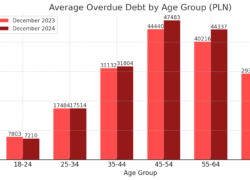
Debt by Age Group: Younger Generations Struggle LessYounger generations exhibit fewer financial arrears compared to older groups. Among 18-24-year-olds, there were fewer than 120,000 unreliable debtors, while the 35-44 age group had nearly 650,000. The youngest debtors also had the lowest average overdue liabilities, standing at PLN 7,210—a decline of PLN 593 from the previous year. In contrast, individuals aged 45-54 held the highest per-person overdue debt, averaging PLN 47,483.

BIG InfoMonitor and BIK data indicate that the most financially burdened group consists of individuals aged 35-54, with over 1.2 million unreliable debtors and total unpaid liabilities nearing PLN 48 billion. However, the most significant increase in overdue debt was observed among those aged 55-64, whose average unpaid debts grew by PLN 4,121 per person.

Biggest Debtors in PolandA small fraction of individuals account for a disproportionately large share of Poland’s overdue debt. The top 1% of unreliable debtors collectively owe PLN 523 million, with their debts increasing by PLN 11.4 million in 2024. The most indebted individual in Poland, a 68-year-old man from the Lubelskie Voivodeship, owes over PLN 92 million.

Conclusion: A Mixed Financial OutlookWhile Poland has seen some improvements in debt repayment, with a declining number of unreliable debtors and a slower rate of debt growth, the overall amount of overdue liabilities remains alarmingly high. Many Poles continue to struggle with financial difficulties, exacerbated by inflation concerns and rising costs of living. Policymakers and financial institutions will need to focus on sustainable economic solutions to prevent deeper financial crises in the future.


Czech Republic sees 7.2% increase in average wages in Q4 2024

The average gross monthly nominal wage in the Czech Republic saw a significant rise in the fourth quarter of 2024, increasing by 7.2% year-on-year, according to data from the Czech Statistical Office (CZSO). In real terms, after adjusting for inflation, wages grew by 4.2%, reflecting positive wage growth amid stable economic conditions.

The latest figures reveal that the average gross monthly wage per full-time equivalent (FTE) employee in the national economy reached CZK 49,229, marking a CZK 3,322 increase compared to the same period in 2023. Over the same timeframe, consumer prices rose by 2.9%, reinforcing the real-term wage growth of 4.2%. The total volume of wages in the economy expanded by 7.4%, while the number of employees increased slightly by 0.1%. Seasonally adjusted data also showed a quarter-on-quarter wage increase of 1.7%.

Commenting on the report, Jitka Erhartová, Head of the Labour Statistics Unit at CZSO, highlighted the broader trend of wage growth throughout 2024. “For the whole year 2024, inflation stood at 2.4%, while nominal wages increased by 7.1%, leading to a real-term wage growth of 4.6%,” she stated. The annual average wage in 2024 was recorded at CZK 46,165, an increase of CZK 3,044 compared to the previous year.

Wage Growth by Sector

A sectoral breakdown of wage growth showed notable differences across industries. The highest increases were observed in real estate activities (16.0%), professional, scientific, and technical activities (12.2%), and accommodation and food service activities (10.3%). Meanwhile, more modest wage growth was recorded in mining and quarrying (1.2%), public administration and defence (2.3%), and education (2.3%).

Median Wage and Income Distribution

The median wage in Q4 2024 stood at CZK 41,739, reflecting a year-on-year increase of 4.2%. The data also showed a gender disparity, with the median wage for men reaching CZK 45,004, while women earned a median wage of CZK 38,643. Furthermore, 80% of employees had wages ranging between CZK 21,577 and CZK 80,431.

The wage growth data indicates a stable economic environment with positive real income growth for Czech workers. However, disparities between industries and gender wage gaps remain key points for economic policymakers to monitor in the coming year.

Poland’s housing loan inquiries rise by 37.2% year-on-year in February 2025

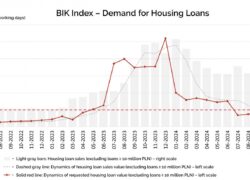
The value of inquiries about housing loans in Poland increased by 37.2% year-on-year in February 2025, according to the BIK Index of Housing Loan Demand. This means that on a working day in February, banks and credit unions submitted requests for housing loans that were, on average, 37.2% higher in value compared to the same period in 2024.

The BIK Index for housing loans measures interest in mortgage financing by tracking the total value of loan applications submitted by individual customers. It is a key indicator used by analysts and financial institutions to assess trends in the mortgage market and forecast future credit activity.

In February 2025, a total of 33,110 people applied for a housing loan, compared to 26,640 in February 2024, marking an increase of 24.3%. Compared to January 2025, the number of applicants grew by 17%. The average requested loan amount reached PLN 449,100, up 5.1% from the previous year and 1.7% higher than in January 2025.

According to Dr. hab. Waldemar Rogowski, chief analyst at BIK Group, the 37.2% increase in the index should be analyzed in the context of last year’s figures. In early 2024, demand for housing loans had slowed following the conclusion of the “Safe Loan 2%” program in December 2023. He also noted that February saw a 17% rise in the number of applicants compared to January, a month that historically records lower mortgage demand. Additionally, as many loan applications involve multiple borrowers, the increase may reflect a decline in the number of single applicants.

Another factor influencing the index is the average loan amount, which reached a record high in February despite a 6% decline in transaction prices on the secondary market and relative price stability in the primary market. The data suggests that buyers are financing higher-value properties, often requiring multiple borrowers per loan. Looking ahead, Rogowski expects further increases in housing loan demand in the coming months of 2025.

Source: BIK

Biedronka opens first store in Slovakia with plans for rapid expansion

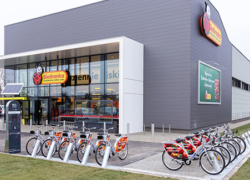
The Polish discount supermarket chain Biedronka has officially opened its first store in Slovakia, located in the village of Miloslavov near Bratislava. Known primarily in Poland, where it operates over 3,000 stores and employs more than 80,000 people, Biedronka’s expansion into Slovakia marks a significant development in the country’s retail sector.

The newly opened store is situated in a developing residential area, with apartment buildings on one side and open fields on the other. Upon entering, customers are greeted with floral displays, followed by a produce section featuring neatly arranged fruits and vegetables. Refrigerated units line the right side of the store. Unlike some Biedronka stores in Poland, where products are often stacked on pallets for efficiency, the Miloslavov location follows a more organized layout, with bananas and other fresh produce arranged neatly on shelves.

Retail analyst Ľubomír Drahovský notes that Biedronka’s presentation style reflects a broader trend in discount retailing. When Lidl entered Slovakia in 2004, it initially stocked products on pallets, but over time shifted toward a more refined shopping experience. A similar evolution is expected for Biedronka, which, despite its discount reputation, is aiming for a cleaner and more structured store design.

Biedronka had originally planned to open its first stores in Slovakia at the end of last year, but the timeline was delayed. The company now expects to launch five locations in March, with a total of 50 stores planned by the end of 2026. This expansion represents the most significant entry of a major grocery retailer into the Slovak market in recent years.

LATEST NEWS