Light: Essential reesource or environmental threat?

Light, both natural and artificial, has a significant impact on life on Earth. Over millions of years, all living organisms have adapted to the natural rhythm of day and night, governed by sunlight and its variations in intensity. For humans, natural light influences essential processes such as the production of melatonin and serotonin, which regulate sleep, mood, and energy levels. In plants, sunlight drives photosynthesis and seasonal growth, while animals adjust behaviors like migration, reproduction, and hunting to changes in daylight.

However, artificial light can disrupt these natural cycles. Light pollution, caused by excessive or misdirected artificial lighting, has emerged as a growing environmental concern. Unlike air or water pollution, it often goes unnoticed, but its consequences are significant, affecting ecosystems, human health, and astronomical observations.

Magdalena Oksańska of Savills Poland emphasizes that responsible lighting design in real estate has become an essential component of environmental stewardship, impacting both human well-being and the broader ecosystem.

Light pollution commonly originates from streetlights, neon signs, illuminated advertisements, and buildings that remain lit throughout the night. Instead of targeting specific areas, light often spills into unintended spaces such as green areas, water bodies, building façades, and the night sky. This misdirected light disrupts wildlife that relies on darkness for navigation, reproduction, and survival. For instance, migratory birds can become disoriented by bright lights, leading to collisions with buildings, while insects drawn to artificial lights often perish from exhaustion or become easy prey, contributing to declining populations.

Other species, including bats and sea turtles, also face challenges due to artificial light. Bats avoid lit areas where they are more vulnerable to predators, affecting their feeding and breeding habits. Sea turtle hatchlings, guided naturally by moonlight, sometimes crawl toward artificial coastal lights instead of the ocean, significantly reducing their survival rates. Plants are not immune either; artificial lighting can interfere with flowering, dormancy, and relationships with pollinators, thereby impacting broader food chains.

Artificial light also affects human health by disturbing circadian rhythms. The widespread presence of blue light from screens and LEDs suppresses melatonin production, resulting in shorter and poorer-quality sleep. In urban areas, the night sky is so bright that many residents rarely experience natural darkness. Reports indicate that up to 80 percent of the world’s population and 99 percent of people in Europe and North America cannot see the Milky Way from where they live.

The phenomenon was illustrated in 2003 during a massive blackout in the United States, when millions of people in New York City, many for the first time, saw the stars clearly—a sight that initially caused confusion and awe. In Poland, about 60 percent of the population lacks the opportunity to view the Milky Way due to urban light pollution.

Recent reports highlight the increasing severity of light pollution in Poland. The Light Pollution Think Tank (LPTT), in collaboration with the Space Research Centre of the Polish Academy of Sciences, found that in 2022, the intensity of light emitted into the sky was at its highest level ever recorded, six percent above the average for the previous decade. Urban areas can be several thousand times brighter than natural levels, with cities like Warsaw, Kraków, Wrocław, Łódź, and Poznań being the brightest. Notably, some areas in Warsaw never experience true night conditions due to constant illumination.

Despite growing awareness, Poland currently lacks legal frameworks that define or regulate light pollution as an environmental threat. Existing guidelines are non-binding, and there is no systematic government monitoring of the issue.

There have been efforts to protect dark skies in Poland, including the creation of Dark Sky Parks in the Bieszczady and Izery Mountains, where artificial lighting is limited to preserve natural darkness. Some municipalities have also implemented practices like switching off street lights at night to reduce light pollution, benefiting both wildlife and astronomical observation.

In the real estate sector, improper lighting design contributes significantly to light pollution. Many commercial properties are illuminated beyond necessity, with lights spilling into unused spaces or directed upward, wasting energy and affecting the surrounding environment. Neon signs and building façades often remain lit throughout the night, although the pandemic demonstrated that reduced lighting during off-hours is feasible without significant economic impact.

Warehouse developments, in particular, require careful lighting strategies, as poorly directed lights can illuminate fields, wetlands, and protected natural areas unnecessarily. However, examples exist of industrial sites implementing better solutions, directing light downward where needed and using warmer color temperatures to minimize ecological disruption. Products that meet DarkSky Approved standards are now available, promoting lighting designs that limit upward light emissions and reduce overall brightness.

The LPTT report recommends that the real estate industry adopt sustainable lighting practices, using modern technologies and thoughtful design to minimize the impact of artificial light on the environment. Light pollution continues to grow globally, with estimates suggesting an annual increase of at least two percent. While technological progress has brought convenience, it also carries unintended consequences for ecosystems.

Like the early warnings about climate change and plastic pollution, light pollution requires recognition as a genuine environmental challenge. Its effects, though often invisible, are profound and far-reaching. Protecting natural darkness is essential for the health of ecosystems, human well-being, and the preservation of the cultural and scientific value of the night sky.

Sources: Savills Polska, Eklöf, J. (2024). Manifesto of Darkness. Warsaw: Wydawnictwo Krytyki Politycznej,
Szlachetko, K. (ed.). (2025). Towards Sustainable Outdoor Lighting. An Interdisciplinary Study. Gdańsk: Gdańsk University Press and Light Pollution Think Tank. (2023). Light pollution in Poland. Report 2023 (A. Z. Kotarba, ed.). Warsaw: Space Research Centre of the Polish Academy of Sciences Publishing House.

Poland: Demand for large new apartments and houses

How well are the largest new apartments and houses selling, and who is buying them? What sizes do these spacious properties offer, and in which residential projects can they be found? Industry experts provide insights into prices, buyer profiles, and market trends for these premium homes.

Agnieszka Majkusiak, sales director at Atal
Due to high financing costs, large flats are now less frequently chosen by buyers using mortgages. However, they are purchased by cash buyers, who account for approximately 30-40 per cent of total demand, and this level is fairly stable. The general slowdown is also translating into a reduction in volume in this segment, but it is not the case that demand has completely dried up here. Large flats are often purchased by people who have a substantial down payment and only need a mortgage to complete the purchase. Many of them sell a smaller property and use the proceeds to buy a larger one.

Due to our very wide offer in the eight largest agglomerations in Poland, we also have large flats with an area exceeding 100 sqm. However, in percentage terms, they constitute the smallest part of our sales portfolio. We usually plan them in prestigious premium investments or as a certain part of family-oriented projects.
Customers will find many such units with an area of 100 sqm and more in our projects in Katowice: Atal Olimpijska, Atal Sky+ and Atal Francuska Park. Their prices start at around PLN 900,000. Slightly above this price threshold are apartments in Łódź in the Modern Helenów, Hipoteczna Park and Atal Ogrody Geyera Apartamenty developments.

Tomasz Kaleta, managing director for sales and marketing at Develia
Sales of large flats are not changing significantly, although we have recently seen a slight increase in interest in four-room flats. People with a stable financial situation, who are buying an apartment for cash or with a small mortgage, are deciding to purchase larger properties, which is why this group of customers is relatively stable. For them, the most important factor influencing their purchase is finding an offer in a specific location, often not far from where they already live, at a price that fits their budget. We observe the greatest interest in large properties in districts with an already developed urban fabric and the potential for so-called ‘neighbourhood customers’. Large flats are available in all our developments, with prices starting from PLN 7,900 per sq m, depending on the project.

Renata Mc Cabe-Kudla, Country Manager at Grupo Lar Polska
We do not currently have any plans to sell such flats. Large properties usually sell in expensive developments in the city centre. We do not have any such properties on offer at the moment, but we are considering such a project in the coming years. These are expensive flats for demanding customers.
Joanna Chojecka, Sales and Marketing Director for Warsaw and Wrocław at Grupa Robyg
In the current market situation, we are seeing stable interest in the largest flats, i.e. those with an area exceeding 80-90 sqm, although their buyers are a more select group compared to the compact flat segment. The largest properties are mainly purchased by large families, customers looking for premium flats and investors.

Despite the challenges associated with higher prices and credit restrictions, the larger apartment segment remains attractive to customers with larger budgets or stable financing. We observe that decisions to purchase a larger apartment often involve longer reflection and a more thoughtful purchasing process. These customers pay particular attention to location, build quality and additional amenities such as spacious balconies, parking spaces and access to recreational facilities. We are also adapting our offer to these expectations by offering apartments with a higher standard of finish and designs with great attention to detail and functionality.
In summary, although the largest flats constitute a narrower segment of the market, they remain an important part of our offer and are popular with customers who are looking for comfort, space and the highest quality. Our largest apartments are available in the Nowa Wałowa, Port Popowice, WENDY, Leszczyńskich (Gdańsk), Osiedle Kameralne and Rytm Mokotowa (Warsaw) developments. The apartments range in size from 100 to 140 sqm, with prices starting at PLN 1.4 million.

Wojciech Wilhelm Zhang-Czabanowski, President of the Management Board of Waryński S.A. Holding Group
In the current market conditions, large apartments are still popular, although the decision-making process in their case is often longer than in the segment of smaller properties. The purchase of such properties is often a long-term decision that requires careful consideration and adaptation to changing life needs. Large properties are most often purchased by families with children, as well as people looking for spacious flats for permanent residence, often with a separate space for remote work or relaxation.

The largest flats offered by the Waryński Group have an area of 90 to 112 sq m and are available in the Stacja Ligocka development in Katowice. This is a modern project located in a well-connected part of the city, with access to infrastructure and green areas. Prices for these properties range from PLN 11,500 to PLN 11,900 per sqm, depending on the standard of finish, location in the building and available amenities, such as terraces, parking spaces or views of greenery.

Katarzyna Kwiatkowska, Sales Office Manager Warsaw, Matexi Polska
Larger flats continue to enjoy high interest, both in projects that have already been completed and those that are in the early stages of construction, with completion scheduled for 2026. The majority of buyers of such flats are families of 3-4 people who value a convenient location, well-developed infrastructure in the area, as well as amenities such as a communal garden or a terrace belonging to the flat.

Matexi offers apartments with an area of up to 161 sqm in the excellently located Sady Żoliborz project on Anny German Street. In the second stage of this investment, we offer premises with an area of approx. 115-127 sqm at a price starting from approx. PLN 3,085,000. For those who value proximity to the city centre and a metropolitan lifestyle, we offer apartments with an area of 108 sqm in the Żelazna 54 development. And if you are looking for a comfortable space with four rooms in a compact area of approx. 80-89 sqm, we offer such apartments in the Splot Wola and XYZ Place developments for prices ranging from approx. PLN 1,204,000 to PLN 2,060,000.

Barbara Marona, Sales Office Manager Kraków, Matexi Polska
Larger flats, especially those with three or more rooms, are consistently popular, particularly among families looking for a comfortable, permanent place to live. The current market situation has not changed this trend, with customers continuing to seek functional and well-designed larger properties. Such properties are popular among families with children or those planning to have children.

The largest properties in our offer are located in the Takt Lirników development and have an area of approximately 83 sqm at a price of approximately PLN 1,320,000 – these are four-room flats. Four-room and five-room flats are also available in the Apartamenty Portowa development, where the area of four-room flats ranges from 75 sq m to 92 sq m, and the largest five-room flat has an area of 123 sq m. Prices for such flats in this development start at PLN 1,753,000.

Marcin Malka, President of the Management Board of Real Management S.A.
With house prices in the PLN 3.5-5 million range, customers are obviously very selective and do not make hasty purchasing decisions. Sales of houses in this segment never reach levels comparable to the standard residential market. At the same time, the premium sector is more resistant to changes in consumer sentiment and changes in the availability of financing – we are currently seeing a stabilisation in demand and supply. As for the group of customers who decide to buy houses in our Neo Natolin estate, they are mostly entrepreneurs, top management representatives and professionals. We are currently implementing the second stage of the Neo Natolin project with 26 houses. In the next 6-9 months, we will supplement our offer with another 32 houses.

Agnieszka Gajdzik-Wilgos, Sales Manager, Ronson Development
The largest flats are sold in a relatively predictable manner, mainly when the decision to buy is driven by the need to move to a larger property. This need often determines the purchase even in less favourable price or credit conditions. However, there is a noticeable tendency to save on floor space. When choosing, for example, three-room flats, customers prefer smaller sizes, e.g. 60 sqm instead of 70 sqm. The main group of customers who decide to buy the largest properties are people who are moving to a larger flat due to their living needs.

The largest properties offered by the company are spacious houses in the Nova Królikarnia development in Warsaw, with an area of 227 sq m and a price of PLN 5,513,000. Among the flats, the largest floor areas are offered by: Zielono Mi II in Warsaw – 111 sq m for PLN 1,860,000, Zielono Mi I in Warsaw – 94 sq m for PLN 1,438,000, Nowe Warzymice 5.2 in Szczecin – 103 sq m for PLN 1,067,000, Viva III in Wrocław – 95 sq m for PLN 1,110,000, and Grunwald Między Drzewami II in Poznań, where the largest unit has an area of 82 sq m and costs PLN 886,304.

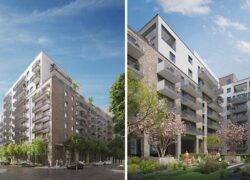
Photo: Przasnyska – Matexi Polska
Source: dompress.pl

Sales begin for final phase of Park West residential development in Budapest

Sales have commenced for Park West Rise, the fourth and final phase of the Park West residential development in Budapest’s District 13. Located in the Ferdinánd Quarter, an area undergoing significant urban redevelopment, the new phase will add 195 modern, energy-efficient apartments to the downtown housing market. Completion is scheduled for late 2027, and units are currently available at introductory prices. Due to the brownfield nature of the site, buyers may be eligible for a refund of the 5% VAT on apartment purchases.

Park West Rise forms part of the broader Park West project, which will total nearly 900 apartments once completed. The development is situated between Szabolcs utca and Lőportár köz, adjacent to Dózsa György út and Lehel utca. District 13, particularly Szabolcs utca, has seen significant infrastructure and urban improvements in recent years, contributing to increased interest from both residents and investors.

The Ferdinánd Quarter offers strong transportation links and local amenities, making the area accessible by car, public transit, and bicycle. Within a ten-minute radius are various shops, schools, kindergartens, the Váci út office corridor, and the Nyugati railway station. The location also provides proximity to Margaret Island, City Park, the WestEnd shopping centre, the Széchenyi Spa, and the Budapest Zoo.

Park West Rise will comprise 195 apartments across nine floors, ranging from studio units to five-room penthouses with city views. All apartments will include terraces, functional layouts, and abundant natural light. Residents will also have access to storage spaces and a two-level underground car park. Additionally, the building’s ground floor will house a retail unit designed with ceiling height sufficient for a potential mezzanine level.

According to Tibor Tatár, Head of WING’s residential and office development division in Hungary, the earlier phases of the Park West project demonstrate sustained demand for centrally located apartments with strong transport connections. He noted that Park West Rise will be among the last new residential projects on rehabilitated sections of Szabolcs utca, marking a significant milestone for both the company and the Ferdinánd Quarter.

Park West Rise will incorporate environmentally sustainable features, including a modern heat pump system for heating and cooling, triple-glazed windows, and a 15-centimetre layer of thermal insulation. Landscaped green areas within the development will also contribute to residents’ well-being.

All apartments will be equipped with smart home technology, allowing residents to control various functions via mobile app. Buyers can choose from three basic smart home packages at no extra cost if selected during early stages of construction. Consistent with other LIVING projects, communal amenities will include a community lounge, business corner, and parcel lockers.

LIVING Service, the company’s service division, offers additional support for buyers, ranging from technical inspections during handover to assistance with furnishing, renting, property management, and resale.

The development is anticipated to be completed by the end of 2027.

Garbe Industrial holds topping-out ceremony for logistics development in Salzgitter

Garbe Industrial has celebrated the topping-out ceremony for its logistics development in Salzgitter, Lower Saxony. The project involves the redevelopment of a 51,000-square-metre industrial brownfield site and is progressing toward completion, with the building scheduled to be ready for occupancy in the fourth quarter of 2025. The total investment is approximately €40 million.

Adrian Zellner, Member of the Executive Board at Garbe Industrial, described the ceremony as an important milestone in the project. He acknowledged the efforts of all parties involved in the redevelopment of the former industrial site.

The property was previously owned by rail vehicle manufacturer Alstom. Prior to new construction, significant remediation work was required to clear hazardous materials, demolish old foundations, remove concrete slabs, and properly dispose of excavated soil. Garbe Industrial leveraged its experience with former industrial sites to prepare the area for redevelopment.

The project will deliver a logistics facility of around 31,000 square metres, divided into three units. The development includes approximately 27,700 square metres of hall space, 2,000 square metres of mezzanine space, and 1,400 square metres allocated for office and social areas.

The facility will feature 29 dock levellers and twelve ground-level sectional doors, nine of which will have covered side access, making it suitable for tenants in sectors such as the automotive industry. A sealing membrane will be installed beneath the floor slab of the hall units to allow storage of materials classified as hazardous to water. Plans for the site include six truck parking spaces and 112 car parking spaces, with some pre-fitted for electric vehicle charging infrastructure.

The site’s location south of the Hanover–Wolfsburg–Braunschweig region provides access to key transport routes, including proximity to the A39 motorway, which links Salzgitter to Wolfsburg, the A2 motorway between Dortmund and Berlin, and the A7 motorway connecting Hamburg and Ulm. Zellner indicated that leasing activity is expected to progress during the construction phase.

The project is being developed in line with environmental, social, and governance (ESG) standards. The building will use district heating, and Garbe Industrial plans to pursue Gold certification from the German Sustainable Building Council (DGNB) upon completion.

Germany: “Boomer Soli” proposed to help stabilise German pension system

A special levy on all retirement income could help stabilise Germany’s pension system without directly burdening younger generations, according to a study by the German Institute for Economic Research (DIW Berlin). The proposed “boomer solidarity levy” would target higher-income pensioners, with the goal of supporting low-income retirees and reducing poverty among the elderly.

Unlike rising pension contributions or tax subsidies, which would impact younger workers, the Boomer Soli would redistribute income exclusively within the older population. Peter Haan, head of the State Department at DIW Berlin, noted that the pension system has failed to build sufficient financial reserves in recent years, and the retirement of the baby boomer generation will place significant additional strain on pension finances. DIW tax expert Stefan Bach said it would be unfair to shift the costs of demographic change onto younger people and argued that a solidarity levy could help ensure fairness by modestly affecting well-off pensioners.

The study estimates that the poverty risk rate among the elderly could fall from around 18 percent to just under 14 percent if such a measure were implemented. Under the proposal, a ten percent levy would be applied to retirement income above an allowance of approximately €1,000 per month. This would impose a moderate burden on the top 20 percent of pensioner households, who could see their net equivalent income reduced by three to four percent, depending on whether capital income is included. Meanwhile, pensioners in the lowest fifth of the income distribution would benefit from an increase in statutory pension income, resulting in a rise in their incomes of around ten to eleven percent.

The Boomer Soli would have a broad assessment base, applying not only to statutory pensions but also to private and occupational pensions, civil servant pensions, and potentially income from assets. This approach recognises that wealthier households often rely less on statutory pensions and more on other sources of income, such as company pensions or investment returns.

DIW pension expert Maximilian Blesch explained that redistributing entitlements solely within the statutory pension system would be less effective, as pension points are not always reliable indicators of a household’s overall income. He argued that limiting redistribution to the statutory system would therefore not accurately target higher-income retirees.

However, the study’s authors also caution that implementing a Boomer Soli could have side effects. Even though current earned income would not be directly taxed, long-term effects might discourage individuals from working or saving for retirement if they anticipate higher taxes on retirement income in the future. Ultimately, the choice of how to balance financial responsibilities between older and younger generations will depend on political priorities. Nonetheless, DIW Berlin considers the Boomer Soli a preferable option compared to relying solely on redistribution within the statutory pension scheme.

Colliers to manage Ghelamco’s The Bridge office complex in Warsaw

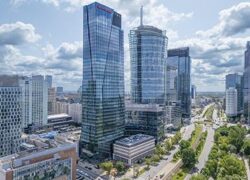
Colliers has expanded its cooperation with Ghelamco by taking over the management of The Bridge, an office complex located in Warsaw. The development consists of a modern 174-meter-high skyscraper and the renovated Bellona building, forming one of the region’s technologically advanced and environmentally focused office projects.

Situated on Plac Europejski in Warsaw’s Wola district, The Bridge offers more than 54,000 sqm of office space, including approximately 49,000 sqm in the tower and over 5,000 sqm in the historic Bellona building. Both buildings are connected by an 18-meter-high main lobby, integrating modern architecture with historical elements.

Colliers will oversee management of both buildings. The Bellona building has undergone significant renovation, preserving its classic interiors and historical details, while the new tower features a glass design resembling a cut diamond.

Jarosław Zagórski, Managing Director of Ghelamco Poland, noted the longstanding relationship with Colliers, highlighting the company’s professionalism and expertise as key reasons for entrusting them with management of The Bridge. He expressed confidence in Colliers’ ability to maintain smooth operations and high tenant satisfaction.

The Bridge is one of several Ghelamco properties managed by Colliers, following previous collaborations on the KREO building in Krakow and the Craft project in Katowice.

Agnieszka Krzekotowska, Senior Partner, Asset Services at Colliers, described the acquisition of The Bridge as significant and emphasized Colliers’ aim to provide high-quality management services that support both owners and tenants.

The complex has achieved SmartScore and WiredScore Platinum certifications and is pursuing additional sustainability standards, including WELL, BREEAM, Green Building Standard, DGNB, and a “Barrier-Free Building” designation. The Bridge is designed to be fully energy neutral and powered entirely by renewable energy. It features a building energy management system, a waste monitoring application, and a vacuum sewerage system that reduces water consumption by up to 75%.

Tenant amenities at The Bridge include 282 parking spaces, 164 bicycle spaces, electric vehicle charging stations, changing rooms with showers, and a bicycle lift—a feature introduced from the Netherlands and implemented for the first time in Poland.

Colliers continues to expand its asset management services in the commercial real estate sector, providing clients with operational, technical, and strategic support.

INVESTIKA enters Austria with acquisition near Vienna airport

INVESTIKA Real Estate Fund, the largest non-bank open-ended mutual real estate fund for retail investors in the Czech and Slovak markets, has entered the Austrian real estate sector with the acquisition of the CAE Aviation Training Centre near Vienna International Airport. The property was purchased for over €30 million from Propel Industrial Holding, an independent real estate investment firm active in Austria, Germany, and the Netherlands. This transaction expands INVESTIKA’s geographic and sector diversification, bringing its portfolio to five European countries.

The CAE Aviation Training Centre is located in Schwechat, close to Vienna International Airport, with direct motorway connections to Vienna’s city centre via the A4. The property comprises 8,077 sqm of gross lettable area and was developed as a build-to-suit project for CAE Inc., a Canadian company specialising in aviation training.

The facility features both office and industrial areas, designed for clean operations. It serves as a training centre for professional pilots using specialised aviation equipment and provides workspace for training staff. The building’s proximity to the airport and key motorway routes makes it strategically well-positioned for its purpose.

Sustainability features are integral to the property, which incorporates a timber framework, a modern building management system, LED lighting, and plans for rooftop photovoltaic panels. Rainwater collection and reuse systems are also in place. The site includes 88 parking spaces with electric vehicle chargers. The asset is currently undergoing certification for ÖGNI Gold sustainability standards.

Jaroslav Kysela, Member of the Board of Directors at INVESTIKA, investiční společnost, a.s., which manages the fund, stated that the acquisition represents the fund’s first transaction in Austria, a market regarded as mature and stable. He noted that securing a prime asset with a long-term tenant contributes to the fund’s target annual return of 4–6 percent and sets a precedent for future investments in Austria.

Armen Gevorkian, Founder and CEO of Propel Industrial, expressed satisfaction with the sale, highlighting INVESTIKA’s strategic vision and focus on high-quality, sustainable assets as consistent with Propel’s own approach to industrial real estate investments.

INVESTIKA Real Estate Fund was advised in the transaction by EHL Investment Consulting, STC Development, TPA, PwC Legal Rechtsanwälte, and PFP-LAW Austria.

Romania H1 real estate investment 30% above 12-year average

Investment in income-generating real estate assets in Romania totaled approximately €391 million during the first half of 2025, according to data from Cushman & Wakefield Echinox. This represents a slight decrease of 6.5% compared to the same period in 2024, when the volume reached €418 million. Despite the year-on-year decline, H1 2025 ranks as the second-best performing first half of the past 12 years, standing 30% above the average for the period.

Cushman & Wakefield Echinox participated in three of the largest transactions completed so far this year, with a combined value of €160 million, accounting for more than 40% of the total market volume.

These transactions included the sale of a portfolio of seven strip malls in Slobozia, Focșani, Râmnicu Sărat, Sebeș, Făgăraș, Târgu Secuiesc, and Gheorgheni; the sale of Focșani Mall; and the disposal of a significant portion of the IRIDE Business Park in Bucharest. The IRIDE complex consists of 17 mixed-use buildings for office, storage, and light production purposes, located on a 128,000 sqm plot near the Pipera metro station.

Cristi Moga, Head of Capital Markets at Cushman & Wakefield Echinox, noted that the results from the first half of 2025 reflect growing interest from foreign investors, who accounted for over 70% of the transaction volume. “The outlook for the second half of the year remains positive, considering ongoing negotiations and the historical trend of higher activity in H2. We expect the total annual investment volume to reach between €800 million and €1 billion,” he said.

By asset class, retail properties recorded the highest investment volume in H1 2025, amounting to €163 million and representing 42% of the total. Office assets followed with €126 million (32%), while mixed-use projects accounted for €55 million (14%).

The office sector experienced a notable recovery, rising from a 5% share in H1 2024 to nearly one-third of total investments in the first half of this year. This was attributed to improved office occupancy levels and a moderate decline in vacancy rates.

Among investor groups, those based in the United Kingdom were the most active, completing transactions totaling €148 million (38% of total), followed by Romanian investors with €105 million (27%), and Hungarian investors with €52 million (13%).

Santander Bank Polska provides €22 million financing for Panattoni Park Poznań XIV expansion

Panattoni has secured additional financing from Santander Bank Polska to support further development of Panattoni Park Poznań XIV. The €22 million loan will fund the second and third phases of the project, which include the construction of a build-to-suit (BTS) facility and a 28,000 sqm speculative hall.

Emilia Taczewska-Trojańska, Head of Debt Finance Poland at Panattoni, noted that Greater Poland is a key market for the company, where it has already delivered over 1.9 million sqm of space. She stated that the new financing will help Panattoni meet tenant demand by providing modern facilities in a location with strong transport connections. Panattoni Park Poznań XIV is designed to support advanced logistics operations and meet high ESG standards.

The park is situated in Głuchowo, near Poznań, approximately 6 km from the Poznań Zachód junction, where the S5 and S11 expressways intersect with the A2 motorway. This location offers convenient access to both national and international transport routes, making the site suitable for logistics, e-commerce, and light manufacturing companies.

The second phase of the development will include a BTS logistics center, while the third phase will feature a speculative hall totaling 28,000 sqm, intended for future tenants.

Once completed, Panattoni Park Poznań XIV will comprise three buildings with a total area of 63,000 sqm. The first phase, a 14,000 sqm facility, is nearing completion and will be leased by Gasa Group and Markat Plus. The entire complex is planned to receive BREEAM certification at the Excellent level, incorporating environmental measures aimed at reducing energy and water consumption.

Companies increase refinancing and seek funds for new acquisitions, CBRE survey finds

Lending activity is expected to grow significantly this year among companies using debt to finance their real estate portfolios, according to a Europe-wide survey conducted by CBRE, a global provider of commercial real estate services.

The survey found that 40% of respondents observed an improvement in market sentiment compared to the previous year across all commercial real estate sectors. Nearly 80% of companies plan to expand their borrowing activities. The primary reason cited is refinancing existing loans (56%), followed by funding for new development projects (21%) and acquisitions (15%). The share of companies pursuing financing for these purposes has increased by nine percentage points year-on-year.

Non-bank lenders—including debt funds, insurance companies, and investment banks—are playing a larger role in financing and are generally more optimistic about credit growth than traditional banks.

Rental housing remains the leading asset class for loan financing in Europe this year, accounting for 48% of activity. Industrial and logistics properties, which shared the top position with residential assets last year, have moved to second place, while hotels have risen to third place with a 14% share.

“Similar to last year, the survey shows that over 80% of companies remain open to investing in alternative assets,” said Chris Gow, Head of Debt and Structured Finance for CBRE Europe. “This segment is currently led by various residential sub-sectors, including senior housing and co-living projects. Storage units and mini-warehouses have newly emerged among the top investment areas.”

Geopolitical uncertainty is seen as the main risk facing the European credit market, with nearly 70% of respondents expressing concerns—an increase from 37% a year earlier. Despite this, many companies plan to increase their lending activity, which could enhance liquidity and support higher loan-to-value (LTV) ratios.

From a sector perspective, interest remains strong in residential rental and industrial and logistics properties in Western Europe. There is also renewed interest in retail real estate and continued focus on data centers.

Jakub Štěpán, Head of Valuation at CBRE for the Czech Republic and Central and Eastern Europe, noted differences in the region’s market trends. “In Central Europe, including the Czech Republic, we have not yet seen widespread construction of data centers or storage units, although activity in these sectors is increasing. Debt financing in our region remains focused on traditional property types, such as shopping centers, retail parks, premium offices, and, increasingly, hotels. Following the recent sale of the Hilton Prague hotel, other significant transactions are underway.”

Across Europe, most lenders are willing to provide loans with LTV ratios of 50-60%, with only minor differences between sectors. Rental housing projects see slightly higher LTVs, ranging from 52.5% to 65%. Data centers also exhibit a broader LTV range of 50-65%, with a median slightly above 50%.

Overall, median LTVs remained stable compared to last year, fluctuating by no more than one to two percentage points. European banks and non-bank institutions reported similar figures, except in logistics and data centers. In logistics, banks reported a median LTV of 55%, compared to 60% for non-bank lenders. For data centers, banks reported a median of 60%, while non-bank lenders reported 55%.

Sustainability has become a key element in lending strategies. More than 70% of respondents indicated they would avoid financing assets lacking sustainability features or plans to achieve them. Additionally, 57% of lenders confirmed they offer improved terms or margin discounts for properties that meet higher environmental standards, Gow said.

The CBRE Lender Intentions Survey was conducted in March and April 2025, involving 143 respondents representing established companies across Europe.

LATEST NEWS