Poland: Education sector recovers, families still burdened by costs

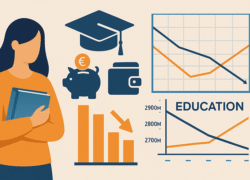
At the beginning of the 2025/2026 school year, the education sector in Poland entered with a reduced level of outstanding debt, though households continue to face rising financial pressure linked to children’s learning expenses. According to BIG InfoMonitor, total arrears in the sector fell by nearly PLN 5 million year-on-year, to just under PLN 283 million at the end of June. Yet, despite this improved balance sheet, parents report ongoing difficulties covering the costs of out-of-school educational activities.

Data from the Register of Debtors BIG InfoMonitor and the BIK database show that around 2 percent of companies in the school and education sector fail to settle their financial obligations on time, a significantly lower share than the 5 percent recorded across the wider economy. Still, arrears remain substantial, particularly in non-formal education services such as language schools, tutoring, or extracurricular activities. For this segment, debts rose by PLN 4.5 million over the year, reaching PLN 194.2 million.

Household spending patterns reveal that educational costs are a persistent burden. Only 7 percent of Poles report saving money specifically to support their children’s education, compared with 17 percent who save for leisure and 15 percent who prioritize healthcare. According to BIG InfoMonitor’s chief analyst, Waldemar Rogowski, the limited willingness to save for children’s future stems from low levels of financial literacy, a comparatively low savings rate of 9.8 percent in Poland—among the lowest in the EU—and shifting social norms that place more emphasis on children’s independence.

Parents’ financial constraints directly affect demand for extracurricular education. Previous surveys indicate that one in three families reduced school-year spending, most often cutting extracurricular classes, tutoring, or school trips. The trend has eased in recent years, but the strain on household budgets remains visible. Rogowski notes that the pandemic initially boosted demand for tutoring due to dissatisfaction with remote learning, while more recently rising operating costs have weighed on the finances of education providers. What has remained constant, however, is that families continue to be required to increase their outlays on education, regardless of broader economic conditions.

Housing loan inquiries in Poland up 52.5% year-on-year in August 2025

The value of housing loan inquiries in Poland rose sharply in August 2025, increasing by 52.5 percent compared with the same month last year, according to data from the BIK Housing Loan Demand Index. Banks and credit unions submitted requests to BIK for housing loans totaling more than half again the value recorded in August 2024.

A total of 35,300 individuals applied for housing loans during the month, up 33.8 percent from 26,400 applicants a year earlier. However, compared with July 2025, the number of applicants fell by 13.7 percent. The average value of loan applications stood at PLN 467,910, 8.6 percent higher than in August 2024 but 1.2 percent lower than in July.

Despite relatively high interest rates compared with other EU countries, demand for housing loans continues to grow. According to Waldemar Rogowski, chief analyst at the BIK Group, this trend reflects both recent interest rate cuts and expectations of further reductions, as well as a nominal increase in wages of 9 percent year-on-year. These factors have supported household creditworthiness. Rogowski also pointed to favorable conditions in the housing market, particularly the large supply in the primary market, as an additional driver of borrowing activity.

The rise in the average loan amount requested, up 8.6 percent compared with last year, has contributed to the higher BIK index reading. Rogowski noted that further records for average housing loan applications may be seen in the coming months.

The BIK Housing Loan Demand Index measures the year-on-year change in the value of housing loan applications submitted by individuals. It is used by analysts and financial institutions to assess market trends and forecast future demand for housing loans.

Employment in Slovakia declined in second quarter of 2025 after nearly two years of growth

Employment in Slovakia Declined in Second Quarter of 2025 After Nearly Two Years of Growth

Employment in Slovakia decreased in the second quarter of 2025, marking the first year-on-year decline since the third quarter of 2023. According to the Labour Force Sample Survey, the number of employed people reached 2,000,607, down by 0.4 percent compared with the same period last year, equivalent to 10,800 fewer workers. Seasonally adjusted figures also showed a quarter-on-quarter decline of 0.3 percent, leaving the total at 2.612 million employees. The employment rate fell by 0.1 percentage point to 78 percent.

The overall drop was driven primarily by the construction sector, where employment fell by more than 13,000, a decrease of 5.2 percent year-on-year. Manufacturing also contracted, losing nearly 9,000 jobs, continuing a downward trend for the fourth consecutive quarter. Employment in services decreased by almost 3,000, the first decline in a year, with losses concentrated in information and communication, education, and healthcare. Information and communication alone shed 9,600 jobs, an 8.6 percent fall, while education and healthcare together lost 15,500 positions. These declines were partly offset by gains in transportation and storage, which added 7,600 jobs, and trade, which increased by 3,200 and remains the country’s second-largest employer with 340,000 people.

Industry, the largest employer in the economy with 652,000 workers, saw only a slight increase and continues to account for one in four jobs nationwide. Agriculture added 4,300 workers, while construction remained under pressure with further losses. In total, six out of 18 monitored sectors reported lower employment compared with a year earlier.

Regionally, five of the eight Slovak regions recorded declines in employment. The sharpest drop was in Nitriansky kraj, where the workforce shrank by 10,800, followed by Prešovský kraj, which lost nearly 7,000 jobs. The strongest growth was in Žilinský kraj, which added 5,000 employees, and Trnavský kraj, which gained 3,800. Besides Bratislavský kraj, where the employment rate traditionally exceeds the national average, Žilinský, Trnavský, and Trenčiansky kraje also reported employment rates above 80 percent. Nitriansky kraj recorded the largest year-on-year fall, with the employment rate dropping by 1.8 percentage points to 77.5 percent. Prešovský kraj continued to have the lowest employment rate, remaining below 72 percent for the sixth consecutive quarter.

Short-term labour migration also rose. Almost 122,000 Slovaks worked abroad during the second quarter, an increase of 8.5 percent year-on-year. More than half were employed in construction and industry, and one-quarter came from Prešovský kraj. Nitriansky kraj recorded the steepest growth in cross-border commuting, up nearly 59 percent, while Košický kraj saw a 40 percent decline.

In the first half of 2025, employment totaled 2.6 million people, a 0.1 percent year-on-year decrease. Manufacturing lost 12,000 jobs, while services gained 8,200. Eight of 18 sectors reported lower employment, and three regions experienced year-on-year declines. Despite this, the national employment rate edged up slightly to 78 percent. The number of Slovaks working abroad in the first half of the year rose by nearly 5 percent to more than 120,000.

Unemployment in Slovakia rose slightly in the second quarter of 2025

Unemployment in Slovakia increased in the second quarter of 2025 after four years of quarterly declines, though the indicators remain among the lowest on record. According to data from the Labour Force Sample Survey, the number of unemployed reached 144,500, up by 1,700 people or 1.2 percent compared with the same period last year. The unemployment rate stood at 5.3 percent, maintaining values below 6 percent for the past two years.

The number of unemployed increased by 1.8 percent compared with the first quarter, reaching 148,100 after seasonal adjustment. Despite the uptick, the current level represents the second-lowest unemployment figure since 2021, when the updated statistical methodology was introduced. The lowest level was observed in the second quarter of 2024.

Long-term unemployment continued to dominate the structure, with 62 percent of jobseekers unemployed for at least 12 months. Their number fell slightly year-on-year to 90,100, down 2.3 percent. Almost one-third of all unemployed had never worked before, a group of more than 45,000 people, most of them under 34 years old, although this figure declined by more than 10 percent compared with last year.

By sector, the largest number of unemployed last worked in industry, trade, construction, and public administration. The most notable year-on-year change was among those previously employed in public administration and social security, where the number rose by nearly 60 percent to 7,200.

Regionally, Prešovský kraj recorded the highest number of unemployed, with over 41,000 people, followed by Košický kraj with almost 32,000 and Banskobystrický kraj with 23,000. Year-on-year growth in unemployment was observed in five of the eight regions, with Banskobystrický kraj up by more than 5 percent and Nitriansky kraj increasing by over 0.5 percent. The most significant decrease was in Bratislavský kraj, where unemployment fell by 3.2 percent.

The unemployment rate ranged from 2.1 percent in Bratislavský kraj to 10.6 percent in Prešovský kraj. Five regions—Bratislavský, Trenčiansky, Žilinský, Trnavský, and Nitriansky—reported unemployment rates below 4 percent. Banskobystrický kraj recorded the largest year-on-year deterioration, with the rate rising by half a percentage point to 7.3 percent.

Looking at the first half of 2025 as a whole, unemployment indicators improved year-on-year. The number of unemployed fell by 3,200, or 2.2 percent, to 145,500. The unemployment rate also decreased to 5.3 percent, while the share of long-term unemployed dropped to 63 percent, continuing a gradual downward trend.

Average monthly wage in Slovakia rises to EUR 1,654 in second quarter of 2025

The average nominal monthly wage of an employee in Slovakia reached EUR 1,654 in the second quarter of 2025, representing an 8.8 percent increase compared with the same period a year earlier. This was the strongest growth in the past five quarters, with gross wages rising on average by EUR 134. After accounting for inflation, real wages increased by 4.5 percent, marking an acceleration in wage growth despite higher consumer prices. Compared with the first quarter of 2025, seasonally adjusted wages were up by 3.4 percent.

All 19 monitored sectors of the economy recorded year-on-year growth in nominal wages, with nearly half exceeding 10 percent. The highest increase, more than 16 percent, was seen in water management, while the lowest, slightly above 4 percent, was in real estate. Real wages also rose across all sectors, with notable gains above 8 percent in water management, education, energy supply, and healthcare. Wage growth in education and public administration was supported by a one-off state bonus.

In the largest employing sectors, industry and trade, wage growth was below the national average. In industry, wages rose by 8.3 percent to EUR 1,791, with a real increase of 4 percent. In trade, wages increased by 8 percent to EUR 1,535, with real wages up 3.7 percent. The highest average wages, above EUR 2,600, were recorded in financial and insurance activities, energy supply, and information and communication. The lowest average, EUR 950, remained in accommodation and food services, the only sector below the EUR 1,000 mark.

Regionally, only Bratislavský kraj maintained an above-average wage level at EUR 1,960. Other regions ranged from EUR 1,299 in Prešovský kraj to EUR 1,629 in Košický kraj. The strongest year-on-year nominal growth was in Košický kraj at 13.3 percent, where real wages also rose the most, by 8.8 percent. The lowest real wage growth was in Bratislavský kraj at 2.6 percent.

For the first half of 2025, the average nominal monthly wage stood at EUR 1,586, an increase of 6.9 percent year-on-year. Real wages grew by 2.8 percent, although in the energy supply sector wages fell in real terms, making it the only sector where purchasing power declined.

Housing construction in Slovakia continues to decline in second quarter of 2025

Housing construction in Slovakia recorded further declines in the second quarter of 2025, with both completed and newly started dwellings falling below recent averages. According to data from the Statistical Office of the Slovak Republic, only 3,717 dwellings were completed in the quarter, representing the lowest figure for a second quarter since 2017. This was 14.8 percent fewer than a year earlier and 9 percent below the long-term average for the period.

The slowdown was most pronounced in Bratislavský kraj, where just 434 dwellings were completed, the lowest number for the region in 22 years and nearly 60 percent below the long-term average. As a result, the capital region lost its position as the leading area for completed dwellings, a role it has traditionally held. Declines were also recorded in Košický kraj, where completions fell by 22 percent. By contrast, completions increased in three regions, with Nitriansky kraj showing the strongest growth at 41 percent.

The number of newly started dwellings was also at a multi-year low. In the second quarter, 4,043 dwellings began construction, down 12.5 percent year-on-year and almost 23 percent below the long-term average. Family houses accounted for 60 percent of these starts. Regional disparities remained evident, with Bratislavský kraj reporting nearly 900 new dwellings started, while other regions ranged between 220 and 570. Declines of more than 40 percent were recorded in Trnavský, Žilinský, and Košický kraj compared with the previous year.

At the end of June 2025, more than 77,000 dwellings were under construction across Slovakia. This represented a 2.8 percent decline compared with a year earlier, though still 1.7 percent above the long-term average.

For the first half of 2025, a total of 6,836 dwellings were completed nationwide, down more than 19 percent year-on-year and 17 percent below the long-term average. During the same period, construction began on 7,241 dwellings, a year-on-year decrease of 14.5 percent and nearly 25 percent less than the long-term trend.

Retail turnover in Slovakia records growth in July 2025

Retail turnover in Slovakia rose by 0.4 percent year-on-year in July 2025, marking only the second monthly increase this year after five consecutive months of declines, according to data from the Statistical Office of the Slovak Republic.

Growth was driven primarily by specialized stores selling textiles, footwear, and drugstore goods, including pharmacies, which posted an 8 percent year-on-year increase. Hypermarkets and supermarkets also contributed positively, with turnover up 2.5 percent. Additional gains came from stores selling household goods such as hobby, furniture, and electronics, which grew by 2.4 percent.

The overall increase was partly offset by weaker performance in other segments. E-shops and mail order sales fell by 4.5 percent, while specialized food, beverage, and tobacco stores and fuel stations also reported declines.

On a seasonally adjusted basis, retail turnover rose 0.5 percent month-on-month. However, cumulative results for the first seven months of 2025 show a 0.9 percent decline in retail trade compared with the same period last year. Six of the nine retail components recorded lower turnover over this period, with declines in smaller components outweighing growth in supermarkets and specialized stores.

Beyond retail, turnover in the sale and repair of motor vehicles increased by 11.6 percent year-on-year in July, and wholesale turnover grew by 5.2 percent. In contrast, accommodation services fell by 3.4 percent and food and beverage service activities declined by 1.9 percent.

Month-on-month, accommodation turnover rose slightly by 0.4 percent, while decreases were recorded in motor vehicle sales and repair (down 0.6 percent), wholesale (down 0.1 percent), and food and beverage services (down 3.3 percent).

For the January–July 2025 period, turnover was higher across all main areas of domestic trade except retail. Motor vehicle sales and repair grew by 3.5 percent, wholesale by 5.5 percent, accommodation by 1.5 percent, and food and beverage services by 2 percent.

Catella APAM secures full occupancy at 1 City Square in Leeds

Catella APAM, on behalf of Britannia Invest A/S, has completed the leasing of 1 City Square in Leeds after letting the remaining part of the sixth floor to Iliad Solutions, a global financial technology company.

The newly leased space covers 5,854 square feet and has been taken on a 10-year term. With this agreement, the office building reaches full occupancy, reinforcing its role as a location for technology and professional services tenants in Leeds.

Chalwe Silwizya, Senior Asset Manager at Catella APAM, noted that Iliad Solutions’ decision to lease space at 1 City Square highlights ongoing demand for high-quality office accommodation in the city.

Clair McGowan, Director at CBRE, which advised on the letting, added that the completion of this deal reflects the sustained interest in Grade A office space in central Leeds.

Polish enterprises report net profit of PLN 125.9 billion in first half of 2025

Enterprises in Poland employing at least 10 people recorded total revenues of PLN 2,998.1 billion in the first half of 2025, according to preliminary data released by Statistics Poland. Total costs reached PLN 2,845.7 billion, resulting in a net financial result of PLN 125.9 billion.

The survey covered 48,229 enterprises, of which nearly 63 percent were small businesses with 10–49 employees. Large enterprises, representing just over 8 percent of the total, accounted for 61.9 percent of revenues, generating PLN 1,856.7 billion. Medium-sized enterprises contributed 25.3 percent of revenues, while small enterprises made up 12.8 percent.

Employment among the surveyed entities stood at 5.6 million people as of June 2025, with large enterprises employing over 60 percent of this workforce. On average, a large entity employed 861 workers, compared to 109 in medium-sized firms and 23 in small enterprises.

The composition of revenues showed that 57.8 percent came from the sale of products, goods, and services, and 38.6 percent from goods for resale and materials. Financial revenues represented 2.0 percent. Costs were dominated by products and materials sold, accounting for 96.7 percent of total expenditure.

Gross financial results for the half-year amounted to PLN 152.4 billion, while obligatory charges totaled PLN 26.5 billion. Investment outlays reached PLN 99.5 billion, with large enterprises responsible for more than 70 percent of these expenditures.

Enterprises with majority foreign ownership, representing 16.5 percent of the surveyed population, played a significant role in the economy. These firms generated PLN 1,232.8 billion in revenues, equivalent to 41.1 percent of the total, and recorded a net profit of PLN 46.1 billion. They also accounted for 37.7 percent of all investment spending, with large foreign-owned entities driving most of these outlays.

The results underscore the continued dominance of large enterprises in Poland’s corporate landscape, both in terms of revenues and employment. At the same time, the data highlight the strong role of foreign-owned firms in revenues, investment, and profitability.

Czechia: Producer prices for business services rise in second quarter of 2025

Producer prices for business services in Poland rose by 0.5 percent in the second quarter of 2025 compared with the previous quarter, according to preliminary figures from Statistics Poland. On an annual basis, service prices increased by 3.6 percent compared with the second quarter of 2024.

The strongest quarterly increases were observed in security and investigation activities, where prices rose by 1.6 percent, and in employment services, which recorded a 1.1 percent increase. Real estate services, information services, management consultancy, and rental and leasing activities also saw price growth of 0.7 to 0.8 percent. By contrast, declines were recorded in travel agency and related services (down 1.0 percent), programming and broadcasting (down 0.5 percent), publishing (down 0.2 percent), and computer programming and consultancy (down 0.1 percent).

Year-on-year comparisons showed more significant changes. Prices for security and investigation services increased by 8.2 percent, while motion picture, video, and television production, along with sound recording and music publishing, saw growth of 6.1 percent. Services to buildings and landscaping rose by 5.2 percent. Smaller increases were recorded in rental and leasing activities (0.2 percent), architectural and engineering services including technical testing and analysis (2.5 percent), and advertising and market research (2.8 percent). Prices fell compared with a year earlier in programming and broadcasting services, which dropped by 4.5 percent, and in travel agency and tour operator services, which fell by 0.8 percent.

The data illustrate ongoing divergence between sectors, with demand pressures pushing up prices in areas such as security, media production, and building-related services, while tourism-related activities and broadcasting continue to face weaker conditions.

LATEST NEWS