FedEx Express Opens Regional Head Office in Riyadh, Expands Middle East Operations

FedEx Express has inaugurated its new global head office in Riyadh, marking a major step in expanding its Middle East operations. The office will oversee activities in Saudi Arabia, Bahrain, Qatar, and Kuwait.

The launch was announced at a ceremony in Diriyah attended by Saudi Transport and Logistics Minister Saleh Al-Jasser and FedEx President and CEO Raj Subramaniam. The event underscored Saudi Arabia’s ambitions to become a leading logistics hub under the Vision 2030 strategy.

As part of the expansion, FedEx will introduce its first nonstop flights to Riyadh from both the United States and Europe, making it the only express logistics company currently offering such direct services. The first flight is scheduled to land at King Khalid International Airport this week, with six weekly flights planned. These services will strengthen trade connectivity between Asia, Europe, and the Americas.

In Saudi Arabia, FedEx will directly manage pickups, deliveries, and customs clearance through four operational stations, while also offering digital shipping tools. Its services will span freight by air, road, and sea, as well as customs brokerage and cargo transit support. The company also plans to establish a regional hub at the upcoming King Salman International Airport, designed to boost logistics capacity and improve services for local businesses.

FedEx highlighted that these investments align with Saudi Arabia’s economic diversification goals. By enhancing supply chain infrastructure, the company aims to create new opportunities for local industries, expand access to global markets, and support job creation. The move comes as Saudi Arabia reported a trade surplus of $16.8 billion in the first quarter of 2025, a 52 percent increase compared with the previous quarter, reflecting growing demand for advanced logistics solutions.

The Riyadh opening follows a string of regional investments by FedEx, including a $350 million hub at Dubai World Central Airport featuring advanced sorting technology and cold storage, as well as expanded projects in Qatar and Vietnam to improve shipping efficiency for Middle Eastern importers.

UK Food and Drink Industry Faces Stricter Health Regulation

The UK is reshaping its food and drink regulation with an increasing focus on public health, nutrition, and consumer awareness. Both England and Scotland have unveiled long-term strategies to reform the food system, backed by measures ranging from restrictions on unhealthy product promotion to tighter scrutiny of baby foods and ultra-processed products.

England’s Fit for the Future strategy, published in July 2025, sets out plans to restrict junk food advertising aimed at children, ban high-caffeine energy drinks for under-16s, and give local councils greater authority to block fast-food outlets near schools. The plan also introduces mandatory healthy food sales reporting for large companies by the end of the parliamentary term. Central to the reforms is an update of the Nutrient Profile Model, first developed in 2004, which underpins restrictions on high fat, salt and sugar (HFSS) product promotions.

Scotland has launched its Population Health Framework 2025–2035 alongside the National Good Food Nation Plan. Early measures focus on preventative action, including reformulating foods to reduce fat, sugar, and salt content, supporting healthy school meals, and working with retailers to improve consumer shopping baskets.

Both nations are advancing restrictions on HFSS promotions. England’s Food (Promotion and Placement) Regulations 2021 already limit multi-buy deals and product placement in stores and online, while new advertising regulations taking effect from January 2026 will ban TV adverts for unhealthy foods before 9pm and restrict paid-for online promotion. Scotland is preparing similar rules after a 2024 consultation. Local authorities will be tasked with enforcement, reflecting efforts to curb obesity-related illnesses, which remain among the leading causes of preventable disease.

Mandatory calorie labelling is already in force for large food outlets in England, and Scottish policymakers are weighing comparable measures. Advocates argue calorie data empowers consumers, though campaigners caution against unintended effects for vulnerable groups, including those with eating disorders.

Regulation is also widening to cover emerging risks. Ultra-processed foods (UPFs), which account for an estimated 57% of the UK diet, are under growing scrutiny following research linking high consumption to obesity and cardiovascular disease. While no UK laws specifically regulate UPFs, the Scientific Advisory Committee on Nutrition’s April 2025 review acknowledged mounting evidence of harm and recommended further research to determine causality.

Food colourings are another area under review. The UK has required warning labels on certain artificial dyes since 2010, leading many producers to switch to natural alternatives. Meanwhile, the US Food and Drug Administration has banned Red Dye No.3 from 2027 after studies suggested a cancer risk. Although the dye is not widely used in the UK, the move is expected to accelerate reformulation for products sold across both markets.

Concerns over the nutritional quality of baby foods have prompted the UK government to issue voluntary guidelines for manufacturers, targeting reductions in sugar and salt without the use of sweeteners. Companies have until February 2027 to meet these targets, after which mandatory measures may follow.

Taken together, these measures mark a clear policy shift toward a health-focused food environment. For food and drink businesses, the implications are significant: tighter advertising and placement rules, greater labelling obligations, and mounting pressure to reformulate. Industry observers note that beyond compliance, companies will need to align more closely with public health priorities and consumer expectations.

The direction of travel is clear. As policymakers in England and Scotland implement these frameworks, the UK food sector faces a decade defined by stricter health standards, greater transparency, and growing scrutiny of the links between diet and disease.

Source: CMS

Dubai Investments and Angola’s Sovereign Wealth Fund Partner on Luanda Real Estate Development

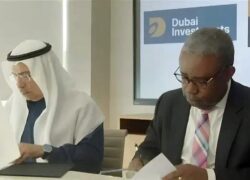
Dubai Investments has signed a partnership with Angola’s Sovereign Wealth Fund (FSDEA) to jointly develop large-scale real estate projects in Luanda Province, beginning with Cazanga Island in the Luanda Archipelago. The agreement was formalized in Luanda by Dubai Investments Chairman and CEO Khalid Bin Kalban and FSDEA Chairman Armando Manuel, with Angola’s Secretary of State for Urban Planning, Manuel Canguezeze, in attendance.

The collaboration is designed to support urban expansion and sustainable development in Angola’s capital, starting with mixed-use projects combining housing, tourism, and city infrastructure. FSDEA will participate through its affiliated company holding the land rights, while Dubai Investments will contribute financing and development expertise. “This agreement underscores our commitment to attract international investment and knowledge into Angola’s real estate and tourism sectors,” FSDEA Chairman Manuel said at the signing.

The Luanda project marks Dubai Investments’ second entry into the Angolan market, following DIP Angola, a mixed-use hub modeled after its flagship development in the UAE. The company has stated that real estate remains a central pillar of its growth strategy, alongside financial services. Ongoing UAE projects include Asayel Avenue at Mirdif Hills, the Danah Bay villas in Ras Al Khaimah, and Violet Tower in Jumeirah Village Circle, scheduled for completion in 2026.

The UAE and Angola have been strengthening trade and investment ties. In the first half of 2025, total trade between the two countries reached $1.4 billion, up nearly 30 percent year-on-year, according to official figures. Angola’s main exports to the UAE include diamonds, gold, copper, and grains, while the UAE exports petroleum products, steel, cigarettes, and perfumes. Other UAE firms are expanding in Angola as well: Masdar is developing a 150 MW solar power plant to supply electricity to 90,000 homes, and AD Ports Group has begun operating a multipurpose terminal at Luanda Port.

Earlier this year, the UAE and Angola signed a Comprehensive Economic Partnership Agreement (CEPA), expected to boost annual trade to more than $10 billion by 2033, add $1 billion to both economies, and create around 30,000 jobs. The Luanda development deal is seen as part of this wider effort to deepen bilateral economic cooperation and attract long-term investment into Angola’s growing urban and infrastructure sectors.

Syria to Redenominate Currency and Push Forward with Economic Reforms

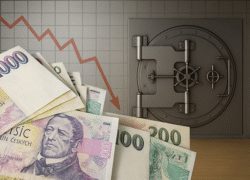
Syria’s Central Bank has confirmed plans to redenominate the national currency by removing two zeros from the Syrian pound as part of a broader strategy to stabilize the economy, reduce inflation, and restore investor confidence. Governor Abdelkader Husrieh outlined the reforms, which also include new banknotes, tighter monetary discipline, and modernization of the financial sector.

The redenomination, expected to roll out before the end of 2025, will simplify payments, cut printing costs, and reduce the need to carry large bundles of cash. New notes will avoid controversial Assad-era imagery and focus on national identity, with a public awareness campaign planned to ease the transition. The launch will include a dual-currency phase, allowing old and new notes to circulate simultaneously for up to a year. Printing contracts are set to be awarded to trusted international companies, with Syria moving away from exclusive reliance on Russian state firms.

The reforms build on recent efforts to stabilize the pound, which has strengthened by roughly 30–35 percent in recent months under stricter financial controls. The central bank allows the market to set exchange rates but intervenes to curb speculation and unfair pricing. Officials have also halted deficit financing, helping ease inflation, and are developing tools such as wider digital payments to improve monetary control.

Syria is also re-establishing its position in global finance. In June, the country completed its first direct international bank transfer via the SWIFT system since the start of the civil war, sending funds to an Italian bank. Foreign reserves are expected to grow for the first time in years, raising hopes that Syria could eventually serve as a financial hub for Lebanon, Jordan, and Gulf markets.

Alongside monetary measures, the Central Bank is drafting legal and institutional reforms, including deposit insurance to protect savings, a credit bureau to expand lending, and new rules to encourage mortgages and debt markets. A digital payments strategy is being developed, with plans to license fintech firms, strengthen anti-money laundering measures, and introduce modern banking tools to reduce reliance on cash.

Governor Husrieh acknowledged that challenges remain, but said gradual, carefully managed reforms could mark the beginning of Syria’s economic recovery. “The new currency, supported by digital payments and stronger institutions, can turn the pound into a symbol of recovery,” he said.

UK Employers Face New NDA Rules from October

Employers in England and Wales will need to revise confidentiality agreements and settlement contracts from October 1, 2025, when provisions of the Victims and Prisoners Act 2024 come into force. The new rules mean non-disclosure agreements (NDAs) cannot prevent victims of crime, or those who reasonably believe they are victims, from speaking to law enforcement, regulators, lawyers, professional advisers, victim support services, or close family members.

The Ministry of Justice has issued guidance confirming that NDAs signed before October remain subject to existing law. Disclosures made primarily to release information into the public domain will still fall outside the new protections.

The National changes come as part of a broader tightening of rules around NDAs. In July, the government introduced an amendment to the Employment Rights Bill that would ban confidentiality clauses covering allegations of discrimination or harassment. Although no date has been set, the ban would prevent employers from using NDAs to conceal workplace misconduct.

Legal experts say the October reforms will require only limited drafting adjustments, since current NDAs already include carve-outs for whistleblowing and criminal reporting. However, they warn employers to ensure templates reflect the new list of permitted disclosures. Solicitors regulated by the Solicitors Regulation Authority (SRA) are reminded that including unenforceable clauses for deterrent purposes breaches professional standards.

If the wider ban on NDAs in harassment and discrimination cases is implemented, employers may face more tribunal litigation and greater public scrutiny of internal investigations. Analysts suggest businesses will need to strengthen reporting systems and ensure transparent handling of workplace complaints as part of a broader cultural shift toward prevention.

Source: CMS

Czech Budget Revenues on Track to Exceed Plan, Council Warns of Spending Risks

Revenues in the Czech state budget for 2025 are expected to surpass planned levels, but risks remain on the expenditure side, the National Budget Council (NRR) said in its quarterly report on public finances. The council highlighted potential shortfalls in funding for renewable energy subsidies and salaries of non-teaching staff in education, and also criticized the classification of certain defense expenditures in the draft budget for 2026.

The NRR said Czech public finances are on course for their strongest performance since 2019, supported by a recovering economy and robust growth in tax and insurance revenues. However, it warned that structural imbalances persist and that further consolidation will be required, particularly in preparations for the 2027 budget.

Revenue from the sale of emission allowances is significantly lower than projected. While CZK 30 billion was expected for the full year, only CZK 7.9 billion had been collected by mid-year. The council has previously criticized what it described as overly optimistic estimates of this revenue stream.

On the spending side, the NRR identified gaps in funding for education and renewable energy support. An additional CZK 10 billion is needed for non-teaching staff salaries, of which only CZK 4.2 billion has so far been secured. For renewable energy, the state has already drawn heavily on its budget reserve and redirected CZK 900 million from funds earmarked for flood recovery. The council noted that a similar reallocation occurred in 2024, when CZK 14.1 billion of the CZK 30 billion flood budget was diverted to other purposes.

The Ministry of Finance defended the practice, saying the transfers complied with budget rules. It argued that less than CZK 9 billion would be required for flood programs this year, freeing up funds for other urgent expenses.

The council also raised concerns over next year’s draft budget, particularly the allocation of CZK 20.1 billion for defense spending within the Ministry of Transport chapter, compared to CZK 100 million in 2025. It called on the government to clarify which transport expenditures are now considered part of national defense.

In response, the Finance Ministry said NATO rules allow infrastructure spending to be counted toward defense if facilities serve both civilian and military purposes. It also stressed that the draft budget remains under discussion and is subject to change during government negotiations.

Billionaire Michal Strnad Acquires Ferrari Importer Scuderia SF Praha

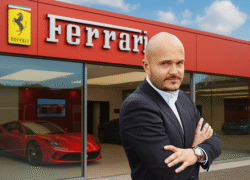
Czech billionaire Michal Strnad, owner of the Czechoslovak Group (CSG), has acquired Scuderia SF Praha along with its sister companies Scuderia MC Praha and Scuderia Praha Racing, which handle Ferrari imports, Maserati sales and service, and motorsport activities. The deal is currently under review by the Office for the Protection of Competition (ÚOHS).

According to the competition authority, the merger mainly concerns wholesale and retail distribution of cars, related services, and motorsport. The transaction is being assessed under a simplified procedure, with a decision expected within 20 days. The purchase price has not been disclosed.

Scuderia SF Praha was created in early 2023 following the split of the original Scuderia Praha into three separate firms. Scuderia SF Praha focused on Ferrari distribution, Scuderia MC Praha on Maserati sales and servicing, and Scuderia Praha Racing on competitive racing. The current owner listed in the Register of Beneficial Owners is Zdeněk Kubát, a former Penta manager.

Financial filings show that Scuderia SF Praha nearly tripled its net profit in 2024 to CZK 75.8 million, while turnover grew by 20 percent to CZK 1.43 billion.

The acquisition was made through Altavia Trade, a company solely owned by Strnad but not formally part of CSG. Strnad is among the wealthiest Czechs, with Forbes ranking him fourth in May 2025 with assets of CZK 230.5 billion. Other rankings, including those published by Euro and e15.cz in late August and early September, placed him either first or fourth, with estimates ranging from CZK 239 billion to CZK 330 billion.

Source: CTK

Tusk Stresses Western Unity at Paris Meeting on Ukraine

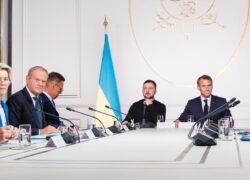
Prime Minister Donald Tusk underlined the importance of unity between Europe and the United States in supporting Ukraine during a meeting of the “Coalition of the Willing” in Paris on September 4. The gathering brought together more than 30 countries backing Kyiv, with participants including European Commission President Ursula von der Leyen, Ukrainian President Volodymyr Zelensky, French President Emmanuel Macron, Dutch Prime Minister Dick Schoof, and Finnish Prime Minister Alexander Stubb.

Speaking after the talks, Tusk said Europe must act jointly with the United States to maintain pressure on Russia. He stressed that Poland will continue to serve as a key logistics hub for aid to Ukraine but will not send troops. “We have repeatedly emphasized that we do not expect the sending of soldiers, even after the end of the war. In Poland, there is the largest hub for organizing aid for Ukraine. This is a sufficient and exceptional task,” Tusk said.

The meeting also included a videoconference with U.S. President Donald Trump. According to Tusk, discussions focused on ways to push Russia toward negotiations. “Everyone is disappointed by the lack of results, despite the efforts of the European countries and the President of the United States,” he said, adding that Moscow appeared to be stalling.

Participants also voiced concern over China’s recent military parade attended by the leaders of Russia, North Korea, and Belarus. Tusk described it as “a demonstration that bodes badly for future international relations,” underscoring the need for Western cohesion.

In bilateral talks with Macron, Tusk said Poland and France agreed to oppose the EU’s trade deal with Mercosur countries unless stronger safeguards are put in place. “If it turns out that there is too much cheap beef, Europe will have defence mechanisms in stock, such as tariffs or suspending imports,” Tusk said. The two leaders also discussed climate policy, with Poland insisting that decisions on CO2 reduction targets should be taken by the European Council, allowing member states greater leverage in negotiations.

Fitch Ratings Cuts Global Credit Outlook as Growth Slows

Fitch Ratings has lowered its global credit outlook in its mid-year update for 2025, citing a deteriorating growth environment driven by higher tariffs, policy uncertainty in the United States, and heightened geopolitical risks.

The agency now forecasts global real GDP growth at 2.2 percent in 2025, a sharp slowdown from 2.9 percent in 2024. Fitch said weaker trade flows and reduced investment confidence are weighing on global activity, with advanced economies particularly exposed to the impact of U.S. tariff measures.

“Global growth momentum is fading, and the risks are increasingly tilted to the downside,” the agency noted in the update released on July 2. Fitch highlighted that while some emerging markets continue to post stronger growth, the overall slowdown is broad-based and likely to pressure credit markets in the coming months.

The revised outlook comes amid concerns over U.S. fiscal and trade policy direction, coupled with geopolitical tensions that are adding to financial market volatility. Fitch warned that the weaker economic backdrop could translate into tighter financing conditions for both sovereign and corporate borrowers.

Despite these challenges, Fitch emphasized that most banking systems remain resilient, with capital buffers stronger than in previous downturns. However, the agency cautioned that prolonged uncertainty and sluggish growth could erode credit quality if the current trends persist.

Survey reveals persistent inequalities in European working conditions

A new pan-European survey has found that while job quality across Europe has generally improved over the past decade, sharp inequalities remain between men and women and among workers in different regions.

The European Working Conditions Survey 2024, conducted by Eurofound, draws on interviews with more than 36,000 workers in 35 countries and assesses seven dimensions of job quality. The results show progress in areas such as working time, skills development, and physical working environments, but highlight widening gender disparities in social relations at work, job intensity, and exposure to risks.

One of the clearest improvements has been a decline in excessively long working hours. The proportion of employees working more than 48 hours per week has fallen from 19 percent in 2005 to 11 percent in 2024. This has narrowed gender gaps in working time quality, with men now scoring at similar levels to women for the first time.

Workers also reported greater opportunities to apply and expand their skills, with the “skills and discretion” index showing the strongest gains. Men in particular have seen improvements in their physical work environment.

However, the survey found that women’s working conditions are worsening in other respects. The social environment at work has deteriorated for women since 2010, largely due to higher exposure to verbal abuse and other negative behaviours. Women are also more likely to work in high-intensity sectors such as healthcare and education, where frequent interruptions and emotional strain are common.

Other challenges include the rise of sedentary work, with 40 percent of Europeans reporting prolonged sitting during working hours. This figure is higher among women (42 percent) than men (39 percent).

Job security and financial predictability remain uneven across Europe. Although overall fear of job loss has declined, men continue to report better career prospects than women. Meanwhile, 15 percent of workers across Europe are unable to predict their income over the next three months, with uncertainty particularly acute in Romania and Greece, compared to more stable conditions in Austria and Germany.

Eurofound’s findings underline that while average job quality has improved, these gains are unevenly distributed. The agency concluded that policymakers must look beyond broad trends to address the vulnerabilities and inequalities that continue to shape working lives across Europe.

LATEST NEWS