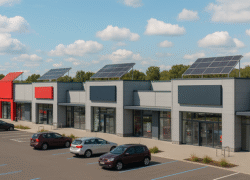
Retail Parks Attract Growing Investment as Shopping Centres Lose Ground

Retail parks continue to expand their role in the Polish retail landscape. Lower development and operating costs, as well as the ability to adjust formats to local demand, are drawing increasing interest from investors. At the same time, analysts note that the period of easy returns is ending, and the long-term performance of new projects will depend on careful strategy and an understanding of market saturation.

Although shopping centres still account for four times more retail space than retail parks, recent development activity shows a clear shift. According to data from the Polish Council of Shopping Centers, 133,000 sqm of new retail space was delivered in the first half of 2025, of which 83.4% consisted of retail parks. Most new space—61%—was built in towns with fewer than 100,000 residents. This year’s openings include M Park Mrągowo, the largest project in Poland for LCP Properties, and Gliwice’s Łabędzka retail park, created through the redevelopment of a former Tesco centre. San Park Piaseczno, now operating for a year, is currently the largest retail park in the Mazowieckie region.

For many shoppers, the appeal of retail parks lies in direct access to stores, free parking, and locations close to main transport routes. Investors value predictable operating structures, lower costs, and the ability to adapt the tenant mix to shifts in demand.

Lower Costs and Shorter Payback Periods

Retail parks remain cost-efficient compared to traditional enclosed shopping centres. Costs are reduced by the absence of air-conditioned passageways, escalators, complex ventilation, and other shared infrastructure. Their simpler design also results in lower energy consumption and more straightforward management. Tenants typically face lower service charges, which, combined with steady customer traffic, can improve business performance. For investors, this format often produces more predictable cash flow and faster capital recovery.

Growing Presence of Catering and Services

Although retail parks were originally built around basic retail, recent years have seen the introduction of restaurants and service tenants.

“With the introduction of services and catering to retail parks, you can get at least three types of benefits. First, increase your rental income. Secondly, rent revenues can be stabilized over a longer period, which is due to how long lease agreements are concluded. Thirdly, this allows you to make the concept of the park more attractive and gain new customers,” says Dariusz Kalinowski, managing partner of Harvent Capital and former board member of Emperia.

He adds that the direction of development depends on the owner’s long-term perspective. Operators focused solely on short-term returns risk high tenant turnover and an unclear commercial concept. “The development of catering takes place in two ways: by allocating part of the lease space to restaurants and making available fragments of the parking lot for this type of services,” Kalinowski notes.

Sustainability Requirements Shape Investment Decisions

Environmental and regulatory expectations are becoming increasingly relevant to investors. ESG strategies, BREEAM certification, and photovoltaic installations can increase upfront costs, but they are playing a growing role in tenant selection and long-term asset value.

“However, the benefits far outweigh the initial costs. We are dealing with operational savings. Thanks to energy efficiency, BREEAM-certified parks record a reduction in operating costs of up to several dozen percent per year. In addition, there are rent bonuses – tenants accept rent higher for space in certified facilities,” says Radosław Jodko, investment expert at RRJ Group.

Jodko points out that large retail chains are increasingly choosing certified sites to meet their own ESG goals. He also warns that, given EU taxonomy requirements, buildings without certification may become “orphaned assets” within five to seven years. According to him, sustainability is no longer optional but necessary to remain competitive.

Avoiding Overinvestment

Defining market limits remains one of the main challenges as new parks continue to open. Kalinowski warns against evaluating projects solely through quick commercialization and resale.

“I encourage you to take a different look at the topic. If we assume that we will become the owner of a particular park for at least 10 years, the way we evaluate the investment will automatically change. Thanks to this approach, our analysis will be deeper, taking into account many factors, including those that will affect investment in the medium or long term,” he says.

Jodko adds that a catchment area of 30,000–40,000 residents within a 15-minute radius is a minimum for a 5,000–8,000 sqm park. He notes that saturation should not exceed 300–350 sqm of commercial space per 1,000 residents. Building a second park nearby makes sense only if the existing park reaches no more than 60–70% of market potential and if the area features distinct residential districts with different demographic structures.

Investors are also reassessing tenant mixes to avoid overlap. When competing parks already include discounters or drugstores, developers may prioritise electronics, sports, or home-goods tenants to reduce assortment duplication and the risk of cannibalisation.

Authors: Radosław Jodko and , investment expert at RRJ Group and Dariusz Kalinowski, managing partner of Harvent Capital and former board member of Emperia
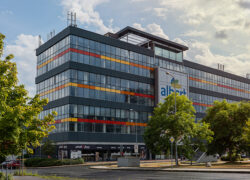

INVESTIKA adds properties in Prague and Wrocław, strengthening its regional diversification

INVESTIKA Real Estate Fund is closing 2025 with two more acquisitions, expanding its portfolio in both the Czech Republic and Poland. After completing transactions in Poland and Austria earlier this year, the fund has returned to the domestic market with the purchase of the Butovice Offices building in Prague 5, home to the Czech headquarters of Ahold (Albert).

The property complements several nearby assets already owned by the fund, including Galerie Butovice, adjacent development land and the Avenir E office building. “We are investing in the domestic market. In addition to Galerie Butovice and the adjacent land, we also own the Avenir E office building. Consolidating property ownership in the area will allow us to synergistically develop the commercial potential of these properties,” said Jaroslav Kysela, a member of the board of INVESTIKA, the investment company managing the fund.

The seller of Butovice Offices was the Safety Real fund, a SICAV of the BDCG investment group. The transaction price was not disclosed. The building offers 9,100 sqm of leasable space, with Albert Česká republika as its main long-term tenant.

Expansion in Poland

The Prague purchase follows INVESTIKA’s November acquisition of Centrum Południe 3 in Wrocław, the third largest city in Poland. The office building offers 21,500 sqm of space and is fully leased, largely to BNY Mellon, which operates its European headquarters there with more than 3,000 employees.

Centrum Południe 3 is among the region’s more advanced office buildings, holding LEED Platinum certification—one of the highest-rated in Europe—along with WELL Gold certification and the Object Without Barriers award. The property is located in the city’s business district on Powstańców Śląskich Avenue.

Outlook for 2026

According to Kysela, the fund has seen record investor inflows in 2025, enabling acquisitions across multiple markets. “We invested on their behalf in attractive income-generating properties in Poland in the regional centers of Szczecin and [other locations], in Austria, where we acquired a flight training center near Vienna, and in Prague in Nové Butovice. We are constantly looking for investment opportunities and are currently working on another transaction. We will announce it after its completion in the first quarter of 2026,” he said.

INVESTIKA Real Estate Fund now manages assets of more than CZK 27 billion. Properties worth nearly CZK 5 billion were added to the portfolio this year.

Key points

  • INVESTIKA has acquired the 9,100 sqm Butovice Offices building in Prague 5, anchored by Ahold (Albert).

  • This is the 64th asset in the fund’s portfolio, complementing several nearby assets already under its ownership.

  • In November, the fund purchased Centrum Południe 3 in Wrocław, offering 21,500 sqm of fully leased premium office space.

  • The fund has completed seven acquisitions since December 2024 and now holds ten new projects in ten locations.

Blue Bolt targets faster growth than the global PropTech market

Blue Bolt, a Polish technology company developing hardware and software for managing common areas in buildings, completed around 70 new projects in 2025, an increase of more than 21% year-on-year. This result is above the growth projections for the global PropTech sector, which various analyses estimate at 10–17% annually. The company says it aims to return to the higher growth levels it achieved in earlier years.

Blue Bolt’s system is used by office and residential real estate operators and now supports 80,000 users across more than 400 projects in Poland and other countries. According to Global Industry Analysts, the global PropTech market was valued at USD 42.1 billion in 2024 and may reach USD 104.0 billion by 2030, with an annual growth rate of 16.3%. Grand View Research estimates the global access control market at USD 10.76 billion in 2024, with projected annual growth of 8.4% through 2030.

Maciej Grabowski, founder of Blue Bolt, notes that the broader technology market is undergoing a period of reassessment: “The technology solutions market is growing rapidly, but there are clear changes taking place. After a dynamic growth phase, when many new solutions appeared, it is clear that the usefulness of the tools currently on the market is being reviewed. Many of the new products offered by IT companies have not lived up to expectations, and customers are now much more conscious of their choices and business decisions in the field of technology, which is increasingly assessed in terms of the ratio of total costs to generated benefits. This is where we see our advantages – as always, we want to deliver real benefits and value to our users and customers. This allows us to look more calmly at long-term development. We are convinced that we can play a significant role in this process, as we are backed by hard statistics confirming the widespread use of our solutions in individual facilities. At the same time, the use of solutions offered by Blue Bolt is becoming the standard expected by users of both office and residential buildings. There is a clear change here compared to previous years.”

In 2025, the company recorded a 47% increase in platform users, along with a 55% rise in app-based “openings,” which include unlocking doors or granting access to rooms. Use of features integrated with Apple CarPlay® and Android Auto® increased by 148%. Blue Bolt says this reflects wider adoption of access control tools based on advanced smartphone functions. The company continued adding features including room reservations, parking management, space-sharing tools, communication modules, sauna control integration, and options that support GDPR-compliant anonymised access.

Mikołaj Jędryczka, Chief Operating Officer at Blue Bolt, highlights ongoing development of the platform: “The Blue Bolt application is constantly being developed, and last year we focused in particular on integration with external systems, increasing the range of possibilities for using our platform. We are also seeing growing demand for all kinds of application personalization from our partners who want to stand out by offering unique features within the Blue Bolt platform. In addition, we are expanding the administrative functionalities of the application to provide more comfort for those who manage common areas. It is worth mentioning, for example, the development of access management capabilities for visitors to the facility, with the option of integration with Google Wallet and Apple Wallet.”

Grabowski also points to shifting expectations among building users: “In both residential and office complexes, we are seeing more and more clearly how much the expectations of the new generation are changing in terms of comfort, easy access, flexibility, and the use of technology. Blue Bolt responds to these needs by allowing users to move around facilities without plastic cards, remote controls, or keys, while combining all the expected amenities associated with this and giving managers greater control over security while respecting privacy and complying with the GDPR.”

Blue Bolt develops its software in-house, and its devices are produced in Poland. The company cooperates with real estate market operators in Poland and Europe who are seeking systems that can be installed quickly and with minimal disruption.

Sija Kamýk Project Completed, All Apartments Sold

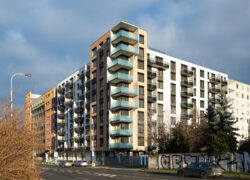
YIT has completed the Sija Kamýk residential development in Prague 12. The project incorporates a number of environmentally focused and energy-efficient features. All 122 apartments have already been sold. Residents will have access to a courtyard with relaxation areas and practical facilities, and the internal passageway will include an abstract mural designed to reflect themes of energy, growth, and harmony.

Located at the corner of Hodkovická and Mariánská streets, the ten-storey building comprises 122 apartments ranging from 1+kk to 4+kk, with sizes between 30 and 116 m². Most units include a balcony, terrace, or front garden. Standard features include triple-glazed windows and preparation for external blinds; some apartments are equipped with heat-recovery ventilation, and the units on the penultimate floor are prepared for air-conditioning installation. The project’s visual identity is based on its Finnish name “sija,” meaning “place,” which is reflected in the orientation system and various design elements. Residents have access to a pram room, basement storage, garage parking, and four commercial units located on the ground floor.

“We saw a lot of interest in the Sija Kamýk project during construction, and all the apartments were sold before the final inspection. We see this as confirmation that our projects meet people’s expectations for modern, high-quality, and comfortable living that is also economical and environmentally friendly. We believe that the new residents will enjoy living in the building and its surroundings,” says Dana Bartoňová, Sales Director at YIT Stavo.

In addition to private courtyard amenities, YIT collaborated with the Prague 12 district to renovate the adjacent public courtyard, adding a park, playground, and workout area. The passageway artwork, created specifically for the project, is inspired by natural motifs and uses yellow, green, and blue tones to correspond with the building’s architecture.

The project incorporates LED lighting, water-saving fixtures, a retention tank for rainwater used in irrigation, and photovoltaic panels to help lower electricity use and related emissions. To support local biodiversity, nesting boxes for swifts have been installed and new plantings added. Construction also included the use of 175 m³ of recycled concrete, reducing the need for natural raw materials and supporting circular-economy principles.

Generali Fond Realit acquires GARBE Progresus Park Klášterec I

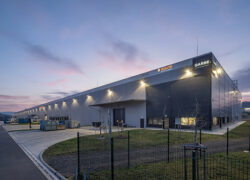
Generali Fond Realit, managed by Generali Investments CEE and advised by Generali Real Estate, has acquired the GARBE Progresus Park Klášterec I logistics facility in the Ústí nad Labem region. The asset, positioned between Chomutov and Klášterec nad Ohří, comprises 18,500 sqm of fully leased space. ISOLATE, a German producer of technical and high-temperature thermal insulation, is the anchor tenant. The sellers were GARBE and Progresus.

“We are pleased to add this first logistic asset in the Czech Republic to the Generali portfolio. The Czech market continues to be of strategic importance to us,” says Ramon Spoladore, Head of CEE & Nordics region at Generali Real Estate.

According to Jaroslav Chalupka, Head of Transactions CEE and Nordics at Generali Real Estate, “The property offers strong investment potential thanks to its stable, long-term tenant. In addition, it is a newly built, modern facility equipped with the latest technologies and certified to the BREEAM Very Good standard.”

Marek Bečička, Head of Real Assets at Generali Investments CEE, comments: “The logistics and industrial segment offer a highly compelling opportunity, providing robust rental income and strengthening the fund’s overall revenue stream. This acquisition of a modern, high-quality asset represents another strategic milestone in diversifying our portfolio and securing sustainable, long-term returns.”

Lukáš Zrůst, Co-Founder of the Progresus Group, notes: “GARBE Park Klášterec I was our entry point into logistics real estate, and we recognized its significant potential from day one. The rapid full lease-up, smooth construction process and consistent performance of the project confirmed that it had been the right decision. I am especially pleased that the project attracted the interest of Generali Investments, one of Europe’s most respected investors and asset managers.”

He adds: “The partnership between GARBE and Progresus consistently delivers assets that stand the test of competition and time. We greatly appreciate this transaction with Generali Fond Realit, a renowned investment fund with a strong European footprint not only in the logistics segment but also across other real estate sectors.”

Martin Polák, Managing Director at GARBE for Central and Eastern Europe, states: “For GARBE, it is key that our logistics parks continue to attract both tenants and investors over the long term. GARBE Park Klášterec I is a newly built, fully leased hall and marks our fourth completed sale in the Czech Republic and Slovakia within the last eighteen months. I am delighted that investor demand continues to confirm the attractiveness of these properties as an investment product.”

Clifford Chance provided legal advice to Generali Real Estate, with tax and financial advisory from ASB and technical due diligence by Grinity. CMS represented GARBE and Progresus, while Grafton Property Partners acted as acquisition advisor and TPA handled tax and financial advisory.

BEOS Corporate Real Estate Fund Germany V completes second acquisition

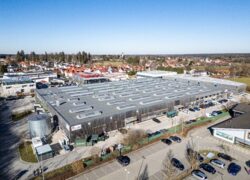
BEOS has acquired the fully leased Gewerbepark Baierbrunn in the Munich district for its Spezial-AIF “BEOS Corporate Real Estate Fund Germany V” (BEOS CREFG V), launched in June.

The Gewerbepark consists of three warehouse and production halls with office space, totalling around 17,000 square metres of lettable area. The main tenants include a sportswear retailer and an international biotechnology and medical technology company.

This is the second investment made on behalf of BEOS CREFG V, following its initial acquisition in Neuss. The fund plans to invest more than €600 million and focuses on multi-use corporate real estate. It integrates environmental and social characteristics in line with SFDR Article 8. Swiss Life Kapitalverwaltungsgesellschaft mbH acts as the regulated AIFM, while BEOS AG is responsible for asset management.

Commenting on the transaction, Michael Kapler, Head Portfolio Management at Swiss Life Asset Managers in Germany, said: “Der Ankauf in Baierbrunn ist bereits die zweite Transaktion innerhalb weniger Monate nach Fondsauflage und unterstreicht die Dynamik des BEOS CREFG V und die Attraktivität des Vehikels für institutionelle Anleger. Er zeigt, wie fokussiert wir unsere Strategie verfolgen und den Fonds erfolgreich im Markt etablieren.”

Nils Schuldt, Senior Manager Transaction at BEOS, added: “Die Transaktion fügt sich ideal in unsere Strategie ein, in die TOP7-Städte und -Ballungsräume in Deutschland zu investieren. Die Lager- und Produktionsimmobilie ist vielfältig nutzbar und punktet mit einer attraktiven Lage im Süden von München sowie einem hochwertigen Mieterbestand.”

Gewerbepark Baierbrunn is located about 15 kilometres south of Munich, close to the B11 federal road and a few kilometres from the A95 motorway. The site also benefits from direct access to the Baierbrunn S-Bahn station.

The seller is Aurelis Real Estate, which previously redeveloped the site for modern and multifunctional use. “Der Gewerbepark Baierbrunn hat sich in den vergangenen Jahren hervorragend entwickelt. Der Verkauf bildet für uns den Abschluss eines erfolgreichen Immobilienprojekts,” said Stefan Wiegand, Managing Director of the Aurelis Region South. The purchase price was not disclosed.

TAS Logistyka expands leasing area at CTPark Warsaw South

CTP has announced that TAS Logistyka sp. z o.o. has expanded its leased space at CTPark Warsaw South by almost 15,500 sqm. The company now occupies approximately 42,000 sqm at the site, a significant increase from its initial lease signed in 2023.

TAS Logistyka provides transport, forwarding, warehousing and integrated logistics services, employing more than 300 people across 110,000 sqm of warehouse space in six locations.

CTPark Warsaw South is located around 50 km south of Warsaw, with access to the A1 motorway and other infrastructure links. The park also offers onsite amenities for employees. TAS Logistyka’s decision to expand follows the company’s broader growth and focus on improving warehouse processes for its clients.

“Due to the continuous growth of TAS Logistyka sp. z o.o., we focus on flexible, trusted cooperation aligned with the latest trends and market needs, which is made possible by the CTP park in Mszczonów. Transparent and clear collaboration is the foundation of success in the logistics field, enabling us to serve TAS Logistyka’s key clients. As we know, every success is the result of the right decision,” said Tomasz Frączkiewicz, President of TAS Logistyka sp. z o.o.

Patrycja Makowska, Senior Business Developer at CTP Poland, noted: “The continued growth of companies like TAS Logistyka at our Parks demonstrates the strength of CTP’s business model. We prioritise flexibility and understanding individual client needs to provide high-quality space in the right locations to meet the evolving needs of local and global businesses.”

CTP reports that a substantial share of its annual leasing activity comes from existing tenants. The company currently operates 19 business parks in Poland and has 13 buildings under construction, which will add more than 290,000 sqm of logistics space.

Other companies based at CTPark Warsaw South include Fiege and IPOS Maciej Szczepanik. The park is positioned between Warsaw and Łódź, directly along the S8 expressway.

MLP Group secures major lease with Winit Germany GmbH at MLP Business Park Schalke

MLP Group has completed one of the largest leasing deals in the German logistics market in recent years. Winit Germany GmbH, a subsidiary of global cross-border logistics company Winit, has leased 36,300 sqm of space at MLP Business Park Schalke, with an option to expand. The agreement highlights MLP Group’s position in a market where large modern facilities remain scarce.

MLP Business Park Schalke forms part of the broader redevelopment momentum in the Ruhr region, which is moving from its industrial roots toward innovation-focused and green-economy investments. “Germany is the key driver of our expansion strategy. It is a large, stable market with strong demand and long-term growth potential. In the coming years, we want the value of our assets in Germany to be comparable to our portfolio in Poland. Our portfolio in Germany continues to grow, strengthening the Group’s position as one of the leading investors and managers of logistics real estate in Europe. We focus on key metropolitan areas and the most attractive investment locations, where demand for modern logistics space remains resilient and structurally strong. MLP Group has one of the most modern portfolios of logistics parks in Europe,” says Radosław T. Krochta, CEO at MLP Group.

Winit Germany will occupy three units designed for warehousing, technical operations, and office functions. The spaces are prepared for advanced automation and robotics. Early access is expected in late 2025, with full handover scheduled for the first quarter of 2026.

“We focus on the development of modern and sustainable logistics and commercial parks in strategic locations. Projects delivered in line with the highest ESG standards effectively address the rapidly growing demand for high-quality warehouse and production space,” emphasises Martin Birkert, Chief Country Officer Germany at MLP Group.

The company continues to expand its German portfolio across big-box parks, city-logistics schemes and multi-user facilities. “Our strategy prioritises long-term, financially stable tenants, including manufacturing, technology, and logistics companies, as they provide operational predictability and resilience. This approach forms the foundation of sustainable and balanced portfolio growth,” says André Otto, Director Leasing & Acquisitions at MLP Group.

Winit’s expansion in Europe

Winit, founded in Shanghai in 2012, provides global logistics solutions for international e-commerce, operating fulfilment centres across Asia, Europe, North America, and Australia. Its services cover receiving, storage, picking, packing, delivery and returns. Winit Germany has been based in Bremen for 12 years.

Wei Wei Shen, CEO of Winit Germany GmbH, states: “Europe is one of our most important growth markets. MLP Business Park Schalke offers an ideal platform for expanding our operations, with infrastructure ready for advanced automation, excellent transport connectivity, the ability to scale quickly and access to labour. MLP Business Park Schalke will be our second branch where we will implement our high-quality value-added services with approx. 300 – 400 employees. As a rapidly expanding company, we also value the fact that, MLP Business Park Schalke provides further expansion opportunities for our future growth.”

Radosław T. Krochta adds: “Winit is a global player with exceptionally high technological requirements, and their decision to work with us is a strong confirmation of the quality of MLP Group’s projects. Companies of this calibre require infrastructure that can support highly advanced operational processes, and we are pleased that we can meet these expectations.”

MLP Business Park Schalke

MLP Business Park Schalke is being developed on a 12-hectare former industrial site and will offer 72,000 sqm of space once complete, including warehouse, industrial, office and social areas. The location benefits from strong motorway links, access to airports and proximity to a river port, supporting logistics and production activities.

The buildings are designed for high energy efficiency and allow for PV installation, advanced HVAC solutions and intelligent LED systems. The hall layouts support automation and robotics. MLP Group aims for DGNB Gold certification.

The lease was facilitated by Brockhoff GmbH and CBRE GmbH acting for the landlord, and Colliers International Germany GmbH representing the tenant.

Răzvan Nica: Public buildings remain the overlooked barrier to real decarbonization

The role of public buildings in achieving real decarbonization remains widely underestimated, according to conclusions presented by BuildGreen and CarbonTool following their participation at the Smart City Expo World Congress in Barcelona between 3–5 November 2025. Their assessment highlights that only cities capable of managing their building stock through real data—not political statements—are likely to reach climate neutrality by 2030–2035.

Both the European mission “100 Climate-Neutral & Smart Cities” and the revised Energy Performance of Buildings Directive (EPBD) set firm targets for the next decade, yet many municipal strategies stall before implementation. The missing link, they argue, is the operational chain that connects measurement, cost evaluation, financing models and long-term profitability.

“Companies and public entities from South America, the Middle East or Asia came to Barcelona looking for models and to learn from Europe’s mistakes – massive pollution, congestion, lack of vision. Romania, on the other hand, continues to suffer from the absence of an integrated city-level vision, and positive examples are few. In this context, my message is simple: the climate neutrality of cities starts with buildings, and their decarbonization starts with data”, said Răzvan Nica, CEO of CarbonTool and BuildGreen.

Data as the starting point

According to Nica, cities cannot plan meaningful interventions without a detailed picture of how their buildings consume energy and generate emissions. Budgets, scenarios and funding applications become speculative in the absence of measurement and verification mechanisms.

“From the experience we have accumulated through BuildGreen and CarbonTool, in hundreds of projects across numerous countries, the same pattern is obvious: wherever real measurement–reporting–verification mechanisms exist, investment decisions follow. Where we have only nice targets but no data, budgets are postponed, projects get fragmented, and emissions remain almost unchanged. Without measurement there is no reduction, and you cannot ask for public or private money for decarbonization if you cannot show, at building, district and city level, what you are cutting and at what cost”, explained Nica.

In most major European cities, buildings—through heating, cooling and electricity use—account for well over half of local emissions. Municipal building stock stands out as the most problematic: schools, hospitals, administrative buildings and cultural institutions often operate with outdated systems, minimal monitoring and inefficient processes. For Nica, this is where the greatest impact can be achieved.

“If we don’t start decarbonization exactly here, climate-neutrality missions remain just a communication exercise. At the same time, the private market shows us that it can be done: in office, logistics or hotel portfolios, well-designed intervention packages – combining electrification, heat recovery, smart controls and operational optimization – have delivered significant consumption reductions within 12–24 months, when backed by performance indicators that are constantly monitored. The same mechanisms can be applied at municipal level, with one essential condition: we must treat the city as a portfolio of buildings, not as a collection of disconnected projects”, he added.

Examples from Bucharest and Cluj-Napoca

One of the projects highlighted by BuildGreen is the renovation of more than 15 schools in Bucharest’s District 6. The works were financed on the condition that energy performance would exceed a typical nZEB-level school by at least 40%, while maintaining quality and comfort. According to the company, most renovations have already been delivered, accompanied by a before-and-after technical evaluation that confirmed a marked drop in consumption, lower emissions and reduced operating costs for the local authority.

“This is the approach we already see in large companies and the one we propose for municipalities as well. The city must become a portfolio with clear performance indicators, not just a list of projects that are hard to compare”, noted Nica.

Cluj-Napoca and Bucharest’s District 2 offer additional examples, having implemented incentive-based sustainability programs for several years. Yet, the new European requirements will now oblige municipalities to expand these efforts into systematic data collection and the translation of that data into budgeted, verifiable measures.

The conclusion shared by BuildGreen and CarbonTool is that genuine progress requires moving beyond communication strategies. Climate neutrality, they argue, depends on rethinking how public buildings are designed, funded, monitored and upgraded. Cities that treat their building stock as a strategic portfolio—supported by digital tools and continuous measurement—are expected to be better positioned to attract financing and investment and to retain residents.

Construction Begins on New Retail and Leisure Complex in Lublin

Redkom Development has started construction of a new retail and sports complex on the site of the former Galeria Lubelska on Witosa Avenue in Lublin. The project involves reconfiguring the existing structure into a retail and entertainment park with a planned area of around 14,000 m².

The scheme will combine shopping, leisure, and sports functions. Alongside a Carrefour hypermarket, the tenant lineup will include Sinsay and the FlyPark Trampoline Park, which will cover more than 3,000 m². ProPadel will open an indoor padel facility with eight courts across over 3,000 m², while a fitness club is planned on an additional 1,000 m². According to the developer, the mix is intended to cater both to everyday retail needs and to residents looking for sports and leisure activities.

Trasko Invest has been appointed as the general contractor. The architectural concept was prepared by Plewa Architectural Studio, which has designed multiple commercial, industrial, and residential projects in Poland.

Completion and opening of the new retail and entertainment park are planned for the fourth quarter of 2026.

Between 2023 and 2025, Redkom Development delivered more than 60,000 m² of retail park space across Poland, including Park Glinianka (now BIG Łubna) near Warsaw, Ozimska Park in Opole, Comfy Park Bielik in Bielsko-Biała, and Przystanek Karkonosze near Karpacz. Additional retail developments, including the Lublin project, are underway.

LATEST NEWS