Saturday, 19 September 2026
After several years in which available industrial and logistics space was limited and occupiers competed for new facilities, Slovakia’s warehouse market is showing signs of a changing balance. New developments continue to expand the country’s industrial footprint, while companies are taking a more measured approach to growth, creating a market where tenants have more options and landlords face increasing competition.
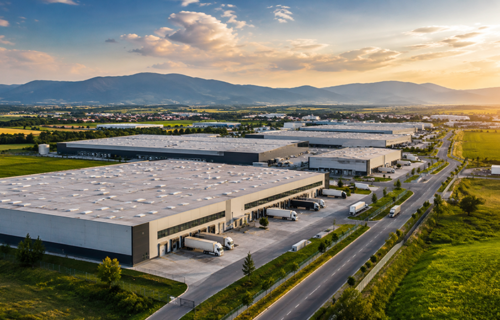
The first months of 2026 brought another wave of new warehouse and production facilities to the market, pushing Slovakia’s modern industrial stock close to the five-million-square-metre mark. At the same time, developers continue to build additional projects, ensuring that further capacity will be added during the remainder of the year.
Despite economic uncertainty across Europe, occupier activity remained relatively solid. Companies signed agreements for more than 129,000 sqm of industrial space during the first quarter, although a large proportion of this activity came from businesses choosing to remain in their existing premises rather than undertaking major expansion projects. This reflects a business environment in which operational efficiency and cost control are increasingly important considerations.
The automotive industry continues to play a decisive role in shaping demand. Slovakia remains one of Europe’s leading vehicle manufacturing locations, and the network of suppliers, logistics providers and production companies linked to the sector continues to generate requirements for both warehouse and manufacturing facilities. At the same time, companies are adapting to changes in vehicle technology, supply-chain structures and production strategies, factors that are influencing future real estate decisions.
Industrial activity remains concentrated in western Slovakia, where established transport infrastructure and proximity to major European markets continue to attract occupiers. The Bratislava region remains the country’s primary logistics hub, while Trnava, Nitra and Žilina benefit from their close links to manufacturing operations. Further east, Košice is gradually strengthening its position as an alternative location for companies seeking expansion opportunities and access to labour.
A growing amount of immediately available space has become one of the defining features of the market. Several projects completed over the past year entered operation without being fully occupied, increasing the number of options available to prospective tenants. Vacancy has risen to levels not seen for several years, although it remains within a range considered manageable by industry standards.
This increase in choice is beginning to influence commercial terms. Property owners are placing greater emphasis on attracting and retaining occupiers, while rental growth has slowed following the sharp increases experienced during the post-pandemic period. Although well-located, high-quality facilities continue to achieve premium pricing, the market is becoming more competitive overall.
Developers are also operating in a different environment. Higher financing costs and longer decision-making processes among occupiers mean that project planning requires greater caution. While construction activity remains active, the success of future developments will increasingly depend on location, building quality and the ability to meet evolving tenant requirements.
Investment interest in the sector remains comparatively strong. Industrial and logistics properties continue to attract capital from domestic and regional investors, supported by the long-term importance of manufacturing, trade and distribution activities within Central Europe. Investors remain particularly interested in modern assets with reliable occupiers and stable income streams.
Environmental performance is becoming another important factor influencing both occupiers and investors. Energy efficiency, lower operating costs and sustainable building features are now routinely included in development plans as companies seek to meet corporate environmental objectives and reduce long-term expenses.
The outlook for the remainder of 2026 will largely depend on how quickly the market absorbs the substantial amount of new space delivered over the past 18 months. Demand remains present, supported by manufacturing and logistics activity, but occupiers are making decisions more carefully than in previous years.
Rather than signalling a downturn, current conditions point to the maturation of a market that has undergone rapid expansion. Slovakia’s industrial property sector remains supported by strong economic fundamentals, but success is increasingly being determined by quality, efficiency and strategic location rather than by a simple shortage of available space.
Source: CIJ.World Research & Analysis Team