Thursday, 10 September 2026
Consumer price growth in Slovakia eased in March, reaching its lowest level in over a year, according to data published by the Statistical Office of the Slovak Republic. Despite the slowdown, housing and energy costs continue to exert upward pressure on inflation.
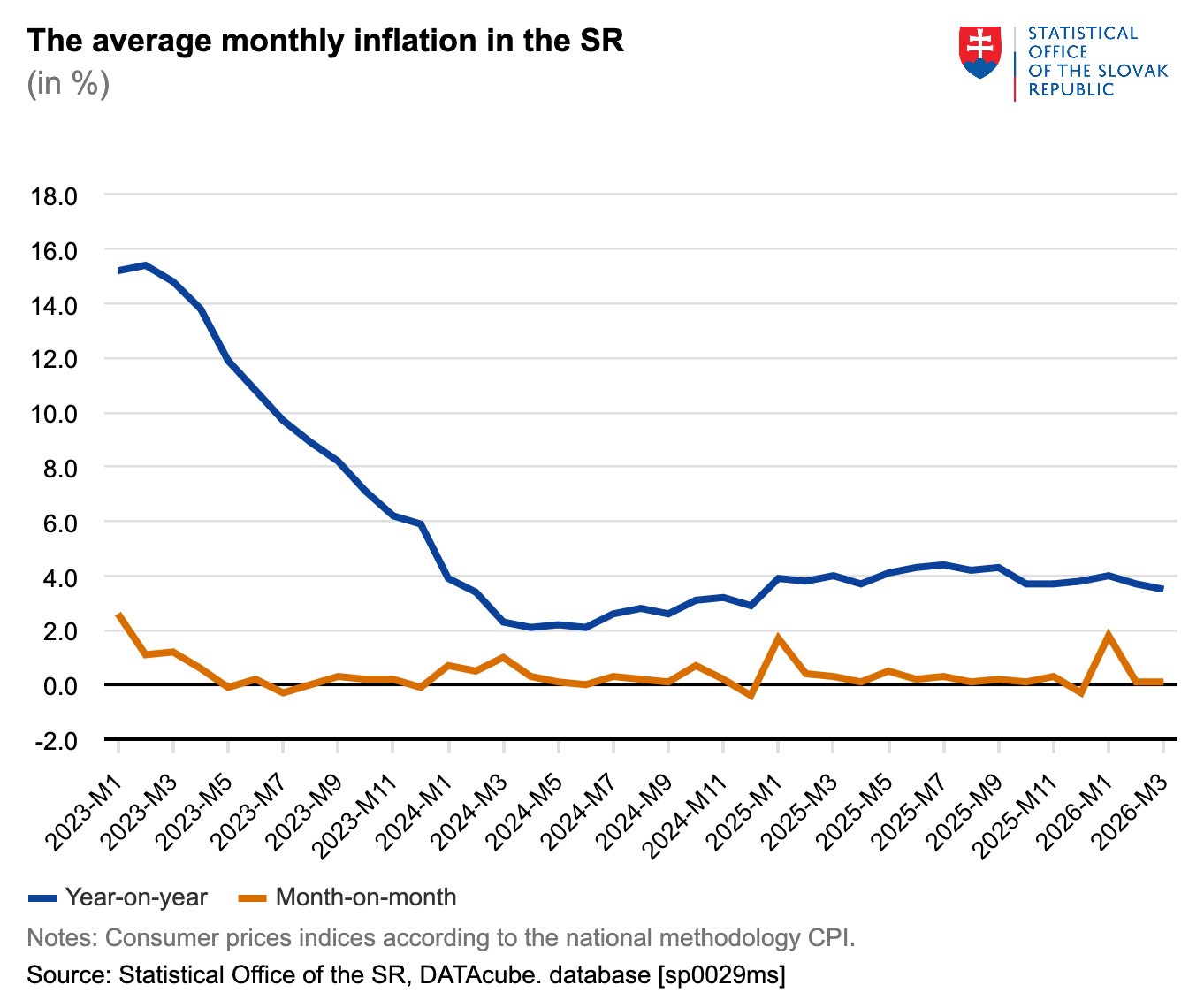
Annual inflation stood at 3.5 percent in March, down from previous months and marking the lowest rate in 15 months. On a monthly basis, prices increased by 0.1 percent, unchanged from February and significantly below January levels.
The moderation in inflation was driven largely by weaker price growth across most categories, particularly food and non-alcoholic beverages, as well as recreation and hospitality-related services. At the same time, lower food prices contributed to the subdued month-on-month increase, with broad declines across key categories such as dairy, oils and cereals.
However, rising costs in housing and transport partially offset this trend. Prices in the housing and energy segment increased both month-on-month and year-on-year, remaining a key driver of overall inflation. Energy costs for heating rose sharply compared to a year earlier, alongside higher imputed rents and service charges linked to housing.
Transport costs also contributed to inflationary pressures, with fuel prices increasing significantly during the month. This reversed the earlier trend of declining transport costs and had a noticeable impact on overall price development.
Across the consumer basket, prices rose year-on-year in all main categories, with the strongest increases recorded in financial and insurance services, as well as housing-related costs. By contrast, price growth slowed considerably in food and beverage categories, helping to moderate overall inflation.
Core inflation, which excludes regulated prices and administrative effects, reached 1.9 percent year-on-year, while net inflation stood at 2.6 percent. These indicators suggest that underlying price pressures remain more contained than headline inflation.
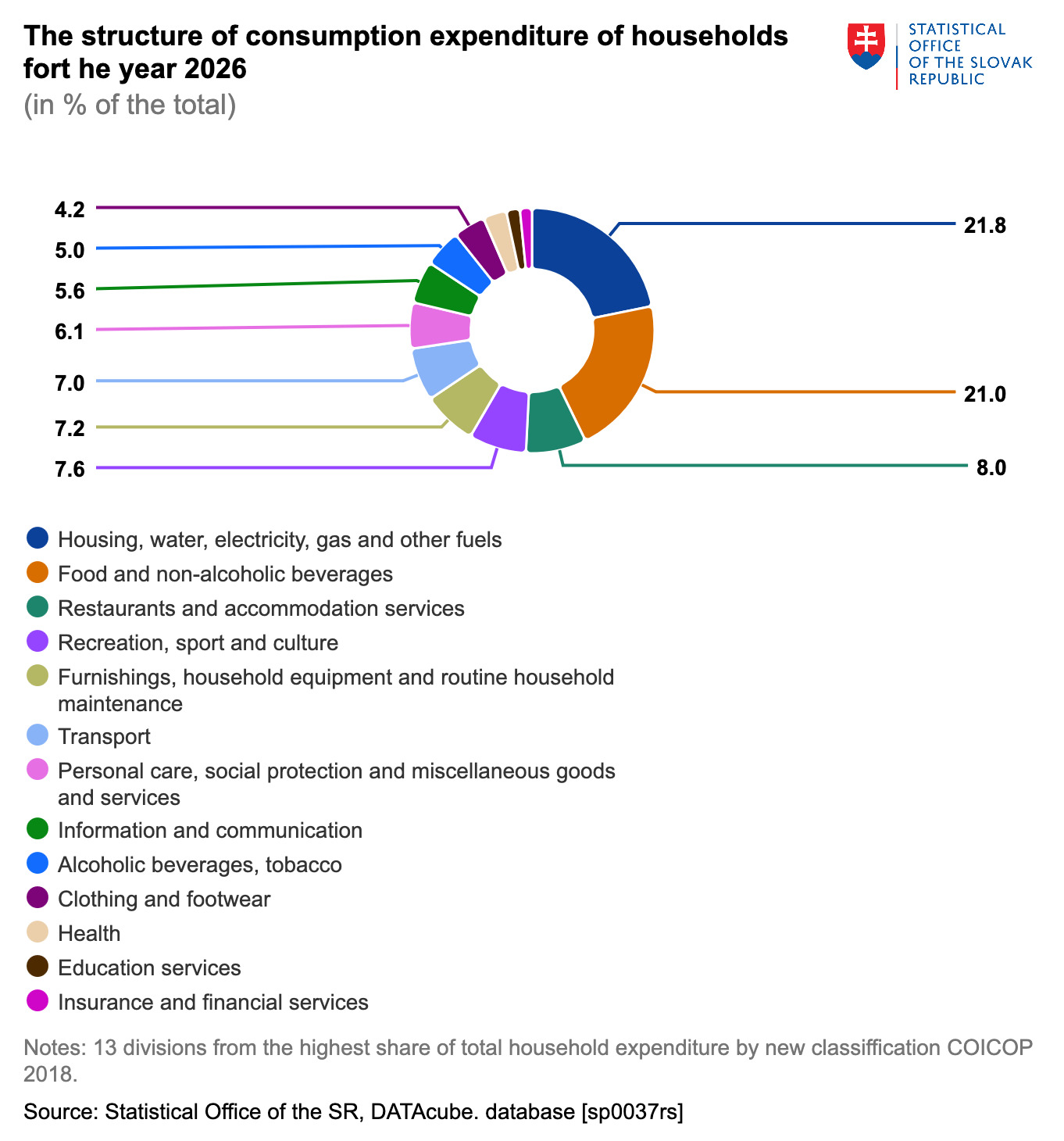
The latest data also reflect methodological changes introduced at the start of 2026, including an updated consumer basket and revised weighting of expenditure categories. Housing and energy now account for just under 22 percent of household spending, while food and non-alcoholic beverages represent just over 20 percent.
Overall, while inflation in Slovakia is easing, the data indicate that structural pressures—particularly in housing and energy—continue to shape price dynamics in the economy.