Thursday, 1 October 2026
Renewable energy sources supplied 45.5% of all electricity generated across the European Union during the first quarter of 2026, marking another step in the region’s transition towards lower-carbon power generation. According to the latest Eurostat data, the share increased from 42.7% recorded during the same period last year, reflecting continued growth in renewable capacity and favourable generation conditions.
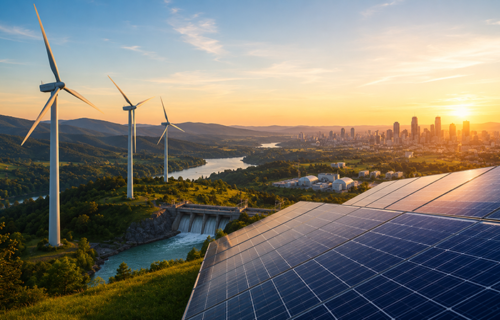
Wind power remained the largest contributor to renewable electricity production, accounting for almost 45% of all renewable generation across the EU. Hydropower represented 28%, while solar energy contributed more than 17%. Biomass and other renewable fuels provided most of the remaining renewable electricity, with geothermal and other technologies making up only a small share.
The transition continues to vary significantly between member states. Denmark again recorded the highest renewable electricity share in Europe, generating 90% of its electricity from renewable sources, largely through wind energy. Portugal followed with 82.9%, supported primarily by hydropower, while Lithuania ranked third at 75.7%, where wind generation also plays a dominant role.
Central and Eastern Europe presents a far more diverse picture. Lithuania stands among Europe’s leading renewable electricity producers, but many neighbouring countries remain in earlier stages of the transition.
Czechia recorded the lowest renewable electricity share in the European Union at 12.7%, while Slovakia generated 17.2% of its electricity from renewable sources during the first quarter. Both countries continue to rely heavily on conventional electricity generation, although renewable capacity has been expanding gradually.
Elsewhere in the region, investment momentum has accelerated. Poland has become one of Europe’s fastest-growing solar markets, with large-scale photovoltaic projects significantly increasing renewable generation over recent years. Romania, Hungary and Bulgaria have also expanded renewable capacity, particularly in solar power, while continuing to modernise electricity networks and improve grid integration.
The differing pace of development reflects each country’s energy mix, natural resources, investment levels and historical dependence on conventional generation technologies. Countries with extensive wind resources or well-developed hydropower systems have generally achieved much higher renewable electricity shares than markets where coal, nuclear power or natural gas continue to dominate electricity production.
Energy analysts expect renewable generation across Europe to continue growing as additional wind and solar projects enter operation, battery storage expands and electricity networks become more flexible. While progress is unlikely to be uniform, ongoing investment across Central and Eastern Europe is expected to gradually narrow the gap between the region’s highest and lowest-performing markets over the coming years.
The latest Eurostat figures relate specifically to electricity generation rather than total energy consumption, but they underline the continuing transformation of Europe’s power sector as renewable technologies account for an increasingly large share of electricity production across the continent.